
Bent over a flower bed, sweating in the sun, a hand fork in one fist and a persnickety dandelion root in the other — this is the weeding reality most gardeners accept as normal. A stirrup hoe breaks that cycle by cutting through shallow-rooted weeds just below the soil surface in a clean, push-pull motion that leaves your back straight and your knees un-knotted. It turns a tedious chore into a fast, light sweeping motion across beds and borders.
I’m Rikta — the co-founder and writer behind Lawn Gear Lab. Over many weeks of research, I’ve examined blade geometries, handle materials, connection ferrules, and thousands of owner reviews to isolate which stirrup hoes justify their place in a serious gardener’s shed.
If you want to stop wrestling with stubborn taproots and start sliding through weeding tasks with one fluid stroke, you need the right stirrup hoe for your soil type and body mechanics.
How To Choose The Best Stirrup Hoe
A stirrup hoe’s value hinges on four pillars: blade geometry, steel composition, handle architecture, and overall weight bias. A weak ferrule or a blade that dulls after one afternoon in loamy soil will waste your time and money. Here is what separates a productive weeding session from a frustrating afternoon.
Blade Shape and Action Type
True stirrup (loop) hoes feature a closed, U-shaped blade that severs weed stems on both the push and the pull stroke. Some models add a pointed tip to dig between tight plantings, while others substitute a flat, open “V” shape. For routine weeding in loose to medium soil, the classic loop design covers the most ground per pass. For rocky or gravel ground, a V-shaped or pointed blade is less likely to catch and jerk.
Handle Length and Material
Standard handles run from 54 to 72 inches. Taller gardeners or those with raised beds should target the 60–72 inch range to avoid stooping. Fiberglass handles dampen vibration better than wood, resist moisture rot, and carry a longer warranty, but wood (especially hickory) offers a warm, shock-absorbing feel that many veterans prefer. Aluminum handles cut weight but can transmit cold and vibration more readily.
Steel Gauge and Ferrule Construction
Head steel thickness is measured in gauge; 12-gauge is heavy duty and resists bending in compacted or root-heavy soil. Thinner 14- or 16-gauge blades will flex and dull faster. The ferrule — the metal collar joining head to handle — should wrap fully around the handle or extend into a steel sleeve. A riveted or welded ferrule beats a simple compression-fit collar every time for longevity.
Quick Comparison
On smaller screens, swipe sideways to see the full table.
| Model | Category | Best For | Key Spec | Amazon |
|---|---|---|---|---|
| Rogue Scuffle Hoe | Premium | Precision work in tight plantings | 6 in. triangular tempered steel head | Amazon |
| Bully Tools Warren Hoe | Pro Grade | Heavy-duty soil penetration | 12-gauge steel, triple-wall fiberglass handle | Amazon |
| Xtreme Weeder | Specialty | Gravel, bark, and drip-system beds | Stainless steel V-blade, 54 in. handle | Amazon |
| Bully Tools Draw Hoe | All-Rounder | Chopping, shaping, and spreading soil | 12-gauge paddle head, 58 in. fiberglass handle | Amazon |
| Truper Weeding Hoe | Classic | Traditional double-edge weeding | Double-edge blade, 54 in. wood handle | Amazon |
| EUIJOIP 2-in-1 Hoe | Budget Pick | Versatile tool with built-in rake | 72 in. adjustable steel handle, stirrup + 4-tine head | Amazon |
| cogardenshower Hoe | Budget Pick | Lightweight, tool-free assembly | Stainless steel blade, 74 in. adjustable aluminum handle | Amazon |
In‑Depth Reviews
1. Rogue Scuffle Hoe

The Rogue Scuffle Hoe is the clear performance winner in this category, built from high-grade tempered steel recycled from agricultural disc blades. Its 6-inch triangular head is precision-sharpened on all three sides, allowing it to cut forward, backward, and sideways without reorienting the tool. The 60-inch hickory handle delivers a balanced swing weight that makes the head feel lighter than its steel mass suggests.
In practice, this design excels at fitting between tight shrub rows and around perennials where a bulkier loop head would mash foliage. The three sharp edges let you slice weed stems at soil level and then flick the debris into a pile without bending. Owners consistently report it cuts through crabgrass and dandelion rosettes like a hot blade, and the carbon steel edge is fast to touch up with a mill file.
At this price tier, the Rogue is a deliberate investment for the gardener who values precision, edge retention, and a heirloom-quality handle. It is not the tool for broad, open-bed weeding where a wider loop would cover more area per stroke — it is the specialist for tight spacing and clean cuts.
What works
- Triple-sharpened edges cut on every stroke direction
- Hickory handle provides natural shock absorption and a secure grip
- Handmade from recycled steel with excellent edge retention
What doesn’t
- Higher upfront cost compared to mass-produced loop hoes
- Narrower head sweeps less area per pass than a full-width stirrup
2. Bully Tools Warren Hoe (92354)
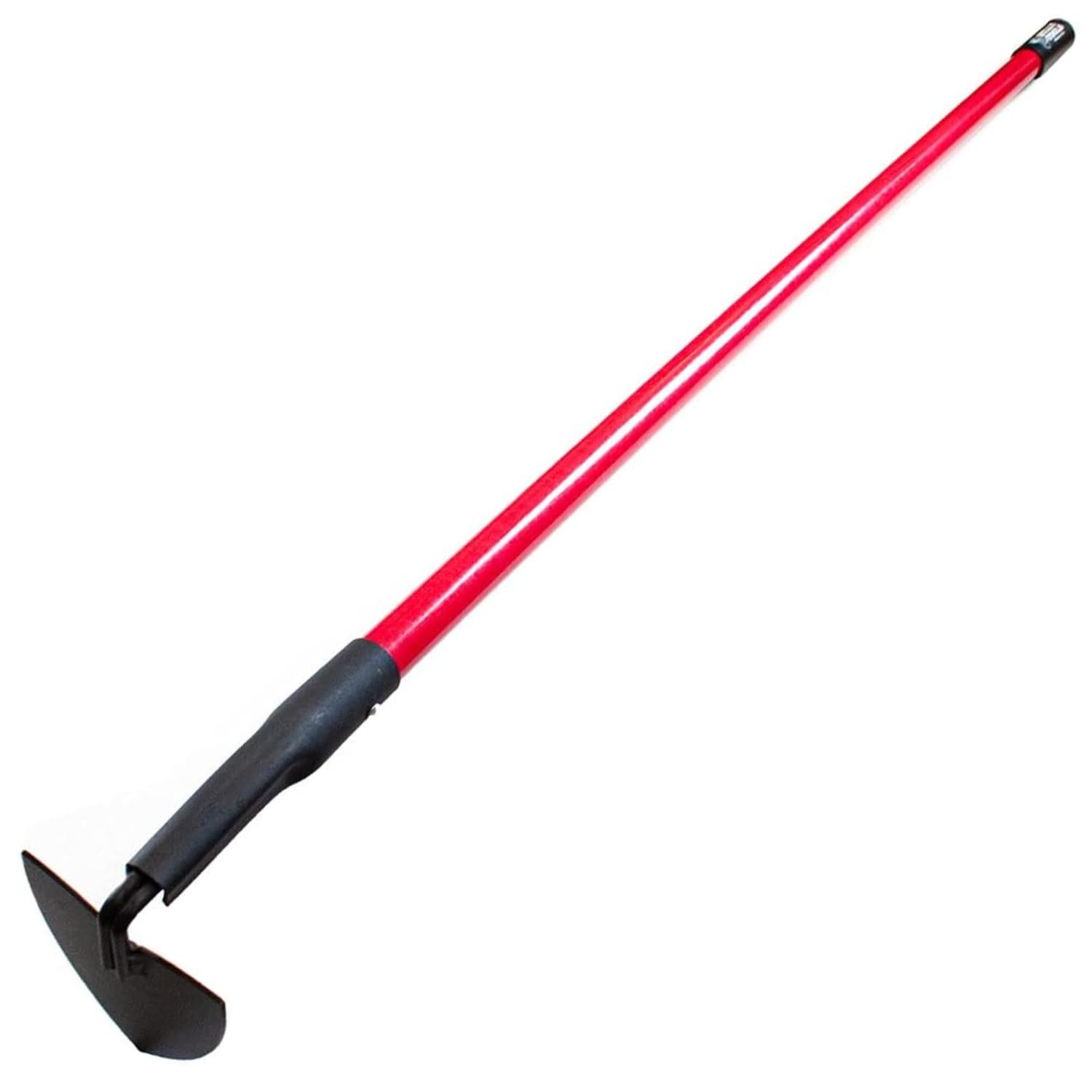
The Bully Tools Warren Hoe is a commercial-grade warren-style hoe with a 6.25-inch head made from extra-thick 12-gauge American steel. Its defining feature is the extended steel ferrule that reinforces the head-to-handle connection, preventing the wobble and detachment that plague cheaper models after repeated impacts. The triple-wall fiberglass handle resists splintering and weather rot far better than standard wood.
This is a heavy tool — over 3 pounds — and that mass is an asset in compacted or rocky soil where a lighter blade would bounce or deflect. The head’s blunt, flat shape is designed for chopping, slicing, and scraping rather than the scuffling action of a true loop hoe. Owners who have used it for four seasons note that the steel does not warp and that the limited lifetime warranty has been honored without hassle when issues arose.
The tradeoff is physical: the 3-pound head demands more arm strength over a long weeding session. It is best deployed in short bursts of aggressive soil work — breaking new ground, cutting through root masses, or edging — rather than as a maintenance weeder for loose beds.
What works
- 100% Made in USA with thick 12-gauge steel head
- Extended ferrule eliminates handle wobble at connection point
- Fiberglass handle resists moisture and UV damage
What doesn’t
- Heavy head causes fatigue during extended weeding sessions
- Blunt design is less effective for shallow, quick scuffling
3. Xtreme Weeder (Scuffle Hoe Cultivator)
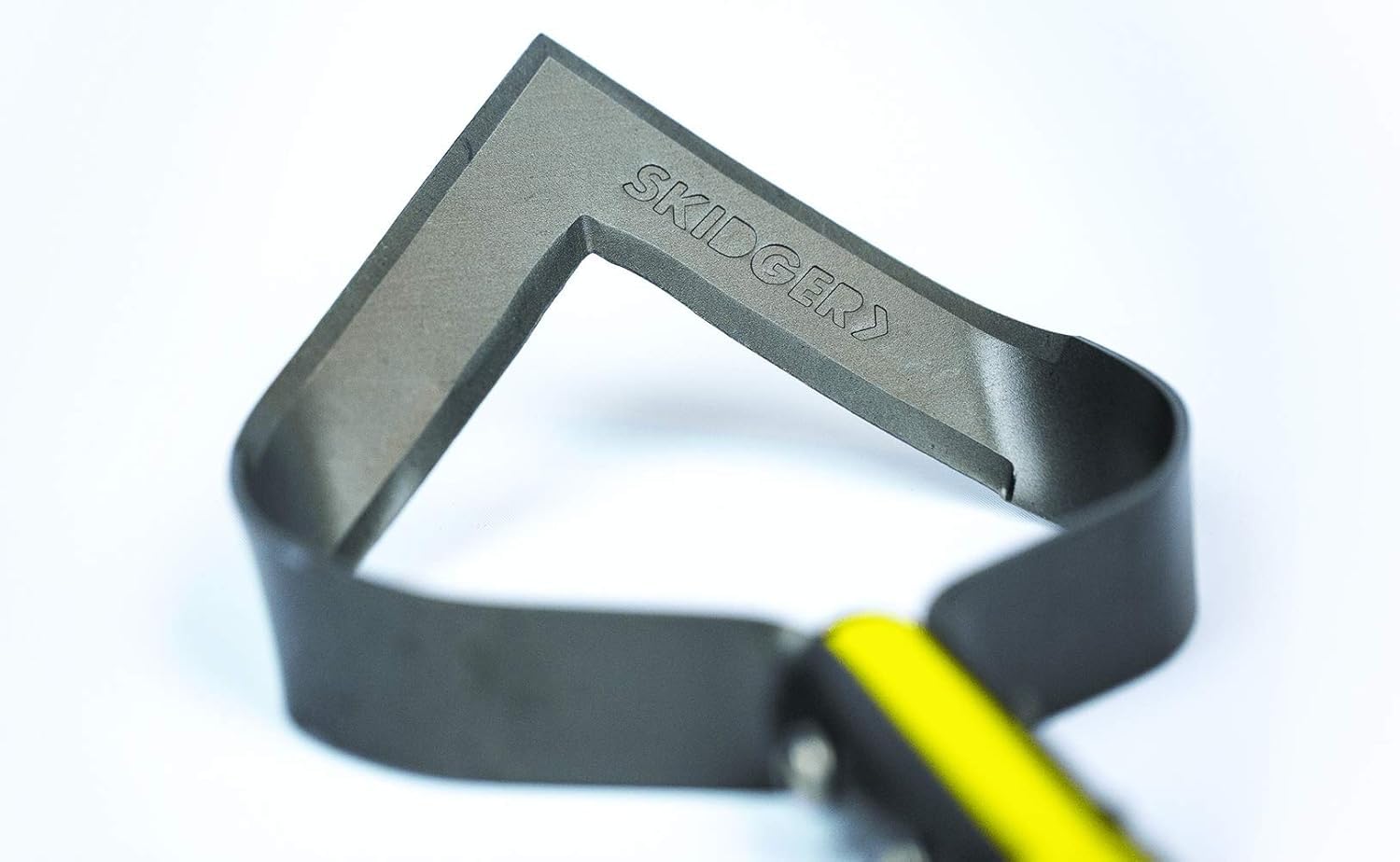
The Xtreme Weeder is the category’s specialist for non-soil surfaces. Its open V-shaped stainless steel blade is designed to slide through gravel, decomposed granite, bark mulch, and around drip irrigation tubing without snagging or displacing material. The pointed tip lets you reach between closely spaced plants, while the curvature of the blade gives you a sightline to where the cutting edge is working.
The 54-inch fiberglass handle keeps the tool light at 1.8 pounds, reducing arm strain during long sessions. Owners report that the blade holds its edge well in sandy and loamy conditions and is easy to sharpen with a diamond file when it eventually dulls. The open back design means soil and debris pass through rather than clogging the head, a common complaint with closed-loop hoes in sticky clay.
For a gardener maintaining gravel pathways, rock-covered borders, or bark-mulched flower beds, this is the correct tool for the job. It is less efficient on open, loose soil where a wide loop hoe would clear more weeds per stroke, and the 54-inch handle may feel short for taller users working in raised beds.
What works
- Open V-blade passes through gravel and bark without clogging
- Pointed tip provides precise weeding around drip lines and plants
- Lightweight fiberglass handle reduces fatigue
What doesn’t
- Narrow head clears less area per pass than a full-width stirrup
- Handle length may be insufficient for taller gardeners
4. Bully Tools 12-Gauge Garden Hoe (92353)

This is Bully Tools’ standard 12-gauge paddle draw hoe, distinct from the Warren model above. The paddle head measures 5.25 by 6.25 inches and is over-welded to a steel-encased neck, creating a robust connection that survives years of chopping and prying. The 58-inch fiberglass handle is coated in a polyester veil that prevents splintering and stands up to direct sunlight without becoming brittle.
The paddle shape excels at two actions the stirrup hoe cannot do well: chopping into compacted ground to break it open, and pulling soil toward you to shape beds or fill trenches. The sharp leading edge slices through annual weeds when drawn, but the tool is not designed for the fast push-pull scuffling motion that defines a stirrup hoe. It is a draw hoe, best used with a chopping and pulling motion.
Owners consistently praise its durability, noting that the head has not bent or loosened even after repeated contact with rocks and roots. The rubber grip reduces hand fatigue, and the overall build quality justifies its mid-range price. If your primary need is breaking ground and moving soil rather than surface weeding, this is a better fit than the loop-style alternatives.
What works
- Over-welded head-to-neck joint resists breakage under heavy use
- Paddle shape is effective for chopping, shaping, and moving soil
- Fiberglass handle with rubber grip reduces shock and fatigue
What doesn’t
- Not designed for fast push-pull scuffling weeding
- Heavier than loop-style hoes, causing quicker arm fatigue
5. Truper Weeding Hoe (ACT-Hoe / 15127)
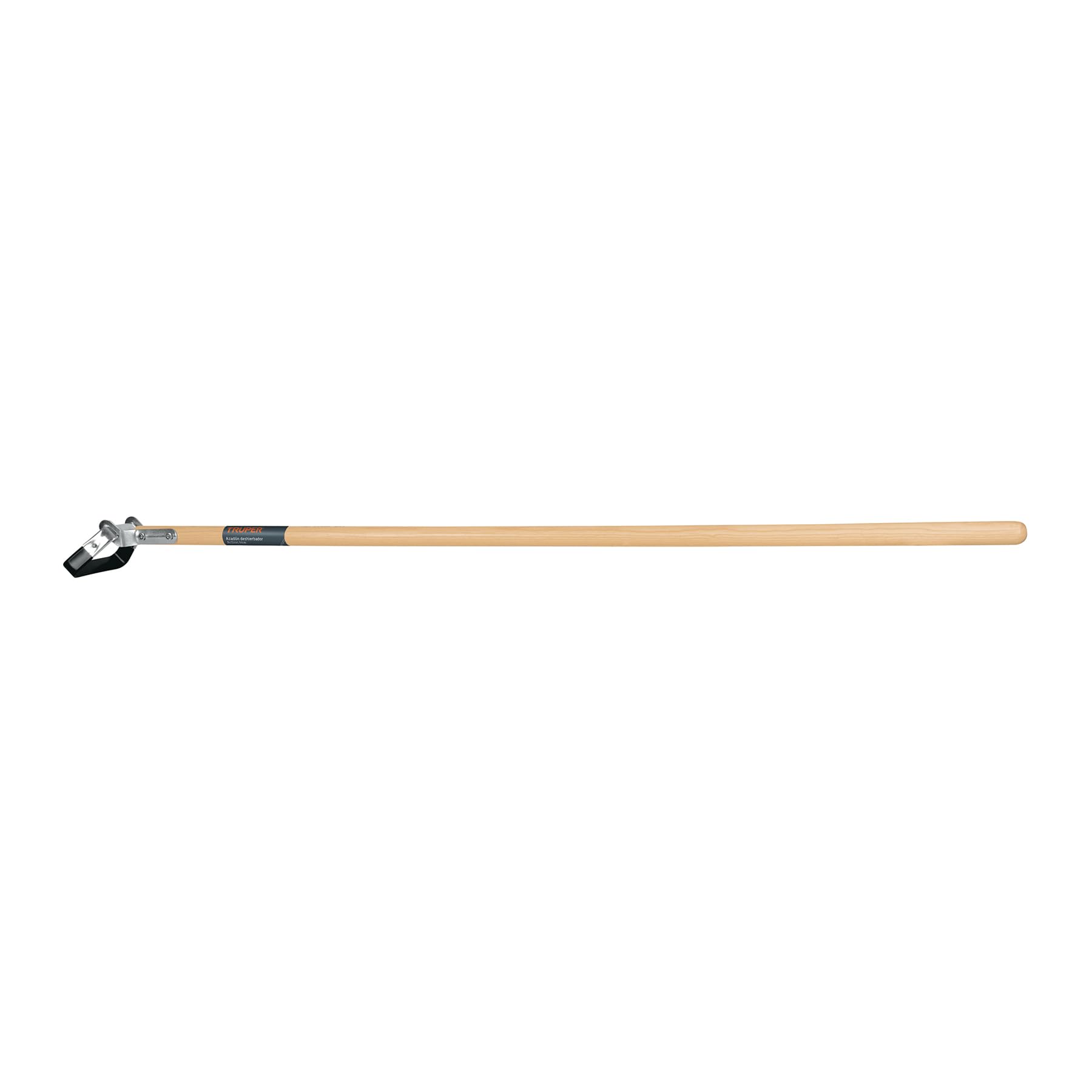
The Truper ACT-Hoe is a straightforward, double-edge weeding hoe with a 54-inch wood handle and a 0.7-pound head. It is the lightest tool in this roundup, making it exceptionally nimble for quick passes through mulched beds and loose soil. The double-edge design means you can cut on both push and pull strokes, and the narrow profile slips between row crops without disrupting neighboring plants.
Owners who maintain large mulched areas report that this hoe cuts weeding time by more than two-thirds compared to hand pulling. The long wood handle provides adequate leverage for standing work, though it is shorter than the adjustable steel-handle models. The head weight is light enough that the tool does not feel tiring over a 30-minute session, but it lacks the mass to drive into compacted soil or cut through established root networks.
The wooden handle is the primary durability concern — it can splinter or crack if left in damp conditions or subjected to prying motions. This is a tool for routine maintenance weeding in loose, friable soil, not for breaking new ground or fighting heavy clay.
What works
- Light weight allows fast, fatigue-free weeding in mulched beds
- Double-edge blade cuts on both push and pull strokes
- Wood handle provides natural feel and shock absorption
What doesn’t
- Wood handle prone to splintering if not stored dry
- Light head lacks force for compacted or root-heavy soil
6. EUIJOIP 2-in-1 Garden Hoe
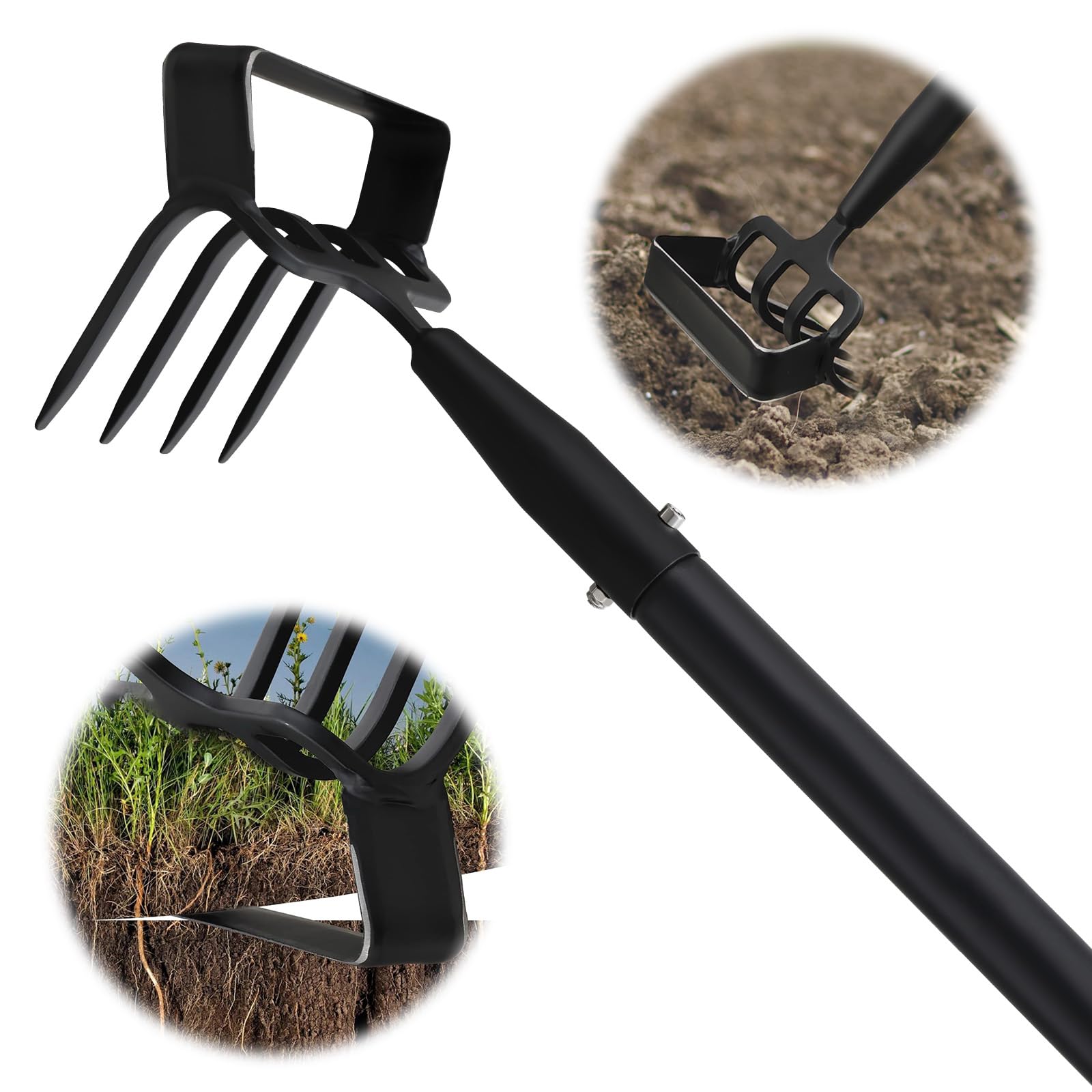
The EUIJOIP 2-in-1 Hoe combines a sharp stirrup blade on one side of the head with a 4-tine rake on the reverse, giving you two tools in a single head. The 72-inch steel handle is adjustable by adding or removing threaded extensions, allowing you to dial in the exact length for your height and bed depth. The non-slip rubber grip at the top end provides a comfortable hold for extended use.
In loose to medium soil, the stirrup blade cuts weeds efficiently on both push and pull strokes. Flipping the head engages the rake tines, which are useful for dragging out pulled weeds, loosening soil clumps, and mixing compost into the top layer. Owners note that the head weight is substantial enough for solid soil penetration but not so heavy that it becomes exhausting. The steel handle is far more durable than wood, and the 1.125-inch diameter resists bending under moderate leverage.
The primary weakness reported is that the stirrup blade can bend slightly under aggressive use in rocky or very hard-packed soil. It is best suited for maintained garden beds, raised planters, and loose loam rather than virgin ground. The 999-day return policy adds peace of mind for a budget-tier purchase.
What works
- 2-in-1 head combines stirrup weeding and 4-tine raking in one tool
- Adjustable 72-inch steel handle accommodates different user heights
- Thick steel handle resists bending and weather damage
What doesn’t
- Stirrup blade may bend slightly in rocky or compacted soil
- Threaded handle sections can loosen during heavy use
7. cogardenshower 2-in-1 Stirrup Hoe

The cogardenshower 2-in-1 Hoe pairs a rust-resistant stainless steel stirrup blade with a 4-tine cultivator rake on the back of the head. Its standout feature is the 74-inch adjustable aluminum handle, which at 2.8 pounds makes this the lightest full-length hoe in the roundup. The 1.2-inch diameter handle and anti-loose sleeve structure are designed to minimize wobble during the push-pull motion.
In use, the stainless steel blade stays sharp through multiple weeding sessions in loose to medium soil, and the rake side is effective for breaking soil clods and mixing in amendments. The tool-free threaded assembly means you can break it down for compact storage in a shed or car trunk. Owners who work in raised beds and flower borders report that the long handle eliminates most bending and that the light weight allows extended weeding sessions without arm fatigue.
The aluminum handle, while light, transmits more vibration to the hands than fiberglass or wood. The tool is not intended for heavy prying, sod cutting, or rocky soil — the blade and rake head lack the mass to handle these conditions without risk of bending. It is a smart choice for the home gardener focused on maintenance weeding in established, well-tended beds.
What works
- Stainless steel blade resists rust and retains a sharp edge
- Long 74-inch aluminum handle minimizes bending for tall users
- Light weight enables fatigue-free weeding over large areas
What doesn’t
- Aluminum handle transmits more vibration than fiberglass or wood
- Not designed for heavy prying or rocky soil conditions
Hardware & Specs Guide
Blade Material and Gauge
The steel thickness of a stirrup hoe head is measured in gauge — lower numbers mean thicker steel. A 12-gauge head (used by Bully Tools) will resist bending in compacted soil and heavy roots, while a 14- or 16-gauge head is thinner and more prone to flex. Stainless steel (found on the Xtreme Weeder and cogardenshower models) resists rust but may not hold an edge as long as high-carbon tempered steel (used by Rogue). For routine weeding in loose soil, stainless is sufficient; for abrasive, rocky, or hard-packed ground, opt for tempered 12-gauge steel.
Handle Length and Material
Handle length directly governs your working posture. A 54-inch handle suits average-height users working in ground-level beds, while 60–74 inch handles allow taller gardeners or raised-bed users to work without stooping. Fiberglass handles offer the best balance of weight, vibration damping, and weather resistance. Wood handles (hickory) provide natural shock absorption but require dry storage to prevent rot and splintering. Aluminum handles are lightest but transmit more vibration and can feel cold in cool weather.
Ferrule Construction
The ferrule is the metal collar that secures the hoe head to the handle. A wrap-around ferrule that extends into a steel sleeve (as seen on Bully Tools models) provides the strongest connection, resisting the twisting forces generated during the push-pull motion. Compression-fit ferrules or simple pinned connections are weaker and can loosen over time, causing the head to wobble or detach. Always check that the ferrule is either welded or riveted directly to the head for long-term reliability.
Head Width and Action Type
Stirrup hoes typically have head widths from 4 to 8 inches. A 6-inch head (Rogue, Xtreme Weeder) provides a good balance of coverage and precision for working between plants. Wider heads (7–8 inches) clear more area per pass but are harder to maneuver in tight rows. The action type distinguishes true stirrup hoes (closed loop) from scuffle hoes (open V or triangle). Closed loops are best for routine weeding in loose soil; open V-blades (Xtreme Weeder) excel in gravel, bark, and around obstacles.
FAQ
How does a stirrup hoe differ from a standard draw hoe?
What handle length is best for raised bed gardening?
Can I use a stirrup hoe in gravel or bark mulch?
How do I sharpen a dull stirrup hoe blade?
Final Thoughts: The Verdict
For most gardeners, the stirrup hoe winner is the Rogue Scuffle Hoe because its triple-sharpened tempered steel head and balanced hickory handle deliver precision, edge retention, and ergonomic comfort that outperform every other model in this roundup. If you need a tool that excels in gravel and around drip irrigation, grab the Xtreme Weeder. And for heavy-duty chopping and soil shaping at a mid-range price, nothing beats the Bully Tools Warren Hoe.