
Spider mites are among the most destructive pests for indoor plants, turning vibrant foliage into a yellow, webbed mess within days. A targeted spray is the fastest way to stop an active infestation, but choosing the wrong formula can damage your plants or fail to kill the mites entirely.
I’m Rikta — the co-founder and writer behind Lawn Gear Lab. For this guide, I’ve compared active ingredients, concentration forms, and OMRI certification status across a range of dedicated miticides to identify which sprays actually deliver contact kill for spider mites on indoor plants.
After cross-referencing formulation data with hundreds of verified owner accounts, the best spray for spider mites on indoor plants balances a plant-safe botanical base with a reliable mechanical action that mites cannot develop resistance against.
How To Choose The Best Spray For Spider Mites On Indoor Plants
Selecting a spider mite spray requires understanding the mite’s biology and the spray’s mode of action. Indoor environments lack natural predators, so you need a product that kills on contact and disrupts the pest’s protective outer layer, rather than relying on ingestion or repellency alone.
Active Ingredient: Mechanical vs. Chemical Action
Potassium salts of fatty acids (insecticidal soaps) and soybean or neem oils physically break down the mite’s waxy cuticle, causing dehydration and suffocation. This mechanical action is critical — spider mites develop resistance to neurotoxins quickly, but they cannot evolve around a physical disruption of their exoskeleton.
Coverage and Application Method
Spider mites predominantly colonize the undersides of leaves. An adjustable nozzle that can deliver a mist or stream is essential for reaching these protected areas. Ready-to-use sprays offer convenience for small collections, while concentrates provide better value for large or recurring treatment schedules.
Organic Certification and Plant Safety
OMRI-listed sprays confirm the formula meets organic standards and typically contain no synthetic residues. However, oils and soaps can burn sensitive foliage if applied in direct sunlight or high temperatures. Always test a small area first and wait 24 hours before applying broadly.
Quick Comparison
On smaller screens, swipe sideways to see the full table.
| Model | Category | Best For | Key Spec | Amazon |
|---|---|---|---|---|
| Grower’s Ally Crop Defender 3 | Triple Action | Preventative weekly program | 24 oz ready-to-use | Amazon |
| Bonide Capt. Jack’s Neem Max | Cold Pressed Oil | Heavy outdoor & indoor infestations | 16 oz ready-to-spray | Amazon |
| Athena IPM | Broad Spectrum | Professional & home growers | 32 oz ready-to-use | Amazon |
| Safer Insect Killing Soap | Concentrate | Large volume & recurring treatment | 16 oz concentrate | Amazon |
| Miracle-Gro Leaf Protect & Shine | 4-in-1 Spray | Leaf shine & light mite prevention | 8 oz (2-pack) | Amazon |
| Dr. Killigan’s Doom & Bloom | Mechanical Oil | Small-bodied pest contact kill | 16 oz ready-to-use | Amazon |
| Safer Garden 3-in-1 | Fungicide + Miticide | Combined mite & fungal disease control | 24 oz ready-to-use | Amazon |
In‑Depth Reviews
1. Grower’s Ally Crop Defender 3
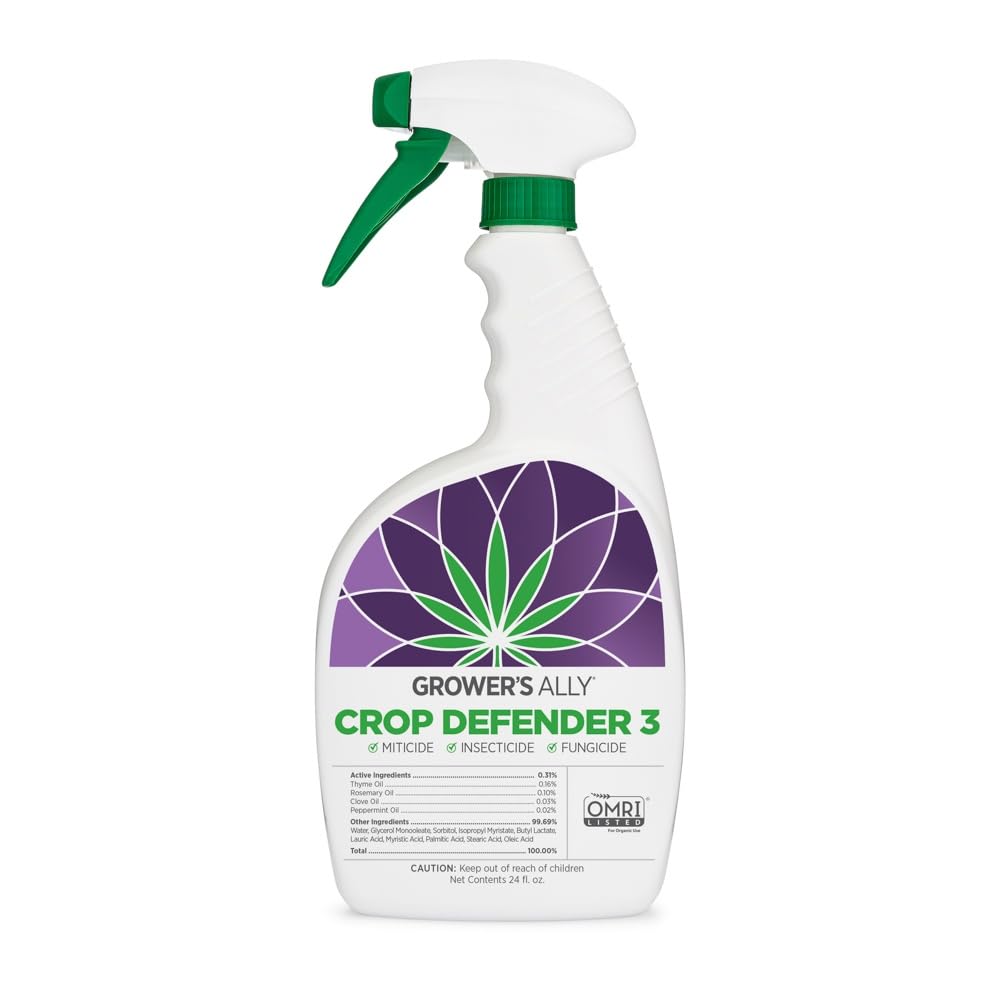
Grower’s Ally Crop Defender 3 combines botanical oils with a built-in surfactant to penetrate spider mite webbing and coat the pest’s body. The triple-action formula works as a miticide, insecticide, and fungicide, making it a strong choice for a preventative weekly spraying program indoors. Users report visible mite reduction after a single application at the elimination concentration.
The FIFRA 25(b) exempt and OMRI-listed formulation contains no residual solvents or synthetic pesticides, allowing same-day harvest on edible crops. The ready-to-use 24 oz bottle covers a substantial number of houseplants, and the spray delivers a fine mist that reaches under-leaf surfaces without heavy runoff. Many owners praise the clove-like scent as a pleasant change from sulfur-based sprays.
Where this product earns its position is in its egg-killing capability and long residual protection. Reapplication every seven days during an active outbreak is standard, but several verified reviews noted two weeks of pest-free foliage after the initial treatment. This makes it a top choice for growers who want a reliable weekly defense rather than a one-time rescue.
What works
- Kills spider mites, eggs, and powdery mildew on contact
- Safe for use on seedlings without leaf burn
- Pleasant natural clove scent compared to other oils
What doesn’t
- Requires weekly reapplication during active infestations
- Bottle size is moderate for large plant collections
2. Bonide Captain Jack’s Neem Max
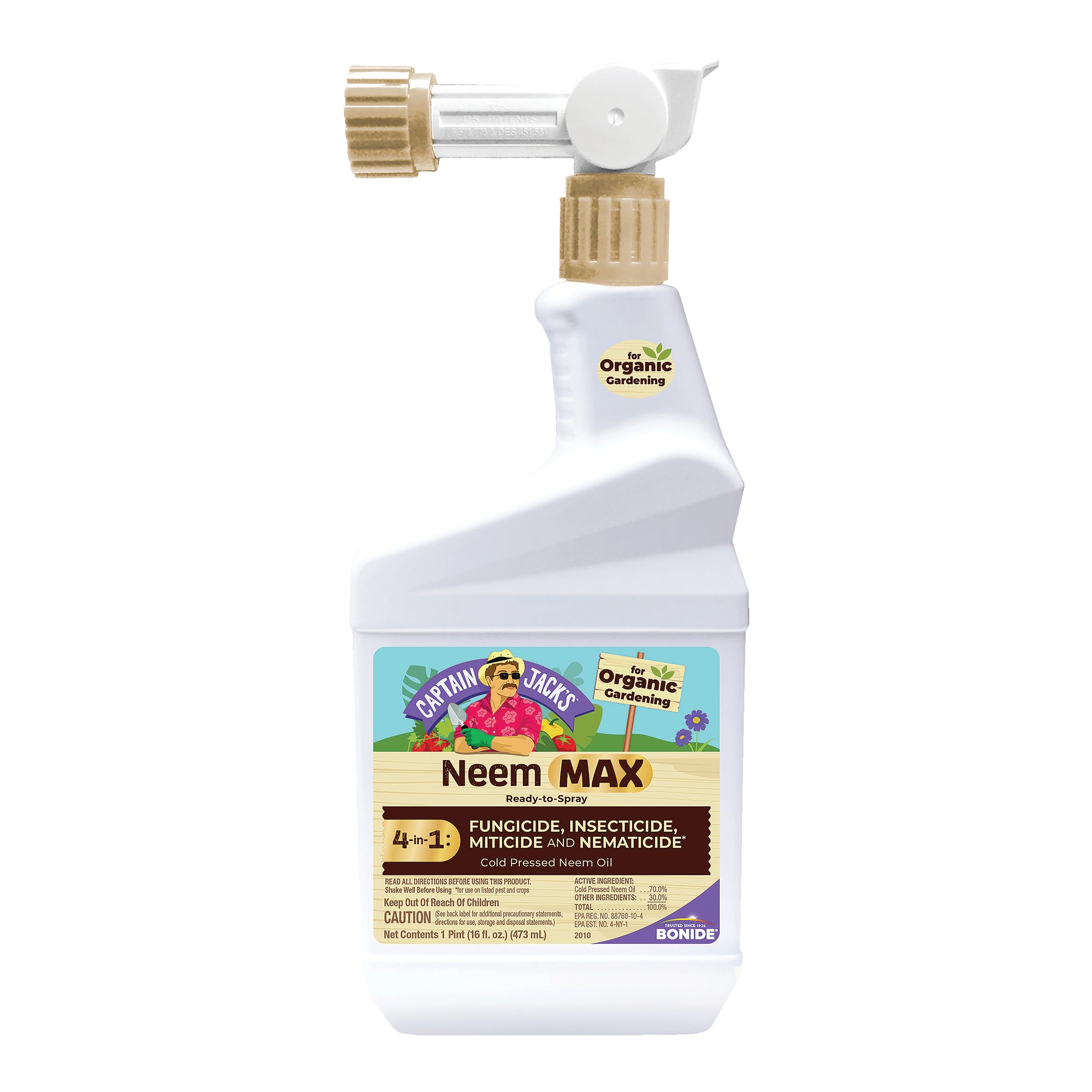
Bonide Captain Jack’s Neem Max uses cold-pressed neem oil as its sole active ingredient, providing a 4-in-1 action against insects, mites, fungi, and nematodes. The ready-to-spray design attaches directly to a garden hose for outdoor use, but the same concentrate can be used with a pump sprayer for indoor applications. Azadirachtin and other neem compounds work by disrupting the mite’s hormonal systems and feeding behavior.
Users report strong results against heavy Japanese beetle and mite populations on fruit trees and ornamentals. The oil coats the leaves with a thin residual layer that continues to suppress pest activity for several days. Some reviewers noted the viscous oil requires thorough shaking and occasional tube priming, but once the spray path is established, coverage is even across large foliage surfaces.
The main trade-off is the strong neem odor, which lingers for 24–48 hours after application. This is a non-issue for utility-focused growers, but it may be unpleasant in a small apartment with many plants. The 16 oz bottle treats a surprising area when diluted through a hose-end system, making it an economical choice for both indoor and perimeter outdoor spraying.
What works
- Cold-pressed neem kills mite eggs, larvae, and adults
- Hose-end sprayer covers large areas efficiently
- Approved for organic gardening up to day of harvest
What doesn’t
- Strong neem odor may linger indoors
- Viscous oil can cause aspiration issues in the spray tube
3. Athena IPM Ready-to-Use Spray
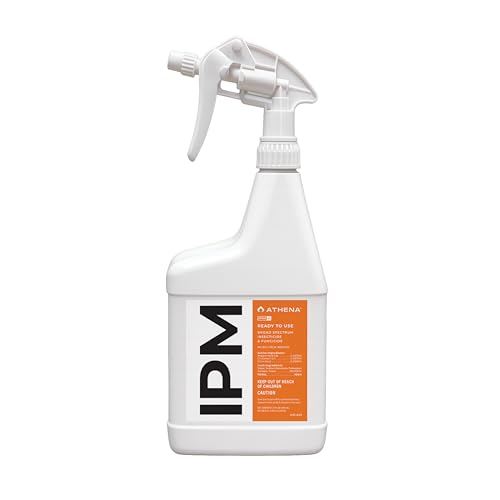
Athena IPM positions itself as a professional-grade solution trusted by commercial cultivators, yet the ready-to-use bottle requires zero mixing or measuring. The broad-spectrum formula targets spider mites, aphids, thrips, and powdery mildew, all from a single spray. Users value the no-mistake simplicity — just shake and apply directly to infested foliage.
The 32 oz bottle is the largest volume in this list, offering more treatments per purchase than the smaller RTU options. The formula uses minimum-risk ingredients under EPA 25(b), making it safe for use around pets and children once the spray has dried. Many users mention the pleasant smell and the absence of the oily residue that some neem products leave behind.
While Athena IPM is less established in the consumer market than some legacy brands, its adoption by commercial growers gives it credibility. Reviews consistently mention fast knockdown of active mite populations, particularly when the spray is applied to the undersides of leaves. For home growers wanting a plug-and-play solution that mirrors commercial protocols, this is a strong contender.
What works
- No mixing or dilution required
- Large 32 oz bottle provides more coverage per dollar
- Safe for use around pets and people
What doesn’t
- Less proven track record than legacy brand sprays
- Requires frequent reapplication for severe infestations
4. Safer Insect Killing Soap Concentrate

Safer Insect Killing Soap relies on potassium salts of fatty acids to break down the mite’s waxy cuticle on contact. As a concentrate, a single 16 oz bottle mixes into multiple gallons of finished spray, offering the lowest cost per treatment in this guide. The soap formula is gentle on most plants but tough on soft-bodied pests like spider mites.
Users report rapid knockdown — 90% reduction within 24 hours for severe aphid and mite outbreaks. The key to success is coverage: spraying the underside of each leaf and reapplying every 5–7 days while insects are present. The soap leaves no toxic residue, allowing harvest of edible plants the same day. Several reviewers found it effective against fungus gnats when applied to the soil surface.
The concentrate format requires mixing with water at a rate of 2–4 tablespoons per gallon. Over-concentration can cause leaf burn, particularly in hot conditions or on sensitive plants. The soap smell is noticeable but dissipates quickly. For growers managing recurring mite problems across a large collection, the value of the concentrate is hard to beat.
What works
- Concentrate makes multiple gallons of spray
- Kill on contact without toxic residues
- Approved for organic gardening up to harvest day
What doesn’t
- Can burn leaves if diluted too strong
- Requires mixing and measuring before use
5. Miracle-Gro Leaf Protect & Shine
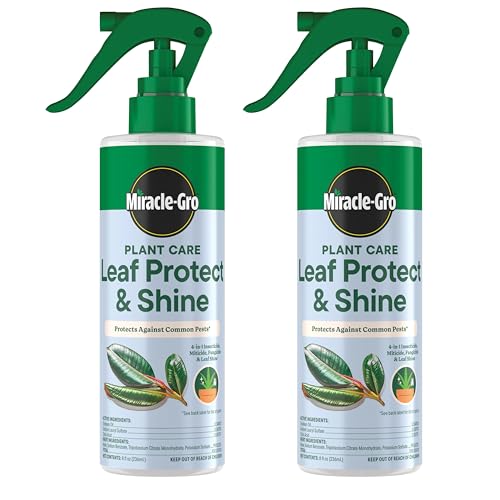
Miracle-Gro Leaf Protect & Shine combines insecticide, miticide, fungicide, and leaf shine into a single spray. The formula kills spider mites on contact while adding a natural gloss to foliage. Owners of indoor plants with hard leaves — fiddle leaf figs, monsteras, rubber plants — appreciate the dual function of pest control and aesthetics.
The 8 oz bottle (sold as a 2-pack) is small compared to other options, but users note that a light mist covers many leaves. The spray leaves a clean, non-greasy finish that resists dust accumulation. Reviewers report no noticeable chemical smell, a plus for use in living spaces. The recommended application cycle of every 7–14 days supports a preventative schedule rather than a rescue treatment.
This spray works best as a maintenance tool for light mite pressure. It is not formulated for heavy infestations where webbing and egg masses are already established. The leaf shine additive can clog stomata if overapplied, so following the label’s spray volume is essential. For collectors who want to keep plants pest-free and glossy simultaneously, this is a niche winner.
What works
- Leaves a clean, natural shine on hard leaves
- No unpleasant chemical odor indoors
- Prevents powdery mildew alongside mites
What doesn’t
- Small bottle size limits coverage for large collections
- Not effective for heavy, active spider mite infestations
6. Dr. Killigan’s Doom & Bloom
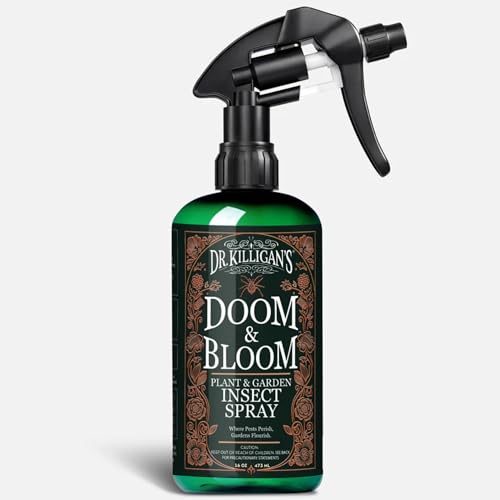
Dr. Killigan’s Doom & Bloom uses soybean oil to physically break down the protective outer layer of spider mites and other small-bodied pests. The spray works by dehydration and disrupted respiration rather than chemical poisoning, a mechanical action that mites cannot develop resistance against. The adjustable trigger sprayer switches between a mist for broad coverage and a stream for targeted spraying.
Users report dramatic knockdown on thrips and fungus gnat infestations with consistent application every three days during active outbreaks. The oil is gentle enough to use repeatedly without leaf damage, though the manufacturer advises avoiding application in excessive heat. The formula contains no synthetic pesticides and is safe for use around people and pets once dried.
The 16 oz bottle is ready to use, and the spray pattern from the adjustable nozzle covers leaf surfaces effectively. Some users note that the oil leaves a temporary residue that attracts dust, but this dissipates after a few days. For small collections where a fast-acting, no-mix spray is needed, this is a reliable contact killer.
What works
- Mechanical mode of action prevents resistance
- Adjustable nozzle provides mist or stream options
- Safe for repeated use on sensitive plants
What doesn’t
- Temporary oil residue can attract dust
- Not effective on fungal issues
7. Safer Garden 3-in-1 Ready-to-Use

Safer Garden’s 3-in-1 spray combines potassium salts of fatty acids for insecticide and miticide action with sulfur for fungal disease control. This dual approach is rare in a single ready-to-use bottle, allowing the user to address both spider mites and powdery mildew with one product. The formula is OMRI listed for organic gardening and safe to use up until the day of harvest.
The 24 oz bottle provides generous coverage for indoor and outdoor plants. Users find the spray effective against mealybugs, flat mites, and aphids when applied every 5–7 days. The sulfur component helps prevent and stop the spread of fungal infections like black spot and rust, which often accompany mite damage. Several reviewers noted that the spray improved plant health through the treatment period.
The most common complaint is the spray nozzle quality, with multiple users reporting that the trigger mechanism fails partway through the bottle. The sulfur smell is also noticeable and lingers longer than soap-only sprays. Despite these drawbacks, the 3-in-1 functionality makes this a versatile option for growers dealing with multiple plant health issues simultaneously.
What works
- Fungicide + miticide in a single ready-to-use spray
- OMRI listed for organic gardening use
- Safe for edible crops up to day of harvest
What doesn’t
- Spray nozzle frequently fails or leaks
- Sulfur smell can be strong and persistent
Hardware & Specs Guide
Mechanical vs. Systemic Action
Spider mites develop resistance to systemic neurotoxins within a few generations. Mechanical-action sprays (oils soaps) physically dissolve the mite’s waxy cuticle, leading to dehydration death. This mode of action cannot be out-evolved, making it the preferred choice for indoor mite management where pesticide rotation is limited.
Concentrate vs. Ready-to-Use
RTU sprays offer convenience for a small number of plants. A 16 oz bottle typically covers 8–12 medium houseplants per application. Concentrates like Safer Insect Killing Soap provide 6–12 gallons of finished spray per bottle, making them more economical for large collections or weekly treatment schedules. Always read the dilution rate — over-concentration causes leaf phytotoxicity.
OMRI Listing and Plant Safety
OMRI certification ensures the formula meets organic standards without synthetic residues. However, oil-based sprays can burn foliage if applied under direct light or above 85°F. Always test on a single leaf and wait 24 hours before full application. Succulents and ferns are particularly sensitive to oil-based treatments.
Nozzle Design and Coverage
An adjustable nozzle that delivers a fine mist is critical for reaching the undersides of leaves where spider mites congregate. A stream setting helps target visible webbing and infested nodes. Fixed-jet nozzles often produce a narrow spray that misses protected surfaces, reducing treatment efficacy.
FAQ
How often should I spray indoor plants for spider mites?
Can I use neem oil directly on indoor plant leaves without diluting?
Why do spider mites keep coming back after spraying?
Is insecticidal soap safe for all indoor plant types?
Final Thoughts: The Verdict
For most gardeners, the spray for spider mites on indoor plants winner is the Grower’s Ally Crop Defender 3 because it delivers reliable contact kill across mites, eggs, and mildew with a pleasant botanical formula that won’t burn foliage. If you want a professional-grade no-mix spray, grab the Athena IPM. And for growers treating large collections on a budget, nothing beats the Safer Insect Killing Soap Concentrate.