
The String of Turtles (Peperomia prostrata) thrives on neglect, but only if its roots stay dry between waterings. Standard potting soil holds moisture too long, turning those delicate turtle-shell leaves into mushy casualties. The right mix is about particle size, drainage speed, and the precise absence of water-retentive peat.
I’m Rikta — the co-founder and writer behind Lawn Gear Lab. I’ve spent hundreds of hours analyzing soil particle distribution, comparing drainage rates, and cross-referencing thousands of owner reports across this specific succulent category to pin down the exact blends that keep String of Turtles alive and trailing.
This guide breaks down exactly which commercial mixes provide the fast drainage, low compaction, and root-safe aeration your String of Turtles needs. We dissect ingredients, particle sizes, and pH to find your plant’s perfect home in the best soil for string of turtles.
How To Choose The Best Soil For String Of Turtles
Choosing a soil for String of Turtles isn’t the same as grabbing any cactus bag off the shelf. The plant’s shallow, fine root system demands a specific balance of drainage, aeration, and particle consistency that many general succulent mixes fail to deliver.
Drainage Speed Is Non-Negotiable
String of Turtles roots rot within days if water sits in the pot. The mix must drain completely in under 30 seconds when saturated. Look for large-particle ingredients like pumice, perlite, lava rock, or calcined clay — these create macro-pores that let water flow straight through rather than clinging to root fibers.
Particle Size Prevents Compaction
Small particles like sand or fine peat moss fill the air spaces between larger chunks, turning a well-draining recipe into a dense, moisture-trapping block. The ideal mix contains particles predominantly in the 1/8 to 1/4 inch range. Avoid powders, fine sands, and anything labeled “potting soil” without amendments, as they compact tightly around delicate roots.
pH and Organic Content Balance
String of Turtles prefers a slightly acidic to neutral pH between 5.5 and 7.0. While pure grit provides perfect drainage, it lacks the organic matter needed for trace nutrients. The sweet spot is a blend that includes worm castings or pine coir (not peat moss) to deliver slow-release nutrition without waterlogging the pot. Avoid mixes containing high proportions of peat or compost, which stay wet too long.
Quick Comparison
On smaller screens, swipe sideways to see the full table.
| Model | Category | Best For | Key Spec | Amazon |
|---|---|---|---|---|
| Tinyroots Succulent Soil | Gritty Mix | Fine-root succulents (lithops, string varieties) | 2.25 qt, fine grain, no perlite | Amazon |
| Rosy Soil Cactus & Succulent Mix | Living Soil | Root health with microbes and worm castings | 4 qt, peat-free, chunky texture | Amazon |
| Bonsai Jack Gritty Mix | Ultra-Draining | Accelerated drainage for rot-prone plants | 2 qt, pH 5.5, Bonsai Block & Monto Clay | Amazon |
| Hoffman Organic Cactus Mix | Classic | Fungus gnat prevention with low organic matter | 4 qt, pH balanced, ready-to-use | Amazon |
| DUSPRO 7-in-1 Succulent Mix | Pre-Blended | Multiple plant varieties in one bag | 1 qt, 7 ingredients including lava rock | Amazon |
| Avalution Gritty Mix (Lava Rock & Pumice) | Amendment | DIY custom blends and top dressing | 2.4 lb, professional grade formulation | Amazon |
| Miracle-Gro Cactus, Palm & Citrus Mix | Budget-Friendly | High volume repotting at low cost | 8 qt (x3), fast-draining formula | Amazon |
In‑Depth Reviews
1. Tinyroots Succulent Soil

Tinyroots delivers a consistent fine-grit blend that drains almost instantly, eliminating the water pooling issues that plague String of Turtles with deeper particle mixes. The absence of perlite means no floating white specks, and the uniform particle size prevents the stratification that creates hidden wet layers in the pot.
Owners report this mix is ideal for tiny succulents like lithops and string varieties because the fine texture allows delicate roots to spread without fighting large stones. The drainage is aggressive enough that overwatering becomes genuinely difficult — one reviewer noted they could saturate the pot weekly without any sign of root stress.
The main trade-off is the bag size. At 2.25 quarts, you’ll get enough for one or two standard pots, and the premium pricing per quart is notable. For a single String of Turtles plant or a small collection of fine-rooted succulents, the performance justifies the cost.
What works
- Uniform fine grit allows thorough root penetration
- Drains so fast that overwatering is nearly impossible
- No floating perlite or dust issues during use
What doesn’t
- Small bag volume for the price point
- May require additional organic amendment for long-term feeding
2. Rosy Soil Cactus & Succulent Mix
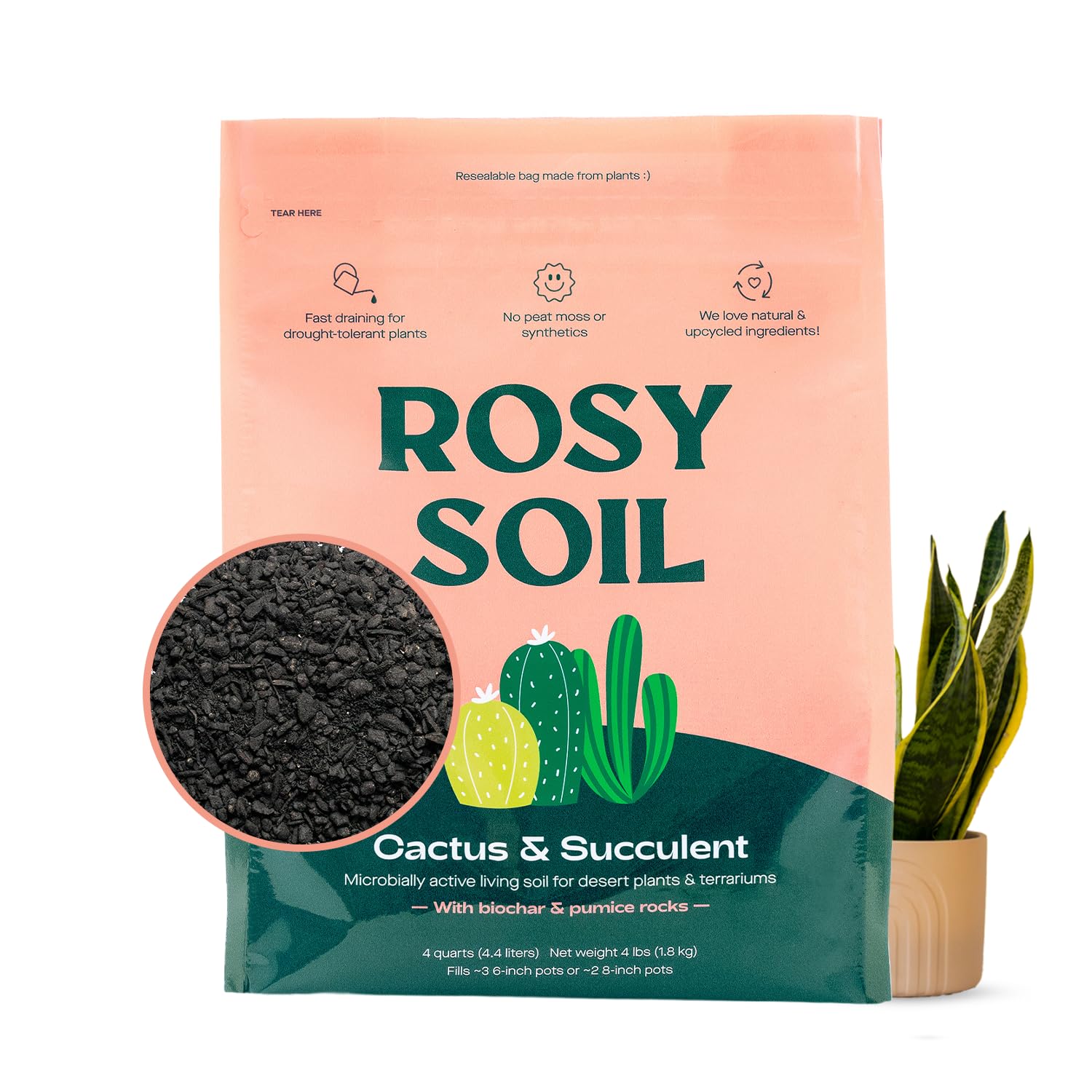
Rosy Soil completely skips peat moss, which is a major win for String of Turtles growers. Peat holds water and compresses over time, two properties that directly oppose what this plant needs. Instead, the mix relies on chunky bark fines, worm castings, and a pre-loaded microbial ecosystem that feeds roots without synthetic boosters.
The texture stays loose and airy — users describe it as “chunky” rather than dusty, which creates the macro-pores needed for rapid drainage. The worm castings provide a slow-release nutrient source that supports the plant over several months without the risk of fertilizer burn on tender roots.
The bag is resealable and sustainably packaged, though some owners find it slightly damp on opening and recommend adding extra perlite or bonsai soil to adapt it for the most sensitive trailing succulents. For growers who value organic, peat-free ingredients and root microbiome health, this is a top-tier choice.
What works
- Peat-free formula prevents moisture retention and compaction
- Pre-loaded beneficial microbes and worm castings support root health
- Chunky, airy texture promotes excellent aeration
What doesn’t
- May need additional grit for String of Turtles specifically
- Resealable bag can be difficult to close tightly
3. Bonsai Jack Gritty Mix

Bonsai Jack’s trademarked Gritty Mix is built for plants that demand “dry feet,” and String of Turtles fits that description perfectly. The blend of Bonsai Block, Monto Clay, and Pine Coir creates particles that water cannot cling to — the mix drains so aggressively that you must soak the pot weekly to keep any moisture in the root zone.
The optimized pH of 5.5 is ideal for acid-loving succulents and encourages vibrant leaf coloration. The inorganic clay components also resist breaking down over time, meaning the structure stays porous for years rather than compacting into a dense sludge like peat-based soils do.
The biggest consideration is the watering rhythm adjustment. First-time users often underwater because the surface dries so fast. Owners report needing to deeply soak twice a week in warm conditions. The bag is also noticeably expensive per quart, making it best suited for collectors with a few high-value plants rather than mass repotting.
What works
- Ultra-fast drainage eliminates any risk of root rot
- Particle structure remains stable for years without compaction
- Optimized pH 5.5 supports vibrant leaf color and growth
What doesn’t
- Requires frequent watering due to rapid drying
- Very expensive per quart compared to other options
4. Hoffman Organic Cactus and Succulent Soil Mix

Hoffman’s mix has been a steady performer for succulent growers for years, and it works well for String of Turtles with one caveat — it benefits from additional grit. The base is primarily compost and peat moss, which drains reasonably well on its own but can hold moisture longer than ideal for this plant’s shallow roots.
Owners consistently report that this mix solved persistent fungus gnat problems they experienced with other soils. The low content of decomposing wood matter and the fast-draining structure leave less habitat for gnats to breed. Several users mentioned that adding perlite or orchid bark transformed it into an excellent custom blend for trailing succulents.
The value is strong for the volume, and the ready-to-use convenience means you can repot immediately. For growers willing to do a 50/50 mix with pumice or lava rock, this becomes a budget-friendly base that rivals pricier specialty blends.
What works
- Effectively prevents fungus gnat infestations
- Very affordable for the 4-quart bag size
- Light, fluffy texture straight out of the bag
What doesn’t
- Too moisture-retentive for String of Turtles as-is
- Requires amendment with perlite or pumice for optimal drainage
5. DUSPRO 7-in-1 Succulents Potting Mix
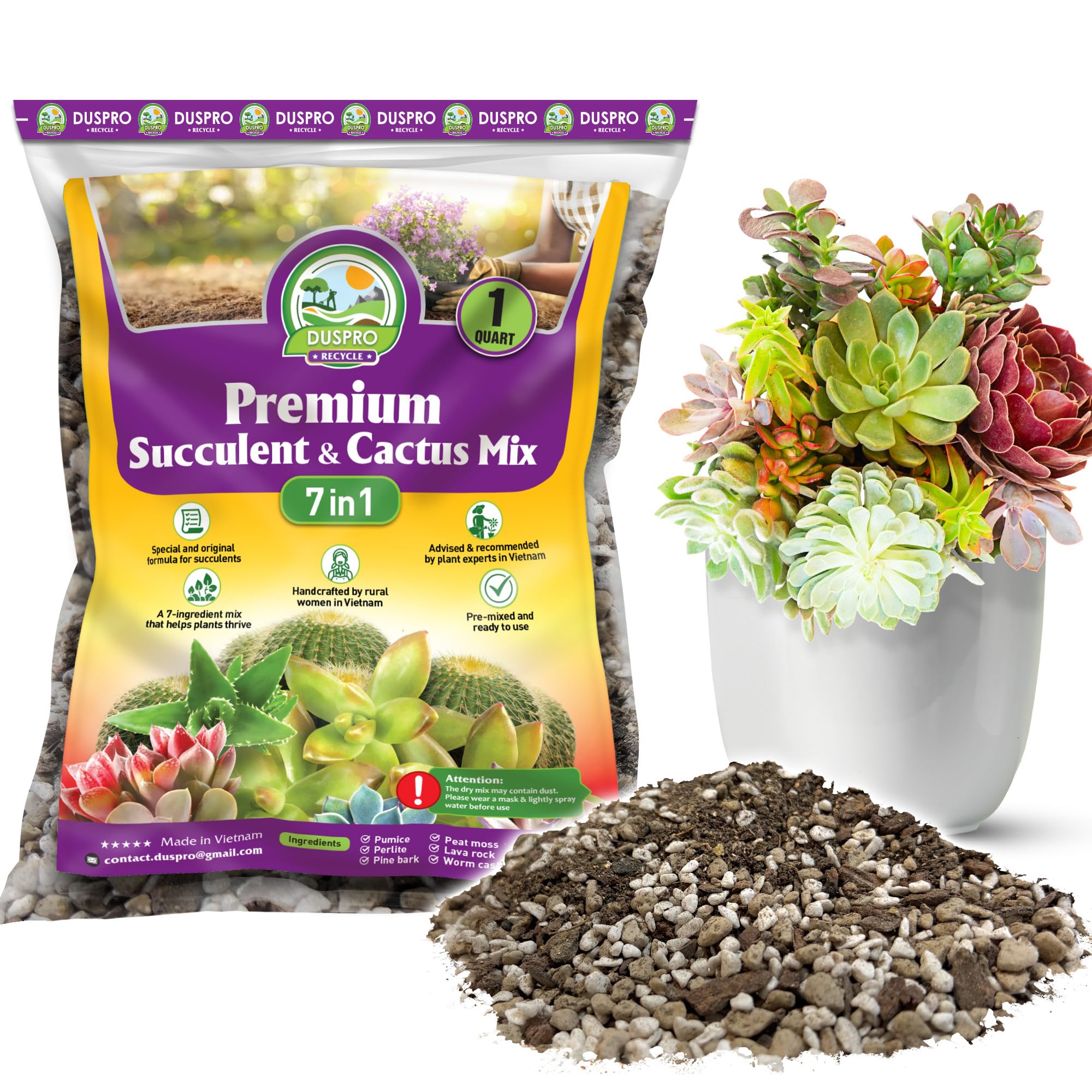
DUSPRO packs perlite, pumice, lava rock, peat moss, pine bark, worm castings, and vermiculite into one bag — a broad-spectrum blend that covers multiple succulent types. For String of Turtles, the lava rock and pumice provide the drainage backbone, while the worm castings add a gentle nutrient boost that benefits slow-growing peperomias.
The mix arrives slightly dusty and requires a good shake or stir before use, as ingredients settle during shipping. Once homogenized, it drains well, though the peat and vermiculite component means it holds more moisture than pure gritty blends. Owners of desert cacti found it ideal, while succulent growers noted it works best when allowed to dry completely between waterings.
The small bag size (1 quart) is perfect for a single repotting session, but the price-per-quart is higher than larger bags of simpler mixes. It’s a decent one-stop solution for a mixed succulent collection, though String of Turtles purists may want to cut it with extra pumice.
What works
- Seven diverse ingredients cover a wide range of succulent needs
- Worm castings provide slow-release, gentle nutrition
- Lava rock and pumice create excellent aeration channels
What doesn’t
- Ingredients separate during shipping; needs mixing before use
- Vermiculite and peat retain more moisture than ideal for String of Turtles
6. Avalution Lava Rock & Pumice Gritty Mix

Avalution’s blend of horticultural lava rock and pumice is not a standalone soil — it’s a precision amendment designed to be mixed into other bases. For String of Turtles growers who want full control over their blend, this pure grit mix lets you dial in exactly how much drainage your current soil needs.
The particles are uniform and clean, though they arrive with a fine dust coating that requires thorough rinsing before use. Once washed, the stones reveal subtle colors that work beautifully as a top dressing or as a primary drainage layer. Owners successfully mix it with coir for moisture retention or use it pure for semi-hydro setups with succulents.
A single bag stretches far when used as an amendment rather than a full potting medium. For anyone building a custom mix for String of Turtles, this is the raw material to blend with a low-organic base like coco coir or pine fines, giving you complete control over the final drainage rate.
What works
- Provides professional-grade, uniform drainage particles
- Versatile as a soil amendment, top dressing, or semi-hydro medium
- Stones are visually appealing when used as a decorative layer
What doesn’t
- Not a standalone potting mix; requires blending with organic base
- Needs thorough rinsing before use to remove embedded dust
7. Miracle-Gro Cactus, Palm & Citrus Potting Mix

Miracle-Gro’s cactus formula is the most widely available option on this list and the lowest cost per quart by a wide margin. The fast-draining formula is enriched with plant food, giving it a growth boost that helps newly potted String of Turtles establish quickly — but only if you amend it with significant extra drainage material.
On its own, this mix is finer and denser than dedicated succulent blends. Owners consistently report best results when cutting it 50/50 with perlite, pumice, or the Avalution gritty mix. Used straight, it holds enough moisture to risk root issues for String of Turtles, especially if the pot doesn’t have excellent airflow.
The 3-pack provides enough volume for an entire collection of succulents at a fraction of the cost of boutique soils. For budget-conscious growers willing to do a custom blend, this makes a solid base. For those seeking a ready-to-use soil specifically for String of Turtles, it needs work to hit the right drainage level.
What works
- Extremely affordable per quart, especially in the 3-pack
- Widely available and consistent formulation
- Enriched plant food supports initial growth after repotting
What doesn’t
- Too moisture-retentive for String of Turtles without heavy amendment
- Fine texture compacts faster than gritty specialty mixes
Hardware & Specs Guide
Particle Stratification
The biggest determinant of soil performance for String of Turtles is how particle sizes sort inside the pot. Mixes with a wide range — from fine dust to large bark chunks — create layers as water settles them, with fine particles sinking to the bottom and forming a moisture-trapping seal around the root zone. Uniform particle size (1/8 to 1/4 inch) prevents this stratification and ensures consistent drainage throughout the pot’s depth.
Cation Exchange Capacity (CEC)
CEC measures a soil’s ability to hold and exchange nutrients. Inorganic aggregates like pumice and calcined clay have low CEC, meaning they provide almost no nutrient retention. Organic components like worm castings and pine coir have high CEC. For String of Turtles, a moderate CEC achieved through a small percentage of organic amendments is ideal — enough to buffer nutrient availability without retaining excess moisture like high-CEC peat does.
FAQ
Can I use regular potting soil for my String of Turtles?
What particle size is best for String of Turtles soil?
Should I add more drainage to a commercial cactus mix?
Final Thoughts: The Verdict
For most gardeners, the soil for string of turtles winner is the Tinyroots Succulent Soil because its fine, uniform grit provides the perfect balance of rapid drainage and root support without requiring any amendments. If you want a living soil with microbial benefits, grab the Rosy Soil Cactus & Succulent Mix. And for aggressive drainage that makes overwatering nearly impossible, nothing beats the Bonsai Jack Gritty Mix.