
Transforming a tired, patchy lawn into a dense green carpet starts below the surface. The wrong soil leaves grass struggling against compaction, poor drainage, and nutrient starvation—no amount of premium seed can fix a dead foundation.
I’m Rikta — the co-founder and writer behind Lawn Gear Lab. I’ve spent hundreds of hours cross-referencing organic amendments, aeration specs, and cubic-foot coverage data to separate the lawn-building essentials from the bagged filler.
Whether you are patching bare spots, top-dressing a full yard, or launching a new lawn from seed, the right foundation determines success. This guide pinpoints the soil for lawn that delivers measurable results without wasted money.
How To Choose The Best Soil For Lawn
Selecting the right soil is more than grabbing the cheapest bag. Your lawn needs a specific balance of texture, organic content, and biological activity to establish deep roots and resist drought. Here are three factors that separate effective soil from inert filler.
Texture and Aeration
Grass roots require oxygen and room to spread. A soil that is too heavy with clay compresses into a brick, suffocating roots and pooling water. Sandy soil drains too fast, letting nutrients wash away. The ideal lawn soil has a loamy feel — crumbly, dark, and porous. Products that include perlite, sand, or coco coir create the air pockets grass needs to breathe.
Organic Matter and Nutrient Load
Organic material feeds the microbes that break down nutrients into forms roots can absorb. Compost, earthworm castings, kelp meal, and feather meal are signs of a biologically active mix. A soil that is just dirt with no organic content forces you to fertilize more frequently. Look for a visible dark color and a rich earthy smell — that is the signature of properly composted ingredients.
Mycorrhizae and Biological Boosters
Endo and ecto mycorrhizae are beneficial fungi that attach to grass roots and dramatically expand their reach for water and phosphorus. Some premium lawn soils inoculate the mix with these fungi, giving new seed a head start. If you are seeding or laying sod, a mycorrhizae-enhanced soil can mean the difference between a thin stand and a full lawn in one season.
Quick Comparison
On smaller screens, swipe sideways to see the full table.
| Model | Category | Best For | Key Spec | Amazon |
|---|---|---|---|---|
| Espoma Organic Lawn Soil | Organic Topsoil | Seeding and sod establishment | 1 cu ft, endo/ecto mycorrhizae | Amazon |
| PlantBest Coco Topsoil Block | Coco Coir Block | Overseeding large areas | 11 lb block expands to 19.8 gal | Amazon |
| Michigan Peat Baccto Top Soil (50 lb) | Traditional Topsoil | Top-dressing and transplant mixtures | 50 lb, reed sedge peat and sand | Amazon |
| R&M Organics Premium Compost | Manure Compost | Restoring nutrient-depleted patches | 0.31 cu ft, dairy cow manure | Amazon |
| UBICON Coco Coir Bricks (4-pack) | Coco Coir Brick | Compact storage and indoor/outdoor use | 4 bricks expand to 10 gal total | Amazon |
| Lancaster Greensand | Mineral Amendment | Improving clay or sandy soil structure | 20 lb, glauconite greensand | Amazon |
| Michigan Peat Baccto Potting Mix (2×50 lb) | Potting/Lawn Mix | Large garden beds and heavy use | 100 lb total, perlite included | Amazon |
In‑Depth Reviews
1. Espoma Organic Lawn Soil
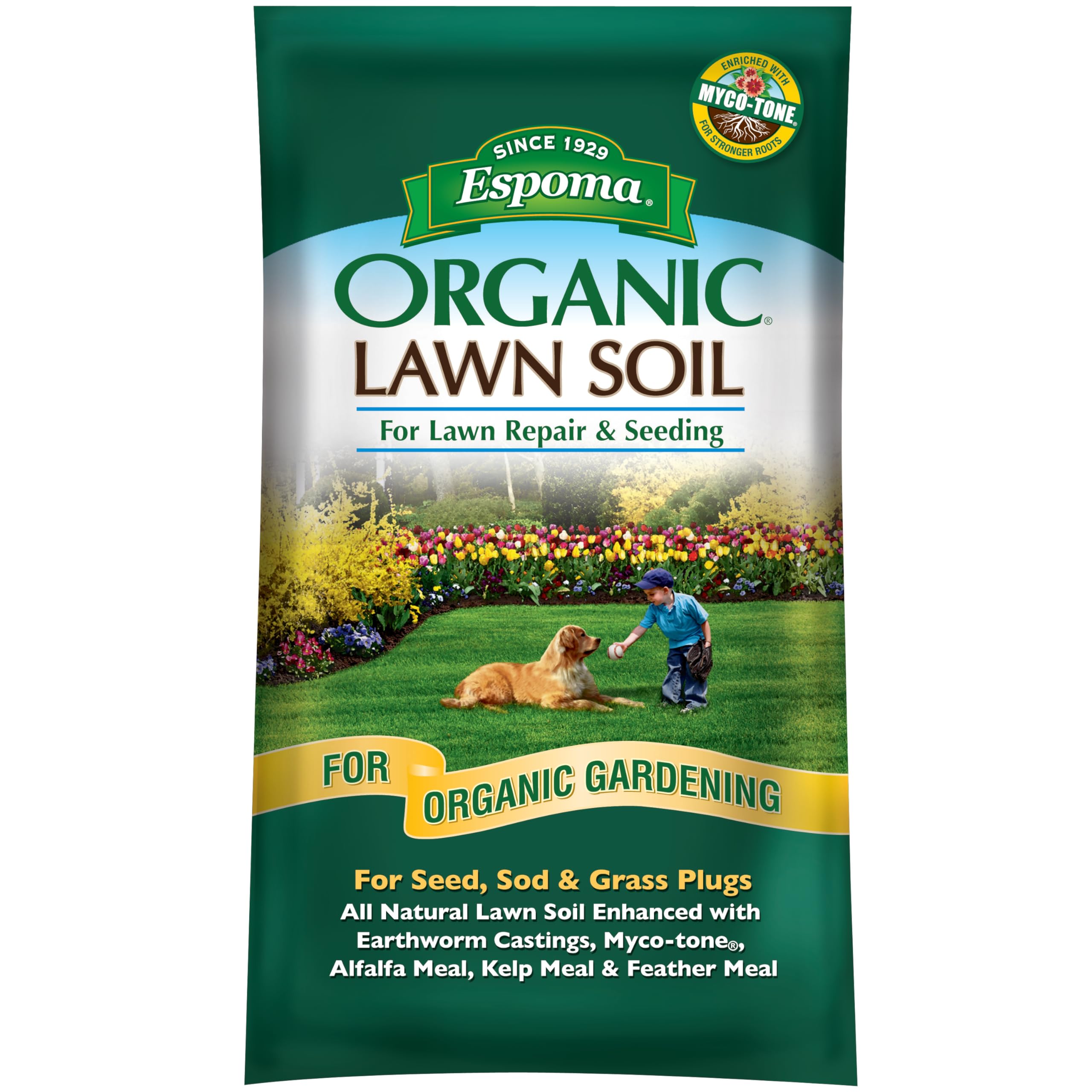
The Espoma Organic Lawn Soil is purpose-built for seeding and sod installation, not as a generic fill. It blends natural ingredients with earthworm castings, alfalfa meal, kelp meal, and feather meal, creating a slow-release nutrient profile that feeds new grass without burning tender roots.
The standout feature is Myco-Tone — a proprietary blend of endo and ecto mycorrhizae that colonize root systems and boost water and phosphorus uptake. This biological head start gives seed a measurable advantage during the critical first few weeks. The texture is finely screened with no large debris, and the earthy smell confirms it is fully composted.
At 1 cubic foot per bag, a single bag covers around 4 to 6 square feet at a 2-inch depth, so plan your coverage before ordering. The price per cubic foot is competitive given the organic certification and the added mycorrhizae — an investment that reduces the need for synthetic starter fertilizers.
What works
- Ready-to-use for sod or direct seeding
- Rich organic feed blend supports germination
- Mycorrhizae improve root establishment
What doesn’t
- Coverage is modest per bag for large lawns
- Premium price point compared to plain topsoil
2. PlantBest Coco Topsoil Compressed Block
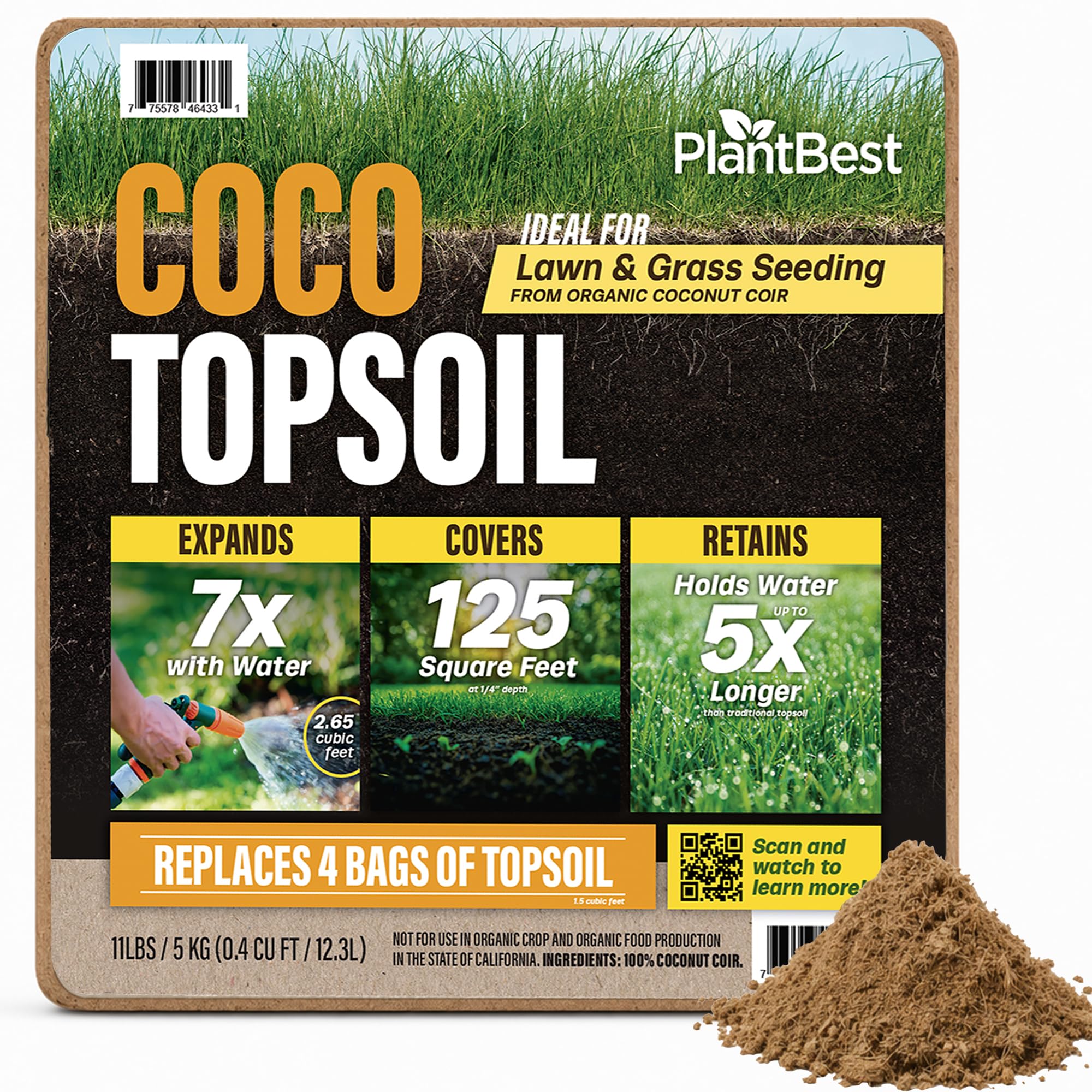
The 11-pound compressed block from PlantBest replaces four standard bags of topsoil after hydration. It expands to nearly 20 gallons and covers up to 125 square feet at a quarter-inch depth — ideal for overseeding, patching bare spots, or top-dressing a new lawn. The logistics advantage is real: one block is far easier to carry, store, and transport than four bulky bags.
This is a peat-free organic coconut coir product, so it is sustainably sourced and naturally resistant to fungal spores and weed seeds. Coir holds water up to five times longer than traditional topsoil, which keeps grass seed consistently hydrated during the germination window and reduces the watering frequency required.
Some users report that the block can leave hard clumps if not fully hydrated with warm water and broken apart early. A few minutes of manual mixing during expansion solves this. The end result is a fluffy, aerated medium that improves drainage and root penetration in compacted yards.
What works
- Outstanding coverage-to-weight ratio
- Superior water retention for germination
- Lightweight storage and transport
What doesn’t
- Requires hydration and mixing before use
- Can form persistent clumps if water is cold
3. Michigan Peat Company Baccto Top Soil (50 lb)

Michigan Peat’s Baccto Top Soil has earned a dedicated following among lawn owners who need a clean, dark, loamy blend for top-dressing and transplant work. The mix of reed sedge peat, sand, and screened organic matter creates a texture that loosens heavy clay and adds body to sandy ground without becoming muddy.
The 50-pound bag size is practical for medium-scale projects — users consistently describe it as free of the large sticks, rocks, and plastic debris that plague cheaper bulk soils. It arrives ready to use, with no need to sift. The moisture retention is excellent, which helps lawns stay hydrated between rain events.
A minority of bags contain small twigs that require manual removal, though this is less common than with bargain-brand topsoils. The price sits at a premium for topsoil, but frequent buyers note that the quality jump over generic fill is significant enough to justify the cost for finishing work and seed beds.
What works
- Dark, clean texture with minimal debris
- Balances moisture and aeration well
- Excellent for top-dressing lawns
What doesn’t
- Occasional twigs require sifting
- Heavy 50-lb bag is a workout to carry
4. R&M Organics Premium Organic Compost (10 lb)
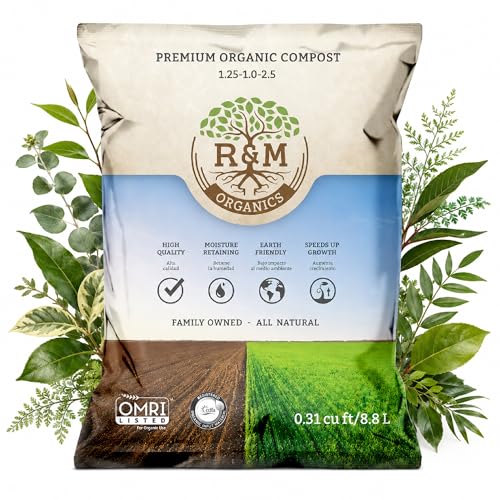
R&M Organics delivers a concentrated dairy cow manure compost that functions as a soil amendment rather than a standalone growing medium. The fully composted material has a fine, clump-free texture and, critically, a low odor that allows indoor and outdoor use without unpleasant smells typical of raw manure.
The compost improves moisture retention and introduces beneficial microbial life to depleted soil. Users report reviving struggling plants — including azaleas damaged by roof-cleaning chemicals and tomato plants showing yellow leaves inside a planter — within a week of application. The 5:1 mixing ratio means a small bag goes further when blended into existing soil.
At 10 pounds, this is a targeted amendment, not a bulk topsoil. It works best as a quarter-inch top dressing or mixed into the planting hole. For full-lawn coverage, you will need multiple bags or a larger-scale compost source, but for patching and enriching specific areas, the potency is hard to match.
What works
- Rapid visible results on stressed plants
- Low odor suitable for indoor use
- Fine texture mixes easily
What doesn’t
- Small bag size limits large-area applications
- Higher cost per cubic foot than bulk compost
5. UBICON Easy Use Coco Coir Bricks (4-Pack)

UBICON’s 4-pack of coco coir bricks solves the storage problem that plagues bagged soil. Each brick is lightweight and compact until hydrated, expanding into a total of 10 gallons of growing medium. The bricks are odorless, pH-balanced, and free from synthetic chemicals, weed seeds, and fungal spores.
The coir provides excellent aeration and water retention for grass seed and lawn patches. Users note the bricks take a short time to fully absorb water — breaking them apart early speeds the process. The end result is a fluffy, consistent medium that supports root development without compaction. The bricks also serve as erosion control and pet bedding, adding versatility.
While 10 gallons total is sufficient for small patch repairs and container top-dressing, covering substantial lawn areas requires multiple packs. The hydration step adds a minor delay compared to ready-to-use bagged soil. For gardeners who value stacking bricks in a corner over hauling heavy bags, this trade-off is worthwhile.
What works
- Extremely compact storage before use
- pH-balanced and free of contaminants
- Good aeration and moisture retention
What doesn’t
- Needs time to fully hydrate
- Limited total volume for large lawns
6. Lancaster Agriculture Greensand (20 lb)

Greensand is not a standalone soil — it is a mineral amendment that changes the physical and chemical nature of your existing dirt. Lancaster Agriculture’s 100% natural glauconite greensand is rich in slow-releasing potassium, iron, and trace minerals that clay and sandy soils often lack. The application rate is flexible, ranging from 5 to 50 pounds per 1,000 square feet depending on your soil test.
The benefits are structural as well as nutritional. The sand particles loosen compacted clay, improving drainage and root penetration, while simultaneously helping sandy soils hold more moisture. Texas gardeners report visible new growth on Live Oak and Crape Myrtle after incorporating greensand into heavy clay. The single application lasts a full season because the minerals release slowly via microbial activity.
This is not a product you spread alone — it must be worked into the top few inches of soil or mixed into potting blends. For a quick surface fix, it is not the right tool. For long-term soil rehabilitation, it is one of the most effective and cost-efficient amendments available.
What works
- Improves both clay and sandy soil structure
- Slow-release potassium feeds for months
- Strong results on deeply compacted lawns
What doesn’t
- Requires incorporation into soil, not a topdressing alone
- Slow action — not a rapid green-up solution
7. Michigan Peat Baccto All Purpose Potting Mix (2×50 lb)
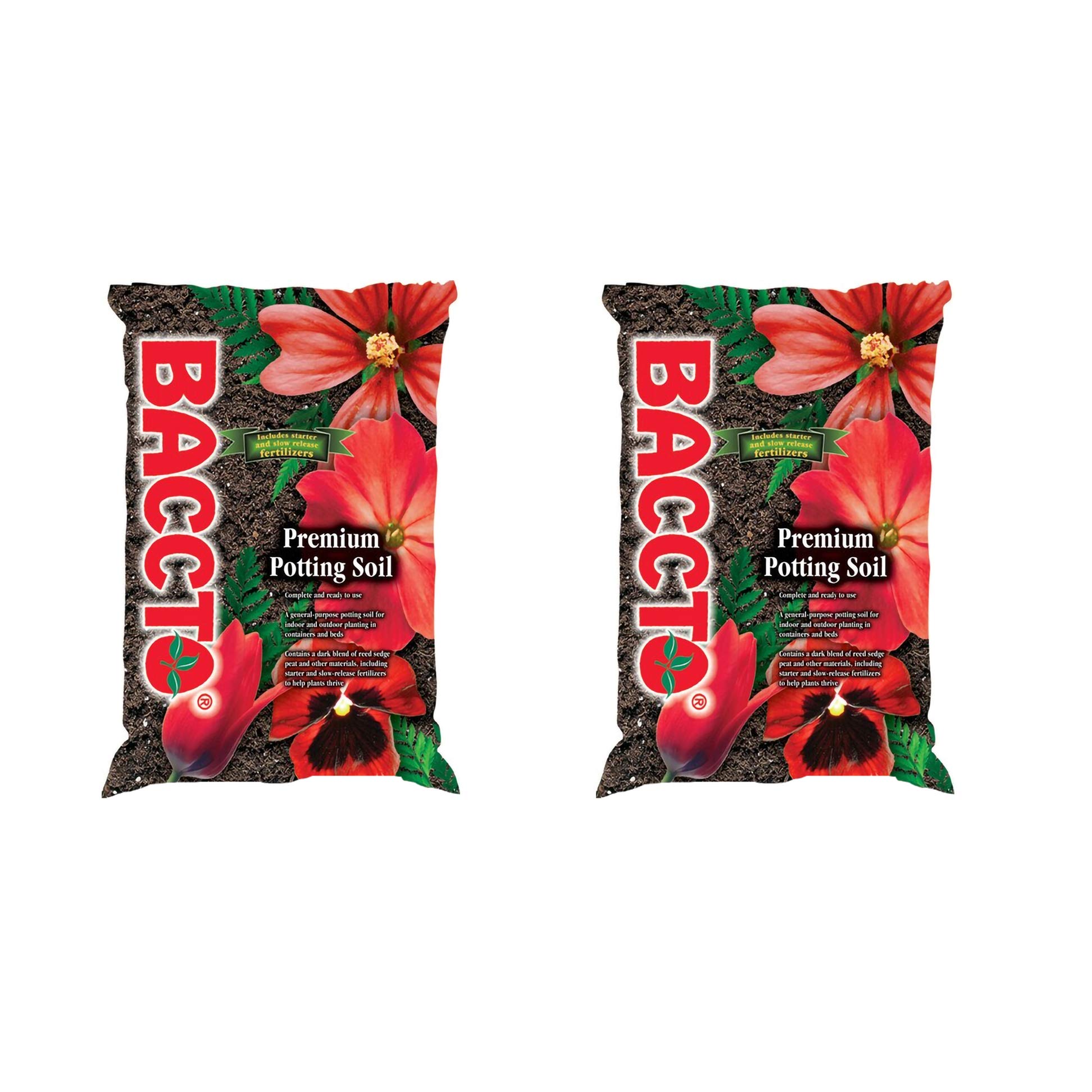
This 100-pound bundle from Baccto gives you two 50-pound bags of the same quality reed sedge peat, perlite, and sand blend that the single-bag version offers, at a lower per-pound cost. It is designed for gardeners covering raised beds, large planting areas, or combining with native soil for full-lawn renovation.
The inclusion of perlite improves drainage and keeps the mix loose, reducing the risk of compaction common with pure topsoil. Users report the mix works well for container vegetable gardens and flower beds as well as lawn top-dressing. The shipping weight is substantial, so delivery logistics matter, but the value per cubic foot is strong for the volume.
A recurring user note involves fungus gnats emerging from the bags after opening. This is a common issue with any soil that contains organic peat stored in moist conditions. Aerating the soil and letting it dry slightly before use usually resolves the problem. For the coverage area and price, this remains a solid entry-level option for heavy users.
What works
- Great coverage for the price in bulk
- Perlite adds drainage and aeration
- Screened to a consistent texture
What doesn’t
- Fungus gnats can appear from the bags
- Extremely heavy — two 50-lb bags are hard to move
Hardware & Specs Guide
Mycorrhizae Inoculation
Endo and ecto mycorrhizae form symbiotic relationships with grass roots. The fungi extend the root system’s reach for water and phosphates, reducing transplant shock and speeding establishment. Not all lawn soils include these, but products that do — like the Espoma Organic Lawn Soil — give new seed a measurable biological advantage during the first 30 days.
Coco Coir vs. Peat-Based Mix
Coco coir is a renewable byproduct of coconut processing. It holds water longer than peat moss, resists compaction, and has a neutral pH around 5.5 to 6.8. Peat-based mixes like the Baccto line offer a darker, richer texture and naturally lower pH that suits acid-loving grass species. Coir is lighter to ship and easier to rehydrate than compressed peat blocks.
FAQ
Can I use potting mix instead of topsoil for my lawn?
How much soil do I need to cover a bare patch in my lawn?
Should I test my soil pH before buying lawn soil?
Is greensand safe to use around pets and children?
Final Thoughts: The Verdict
For most gardeners, the soil for lawn winner is the Espoma Organic Lawn Soil because its mycorrhizae inoculation and organic feed blend give new seed the best possible start without synthetic chemicals. If you need massive coverage with minimal weight and storage hassle, grab the PlantBest Coco Topsoil Block. And for rebuilding compacted or nutrient-poor soil over a full season, nothing beats the Lancaster Greensand for structural and mineral correction.