
Specs are compiled from manufacturer listings and verified buyer reviews and can change over time — please confirm the key details on the product page before buying.
Starting vegetable seeds indoors is a moment of pure hope—every tiny sprout feels like a win against the calendar. But hope dies fast when your “potting soil” turns into concrete, or the mix stays soggy and drowns the whole tray. The fix is a true seed starting mix: a light, fluffy, sterile medium designed for one job—getting a seed from dormancy to a strong seedling with zero struggle.
I’m Rikta — the founder and writer behind Lawn Gear Lab. This guide is built by comparing the manufacturers’ published specifications and the patterns across verified customer reviews, so you get each pick’s real strengths and trade-offs instead of marketing spin.
The single biggest decision you make for an indoor garden is choosing the right soil for starting vegetable seeds. A bad mix means weak stems or total failure. The right one rewards you with sturdy, transplant-ready seedlings.
Quick Picks
- Old Potters Germination Mix (24 Quarts) — Best Overall
- Espoma Organic Seed Starter Premium Potting Soil Mix (16 Qt, Pack of 2) — Best Performance
- Hoffman Seed Starter Potting & Planting Mix (10 Quarts) — Best Value
- Soil Sunrise All Natural Seed Starting Mix (8 Quarts) — Premium Blend
- Jiffy Natural & Organic Seed Starting Soil Mix (10 Quarts) — Classic Choice
- ZeeDix 100 Pack 30mm Organic Coco Coir Pellets — Easiest Pick
- Riare 200 Pcs 30mm Organic Coco Coir Seed Starter Soil — High-Volume
How To Choose The Best Soil For Starting Vegetable Seeds
Picking the right mix depends on three things: the particle size, the water-holding ability, and if you want to add your own fertilizer later. Here is what to look for.
Particle Size and Texture
The mix should feel like fine, fluffy crumbs—not like wet sand or chunky bark. Large pieces block tiny roots and create air pockets that dry out the seed. A fine texture lets the seed push through easily and make consistent contact with moisture. Look for mixes described as “fine” or “soilless.”
Moisture Retention vs. Drainage
Seeds need constant moisture to germinate, but they also need oxygen. A mix that holds too much water (like heavy garden soil) will rot the seed before it can sprout. The best mixes use ingredients like peat moss, coco coir, or vermiculite to hold moisture while perlite or coarse sand creates tiny drainage channels.
Nutrient Content
A true seed starting mix has very low or zero fertilizer. The seed itself supplies everything for the first week or two, so young seedlings do not need food. Too much fertilizer burns the tiny roots. Some premium mixes add gentle organic amendments like worm castings or mycorrhizae, but you can buy a plain mix and start liquid fertilizer after the first true leaves appear.
Pellet vs. Bagged Mix
Compressed coco coir pellets are the most convenient option—drop one in water, it expands into a perfect little pot of soil. They are great for small batches or beginners. Bagged mixes give you more volume and control; you can fill any tray or cell and adjust the texture by adding perlite or water.
Quick Comparison
| Model | Best For | Volume | Base Material | Unit Count | Amazon |
|---|---|---|---|---|---|
| Old Potters Germination Mix | Large-scale germinating | 24 Quarts | Peat & Perlite | 768.0 Fluid Ounces | Amazon |
| Espoma Organic Seed Starter | Organic gardening | 16 Quarts (2 bags) | Sphagnum Peat & Perlite | 512.0 Ounce | Amazon |
| Hoffman Seed Starter | Value & reliability | 10 Quarts | Soilless Mix | 128.0 Fluid Ounces | Amazon |
| Soil Sunrise All Natural | Nutrient-rich blend | 8 Quarts | Peat & Coco Coir | 1.0 Count | Amazon |
| Jiffy Natural & Organic | Classic peat-based mix | 10 Quarts | Peat & Vermiculite | 320.0 Ounce | Amazon |
| ZeeDix Coco Coir Pellets | Ease & convenience | — | Coco Coir | 100.0 Count | Amazon |
| Riare Coco Coir Pellets | High-volume pellet use | — | Coco Coir | 200.0 Count | Amazon |
In‑Depth Reviews
1. Old Potters Germination Mix (24 Quarts)
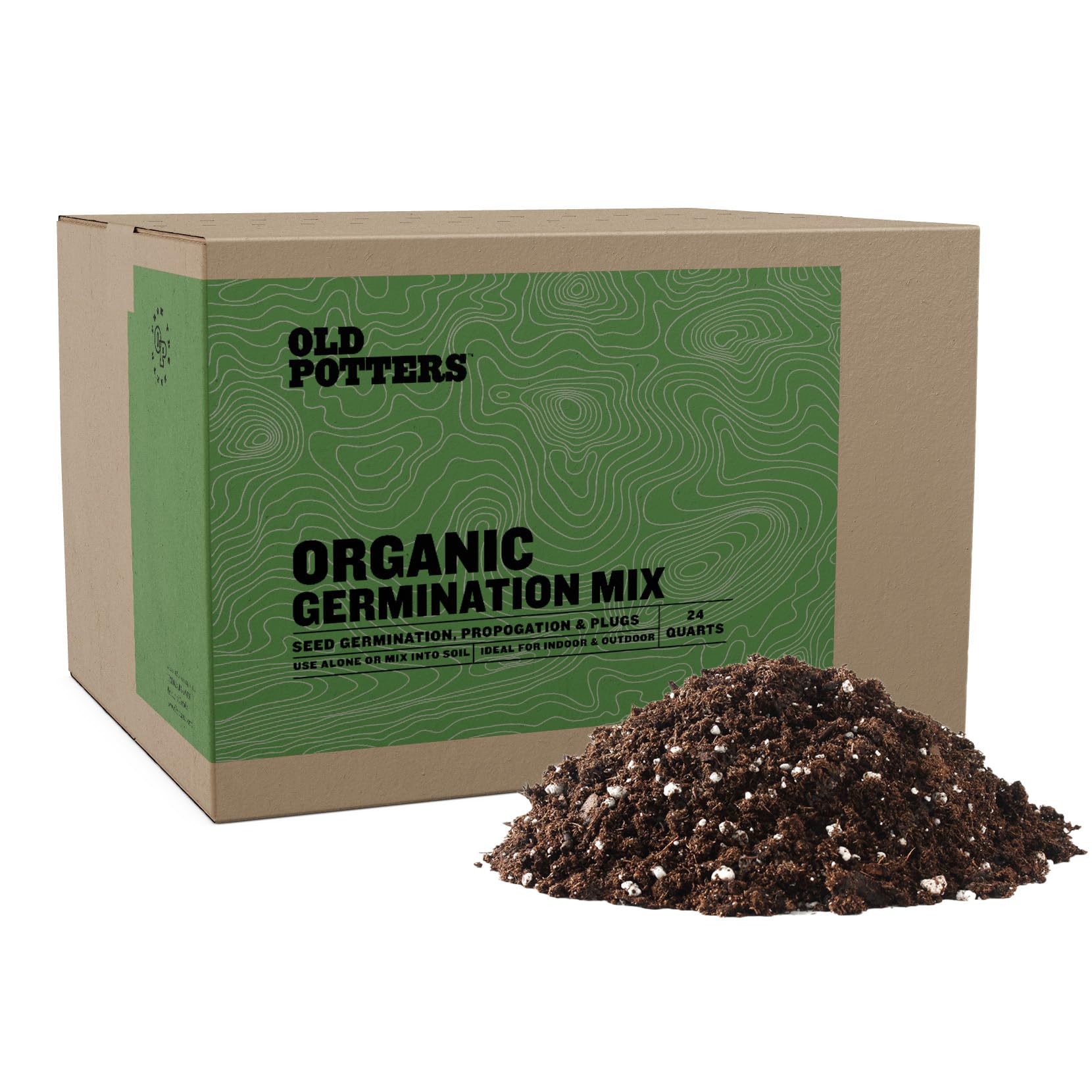
The grower-grade heavyweight that fills big trays without sacrificing texture.
This 24-quart bag is the largest in the lineup, and the fine particle mix (80-90% fine Canadian sphagnum peat moss with perlite and vermiculite) lets you water from overhead or use sub-irrigation without drowning seeds. The manufacturer says it keeps pH (a measure of acidity/alkalinity) in the ideal germination range of 5.4 to 6.3 — that is a critical spec the Jiffy and Hoffman do not guarantee. One reviewer noted they got a 90% germination rate and called it the best success they have had with any mix.
The Old Potters also states its electrical conductivity (a stand-in for salt content) at 1.0-1.5 mmhos/cm — a way of saying it has just enough natural salts to support growth without burning tender roots. The texture is uniformly fine, and buyers report it stays free of fungus gnats when used properly. For anyone starting multiple trays of tomatoes, peppers, or brassicas, this is a professional-grade volume that can last an entire spring.
The per-quart cost is higher than the Hoffman or Jiffy, so you are paying more upfront. But you get a guaranteed pH and a fine mix that needs no adjustment out of the bag.
Why It Dominates
- Massive 24-quart bag for serious sowing
- Fine texture promotes even root growth in plugs and cuttings
- Controlled pH (5.4-6.3) and balanced EC (1.0-1.5 mmhos/cm)
- Contains calcitic and dolomitic limestone for pH stability
The Trade-off
- Heavier and bulkier to store than pellet options
- Higher upfront cost than mid-range options
Your go-to if: you are starting multiple trays of vegetables or flowers and want a professional-grade, fine-textured mix with a balanced pH right out of the bag.
Skip if: you only need a quick batch of 20-30 seedlings; a pellet or smaller bag wastes less product.
2. Espoma Organic Seed Starter Premium Potting Soil Mix (16 Qt, Pack of 2)
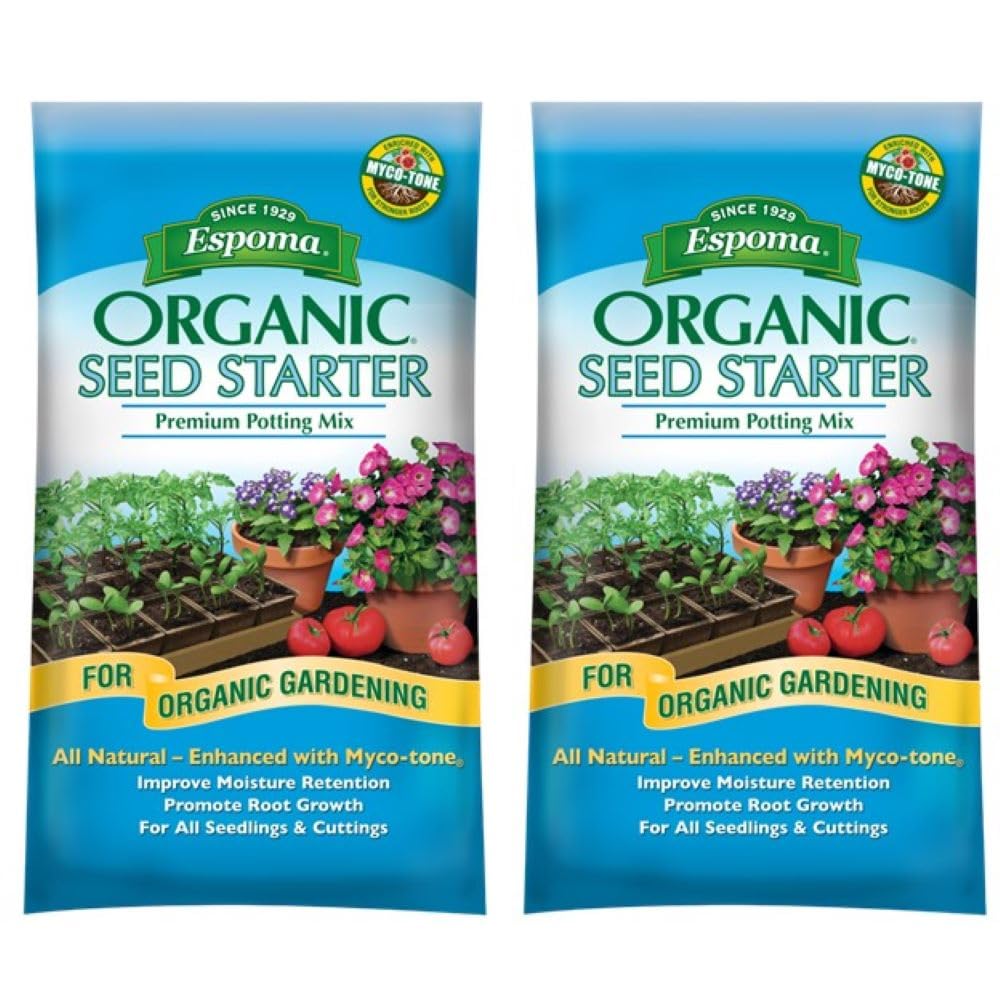
The organic powerhouse that pairs fine texture with a living root booster.
This mix adds a unique biological edge the Old Potters lacks: the brand’s Myco-Tone blend of endo and ecto mycorrhizae — beneficial fungi that attach to roots and help the plant take up water and nutrients. The base is an organic blend of sphagnum peat moss and perlite with yucca extract (a natural wetting agent) and lime to keep pH in check. One buyer called it the “best seed starter I have used” and reported great germination across trays.
The pack contains two bags of 16 quarts each, giving you 32 quarts total. The texture is described as “clean, light, fluffy soil” that drains well but holds moisture, the exact balance for vegetables like peppers and tomatoes. If you want a biological root booster and organic certification, the Espoma is your pick over the Hoffman or Jiffy.
The per-quart price is higher than the Hoffman or Jiffy, and unlike the Old Potters, the brand does not list a specific pH or EC range in the product data.
Why It Stands Out
- Two-bag pack provides a total of 32 quarts for large projects
- Contains Myco-Tone mycorrhizae to boost root development
- Light, airy texture with no synthetic chemicals
What to Know
- A bit more expensive per quart than the Hoffman or Jiffy
- No explicit pH or EC numbers in the product data
Buy this if: you prefer organic gardening and want the root-boosting benefit of mycorrhizae, plus enough volume to fill multiple trays.
Consider another if: you need a very controlled pH for finicky seeds like leeks or parsley; consider the Old Potters mix for its guaranteed 5.4-6.3 pH range.
3. Hoffman Seed Starter Potting & Planting Mix (10 Quarts)

The reliable soilless mix that proves simple ingredients still beat fancy promises.
Hoffman keeps things straightforward: a lightweight soilless blend with six components (including a wetting agent — an ingredient that helps dry mix absorb water quickly). Owners mention it has a “fine consistency” with “no large chunks,” which matters for tiny seeds like carrots or lettuce that must push through easily. One buyer mentioned it gave a 90% germination rate and was “superior to Miracle Gro (which had big wood chunks and dried out faster).”
At 10 quarts, this mix hits a balance for home gardeners starting four to six 10×20 trays. It weighs 4.67 pounds — heavier than the Jiffy (1 pound) for the same 10-quart volume — because a wetting agent and moisture are already blended in. A buyer confirms it absorbs water well with “minimal debris.” This is the same 10-quart volume as the Jiffy, so if your budget is tight, compare cost per quart.
It contains no added fertilizer or mycorrhizae, which is correct for seed starting, but you will need to start feeding after the first true leaves appear.
What Works
- Fine, chunk-free texture that seeds push through easily
- Wetting agent already mixed in for fast water absorption
- Reliable germination rates (90% reported by one buyer)
The Details
- No added fertilizer or mycorrhizae
- Heavier than Jiffy (4.67 lbs vs 1 lb for 10 quarts)
Reach for this if: you want a proven, fine-textured, wetting-agent-enhanced mix that is ready to use immediately and delivers high germination rates.
Look elsewhere if: you want an organic-certified medium or a biological root booster built in.
4. Soil Sunrise All Natural Seed Starting Mix (8 Quarts)
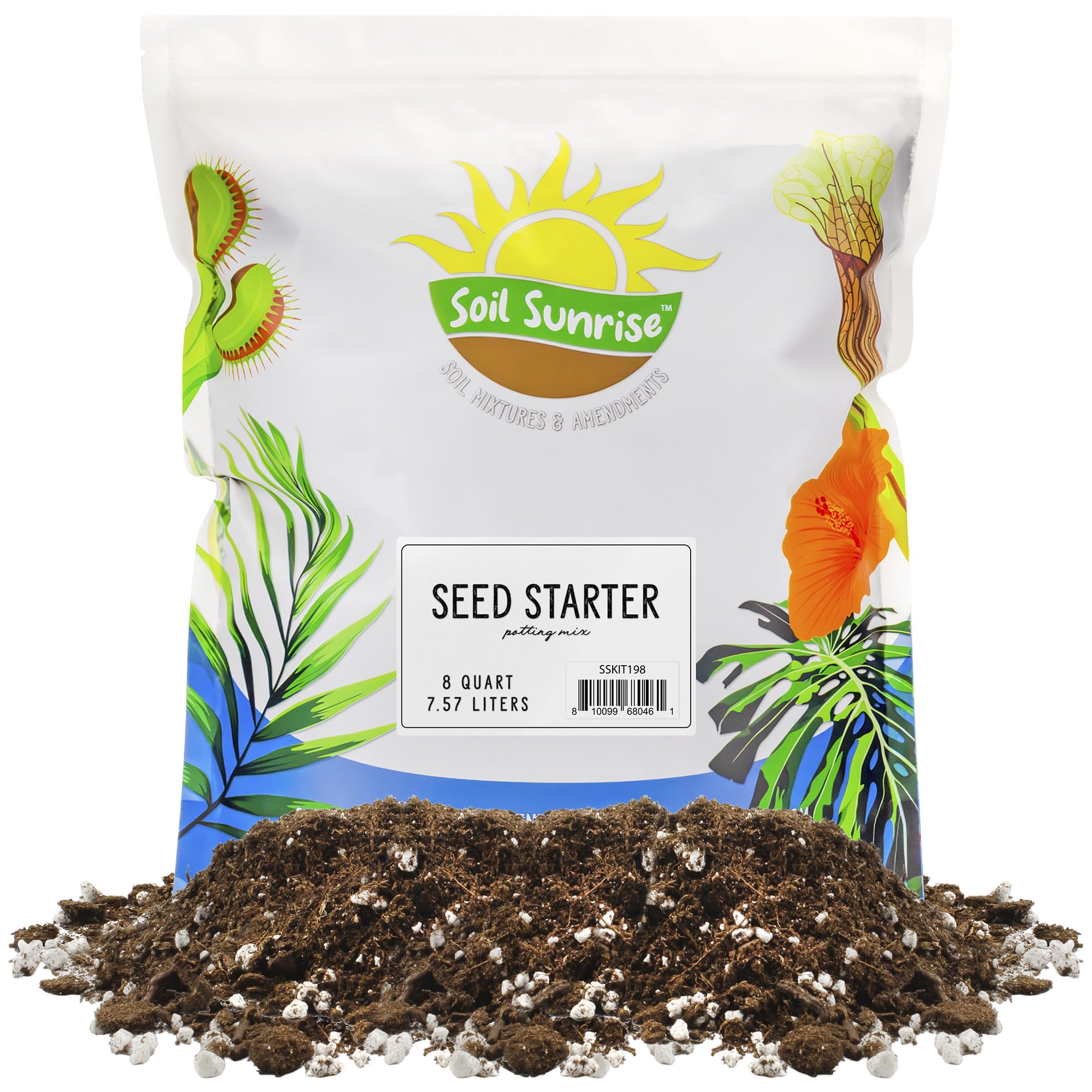
A hand-blended, nutrient-dense mix that feeds seedlings without burning them.
This is the most thoughtfully composed blend on the list: peat moss, perlite, worm castings, coarse sand, coco coir, and lime. The worm castings give a gentle, natural nutrient boost that other seed starting mixes lack, so your seedlings get a small meal right away without chemical burn. The coarse sand adds drainage that the Jiffy and Hoffman do not offer.
Customers note “all seeds sprouted” and “germinate quickly.” One owner reported it is “just the right mix to retain moisture without staying soggy.” At 3.4 pounds, it is lighter than the Hoffman (4.67 lbs) but heavier than Jiffy (1 lb) for a smaller 8-quart bag. The volume is less than the Hoffman or Jiffy at a similar price point, but if you want organic ingredients with built-in nutrients before you ever add fertilizer, this is a fantastic choice for herbs and tender vegetables like basil.
what separates it
- Hand-blended with worm castings for natural, gentle nutrients
- Includes coarse sand for improved drainage
- 100% all-natural, suitable for organic seedlings
Considerations
- Only 8 quarts—less volume than the Hoffman or Jiffy at the similar price
- Not the best value for large-volume seed starting
Choose this for: starting herbs and sensitive vegetables where you want natural nutrients and excellent drainage from day one.
Not ideal if: you need to fill multiple large trays and want the most cost-effective volume per bag.
5. Jiffy Natural & Organic Seed Starting Soil Mix (10 Quarts)

The peat-and-vermiculite classic that generations of gardeners trust for reliability.
Jiffy keeps its formula simple: peat moss, vermiculite (a mineral that soaks up water and prevents soil from packing tight), and lime to maintain healthy pH. The peat can hold up to 20 times its weight in water, and vermiculite can absorb 3-4 times its volume, so the mix stays moist without becoming a brick. At 10 quarts, it is a solid volume, and the bag weighs only 1 pound versus the Hoffman mix at 4.67 pounds for the same 10-quart size, meaning it is very dry and fluffy and will need thorough pre-wetting before use.
Reviewers point out “excellent germination rate, healthy seedlings” and note the “fine texture, good moisture retention.” One customer observed it is “by far my favorite starter soil, holds together when transplanting to larger pots.” The Jiffy is also the most affordable per quart in the bagged category, making it the best entry point for a new gardener who wants something that works without overspending. It contains no fertilizer, so you must start feeding after the first true leaves appear.
Why It Endures
- Fine, consistent texture with no large bark chunks
- Very lightweight (1 lb per 10 quarts)
- Organic, with proven high germination rates
Watch Out For
- No added nutrients—you must fertilize after true leaves appear
- Need to pre-moisten thoroughly as dry peat can be hard to re-wet
Grab this if: you are new to seed starting or want a proven, affordable, organic base mix that is easy to handle.
Pass this by if: you prefer a mix that already contains a wetting agent (like Hoffman) or natural fertilizer (like Soil Sunrise).
6. ZeeDix 100 Pack 30mm Organic Coco Coir Pellets
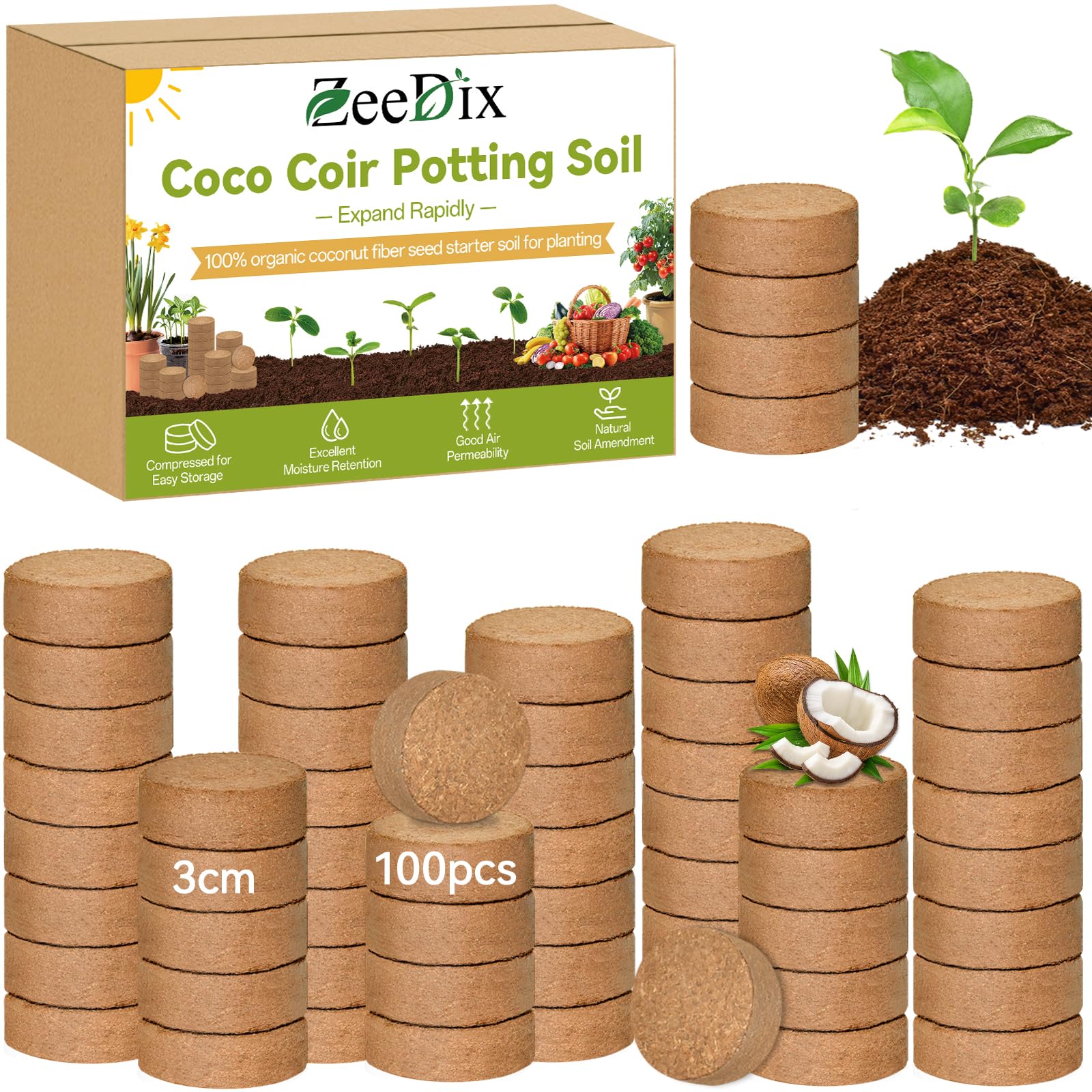
The simplest hands-off path from dry disc to sprouting seedling in one step.
These are the most beginner-friendly option. Drop a dried 30mm disc in water, wait for it to expand, and you have a perfect little cell — no measuring, no mixing. The 100-count pack is enough for a solid round of vegetable seeds without committing to a giant bag. The material is 100% organic coconut fiber with a low EC (low salt content) and balanced pH, so it is gentle on fussy seeds. One user highlighted: “Used a heating pad underneath and within a week, I have happy, healthy peppers and citrus growing.”
The fibrous structure provides good aeration and drainage, reducing the risk of oversaturation. Shoppers say they are “economical, easy, no waste, good growth.” Like all plain coco coir, these pellets have almost no nutrients, so you must start a weak fertilizer within a week or two. Compared to bagged mixes like the Hoffman or Jiffy, the ZeeDix pellets trade bulk volume for individual convenience — ideal for small-scale gardeners who want a tidy seed-starting station.
Why They Work
- No mixing or measuring—just add water
- 100% organic with balanced pH and low EC
- Great aeration and drainage for healthy roots
The Downside
- No inherent nutrients; need to fertilize early
- You get 100 units; larger-scale starts need multiple packs or bagged mix
Perfect for: first-time seed starters, small-space gardeners, or anyone who wants a clean, pre-measured growing medium.
Not for: starting hundreds of seeds at once; for volume, a 24-quart bag like Old Potters is more cost-effective.
7. Riare 200 Pcs 30mm Organic Coco Coir Seed Starter Soil
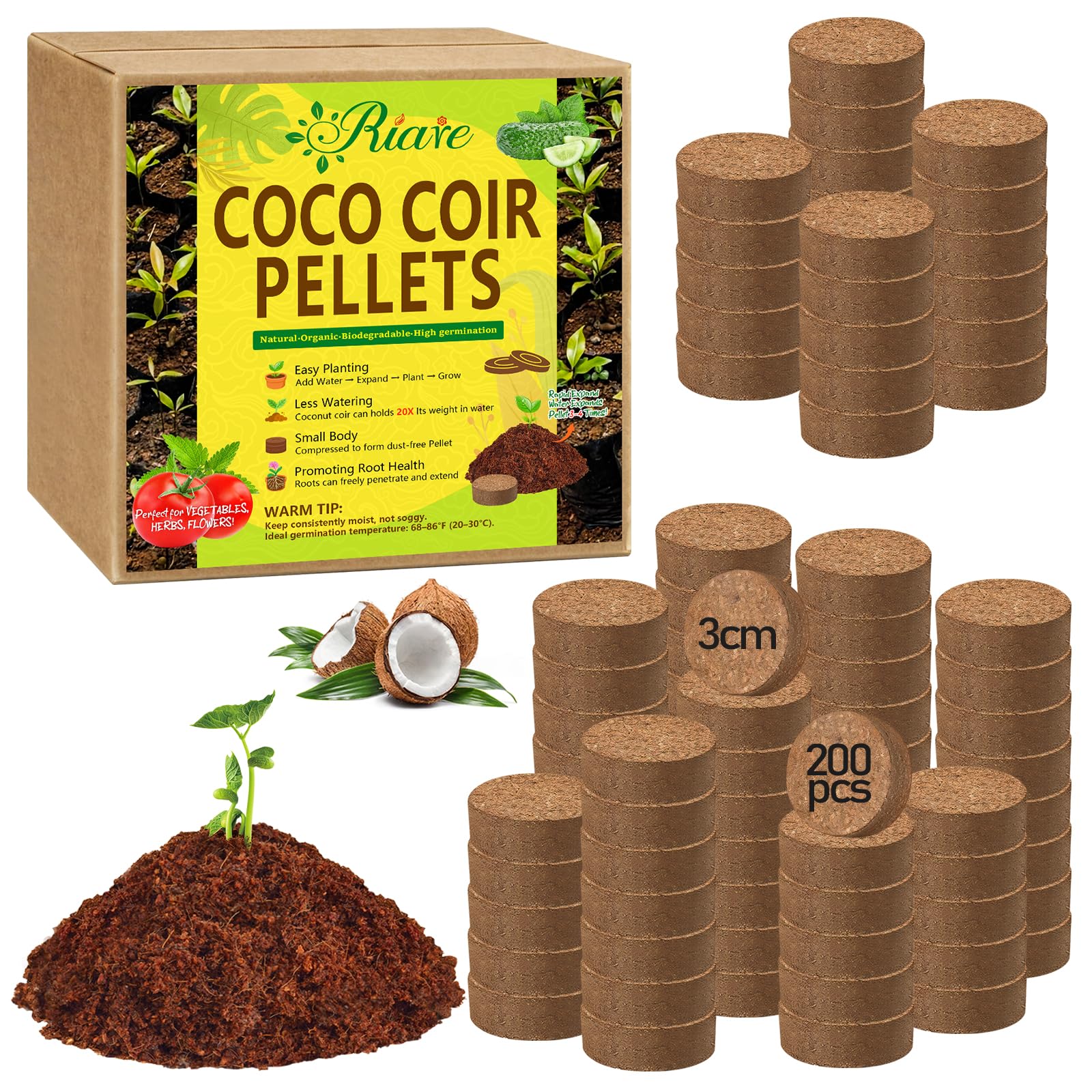
The value-priced pellet pack that gives you 200 starts without the bulk of a bag.
This is the ZeeDix’s bigger sibling, giving you 200 pellets in one purchase. Each pellet is 1.18 inches in diameter and 0.5 inches thick when dry, and buyers report it expands to about four times its soaked size, filling a standard 3-inch cell. The material is the same low-EC, pH-balanced organic coconut fiber with a fine texture for easy root penetration. One shopper added a caution: the pellets “get moldy easily” if over-saturated or in poor air circulation, so avoid sealing them in a dome without ventilation.
The 200-unit count is the highest in the pellet category here. Soil Sunrise is listed at 1.0 Count in the comparison table. But the same nutrient deficiency applies: you must add fertilizer within the first two weeks. If you want to start a large quantity of seeds using individual pods, this is the most cost-effective pellet option in the list. For volume bagged mix, the Old Potters 24-quart bag is a different approach entirely.
What You Get
- 200 pellets in one pack for high-volume starts
- Expands ~4x in water, fills a 3-inch cell
- Fine, lightweight texture for easy root penetration
What To Watch
- No inherent fertilizer
- Some owners mention mold if over-saturated or in poor air circulation
Best for: starting a large quantity of seeds economically using individual pods, such as a community garden or a big spring planting.
Skip if: you prefer a bagged mix that you can tailor to each tray, or if you struggle with moisture control in closed seed-starting domes.
Understanding the Specs
Base Material Matters
The two main base materials are peat moss and coco coir. Peat moss holds up to 20 times its weight in water and provides good aeration, but it is hard to re-wet once completely dry. Coco coir is a sustainable alternative with excellent drainage, resists compaction, and is naturally pH neutral. Both work well, but choose coco coir if you are concerned about peat harvesting or if your tap water is hard and alkaline.
Fine Particle Size
Seed starting mixes should have a uniformly fine texture, created through vermiculite and perlite. Vermiculite can absorb 3-4 times its volume in water and prevents compaction, while perlite creates tiny drainage channels to keep the mix from staying soggy. A mix with large bark chunks is meant for established plants, not seeds. Always look for “fine” or “soilless” on the label.
FAQ
Can I use regular potting soil to start vegetable seeds?
How do I pre-moisten the mix before planting?
Should I add fertilizer to my seed starting mix?
How much mix do I need per seed tray?
Are coco coir pellets better than bagged mix?
Can I reuse my seed starting mix?
What is the difference between peat moss and coco coir?
How often should I water my seedlings?
Final Thoughts: The Verdict
For most buyers, the soil for starting vegetable seeds winner is the Old Potters Germination Mix because it offers a large 24-quart bag of professional-grade, pH-controlled, fine-textured mix that makes germination nearly easy. If you want a nutrient-rich organic blend that feeds your seedlings naturally, grab the Soil Sunrise All Natural Seed Starting Mix. And for convenient, mess-free seed starting without a bag, the standout is the simplicity of the ZeeDix Coco Coir Pellets.
How We Picked
We do not accept paid placement. Every pick is matched to a real buyer and a real use-case; we do not hands-on test units.
Sources & Methodology
Specifications: manufacturer listings and product documentation. Review insights: verified customer reviews, as of July 2026. Pricing: not shown on this page (it changes often); check the current price via the retailer link.
As an Amazon Associate, Lawn Gear Lab earns from qualifying purchases. This does not affect which products we feature.