
Starting seeds indoors is all about giving tiny roots the perfect balance of air and water. Many potting soils are too heavy for delicate seedlings, or they hold so much moisture you end up with damping-off disease instead of green sprouts. The best soil for seedlings is a fine, light, sterile blend that holds just enough water to wake up the seed then lets the roots breathe.
I’m Rikta — the co-founder and writer behind Lawn Gear Lab. This guide is built by comparing the manufacturers’ published specifications and the patterns across verified customer reviews, so you get each pick’s real strengths and trade-offs instead of marketing spin.
Whether you are a first-time gardener or a seasoned grower looking for a reliable medium, I have broken down the top options so you can find the perfect soil for seedlings that matches your seeds, style, and setup.
How To Choose The Best Soil For Seedlings
Walking into the garden center (or scrolling through Amazon) you will see bags labeled “potting mix,” “garden soil,” and “seed starting mix.” They are not the same thing. Regular potting soil often has bark chunks, large perlite, and a heavy base that smothers a tiny root before it gets started. A seed starting mix is finer, lighter, and free of large particles so a sprout can push through without fighting.
Texture and Particle Size
Seedlings have tiny, shallow roots. They need a fine, crumbly texture — think dry coffee grounds with a little grit — not big chunks of wood or bark. A good mix has no pieces larger than about 1/4 inch. Fine particles give the root hair something to grip and let water wick evenly through the tray.
Moisture Retention vs. Drainage
This is the big balancing act. You want the mix to stay damp long enough to soften the seed coat and trigger germination, but you do not want it soggy or waterlogged. Ingredients like peat moss (or coco coir) soak up many times their weight in water, while perlite and vermiculite create tiny air pockets so roots can breathe.
pH Balance and Nutrients
Most seeds germinate best in a slightly acidic to neutral pH range (around 5.5 to 6.5). Many quality mixes include lime (calcitic or dolomitic limestone) to buffer the pH. For nutrients, the rule is “less is more.” Seeds contain their own food for the first week or two, so too much fertilizer can actually hurt them.
Quick Comparison
On smaller screens, swipe sideways to see the full table.
| Model | Category | Best For | Key Spec | Amazon |
|---|---|---|---|---|
| Old Potters Germination Mix | Premium | Maximum volume & root growth | 24 Quarts | Amazon |
| Jiffy Seed Starting Mix | Mid-Range | Reliable everyday germination | 10 Quarts | Amazon |
| Soil Sunrise Seed Starting Mix | Mid-Range | Organic ingredients & versatility | 8 Quarts | Amazon |
| Hoffman Seed Starter | Mid-Range | Consistent texture & moisture | 10 Quarts | Amazon |
| Black Gold Seedling Mix (2 Pack) | Mid-Range | Budget-friendly multi-pack | 8 Quarts (2 pack) | Amazon |
| Purple Cow Organics Seed Starter | Premium | Organic compost & strong roots | 12 Quarts | Amazon |
| Espoma Organic Seed Starter (2 Pack) | Premium | Mycorrhizae & dual bag value | 16 Quarts (2 pack) | Amazon |
In‑Depth Reviews
1. Old Potters Germination Mix with Peat Moss, Fine Perlite & Vermiculite
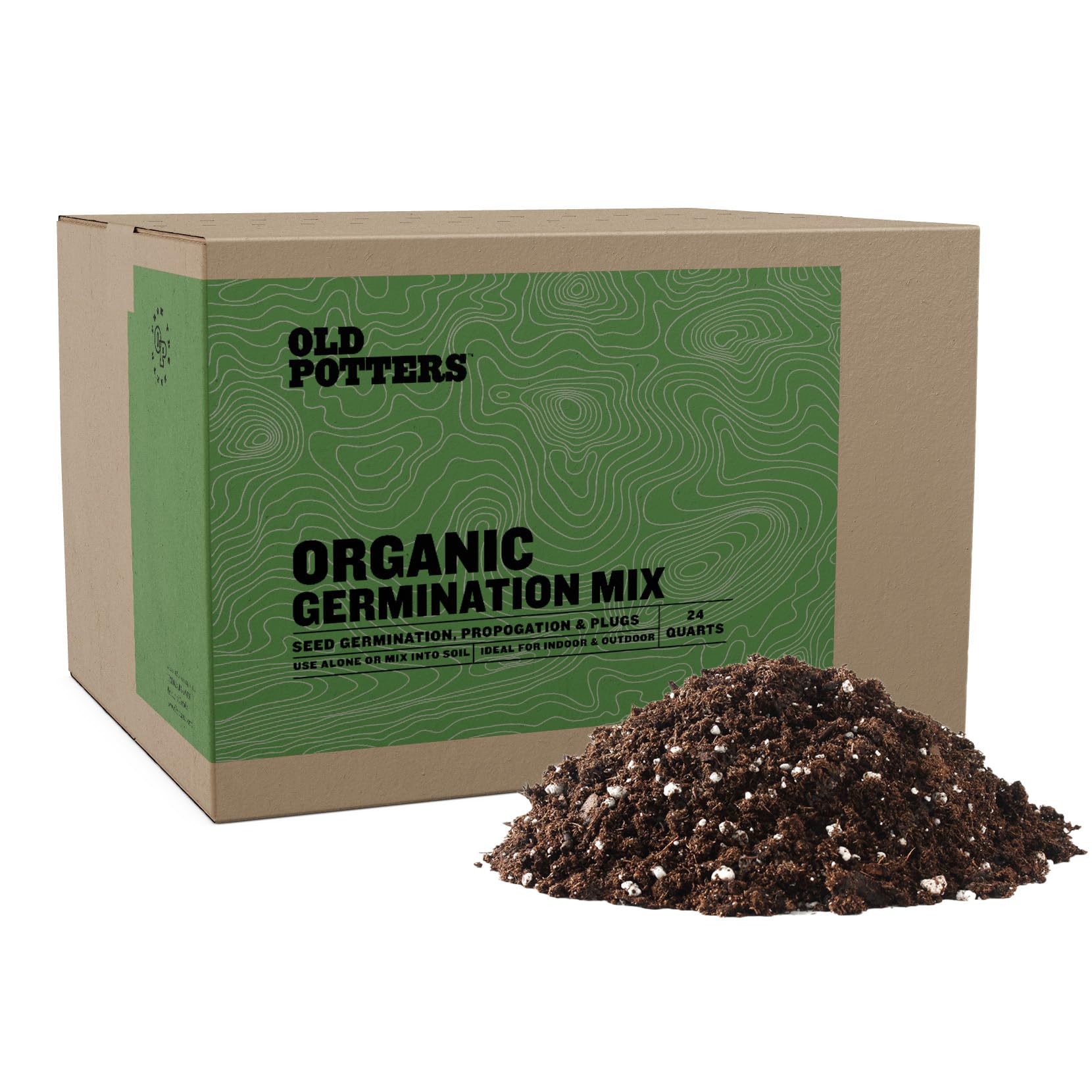
24 quarts — triple the volume of smaller bags — makes this the top pick for anyone setting up a serious indoor propagation station. Buyers report a “90% germination rate” and “no problems with gnats.” The fine blend contains 80–90% Canadian sphagnum peat moss, fine perlite, and vermiculite, creating a light texture that lets tiny roots push through easily.
Added calcitic and dolomitic limestone keeps the pH in the 5.4–6.3 range — the slightly acidic sweet spot where nutrients become available to roots. A wetting agent prevents dry pockets in the peat. One trade-off: this big bag may be excessive if you only need a small flat of peppers.
Choose it over the Jiffy mix for serious volume without sacrificing quality.
Why it’s great
- Highest volume at 24 quarts (3x more than 8-quart mixes)
- Fine, loose texture perfect for root growth
- Contains pH-stabilizing limestone and wetting agent
- Excellent 90% germination rate reported by buyers
Good to know
- Large bag may be excessive for small indoor setups
- No added fertilizer (correct for seed starting, but needs feeding after first leaves)
2. Jiffy Natural & Organic Seed Starting Soil Mix, 10 QT

The Jiffy mix wins on everyday reliability and a texture that buyers love — one reviewer noted it “holds together when transplanting to larger pots,” a big plus when moving fragile seedlings. It holds less than the Old Potters (10 quarts vs 24 quarts) and weighs just 1 pound (a fraction of the 8-pound Purple Cow). But the peat moss can soak up to 20 times its weight in water, so the bag goes further than you would think.
You get a simple blend of peat moss, vermiculite, and lime with no large bark chunks. Reviewers consistently praise the “fine texture” and “excellent germination rate,” calling it “by far my favorite starter soil.” The vermiculite prevents soil compaction and can absorb 3–4 times its volume in water, so your seeds stay damp without sitting in a puddle.
If you want a lightweight, proven mix that sprouted healthy seedlings as fast as any premium option at a friendly price point, choose Jiffy over the Old Potters for smaller batches.
Where it shines
- Fine, consistent texture with no large wood chunks
- High water retention (peat moss absorbs 20x its weight)
- Excellent germination rate verified by many buyers
- Holds together well for transplanting
Worth noting
- 10-quart bag is moderate volume, not the biggest
- Some users felt it was slightly expensive per quart
3. Soil Sunrise All Natural Seed Starting Mix (8 Quarts)
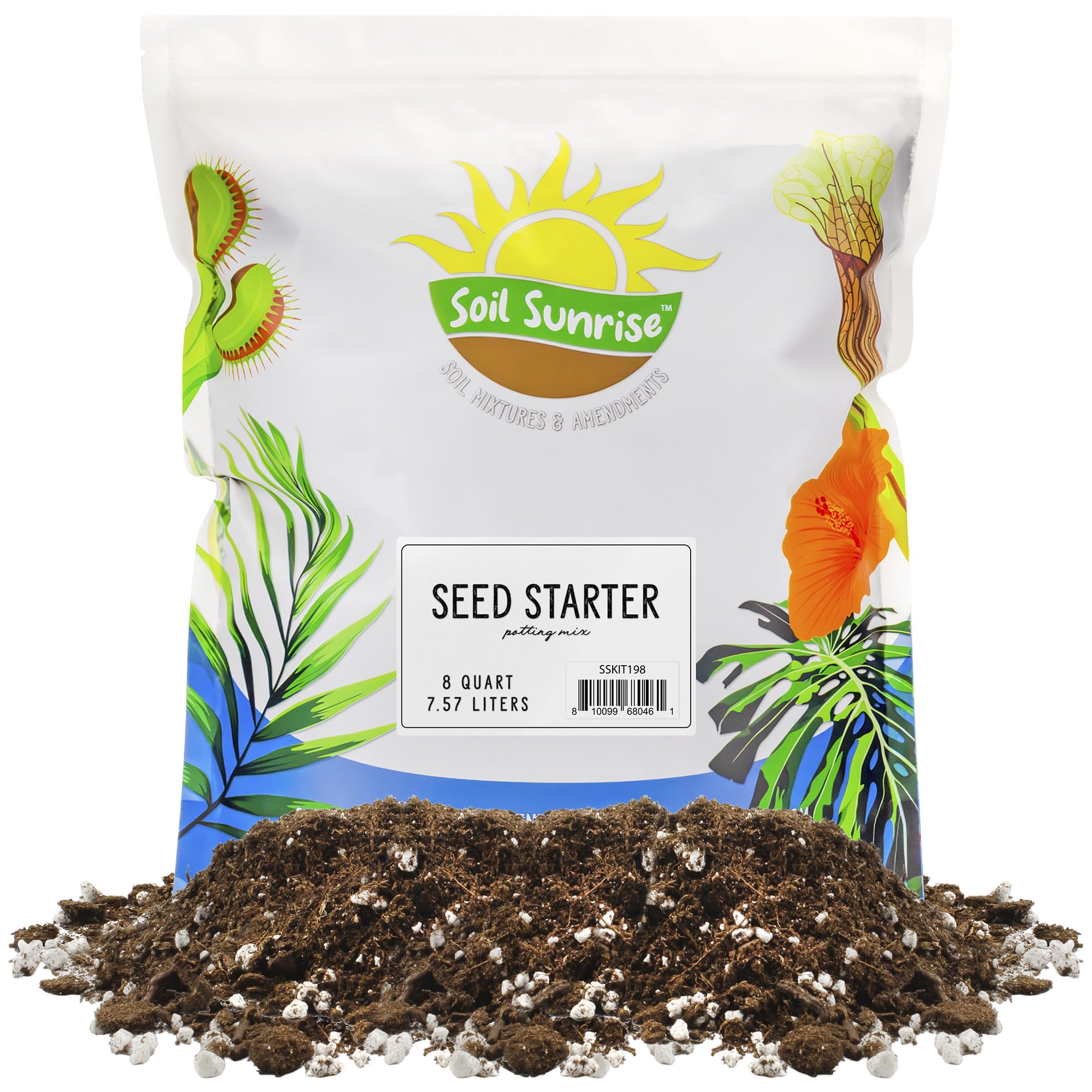
Picture a gardener who wants to use heirloom or organic seeds and needs a mix free of synthetic ingredients. Soil Sunrise is hand-blended with seven all-natural ingredients: peat moss, perlite, worm castings, coarse sand, coco coir (a coconut-husk fiber that holds moisture), and lime. One buyer wrote “my seedlings turned out perfectly!!” and praised its light weight for holding just enough moisture without staying soggy.
At 8 quarts (about 2 gallons) and 3.4 pounds, it is a compact bag that fits neatly on a shelf. The coco coir and worm castings add organic humus and gentle nutrients, which is helpful if you plan to let seedlings grow a bit before transplanting. Reviewers said “all seeds sprouted” and called it “just the right mix to retain moisture without staying soggy.”
The standout feature is ingredient transparency — you get a full list of what is inside, which matters when growing food crops or avoiding synthetic chemicals.
What stands out
- Seven hand-blended natural ingredients including worm castings
- Lightweight at 3.4 lbs, easy to handle
- Retains moisture without staying soggy
- Versatile for indoor, outdoor containers, and raised beds
The trade-offs
- 8 quarts is a smaller volume than some alternatives
- Contains coarse sand which may hold excess weight when wet
4. Hoffman Seed Starter Potting & Planting Mix, 10qt

The single number that matters most here is the fine consistency score — buyers describe it as “fine consistency with minimal debris” and note it absorbs water “highly” thanks to the included wetting agent (a surfactant that helps dry mix reabsorb water quickly). For 10 quarts, you get a six-component soilless mix at a mid-range price point that experienced gardeners keep coming back to. One reviewer who compared it directly to a homemade mix noted it outperformed pure coconut coir in side-by-side trials.
The catch: the added lime is present mainly to reduce acidity, so you are not getting any extra nutrients — which is correct for seeds, but beginners might think a “starter” mix should contain fertilizer. If you want a dependable, no-surprise medium that experienced users call “the real seed starter” and “experienced gardener’s top choice,” Hoffman delivers consistent results for the price.
At 10 quarts for a mid-range price, this mix offers a strong price-to-value read for growers who prioritize fine texture and reliable water absorption over added nutrients.
The upsides
- Fine consistency with very little debris
- Wetting agent helps water spread evenly
- Contains lime to stabilize pH
- Outperformed pure coconut coir in user trials
Keep in mind
- No added fertilizer (must feed seedlings after first true leaves)
- Some users felt it was a little expensive
5. Black Gold 1311002 8-Quart Seedling Mix (2 Pack)

At this lower price you get two 8-quart bags of straightforward peat-based seedling mix with a fine texture and no large chunks or twigs, giving you 16 total quarts. Owners mention “all four seeds sprouted vigorously” and call it “excellent for beginners.” What you give up: compared to premium mixes with added mycorrhizae (beneficial root fungi) or worm castings, this mix is simpler. One buyer mentioned seedlings grew “slower and produced smaller, less hardy plants” compared to a homemade mix, and said the soil dried out quickly.
This mix is perfect for first-time growers who want a simple peat-based medium at a low cost per quart and are ready to water a little more frequently. Other reviewers had great results, so consistency may depend on your watering schedule.
It is the exact budget buyer it is perfect for: the first-time grower who wants the lowest cost per quart and is willing to water more often.
Why we’d pick it
- Two bags in one pack (16 total quarts)
- Fine texture with no large twigs or bark
- Excellent for beginners learning seed starting
- Good germination rate reported by many users
A few caveats
- Tends to dry out faster than some premium mixes
- No added nutrients or mycorrhizae
- Some users reported smaller, less hardy plants
6. Purple Cow Organics Seed Starter 12 Quart Bag

This mix is perfect for organic gardeners who want a compost-based seed starter with built-in fertility, skipping the need for early liquid feeding. At 12 quarts and 8 pounds, it is over 7 times heavier than the Jiffy mix (8 pounds vs 1 pound), because it uses actual activated compost rather than lightweight peat. Buyers noted “a lot of my seeds came up and I didn’t buy expensive seeds,” meaning it works even with budget seed packets.
It works both in plastic trays and with soil blockers (tools that press the mix into cubes for transplanting) — one owner reported “the blocks came out perfectly sized and held together well.” The compost base promotes sturdy root systems that can withstand transplanting shock. The honest limit is some buyers found it “a little too compact” compared to fluffy peat-based mixes.
If you prioritize a light, airy texture over organic fertility, a peat blend like the Jiffy might suit you better.
Strong points
- Compost-based with 45 days of built-in fertility
- Works great for soil blocking applications
- Promotes strong root systems for transplanting
- Organic composition ideal for food crops
Before you buy
- Heavier than peat-based mixes (8 pounds for 12 quarts)
- Some users found the texture a bit compact
7. Espoma Organic Seed Starter Premium Potting Soil Mix (2 Pack)
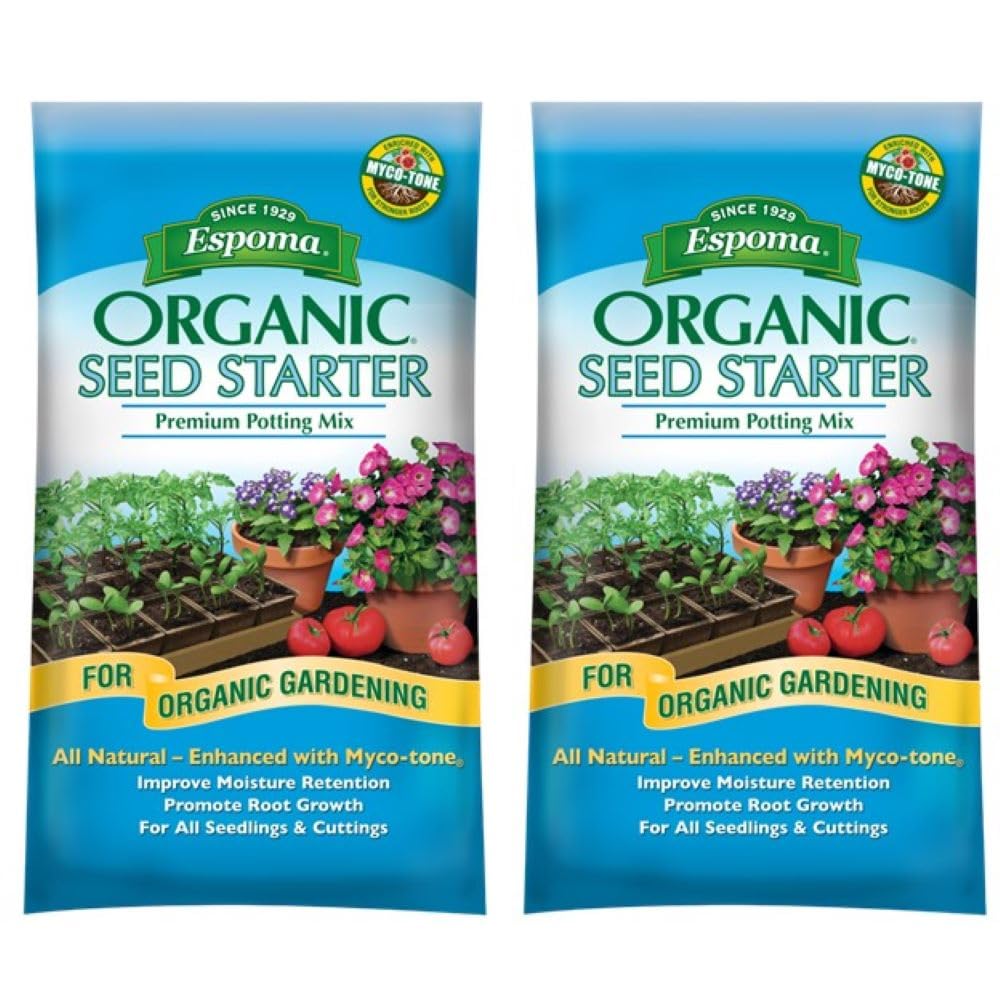
On a price-per-quart basis, the Espoma 2-pack lands in premium territory, but you are getting two 8-quart bags for a total of 16 quarts of mix with something unique: Myco-Tone, a blend of endo and ecto mycorrhizae (beneficial fungi that attach to roots and help them absorb water and nutrients). This is a biological boost you do not get from most competitors, including the Jiffy or Old Potters. You get a blend of sphagnum peat moss and perlite with yucca extract (a natural wetting agent) and lime for pH balance.
Customers note “great germination rate,” call it “the best seed starter I have used,” and say it beats Miracle-Gro by a long shot. One customer observed one bag was “more than enough for the 5 trays” of their Gardzen set.
If you are an organic grower who wants a biological head start and the convenience of two sealed bags, this is the one to choose over simpler peat blends.
What we like
- Two 8-quart bags (16 quarts total)
- Contains Myco-Tone mycorrhizae for root health
- Organic, all-natural ingredients, no synthetic chemicals
- Excellent germination rate with light, fluffy texture
The downsides
- Premium price point per quart
- Some buyers wished for even more volume in each bag
Understanding the Specs
Peat Moss vs Coco Coir
Peat moss, harvested from sphagnum bogs, can absorb up to 20 times its weight in water and creates a fluffy, acidic (low pH) environment that most seedlings love. Coco coir, made from coconut husk fibers, is a renewable alternative that also holds water well but has a more neutral pH. Most mixes use one or a blend of both. Peat moss is more common in seed starting mixes because it provides that light, airy structure that lets tiny root hairs spread easily.
Perlite and Vermiculite
Perlite is the little white popcorn-like bits that improve drainage and aeration. Vermiculite is the shiny golden flakes that absorb up to 3–4 times their volume in water and release it slowly. A good seed starting mix uses both: perlite to keep the mix from getting compacted in a tray and vermiculite to keep moisture available between waterings. Too much vermiculite can make the mix stay wet too long, while too much perlite dries it out too fast.
Lime and pH Balance
Most seed starting recipes include calcitic or dolomitic limestone to raise the pH of acidic peat moss into the 5.5–6.5 range where seeds germinate best. Without lime, pure peat moss can be too acidic (around pH 3.5–4.5) for many vegetables and flowers. The limestone also supplies calcium and magnesium, which help build strong cell walls in young seedlings.
Wetting Agents and Mycorrhizae
A wetting agent is a surfactant (a substance that reduces surface tension) that helps dry peat or coir reabsorb water quickly. Without one, dry peat can become hydrophobic and repel water. Mycorrhizae are beneficial fungi that attach to seedling roots and help them access water and nutrients in exchange for sugars. Most premium mixes add one or both of these for a better start.
FAQ
Can I use regular potting soil for seedlings?
Why does my seed starting mix have no fertilizer?
How much water should I use for seedlings?
Final Thoughts: The Verdict
For most people, the soil for seedlings winner is the Jiffy Natural & Organic Seed Starting Mix because it delivers a consistent fine texture, excellent germination rates, and a lightweight peat-based formula at a friendly price. If you want the biggest bag for starting a huge tray, grab the Old Potters Germination Mix. And for organic grower looking for compost-based fertility and strong roots, the standout is the Purple Cow Organics Seed Starter.