
If you have sandy soil, you already know the struggle: you water, it drains; you fertilize, it washes away before the grass can use it. The key is a fertilizer built to hold on in loose, fast-draining ground — one with slow-release nitrogen (nitrogen coated to dissolve gradually) and enough iron to keep grass dark green without burning. This guide walks you through the specific formulas and ingredients that actually work in sandy soil, so you stop wasting money on treatments that vanish with the next rain.
I’m Rikta — the co-founder and writer behind Lawn Gear Lab. This guide is built by comparing the manufacturers’ published specifications and the patterns across verified customer reviews, so you get each pick’s real strengths and trade-offs instead of marketing spin.
We’ve sorted through the leading products to find the very best lawn fertilizer for sandy soil, zeroing in on slow-release nitrogen, iron content, and formulas that stay put in loose ground.
How To Choose The Best Lawn Fertilizer For Sandy Soil
Sandy soil drains fast and holds nutrients poorly, so picking a fertilizer is different than on heavy clay or loam. You need a formula that releases nitrogen slowly and includes ingredients that help the soil hold what you put down. Here are the three specs that matter most.
Slow-Release Nitrogen Content
This is the single most important feature for sandy soil. Fast-release nitrogen (the kind in cheap all-purpose fertilizers) dissolves quickly in water and washes right through loose sand before roots can grab it. Look for a product that lists a percentage of slow-release nitrogen on the label — ideally 30% or more. The 24-0-6 Flagship Granular, for example, delivers 24% slow-release nitrogen, which means it feeds your lawn steadily for weeks instead of one quick hit that disappears.
Iron for Color Without Excess Growth
On sandy soil, it is tempting to pile on nitrogen to get a green lawn, but that just forces fast growth that the shallow roots can’t sustain. Iron (chelated iron or ferrous sulfate) gives you that dark green color without pushing explosive growth. The PetraMax Neighbor’s Envy packs 2.5% iron, which is why buyers report visible darkening within days — it is the iron staining the grass green, not excessive nitrogen that would stress the soil.
Added Humic Acid or Sea Kelp
Sandy soil lacks organic matter, which means it can’t hold onto the nutrients you apply. Humic acid and sea kelp act like a glue — they improve the soil’s cation exchange capacity (its ability to hold positively charged nutrients like ammonium, potassium, and magnesium). Products like the PetraMax Neighbor’s Envy and The Andersons PGF include these ingredients specifically to help sandy soil retain the fertilizer you just applied.
Quick Comparison
On smaller screens, swipe sideways to see the full table.
| Model | Category | Best For | Key Spec | Amazon |
|---|---|---|---|---|
| Yard Mastery 24-0-6 Flagship | Granular | Deep greening & weed suppression | 24% Slow-Release Nitrogen | Amazon |
| PetraMax Neighbor’s Envy | Liquid | Fast visible darkening | 2.5% Iron + 7-in-1 Formula | Amazon |
| The Andersons PGF 16-0-8 | Granular | High-phosphorus soil | Humic DG + Micros | Amazon |
| Espoma Summer Revitalizer | Organic | Chemical-free lawns | 30 lb Bag / 5,000 sq ft | Amazon |
| Petramax Liquid Nitrogen 28-0-0 | Liquid | Quick green correction | 70% Quick / 30% Slow N | Amazon |
| Pendelton Turf 18-3-6 Liquid | Liquid | Large acreage coverage | 2.5 Gallons / 50% SRN | Amazon |
In‑Depth Reviews
1. Yard Mastery 24-0-6 Flagship Granular Lawn Fertilizer
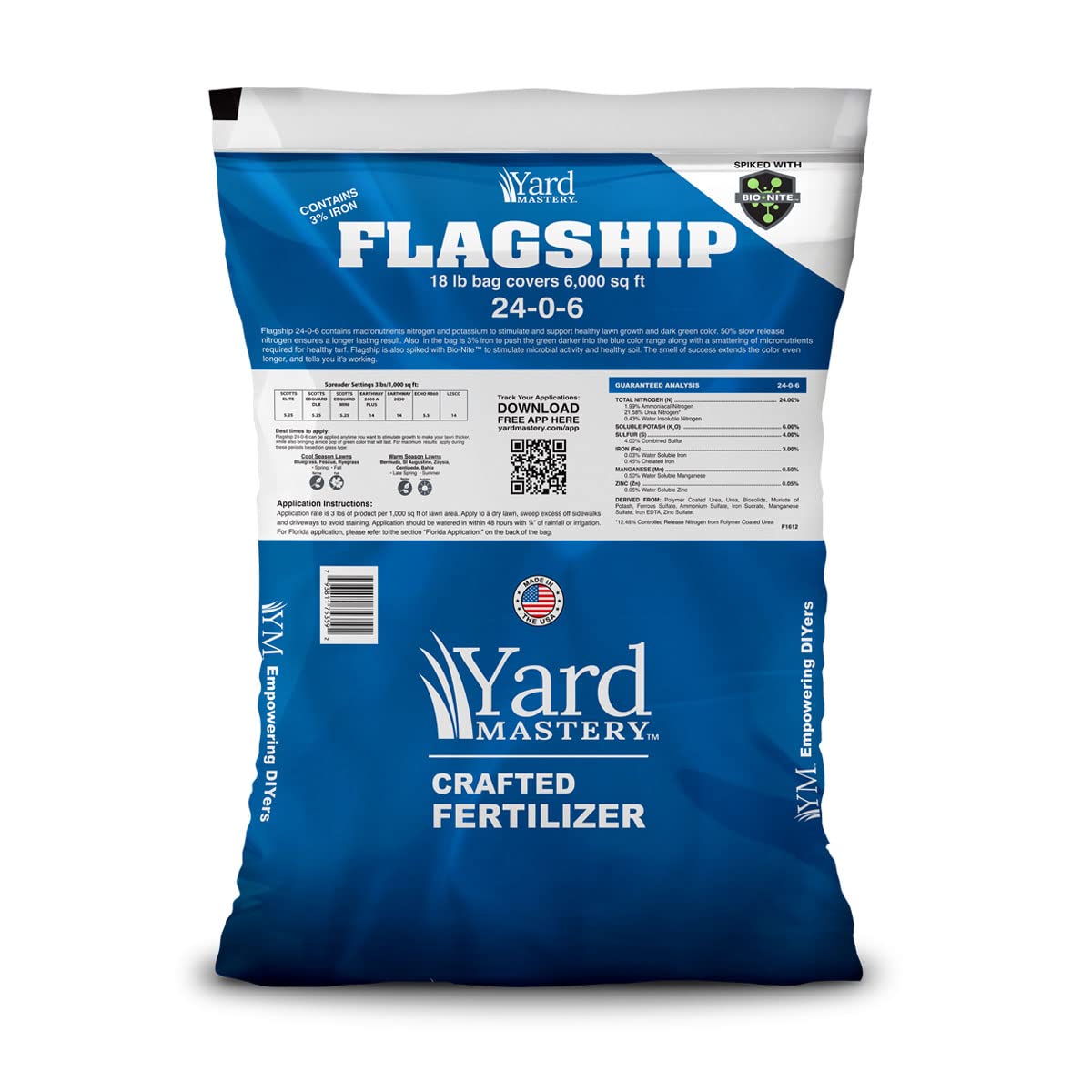
24% slow-release nitrogen makes it our top pick for sandy soil that cannot hold onto nutrients — the coated nitrogen feeds your lawn for weeks instead of washing through loose sand with the next watering. It is best for anyone with Bermuda, Fescue, or Zoysia who wants serious greening without reapplying every two weeks.
The 3% iron delivers deep blue-green color without pushing the explosive growth that forces you to mow twice a week — owners mention their Bermuda grass thickened and choked out weeds after just one bag, outperforming three years of professional yard service. It also contains micronutrients like boron, copper, and zinc that sandy soil often lacks, so the grass gets trace elements it would normally miss.
The honest limit is that if you overapply or apply during a hot dry spell, the high nitrogen can cause a growth surge that demands more frequent mowing — one reviewer noted you will be cutting twice a week during the peak season. For pure performance on sandy soil where other fertilizers vanish, this is the most complete choice you can buy.
Why it’s great
- 24% slow-release nitrogen holds on in sandy soil
- 3% iron provides deep green color without excess growth
- Includes micronutrients sandy ground typically misses
Good to know
- Can cause a growth surge if overapplied in hot weather
- Granular requires a spreader and watering in
2. PetraMax Neighbor’s Envy 7-in-1 Liquid Fertilizer
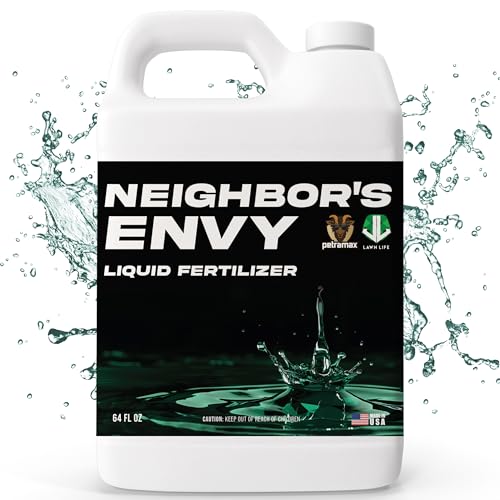
While the Yard Mastery Flagship is the granular king for longevity, the Neighbor’s Envy beats it on speed of visible results — it delivers 2.5% iron in a liquid form, so customers note seeing noticeably darker grass within 1 to 3 days of application, compared to the 7-14 days typical of granules. Where the Flagship excels in slow release over weeks, this liquid formula hits hard and fast.
It is a 7-in-1 blend combining 19% nitrogen, humic acid, and sea kelp — the humic acid and kelp help sandy soil retain moisture and nutrients, which is exactly what loose ground needs. One buyer combined it with overseeding and starter fertilizer, reporting that the grass became thicker and darker even during hot dry weather, with only one dandelion weed by mid-June.
The catch is that because it works fast, it also fades faster: one thoughtful reviewer notes you need to reapply every 2-4 weeks, whereas a granular like the Flagship lasts 30-45 days. Choose this over the top pick if your lawn is already on a regular watering schedule and you want that rapid, dramatic darkening that makes the neighbors jealous.
Where it shines
- Visible darkening in 1-3 days from 2.5% iron content
- Humic acid and sea kelp improve sandy soil retention
- Safe for pets and kids once absorbed
Worth noting
- Requires reapplication every 2-4 weeks
- Liquid can cause staining on concrete if not watered in
3. The Andersons Professional PGF 16-0-8 Fertilizer
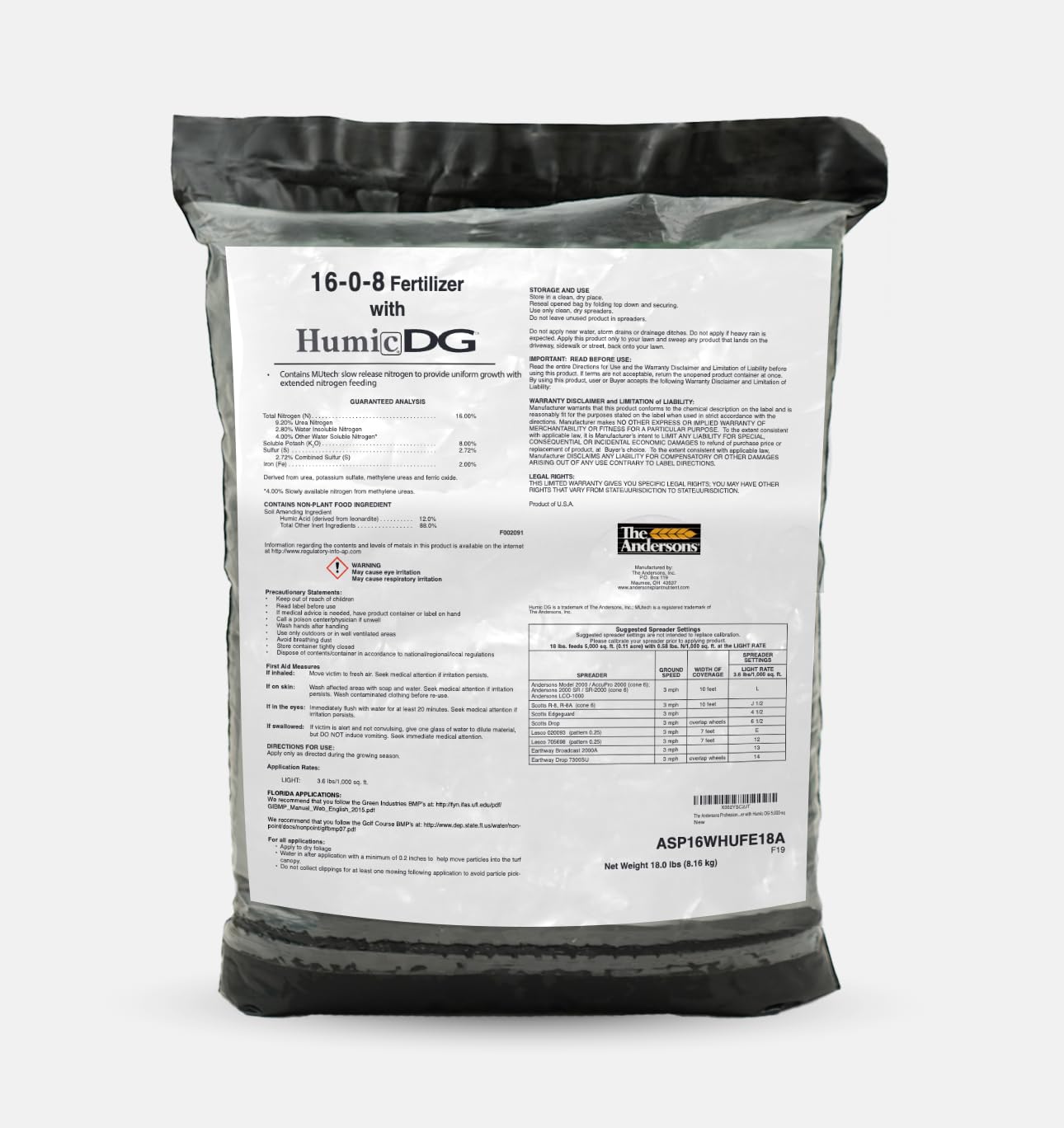
If you have sandy soil that a soil test has already shown to be high in phosphorus (a common issue on old farm ground or over-fertilized lawns), this phosphorus-free 16-0-8 formula is the exact solution — it delivers nitrogen and potassium without adding more phosphorus that would just build up. The super-fine granules provide twice the number of particles per square foot compared to standard granules, meaning better coverage on loose, uneven sandy ground.
The quick-release portion provides immediate green-up while the slow-release nitrogen feeds for up to 8 weeks, which is essential in sandy soil where nutrients leach fast. It also includes Humic DG — humic acid in a dispersible granular form — which binds to the sand particles and improves the soil’s ability to hold onto the fertilizer. One buyer mentioned it dramatically improved their lawn’s greenness and health, calling it the best on the block despite the higher cost.
The standout spec here is the phosphorus-free 16-0-8 NPK ratio — you will not find another premium granular in this category that skips phosphorus entirely while still delivering iron, micronutrients, and humic acid in one bag.
What stands out
- Phosphorus-free 16-0-8 ideal for high-P soil
- Humic DG improves nutrient retention in sand
- Super-fine granules give even coverage
The trade-offs
- Not available in California or Oregon
- Over-application can burn turf in heat
4. Espoma Organic Lawn Food Summer Revitalizer 8-0-0

The single number that matters most in this category is the NPK value of 8-0-0, the lowest-nitrogen score among our picks — but that is by design for organic formulas that rely on natural ingredients rather than manufactured urea. The 30-pound bag covers up to 5,000 square feet, and because it is organic, it is far less likely to burn your lawn even on sandy soil that dries out quickly.
The downside you accept for organic safety is slower results: the nitrogen comes from natural organic matter that soil microbes must break down first, so greening takes longer than a synthetic formula. However, since sandy soil struggles to hold onto anything, the organic matter actually improves the soil structure over time. Reviewers point out that it does not burn lawns and works well for overseeding in the fall, though one owner reported it smells like manure until you water it in. At 30 pounds, it is also the heaviest bag — 67% more product by weight than the 18-pound Flagship — meaning more material for the price tier.
For the eco-conscious buyer who values long-term soil health over instant cosmetic results, this organic option delivers consistent, gentle feeding that will not wash away as fast as synthetic liquids on loose sand, making it a strong price-to-value read for those prioritizing soil improvement over speed.
The upsides
- Organic certified, safe for kids and pets
- Won’t burn lawns even on hot sandy soil
- Improves soil organic matter over time
Keep in mind
- Slower greening than synthetic fertilizers
- Has a manure smell until watered in
5. Petramax Liquid Nitrogen Fertilizer 28-0-0

At this entry-level price, you get a concentrated 28-0-0 liquid that is packed with quick-release nitrogen — 70% of it is fast-acting to turn a yellow lawn green within days. The 32-ounce bottle treats up to 12,800 square feet for maintenance, which is a large area for the cost. One buyer who was skeptical reported that after applying 2/3 gallon to a triangle with cheap mulch, the grass greened up dramatically and the mulch held after heavy rain.
What you give up is longevity: only 30% of the nitrogen is slow-release, so on sandy soil the fast portion washes through quickly — you will need to reapply every 2-3 weeks during the growing season. It also lacks the iron, humic acid, or kelp that help sand hold moisture and nutrients, so this is purely a nitrogen shot, not a complete soil treatment.
It is perfect for the budget buyer who needs an immediate green correction for a specific area — like recovering from a yellow patch or prepping for an event — and does not mind reapplying frequently. For a full-season plan on sandy soil, you are better off with the Flagship or Andersons, but for a quick cheap fix, this works.
Why we’d pick it
- High 28-0-0 formula for rapid green-up
- Covers up to 12,800 sq ft per bottle
- Easy mix-and-spray application
A few caveats
- Only 30% slow-release, so washes out fast in sand
- Lacks iron, humic acid, and other soil helpers
6. Pendelton Turf Supply 18-3-6 Liquid Fertilizer (2.5 Gallons)

This 2.5-gallon jug is perfect for the large-property owner who wants the lowest cost per square foot in this guide — at 320 fluid ounces total, it covers roughly one acre for three applications, according to one buyer. The 18-3-6 ratio includes 50% slow-release nitrogen (SRN), which is double the slow-release percentage of the Petramax liquid, making it far better suited for sandy soil where fast nitrogen leaches away.
That 50% SRN means this liquid can hold on in loose ground almost as well as a granular, while still giving you the convenience of a spray-on application. It also includes micronutrients (copper, iron, manganese, zinc) that sandy soil typically lacks. One reviewer using it on St Augustine grass reported that it replaced a five-times-costlier professional service and took only 15-20 minutes per application via a hose-end sprayer.
The one honest limit is that the 2.5-gallon container is large and heavy — the item weight is only listed as 3 ounces (likely a data error for the product page) but in reality this is a substantial jug that is awkward to mix if you do not have a large sprayer. Against the other picks in this field, it wins on pure value per gallon for big property owners.
Strong points
- 50% slow-release nitrogen for sandy soil retention
- 2.5 gallons covers large acreage affordably
- Includes iron, manganese, and zinc micronutrients
Before you buy
- Large jug is cumbersome to handle and mix
- Needs reapplying every 2-4 weeks for best results
Understanding the Specs
NPK Ratio: What the Three Numbers Mean
The three hyphenated numbers on any fertilizer bag — for example 24-0-6 — stand for Nitrogen (N), Phosphorus (P), and Potassium (K). Nitrogen is what greens up the leaves and drives growth. Phosphorus supports root development and flowering, but many sandy soils already have enough phosphorus from past treatments, so a 0 in the middle is fine. Potassium strengthens cell walls and helps grass handle drought and heat stress. For sandy soil, you want a high first number (nitrogen) and a moderate third number (potassium), with phosphorus only if your soil test shows it is low.
Slow-Release vs. Quick-Release Nitrogen
Nitrogen comes in two forms: quick-release, which dissolves instantly and greens up grass within days, and slow-release, which is coated or bound so it breaks down gradually over weeks. In sandy soil, quick-release nitrogen can wash below the root zone after just one or two waterings. You want a product where at least 30% to 50% of the nitrogen is labeled as slow-release (sometimes called SRN or controlled-release) so the grass gets fed steadily instead of getting a single dose that then disappears.
FAQ
Will liquid fertilizer wash out of sandy soil faster than granular?
How often should I fertilize a lawn on sandy soil in the summer?
Can I use organic fertilizer on sandy soil or will it just wash away?
Final Thoughts: The Verdict
For the majority of shoppers, the lawn fertilizer for sandy soil winner is the Yard Mastery 24-0-6 Flagship Granular because its 24% slow-release nitrogen and 3% iron deliver deep greening that lasts through sandy soil’s fast-draining conditions. If you want rapid visible darkening in days rather than weeks, grab the PetraMax Neighbor’s Envy. And for large properties needing cost-effective bulk coverage, the standout is the Pendelton Turf Supply 18-3-6 Liquid.