
Rosemary demands lean, gritty, fast-draining soil that mimics its native Mediterranean cliffs. Most general-purpose potting mixes hold too much moisture, leading to root rot and yellowing needles within weeks. The right blend forces water through quickly, keeps the root zone aerated, and delivers the sharp drainage rosemary craves.
I’m Rikta — the co-founder and writer behind Lawn Gear Lab. I’ve spent countless hours analyzing bagged soil compositions, cross-referencing drainage rates, peat content, and pH ranges, and studying owner-reported outcomes to identify which mixes actually support rosemary’s unforgiving root system in container environments.
Whether you’re potting a new cutting or repotting a mature plant, selecting the right substrate is critical. This guide breaks down the top-rated options for the best soil for rosemary in pots, based on drainage performance, ingredient transparency, and real-world grower results.
How To Choose The Best Soil For Rosemary In Pots
Rosemary is a drought-tolerant perennial that evolved in rocky, alkaline soil with excellent drainage. When confined to a pot, the margin for error shrinks — the wrong mix holds water and invites root rot. Three factors determine whether a bag will work: drainage speed, aeration structure, and pH range.
Prioritize Fast Drainage Above All Else
Rosemary roots suffocate in soggy conditions. Look for mixes that list perlite, pumice, coarse sand, or calcined clay as primary ingredients. These create pore space that allows water to escape rapidly. A mix that stays wet longer than three days after watering is too dense for rosemary in a container.
Choose a Gritty, Chunky Texture
A fine, powdery texture compacts quickly, restricting oxygen flow to the roots. Chunky blends with visible particles — pine bark, lava rock, or grit — maintain air pockets between waterings. This physical structure is what separates a rosemary-friendly mix from a general-purpose potting soil that works for moisture-loving plants.
Check for pH in the Alkaline Range
Rosemary prefers a soil pH between 6.0 and 8.0, slightly more alkaline than most common potting mixes. Many bagged soils are formulated for acid-loving plants and include lime or sulfur to lower pH. A neutral to slightly alkaline pH supports better nutrient uptake and overall plant vigor for rosemary specifically.
Quick Comparison
On smaller screens, swipe sideways to see the full table.
| Model | Category | Best For | Key Spec | Amazon |
|---|---|---|---|---|
| Rosy Soil Cactus & Succulent Mix | Peat-Free Gritty Mix | Root health & drainage | Chunky texture with microbes | Amazon |
| Soil Sunrise Cactus & Succulent Mix | Gritty Premium Blend | Ready-to-use no amendments | Pine bark, silica sand, pumice | Amazon |
| Coast of Maine Tomato & Vegetable Soil | Organic Compost Blend | Nutrient-rich container mix | Composted manure & peat moss | Amazon |
| Perfect Plants Indoor Plant Soil | All-Purpose Indoor Mix | Bug-free houseplant repotting | Pine bark, coco coir, perlite | Amazon |
| Midwest Hearth Premium Potting Soil | General Purpose Mix | Seed starting & small pots | Peat moss, perlite, vermiculite | Amazon |
| Midwest Hearth Cactus & Succulent Mix | Fast Draining Blend | Budget container planting | Peat moss, perlite, vermiculite | Amazon |
| DUSPRO 7-in-1 Succulent Mix | Multi-Ingredient Blend | Small pot & terrarium use | Perlite, pumice, lava rock | Amazon |
In‑Depth Reviews
1. Rosy Soil Cactus & Succulent Potting Mix
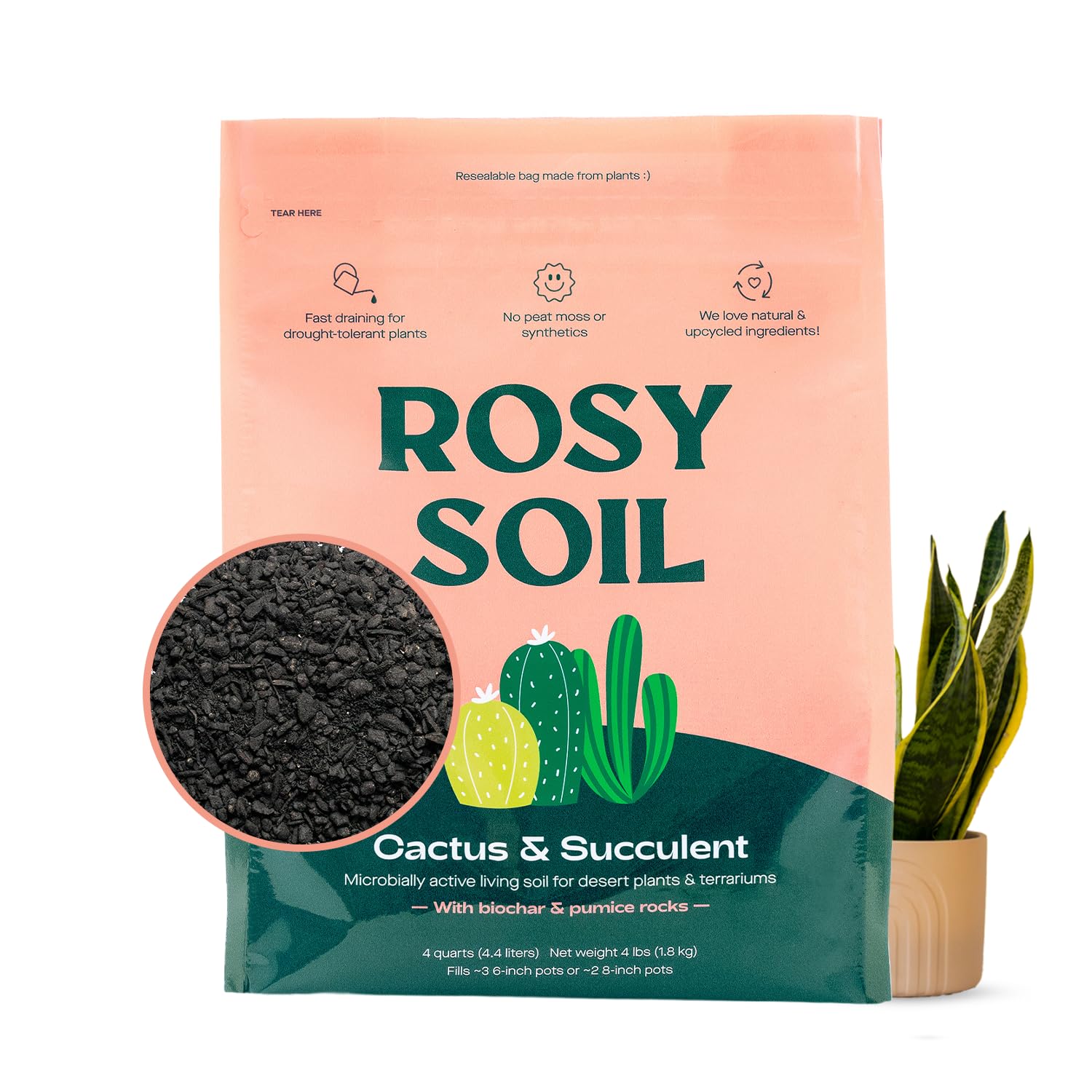
Rosy Soil’s cactus mix is the closest you can get to a custom-blended rosemary substrate straight out of the bag. The chunky, loose texture — built without peat moss — ensures that water flows through the pot in seconds rather than pooling around the crown. Pre-loaded beneficial microbes and worm castings provide a nutrient baseline without the heavy moisture retention that synthetic fertilizers often encourage.
Multiple verified owners report zero pest problems across dozens of bags, which matters when you’re bringing soil indoors. The 4-quart resealable bag is plastic-neutral and includes planting instructions on the label, making it accessible for first-time rosemary growers. Some users add extra perlite or bonsai soil for older, more established plants, but for most potted rosemary — especially in the first year — this mix performs without amendments.
The peat-free formula also means the pH skews slightly higher than standard potting soils, which aligns well with rosemary’s preference for neutral-to-alkaline conditions. This is the most thoughtful, category-specific mix on this list for growers serious about drainage.
What works
- Excellent drainage straight from the bag
- Bug-free across reported uses
- Sustainable peat-free formula
What doesn’t
- Small bag size — 4 quarts fills only 2-3 small pots
- Some users add grit for long-term plants
2. Soil Sunrise Cactus and Succulent Potting Mix
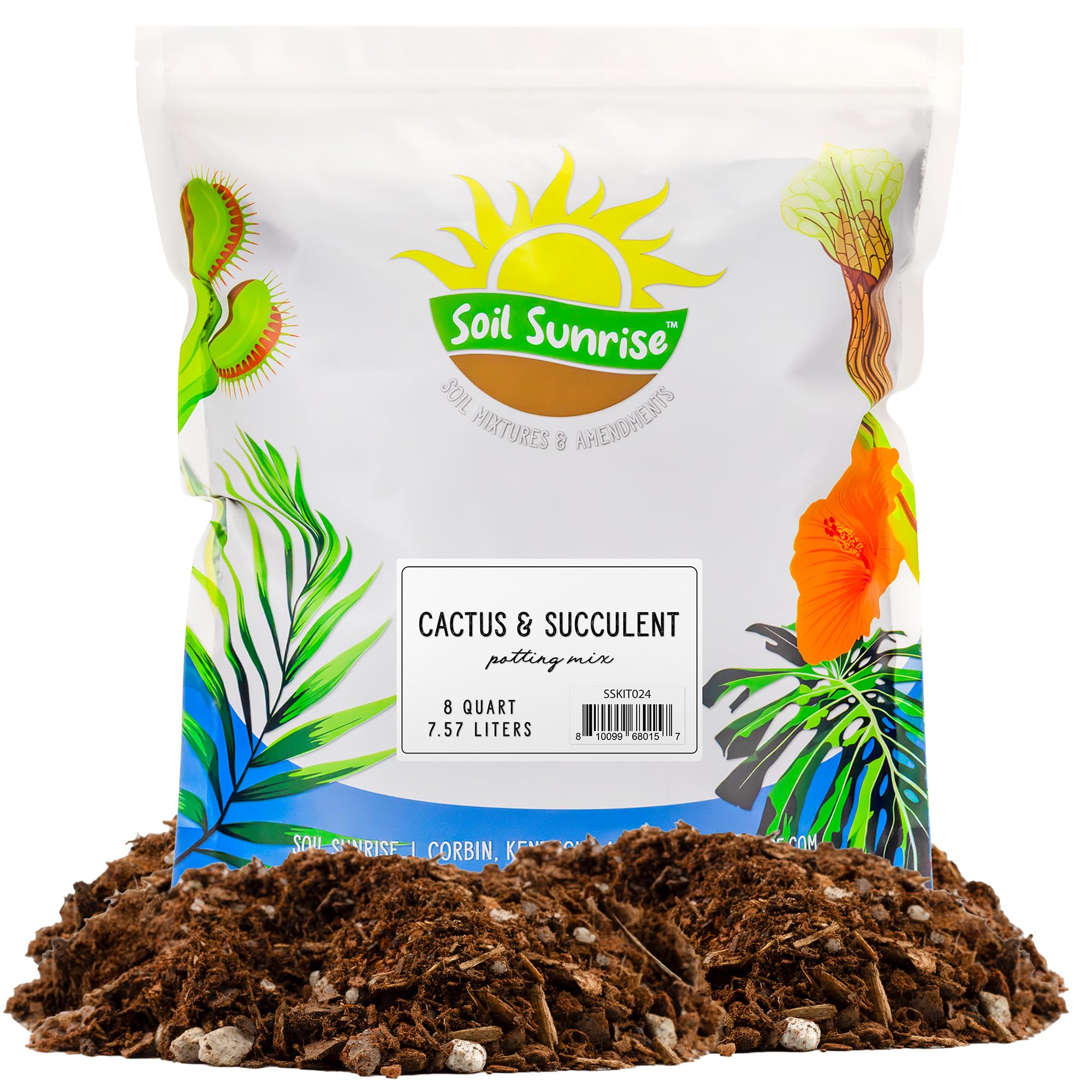
Soil Sunrise delivers an 8-quart bag of hand-blended, all-natural gritty mix that includes pine bark, silica sand, calcined clay, and pumice. This is a true desert-style substrate — not a dark, loamy potting soil with extra perlite tossed in. The physical feel is visibly different: you see and feel the grit, which translates directly into faster drainage for rosemary roots.
Owners consistently highlight that no amendments are needed for succulents and cacti, and the same holds true for rosemary in containers. Several reviewers who repotted ponytail palms and ferns used this as a base mix, adding coarse sand and worm castings for specific needs, but the straight mix worked well for straight rosemary potting. The 8-quart volume is enough to fill a 12-inch pot or several smaller containers, giving it a volume advantage over the 4-quart options on this list.
The only downside is the price per quart, which sits toward the higher end of the spectrum. But for growers who value a ready-to-use gritty mix without hunting down individual components, this is the most convenient premium option available.
What works
- True gritty texture — no amendments required
- Generous 8-quart bag for larger pots
- No bugs or foul odor reported
What doesn’t
- Higher cost per quart than standard mixes
- Some users still add extra pumice for mature plants
3. Coast of Maine Organic Tomato & Vegetable Planting Soil

Coast of Maine’s blend is formulated for vegetables and tomatoes, but its lightweight structure and inclusion of composted manure and sphagnum peat moss make it a viable candidate for rosemary in larger pots. The key here is the organic compost that provides slow-release nutrients over weeks, which benefits rosemary during the active growing season without the risk of fertilizer burn.
Owner reviews praise the moisture retention and drainage balance — a rare combo. One reviewer noted that their heirloom tomatoes saw visible growth within days, and the cedar content appeared to deter insects. However, a small number of bags reportedly introduced fungus gnats, requiring neem oil treatment. Pre-disinfecting the soil before potting is a smart precaution for sensitive indoor rosemary setups.
This is not a true gritty mix, so rosemary growers may need to blend in additional perlite or coarse sand for better aeration. But for those who prioritize organic certification (OMRI listed) and a nutrient-rich foundation, this 20-quart bag delivers exceptional value per volume.
What works
- High nutrient content with organic manure
- Large 20-quart bag covers many pots
- Good moisture balance for larger containers
What doesn’t
- Not a fast-draining mix — needs amendments for rosemary
- Some bags reported fungus gnats
4. Perfect Plants Indoor Plant Soil

Perfect Plants has built a loyal following among indoor houseplant owners specifically because the mix arrives free of fungus gnats — a complaint that plagues many big-brand potting soils. The blend combines pine bark, coco coir, perlite, and sand with garden lime, which gives it a slightly aerated texture and a neutral-to-slightly-alkaline pH that suits rosemary well.
Multiple verified reviews mention that plants — including ivy, aglaonema, and spider plants — thrive in this mix with no sign of root issues. The coco coir provides moisture retention without becoming waterlogged, and the sand adds weight and drainage. The 4-quart bag is resealable, and owners consistently note that the soil remains fresh between uses.
While it is not a gritty cactus mix, this substrate is light and fluffy enough to work for rosemary in smaller containers, especially if you add a handful of extra perlite or pumice. The price per quart is mid-range, but the bug-free guarantee alone justifies it for indoor growers who have struggled with soil-borne pests.
What works
- Bug-free — no gnats reported
- Lightweight, airy texture with good drainage
- Alkaline-friendly pH from garden lime
What doesn’t
- Small bag size for the price
- Dries slower in plastic pots — adjust watering
5. Midwest Hearth Premium Potting Soil Mix

Midwest Hearth’s general-purpose mix is built around a professional-grade formulation of peat moss, perlite, and vermiculite. It is pH-controlled to support a broad spectrum of plants, and the texture is light and fluffy — easy to work with and quick to rewet after drying out. The resealable bag keeps the soil fresh for multiple uses over several weeks.
Owner feedback is overwhelmingly positive for seed starting and small transplanting projects. One reviewer germinated petunias successfully, and another reported their jade plant perked up within days. The vermiculite helps retain moisture at a level that benefits seedlings, but for mature rosemary in pots, you will want to mix in additional perlite or coarse sand to increase drainage speed.
At 4 dry quarts, this is a compact bag suitable for one or two small rosemary pots. It works best as a base that you customize rather than a standalone mix. The value lies in its consistency and lack of contaminants — no weeds, no bugs, and no hard clumps.
What works
- Clean, consistent texture with no contaminants
- pH controlled for broad plant compatibility
- Resealable bag keeps soil fresh
What doesn’t
- Needs amendments for rosemary — not fast-draining alone
- Small bag size limits large projects
6. Midwest Hearth Cactus & Succulent Potting Soil Mix
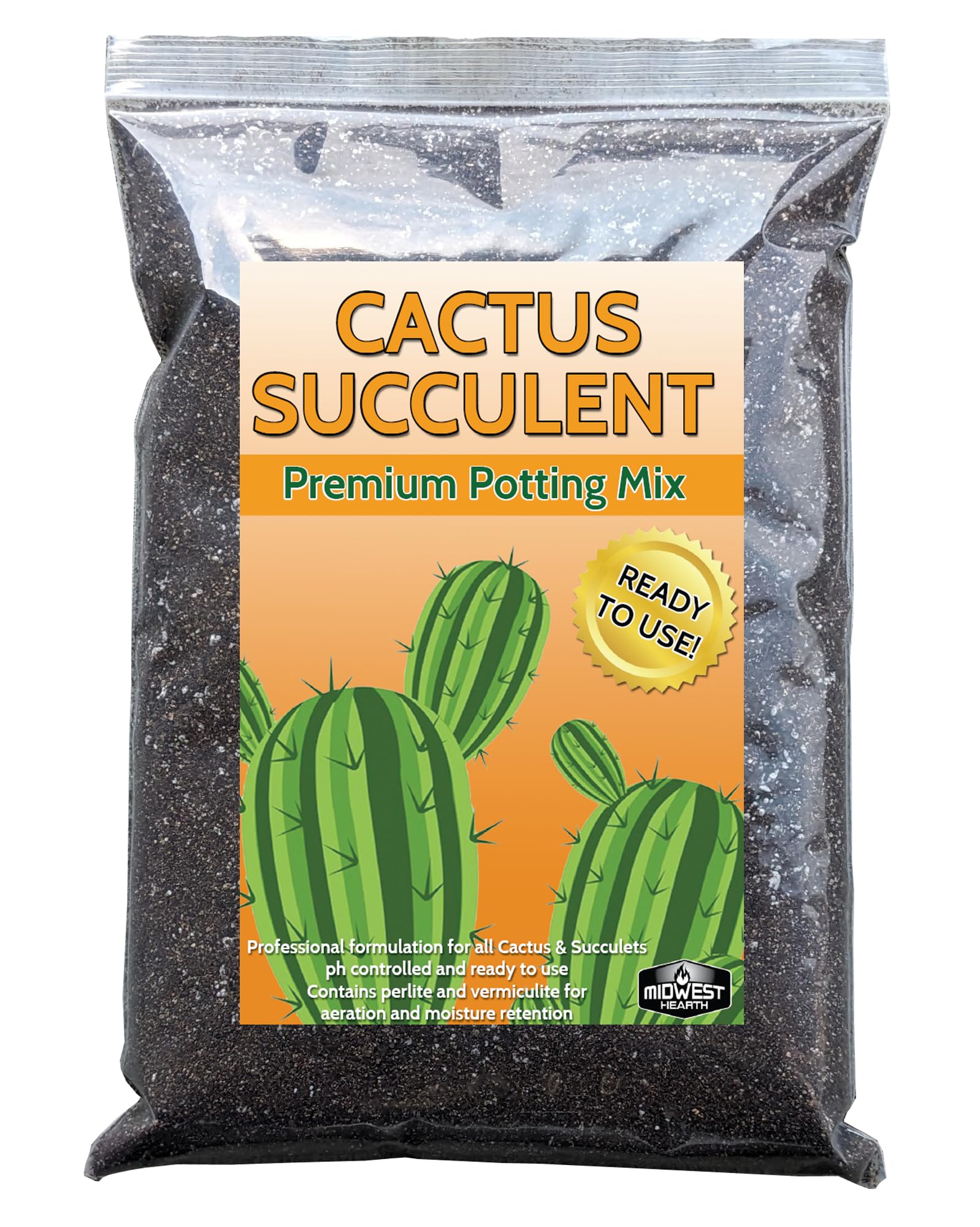
Midwest Hearth’s cactus-specific blend is formulated for drought-tolerant plants with peat moss, perlite, and vermiculite. The 4-quart resealable bag is made in the USA and designed for immediate use without mixing. The primary appeal is the price point — this is a straightforward, no-frills cactus mix that works as a baseline for rosemary in small pots.
Owner reviews are mixed on the practicality for indoor use. One reviewer noted that the dry top particles blow away from an open windowsill, creating a mess requiring daily vacuuming. Others praised the soil quality for succulent dish gardens and noted that plants seemed happy after repotting. The formula is pH-balanced specifically for cacti and succulents, which aligns well with rosemary’s needs.
The biggest limitation is that the mix is fine-textured compared to a gritty blend. Rosemary may still experience moisture retention issues in deeper pots unless you add pumice or coarse sand. This is a solid entry-level option for budget-conscious growers who are willing to tweak the blend.
What works
- Budget-friendly price per bag
- Made in USA with consistent quality
- pH balanced for drought-tolerant plants
What doesn’t
- Fine texture may blow away near open windows
- Not gritty enough for optimal long-term rosemary drainage
7. DUSPRO 7-in-1 Succulents Soil Potting Mix
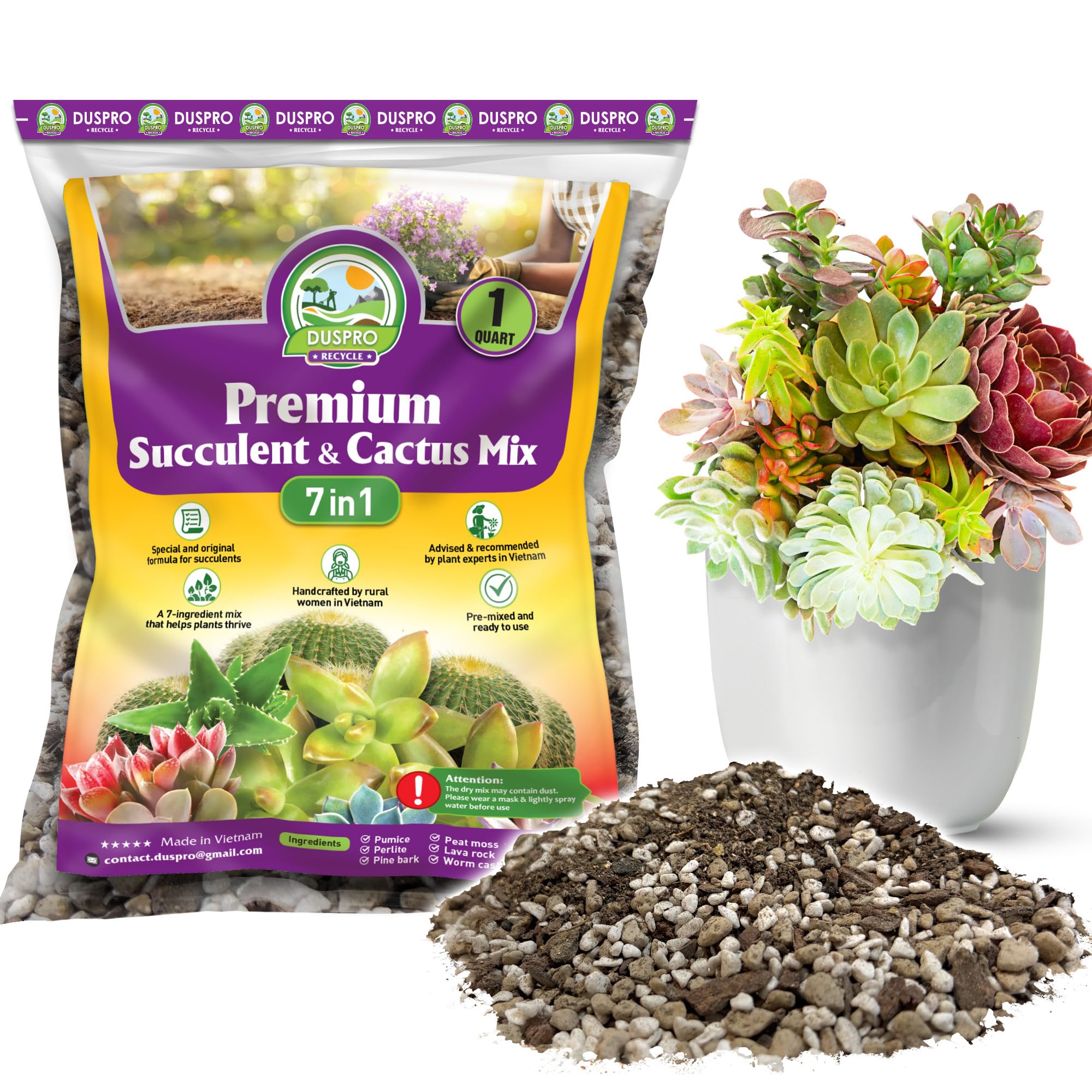
DUSPRO packs seven ingredients into one bag — perlite, pumice, lava rock, peat moss, pine bark, worm castings, and vermiculite — creating a diverse substrate that offers both drainage and a small nutrient boost. The worm castings provide gentle organic feeding, and the multiple rock components ensure water flows through without pooling. The 1-quart size is intended for very small pots or single plant repotting.
Owner feedback highlights the richness of the soil and the fact that succulents and desert cacti respond well. A few reviewers noted that the ingredients are not fully mixed when you open the bag, requiring you to dump it out and stir before use. This is a minor inconvenience but worth knowing if you expect a pre-blended consistency. The bag is expensive for its volume — multiple owners described it as smaller than anticipated.
For rosemary in a 4-inch starter pot, this mix works without modification. For larger or deeper containers, you will need to supplement with additional perlite or pumice to maintain the necessary aeration through the full root zone.
What works
- 7-ingredient blend with excellent ingredient diversity
- Worm castings provide natural nutrient support
- Well-draining with pumice and lava rock
What doesn’t
- Small 1QT bag — expensive per volume
- Requires hand-mixing before use
Hardware & Specs Guide
Drainage Speed & Pore Space
The single most important metric for rosemary in pots is how quickly water moves through the medium. A mix with at least 30-40% perlite, pumice, or coarse sand by volume creates the macro-pores that allow excess water to drain within seconds. Avoid mixes heavy in fine peat or vermiculite alone — they retain too much moisture for rosemary’s root structure.
pH Range & Buffering
Rosemary prefers a soil pH between 6.0 and 8.0, with ideal performance near the neutral-to-alkaline side. Many commercial cactus mixes are pH-adjusted for succulents, which lands in the right zone. If you’re using a general-purpose mix, check whether the bag includes lime (which raises pH) or sulfur (which lowers it). A simple soil pH test kit is a worthwhile investment.
Texture & Grit Content
Gritty mixes with visible particles — pine bark chips, calcined clay, silica sand — resist compaction over time. This physical structure maintains airflow to the roots even after repeated waterings. Fine-textured soils collapse under the weight of water and gravity, suffocating rosemary roots in deep pots. Look for bags that advertise “chunky,” “gritty,” or “fast-draining” on the label.
Organic Matter vs. Drainage
Worm castings and compost are beneficial for nutrient content, but they also hold moisture. For rosemary, the ideal balance is a nutrient-light mix with just enough organic matter to support slow growth without saturating the root zone. Heavy compost blends from the vegetable garden category may need a 50/50 dilution with perlite or pumice to become suitable for rosemary containers.
FAQ
Can I use regular potting soil for rosemary in pots?
Should I add sand or perlite to cactus soil for rosemary?
What pH should the soil be for rosemary in containers?
How often should I repot rosemary into fresh soil?
Final Thoughts: The Verdict
For most gardeners, the soil for rosemary in pots winner is the Rosy Soil Cactus & Succulent Potting Mix because it delivers the ideal chunky, peat-free texture with built-in microbial support and zero pest issues. If you want a larger volume that requires no amendments at all, grab the Soil Sunrise Gritty Mix. And for a budget-friendly entry point that works well in smaller pots, the Midwest Hearth Cactus Mix gets the job done with a little added grit.