
You spent good money on your raised garden bed, so the last thing you want is to fill it with dirt that just sits there—or worse, stunts your tomatoes and turns your lettuce yellow. The real secret to a bounty isn’t a fancy planter; it’s the soil you pour into it. You need a mix that feeds your plants without guesswork, drains well so roots don’t drown, and holds enough moisture so you are not watering three times a day.
I’m Rikta — the co-founder and writer behind Lawn Gear Lab. This guide is built by comparing the manufacturers’ published specifications and the patterns across verified customer reviews, so you get each pick’s real strengths and trade-offs instead of marketing spin.
Whether you are filling a new bed from scratch or refreshing an old one, the right mix makes the difference between a sad harvest and a table full of vegetables. This is our guide to finding the best soil for raised beds, so you know exactly which bag to grab first.
How To Choose The Best Soil For Raised Beds
Not every bag of dirt is built for the job. A raised bed is like a giant pot—it needs a mix that stays fluffy, drains excess water, and holds onto nutrients longer than a typical in-ground soil would. Here are the key things to look for before you start hauling bags into your garden.
Volume: How Many Cubic Feet Do You Actually Need?
This is the number that decides if one bag fills your bed or you need a truckload. Most premium bags come in 1.5 or 2 cubic feet. A standard 4×8 raised bed that is 12 inches deep needs 32 cubic feet of soil. Plan your purchase by measuring your bed’s length, width, and depth in feet, multiply them, and that is your total cubic feet. Divide that by the bag size (for example, 32 ÷ 1.5 = roughly 22 bags) so you are not short on filling day.
Organic Certification: What OMRI Listed Means for Your Food Garden
The OMRI (Organic Materials Review Institute) seal is a third-party check that the ingredients inside the bag are allowed for certified organic production. For a home gardener, that seal means no hidden synthetic fertilizers, sewage sludge, or unlisted chemicals. If you are growing vegetables you plan to eat raw, a mix with OMRI listed ingredients gives you real peace of mind.
Texture and Drainage: The Make-or-Break of Root Health
A good raised bed mix should feel light and crumbly in your hands—not heavy like clay and not packed with large wood chips that rob nitrogen from your plants. The ideal mix contains aged forest products (like composted bark fines), sphagnum peat moss or coco coir for moisture, and perlite or biochar for aeration. Ingredients like worm castings, kelp meal, and oyster shell are signs the manufacturer added real fertility, not just filler.
Quick Comparison
On smaller screens, swipe sideways to see the full table.
| Model | Category | Best For | Key Spec | Amazon |
|---|---|---|---|---|
| Coast of Maine Castine Blend | Premium | All-around best for heavy feeders (tomatoes, squash) | 2 Cubic Feet per bag | Amazon |
| FoxFarm Raised Bed Mix | Mid-Range | Ready-to-use balance for new gardeners | 1.5 Cubic Feet (40 lbs) | Amazon |
| Purple Cow Organics Raised Bed Mix | Premium | OMRI certified, manure-free organic growing | 1.5 Cubic Feet | Amazon |
| Espoma Organic Raised Bed Mix | Mid-Range | Budget-friendly organic with mycorrhizae | 1.5 Cubic Feet | Amazon |
| Wiggle Worm Raised Bed Mix | Specialty | Adding living biology and worm power | 40 lbs (Pack of 3) | Amazon |
In‑Depth Reviews
1. Coast of Maine Organic & Natural Castine Blend Soil
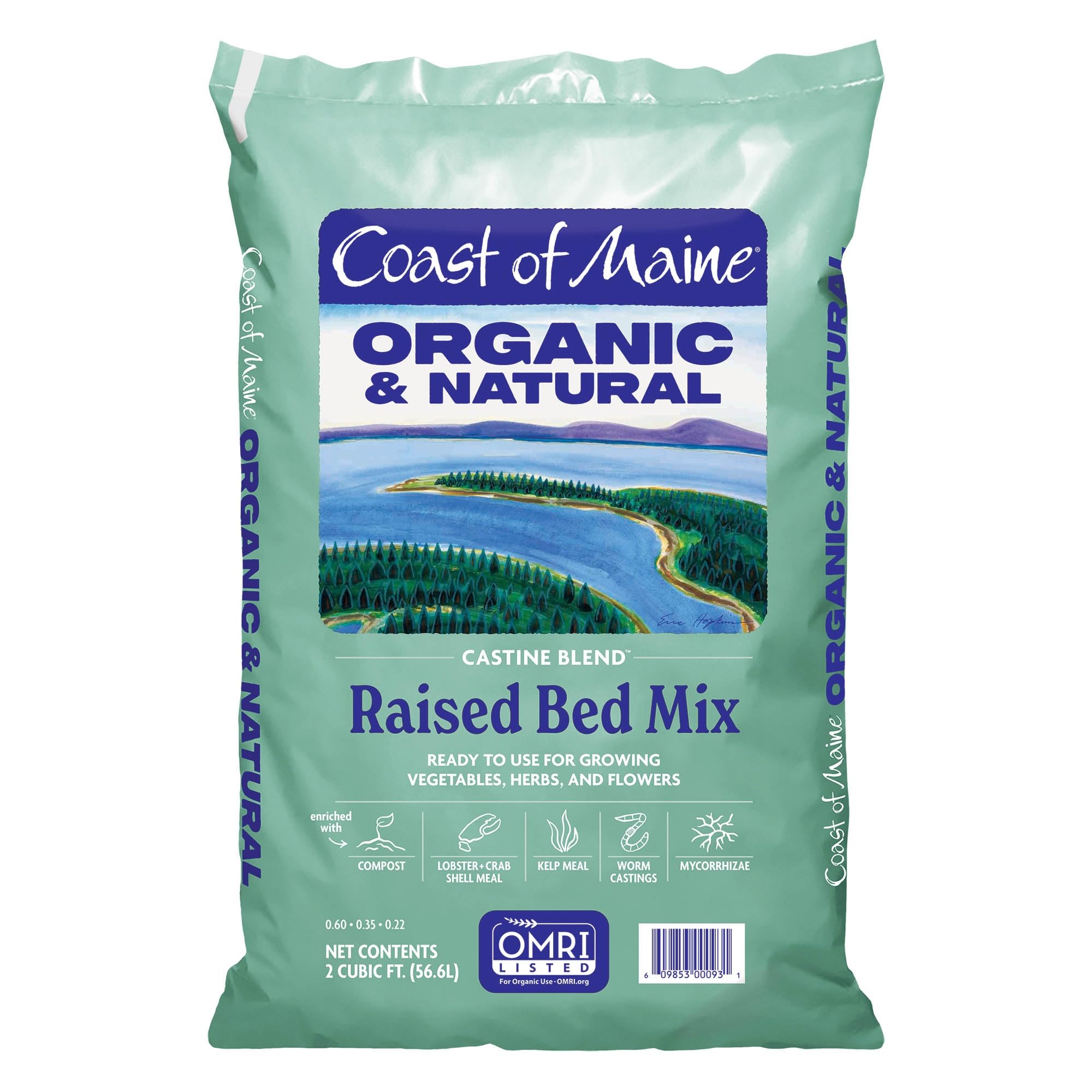
2 cubic feet per bag (33% more than the standard 1.5-cubic-foot bag from Espoma) makes this the top pick for gardeners who want to fill raised beds faster with fewer bags. Its secret weapon is biochar (a charcoal-like material that holds nutrients and moisture in the root zone) plus mycorrhizae (beneficial fungi that attach to roots and help them absorb more water and food). Buyers report using this product for three years straight, and they specifically note it “loosens soil already in the beds” while staying “light, fluffy soil” with “no twigs or bugs.”
The ingredient list reads like a gourmet recipe for dirt—worm castings, green sand, kelp meal, and lobster and crab shell meal (which slowly release calcium and chitin to naturally deter some soil pests). It is ready to use right out of the bag, so you do not need to mix or add fertilizer at planting time. At 40.25 pounds, it is nearly identical in weight to the 40-pound FoxFarm bag, but with more than double the biodiversity in its ingredients. This is the best pick if you fill a bed with confidence and focus on picking vegetables, not fixing soil problems. If you grow very sensitive seedlings, skip this rich mix or blend it 50/50 with topsoil, since owners mention the high nutrient load can be strong for young plants.
Compared to the FoxFarm Raised Bed Mix, the Coast of Maine has more diverse ingredients and a larger bag size, making it the smarter buy for anyone filling a deep 4×8 bed who wants to add compost only once per season. This is the one-season wonder that keeps your bed going strong.
Why it’s great
- Largest volume per bag (2 cu ft) means fewer bags to haul
- Nutrient-dense recipe with biochar, kelp, and lobster shell for long-term feeding
- Buyers confirm it stays light and works for years without clumping
Good to know
- Premium price point reflects the unique ingredients
- Very rich; sensitive seedlings may prefer a 50/50 mix with topsoil
2. FoxFarm Raised Bed Planting Mix
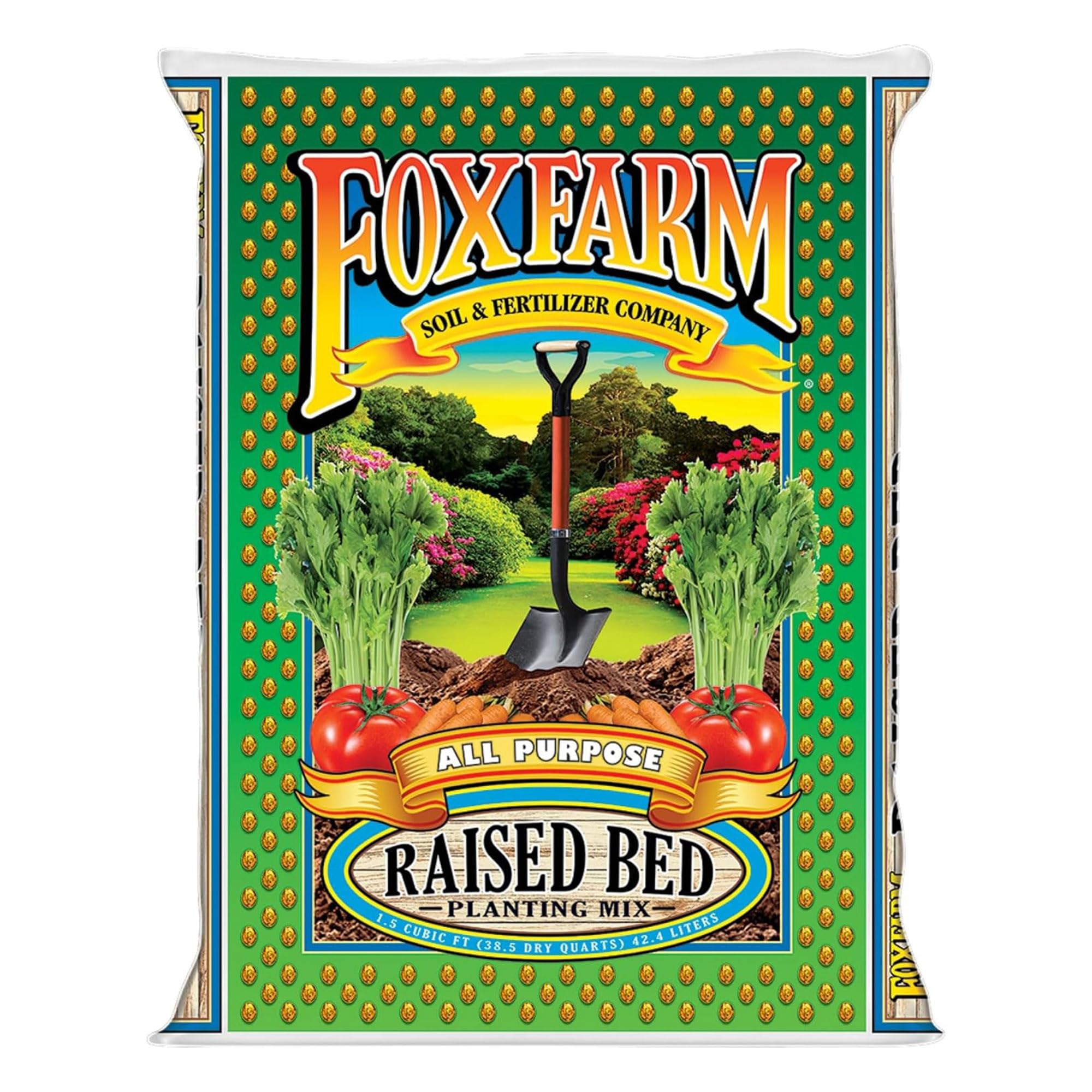
Compared to the top-pick Coast of Maine, the FoxFarm Raised Bed Planting Mix costs less per bag and requires zero mixing—it is a drop-in-and-go formula containing 50 to 60% aged forest products (composted bark and fines), sphagnum peat moss, earthworm castings, oyster shell for calcium, and dolomite lime to balance pH. You simply pour it into the bed and plant. Gardeners who stick with FoxFarm year after year call it “the best” and note it is “high quality stuff.” The oyster shell provides a slow-release calcium source that prevents blossom-end rot on tomatoes, a common frustration for raised-bed growers.
The texture is designed to hold moisture without getting soggy, reducing the frequency of watering during hot summer stretches. If you want a tried-and-true mix from a brand known for consistency, this FoxFarm bag delivers a reliable harvest every time. Buyers who care strongly about sustainable sourcing should note this bag contains peat moss, which some gardeners avoid because it is a non-renewable resource.
Choose this FoxFarm mix over the top pick if you want the simplest, most straightforward option—just open the bag and fill your bed—and you prefer a lower upfront cost per bag over the Coast of Maine’s organic-certified ingredients and peat-free formulation.
Where it shines
- Truly ready-to-use; zero mixing or additional amendments needed
- Oyster shell and dolomite lime manage pH and prevent blossom-end rot
- Strong brand reputation with decades of consistent quality
Worth noting
- Volume is 1.5 cu ft—about 25% less material than the Coast of Maine bag
- Contains peat moss, which some gardeners avoid for sustainability concerns
3. Purple Cow Organics Raised Bed Mix
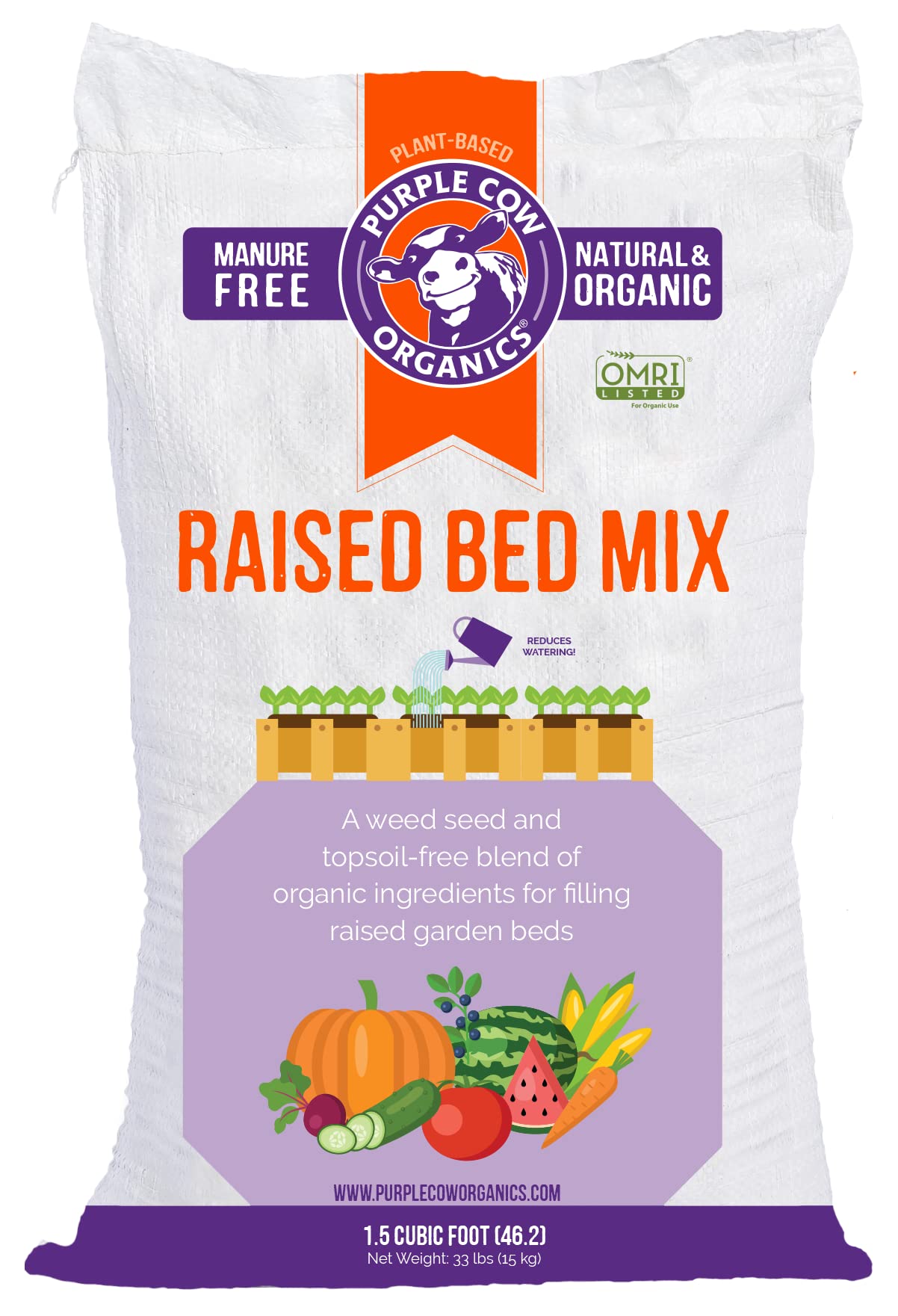
Imagine opening a bag of soil with zero manure smell, no topsoil, and no weed seeds—just a clean, plant-based compost mix that you can trust for your organic vegetable garden. The Purple Cow Organics Raised Bed Mix is OMRI listed (the certification that confirms it meets organic standards for ingredients), and it is completely manure-free, which is rare among raised bed mixes. Customers note that “seedlings grow more vigorously” in this mix, and they love the “light, consistent, no odor” texture.
Because it is a compost-based formula, it acts like a sponge—holding water well so you can water less often, which is a huge relief during hot weather. Reviewers also note that it is “very expensive” and “needs added fertilizer at start” because the initial nutrient levels are moderate compared to the Coast of Maine. The one downside some buyers flag is the inclusion of peat moss, which is a non-renewable resource, and some woody material that can float to the surface after watering.
If having a certified organic, plant-based mix is your top priority and you are willing to add a bit of your own fertilizer, this is a clean, high-integrity option. The FoxFarm bag is cheaper and more consistent for basic vegetable growing, but Purple Cow wins for organic purists who want manure-free ingredients.
What stands out
- OMRI listed—the highest organic certification for home garden soils
- Manure-free, weed-seed-free, and easy on sensitive roots
- Plant-based compost holds moisture well, reducing watering frequency
The trade-offs
- Most expensive per cubic foot on this list
- Beneficial to add a balanced organic fertilizer at planting time
4. Espoma Organic Raised Bed Mix

The single number that matters most when you are on a budget is the price per cubic foot, and the Espoma mix consistently lands near the low end of the premium-organic range. You get all-natural ingredients in the Espoma mix—earthworm castings, alfalfa meal, kelp meal, and feather meal for nitrogen—plus Espoma’s proprietary Myco-Tone blend (a mix of endo and ecto mycorrhizae that help roots absorb more nutrients). The catch you accept is a higher risk of inconsistent texture. A one-star reviewer who bought six bags reported that the mix was “mostly wood, looks like mulch,” and said “the seeds came up 3 weeks ago and they are not growing now they are turning yellow.”
That is a classic symptom of a mix with too much undecomposed wood fiber, which robs nitrogen from the soil as it breaks down. Positive reviewers, however, praise it as “excellent quality soil mix” that “retains moisture well without sogginess” and note it works great for vegetables, herbs, and flowers in cool, wet climates.
For the price-to-performance ratio, this bag is a solid gamble. If you get a consistent batch, you get organic ingredients and mycorrhizae for cheap. Compared to the Coast of Maine, the Espoma is much more affordable but has a reputation for batch inconsistency. Buy a single bag first and test it in a small bed before committing to a full bed fill.
The upsides
- Lowest price per bag among organic options with mycorrhizae
- Includes alfalfa, kelp, and feather meal for built-in slow-release feeding
- Packaged well—reviewers point out sealed bags with no mold or dry spots
Keep in mind
- Some batches contain excessive wood material that stalls plant growth
- One-star reviews suggest it is hit-or-miss; test a single bag first
5. Wiggle Worm Raised Bed Mix (Pack of 3)
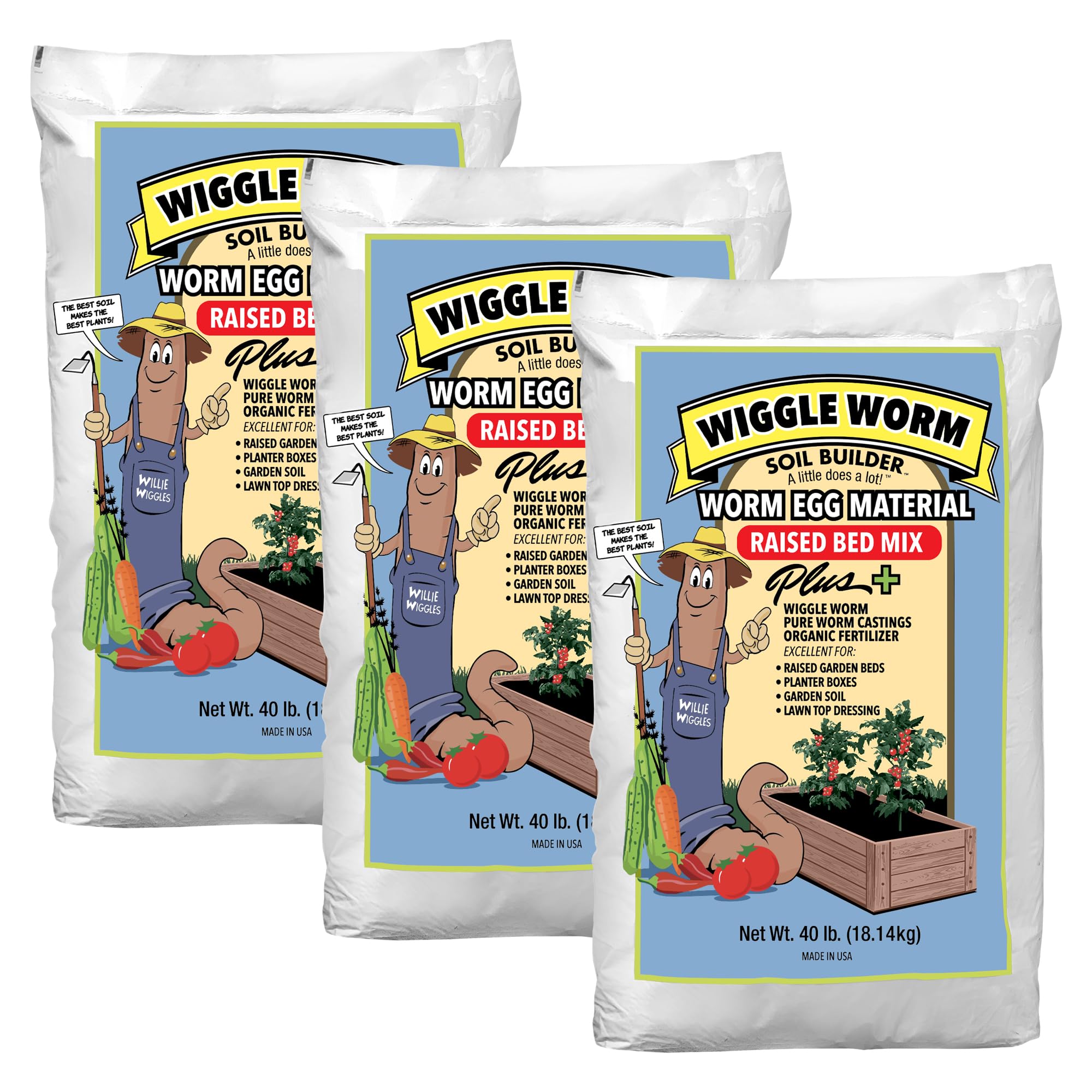
What you actually get at this lower price is three 40-pound bags of high-quality compost soil blended with pure worm castings and trace amounts of worm eggs—a living system, not just soil. The worm eggs may hatch into live worms that burrow through your raised bed, creating tunnels that bring oxygen to roots, drain excess water, and keep producing more nutrient-rich castings. One buyer who used it last year confirmed they now have “a lot of worms in the raised beds,” and shoppers say it is “the best fertilizer boost ever without burning plants” and that plants “take off like wildfire” when you place a scoop under seedlings.
The packaging is basic (simple black-and-white bags), and one reviewer noted “only received 2 bags” instead of 3, which is worth noting if you order. A critical reviewer found “rocks and twigs and chunks of wood” in the mix, requiring sifting—a common issue with compost-based products that are less processed. If you are the kind of gardener who loves the idea of building a self-sustaining soil food web and you do not mind sifting out an occasional rock, this three-pack is a unique way to jump-start your raised bed with living biology.
It is the only product on this list designed explicitly to hatch worms inside your garden, making it perfect for the budget buyer who wants a living soil starter and is willing to accept some rocks and twigs in exchange for that biological boost. skip it if you want a uniform, sift-free mix without any extra effort; the Coast of Maine gives you a more consistent texture.
Why we’d pick it
- Worm eggs can hatch into live worms that improve soil structure long-term
- Pure worm castings provide a gentle, non-burning fertilizer boost
- Buyers report noticeably more vigorous plant growth in treated beds
A few caveats
- May contain small rocks or wood chunks that require sifting
- One buyer mentioned partial shipment; check your delivery carefully
Understanding the Specs
Volume (Cubic Feet)
This is the single most practical number on the bag. It tells you exactly how much area the soil will cover. A 2-cubic-foot bag fills roughly 1.5 average wheelbarrows, while a 1.5-cubic-foot bag fills just over one. To figure out how many bags you need: multiply your bed’s length (feet) by its width (feet) by its depth (feet), then divide by the bag size. A 4×8 bed that is 1 foot deep needs 32 cubic feet total—so you would need about 22 of the 1.5-cubic-foot bags or 16 of the 2-cubic-foot bags.
OMRI Listed vs. Organic Labeling
Any bag can claim “organic” on the front—it is not regulated for soil. OMRI (Organic Materials Review Institute) listed means a third party has confirmed every single ingredient in that bag is allowed for certified organic agriculture. For your home vegetable garden, OMRI listed is the only label that guarantees no synthetic chemicals, sewage sludge, or unapproved fillers made it into the mix. A bag that simply says “natural” or “organic” without the OMRI seal has no such guarantee.
FAQ
Can I just use potting mix in my raised bed?
How deep should the soil be in a raised bed?
What is the white stuff in my bag of raised bed soil?
Final Thoughts: The Verdict
If you want one dependable pick, the soil for raised beds winner is the Coast of Maine Castine Blend because it offers the largest volume per bag (2 cubic feet), the richest and most diverse ingredient list (biochar, mycorrhizae, kelp, and lobster shell), and proven results from buyers using it for three consecutive years. If you want a simpler, tried-and-true ready-to-pour mix at a lower price, grab the FoxFarm Raised Bed Mix. And for the organic purist who wants OMRI certified, manure-free soil that seedlings love, the Purple Cow Organics Raised Bed Mix is your best bet.