
Planting a tree is a generational investment, and the single most common reason new trees fail is that the surrounding soil is either too heavy, too barren, or chemically mismatched for the species. The bag you grab off the shelf determines whether those roots establish fast or slowly suffocate in compacted clay or waterlogged peat.
I’m Rikta — the co-founder and writer behind Lawn Gear Lab. I’ve spent hundreds of hours cross-referencing horticultural data, analyzing soil chemistry breakdowns, and combing through verified owner feedback to isolate exactly which mixes deliver measurable root establishment in real-world planting holes.
Whether you are backfilling a containerized oak, amending a clay pit for a dogwood, or refreshing a blueberry patch, this guide helps you find the right soil for planting trees by matching texture, pH, and nutrition to your specific dig site.
How To Choose The Best Soil For Planting Trees
Tree roots are not like annual plant roots. They need deep, well-aerated corridors to spread beyond the planting hole. A bagged soil that works for a petunia can actually trap a young tree. Focus on these factors before you open the first bag.
Texture and Drainage Profile
Clay-heavy native soil holds too much water and suffocates roots. Sandy soil drains so fast that nutrients wash away. The ideal tree-planting mix contains coarse organic matter, perlite or sand, and enough silt or peat to retain moisture without becoming anaerobic. Look for a crumbly structure that forms a loose ball when squeezed but breaks apart easily.
pH Suitability for the Tree Species
Most ornamental and fruit trees prefer a pH between 5.5 and 7.0. Acid lovers such as dogwoods, blueberries, and rhododendrons demand a pH below 5.5. Alkaline soils lock up iron and cause chlorosis. Test your native soil pH first, then select a soil amendment that shifts the zone toward the target range rather than fighting it.
Organic Content vs. Inert Filler
Composted manure, worm castings, and peat moss feed soil biology and improve water-holding capacity. Pure bark or wood fines decompose too quickly and can temporarily steal nitrogen from the tree. Aim for a mix where at least 30 percent of the volume is decomposed organic matter with a dark, earthy smell, not raw wood chips.
Mycorrhizal Inoculants
Endo and ecto mycorrhizae form a symbiotic network with tree roots, dramatically increasing water and nutrient absorption. Some premium soils already contain these fungi. If yours does not, consider mixing in a mycorrhizal supplement at planting time. This single step can cut establishment stress in half.
Quick Comparison
On smaller screens, swipe sideways to see the full table.
| Model | Category | Best For | Key Spec | Amazon |
|---|---|---|---|---|
| Espoma Organic Vegetable & Flower Garden Soil | Organic In-Ground Mix | Amending native soil for edible trees | 1 Cubic Foot, Myco-Tone inoculant | Amazon |
| R&M Organics Premium Organic Compost | Manure Compost | Top-dressing and enriching poor soil | 10 lb, 5:1 mixing ratio | Amazon |
| Michigan Peat General All Purpose Potting Soil | All-Purpose Potting Mix | Container trees and raised bed planting | 50 lbs, reed sedge peat + perlite | Amazon |
| Coast of Maine Organic Planting Soil for Acid Loving Plants | Low pH Organic Mix | Acid-loving ornamentals and berries | 20 Qt, pH below 5.5 | Amazon |
| Miracle-Gro Potting Mix (3-Pack) | Fertilizer-Enhanced Mix | Quick establishment in containers | 8 qt x3, feeds up to 6 months | Amazon |
| Earth Science Fast Acting Gypsum Granules | Soil Conditioner | Breaking up clay and compacted soil | 5 lb, Nutri-Bond technology | Amazon |
| Midwest Hearth Premium Potting Soil Mix | Balanced pH Mix | Seed starting and small container trees | 8 Dry Quarts, peat+vermiculite+perlite | Amazon |
In‑Depth Reviews
1. Espoma Organic Vegetable & Flower Garden Soil

Espoma’s in-ground mix is the benchmark for amending native soil around food-producing and ornamental trees. The 1-cubic-foot bag is heavy enough to fill a generous planting hole, and the proprietary Myco-Tone blend supplies both endo and ecto mycorrhizae that latch onto tree roots immediately. This biological head start reduces transplant shock noticeably.
The texture leans toward a rich, dark crumble — a blend of peat moss and earthworm castings that holds moisture without turning into a brick. Customers consistently report that trees and shrubs planted in this mix outgrow identical specimens in generic topsoil within a single season. The organic certification guarantees no synthetic growth regulators that can stress newly planted roots.
It is designed to be mixed with native soil at a roughly 50/50 ratio rather than used alone as a potting medium. For container-grown trees you plan to eventually transplant, this ensures the root ball transitions smoothly into the surrounding earth without encountering a dramatic textural boundary.
What works
- Mycorrhizal inoculant gives roots a measurable growth advantage
- Nutrient-dense without burning tender feeder roots
- Large bag size covers deep planting holes
What doesn’t
- Must be mixed with native soil — not a stand-alone potting soil
- Bag can arrive compacted if shipped in extreme heat
2. R&M Organics Premium Organic Compost
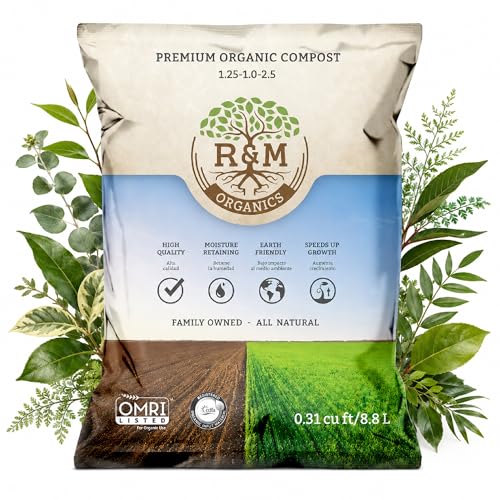
This is not a potting soil — it is a concentrated organic amendment designed to rehabilitate tired or depleted ground before tree planting. Made from fully composted dairy cow manure, it delivers a slow-release nutrient profile that feeds soil microbiology for months. The 10-pound bag goes a long way when applied as a quarter-inch top-dress or mixed into the backfill.
Multiple verified reviews describe it reviving stressed plants, including azaleas damaged by chemical runoff and a tomato plant that was yellow and stalled for six weeks. The material is fine-textured, almost like dark topsoil, with virtually no odor — a real advantage if you are working in a suburban backyard. The 5:1 mixing ratio means one bag can amend roughly 50 pounds of existing soil.
Because it is fully composted and screened, there are no raw manure salts that can burn roots. For tree planting, work it into the native soil at the bottom and sides of the hole. The improved moisture retention alone can reduce watering frequency during the critical first month.
What works
- Instantly improves water-holding capacity in sandy or rocky soil
- Zero offensive smell — suitable for close-to-house planting
- Revives struggling plants quickly according to owner reports
What doesn’t
- Small bag volume requires multiple units for large trees
- Not a complete soil — must be mixed with existing dirt
3. Michigan Peat General All Purpose Premium Potting Soil

When you are planting multiple trees or working with large containers, this 50-pound sack of Michigan Peat delivers serious volume per dollar. The blend combines dark reed sedge peat, horticultural perlite, and sand to create a structure that resists compaction under the weight of a mature root ball. It includes both starter and slow-release fertilizers, so you do not need to mix in additional feed for the first few weeks.
The texture is noticeably lighter than native topsoil, which is exactly what a containerized tree needs. Roots can punch through the perlite pores easily, and the sand fraction improves drainage in pots that lack drainage holes. Several reviews note that the soil arrives moist — this is intentional to prevent the peat from becoming hydrophobic and repelling water on the first watering.
For in-ground tree planting, this mix works best when blended 1:1 with your excavated soil. The main caveat is that some batches have been reported to harbor fungus gnats, likely because the moist peat environment is attractive to pests. If you are planting indoors or in a greenhouse, consider airing the bag out for a day before use.
What works
- Massive bag size covers large planting projects economically
- Light, airy structure prevents root circling in containers
- Pre-moistened texture absorbs water immediately on first use
What doesn’t
- Can contain fungus gnat larvae in moist storage conditions
- Fertilizer content is generic — not tailored to acid lovers
4. Coast of Maine Organic Planting Soil for Acid Loving Plants

If you are planting dogwoods, blueberries, hollies, or any conifer that demands acidic conditions, this is the most target-specific bag on the list. The low-pH formulation hovers below 5.5, created by a blend of sphagnum peat moss, composted manure, and aged bark. It is OMRI-listed for organic use, so no synthetic pH adjusters are involved.
The 20-quart bag is the perfect size for a single medium-sized tree hole or refreshing two blueberry planters. Owners consistently report that berry plants and rhododendrons show rapid new growth within weeks of transplant. The texture retains moisture well without becoming waterlogged — critical for shallow-rooted acid lovers that dry out fast in sandy soil.
One thing to note: this mix is fairly lightweight, dominated by peat. For heavy clay sites, you will want to incorporate some coarse sand or perlite to prevent the peat from creating a perched water table that drowns roots. Used as an amendment rather than straight fill, it is outstanding.
What works
- Precisely formulated low pH for acid-dependent trees
- Rich organic base with no chemical additives
- Lightweight and easy to carry to the planting site
What doesn’t
- Requires drainage amendment in clay-heavy native soils
- Not suitable for neutral or alkaline-preferring tree species
5. Miracle-Gro Potting Mix (3-Pack)

Miracle-Gro’s potting mix is a reliable workhorse for containerized trees and raised-bed planting. The 3-pack of 8-quart bags gives you flexibility — open one bag for a single planting and keep the others sealed. The built-in fertilizer feeds for up to six months, which means you can skip the granular feeding schedule during the establishment phase.
The formula includes a wetting agent that helps the peat-based mix rehydrate quickly, addressing the common complaint of dry peat turning into a water-repelling brick. Users consistently report that potted plants grow noticeably larger compared to unfed plants, which aligns with the product’s marketing claim. The texture stays loose and does not compact into a hard mass even after repeated watering.
For in-ground tree planting, this mix is best used as a 30 percent amendment to the native soil rather than pure fill. The fertilizer salts can concentrate if used straight in a hole with poor drainage, so always blend thoroughly with existing dirt. For pure container growing of young trees, it is one of the most convenient options available.
What works
- Convenient 3-pack with long shelf life for multiple projects
- Built-in nutrients reduce early-season fertilizing chores
- Consistent, predictable texture batch after batch
What doesn’t
- Not organic — contains synthetic fertilizer salts
- Not formulated for acid-loving or heavy-feeding trees
6. Earth Science Fast Acting Gypsum Granules
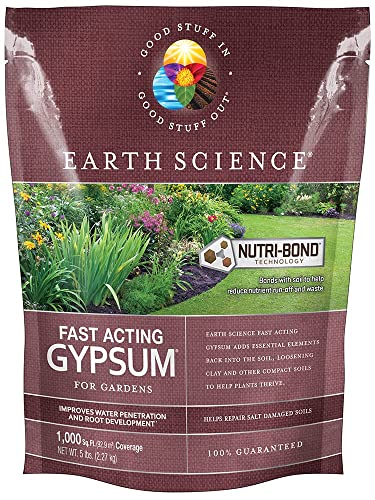
When your native soil is heavy clay that turns into concrete when dry, gypsum is the most effective chemical-free solution for improving structure without digging. Earth Science’s fast-acting granules are finely ground and pelletized, so they dissolve quickly and start flocculating clay particles within weeks. The calcium also counteracts salt damage, which is common in urban soils near salted roads.
The Nutri-Bond technology reduces nutrient runoff by bonding with the soil, which means any fertilizer you apply stays in the root zone longer. Verified reviews from owners with rock-hard clay report that after one application, the soil became workable enough for grass seed to germinate and tree roots to penetrate. The 5-pound bag covers roughly 200 square feet at the recommended rate.
It is important to understand that gypsum adds calcium but does not alter pH. If your clay is also acidic, you will still need lime. For tree planting, spread gypsum over the entire root zone area a few weeks before digging, or mix granules directly into the backfill. It is safe for kids and pets immediately after application.
What works
- Noticeably softens hard clay soil within weeks
- Reduces nutrient leaching through soil bonding technology
- Safe for immediate use around children and animals
What doesn’t
- Does not change soil pH — lime still needed for acidity
- Requires consistent moisture to activate properly
7. Midwest Hearth Premium Potting Soil Mix

Midwest Hearth’s 8-quart potting mix is formulated around the same three-way blend professional growers use: peat moss for moisture, vermiculite for aeration, and perlite for drainage. The pH is pre-balanced to suit a wide range of plants, so you do not need to test or adjust before potting a young tree. The resealable bag is a thoughtful touch for those who use soil in small batches.
Customers compliment its light, fluffy texture that does not harden around roots. One reviewer germinated petunias successfully, while others used it for indoor herbs and outdoor flowers. The absence of weed seeds and pests is a consistent positive note — no fungus gnats or stray grass seeds sprouting in your pots.
The main limitation is volume. At 8 dry quarts, it is just enough for a single small container tree or a few raised-bed pockets. For anything larger, you will need multiple bags, and the cost per cubic foot is higher than bulk options. It works best as a top-dressing or for starting tree seedlings that will be transplanted later.
What works
- Pre-balanced pH removes guesswork for general planting
- Light, fluffy texture encourages rapid root exploration
- No weeds, bugs, or contaminants reported by users
What doesn’t
- Small bag size is impractical for large tree holes
- Must be pre-soaked or it drains too fast initially
Hardware & Specs Guide
Mycorrhizal Inoculants (Myco-Tone)
Endo and ecto mycorrhizae form a symbiotic relationship with tree roots, extending the effective root surface area by up to 100 times. Soils that include these fungi at planting time reduce transplant shock and increase drought tolerance. Espoma’s Vegetable & Flower Garden soil is the only product in this list with a guaranteed proprietary mycorrhizal blend.
pH Buffering Capacity
A soil mix’s ability to resist pH swing determines how long it remains suitable for the tree species. Coast of Maine’s acid-loving formula uses sphagnum peat to maintain a pH below 5.5. Neutral mixes like Midwest Hearth rely on a balanced blend that accepts pH adjustment more readily but can shift if the native soil is heavily alkaline or acidic.
FAQ
Should I use pure bagged soil for the entire planting hole or mix it with native dirt?
Can I use Miracle-Gro Potting Mix directly for planting an oak tree in the ground?
How do I know if my soil pH is correct for the tree I am planting?
Is gypsum safe to use around newly planted tree roots?
Final Thoughts: The Verdict
For most gardeners, the soil for planting trees winner is the Espoma Organic Vegetable & Flower Garden Soil because it combines rich organic matter, mycorrhizal inoculants, and a proven track record for in-ground tree establishment. If you need a targeted acid mix for dogwoods or blueberries, grab the Coast of Maine Acid-Loving Planting Soil. And for breaking up heavy clay before planting, nothing beats the Earth Science Fast Acting Gypsum as a preconditioning step.