
Nothing derails a promising growing season faster than yellowing leaves on acid-loving blueberries or the telltale black rot on the bottom of your prize tomatoes. A soil pH that has drifted too high locks away essential nutrients, and a sulfur deficiency starves plants of the protein-building blocks they need for strong growth. The right bag of sulfur addresses both issues directly, either by lowering alkalinity or supplying a direct dose of this critical secondary nutrient.
I’m Rikta — the co-founder and writer behind Lawn Gear Lab. I’ve spent countless hours comparing the NPK ratios, elemental concentrations, and application formats of dozens of sulfur-based soil amendments, cross-referencing manufacturer claims with hundreds of verified owner experiences to build a guide that cuts through the confusion.
Whether you are battling blossom end rot, trying to turn your hydrangeas blue, or simply feeding a sulfur-hungry crop like onions or garlic, selecting the right amendment means the difference between a thriving garden and a season of frustration. This guide to the best bag of sulfur breaks down the top seven products by format, potency, and intended use so you can match the right sulfur source to your specific soil problem.
How To Choose The Best Bag Of Sulfur
Gardeners often reach for sulfur without understanding the chemical form they are buying. The wrong choice can delay results by months or fail to correct the underlying issue. Match your purchase to your soil’s specific problem: pH correction, nutrient deficiency, or structural improvement.
Elemental Sulfur vs. Sulfate vs. Gypsum
Elemental sulfur (90–99% S) requires soil bacteria to convert it into plant-available sulfate, a process that takes weeks to months depending on soil temperature and moisture. It is the most concentrated and cost-effective option for long-term pH reduction. Ammonium sulfate (21-0-0 + 24% S) delivers nitrogen alongside fast-acting sulfate, making it ideal for green growth and soil acidification in a single pass. Gypsum (calcium sulfate) provides sulfur without altering pH, making it the best choice for correcting blossom end rot in tomatoes and peppers without risking soil over-acidification.
Granule Size and Dissolution Rate
Fine powders spread easily but can blow away or clump if not worked into the soil immediately. Pelletized or granular forms are heavier, disperse uniformly with a broadcast spreader, and dissolve more slowly, providing a sustained release of sulfur over several weeks. For lawns and large garden beds, granular formulations with Nutri-Bond technology minimize runoff and keep the sulfur where roots can access it.
Organic Certification and Regulatory Compliance
If you are managing a certified organic plot, the amendment must carry OMRI (Organic Materials Review Institute) listing to comply with USDA National Organic Program regulations. Both gypsum and some elemental sulfur products carry this designation. Always verify the label before ordering if organic compliance is a non-negotiable requirement for your operation.
Quick Comparison
On smaller screens, swipe sideways to see the full table.
| Model | Category | Best For | Key Spec | Amazon |
|---|---|---|---|---|
| Greenway Biotech Organic Sulfur Powder | Elemental Sulfur | Long‑term soil pH reduction | 99% elemental sulfur concentration | Amazon |
| Earth Science Fast Acting Sulfur Granules | Granular Sulfur | Acid‑loving plants & lawn greening | Nutri‑Bond runoff reduction technology | Amazon |
| Organic Gypsum Powder 5LB | Gypsum | Blossom end rot in tomatoes | OMRI Listed / pH neutral | Amazon |
| Ammonium Sulfate 21‑0‑0 (The Grow Co) | Ammonium Sulfate | Rapid greening & soil acidification | 21% N + 24% Sulfur ratio | Amazon |
| Ammonium Sulfate AMS 21‑0‑0 (Cz Garden) | Ammonium Sulfate | Bulb crops & weed‑killer turbocharging | Water‑soluble granular formulation | Amazon |
| Gypsum Granules (Cz Garden) | Gypsum | Clay soil conditioning & salt repair | Granule form for broadcast spreaders | Amazon |
| Earth Science Fast Acting Gypsum | Gypsum | Clay‑breaker & pet‑urine spot repair | Pelletized with Nutri‑Bond | Amazon |
In‑Depth Reviews
1. Greenway Biotech Organic Sulfur Powder
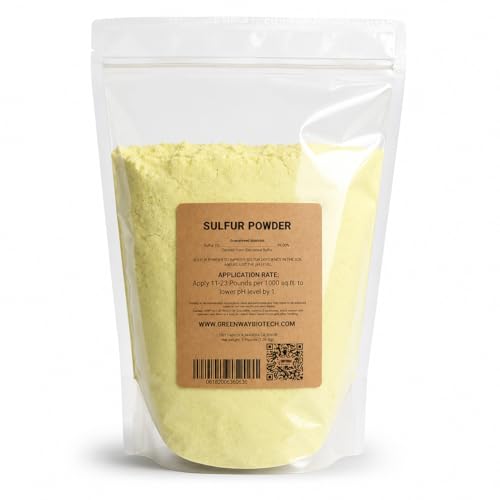
This product tops the list because its 99% elemental sulfur concentration represents the most potent single-source bag you can buy for long-term soil pH reduction. The fine powder texture means it integrates into the soil profile quickly when tilled or watered in, though the absence of an easy-seal mechanism on the bag means you should transfer it to an airtight container for storage. Multiple verified buyers report dramatically improved yields on potatoes and strawberries, and several use it as an effective tick and chigger repellent by dusting socks and pant legs.
The real standout metric is the concentration: at 99% elemental sulfur, you need roughly one-third the volume of this product compared to a lower-grade amendment to achieve the same pH drop. The trade-off is the conversion time. Because it is elemental rather than sulfate, soil microbes must first oxidize the sulfur before roots can uptake it — expect visible pH changes in four to eight weeks depending on soil temperature. Buyers using it for blueberries and azaleas confirm it works reliably once the biological process completes.
A small but recurring frustration is the bag’s press-seal closure, which multiple reviews note is difficult to reseal properly. For the average home gardener, the 3-pound bag provides a multi-season supply, but you will want a dedicated container to keep the powder dry and prevent clumping. The fine dust also requires careful handling on windy days to avoid inhalation or drift onto non-target plants.
What works
- Highest elemental sulfur concentration (99%) for maximum pH-lowering per pound.
- Versatile beyond soil pH — doubles as a fungicide and pest repellent in the garden.
What doesn’t
- Bag seal is weak and difficult to reclose; an airtight transfer container is necessary.
- Slow soil-microbe conversion means results are not immediate — plan ahead for season preparation.
2. Earth Science Fast Acting Sulfur Granules

Earth Science breaks the trade-off between fast action and long-term soil bonding with its patented Nutri-Bond technology. Unlike loose powders that can wash away in the first heavy rain, these granules bond with soil particles to keep sulfur where roots can access it. Verified buyers report visible color improvement on hydrangeas and azaleas within two weeks, and the pelletized format spreads cleanly through a rotary or drop spreader — no dust clouds or clumping.
The 5-pound bag covers roughly 500 square feet, making it a practical choice for lawn applications and medium-sized garden beds. The granular form dissolves gradually over several waterings, providing sustained sulfate availability rather than a single flush. One buyer noted that the pellets took multiple cycles to break down fully, which is actually a feature for gardeners seeking slow release rather than a bug. The product is safe for kids and pets immediately after application, a feature confirmed by multiple family-garden owners.
The limitation is that this is not as concentrated as a pure elemental powder — the granule carrier dilutes the sulfur content relative to the Greenway product. For deep soil pH correction on heavily alkaline clay, you may need a higher application rate per square foot. However, for maintenance applications on established acid-loving plants and turf, the balanced formulation and runoff-resistant bond make this the most user-friendly granular option.
What works
- Nutri-Bond technology reduces nutrient runoff by up to 50% compared to standard granules.
- Compatible with broadcast spreaders and safe for immediate lawn use after application.
What doesn’t
- Granules dissolve slower than powder; not ideal if you need very rapid pH response.
- Less concentrated than 99% elemental sulfur — requires larger volume for the same pH change.
3. Organic Gypsum Powder 5LB

For gardeners who need sulfur but cannot risk lowering their soil pH further, this OMRI Listed gypsum powder delivers calcium and sulfate-sulfur without any pH shift. The 5-pound heavy-duty resealable pouch is a standout packaging improvement over many alternatives — it pours cleanly and seals tightly for long-term storage. Verified buyers consistently report that it stops blossom end rot on Roma and beefsteak tomatoes within weeks, and multiple growers use it as a preventative drench at transplant time.
The powder format dissolves quickly in water for soil drench application, with the recommended rate of 1 to 2 ounces per gallon. This makes it far more versatile than granular gypsum for potted plants and container gardens where a surface broadcast would be wasteful. The OMRI certification is the key differentiator here: organic producers can use this product on certified land without risking their compliance status, verified by the USDA National Organic Program reference on the label.
The downside is that gypsum provides zero pH adjustment. If your soil is also alkaline (above pH 7.0), you will need a separate sulfur product to address both the calcium deficiency and the pH imbalance. Some buyers also note that the powder can clog sprayer nozzles if not fully dissolved — pre-mixing in a bucket and filtering through a screen resolves this.
What works
- OMRI Listed for certified organic production — safe for compliance-sensitive growers.
- Resealable pouch with easy-pour spout design keeps the powder dry and accessible.
What doesn’t
- Does not lower soil pH — ineffective as a standalone amendment for alkaline soil correction.
- Powder can clump in sprayers if not fully pre-dissolved before application.
4. Ammonium Sulfate 21‑0‑0 (The Grow Co)

When a lawn has turned pale yellow or garden alliums are failing to size up, this ammonium sulfate formulation delivers a dual punch of fast-release nitrogen and sulfate sulfur. The 21-0-0 analysis is specifically engineered for plants that crave both green vegetative growth and soil acidification — verified buyers report that side-dressing onions and garlic with this product produced noticeably larger bulbs by harvest time. One reviewer used it to correct a soil test showing zero nitrogen, and plants returned to deep green within days.
The granular format dissolves readily in water for liquid feeding or can be broadcast dry around plant bases. Its versatility extends beyond direct feeding: a popular trick among budget-conscious gardeners is mixing ammonium sulfate with post-emergent herbicides to overcome weed resistance, as the sulfur and nitrogen increase foliar absorption rates. The 4-pound bag covers roughly 100 square feet at label rates, making it a mid-scale option for raised beds and small lawns.
Because this is ammonium-based, it can burn tender roots if over-applied or used during drought. The rapid nitrogen release also means multiple applications are needed through the growing season for sustained effect, unlike a single annual application of slow-release elemental sulfur. Users with very sandy soil should also split applications to prevent the nitrogen from leaching below the root zone before plants can use it.
What works
- Rapid greening — both nitrogen and sulfur are immediately available in plant-usable sulfate form.
- Multi-purpose — effective as a soil acidifier, side-dressing fertilizer, and weed-killer synergist.
What doesn’t
- Burn risk on seedlings and drought-stressed plants if label rates are exceeded.
- Requires repeated applications; a single treatment does not provide season-long correction.
5. Ammonium Sulfate AMS 21‑0‑0 (Cz Garden)

From the same manufacturer as our top gypsum pick, this Cz Garden ammonium sulfate offers the exact 21-0-0 + 24% sulfur analysis but in a water-soluble granular form that dissolves faster than the The Grow Co equivalent. Verified onion growers confirm that applying this every two weeks during the bulbing stage produced notably larger, more pungent harvests, even during a drought year when organic-only fertilizers failed to keep pace. The resealable pouch design is shared with their gypsum line and works well for repeated access throughout the season.
A less obvious but highly valued use case is its role as a weed-killer booster. Multiple buyers report mixing a small amount of this ammonium sulfate with glyphosate-based products to overcome tough perennial weeds, as the ammonium ion increases the herbicide’s absorption rate through leaf cuticles. The cost per application is minimal because only a small quantity is needed per gallon of spray solution.
The primary weakness is the same as any ammonium source: it contributes to soil acidification more aggressively than elemental sulfur, meaning soil pH must be monitored annually to avoid over-correction. Users report that it works best as a seasonal feed rather than a single annual amendment, and it should not be used on plants that prefer neutral-to-alkaline soil unless acidification is the explicit goal.
What works
- Dissolves very quickly in water for liquid feeding or spray-based applications.
- Proven yield increase on heavy-feeding bulb crops like onions and garlic.
What doesn’t
- Soil pH needs regular monitoring to prevent excessive acidification over multiple seasons.
- Not suitable for no-till surface application without immediate watering to prevent volatilization.
6. Gypsum Granules (Cz Garden)

For gardeners managing larger plots with broadcast spreaders, this granular gypsum from Cz Garden provides the same calcium-sulfur chemistry as the powder version but in a form factor that handles far more easily for field-scale application. The OMRI Listing remains intact, so organic certification compliance is preserved. Verified buyers praise its effectiveness on clay-heavy soil that has been compacted by equipment or foot traffic, noting improvements in water penetration and root development over the course of a single growing season.
The 5-pound bag covers roughly double the area of the powder form because the granules flow more uniformly and are less prone to wind drift. It also addresses salt damage from pet urine and road salt runoff, which is a common suburban complaint. One reviewer specifically used it to reclaim a lawn damaged by a sewer line trench, reporting that the soil softened enough for grass to re-establish where it had previously refused to root.
The granule size is the limiting factor for gardeners who need fast dissolution. Unlike the powder form that dissolves in minutes, these granules take days to weeks to break down fully depending on moisture and microbial activity. For container plants or immediate correction of blossom end rot on a single tomato plant, the powder version is the better choice. The granules also require incorporation into the top few inches of soil for best results rather than surface broadcasting.
What works
- Excellent for clay soil conditioning — improves soil structure and root penetration.
- OMRI Listed and USDA-compliant for organic production systems.
What doesn’t
- Slow dissolution rate compared to powder form; not for immediate symptom correction.
- Requires incorporation into soil for best results; surface broadcasting alone is inefficient.
7. Earth Science Fast Acting Gypsum
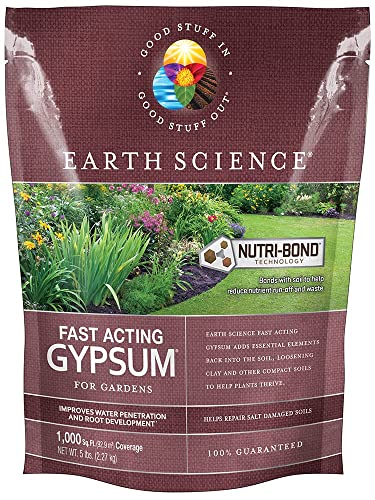
This pelletized gypsum shares the same Nutri-Bond technology as Earth Science’s sulfur granules, meaning it reduces nutrient runoff by up to a claimed 50% while physically conditioning compacted clay. Verified owners report that its small pellet size dissolves significantly faster than the large, rock-like gypsum blocks sold at big-box retailers, with visible soil softening in the top inch of clay within two weeks. This rapid breakdown is a key advantage for anyone dealing with concrete-like soil after construction or heavy equipment traffic.
The specific use case that sets this product apart is pet-urine spot repair. The gypsum neutralizes the salt damage from dog urine while the calcium supports new grass growth. Multiple reviews confirm that lawns treated with this product showed recovery in urine-burn rings within a growing season. The safety profile is also family-friendly: the product is labeled safe for immediate kid and pet contact after application, unlike some chemical soil conditioners that require a waiting period.
The trade-off is that this is a gypsum product — it provides no pH-lowering effect and contains no nitrogen. Gardeners who need both acidification and calcium should pair this with a separate sulfur or ammonium sulfate amendment. The 5-pound bag is also somewhat small for large lawns; users with half-acre properties may need to purchase multiple bags or opt for a bulk alternative.
What works
- Small pellets dissolve much faster than standard gypsum blocks — visible results in two weeks.
- Nutri-Bond technology effectively reduces calcium and sulfur runoff in sloped or heavy-rain areas.
What doesn’t
- Does not alter soil pH; must be combined with elemental sulfur for acid-loving plants.
- Bag size (5 pounds) is modest — larger properties will require multiple purchases.
Hardware & Specs Guide
Elemental Sulfur Content
The percentage of elemental sulfur in a bag directly determines how much product you need to achieve a target pH drop. A 99% elemental formulation like the Greenway Biotech powder is roughly four times more concentrated than a typical granular product, meaning you need less physical volume to correct the same pH imbalance. However, elemental sulfur must first be oxidized by soil bacteria into sulfate, so it works slower than sulfate-based products. For fall application to prepare beds for spring planting, high-concentration elemental sulfur is the most efficient choice.
NPK vs. Single-Nutrient Analysis
Ammonium sulfate (21-0-0 + 24% S) delivers a complete nitrogen-plus-sulfur package that doubles as a general-purpose fertilizer. Gypsum products (0-0-0 + calcium and sulfur) provide zero NPK value and function purely as soil conditioners and secondary-nutrient supplements. Choosing between them depends on whether your primary goal is feeding the plant or amending the soil chemistry. For nitrogen-hungry crops like corn, onions, and leafy greens, ammonium sulfate offers dual benefits in a single application.
FAQ
How long does elemental sulfur take to lower soil pH?
Can I use ammonium sulfate on blueberries or azaleas?
What is the difference between gypsum and garden sulfur?
Final Thoughts: The Verdict
For most gardeners, the best bag of sulfur winner is the Greenway Biotech Organic Sulfur Powder because its 99% elemental concentration delivers the most pH-correcting power per pound, making it the most efficient long-term solution for acidifying alkaline soil. If you need fast green-up and sulfur feeding in a single step, grab the Ammonium Sulfate 21-0-0 from The Grow Co. And for blossom end rot without changing your pH, nothing beats the Organic Gypsum Powder 5LB — it is OMRI Listed and delivers results within weeks for container tomatoes and peppers.