
Your Japanese maple’s leaves are turning yellow between the veins, the edges are browning, and that tree you paid a premium for is looking more like a stressed-out stick. You’re not overwatering it. The culprit is almost certainly soil pH that’s too high—turning essential micronutrients like iron and manganese into unavailable compounds locked in the dirt. Fixing that starts with choosing the right growing medium, not dumping more fertilizer on a losing battle.
I’m Rikta — the co-founder and writer behind Lawn Gear Lab. I’ve spent hundreds of hours cross-referencing pH tolerance tables, comparing organic certification standards, and analyzing owner feedback on dozens of acidic soil blends to see which ones actually reverse chlorosis in the ground, not just on the bag label.
Whether you’re planting a new specimen or rescuing a struggling one, the right soil for japanese maple in ground must feature a low pH profile, enhanced drainage, and organic ingredients that release nutrients slowly without burning tender feeder roots.
How To Choose The Best Soil For Japanese Maple In Ground
Buying soil for an in-ground Japanese maple isn’t a grab-and-bag decision. The wrong mix can lock out nutrients, create a soggy root zone, or fail to provide the consistent acidity these trees need across changing seasons. Focus on what actually moves the needle for established roots.
pH Profile and Buffering Capacity
Japanese maples demand a soil pH between 5.5 and 6.5. The key word is “buffering”—how well the soil resists drifting back toward alkaline conditions after rain or irrigation. Blends containing peat moss, pine fines, or elemental sulfur hold acidity longer than simple topsoil mixes. A product listing must state a low pH formulation; vague claims of “balanced” usually means too neutral for this tree.
Drainage versus Moisture Retention
Maple roots rot in standing water, yet they desiccate quickly in sandy mixes. The winning balance comes from components like perlite for aeration, sphagnum peat moss for even moisture-holding, and composted bark to prevent compaction over time. In-ground planting means you can’t easily replace the soil once the tree is set—initial texture matters for years.
Organic Matter and Nutrient Release
Too much nitrogen forces leggy growth and burns fine root tips. You want a slow-release organic base that breaks down gradually. Composted manure, worm castings, and kelp meal provide micronutrients without a sudden chemical shock. Look for OMRI-listed products that prove the ingredients are natural and free of synthetic additives.
Quick Comparison
On smaller screens, swipe sideways to see the full table.
| Model | Category | Best For | Key Spec | Amazon |
|---|---|---|---|---|
| Coast of Maine Acid-Loving Planting Soil | Premium Blend | In-ground acid-loving trees | Low pH with composted manure | Amazon |
| Soil Sunrise Acid-Loving Potting Mix | Artisan Mix | Container & in-ground beds | Pine needle & bark mulch | Amazon |
| Coast of Maine Bar Harbor Blend | Multi-Purpose | Raised beds & containers | Lobster & kelp meal mix | Amazon |
| Bonsai Jack Universal Organic Mix | Gritty Mix | Bonsai & specimen maples | Optimal pH 6.4 screened | Amazon |
| Espoma Holly-Tone Fertilizer (2-Pack) | Fertilizer | Feeding established trees | 4-3-4 analysis with sulfur | Amazon |
| Midwest Hearth Premium Potting Mix | General Purpose | Seed starting & small pots | 8-quart resealable bag | Amazon |
| Soil Sunrise Citrus Tree Potting Mix | Specialty Blend | Citrus & acid-fruiting plants | Balanced pH for citrus | Amazon |
In‑Depth Reviews
1. Coast of Maine Organic & Natural Planting Soil for Acid Loving Plants

This is not a generic bagged topsoil. Coast of Maine’s formula is built deliberately with sphagnum peat moss, composted manure, and aged bark to bring the pH down to a range that acid-loving maples demand. The 20-quart volume is generous enough to amend a medium-sized planting hole or to top-dress an established tree without needing multiple bags. Reviews consistently note that this soil revitalized struggling shrubs and reversed leaf yellowing within weeks of application.
The texture is lightweight and crumbly, which is exactly what Japanese maple roots need to spread without hitting compacted layers. It holds moisture evenly without becoming waterlogged, a trait that matters most during heavy spring rains when the risk of root rot spikes. The OMRI listing confirms no synthetic chemicals are present, so you aren’t accidentally dumping salts into the root zone.
One practical consideration: because this mix is rich in organic matter, you may see some settling after the first few watering cycles. Plan to add a thin top layer annually to maintain consistent soil contact with the surface roots. For the balance of acidity, drainage, and organic integrity, this is the closest you can get to a turnkey solution for in-ground Japanese maples.
What works
- Proven low pH blend that addresses chlorosis directly
- Generous 20-quart size covers most in-ground planting holes
- OMRI organic certification ensures no synthetic additives
What doesn’t
- Organic material settles over time; annual top-dressing recommended
- Not sold in larger bulk bags for full-bed installation
2. Coast of Maine Organic Bar Harbor Blend Potting Soil (16 QT)
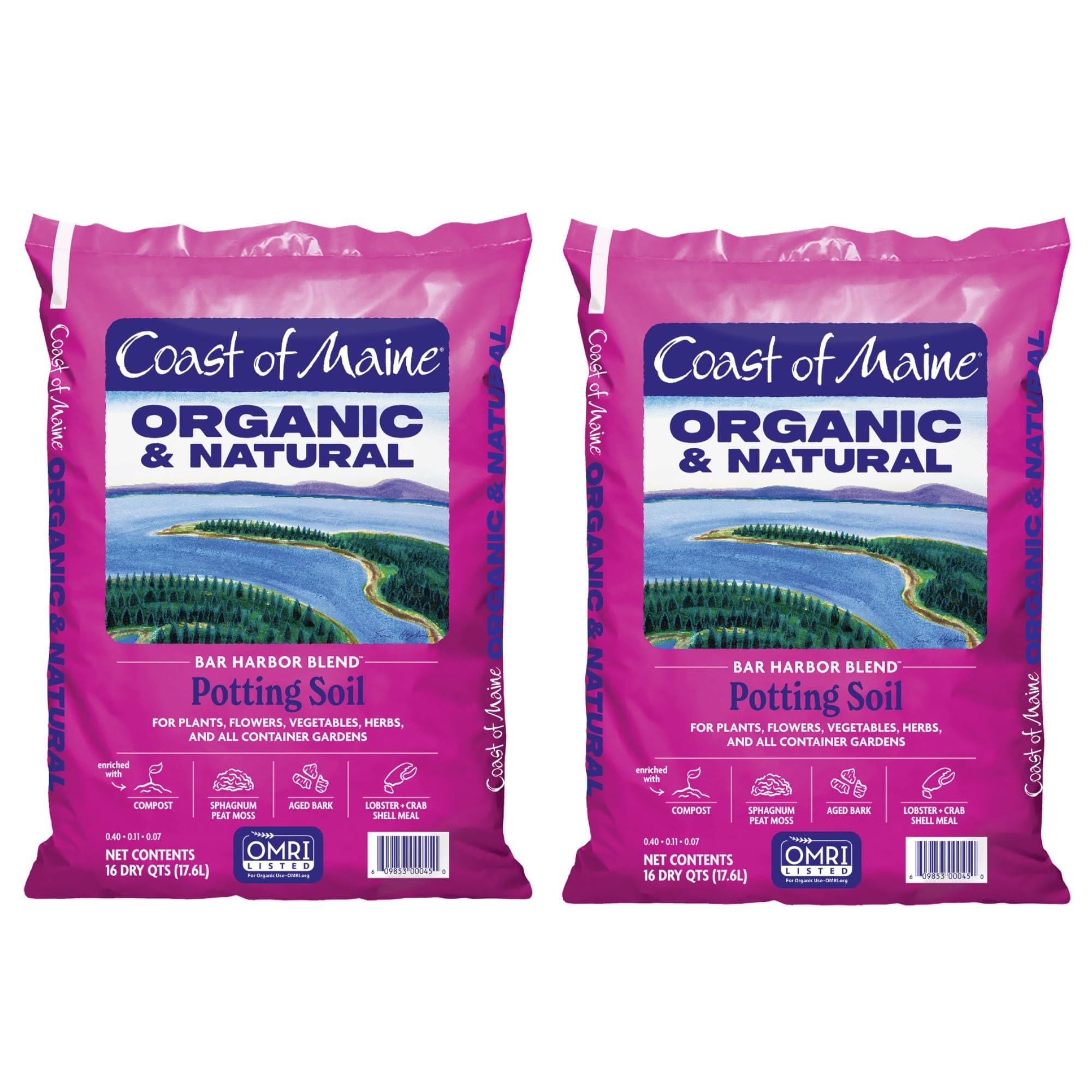
The Bar Harbor Blend is the Swiss Army knife of this lineup. While its primary marketing isn’t exclusively for acid-loving plants, the inclusion of sphagnum peat moss and lobster-crab shell meal creates a slightly acidic, nutrient-dense environment that Japanese maples respond to well. The 16-quart bag holds a surprising 14 pounds because of the compost and perlite density, making it a heavy hitter for filling raised beds or large containers near in-ground trees.
Owner feedback highlights the dark, rich color and absence of weed seeds—a sign that the compost was properly hot-cured before bagging. The slow-release nitrogen from the kelp meal provides steady feeding without burning tender roots, which is critical for newly planted maples still adjusting to their site. The texture is chunky enough to maintain air pockets while staying cohesive around root balls.
One trade-off: the lobster meal can give off a faint marine odor for the first few days after application, especially if watered in. It dissipates quickly but might be noticeable in enclosed spaces. For in-ground use around an ornamental tree, this is rarely an issue. It’s the best multi-purpose organic option if you want one soil that can also feed your perennials and veggies.
What works
- Rich organic composition with natural slow-release nutrients
- Excellent aeration from perlite prevents root suffocation
- No weed seeds or synthetic fillers in the mix
What doesn’t
- Mild oceanic odor initially
- Weight makes it less convenient for carrying multiple bags
3. Bonsai Jack Universal Organic Bonsai Soil Mix #221 (2 Gallons)
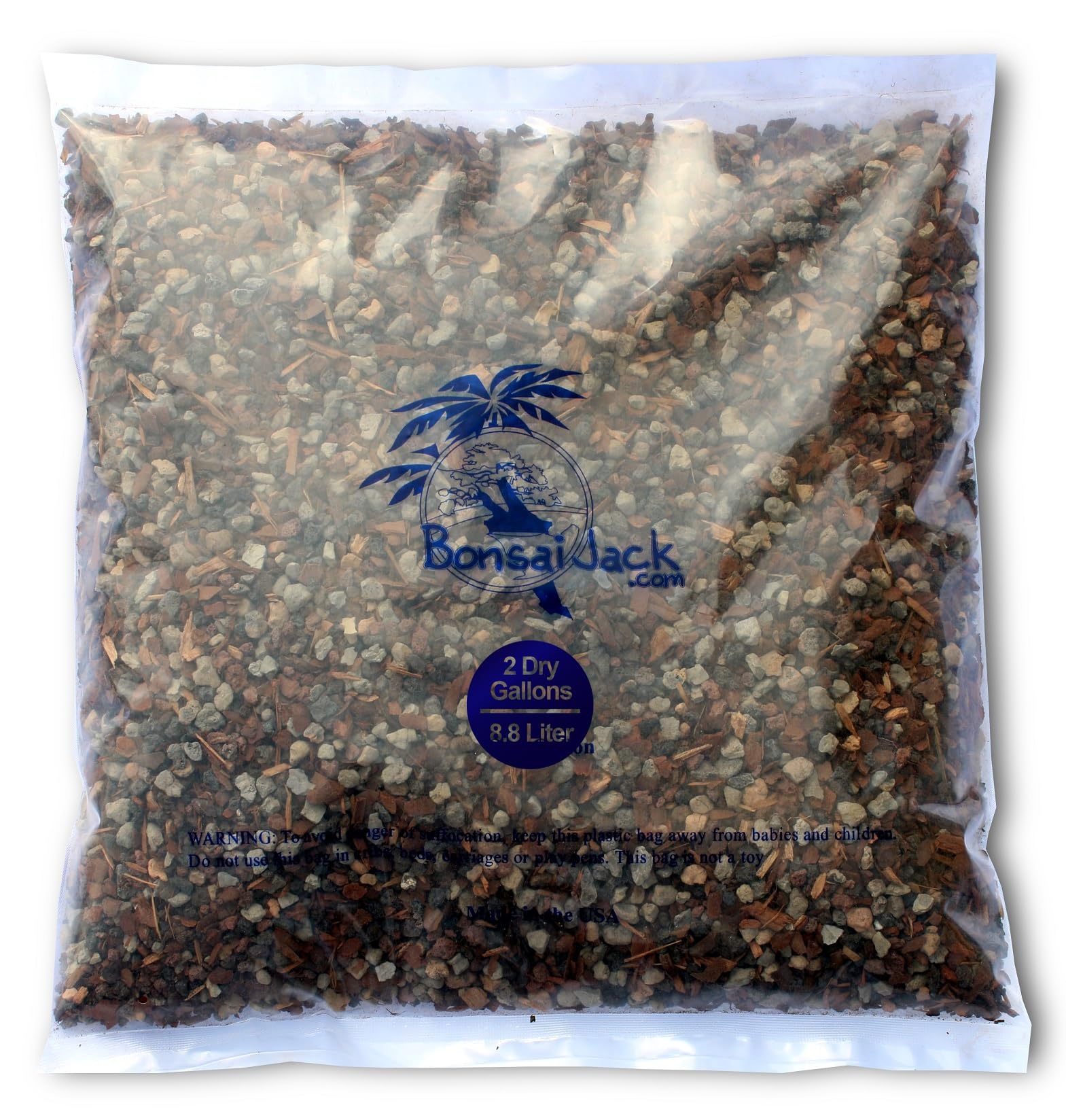
Bonsai Jack #221 operates in a different league of precision. The mix is screened and pre-washed to remove dust and fines, resulting in a gritty, almost granular texture that provides unmatched drainage. The stated pH of 6.4 sits right at the upper edge of the maple’s happy zone, and the pine bark content gently nudges acidity downward as it decomposes. For a collector-grade Japanese maple planted in-ground with heavy clay soil, this is an excellent amendment to add to the backfill for structural aeration.
Long-term users report the mix holds together for three years before showing significant breakdown, which is impressive for an organic medium. The particle size encourages fine root branching without compacting under rain weight. A 2-gallon quantity won’t fill a large planting hole alone, but it’s perfect for blending one-to-one with native soil or using around a specimen that needs superior drainage in a low spot.
The obvious hit: price per quart is higher than any bagged mix here. You’re paying for the screening process and the consistency. For gardeners who only need to amend a small area around a single high-value tree, the cost is justifiable. For full-bed renovation, you’d need multiple bags, which pushes the budget upward quickly.
What works
- Pre-washed, dust-free consistency prevents compaction
- Optimal pH precision for acid-loving ornamentals
- Long-lasting structure doesn’t decompose quickly
What doesn’t
- Premium cost per quart versus bulk alternatives
- Small bag volume limits large-area application
4. Soil Sunrise Acid Loving Plant Potting Soil Mix (12 Quarts)
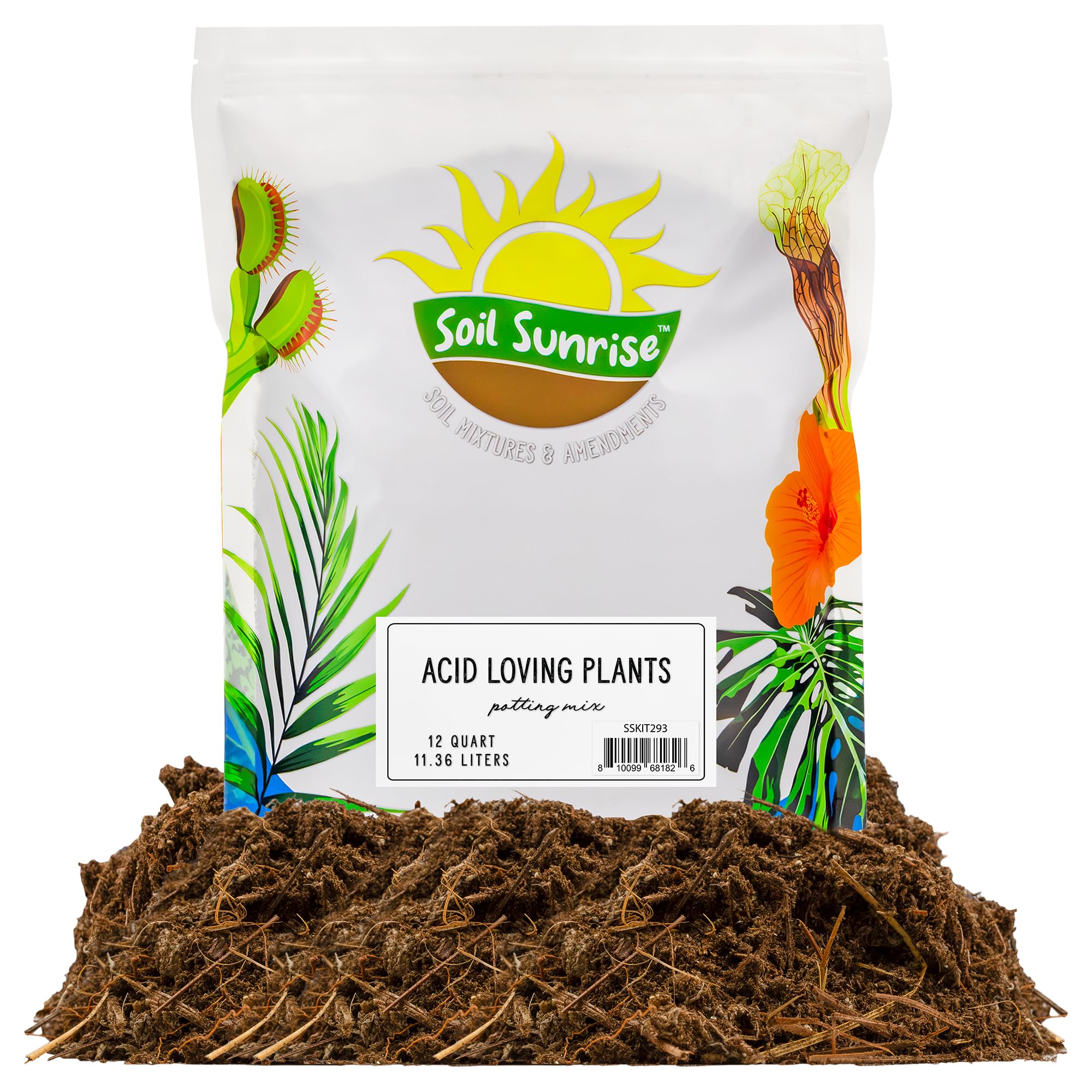
Soil Sunrise takes a different approach by incorporating pine needle mulch and pine bark mulch as natural acidifiers, rather than relying solely on peat moss. This gives the mix a coarser, airier structure that resists matting down over time. The 12-quart size is compact, but the blend is dense enough with sphagnum moss and vermiculite to hold usable moisture without turning soggy. Several reviewers noted immediate growth improvement in acid lovers like gardenias and fuchsias.
The Kentucky-based production means this is a small-batch artisan product, not a commodity blend. The pine needle component introduces tannins that lower pH gradually, which can be more stable than a quick chemical drop. The bag is smaller than it appears in online photos, so double-check the volume if you have a large hole to fill. It works best as a precise amendment around the root ball rather than a full soil replacement.
One minor hiccup: a few users mentioned the mix can become hydrophobic if allowed to dry out completely, requiring careful pre-moistening before planting. Once hydrated, it accepts water normally. For the price point, this is the strongest dedicated acid-loving mix you can buy without stepping up to the premium tier.
What works
- Pine-based ingredients provide gradual, stable acidification
- Light and fluffy texture supports fine root development
- Small-batch production; consistent quality control
What doesn’t
- Bag size is smaller than packaging implies
- Can repel water if allowed to dry completely
5. Espoma Organic Holly-Tone 4-3-4 Fertilizer (2-Pack)
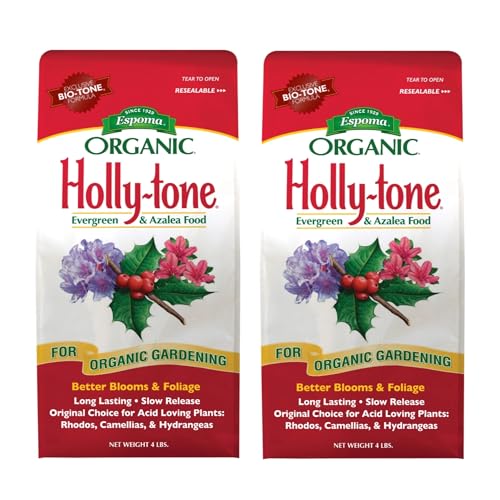
Holly-Tone is not a soil itself—it’s a granular fertilizer designed to drop the pH around existing plants and feed them simultaneously. The 4-3-4 analysis with added sulfur makes it an ideal companion to the soil blends listed above, especially for established Japanese maples that need a mid-season boost. The 2-pack gives you 8 total pounds, enough to treat multiple trees across two applications (spring and fall, as Espoma recommends).
Customers frequently report dramatic improvement in leaf color and vigor within weeks of application on struggling rhododendrons, azaleas, and maples. The Bio-tone microbial additive helps break down the organic materials into bioavailable nutrients without causing a salt spike. For in-ground trees, you simply scatter the granules around the drip line and water in—no mixing or digging required.
The limitation: this is a supplement, not a soil replacement. If your maples are already planted in alkaline native soil, adding Holly-Tone alone won’t fix the structural drainage issues. Use it as part of a one-two punch with a proper acidic planting mix for best results. The powder form can also float away in heavy rain if not watered in thoroughly.
What works
- Proven ability to green up chlorotic leaves quickly
- Organic formulation safe for sensitive roots
- Convenient 2-pack covers multiple trees for a season
What doesn’t
- Requires incorporation with proper acidic soil for best results
- Granules can wash away if not watered in immediately
6. Soil Sunrise Citrus Tree Potting Soil Mix (12 Quarts)

This mix targets citrus trees specifically, but the soil science overlaps directly with what Japanese maples need: superior aeration, balanced pH, and excellent nutrient retention. The 12-quart bag contains a lightweight blend of peat moss, perlite, and bark fines that creates a fluffy medium. Japanese maple roots, which are shallow and fibrous, will appreciate the lack of compaction and the constant oxygen exchange around the root ball.
User reviews frequently mention that the mix holds moisture at the ideal level—moist but not saturated—and that citrus trees doubled in size after repotting. For in-ground maples, this performs best when used as a backfill amendment in sandy or loamy native soil. The balanced pH is less acidic than the dedicated acid blends above, so you may need to pair it with a sulfur-based acidifier if your base soil is already neutral or alkaline.
The packaging is a box with a plastic inner bag, which some users found inconvenient for storage and resealing. The volume is also oriented toward container use; for a full in-ground planting hole, you’ll need more than one bag. It’s a solid alternative if you’re planting both citrus and maples and want one mix for both tasks, but it’s not the primary solution for a dedicated maple bed.
What works
- Light, fluffy texture promotes excellent root aeration
- Holds moisture evenly without waterlogging
- Works well as a backfill amendment for sandy soils
What doesn’t
- Not acidic enough for highly alkaline native soils
- Small bag size requires multiple purchases for large holes
7. Midwest Hearth Premium Potting Soil Mix (8 Dry Quarts)

Midwest Hearth offers a straightforward peat-vermiculite-perlite blend that prioritizes texture and consistency. The 8-quart bag is compact and resealable, making it a convenient option for small-scale planting or for mixing with native garden soil. The pH is described as balanced, though it leans slightly acidic due to the sphagnum peat component. For a Japanese maple that’s going into a relatively neutral yard bed, this can serve as a cost-effective base to which you add your own sulfur or pine fines.
Reviews consistently note the mix is free of weed seeds, mold, and fungal gnats—a sign of quality production. The fluffy texture creates a welcoming environment for tender feeder roots, and the vermiculite helps retain just enough moisture to reduce watering frequency. Several users specifically praised its performance as a seed-starting medium, which reflects the fine, consistent particle size.
The trade-off is volume and acidity depth. 8 quarts is roughly one-third of a cubic foot, which disappears quickly in an in-ground planting hole. You’ll need several bags to prepare a proper root zone. And the pH control is general, not specifically tuned to the 5.5–6.0 range that maples prefer. It’s the best budget-friendly starting point if you’re willing to customize with additional acidifiers.
What works
- Clean, weed-free composition straight out of the bag
- Resealable packaging keeps unused mix fresh
- Light, airy texture ideal for delicate root systems
What doesn’t
- Small bag size insufficient for large in-ground installations
- General pH range may need manual acidification adjustment
Hardware & Specs Guide
pH Range for In-Ground Maples
Japanese maples require a soil pH between 5.5 and 6.5 to access iron, manganese, and zinc. Above 6.5, these nutrients form insoluble compounds that the roots cannot absorb, leading to interveinal chlorosis—yellow leaves with green veins. Below 5.0, aluminum and manganese can become toxic. A soil test kit is a cheap investment before choosing any blend.
Particle Size and Soil Texture
Maple roots are shallow and fine; they need gaps for air exchange and water movement. Blends with a mix of coarse pine bark, perlite, and peat moss create a fractal porosity that holds moisture against gravity while draining excess. Soil that is too fine (silt-heavy) collapses into a dense block; too coarse (pure sand) drains instantly and dries out roots.
Organic Matter Content
Look for at least 30–40% organic matter by volume. Composted manure, peat moss, and worm castings provide both nutrients and structure. Avoid blends with high percentages of raw manure or unaged wood chips, which can rob nitrogen from the soil as they decompose. OMRI-listed products give you confidence the organic matter was properly processed.
Drainage Assessment
Before planting, dig a 12-inch-deep hole, fill it with water, and time how long it takes to drain. Eight inches per hour is ideal. If water sits for more than four hours, you need to amend with perlite, coarse sand, or pine bark to create macropores. Japanese maples are among the most sensitive ornamental trees to poorly drained soil.
FAQ
Can I use regular potting soil for an in-ground Japanese maple?
How often should I test soil pH around an established maple?
Will adding pine needles to the soil lower pH enough for a maple?
Final Thoughts: The Verdict
For most gardeners, the soil for japanese maple in ground winner is the Coast of Maine Acid-Loving Planting Soil because it delivers a proven low pH, OMRI-listed organic integrity, and a bag size large enough to amend a real planting hole. If you need a lighter, more aerated mix for a specimen tree with drainage concerns, the Bonsai Jack #221 provides unmatched precision and longevity. And for budget-conscious gardeners who want to customize their own blend, the Midwest Hearth Premium Mix is a clean, flexible base to which you can add sulfur and pine fines. No single product fixes a poorly chosen site, but starting with the right medium changes everything for a Japanese maple’s first decade in the ground.