
The single biggest killer of indoor tropical plants isn’t neglect — it’s overwatering, and the root cause is almost always standard potting soil that holds too much moisture. Tropical aroids, ferns, and palms native to humid forest floors need a chunky, fast-draining mix that mimics their natural environment, not dense peat-based blends designed for outdoor flower beds. Choosing the wrong medium leads to suffocated roots, fungal gnats, and the slow decline of otherwise healthy houseplants.
I’m Rikta — the co-founder and writer behind Lawn Gear Lab. I’ve spent countless hours comparing soil formulations, analyzing ingredient sourcing, and cross-referencing thousands of verified owner experiences to identify which bagged mixes actually deliver the aeration, drainage, and nutrient profile tropical plants require.
This guide focuses exclusively on the formulations that support healthy root systems for monstera, alocasia, philodendron, calathea, and other humidity-loving species. Keep reading to find the best soil for indoor tropical plants that balances drainage with moisture retention for vigorous growth.
How To Choose The Best Soil For Indoor Tropical Plants
Selecting a tropical soil is not about grabbing any bag labeled “potting mix.” The physical structure of the medium — the size and shape of its particles — determines whether your plant’s roots get the oxygen they need or slowly drown in retained water. Three factors separate effective blends from the rest.
Particle Size and Drainage
Tropical plant roots evolved in loose, airy forest litter, not compacted dirt. Look for a “chunky” or “aroid-style” blend that includes large bark fines, pumice, lava rock, or coconut chips. These ingredients create air pockets between particles, allowing gravity to pull excess water away from the root zone and preventing anaerobic conditions that cause root rot.
Peat-Free and Perlite-Free Alternatives
Harvesting peat moss damages sensitive bog ecosystems, and perlite production is energy-intensive. Many premium tropical blends now use clean, washed coco coir for moisture retention, combined with natural pumice and lava rock for drainage. These alternatives often have a more neutral pH and do not compact over time the way peat does.
pH Buffering and Nutrient Base
Most tropical plants prefer slightly acidic soil in the 5.5–6.5 pH range. Ingredients like New Zealand tree fern fiber help buffer pH downward naturally, while worm castings provide a gentle source of organic nutrients and beneficial microbes. Avoid blends with slow-release synthetic fertilizers, as tropicals often need flexible feeding schedules.
Quick Comparison
On smaller screens, swipe sideways to see the full table.
| Model | Category | Best For | Key Spec | Amazon |
|---|---|---|---|---|
| Craft Aroid Mix (2QT) | Aroid Blend | Pickiest aroids & alocasias | Peat-free, perlite-free, NZ tree fern | Amazon |
| Soil Sunrise Peace Lily Mix | Specialty Mix | Peace lilies & low-light tropicals | Pine bark, peat moss, sand, lime | Amazon |
| Noot Potting Mix | Fast-Draining | Root recovery & gnats elimination | 1 Gallon, pre-soaked, bio-organic | Amazon |
| Soil Sunrise Tropical Mix (12QT) | All-Purpose | Mixed tropical collections | Peat moss, perlite, worm castings | Amazon |
| Midwest Hearth Premium Mix | Grower Formula | General repotting & seed starting | Peat, vermiculite, perlite blend | Amazon |
| rePotme All Purpose Tropical | Conservatory Grade | High-value specimen plants | 4 QT, organic, bark & peat blend | Amazon |
| Craft Aroid Mix (12QT) | Bulk Aroid Blend | Large collections & frequent repotting | 12 Quarts, peat-free, pumice/lava | Amazon |
In‑Depth Reviews
1. Craft Aroid Potting Mix (2QT)
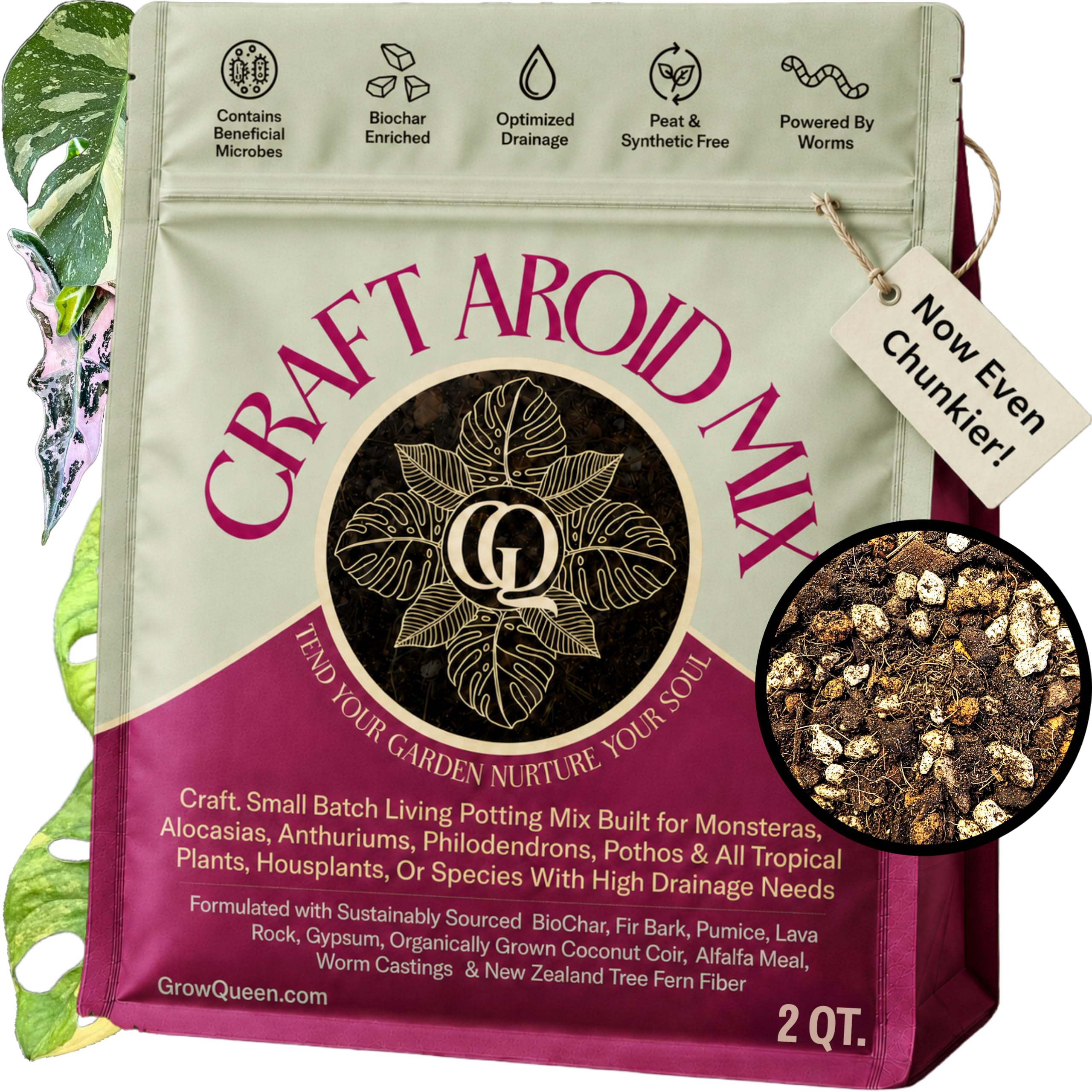
Grow Queen’s Craft Aroid Mix is the most thoughtful blend we evaluated for picky aroids like alocasia, philodendron, and monstera. The texture is genuinely chunky — large Douglas fir bark fines, pumice, and lava rock create large air pockets that prevent water from pooling around sensitive roots. The addition of New Zealand tree fern fiber buffers the pH down to roughly 6.0, closely matching the native soil conditions of tropical forest floors.
Every bag is pre-moistened and ready to use, which eliminates the dusty mess common with dry mixes. The coco coir base is certified organic and triple-washed to remove excess salts that can burn root tips. Multiple verified owners report zero pests or mold after months of use, a sign that the raw ingredients are properly heat-treated and stored.
For anyone maintaining a collection of high-value aroids, this 2-quart size is an ideal trial portion. The formula works for pothos, hoyas, ZZ plants, and even drought-tolerant succulents, making it a versatile addition to any indoor gardener’s shelf.
What works
- Exceptional chunky aeration prevents root rot
- NZ tree fern fiber naturally adjusts pH to 6.0
- Zero pests, mold, or excess salts reported
What doesn’t
- Small 2-quart bag for the price point
- Pre-moistened weight adds shipping cost
2. Soil Sunrise Tropical House Plant Mix (12QT)
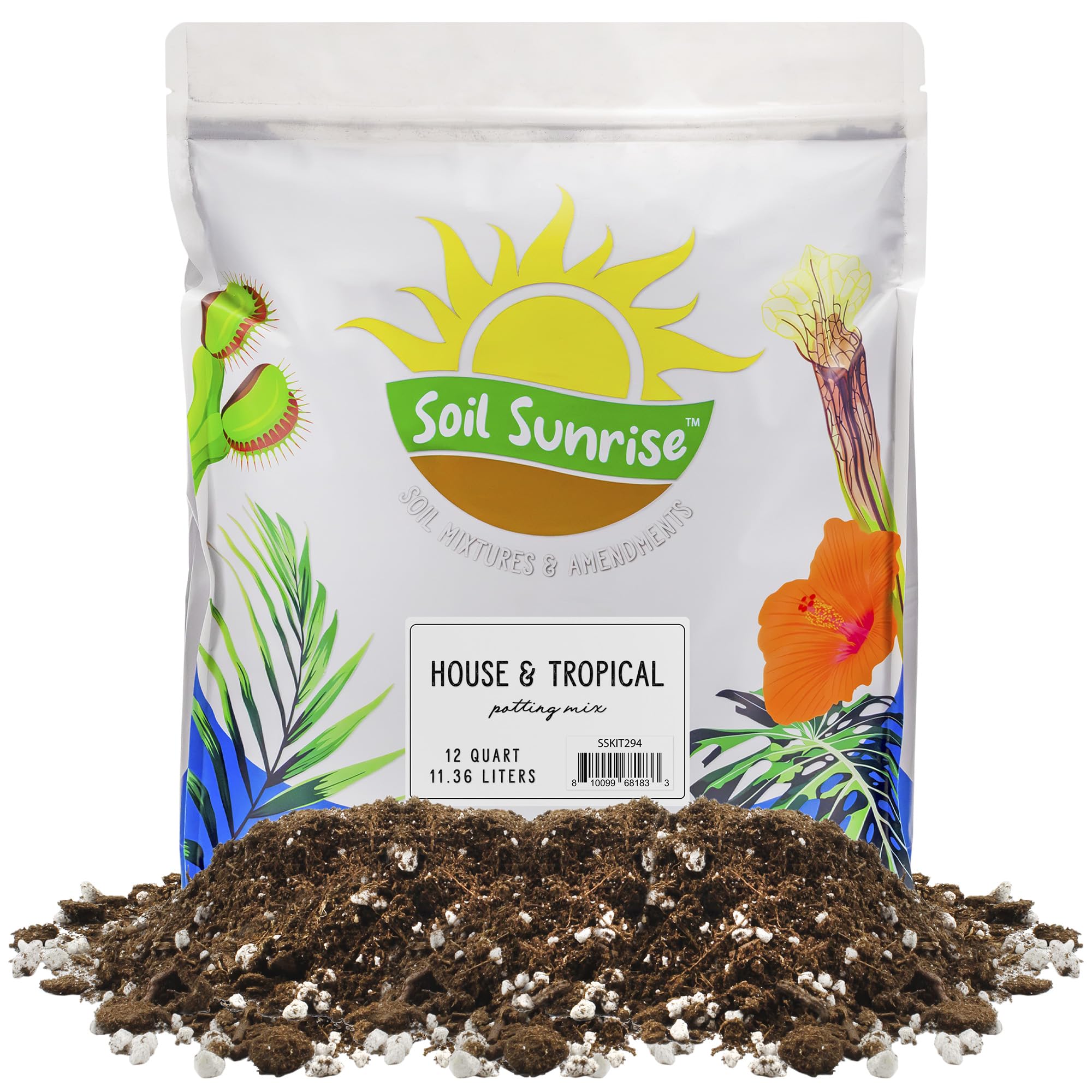
Soil Sunrise’s Tropical House Plant Mix delivers the largest volume in our lineup relative to its cost, making it a practical choice for gardeners with diverse collections. The blend uses peat moss, horticultural perlite, worm castings, and lime for pH balance, creating a light, fluffy texture that drains well while retaining enough moisture for weekly watering schedules.
Verified owners report strong results with monstera, pothos, philodendron, calathea, hoya, and even ZZ plants. The bag is resealable, which helps maintain moisture consistency between repotting sessions. Multiple buyers noted the total absence of fungus gnats or pests after opening, a critical concern for indoor growers who battle soil-borne insects.
Some users found the 12-quart bag smaller than expected for the category, but the per-quart cost remains among the lowest here. It is a solid all-purpose option for growers who want one reliable bag for a range of tropical species without needing to hand-mix amendments.
What works
- Large volume at a low per-quart cost
- Resealable bag preserves moisture
- No gnats or pests reported after opening
What doesn’t
- Contains peat, not peat-free
- Not chunky enough for very sensitive aroids
3. Soil Sunrise Peace Lily Mix (8QT)
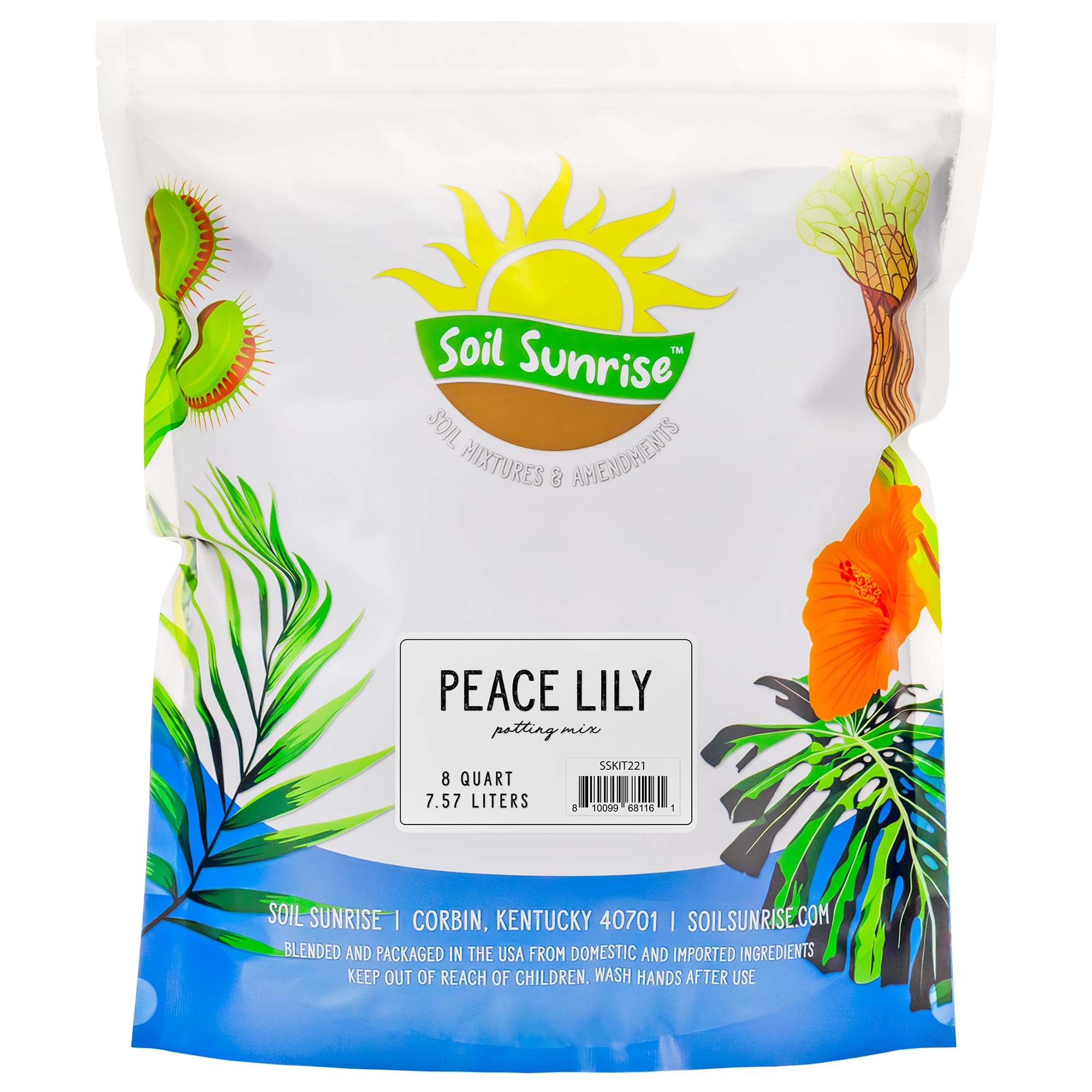
Soil Sunrise formulated this 8-quart blend specifically for Spathiphyllum, better known as peace lilies. The ingredient list — pine bark, peat moss, perlite, sand, and lime — is tuned to produce the consistent moisture and slightly acidic pH that peace lilies need to produce their signature white spathes. It is free from chemical fertilizers, relying entirely on natural organic matter for nutrition.
Owner feedback highlights how the soil revived struggling plants, with multiple reviewers noting new sprouts and blooms within weeks of repotting. The texture is lighter and airier than standard bagged potting mixes, which helps prevent the root-bound compaction that peace lilies often suffer in generic soil.
The bag size is generous at 8 quarts, but some owners noted the price feels high compared to multi-purpose blends. If you keep a dedicated peace lily or a small collection of low-light tropicals, this targeted formulation removes the guesswork from repotting.
What works
- Formulated specifically for peace lily needs
- Light, airy texture prevents compaction
- Revived dying plants quickly per owner reports
What doesn’t
- Premium price for the volume
- Less suitable for aroids like monstera
4. Noot Potting Mix (1 Gallon)
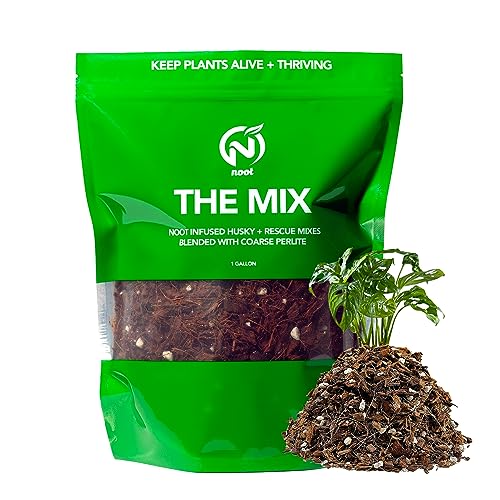
Noot takes a fundamentally different approach by pre-soaking its blend with a proprietary bio-organic nutrient solution (NPK 0.10-0.15-0.12) and 16 strains of beneficial bacteria and fungi. The base medium is a mix of larger coconut chips, fibers, and coarse perlite that drains exceptionally fast — ideal for transitioning water-propagated cuttings or rehabilitating plants with root rot.
Verified owners who switched from traditional soil to Noot reported the elimination of fungus gnats, faster root development, and visible new growth within weeks. The 1-gallon resealable bag is convenient for storing unused portions, and the pre-moistened consistency means zero dust during repotting.
The main drawback is the cost: at roughly the same price per quart as premium options, using Noot across an entire collection becomes expensive quickly. Reserve it for your most sensitive specimens or plants recovering from overwatering issues.
What works
- Pre-soaked with beneficial microbes and nutrients
- Excellent for rehabilitating root-damaged plants
- Effectively eliminated fungus gnats for users
What doesn’t
- High per-quart cost
- Small 1-gallon bag for the price
5. rePotme All Purpose Tropical Mix (4QT)

rePotme’s Tropical Classic Mix is used by major conservatories and botanic gardens, which speaks to its ingredient quality control. This 4-quart blend combines bark chips, peat, and perlite into a well-aerated medium that works for snake plants, pothos, peace lilies, fiddle leaf figs, and many other indoor tropicals. The texture is noticeably light and never feels muddy, even immediately after watering.
Owner experiences consistently highlight the clean packaging (sealed bag ideal for apartment dwellers) and the absence of any musty or moldy smell. The blend works well as a standalone mix or as a lightening additive for denser soils — several reviewers reported mixing it 60/40 with richer soil for monsteras with excellent results.
The cost per quart is among the highest in this review, and the 4-quart bag may not be enough for larger pots. For owners of a few high-value specimen plants, the consistent quality justifies the investment.
What works
- Professional-grade quality used by botanic gardens
- Lightweight, well-aerated structure
- Great as a soil lightener for denser mixes
What doesn’t
- High per-quart cost
- Small bag volume for the price
6. Midwest Hearth Premium Potting Mix (8 Dry Quarts)

Midwest Hearth’s formula is the same blend used by professional growers, combining peat moss, vermiculite, and perlite in a pH-balanced ratio. The texture is light and fluffy, never compacting into a hard block around roots. This mix works well for general repotting of indoor herbs, jade plants, and flowers, and serves as a reliable seed-starting medium.
Owner reviews are consistently positive about the resealable bag, the lack of weed seeds or bugs, and the balanced moisture retention — the vermiculite holds water long enough for most tropicals without creating soggy conditions. Several users praised it for promoting faster root growth compared to mass-market big-box soils.
This is not a chunky aroid mix, so it is less ideal for high-drainage-demand plants like alocasia or monstera. As an entry-level option for growers building their first collection of low-light tropicals, the value proposition is strong.
What works
- Excellent value for the bag size
- Light, fluffy texture resists compaction
- Resealable bag and clean ingredients
What doesn’t
- Not chunky enough for aroids or orchids
- Contains peat moss
7. Craft Aroid Potting Mix (12QT)
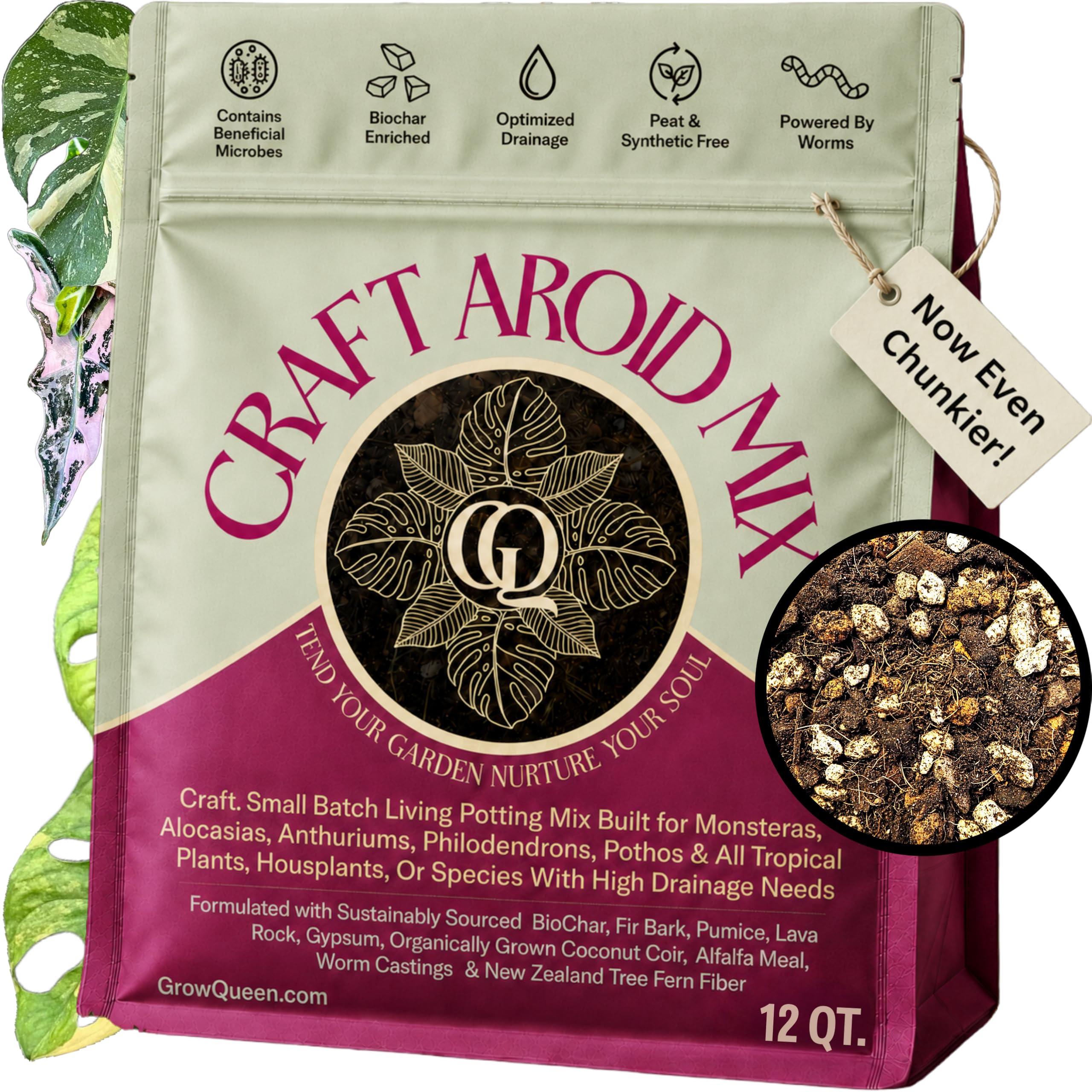
This 12-quart bag from Grow Queen is the same premium formula as the 2-quart version but scaled for serious collectors. The chunky blend — Douglas fir bark, pumice, lava rock, organic coco coir, and New Zealand tree fern fiber — delivers the same high drainage, pH-neutralizing performance, and peat-free sustainability. If you have multiple aroids or plan to repot a large specimen monstera, the bulk size saves per-quart cost compared to buying small bags repeatedly.
Owner feedback mirrors the 2-quart version: consistently excellent quality after multiple orders, no pests or mold, and plants that settle quickly and push new growth. The pre-moistened texture means no dust clouds during use, and the pet-friendly formulation offers peace of mind for households with curious animals.
The upfront investment is larger, but the per-quart cost drops significantly at this volume. This bag is the most efficient choice for owners with established collections who know exactly what their tropicals need.
What works
- Best per-quart value in the premium segment
- Consistent chunky texture batch after batch
- Pet-friendly and peat-free
What doesn’t
- High upfront cost for the large bag
- Heavy when shipping pre-moistened
Hardware & Specs Guide
Aeration and Particle Size
The defining trait of a tropical soil is the physical size of the particles. Standard potting mixes are ground fine to hold water, but tropicals need “chunky” blends with individual bark chips and lava rocks that are ⅛ to ¼ inch in diameter. These gaps allow oxygen to reach roots and let excess water drain within seconds rather than minutes. Mixes that use only peat and perlite lack this structure and are more likely to compact.
pH Target and Buffering
Most indoor tropical plants absorb nutrients best when the soil pH sits between 5.5 and 6.5. New Zealand tree fern fiber is a natural pH buffer that pulls the mix toward 6.0, while lime raises pH in peat-based blends. Blends that skip pH correction leave your plants unable to access iron and manganese, leading to yellowing leaves and stunted growth regardless of how often you water or fertilize.
FAQ
Can I use cactus soil instead of tropical soil for my monstera?
How often should I repot indoor tropical plants with fresh soil?
Final Thoughts: The Verdict
For most gardeners, the soil for indoor tropical plants winner is the Craft Aroid Potting Mix (2QT) because its peat-free, perlite-free blend of chunky fir bark, pumice, and New Zealand tree fern fiber delivers the exact drainage and pH balance that aroids and tropicals need. If you want the best volume for your dollar across a mixed collection, grab the Soil Sunrise Tropical Mix (12QT). And for rehabilitating root-damaged plants or eliminating fungus gnats, nothing beats the Noot Potting Mix (1 Gallon).