
The single biggest mistake growers make in a tent is treating their soil like garden dirt. A controlled indoor environment with high humidity and artificial lighting completely changes how a medium holds water, feeds roots, and releases nutrients — if you fill bags with dense outdoor topsoil or cheap potting mix, you’re begging for compaction, fungus gnats, and nutrient lockout.
I’m Rikta — the co-founder and writer behind Lawn Gear Lab. I spend hundreds of hours cross-referencing bag labels, studying NPK ratios, analyzing organic amendments like kelp meal versus bone meal, and reading thousands of verified owner experiences to separate the true grow-tent performers from the marketing fluff.
Whether you need a compost-based soil that fuels heavy feeders through a full flower cycle or a peat-free aroid blend that mimics a rainforest floor, this deep-dive guide to the best soil for grow tent environments covers the seven mixes worth your bench space.
How To Choose The Best Soil For Grow Tent
Your grow tent is an enclosed ecosystem — high humidity, intense LED or HID lighting, and limited air exchange. The soil you choose must drain fast enough to prevent root rot but hold enough moisture between waterings so the roots don’t dry out under hot lamps. Start with these four factors before you open a bag.
Texture and Aeration: The Chunky Factor
A grow tent soil must be fluffy and porous. Look for ingredients like perlite, pumice, lava rock, coarse sand, or large bark fines — these create air pockets that oxygenate the root zone and allow excess water to exit through the fabric pot or container. Dense, muddy soil with fine particles compacts under the weight of watering and suffocates roots within days.
Nutrient Load and Feeding Schedule
Some soils are “hot” — pre-loaded with enough compost, worm castings, blood meal, and kelp to feed a plant for four to six weeks without any liquid fertilizer. Others are inert or nutrient-light, requiring you to mix in your own amendments from day one. If you’re a beginner, a compost-based mix like Vermont Compost Company Fort Vee gives you a wide buffer. If you prefer to control every ppm, start with a buffered coco coir like Happy Trees and build your own nutrient program.
Organic Certification and pH Balance
OMRI-listed soil guarantees no synthetic pesticides, herbicides, or GMOs — critical for clean-flavored herbs and vegetables. Most premium grow tent soils are naturally pH-balanced between 6.0 and 6.5, which is the sweet spot for nutrient uptake in an indoor environment. Avoid soils with unlisted “proprietary” fillers; transparency on the bag or listing page signals quality control.
Bag Volume vs Tent Space
A 20-quart bag fills roughly four 3-gallon pots. A 2-cubic-foot bag (about 51 quarts) fills ten 3-gallon pots or six 5-gallon pots. Calculate your container needs before ordering — buying too little forces you to top off with a different mix mid-cycle, which can cause uneven drainage and nutrient stratification in the root column.
Quick Comparison
On smaller screens, swipe sideways to see the full table.
| Model | Category | Best For | Key Spec | Amazon |
|---|---|---|---|---|
| Vermont Compost Fort Vee | Compost-Based | Heavy feeders & seed-starting | 20 qt, compost + blood meal + kelp | Amazon |
| Craft Aroid Mix | Peat-Free | Tropical aroids & humidity tents | 12 qt, pumice + lava rock + Douglas fir bark | Amazon |
| Miracle-Gro Moisture Control | Sphagnum-Based | Moisture-sensitive containers | 2 cu ft, AquaCoir formula | Amazon |
| Coast of Maine Castine | Raised Bed / Container | Biodiverse living soil | 2 cu ft, mycorrhizae + biochar + kelp meal | Amazon |
| Happy Trees Coco Coir | Coco Coir | Custom mix builders & sterile seed-starting | 50L, triple-washed, low EC | Amazon |
| Brut Organic Potting Soil | Worm Casting Rich | Root-level feeding with trace minerals | 2 x 1 cu ft, Azomite + kelp | Amazon |
| FoxFarm Happy Frog + Ocean Forest | Premium Bundle | Versatile indoor container growing | 2 cu ft + 12 qt, dual-mix bundle | Amazon |
In‑Depth Reviews
1. FoxFarm Happy Frog (2 cu ft) + Ocean Forest (12 qt) Bundle

FoxFarm bundles together two of the most respected indoor-soil formulas in a single purchase: a full 2-cubic-foot bag of Happy Frog plus a smaller 12-quart bag of Ocean Forest. Happy Frog is amended with soil microbes that convert nutrients into plant-available forms, while Ocean Forest brings a rich blend of earthworm castings, fish meal, and crab meal. Together they give you 51.4 quarts of premium growing medium — enough to pot up a dozen 3-gallon containers or a combination of propagation trays and final pots.
Happy Frog is lighter and fluffier, making it an ideal top layer or base for plants entering the vegetative phase. Ocean Forest is slightly denser and more nutrient-dense, perfect for transplanting seedlings that need an immediate boost of organic nitrogen. Most experienced indoor growers mix the two at varying ratios depending on plant stage — 2:1 Happy Frog to Ocean Forest for veg, then reverse it for flower. The bundle encourages that kind of customization without forcing you to buy two full-sized bags you may never finish.
Verified owners consistently describe these as the “best premixed soil” and “my go to” for happy, healthy plants. The only real consideration is that the bag sizes are different, so if you need a uniform medium across every pot, you’ll still need to blend them yourself. But for versatility and brand trust, this bundle remains the gold standard for serious tent growers.
What works
- Microbe-rich Happy Frog improves root efficiency and nutrient conversion
- Ocean Forest provides a potent, castings-based boost for transplanting
- Combined volume (51.4 qt) covers multiple containers and stages
What doesn’t
- Two different formulas require manual mixing for uniform medium
- Premium price point relative to single-bag alternatives
2. Vermont Compost Company Fort Vee Organic Potting Mix

Fort Vee is a compost-based potting mix blended from composted manure, sphagnum peat moss, crushed granite and basalt, blood meal, kelp meal, steamed bone meal, and vermiculite. That ingredient list reads like a fertility chart — each component serves a purpose: the granite and basalt provide slow-release trace minerals, the bone meal delivers steady phosphorus for root and bloom development, and the kelp meal supplies growth hormones and micronutrients. This is a “hot” soil that fuel heavy feeders like peppers, tomatoes, eggplant, and corn straight out of the bag without additional amendments for the first three to four weeks.
The texture is notably fluffy and light — reviewers mention “gold flakes” from vermiculite that signal excellent aeration and drainage. It holds moisture well even in high-heat environments like a tent with strong LED arrays, and it holds its form perfectly for soil blocks, which saves time during propagation. It’s also OMRI-listed, so organic purists can trust that no synthetic chemicals touched the mix.
One buyer noted that both the Fort Vee and the company’s raised bed mix contain some larger bark pieces and seemed similar, but the overall germination rates were excellent — marigolds popped in three days. For tent growers who want a true “fill and forget” medium for the first month of a cycle, Fort Vee is a top contender.
What works
- Rich organic base with blood meal, bone meal, kelp, and basalt for long-term feeding
- Fluffy, light texture with vermiculite for aeration and moisture retention
- Ideal for soil blocks and heavy-feeding crops like peppers and tomatoes
What doesn’t
- 20-quart bag size may be small for larger tent setups with multiple pots
- Some users found occasional bark pieces requiring manual removal
3. Brut Organic Potting Soil (Pack of 2, 1 cu ft Each)
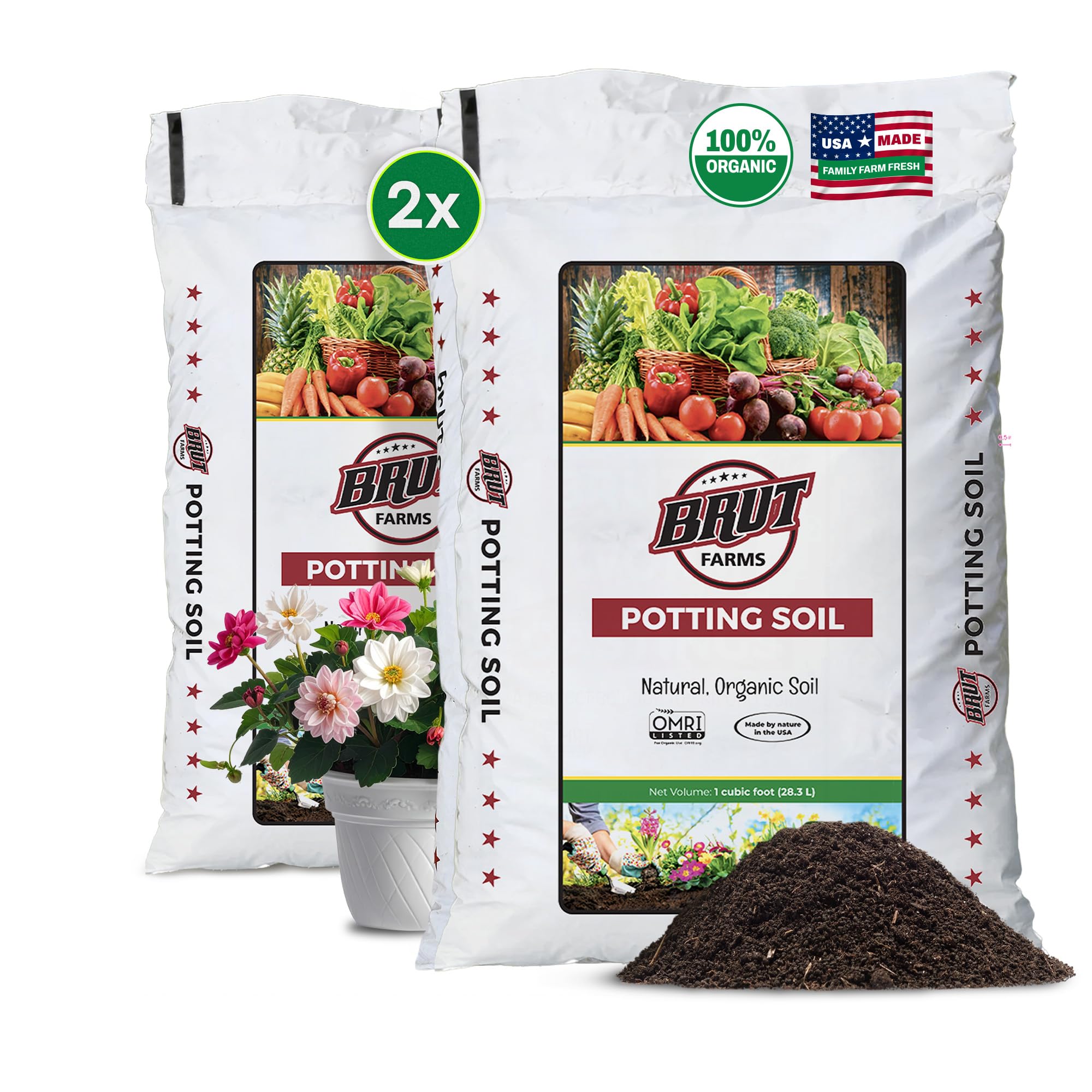
Brut Organic Potting Soil is marketed as a “filler-free” mix, and the ingredient list backs that up: microbe-rich worm castings, trace minerals from Azomite, kelp meal, and perlite — and nothing else. There are no sticks, wood chips, bark chunks, or artificial wetting agents. The pH is pre-balanced between 6.3 and 6.5, right in the ideal range for most grow-tent crops, and it carries OMRI organic certification so you know the inputs are clean.
The texture is fine and easy to work with — reviewers describe it as “very easy to work with” and note that it contains “no wood pieces.” It comes as a two-pack of 1-cubic-foot bags, giving you a total of 21 quarts, which is enough for several 3-gallon pots. The downside is the price per quart is on the higher end, but for growers who want a pure, predictable medium without hidden fillers, the cost is justified.
One verified buyer reported that a Cara Cara orange tree and Lapins cherry tree showed deep green leaves and new growth within two days of transplanting, though they did note that the fish and bone meal in the mix attracted fruit flies once moved outdoors. For indoor tent use, this risk is minimal. If you want a clean, fine-textured organic mix that feeds from day one without surprises, Brut delivers.
What works
- No wood chips, sticks, or artificial filler of any kind
- pH pre-balanced at 6.3–6.5, ideal for tent environments
- Worm castings, Azomite, and kelp provide root-level nutrition
What doesn’t
- Higher price per quart than bulk conventional mixes
- Organic fish/bone meal component may attract flies if exposed to outdoor soil
4. Happy Trees Coco Coir Loose Coconut Fiber (50L)
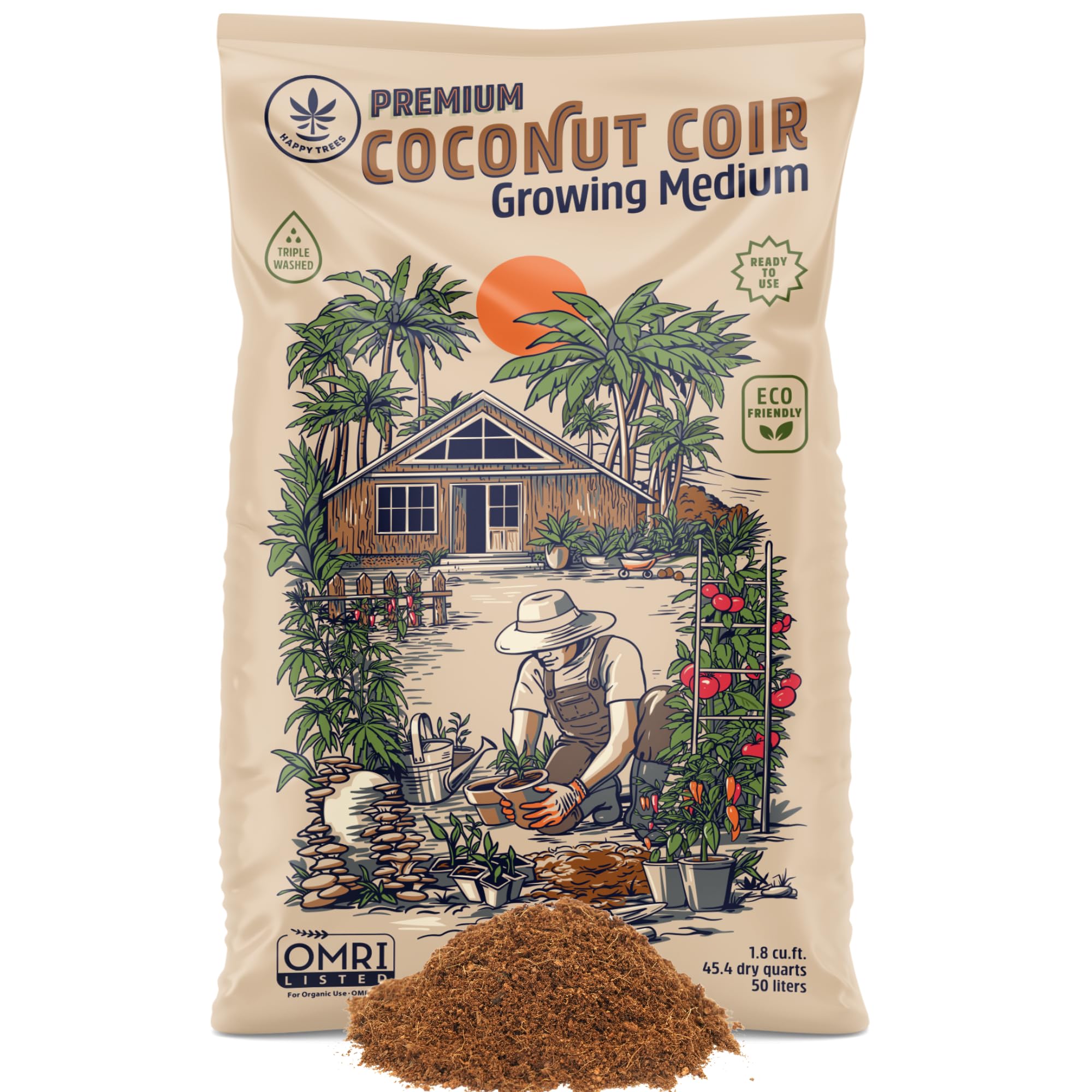
Happy Trees Coco Coir is a standalone growing medium made from coconut husk fiber, triple-washed and buffered to achieve the lowest possible salt content (low EC). High salt levels in cheap coir lock out calcium and magnesium and stunt growth — this bag is tested before sealing, so you get consistent, clean coir every time. It comes pre-expanded in a loose-fill bag, skipping the messy brick-rehydration step that other coco products require.
Because it’s peat-free and sterile, this coir is ideal for propagation, seed-starting, and as a base for custom mixes. You can blend it with perlite, vermiculite, worm castings, or dry amendments to tailor the water retention and nutrient profile to your exact plant species. The texture is soft and fluffy — reviewers love that it has “no plastic, and well broken down” compared to compressed bricks. It’s also OMRI-listed for organic gardening.
The main tradeoff is that 50 liters (about 1.76 cubic feet) is not as large as a 2-cubic-foot bag, and some buyers felt the bag was smaller than expected. But the cleanliness and low salt content make it a premium choice for growers who want complete control over their nutrient schedule. If you run a high-frequency fertigation system in your tent, this is the base you want.
What works
- Triple-washed and buffered for extremely low EC — no salt lockout
- Pre-expanded loose fill, no brick soaking required
- OMRI listed and sterile, perfect for seed-starting and pest-free growing
What doesn’t
- Volume is 50L (~1.76 cu ft) — smaller than some 2 cu ft mixes
- Price per liter is higher than basic coir bricks
5. Coast of Maine Castine Blend Raised Bed Mix (2 cu ft)
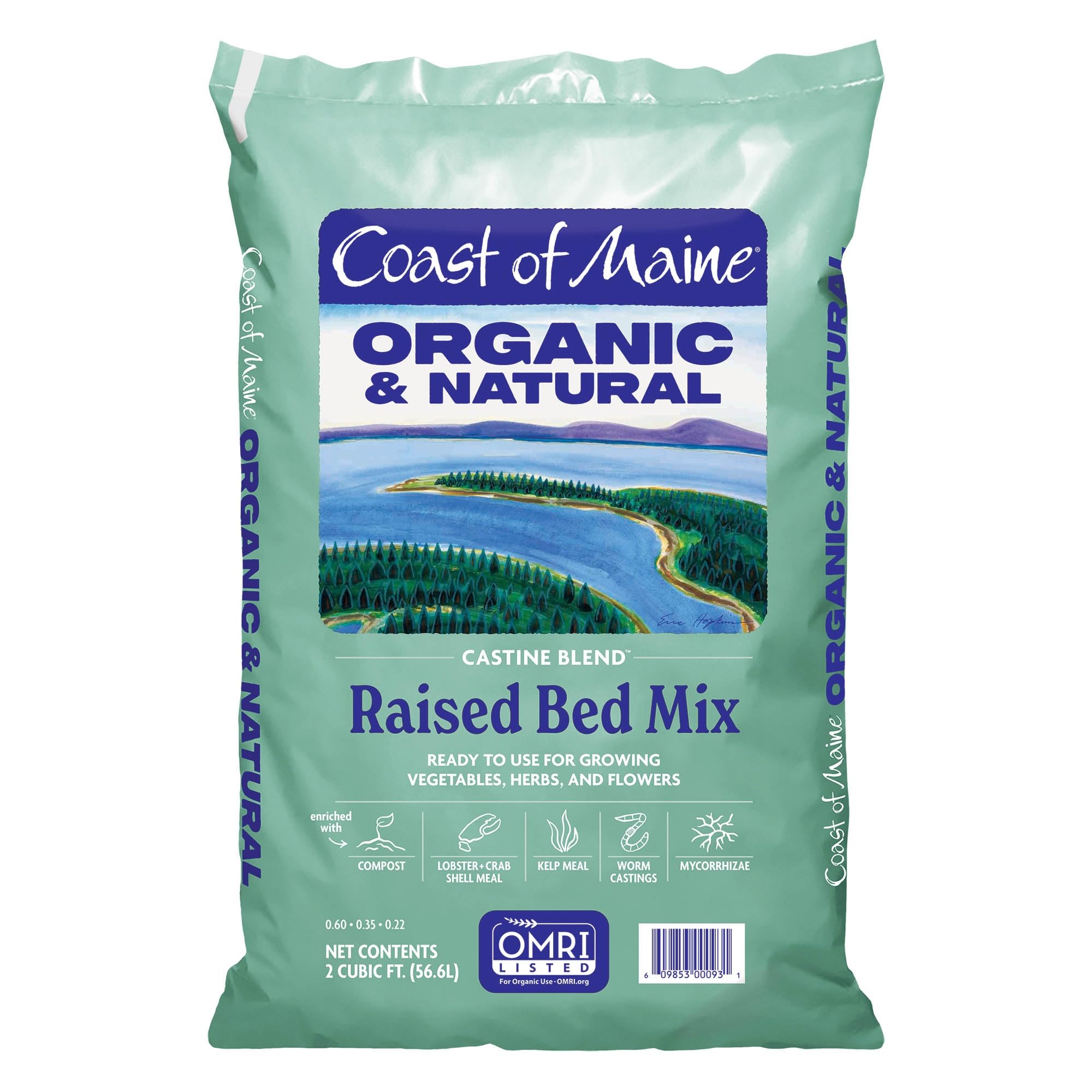
Coast of Maine’s Castine Blend is formulated specifically for raised beds and large containers, but it translates perfectly to a grow tent if you’re running 5-gallon fabric pots or larger. The ingredient list reads like a soil scientist’s wish list: worm castings, mycorrhizae, biochar, green sand, kelp meal, and lobster and crab shell meal. The mycorrhizae form a symbiotic relationship with plant roots, boosting water and nutrient uptake, while biochar improves porosity and acts as a long-term carbon reservoir that holds nutrients in the root zone.
The texture is dark, rich, and soft — multiple owners report “no twigs, no bugs, just beautiful dirt.” It’s also ready to use straight out of the bag, with no mixing or composting required. In a tent, this mix holds moisture well without becoming waterlogged thanks to the biochar’s pore structure. Users have successfully grown large tomatoes, sunflowers, and fruit trees (peach, mango, lemon) in this blend, and many report that it loosens existing hard soil when used as an amendment.
One minor criticism is that the biochar particles can float to the surface over time, creating a thin dark layer on top of the soil after several waterings — a simple stir fixes it. If you want a living soil that supports a biodiverse microbial ecosystem from the start, Castine Blend is one of the most complete bagged options available.
What works
- Mycorrhizae and biochar improve root efficiency and nutrient retention
- Lobster/crab shell meal and kelp provide slow-release organic nutrients
- Dark, soft, bug-free texture — no wood chunks or debris
What doesn’t
- Biochar particles can float to the surface and require occasional mixing
- Designed for raised beds — may be denser than standard potting mixes for small containers
6. Craft Aroid Potting Mix by Grow Queen (12 qt)
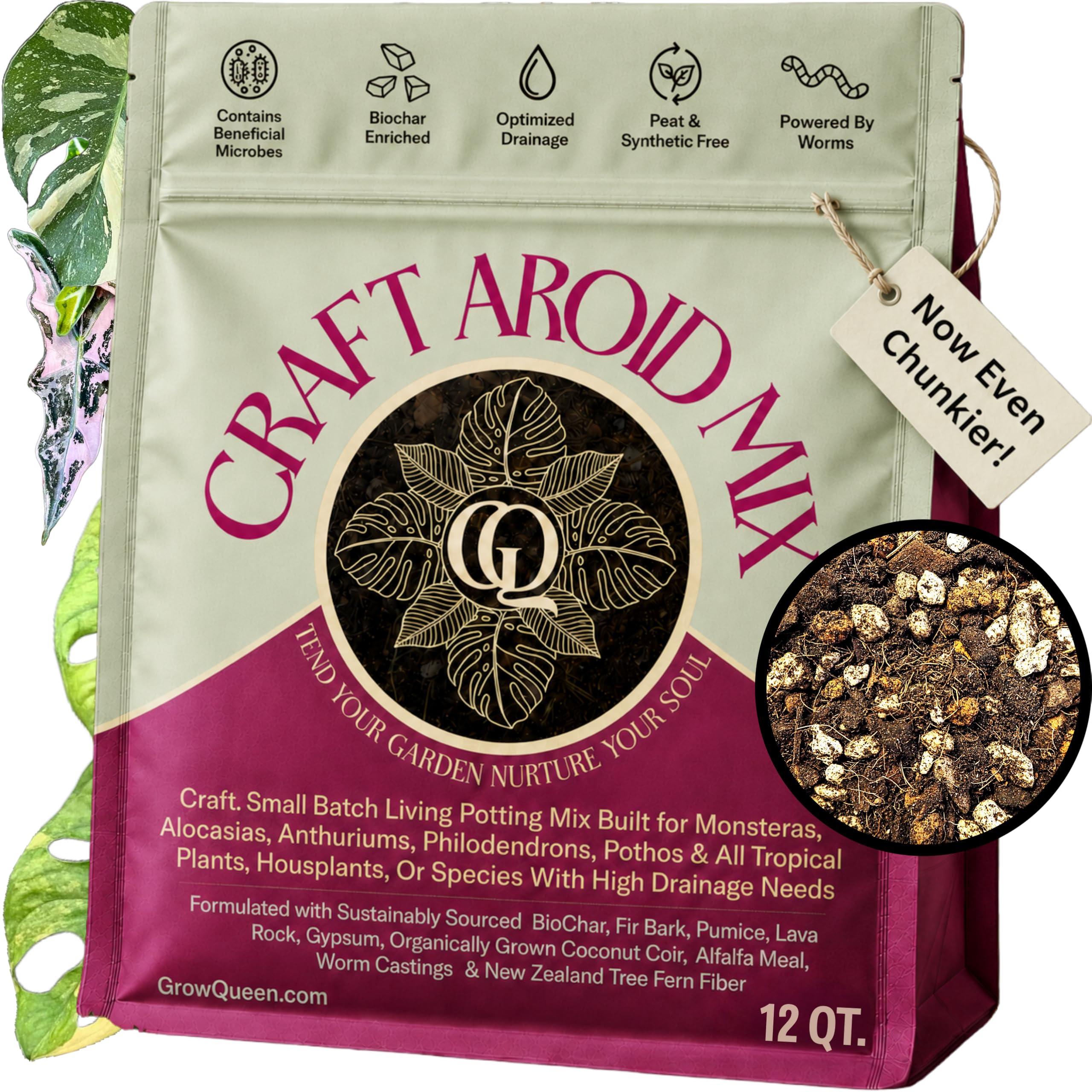
This mix is built around the specific needs of tropical aroids — Alocasia, Monstera, Philodendron, Hoya, and Anthurium — but its engineering principles apply to any tent plant that demands sharp drainage and high air porosity. The recipe uses New Zealand tree fern fiber to naturally buffer pH down to 6.0, mimicking the acidic floor of a tropical forest. It pairs that with large Douglas fir bark fines, lava rock, and pumice, all of which create a chunky, open structure that makes overwatering nearly impossible.
The mix is peat-free and perlite-free, substituting pumice and lava rock for aeration. This matters because peat harvesting is carbon-heavy and perlite production is energy-intensive. The coco coir is certified organic and triple-washed for salt removal — many coir products fail on salt content, but this one repeatedly scores high marks from owners for being “clean” and “pest-free” even after weeks of use. It also comes pre-moistened, so you can pot straight from the bag.
Reviewers who bought multiple bags — some up to five orders — call it “my forever soil” and note consistently excellent quality with no bugs, mold, or compaction. The only limitation is that 12 quarts is a small volume, ideal for four to six medium pots but not enough for a full tent of large containers. If you grow finicky aroids or moisture-sensitive varieties in a humidity tent, this is the most carefully formulated blend you can buy.
What works
- Chunky structure with Douglas fir bark, lava rock, and pumice prevents overwatering
- New Zealand tree fern fiber buffers pH to 6.0 for tropical plants
- Peat-free and perlite-free, with OMRI-certified coco coir and low salt content
What doesn’t
- 12-quart bag is small for large tents or multiple big pots
- Specialized for aroids — less suitable for heavy feeders like tomatoes
7. Miracle-Gro Moisture Control Potting Mix (2 cu ft)

The Miracle-Gro Moisture Control formula uses the company’s exclusive AquaCoir technology — a blend of sphagnum peat moss, coir, and a wetting agent that absorbs up to 33% more water than basic peat-based potting soil. It also promises to feed plants for up to six months with its included controlled-release fertilizer. For a tent grower on a tight budget, this bag gives you a massive 2 cubic feet of medium at one of the lowest per-quart costs in this guide.
That said, “moisture control” is a double-edged sword in a grow tent. Several verified owners warn that the mix can become “swampy” if overwatered, and the high moisture retention increases the risk of root rot and fungus gnat infestations if airflow is inadequate. The mix is dense when wet — one reviewer noted it needs aeration for heavy-feeding plants like peppers, which they successfully corrected by adding perlite. For succulents or cacti, it’s a poor match.
Where this soil shines is in sedge and moisture-loving annuals. Buyers reported 100% turnaround on weak pepper plants after transplanting, with greener foliage and fruit production matching their healthiest plants. If you are a new tent grower who wants a forgiving, widely available bag that feeds for months, this works — just add extra perlite and keep a fan running.
What works
- Very low cost per quart — fills many pots for the price
- AquaCoir formula absorbs more water and feeds for up to 6 months
- Proven to revive and produce heavy fruit in peppers and tomatoes
What doesn’t
- Can hold too much moisture, leading to root rot and fungus gnats in low-air tents
- Dense texture when wet — requires additional perlite for proper aeration
Hardware & Specs Guide
Volume and Bag Size
Grow-tent soil is sold in quarts, liters, and cubic feet. A 2-cubic-foot bag (roughly 51 quarts) fills six to ten 3-gallon pots. A 20-quart bag fills about four 3-gallon pots — useful for micro-tents or single-plant setups. Know your container count and size before you order. Ordering a 12-quart bag for a 5×5 tent will leave you a bag short and force you to mix dissimilar soils mid-cycle, which creates uneven drainage layers and moisture zones.
Organic vs Synthetic Additives
OMRI-listed soils guarantee no synthetic pesticides, herbicides, or GMOs, which is critical if you’re growing herbs, leafy greens, or anything you plan to consume. Non-organic mixes like the Miracle-Gro Moisture Control contain controlled-release synthetic fertilizer salts that can build up in a closed tent environment over time, potentially requiring a flush mid-cycle. Organic compost-based soils feed more slowly but buffer pH fluctuations better in a high-humidity setting.
Worm Castings and Microbial Activity
Worm castings are the single most beneficial organic amendment for tent soil. They contain humic acids, beneficial bacteria, and enzymes that break down organic matter into plant-available nutrients. Soils like Brut and Coast of Maine feature high concentrations of worm castings, while FoxFarm Ocean Forest includes earthworm castings as a primary ingredient. If a bag doesn’t list castings in the top three to five ingredients, you may need to supplement them yourself.
Pre-Buffered Coco Coir vs Raw Coir
Coco coir naturally contains high levels of sodium and potassium salts, which can compete with calcium and magnesium uptake and cause deficiencies. “Buffered” coir is pre-washed with a calcium-magnesium solution to displace those salts and lower the EC to a safe level. Happy Trees Coco Coir is triple-washed and buffered, making it safe to use straight away. Unbuffered coir bricks sold on Amazon often require multiple soaks and Ca/Mg supplementation before they become plant-ready.
FAQ
Can I reuse soil from a previous grow tent cycle?
What is the ideal pH range for soil inside a grow tent?
How often should I water soil in a grow tent?
Is compost-based soil better than coco coir for a tent?
Final Thoughts: The Verdict
For most gardeners, the soil for grow tent winner is the FoxFarm Happy Frog + Ocean Forest bundle because it gives you two proven formulas that cover every stage from seed to harvest, all in one 51.4-quart package. If you want a compost-heavy mix that fuels heavy feeders like peppers and tomatoes with zero supplementation, grab the Vermont Compost Fort Vee. And for a sterile, pest-free custom base that puts you in full control of every ppm, nothing beats the Happy Trees Coco Coir.