
A corn plant’s roots suffocate in dense, waterlogged mix. The difference between a thriving Dracaena with upright leaves and one that droops from root rot often comes down to one thing: soil structure. Most generic potting soils retain too much moisture for this tropical native, which needs rapid drainage, consistent aeration, and a pH that stays between 5.5 and 6.5.
I’m Rikta — the co-founder and writer behind Lawn Gear Lab. For this guide, I sifted through hundreds of owner reports and spec sheets to isolate blends that deliver the open, chunky texture a corn plant’s root system demands without forcing you to mix your own batch.
Whether you are repotting a mature cane or propagating a fresh cutting, choosing the right medium determines whether the plant thrives or slowly declines. This is the definitive analysis of the soil for corn plant market, ranked by drainage performance, organic integrity, and structural longevity.
How To Choose The Best Soil For Corn Plant
A corn plant is not a heavy feeder nor a thirsty drinker. It wants a medium that holds just enough moisture between waterings but never stays wet at the root ball. Selecting the wrong bag will force you to adapt your watering schedule to the soil — instead of the soil working for the plant.
Texture: Chunky Over Fine
The single most important spec is physical structure. A mix dominated by small particles — fine peat, sand, or dense compost — compacts quickly, trapping water against the roots. Look for visible chunks: pine bark fines, pumice, coco chips, or perlite at least 3–5 mm in size. These create air pockets that let oxygen reach the root zone and allow excess water to drain within minutes.
pH Range: Slightly Acidic
Corn plants (Dracaena fragrans massangeana) evolved under tropical canopies where leaf litter breaks down into mildly acidic humus. A pH between 5.5 and 6.5 is the safe window. Outside that range, the plant struggles to absorb iron and manganese — yellow margins on lower leaves are the first visual clue. Some organic blends incorporate tree fern fiber or sphagnum peat to naturally buffer the pH downward.
Organic vs. Synthetic Fertilizer Charge
Many big-box potting soils include a synthetic time-release fertilizer pellet that feeds for up to six months. While convenient, this can burn sensitive roots if the plant goes dormant in winter. Organic mixes rely on worm castings, kelp meal, or composted manure — milder nutrients that release slowly with microbial activity. For a low-ferocity grower like the corn plant, an organic base with optional top-dressing gives you more control.
Quick Comparison
On smaller screens, swipe sideways to see the full table.
| Model | Category | Best For | Key Spec | Amazon |
|---|---|---|---|---|
| Coast of Maine Bar Harbor Blend | Premium Organic | Long-term container vitality | Crab & kelp meal, perlite | Amazon |
| Craft Aroid Mix by Grow Queen | Chunky Aroid | Max root aeration | Pumice, fir bark, lava rock | Amazon |
| Coast of Maine Tomato & Veggie | Organic Compost | Nutrient-rich raised beds | Composted manure, sphagnum | Amazon |
| Midwest Hearth Premium Mix | Balanced All-Purpose | pH-controlled general repotting | Peat, vermiculite, perlite | Amazon |
| DUSPRO 8in1 Aroid Mix | Specialized Aroid | Monstera & philodendron families | LECA, zeolite, coco chips | Amazon |
| Miracle-Gro Organic Indoor Mix | Organic Indoor | Moisture regulation for beginners | Coir, sphagnum, natural fertilizer | Amazon |
| Miracle-Gro Indoor Potting Mix | Standard Indoor | Budget-friendly everyday use | 6-month feed, gnats-resistant | Amazon |
In‑Depth Reviews
1. Coast of Maine Bar Harbor Blend
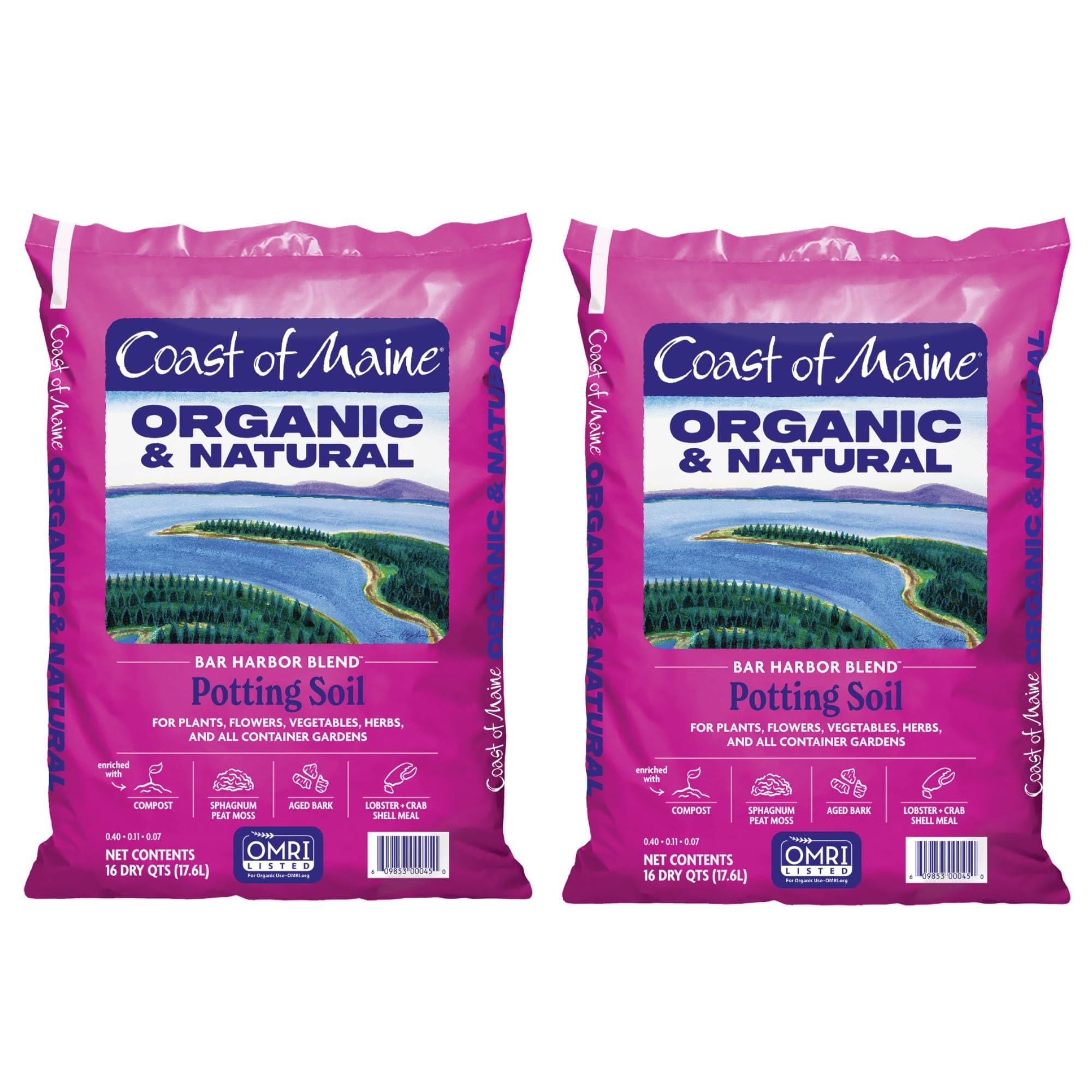
Coast of Maine built this blend around composted yard waste, sphagnum peat, perlite, and marine byproducts — lobster and crab shell meal. The shell meals provide a slow-release calcium and chitin source that supports cell wall strength and deters soil-borne pests. The texture lands somewhere between a chunky raised-bed mix and a fine container soil, offering enough perlite to prevent compaction without becoming a pure aroid grittiness that dries out in 24 hours.
For a corn plant grown in a 10-inch pot or larger, this mix holds moisture for roughly three to four days between waterings under average indoor humidity — an ideal cadence. The 16-quart volume (two 8-qt bags) covers two deep repots. Owner reports consistently mention cleaner growth, no fungus gnats, and a darker leaf color compared to generic big-box brands. The only caveat is the presence of natural compost fines that settle slightly; you may want to add an extra handful of perlite if you are watering on a strict schedule.
pH lands around 6.0 straight from the bag, right in the sweet spot for Dracaena. The organic certification (OMRI-listed) also means you can top-dress with any supplemental fertilizer without worrying about chemical interactions. This is the premium pick for anyone who wants a single-bag solution that delivers sustained root health.
What works
- Marine-based slow-release nutrients support strong leaf color
- Perlite content keeps drainage consistent
- OMRI-listed for organic use
What doesn’t
- Fines in compost can settle over time
- Premium price for larger garden projects
2. Craft Aroid Mix by Grow Queen
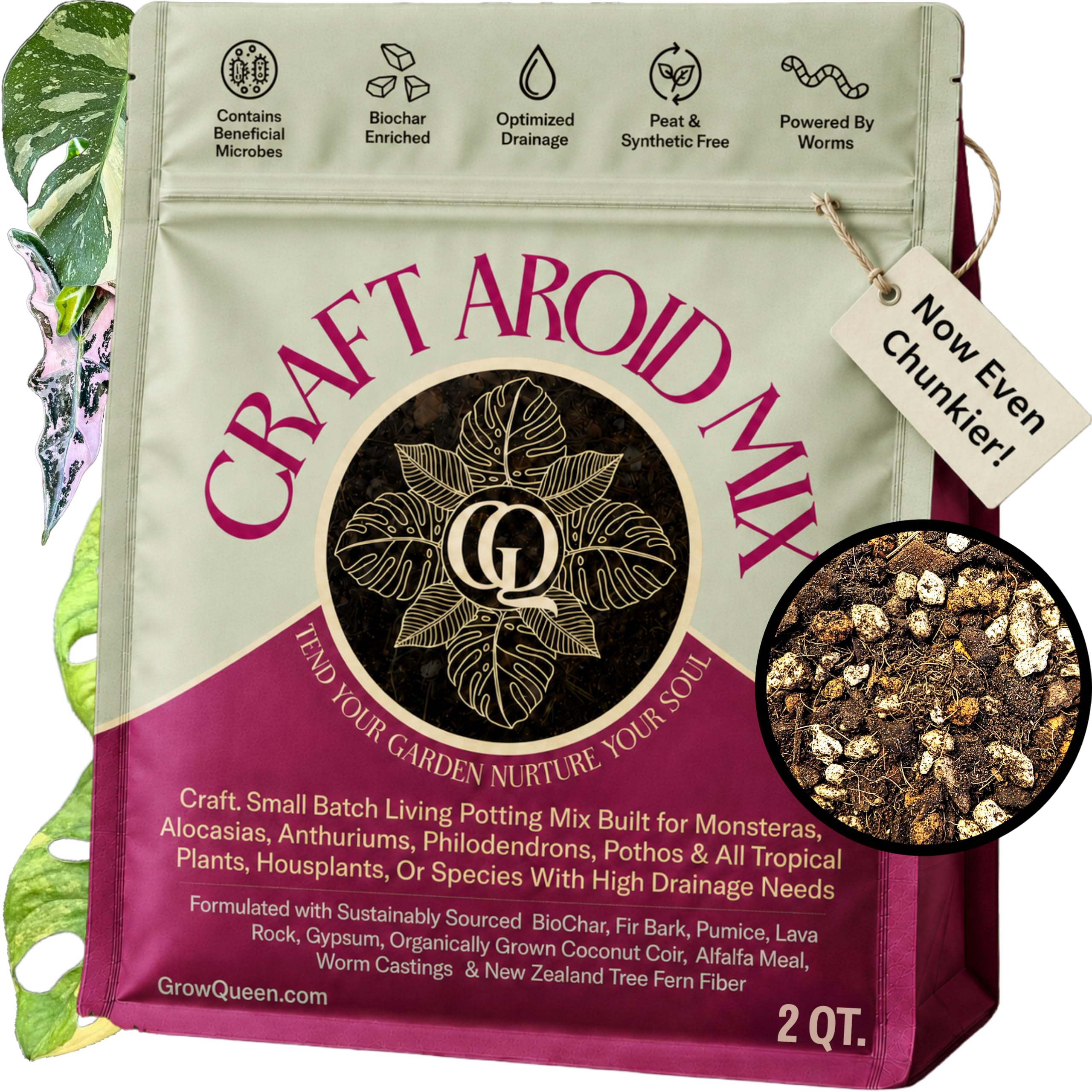
Grow Queen designed this specifically for aroid root systems — the kind of thick, fleshy roots that corn plants also produce. Instead of peat, they use coco coir washed multiple times to remove salt, then bulk it with Douglas fir bark fines, pumice, lava rock, and New Zealand tree fern fiber. The tree fern fiber serves a dual purpose: it acts as a soil conditioner that helps buffer pH down to 6.0, and its fibrous structure resists compaction for months.
The blend is nearly impossible to overwater. Water runs through the bag in seconds, yet the coco coir component holds enough moisture that the root ball never dries out completely if you water once a week. Owners who repotted struggling corn plants reported new root growth within two weeks. The 2-quart bag size is small — you will need multiple bags for a single large repot — but the quality justifies the higher per-quart cost for a specialty blend.
Worm castings provide a mild nutrient charge that lasts roughly eight to ten weeks. Because the mix contains no synthetic fertilizer pellets, you have full control over feeding schedule. If you are experienced enough to recognize when your corn plant needs a liquid feed, this mix gives you the structural foundation to avoid root rot entirely.
What works
- Extremely chunky texture protects against overwatering
- Tree fern fiber stabilizes pH naturally
- No salt residue or dust from processing
What doesn’t
- Small bag volume requires multiple purchases
- Richer price per quart than standard mixes
3. Coast of Maine Tomato & Veggie Soil

Although marketed for tomatoes and vegetables, this organic blend from Coast of Maine works well for larger corn plants in outdoor containers or indoor pots with strong drainage. The base is composed of composted cow manure and sphagnum peat, which gives it a heavier nutrient density than typical houseplant mixes. The 20-quart bag size provides generous volume for deep containers at a reasonable per-quart cost.
The drainage is moderate — better than pure garden soil but not as open as the Craft Aroid mix. For a corn plant, you will want to mix in roughly 20 percent perlite or pumice to prevent the organic matter from staying wet too long indoors. Owners report rapid visible growth after repotting, especially when used with heirloom or heavy-feeding plants. The main risk is the composted manure component, which can retain moisture at the bottom of a pot with poor drainage holes.
Some bags have been reported to contain fungus gnat eggs. Pre-treating the soil by letting it dry out for a day or mixing in a layer of sand on top solves this quickly. If you are growing a corn plant in a raised bed or a very large floor pot with drainage stones at the bottom, this mix offers rich organic nutrition that supports steady leaf production.
What works
- High organic nutrient content for vigorous growth
- Large bag is economical for big planters
- OMRI-listed organic ingredients
What doesn’t
- Needs perlite amendment for indoor containers
- Occasional gnat eggs in the compost
4. Midwest Hearth Premium Potting Mix

Midwest Hearth formulates this mix with three primary components — Canadian sphagnum peat, horticultural vermiculite, and coarse perlite — specifically to balance pH for a broad range of indoor plants. The peat pulls the pH down to roughly 5.8–6.2, which suits a corn plant perfectly. The vermiculite contributes water-holding capacity while perlite ensures the excess drains freely.
The texture is light and fluffy straight from the resealable bag. You do not get the chunky bark pieces that aroid mixes provide, but the vermiculite and perlite together create enough pore space to prevent root rot in a standard nursery pot. Owners note that seeds germinate well and seedlings transplant without shock. For a mature corn plant, you may want to add a handful of orchid bark to increase the open structure.
At 8 dry quarts, the bag is ideal for repotting one to two medium pots. The price per quart sits between budget and premium, offering a middle path for growers who want a controlled pH base without paying a premium for proprietary marine meals or tree fern fiber. A few users reported slight dustiness on opening — a quick misting settles it before use.
What works
- pH balanced specifically for broad-spectrum indoor plants
- Light, fluffy texture resists compaction
- Resealable bag for portioned use
What doesn’t
- Lacks chunky amendments preferred by large Dracaena
- Can be dusty when poured dry
5. DUSPRO 8in1 Aroid Mix
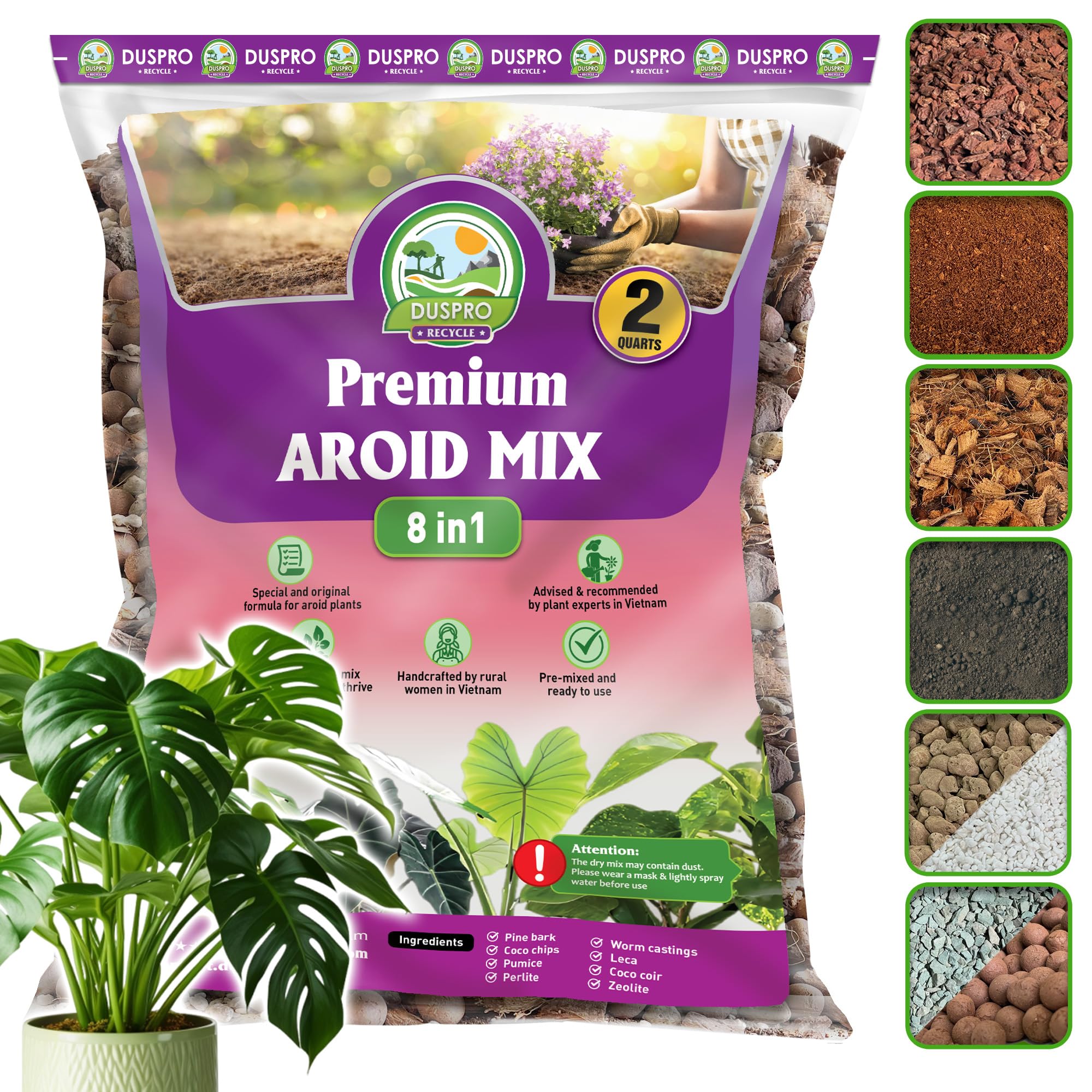
DUSPRO packs eight distinct components into one bag: pine bark, coco chips, pumice, clay pebbles (LECA), fine perlite, coco coir, worm castings, and zeolite. The zeolite is a notable addition — this volcanic mineral traps ammonium and slowly releases it, acting as a natural slow-release nitrogen buffer. The clay pebbles (LECA) add weight and structure, preventing the mix from floating or shifting during heavy watering.
The texture is aggressively open. Water flows through the bag almost immediately, which makes it ideal for growers who tend to overwater or who live in humid climates. Owners who repotted citrus and money trees — plants with similar root sensitivity to corn plants — reported visible improvement within weeks. The worm castings deliver a mild nutrient charge without risk of fertilizer burn.
At 2 quarts, this is best for a single small to medium repot. Larger pots will require multiple bags. The bag can produce a fine dust toward the bottom; wearing a mask when pouring the last portion is advisable. For growers who want a pre-mixed aroid blend that includes zeolite for nutrient management, this is a strong contender.
What works
- Zeolite buffers nitrogen release over weeks
- LECA prevents floating during heavy watering
- Chunky, open structure eliminates overwatering risk
What doesn’t
- Small bag yields limited volume
- Fine dust in bottom portion of bag
6. Miracle-Gro Organic Indoor Potting Mix

Miracle-Gro’s organic indoor formulation swaps the synthetic fertilizer pellets of their standard line for a natural quick-start food derived from plant-based sources. The base uses responsibly sourced sphagnum peat and coconut coir, which work together to regulate moisture without becoming waterlogged. The coir fibers create small air channels as they break down, providing better drainage than straight peat.
The 2-pack (8 qt. each) is a solid entry-level purchase for a beginner who just bought a corn plant from a big-box store. The soil comes pre-moistened, making it easy to work with immediately. Owners report a significant reduction in fungus gnat populations after switching from generic topsoil — the coir and peat combination leaves fewer organic fines for larvae to feed on. The moisture regulation feature is real; overwaterers will notice the soil stays damp but not soggy.
For a dedicated corn plant grower, this mix provides a safe baseline but lacks the chunkiness that long-term Dracaena roots prefer. Adding a cup of perlite or orchid bark per 8 quarts will bring it closer to the ideal structure. It is the best budget-friendly starting point, especially if you are working with multiple houseplants on a single order.
What works
- Pre-moistened texture reduces dust and handling time
- Organic coir helps regulate moisture swings
- Significantly fewer gnats than standard topsoil
What doesn’t
- Needs perlite or bark added for ideal aeration
- 2-pack volume may be too much for one small plant
7. Miracle-Gro Indoor Potting Mix (6 QT)
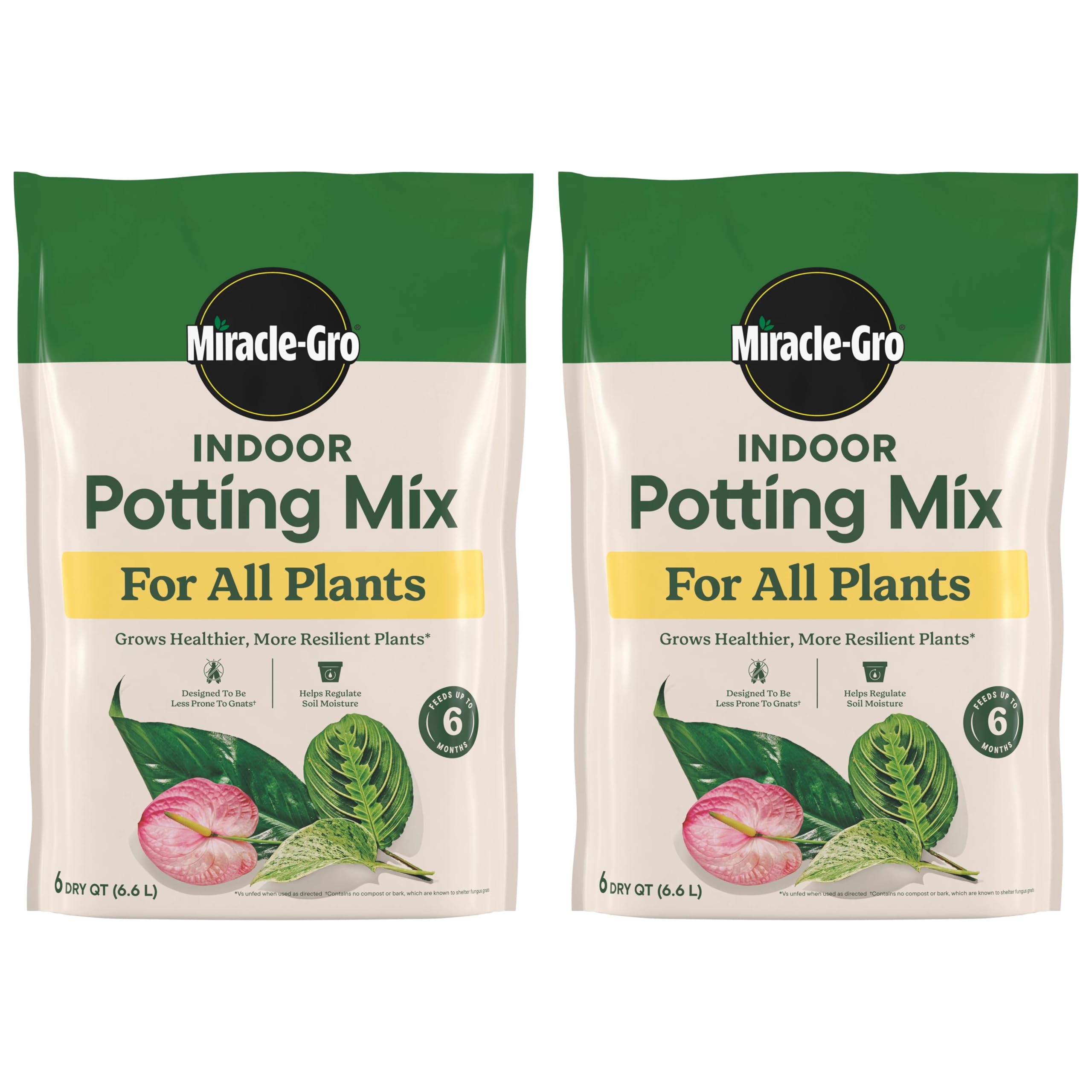
This is the standard indoor potting mix from Miracle-Gro, distinguished from the organic version by the inclusion of synthetic time-release fertilizer that feeds for up to six months. The base contains sphagnum peat, coconut coir, and perlite, with no compost or bark — a deliberate formulation intended to reduce the habitat for fungus gnats. Many owners with large collections report this as their go-to for consistent, predictable results.
The texture is lighter than a typical garden soil and the drainage is reliable, but the fine particle size means it can still become dense in a deep pot without extra amendment. For a corn plant, mixing in a handful of coarse perlite or small pine bark chips per 6-quart bag will prevent the bottom third from staying wet. The six-month feed is convenient but means you should not add additional fertilizer during that period to avoid salt buildup.
The 6-quart 2-pack is the most affordable option on this list, making it a low-risk entry for someone who wants to repot a single medium corn plant. Owners praise the lack of gnats and the easy handling. The main trade-off is the lack of chunky aeration compared to specialty aroid blends, which may matter more for plants kept in non-draining ceramic cachepots.
What works
- No compost or bark reduces gnat risk significantly
- Built-in 6-month feed for continuous nutrition
- Consistent texture bag to bag
What doesn’t
- Fine particle size compacts in deep containers
- Fertilizer charge may overlap if you use liquid feed
Hardware & Specs Guide
Particle Size & Air Porosity
The most critical spec for a corn plant is the diameter of the largest components. Blends with particles 4 mm and larger — pine bark fines, pumice, coco chips, LECA — create enough macro-pore space for oxygen to reach roots after watering. Standard fine potting soils with particles under 2 mm will steadily suffocate the root ball unless the pot has exceptional drainage. Measure by feel: grab a handful; if it compresses into a solid clump, it is too fine.
Wet-Dry Cycle Duration
Corn plants prefer a short wet-dry cycle: the soil should feel moist two inches down three days after watering, but be barely damp by day five. Mixes high in sphagnum peat alone can stay wet for seven to eight days indoors, increasing rot risk. Adding coir, vermiculite, or bark shortens the cycle by wicking moisture laterally. A balanced mix should lose roughly 30 percent of its water weight within 48 hours of thorough saturation in a standard nursery pot.
FAQ
Can I use cactus soil for a corn plant?
How often should I repot a corn plant in fresh soil?
Should I add fertilizer to a pre-mixed potting soil for corn plants?
What does a pH of 5.5 to 6.5 mean for my corn plant’s leaves?
Final Thoughts: The Verdict
For most gardeners, the soil for corn plant winner is the Coast of Maine Bar Harbor Blend because it delivers long-lasting organic nutrition, stable pH, and a perlite content that keeps the drainage profile safe for Dracaena roots without requiring additional amendments. If you want max aeration and the chunkiest texture available, grab the Craft Aroid Mix by Grow Queen. And for a budget-friendly entry that reduces fungus gnats while providing reliable moisture regulation, the Miracle-Gro Organic Indoor Potting Mix works well for beginners or multi-plant repotting sessions.