
Shaping a bonsai is a long conversation between you and the tree, and the right wire is your voice. A wire that’s too stiff scars the bark; too soft won’t hold a curve. You need a coil that bends cleanly under your fingers, locks the branch into place, and stays there for the entire growing season without corroding or snapping. That specificity—finding aluminum anodized wire in the right gauge range—separates a frustrated beginner from an artist who gets the branch angle right on the first try.
I’m Rikta — the co-founder and writer behind Lawn Gear Lab. I’ve spent countless hours comparing aluminum alloy compositions, anodized coating thicknesses, and tensile consistency across brands, cross-referencing verified owner experiences to find the wire that actually holds without damaging delicate bark.
Whether you’re wiring a juniper cascade or a formal upright maple, the best bonsai training wire is the one that offers the right gauge variety, bends without kinking, and blends into the canopy so your tree—not the metal—stays the focal point.
How To Choose The Best Bonsai Training Wire
Picking the right wire isn’t about brand loyalty—it’s about matching the metal’s behavior to your tree’s needs. The two biggest factors are the material’s hardness and the range of diameters you have on hand. Anodized aluminum dominates the hobbyist market because it’s soft enough to bend by hand yet springy enough to hold a branch in a new position for months. Copper wire requires annealing before use and leaves deeper scars, so most serious hobbyists start with aluminum and stay there.
Gauge range: why you need more than one diameter
A common mistake is buying a single roll of medium wire and trying to shape every branch with it. Thin shoots under 5mm call for 1.0mm to 1.5mm wire; primary branches need 2.0mm to 3.0mm; thick trunks require 4.0mm or even 6.0mm. A kit that skips the mid-range (around 2.5mm) forces you to double-wrap thin wire, which wastes time and looks messy. Look for a set that includes at least four distinct sizes covering 1.0mm through 3.0mm—that range handles 90% of deciduous and conifer training work.
Coating and finish: rust resistance and visibility
Raw aluminum still oxidizes and can leave gray streaks on bark. Anodized wire—especially in brown or black—resists corrosion and blends into the canopy. Brown wire disappears against most bark tones; black stands out slightly but is easier to see during removal. Avoid bright silver or copper-colored wire unless you plan to remove it within a few weeks. The anodized layer also reduces friction, which means less damage to the cambium when you unwind the coil.
Quick Comparison
On smaller screens, swipe sideways to see the full table.
| Model | Category | Best For | Key Spec | Amazon |
|---|---|---|---|---|
| RASKOO 189ft Kit | Premium Starter Set | Widest gauge variety in one box | 5 sizes (1.0–3.0mm) | Amazon |
| Wazakura 6mm | Pro-Grade Single | Heavy trunk training | 6.0mm diameter | Amazon |
| Bonsai Outlet 3-Pack | Mid-Range Trio | Fine, medium, and thick branches | 1.5mm / 3.0mm / 4.0mm | Amazon |
| FALIDI 5-Roll Kit | Entry-Level Value | Beginners on a budget | 1.0mm / 1.5mm / 2.0mm | Amazon |
| MOSFiATA 8-Piece Kit | Compact All-in-One | Portable starter with cutter | 7 rolls + cutter | Amazon |
| Antrader 3-Size Set | Mid-Gauge Specialist | Medium to thick branches | 2.5mm / 3.0mm / 4.0mm | Amazon |
| Hotop 10-Roll Kit | Large-Volume Bundle | High-volume wiring projects | 10 rolls in 5 sizes | Amazon |
In‑Depth Reviews
1. RASKOO 189ft Bonsai Wire Kit
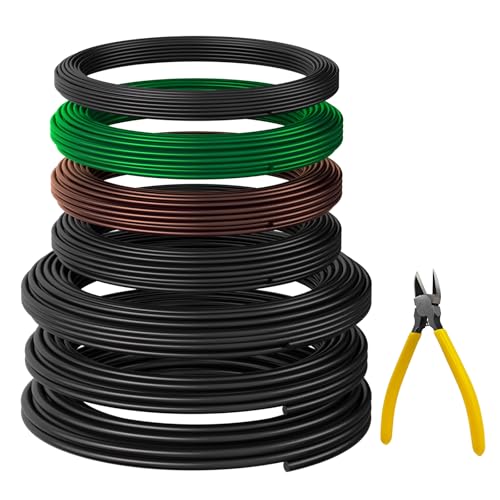
This kit covers the essential gauge spectrum—1.0mm, 1.5mm, 2.0mm, 2.5mm, and 3.0mm—with a generous 189 total feet of anodized aluminum wire. The 1.5mm roll comes in three colors (black, green, brown), which is actually useful when you’re wiring overlapping branches and need visual contrast to track your wraps. The aluminum is soft enough to bend with bare fingers but stiff enough to hold a 6mm branch without slipping.
The included wire cutter is a functional addition for cleanup, though it’s best reserved for aluminum and thin copper—it struggles on anything over 3mm. Owners consistently note that the wire holds its shape well during the first season and removes cleanly without leaving anodized residue on the bark. The 2.5mm and 3.0mm rolls are shorter (about 10 feet each), which is typical for thicker gauges, but the 33-foot 1.5mm rolls give you plenty of practice material.
For the combination of gauge diversity, total footage, and an included cutter, this is the most balanced all-in-one package for anyone moving past the absolute beginner stage. The only real gap is the lack of a 4.0mm option for very thick trunks, but for 90% of branch training, this set has you covered.
What works
- Five gauge sizes cover thin to medium branches thoroughly
- Multiple 1.5mm color options help track overlapping wraps
- Anodized finish resists rust and leaves minimal marks
What doesn’t
- Thick-gauge rolls (2.5mm and 3.0mm) are short at ~10 feet each
- Included cutter struggles on wire above 3mm
2. Wazakura Japanese Bonsai Training Wire 6mm
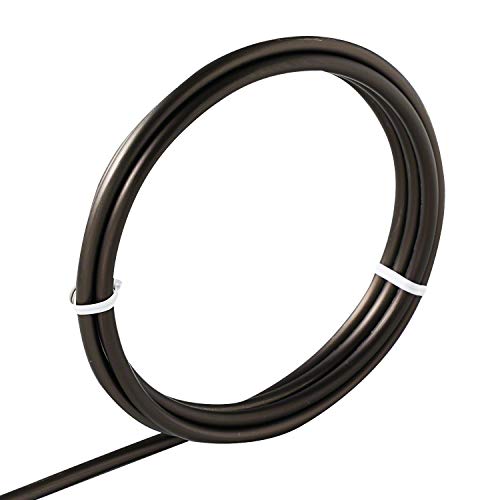
If you’re wiring a substantial trunk—a thick juniper or a maple with a 12mm leader—you need wire that won’t buckle under the leverage. Wazakura’s 6.0mm anodized aluminum coil is the stiffest option on this list without crossing into copper’s unforgiving territory. The brown coating is matte and blends into dark bark almost invisibly, which matters when the wire stays on for a full growing season.
The aluminum alloy feels noticeably denser than budget spools. It straightens out cleanly after removal and can be reused at least once if you’re gentle during unwinding. At 150 grams per roll, you get roughly 5 to 6 feet of wire, which is enough for two or three heavy branches. Owners with Japanese maples and pines specifically praise how little scarring this wire leaves compared to cheaper alternatives.
This is a specialist purchase—single gauge, no cutter, no variety. It’s the right choice when you’ve already got a kit for fine work and need a dedicated heavy-lifter for trunk reshaping. The higher material quality justifies the premium for anyone serious about bark preservation.
What works
- 6.0mm thickness handles thick trunks without collapsing
- Brown anodized finish is nearly invisible on most bark
- Reusable if removed carefully
What doesn’t
- Single gauge limits use to heavy branches only
- Short per-roll footage for the price point
3. Bonsai Outlet 3-Pack Training Wire

Bonsai Outlet’s three-roll set skips the thin 1.0mm wire entirely and starts at 1.5mm, then jumps to 3.0mm and 4.0mm. That makes it a better fit for intermediate hobbyists who already own fine-gauge wire and need the mid-to-heavy range. Each spool holds 100 grams—enough for several trees—and the black anodized finish is consistent across all three rolls.
The 4.0mm wire is the standout here. It’s stiff enough to hold a 10mm trunk bend but still workable by hand if you leverage the branch as you wrap. Owners specifically mention using the 3.0mm roll on Japanese maple primary branches and the 4.0mm on conifer leaders. The aluminum straightens well after removal and shows no pitting or oxidation even after months of outdoor exposure.
The lack of a 2.0mm or 2.5mm option creates a gap for finer secondary branches. If your tree has many 4mm to 6mm shoots, you’ll need to double-wrap the 1.5mm or buy a separate spool. Still, for focused work on medium-to-thick wood, this is a clean, no-frills set from a trusted specialist brand.
What works
- 4.0mm wire handles thick branches and trunks effectively
- Generous 100g per roll for extended use
- Black anodized finish blends well and resists corrosion
What doesn’t
- No 2.0mm or 2.5mm gauge for fine secondary branches
- 1.5mm is the only option for thin work
4. FALIDI 5-Roll Bonsai Wire Kit

This entry-level kit gives you five rolls—1.0mm, 1.5mm, and 2.0mm—plus a basic wire cutter, all for a very accessible price. The 1.0mm and 1.5mm rolls are 32.8 feet each, giving you plenty of material for wiring multiple small trees. The aluminum is noticeably softer than premium options, which is actually a plus for beginners: it’s harder to over-tighten and damage bark.
The 2.0mm roll handles branches up to about 8mm, but you’ll feel it flex when trying to hold a thicker limb. The included cutter works cleanly on the two thinner gauges but blunts quickly if used on the 2.0mm wire. Several owners report the cutter failing on the first use, so budget for a separate pair of flush cutters if you stick with this kit.
Where this set shines is volume for the money. The 1.0mm wire is ideal for wiring hedges, securing moss to driftwood, or practicing anchor wraps without worrying about waste. It’s a smart starting point for anyone who isn’t sure how much wiring they’ll actually do.
What works
- Long 32.8-foot rolls of fine wire for extensive practice
- Soft aluminum reduces risk of bark damage for novices
- Very low entry cost for a full kit
What doesn’t
- Included cutter is fragile and may break quickly
- 2.0mm wire lacks stiffness for medium-to-thick branches
5. MOSFiATA 8-Piece Bonsai Wire Kit
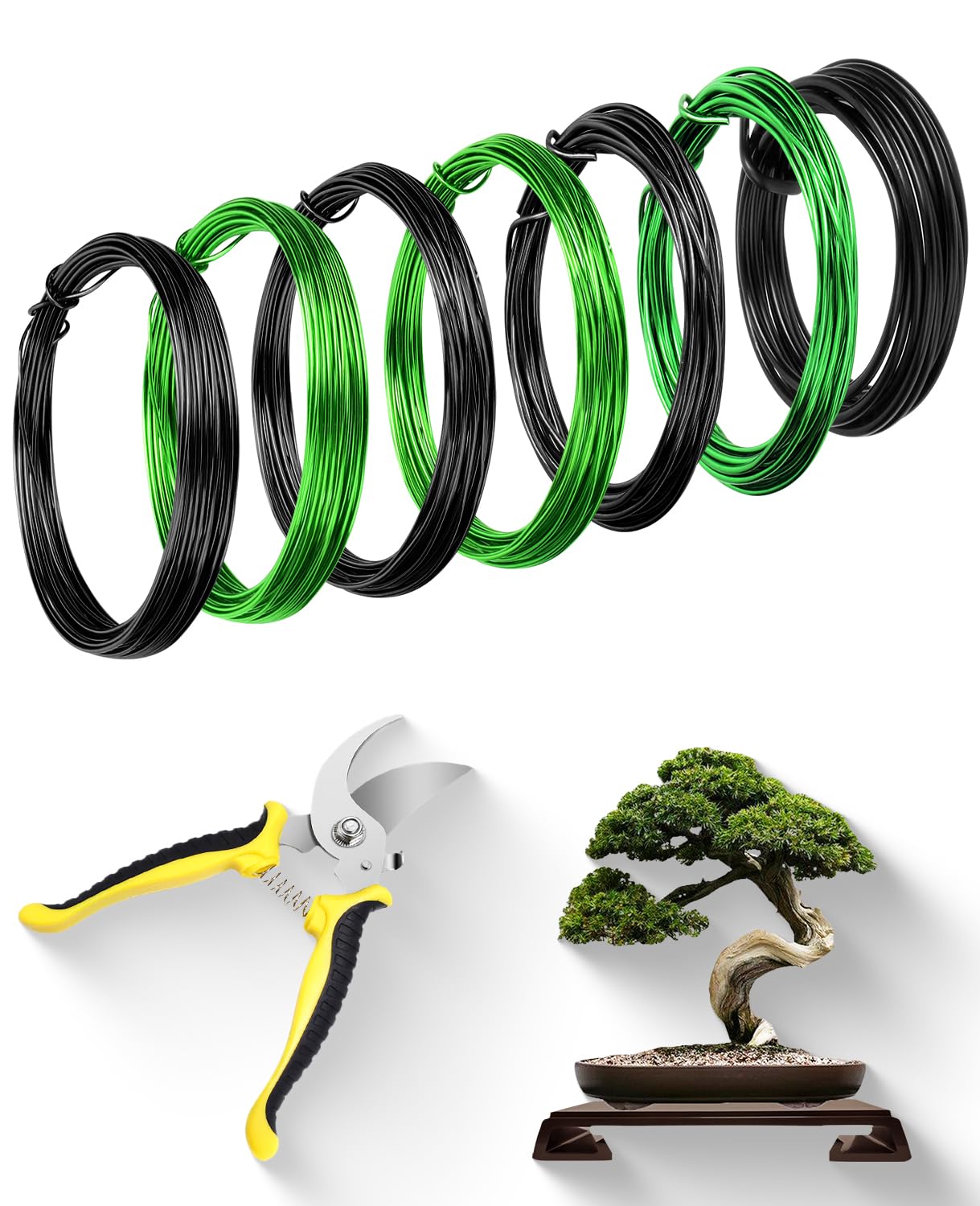
MOSFiATA’s kit packages seven wire rolls (two of 1.0mm, two of 1.5mm, two of 2.0mm, and one of 3.0mm) into a compact plastic case, making it the most portable option for bonsai clubs or small-apartment hobbyists. The brown anodized aluminum matches the aesthetic you’d expect, and the 3.0mm roll—while only 2 meters long—is enough for one or two medium branch bends.
The included wire cutter has a double-leaf-spring design that feels more robust than the budget cutters in other kits. It cuts the 2.0mm and 3.0mm wire cleanly, which is a relief at this price tier. Owners consistently note the convenience of having everything organized in one box—no loose spools rolling under the workbench.
The trade-off is per-roll footage: the 1.0mm and 1.5mm rolls are 5 meters each, which feels short once you start wiring a tree with multiple branches. For a single small juniper or a Chinese elm, it’s adequate. For a collection of several trees, you’ll burn through the 3.0mm roll fast. It’s a good travel companion or a gift set for someone just starting.
What works
- Compact case keeps wire organized and tangle-free
- Cutter handles 3.0mm aluminum without issue
- Includes a dedicated 3.0mm roll for medium branches
What doesn’t
- Short per-roll lengths limit use to one or two trees
- 1.0mm and 1.5mm rolls are only 5m each
6. Antrader 3-Size Bonsai Training Wire Set
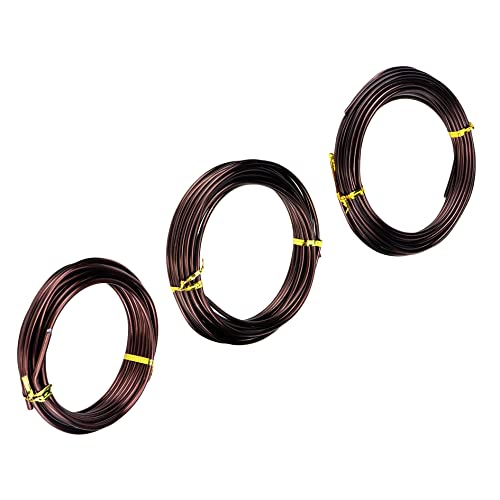
Antrader’s set positions itself squarely in the mid-to-thick range with 2.5mm, 3.0mm, and 4.0mm rolls, each weighing 100 grams. The 2.5mm gauge is a welcome inclusion—it’s the perfect diameter for 6mm to 8mm branches that are too thick for 2.0mm but don’t need the brute force of 4.0mm. The brown anodized coating has a matte finish that looks natural against juniper and pine bark.
The aluminum bends with consistent resistance across all three rolls—no weak spots or brittle sections. Owners report that the 4.0mm wire holds heavy branches securely through wind and rain, and the 2.5mm wire is ideal for deciduous trees with multiple leaders. The 100-gram roll size gives you roughly 15 to 20 feet of 4.0mm, which is generous compared to other kits at this price point.
The obvious limitation is the lack of any gauge below 2.5mm. If you need to wire thin shoots or secure moss, you’ll need a separate spool. This set works best as a complement to an existing fine-wire kit or for an intermediate artist who mainly works with established trees that have thick secondary branching.
What works
- 2.5mm gauge fills a critical gap missing in many kits
- 100g per roll offers solid value for mid/heavy wire
- Consistent bend quality across all three sizes
What doesn’t
- No fine wire below 2.5mm for small branches
- Not a complete starter set—requires additional gauges
7. Hotop 10-Roll Bonsai Wire Kit
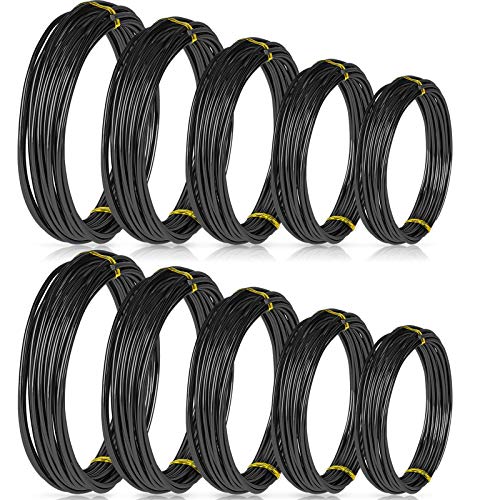
Hotop doubles down on volume: ten rolls (two each of 1.0mm, 1.5mm, 2.0mm, 2.5mm, and 3.0mm) in black anodized aluminum at a total of 164 feet. That’s enough wire to train a small forest of mame or shohin trees. The duplication of each gauge is smart—you can keep one roll open for active work and store the other for later without having to respool.
The aluminum is mid-range in softness—softer than Wazakura but firmer than the FALIDI kit. It holds a 90-degree bend on a 5mm branch without springing back. The black finish is uniform and doesn’t flake off during bending. Owners specifically appreciate having two rolls of 2.5mm, which is the gauge that gets used fastest once you move past beginner projects.
The main compromise is the lack of a carrying case or included cutter. You get ten loose rolls and nothing else. For the price per foot, it’s tough to beat, but you’ll need to buy a separate cutter and find your own storage solution. It’s a bulk buy for someone who already owns the basic tools and just needs a long-term supply of clean wire.
What works
- Ten rolls provide exceptional total footage for the price
- Two rolls per gauge means less fear of running out mid-project
- 2.5mm double-pack addresses the most-used gauge
What doesn’t
- No storage case or included cutter
- Black finish stands out more on light-barked trees
Hardware & Specs Guide
Gauge Selection (1.0mm to 6.0mm)
Branch thickness determines wire gauge. The rule of thumb: wire diameter should be roughly one-third the branch diameter. A 6mm branch calls for 2.0mm wire; a 12mm trunk needs 4.0mm. Using wire that’s too thin causes the branch to pop back; too thick risks bark splitting. Kits that offer sequential sizes (1.0, 1.5, 2.0, 2.5, 3.0) let you match each branch individually rather than forcing one size to do double duty.
Anodized Coating Durability
Anodizing creates a hard oxide layer on the aluminum surface that prevents corrosion and reduces friction against bark. A quality anodized coating won’t peel or flake when bent around a 45-degree curve. Cheaper wire often uses a painted finish that chips at the bend point, exposing bare metal that can oxidize and stain light-colored bark. Brown and black coatings are preferred because they disappear visually from arm’s length.
FAQ
Can I reuse aluminum bonsai training wire after removing it?
Why does my wire leave dark marks on the bark?
How long should I leave training wire on a bonsai branch?
Final Thoughts: The Verdict
For most gardeners, the best bonsai training wire winner is the RASKOO 189ft Kit because it delivers the widest usable gauge range (1.0mm to 3.0mm) in a single purchase, backed by consistent anodized quality and a functional cutter. If you want a dedicated heavy-gauge spool for trunk work, grab the Wazakura 6mm. And for pure volume at a low per-foot cost, nothing beats the Hotop 10-Roll Kit.