
Carrots are root vegetables that store energy in a swollen taproot, so the physical structure of their growing medium directly dictates harvest quality. Heavy, compacted, or rock-laden soil forces roots to fork, twist, or stop growing entirely — a problem no amount of watering or sunlight can fix.
I’m Rikta — the co-founder and writer behind Lawn Gear Lab. After comparing hundreds of soil analyses, studying bagged-mix particle size distributions, and cross-referencing owner-reported carrot germination rates across multiple brands, I built this guide around the one spec that matters most for carrots: the soil’s ability to stay loose and drain freely through the full depth of root development.
From sterile seed-starting blends for flawless early root tips to rich, loamy raised-bed mixes that support weeks of steady growth, this guide evaluates each option by its texture, drainage profile, and nutrient balance. This is the definitive guide to finding the best soil for carrots that actually grows straight, sweet, and full-sized roots.
How To Choose The Best Soil For Carrots
Choosing the wrong soil is the single fastest way to ruin a carrot crop. The root develops downward, and any obstacle in its path causes the carrot to fork, split, or grow into a stunted nub. This section covers the key factors to evaluate before you open a bag.
Texture & Particle Size
Carrots demand a fine, loose texture free of stones, bark chunks, and heavy clay clumps. Look for a mix dominated by screened sphagnum peat moss, vermiculite, perlite, or coir fibers. Coarse particles larger than a pea create air pockets that deflect the root tip. If the bag contains uncomposted wood chips or large perlite nuggets, it is better suited for general container flowers than for carrots.
Drainage vs. Moisture Retention
Carrots need consistent moisture to stay tender, but waterlogged soil promotes root rot and surface cracking. A good carrot soil holds water like a wrung-out sponge and drains excess within minutes. Blends that include both vermiculite (holds water) and perlite (creates drainage channels) offer the right middle ground. Avoid soils marketed as “moisture control” with polymer crystals — these hold water too long for deep-rooted vegetables.
Nutrient Profile (NPK & Organic Matter)
Carrots are light feeders that prefer low nitrogen and higher potassium and phosphorus. High nitrogen pushes lush green tops at the expense of thick, sweet roots. Look for soil with an NPK ratio around 1-1-2 or 2-3-4, or rely on OMRI-listed organic blends that release nutrients slowly. Earthworm castings, kelp meal, and rock dust provide trace minerals without overloading nitrogen.
pH Level & Liming
The ideal pH range for carrots is 6.0 to 6.8. Slightly acidic to neutral conditions maximize nutrient uptake for root development. Some seed-starting mixes include lime specifically to adjust pH, which is a helpful feature if your water or native soil tends toward acidity. Avoid soils with sulfur additives unless you have confirmed your soil is too alkaline.
Quick Comparison
On smaller screens, swipe sideways to see the full table.
| Model | Category | Best For | Key Spec | Amazon |
|---|---|---|---|---|
| Espoma Organic Potting Mix (AP2) | Premium All-Purpose | Containers & raised beds with taproot crops | 2 cu ft, Myco-Tone, 5+ organic ingredients | Amazon |
| Coast of Maine Castine Blend | High-End Raised Bed | Deep, loose raised beds with biochar boost | 2 cu ft, biochar, mycorrhizae, worm castings | Amazon |
| Espoma Organic Vegetable & Flower (VFGS1) | In-Ground Amendment | Mixing into native garden soil | 1 cu ft, Myco-Tone, earthworm castings | Amazon |
| Sun Gro Black Gold | Natural & Organic | All-purpose container gardening | 2 cu ft, pumice, perlite, loamy texture | Amazon |
| Coast of Maine Tomato & Vegetable | Vegetable-Specific | Tomatoes and heavy-feed vegetables | 20 qt, composted manure, peat moss | Amazon |
| Jiffy Natural & Organic Seed Starting Mix | Seed Starting | Germinating carrot seeds indoors | 10 QT, fine texture, lime, vermiculite | Amazon |
| Midwest Hearth Premium Potting Mix | Lightweight Blend | Small pots and indoor herb gardens | 8 dry qt, pH controlled, triple mix | Amazon |
In‑Depth Reviews
1. Espoma Organic Potting Soil Mix (AP2)

The Espoma AP2 is the most versatile soil on this list for carrot growers who work with containers, raised beds, or a mix of both. It is a rich, loamy blend of sphagnum peat moss, humus, and perlite, fortified with earthworm castings, alfalfa meal, kelp meal, and feather meal. This combination provides a steady release of low-nitrogen nutrients that support root expansion without forcing excessive leaf growth.
What sets this mix apart for carrots is its texture. Reviewers describe it as chunky without being dense, and the absence of big wood sticks or bark pieces means fewer obstructions for developing taproots. The proprietary Myco-Tone blend of endo and ecto mycorrhizae colonizes the root zone, improving water and phosphorus uptake — both critical for sweet, straight carrots. It arrives clean with no weed seeds or gnat larvae.
At 2 cubic feet, one bag fills several large containers or supplements a 4×4 raised bed. It costs more per cubic foot than bargain mixes, but the ingredient quality justifies the premium for anyone serious about root crop quality. The bag is heavy and not resealable, so plan to use it within a season.
What works
- Myco-Tone improves root zone nutrient access
- Clean texture with minimal large debris
- Versatile for containers, raised beds, and in-ground amending
What doesn’t
- Bag is not resealable; must be used quickly
- Heavy when wet; not ideal for high shelving
2. Coast of Maine Castine Blend
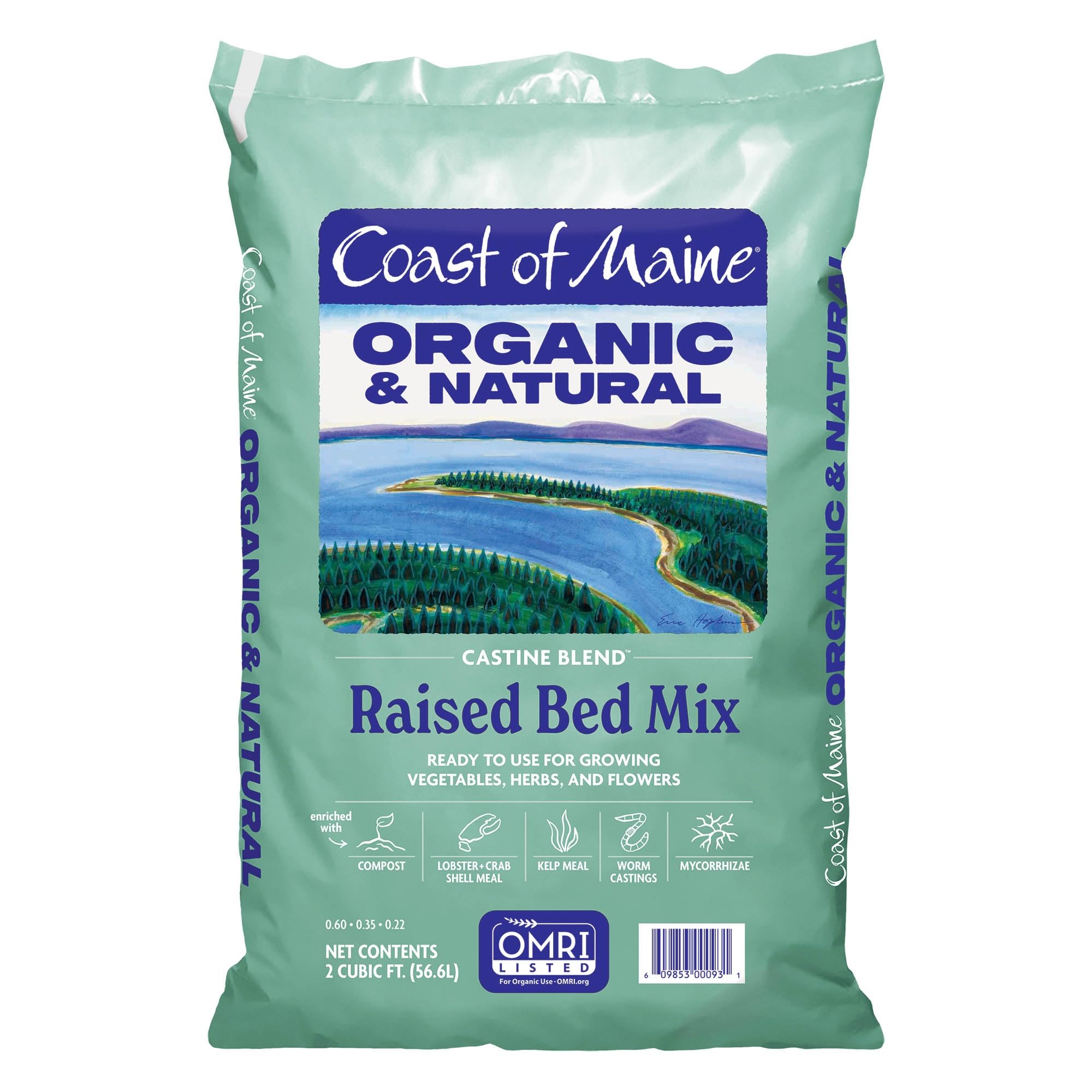
The Castine Blend is a purpose-built raised-bed mix from Coast of Maine that reads like a soil recipe from a master gardener. It contains worm castings, mycorrhizae, biochar, greensand, kelp meal, and lobster and crab shell meal. Biochar is the standout ingredient here — it creates microscopic pores in the soil that improve aeration and water retention at depth, exactly what carrot taproots need to grow straight and long.
According to verified buyers, this soil arrives dark, soft, and free of twigs or bugs. One gardener reported using the product for three consecutive seasons in elevated beds, noting that it actively loosens existing compacted soil. The high organic matter content feeds soil biology over weeks, so carrots develop steadily without the nutrient surge that causes forking. The 2-cubic-foot bag is heavy, but the material fluffs up significantly when opened.
The main drawback is the price per bag — this is the most expensive option here. For a large 4×8 raised bed, you may need three or more bags, which adds up quickly. It also contains shellfish meal, so gardeners with true shellfish allergies should handle it with gloves. If your budget allows, this is the best soil for carrots in dedicated raised beds.
What works
- Biochar improves deep aeration for long taproots
- Rich, dark texture with no debris
- Multiple organic amendments support steady root growth
What doesn’t
- Highest price per square foot on this list
- Contains shellfish meal; caution for allergies
3. Espoma Organic Vegetable & Flower Garden Soil (VFGS1)

The Espoma VFGS1 is formulated specifically for mixing into native garden soil rather than for standalone container use. It contains the same Myco-Tone mycorrhizae found in the AP2, plus earthworm castings, but its coarser, denser texture makes it a soil amendment rather than a complete growing medium. For carrot growers with existing garden beds that are too clay-heavy or compacted, this bag provides the organic structure needed to create loose, deep rooting zones.
Buyers consistently report that plants started in native soil amended with VFGS1 visibly outperform those in unamended plots. The earthworm castings add microbial life that breaks down clay aggregates over a single growing season. While it is OMRI-listed and free of synthetic chemicals, some users did note that indoor containers developed fungus gnats when using this mix, likely due to the rich organic content. Outdoors in garden beds, this was not an issue.
At 1 cubic foot, you will need several bags to cover a typical garden row. It is not designed for container-only carrot growing — the particle size is larger than a seed-starting mix, and it compacts more in pots. Use it to transform heavy native soil into a carrot-friendly bed, and you will see straighter roots by harvest time.
What works
- Myco-Tone improves root access to soil nutrients
- Rich organic matter breaks down clay soil
- OMRI-listed for organic gardening
What doesn’t
- Too coarse for containers alone
- Can attract fungus gnats in indoor setups
4. Sun Gro Black Gold Natural and Organic Soil (SUGRBG2)

Sun Gro’s Black Gold is a natural and organic potting soil that has built a loyal following among home gardeners who value consistent texture and reliable performance. It is based on screened earthworm castings and Canadian sphagnum peat moss, with perlite and pumice blended in for aeration. The result is a light, fluffy mix that stays loose even after repeated watering cycles, a critical trait for carrots growing in containers over several months.
Long-term users report that Black Gold stays fluffy for years when used in large pots, resisting the compaction that causes carrot roots to flatten against the pot wall. The soil also has a rich, earthy smell and supports beneficial bacteria without adding synthetic fertilizers. On the downside, several buyers noted that the mix can harbor fungus gnats, a common issue with high-organic-content soils sold in bags. Applying a Bacillus thuringiensis (BT) treatment at planting time resolves this easily.
Priced in the mid-range per cubic foot, the 2-cubic-foot bag delivers excellent coverage for the cost. It is not as nutrient-dense as the Castine Blend, so you may need to supplement with a balanced fertilizer mid-season if your carrots look pale. For pure value in a container-friendly mix, this is a solid choice.
What works
- Light, fluffy texture resists compaction
- Good aeration from perlite and pumice
- Large 2-cubic-foot bag at reasonable price
What doesn’t
- Fungus gnats can appear without preventive BT treatment
- Needs mid-season nutrient supplement for heavy feeders
5. Coast of Maine Organic & Natural Planting Soil for Vegetables & Tomatoes

Coast of Maine’s Tomato & Vegetable formula is a compost-based mix that brings a higher organic matter load than standard potting soils. It contains composted manure and sphagnum peat moss, which together create a fertile base for hungry crops like tomatoes — and carrots, when used in moderation. The earth-friendly OMRI listing appeals to organic growers, and the lightweight texture makes it easy to work with straight from the bag.
Verified buyers report excellent results with heirloom tomatoes, noting visible growth within days of transplanting. For carrots, the higher nutrient density means you should use it in a blend with a leaner mix (like the Jiffy seed starter) to avoid nitrogen overload that causes hairy, thin roots. The 20-quart bag is smaller than the 2-cubic-foot options, making it ideal for gardeners with a few containers rather than large beds.
Some customers reported soil gnats in indoor containers, similar to other compost-rich mixes, and recommended a weekly neem oil spray as a preventive. The cost per quart is slightly higher than general-purpose blends, but the quality of the compost base is hard to beat for nutrient availability. If you want a ready-to-use vegetable mix and plan to supplement with a lower-nitrogen filler for carrots, this is a strong candidate.
What works
- High compost content provides rich nutrients
- Lightweight, easy to handle and mix
- OMRI-listed for organic gardening
What doesn’t
- Too nutrient-rich for carrots alone without diluting
- Can bring fungus gnats indoors without treatment
6. Jiffy Natural & Organic Seed Starting Soil Mix

The Jiffy Seed Starting Mix is the finest-textured soil on this list, composed of peat moss, vermiculite, and lime. It contains no bark, no perlite aggregates, and no heavy compost — just a uniform, dust-like consistency that carrot seeds can push through without resistance. This is the ideal medium for germinating carrot seeds in trays or small pots, where consistent moisture and zero physical obstruction are non-negotiable.
Reviewers consistently praise the high germination rates and rapid seedling development they get from this mix. The vermiculite holds three to four times its volume in water, keeping the seed zone damp without waterlogging the delicate root tip. The added lime stabilizes pH in the 6.0-6.5 range, which is spot-on for carrots. Several users mentioned mixing it with potting soil to extend the bag further, which is a smart strategy for budget-conscious growers.
The trade-off is volume — only 10 quarts per bag — and the fact that it provides no nutrients. Carrot seedlings need to be transplanted or fed within two to three weeks after germination. If you plan to grow carrots directly in a final container, you will need to mix this with a nutrient-rich soil or add a balanced fertilizer. But as a dedicated seed-starting medium, it is nearly perfect.
What works
- Extremely fine texture allows unobstructed root emergence
- Vermiculite holds consistent moisture levels
- Lime content stabilizes pH for carrots
What doesn’t
- No nutrients; requires feeding after germination
- Small bag volume for the price
7. Midwest Hearth Premium Potting Mix

The Midwest Hearth Premium Potting Mix is a triple-component blend of peat moss, vermiculite, and perlite designed for small-scale container gardening and seed starting. It comes in a compact 8-dry-quart bag with a resealable closure, a practical detail for occasional use. The pH is balanced for a broad spectrum of plants, and the mix is ready to use straight from the bag without additional amendments.
Buyers describe it as light, fluffy, and easy to work with, noting that it does not harden around roots the way some budget soils do. One customer used it to start petunias and reported excellent germination; others used it for jade plants and herbs with equal success. For carrots, the fine texture and balanced pH make it a solid choice for a small container on a patio or windowsill. The resealable bag is a real plus — you can use half, close it, and store the rest without degradation.
At 8 quarts, this bag is best suited for a single 12-inch pot or a few smaller containers. The price per quart is higher than bulk options, so this is not economical for large raised beds or multiple rows. Also, the nutrient content is minimal, so you will need to supplement with a mild fertilizer after the first two weeks. If your carrot project is small-scale, this is a convenient, mess-free option.
What works
- Resealable bag keeps unused soil fresh
- Light, fluffy texture prevents root hardening
- pH balanced for broad plant compatibility
What doesn’t
- Small volume; not cost-effective for large projects
- Low nutrient content requires early fertilization
Hardware & Specs Guide
Particle Size & Aeration
The most important physical spec for carrot soil is the absence of particles over 1/4 inch. Vermiculite and perlite should be finely graded — not the large nuggets found in orchid mixes or commercial landscaping blends. A loose texture allows the taproot to extend 6–12 inches without deflection. Mixes that include pumice (like Sun Gro Black Gold) provide longer-lasting aeration because pumice does not break down over time like perlite does. For carrots, any soil that feels gritty or contains visible wood chunks should be avoided or sifted before planting.
Organic vs. Synthetic Inputs
Carrots are sensitive to synthetic nitrogen spikes, which cause excessive top growth and forked or hairy roots. OMRI-listed organic soils (Espoma AP2, Coast of Maine Castine, Jiffy) rely on slow-release sources like feather meal, alfalfa meal, kelp meal, and earthworm castings. These release nitrogen gradually, matching the carrot’s steady, moderate appetite. Soils with synthetic slow-release coatings or added ammonium nitrate should be avoided for carrots unless heavily diluted with inert media. The presence of mycorrhizae (Myco-Tone) is a bonus because the fungi extend the root system’s reach for water and phosphorus underground.
FAQ
Can I use regular garden soil for carrots in containers?
What NPK ratio should I look for in a carrot-specific soil?
Is it safe to mix a seed-starting medium with a vegetable soil for carrots?
Final Thoughts: The Verdict
For most gardeners, the best soil for carrots winner is the Espoma Organic Potting Mix (AP2) because its loamy, well-aerated texture and Myco-Tone inoculant create ideal conditions for straight, sweet taproots in both containers and raised beds. If you want the ultimate raised-bed performance, grab the Coast of Maine Castine Blend for its biochar-enriched structure and deep organic feeding. And for starting seeds or small windowsill pots, nothing beats the Jiffy Natural & Organic Seed Starting Mix for its fine, obstruction-free particle size and consistent moisture retention.