
Blueberry bushes are notoriously finicky about their soil, and the difference between a bountiful harvest and a struggling, yellow-leafed plant often comes down to a single metric: soil pH. A pH that drifts even slightly above the 4.5–5.5 sweet spot locks away essential nutrients, starving the plant no matter how much you water or fertilize. Getting the chemistry right from the start is the only way to ensure vigorous growth and sweet, abundant fruit.
I’m Rikta — the co-founder and writer behind Lawn Gear Lab. I’ve spent hundreds of hours analyzing soil amendments, cross-referencing lab-grade pH data, and filtering through thousands of verified owner experiences to pinpoint the mixes and acidifiers that actually deliver measurable results for berry growers.
After sorting through dozens of premixed bags, sulfur-based acidifiers, and liquid concentrates, I’ve built a tight list of the products that reliably solve the acid-soil puzzle. This guide to the best soil for blueberry plants breaks down exactly which formulations work for potted bushes, in-ground beds, and minor pH corrections.
How To Choose The Right Soil For Blueberry Plants
Buying the wrong bag of dirt is the fastest way to watch your blueberry bushes fail. Unlike most garden vegetables that tolerate a wide pH range, blueberries are strict acidophiles. Focus on three critical factors before you buy.
Target pH Range: 4.5 to 5.5
This is non-negotiable. A pH above 6.0 causes iron chlorosis—leaves turn yellow between the veins while the plant starves. If your native soil is neutral or alkaline, you need a pre-acidified mix like one blended with peat moss and pine bark, or a dedicated acidifier to lower the pH yourself.
Organic Matter & Drainage
Blueberry roots are shallow and fibrous. They need a loose, well-draining structure that holds moisture without becoming waterlogged. Look for mixes containing sphagnum peat moss, composted pine bark, perlite, or sand. Avoid heavy clay-based garden soils that suffocate the roots.
Acidifier Type: Pre-Mixed vs. Amendment
Pre-mixed potting soils are convenient for containers—just open the bag and plant. Acidifier amendments (elemental sulfur granules, liquid concentrates, or fertilizer blends like Holly-tone) let you adjust pH in existing beds. Granules release slowly over weeks, while liquids work in days but require careful dosage.
Quick Comparison
On smaller screens, swipe sideways to see the full table.
| Model | Category | Best For | Key Spec | Amazon |
|---|---|---|---|---|
| Perfect Plants Specialty Blueberry Mix | Ready-to-Use Mix | Container blueberry bushes | pH 4.5–5.5, 18-6-8 slow-release fertilizer | Amazon |
| Coast of Maine Acid-Loving Soil | Ready-to-Use Mix | In-ground & container acid-lovers | 20 qt, OMRI-listed, compost + peat moss | Amazon |
| Doter Premium Blueberry Soil Mix | Ready-to-Use Mix | Potted blueberries & acid plants | 10 qt, pH 4.5–5.5, mycorrhizae added | Amazon |
| Espoma Organic Holly-Tone 4-3-4 | Granular Fertilizer | Feeding established acid-loving shrubs | 4-3-4 NPK, 5% sulfur, Bio-tone formula | Amazon |
| Espoma Organic Soil Acidifier | Granular Acidifier | Lowering soil pH in existing beds | 6 lb bag, elemental sulfur + gypsum | Amazon |
| Earth Science Fast Acting Sulfur | Granular Acidifier | Quick pH drop for lawns & beds | 5 lb, Nutri-Bond technology | Amazon |
| Ferti-lome Soil Acidifier Plus | Liquid Concentrate | Fast iron chlorosis correction | 1 gal, iron + zinc + sulfur | Amazon |
In‑Depth Reviews
1. Perfect Plants Specialty Blueberry Potting Mix
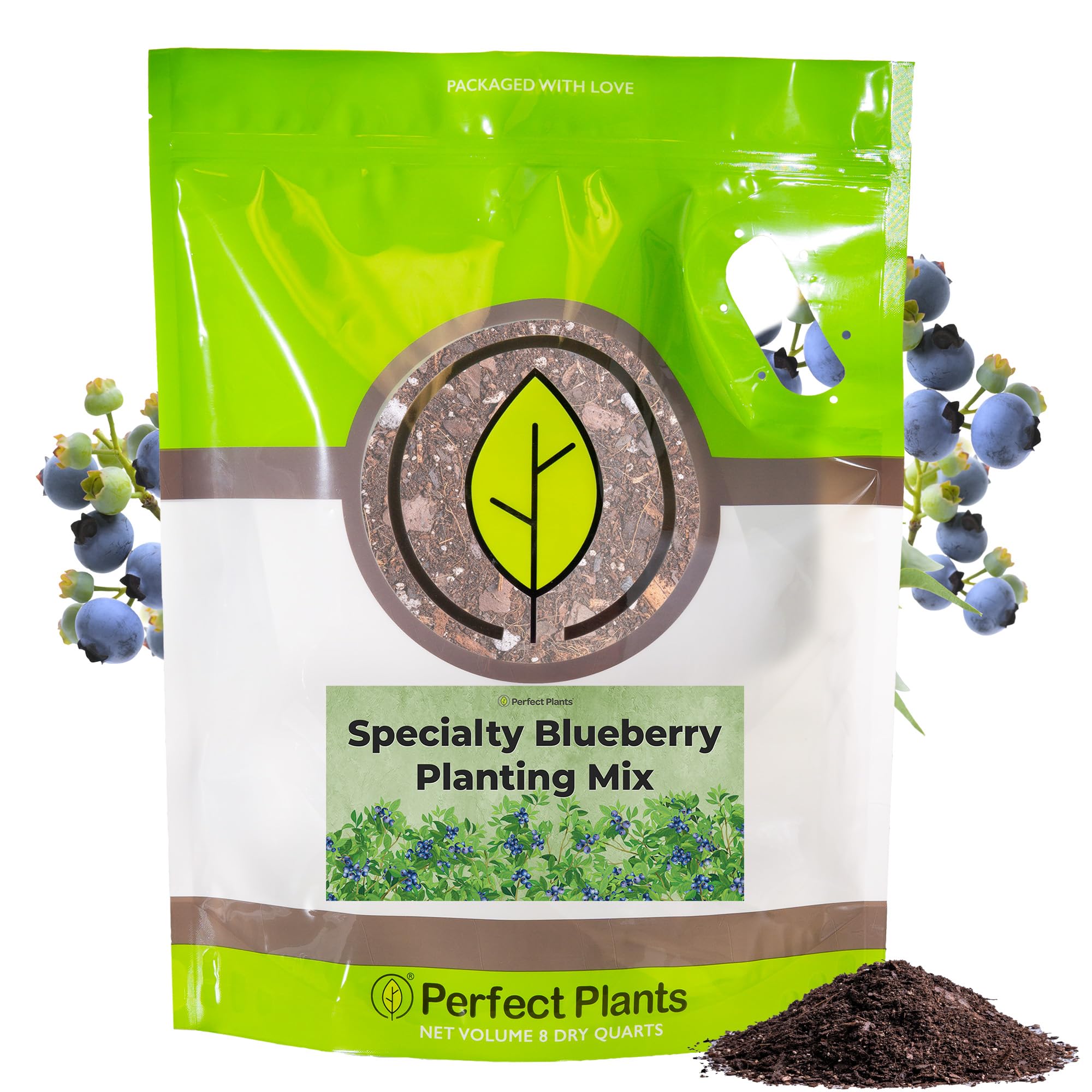
This is the most complete ready-to-use option available for blueberry growers. The mix arrives pre-acidified with sphagnum peat moss and composted pine bark, hitting the ideal pH range of 4.5 to 5.5 straight out of the bag. It also includes a slow-release 18-6-8 fertilizer that feeds your bushes for up to 12 months, eliminating the guesswork of when to apply supplemental nutrients.
Hand-mixed on a family-owned farm with over 40 years of horticulture experience, this soil uses granite sand for sharp drainage and holds enough moisture to keep fibrous roots happy without waterlogging. The heavy-duty resealable bag is a practical touch for gardeners who only use a portion at a time. Growers report potted blueberry bushes looking noticeably healthier within days of transplanting.
One verified review noted that the soil appeared alkaline on their specific test, so it is worth checking pH after potting, especially if your water source is hard. Still, the vast majority of feedback confirms strong growth, early budding, and excellent results for first-time blueberry planters.
What works
- Pre-buffered pH ideal for blueberries out of the bag
- Slow-release fertilizer lasts a full growing season
- Resealable heavy-duty packaging keeps unused mix fresh
What doesn’t
- Smaller bag volume (8 qt) limits use for large in-ground beds
- Rare batch inconsistencies may still require pH testing
2. Coast of Maine Organic & Natural Planting Soil for Acid Loving Plants

Coast of Maine has been producing regionally sourced compost blends since 1996, and this acid-loving mix reflects that long-running expertise. The blend combines composted manure, sphagnum peat moss, and aged bark to create a low pH formulation that is naturally lightweight, dark, and crumbly. It is OMRI-listed for organic use, so you can confidently use it around edible berries and fruiting shrubs without synthetic residue concerns.
The 20-quart bag is significantly larger than many competitors, making it a strong value for planting multiple bushes in a raised bed or reconditioning a larger patch of worn ground. The moisture-retaining perlite ensures consistent dampness between waterings, while the composted components provide a slow feed of organic nutrients that support steady root establishment and early fruiting.
Gardeners who used this to top-dress tired blueberry planters observed a quick return to vigorous growth. The mix is slightly heavier than pure peat-based alternatives, so it holds its structure well in outdoor containers. No strong manure smell was noted, which is a plus for patio growers.
What works
- Large 20-quart volume covers multiple containers or beds
- Organic compost base improves soil structure over time
- Lightweight mix with good moisture retention
What doesn’t
- Not a precise pH guarantee—test before heavy planting
- Bark chunks may feel chunky for small pots
3. Doter Premium Blueberry Soil Mix

Doter enters the blueberry soil category with a formulation that targets the specific pH sweet spot of 4.5 to 5.5 using peat moss and pine bark. The mix also features added perlite for drainage, sand for weight and aeration, and mycorrhizal fungi to enhance the root system’s ability to pull water and nutrients from the soil. This biological booster gives young transplants a noticeable resilience edge.
The 10-quart bag is well-suited for small containers or refreshing a couple of medium-sized pots. The inclusion of balanced N-P-K nutrients supports both leafy growth and fruit production in a single application. Growers using this mix have reported rapid new shoot development within weeks of potting, even from propagated cuttings.
Some feedback has mentioned the bag density—the mix is slightly lighter than standard garden soil, so you get more volume per bag than expected. It does not contain any added slow-release fertilizer prills, so you will need to plan a separate feeding schedule for long-term container growth beyond the first season.
What works
- Pre-mixed to correct acidic pH for blueberries
- Mycorrhizal fungi improve root health and nutrient uptake
- Perlite and sand provide excellent drainage for pots
What doesn’t
- No long-term fertilizer included
- Smaller bag size limits use to containers only
4. Espoma Organic Holly-Tone 4-3-4 Fertilizer (Pack of 2)
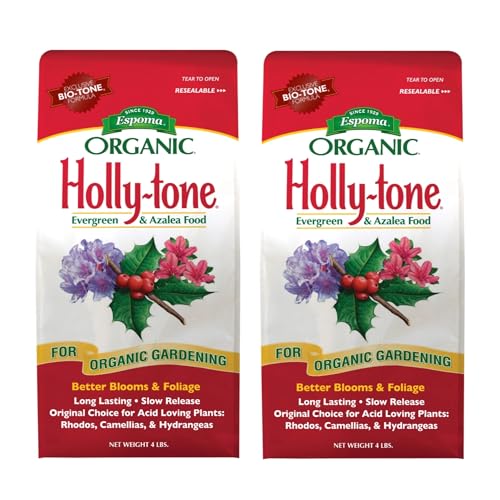
Holly-tone is one of the most recognized organic fertilizers for acid-loving plants, and for good reason. The 4-3-4 analysis with 5% sulfur provides a steady, gentle release of nutrients that encourages strong foliage color and prolific flowering in blueberries, azaleas, rhododendrons, and hydrangeas. The Bio-tone formula contains beneficial microbes that improve soil biology as the granules break down.
This pack includes two 4-pound bags, giving you enough material to feed multiple bushes through spring and fall applications. The powder-like granules are ready to use—just sprinkle around the drip line of each plant and water in. Users have reported dramatic turnarounds in struggling rhododendrons and increased berry set on blueberries after a single feeding cycle.
The product is OMRI-approved for organic gardening and contains no sludges or toxic ingredients. It is not a standalone soil, so pair it with an acidic planting mix or existing acidic bed. Over-application can raise sulfur levels excessively, so follow the recommended rates on the packaging.
What works
- Organic formula with proven results for berry-producing shrubs
- Two-bag pack provides extended coverage for a whole garden
- Contains Bio-tone microbes to enhance soil biology
What doesn’t
- Not a soil mix—requires existing acidic soil to work best
- Powder form can be messy to handle in windy conditions
5. Espoma Organic Soil Acidifier (6 lb. Bag – Pack of 2)
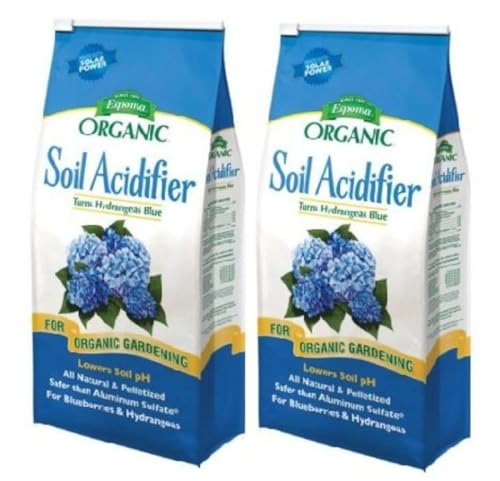
When your starting soil pH is too high, a dedicated acidifier like this Espoma product is the most direct solution. Each 6-pound bag contains elemental sulfur and gypsum, which work together to gradually lower the pH around the root zone. This is particularly useful for gardeners with naturally alkaline native soil who want to plant blueberries in the ground rather than containers.
This two-pack provides 12 pounds of acidifier, which is enough to treat a significant bed area or multiple large planting holes. Users have reported that it effectively turns hydrangea blooms blue when applied correctly, confirming that the sulfur is actively shifting pH. The granular form is easy to broadcast or work into the soil surface.
The product is registered as an organic input material, so it meets organic production standards. Work it into the soil a few weeks before planting, or apply it as a top-dress around established bushes. Sulfur is slow-acting, so expect results over several weeks rather than days. Over-application can acidify too aggressively in sandy soils.
What works
- Effective at lowering pH for in-ground blueberry beds
- Two-bag pack offers generous coverage for the price
- Certified for organic gardening use
What doesn’t
- Slow release requires patience—not an instant fix
- Must be used carefully to avoid overshooting pH
6. Earth Science Fast Acting Sulfur Granules (5 lb)

Earth Science claims a fast-acting edge with its elemental sulfur granules, and the Nutri-Bond technology is designed to keep the product anchored in the soil rather than washing away with rainfall. This is a critical advantage if you are treating a sloping bed or an area with frequent irrigation. The 5-pound bag covers a moderate-sized bed or multiple planting holes.
Growers have successfully used this sulfur on hydrangeas, strawberries, and blueberries to correct leaf yellowing and encourage stronger growth. The pellets take several waterings to dissolve fully, but the pH shift becomes visible as foliage color deepens and new growth appears. The product is labeled safe for people and pets, so you can apply it without worrying about re-entry timing.
Some users noted that the term “fast acting” is relative—the granules are not instant like a liquid drench. Plan for a few weeks of consistent moisture to see full pH adjustment. Over-application can overshoot the target, so a soil test before and after is recommended.
What works
- Nutri-Bond technology reduces runoff losses
- Safe for use around pets and children
- Effective at correcting iron chlorosis in acid-loving plants
What doesn’t
- Pellets dissolve slowly—not instant acting
- Requires careful measurement for precise pH adjustment
7. Fertilome (10665) Soil Acidifier Plus Iron (1 gal)
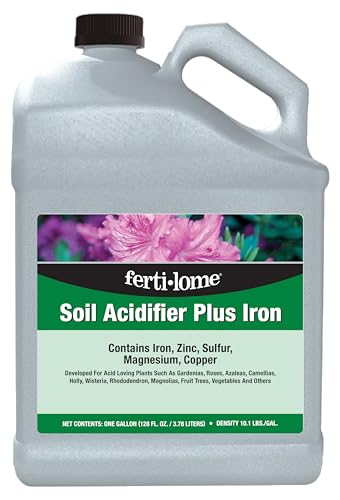
This liquid concentrate is the choice for gardeners who need rapid pH correction and immediate iron availability. The 1-gallon bottle contains sulfur, iron, zinc, magnesium, and copper—a full suite of micronutrients that acid-loving plants demand. The liquid form allows the solution to reach the root zone within hours, making it the go-to remedy for active iron chlorosis where leaves are already turning yellow.
Mixing is straightforward: 2 tablespoons per gallon of water applied to the soil. Users have reported visible greening of yellowed blueberry and citrus leaves within a week of the first application. This is also the most effective option for potted plants, where granular sulfur struggles to dissolve quickly in confined spaces.
The concentrated formula can burn roots if overused, especially in containers. Always start with a diluted dose and work up based on your soil test results. The liquid is also best applied when rain is not expected for 24 hours to prevent runoff loss of the micronutrient blend.
What works
- Fast-acting liquid corrects chlorosis in days
- Includes micronutrients (iron, zinc, copper, magnesium)
- Easy to apply and measure for container plants
What doesn’t
- Requires careful dilution to avoid root damage
- Liquid is less effective for long-term pH maintenance
Hardware & Specs Guide
pH Range & Measurement
The ideal pH range for blueberries is 4.5 to 5.5. Use a digital pH meter or a soil test kit designed for gardens to check your soil before planting. A reading above 6.0 means you must acidify the soil or choose a pre-mixed acidic potting soil.
Elemental Sulfur vs. Liquid Acidifier
Elemental sulfur granules break down slowly as soil microbes oxidize them into sulfuric acid, providing pH reduction over 4–8 weeks. Liquid acidifiers (such as Fertilome’s concentrate) work within days but require reapplication every few weeks. Granules are better for long-term maintenance; liquids are better for immediate chlorosis correction.
Organic Matter Components
Sphagnum peat moss is the most common acidifier in bagged blueberry soils, providing a pH of about 3.5–4.5 on its own. Composted pine bark adds structure and slow acidity, while perlite and sand ensure drainage. Avoid soils with high lime content or added alkaline fertilizers.
Container vs. In-Ground needs
Container blueberries require a soil mix that is consistently acidic and well-draining, since tap water often raises pH over time. In-ground beds benefit from a pre-season application of granular sulfur or peat moss worked into the top 6–8 inches of native soil. Raised beds can be filled entirely with an acid mix.
FAQ
How often should I test my blueberry soil pH?
Can I use regular garden soil for blueberries?
How much sulfur do I need to lower pH by one point?
What is the difference between Holly-tone and Soil Acidifier?
Should I use a liquid or granular acidifier for potted blueberries?
Final Thoughts: The Verdict
For most gardeners, the best soil for blueberry plants winner is the Perfect Plants Specialty Blueberry Potting Mix because it arrives with the correct pH, slow-release fertilizer, and excellent drainage in a single bag. If you want a larger volume for multiple bushes, grab the Coast of Maine Organic & Natural Planting Soil. And for correcting high pH in existing beds quickly, nothing beats the Ferti-lome Soil Acidifier Plus Iron.