
Getting asparagus to come back strong year after year is all about what is under the surface. Unlike most garden vegetables, asparagus crowns need a loose, deeply fertile bed that drains fast in winter and holds just enough moisture during the growing season—so picking the right mix from the start matters more than any other step.
I’m Rikta — the co-founder and writer behind Lawn Gear Lab. This guide is built by comparing the manufacturers’ published specifications and the patterns across verified customer reviews, so you get each pick’s real strengths and trade-offs instead of marketing spin.
Whether you are filling a new raised bed, amending a row in the ground, or topping off an established patch, this breakdown of the best soil for asparagus will help you choose exactly what your crowns need for a long, productive life.
How To Choose The Best Soil For Asparagus
Asparagus is a perennial crop that lives in the same spot for 15 to 20 years. That means the soil you start with has to support deep root growth, drain excess water quickly, and stay rich in nutrients without you constantly reworking the bed. A mix designed for annual tomatoes or general flowers often fails on the drainage front, leaving crowns to rot in heavy clay or waterlogged spots.
Drainage and Aeration
Asparagus roots hate sitting in wet soil. You want a mix that includes perlite (small white volcanic glass particles that create air pockets), compost, or coarse sand to keep the structure loose. A 20-quart bag like the Coast of Maine Tomatoes and Veggies mix uses cedar and sphagnum peat moss (partially decayed moss that holds water) to balance moisture retention with drainage. Buyers describe it as “excellent for vegetables; retains moisture well yet drains well.” That dual behavior is exactly what a permanent asparagus bed needs.
Nutrient Profile and Organic Matter
Heavy feeders need deep fertility. Look for soils that contain composted manure, worm castings (the nutrient-rich waste from earthworms), kelp meal (dried seaweed powder), or crab shell meal—ingredients that release nitrogen and minerals slowly over the season. Espoma’s Vegetable & Flower Garden soil uses earthworm castings and mycorrhizae (beneficial fungi that help roots absorb water and nutrients), giving crowns a steady food source without synthetic quick-release salts that can burn tender roots.
Volume and Coverage
A single asparagus crown needs roughly a 12-inch-deep hole and a mound of loose soil 18 inches wide. For a row of 10 crowns, you are looking at 1.5 to 2 cubic feet of soil minimum. Bags labeled in quarts (16 or 20 quarts) are fine for topping off or small patches, while cubic-foot bags (1 cu ft or 2 cu ft) are more practical for building a whole bed. Coast of Maine’s Castine Blend comes in a 2-cubic-foot bag weighing 40.3 pounds. Buyers report it “loosens soil already in the beds”—exactly the texture deep-rooted asparagus needs.
Quick Comparison
On smaller screens, swipe sideways to see the full table.
| Model | Category | Best For | Key Spec | Amazon |
|---|---|---|---|---|
| Coast of Maine Tomatoes & Veggies | Mid-Range | Containers & raised beds | 20 Quarts | Amazon |
| Espoma Vegetable & Flower Garden | Mid-Range | In-ground row planting | 1 Cubic Foot | Amazon |
| Espoma Organic Potting Mix | Mid-Range | Container & raised beds | 1 Cubic Foot | Amazon |
| Coast of Maine Bar Harbor Blend | Premium | Container & raised beds | 16 Quarts | Amazon |
| Brut Organic Potting Soil | Premium | General container use | 21 Quarts | Amazon |
| Coast of Maine Castine Blend | Premium | Large raised beds | 2 Cubic Feet | Amazon |
In‑Depth Reviews
1. Coast of Maine Organic & Natural Planting Soil for Vegetables & Tomatoes

20 quarts of ready-to-use organic mix that hits the perfect balance of drainage and rich organic matter for the home asparagus grower. The 20-quart volume is enough to mound a couple of crowns or heavily amend a 4-foot row. The mix includes composted manure and sphagnum peat moss to keep the ground from turning into mud after a heavy rain. Asparagus roots need consistent water without ever being waterlogged, and owners mention it is “excellent for vegetables; retains moisture well yet drains well.”
The lightweight texture comes from cedar chips (shredded bark that also naturally deters soil-dwelling pests). This means fewer pests nibbling on your tender asparagus roots. Skip this if you are filling a long in-ground trench—the 20-quart bag is better for smaller containers and raised beds than a full row.
For starting an asparagus bed in a raised bed or container, this is the one bag to buy.
Why it’s great
- Balances moisture retention with quick drainage
- Lightweight organic mix with composted manure
- Contains cedar to naturally repel pests
Good to know
- Some bags have had fungus gnats
- Pricey if you need to fill a large in-ground bed
2. Espoma Organic Vegetable & Flower Garden Soil

Espoma gives you more soil per bag than the Coast of Maine Tomatoes & Veggies mix—its 1-cubic-foot bag holds about 25 quarts, which is 25% more than the top pick’s 20-quart bag, and at a similar cost. That extra volume helps when you are filling a permanent asparagus trench and need enough loose material to backfill around the crowns without running out.
The real draw is the mycorrhizae (beneficial root fungi) and earthworm castings packed into the blend. Customers note that “plants potted in this soil significantly outperformed those in a store-bought organic alternative.” For a deep-rooted perennial like asparagus, that head start in root colonization pays off for years. If you plan to use this indoors in containers, skip it—a good number of reviewers mention it developed gnats inside because the rich organic matter holds moisture longer than standard potting mix.
Choose this over the top pick if you want more volume per bag and a mycorrhizae-rich blend that gives asparagus roots a stronger early start, especially in permanent garden beds.
Where it shines
- 25% more volume per bag than the top pick
- Mycorrhizae boost root development long-term
- Rich, nutrient-dense texture from worm castings
Worth noting
- Can attract gnats if used indoors
- Drainage is moderate—best for in-ground use
3. Espoma Organic Potting Soil Mix

Imagine you have pre-started your asparagus crowns in large nursery pots and need a mix that does not compact into brick-like chunks. Espoma’s AP1 formula uses sphagnum peat moss, perlite (those white pebbles that create air pockets), humus (decomposed plant matter), and kelp meal so that water drains freely while the texture stays airy enough for deep root penetration.
Reviewers point out the soil arrived “insect free” and stored easily when kept outside under cover—useful if you buy this bag weeks before the crowns arrive. The lack of added fertilizer is actually a plus for asparagus: you can add your own balanced feed once the crowns are established and avoid salt burn from a pre-charged mix. This is for you if you are growing in outdoor containers or raised beds; it is not for indoor seed-starting, as one reviewer noted flying insects after a week indoors.
With its airy blend of sphagnum peat moss, perlite, humus, and kelp meal, Espoma AP1 delivers the drainage and root penetration that asparagus demands without any pre-charged salts to burn young crowns.
What stands out
- Loose, airy texture ideal for root development
- No synthetic fertilizer—customize your own feed
- Stores well without attracting critters
The trade-offs
- Not intended for indoor containers without good airflow
- Requires mixing with native soil for in-ground beds
4. Coast of Maine Organic & Natural Bar Harbor Blend Potting Soil
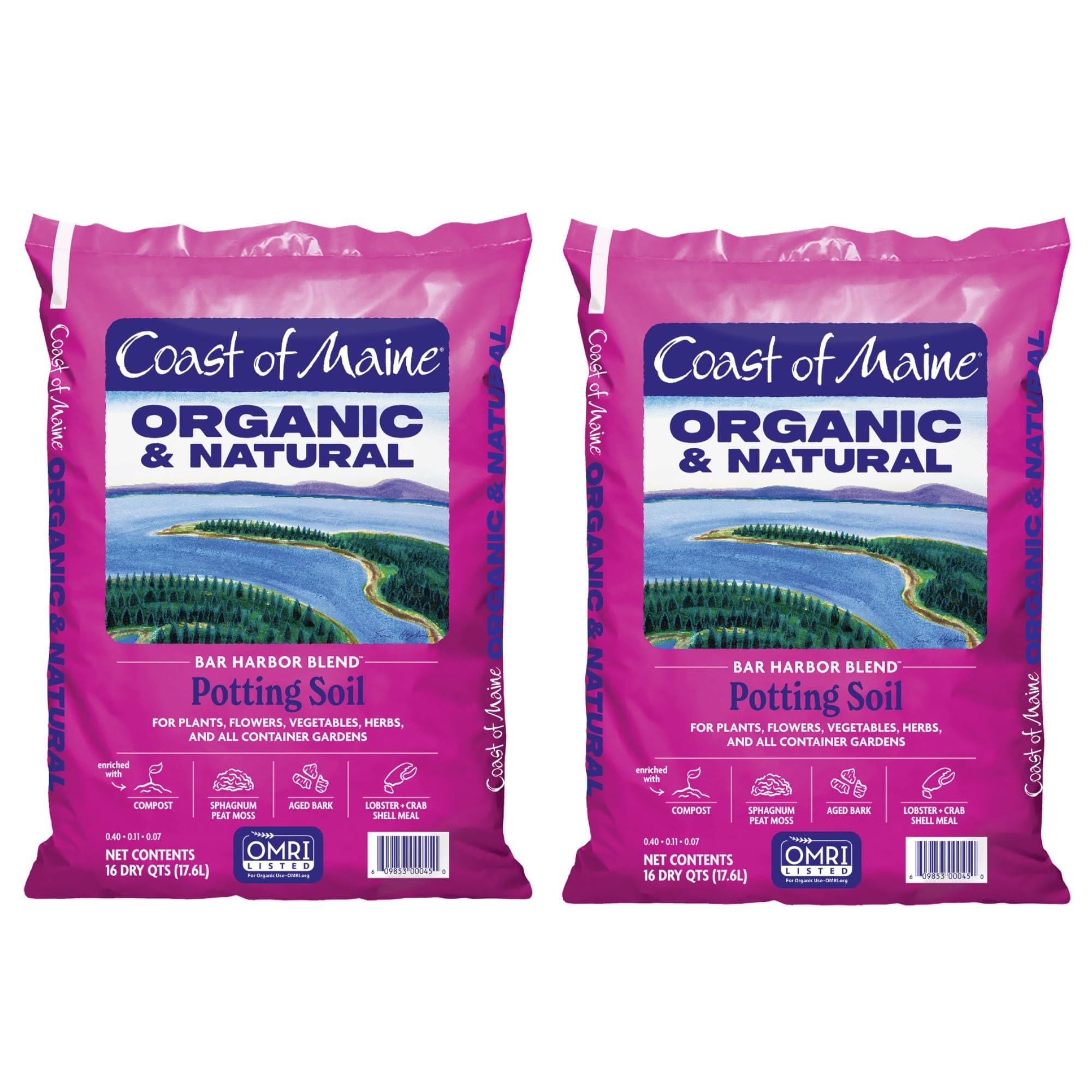
The single number that matters most in this category is 14 pounds—that is the weight of this 16-quart bag, making it noticeably denser than many potting mixes. That density comes from real compost, lobster and crab shell meal, and kelp rather than lightweight peat filler. For asparagus, that means the soil holds onto nutrients longer through the 20-year life of the bed.
The catch is that 16 quarts does not go as far as the 1-cubic-foot Espoma bags. You are paying for concentrated organic matter, not bulk volume. Shoppers say “two bags were enough to mound up 8 potato plants, and have extra for 2 more planters,” so plan on at least two bags for a modest asparagus patch. You get slow-release nitrogen from the shell meal and a dark, crumbly texture that buyers call “some of the best soil out there.”
The price-per-quart is higher than the Espoma options, but the ingredient list stands alone for a single-bag solution, making the value clear for those who want concentrated organic matter without mixing multiple amendments.
The upsides
- Dense, nutrient-rich formula with lobster & crab meal
- Slow-release nitrogen feeds roots for months
- No surprise weeds or sticks in the bag
Keep in mind
- Smaller bag than some competitors
- Higher cost per quart
5. Brut Organic Potting Soil
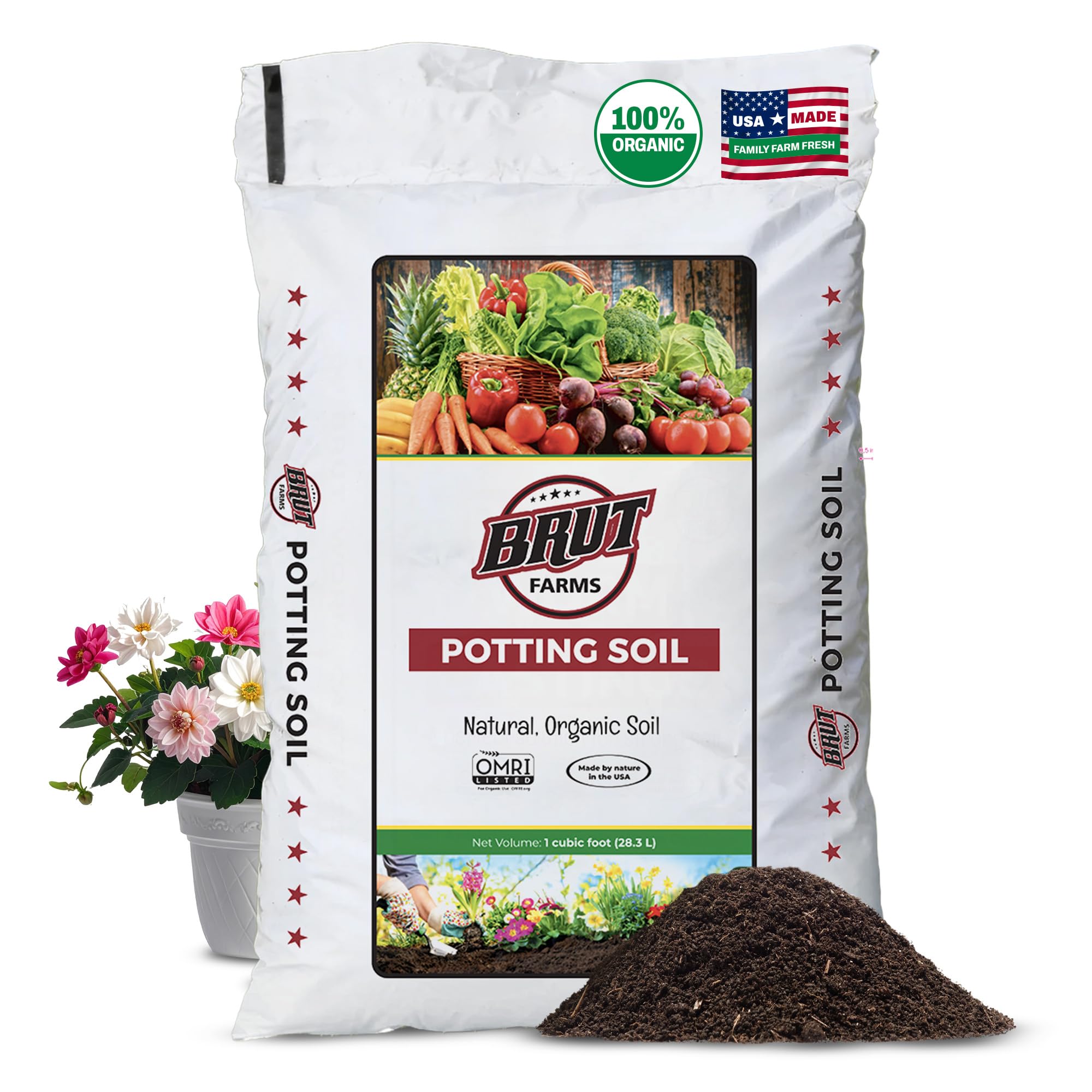
What you actually get at this price point is a 21-quart bag of pure, filler-free organic soil with worm castings, Azomite (a mineral powder that adds trace elements), and kelp—no wood chips, no sticks, no artificial additives. The manufacturer claims the pH sits between 6.3 and 6.5, which is the ideal sweet spot for asparagus. It also carries an OMRI (Organic Materials Review Institute) certification, meaning it meets organic production standards.
What you give up is the specialized drainage ingredients you find in the Coast of Maine blends. There is no perlite or coarse sand built in, so if you use it straight in a container, you will need to mix in extra perlite to keep the roots from getting waterlogged. Buyers report their “tomato plants in 4 inch pots seem to love it,” but they also note the price feels steep for the bag size. This works best for an in-ground bed where you blend it with your existing yard soil.
It is perfect for the budget buyer who already has a garden bed and just wants to enrich their native soil with a clean, organic amendment—no fillers, no fuss, and no need for a separate pH adjuster.
Why we’d pick it
- OMRI certified organic, no fillers
- pH 6.3-6.5 is perfect for asparagus
- Packed with worm castings and trace minerals
A few caveats
- Needs extra perlite for container use
- Some buyers found the price high for 21 quarts
6. Coast of Maine Organic & Natural Castine Blend Soil
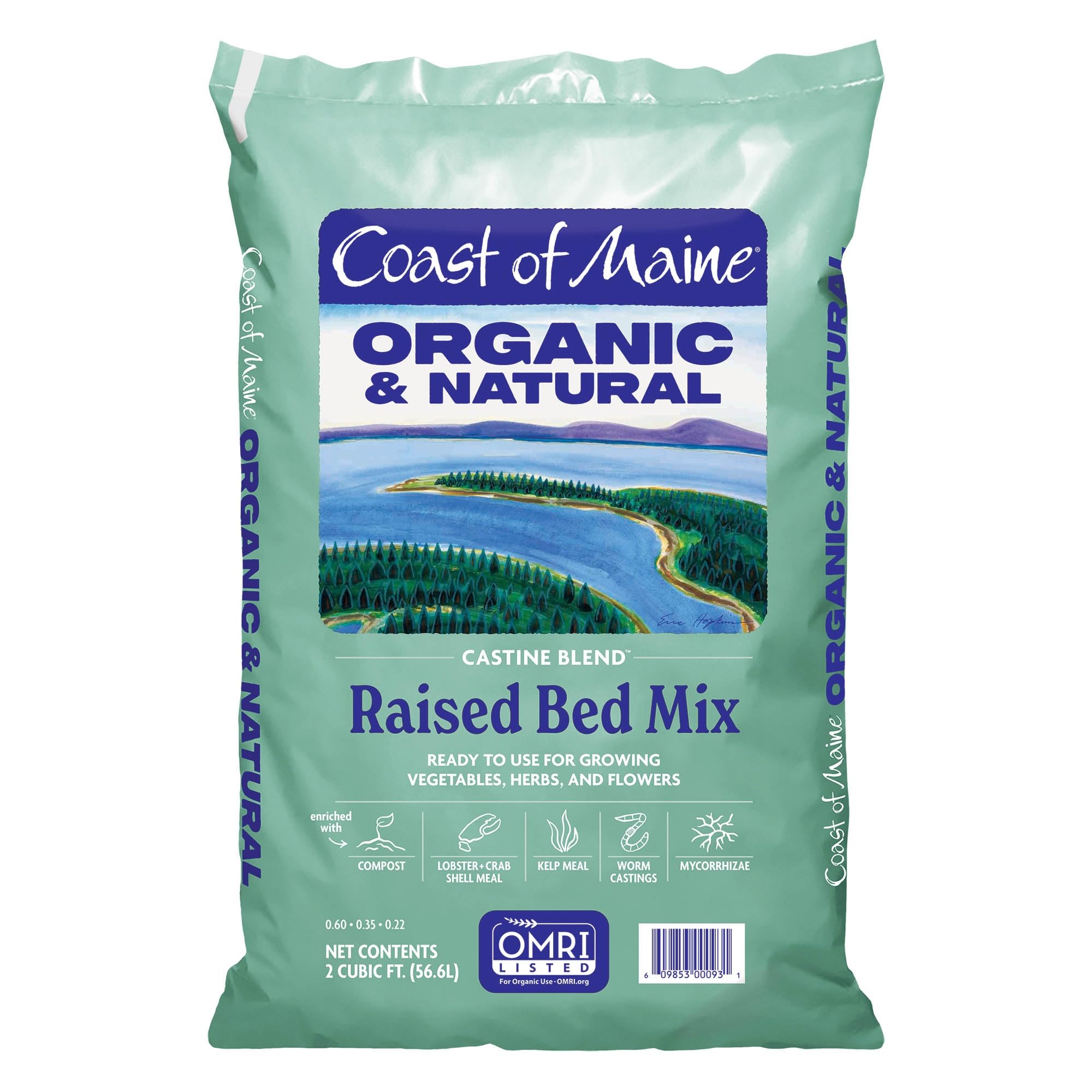
This is the perfect choice for the gardener who is establishing a large, permanent raised bed for asparagus and wants the most economical premium option in a single bag. It is ideal for those who need to fill a significant volume of soil where asparagus roots will spread for two decades.
Compared to the two-bag approach of the Bar Harbor Blend, the Castine Blend delivers a massive 2 cubic feet (about 60 quarts) in a single 40.3-pound bag, making it the most economical buy per quart among the premium options. That volume is critical when you are filling a permanent raised bed where asparagus will spread its roots for two decades.
This is not a general-purpose potting soil—it is specifically formulated for raised beds, with biochar (a charcoal-like material that locks in nutrients and improves soil structure), mycorrhizae, worm castings, and lobster/crab shell meal. Buyers describe it as “light, fluffy soil” and report it “loosens soil already in the beds,” which is exactly the loose, deep texture that asparagus crowns need to form thick spears. If you are in a small container, skip this—it is designed to be blended with your existing native soil, not used straight.
Strong points
- Largest volume per bag—2 cubic feet
- Biochar and mycorrhizae boost long-term soil health
- Light, crumbly texture ideal for deep root beds
Before you buy
- Best when mixed with existing native soil
- Heavy bag at 40.3 pounds
Understanding the Specs
Drainage and Aeration
Asparagus roots are deep and fleshy, and they rot quickly in compact soil. The spec that matters here is whether the mix contains perlite (small pebble-like beads that create air pockets), coarse sand, or composted bark to keep water flowing through. A soil that stays soggy for more than a day after a rain will choke the crowns. The Coast of Maine blends use cedar chips and perlite, while Espoma uses perlite and sphagnum peat moss to accomplish the same goal.
pH Balance
Asparagus prefers a soil pH between 6.0 and 7.0, slightly higher than what most vegetables need. Most organic blends fall naturally in the 6.0–6.5 range, but if your native soil is acidic (below 6.0), you may need to add garden lime (a calcium powder that raises pH) at planting time. The Brut Organic soil is pre-balanced to 6.3–6.5, taking the guesswork out of the equation.
Volume Measurements
Soil bags in the U.S. list volume in quarts or cubic feet. One cubic foot equals roughly 25 dry quarts. For a standard 4×8-foot raised bed, you need about 16 cubic feet of soil to fill it 8 inches deep. If you are planting a single row of 10 asparagus crowns, plan on at least 2 cubic feet of quality mix to mound over the crowns and amend the trench. The Castine Blend’s 2-cubic-foot bag gives you the most coverage per purchase.
Organic Certifications
OMRI (Organic Materials Review Institute) listed soil means the product has been reviewed and approved for use in certified organic production. It guarantees no synthetic pesticides, fertilizers, or sewage sludge are in the bag. All six picks in this guide are organic or naturally derived, but only the Coast of Maine and Brut bags carry the OMRI label explicitly. For an edible crop like asparagus that stays in the ground for years, that certification is a solid safeguard.
FAQ
Can I use regular potting soil for asparagus?
Should I add sand to the soil for better drainage?
How deep should the soil be for an asparagus bed?
Can I reuse the same soil year after year for asparagus?
Are organic soils worth the higher cost for asparagus?
Final Thoughts: The Verdict
For most people starting an asparagus bed, the best soil for asparagus to buy is the Coast of Maine Organic & Natural Planting Soil for Vegetables & Tomatoes because it hits the ideal mix of drainage, nutrient density, and lightweight texture right out of the bag. If you want more volume per dollar for a long row in the ground, grab the Espoma Organic Vegetable & Flower Garden Soil for its 1-cubic-foot bag and mycorrhizae boost. And for building a large raised bed from scratch, the standout is the sheer coverage and deep fertility of the Coast of Maine Castine Blend at 2 cubic feet per bag.