
Specs are compiled from manufacturer listings and verified buyer reviews and can change over time — please confirm the key details on the product page before buying.
Most soil conditioners promise to fix your dirt, but only a few change the way your soil behaves. You want to loosen heavy clay, feed the microbes in it, or hold moisture so roots can breathe. The real task is matching the right conditioner to your specific dirt problem, not grabbing the biggest bag on the shelf.
This guide is built by comparing the manufacturers’ published specifications and the patterns across verified customer reviews. That way you get each pick’s real strengths and trade-offs instead of marketing spin.
If you are battling compacted clay or want to supercharge a raised bed, this roundup of the best soil conditioners breaks down the organic amendments, mineral fixes, and liquid biology that actually deliver on their labels.
Quick Picks
- Espoma Organic Land and Sea Gourmet Compost with Lobster & Crab Meal — Best Overall
- The Andersons Humic DG Organic Soil Amendment — Premium Biology
- Fish Head Farms Organic Liquid Soil Conditioner — Liquid Power
- Espoma Organic Garden Gypsum Soil Conditioner — Clay Buster
- Back to the Roots Organic Worm Castings for Plants — Gentle Nourishment
- Alpha Chemicals Calcium Sulfate Dihydrate (Gypsum Powder) — Lab-Grade Precision
- PVP Industries Medium Vermiculite (4 Cubic Feet) — Water Keeper
How To Choose The Best Soil Conditioners
Soil conditioners fall into two broad camps: mineral-based products (like gypsum and vermiculite) that physically change the structure of the dirt, and biological amendments (like worm castings, compost, and living liquid formulas) that feed the life inside it. Your first decision is which problem your soil actually has. Hard compacted clay benefits from gypsum, while sandy dirt that drains too fast needs something like vermiculite to hold moisture.
Start With a Simple Soil Test
Before buying anything, grab a handful of damp soil and squeeze it. If it forms a tight, hard ball that does not crumble easily, you likely have clay that needs an aerating conditioner like gypsum. If the soil crumbles instantly and feels gritty, you probably have sandy soil that needs organic matter or water-holding vermiculite. Knowing this one thing narrows your options dramatically.
Check the Form: Powder, Pellet, or Liquid
A fine powder (like lab-grade gypsum) dissolves quickly and works fast but can be messy to spread. Pelletized versions (like the Espoma Garden Gypsum) are easier to scatter with a spreader but release slower. Liquids (like the Fish Head Farms formula) enter the soil immediately and are great for container plants, but you have to apply them more often. Choose the form that fits your setup — a broadcast spreader for a lawn, a watering can for pots.
Look for Active Biology
If your goal is long-term soil health rather than a quick fix, choose a conditioner containing mycorrhizae (beneficial root fungi that help plants absorb more water and nutrients) or concentrated microbial species. These living components rebuild the soil food web so your plants can access nutrients that are already in the ground. The best biological conditioners list their microbe count and species variety — the higher those numbers, the more active the product.
Quick Comparison
| Model | Best For | Form | Key Ingredient | Weight / Volume | Amazon |
|---|---|---|---|---|---|
| Espoma Organic Land and Sea Gourmet Compost | All-purpose organic planting | Granules (dry) | Lobster & crab meal + mycorrhizae | 24 lb | Amazon |
| The Andersons Humic DG | Soil carbon & root health | Granules | 70% humic acid | 11 lb | Amazon |
| Fish Head Farms Liquid Soil Conditioner | Indoor/outdoor living biology | Liquid | 4,000+ microbial species | 250 ml | Amazon |
| Espoma Organic Garden Gypsum | Loosening heavy clay soil | Pelletized granules | All-natural mined gypsum | 6 lb | Amazon |
| Back to the Roots Organic Worm Castings | Gentle nutrient boost | Granules | Pure vermicompost | 5 lb | Amazon |
| Alpha Chemicals Gypsum Powder | Lab-grade precision mixing | Fine powder | CaSO₄·2H₂O | 5 lb | Amazon |
| PVP Industries Medium Vermiculite | Water retention & aeration | Medium granules | Vermiculite mineral | 4 cu ft (103 qt) | Amazon |
In‑Depth Reviews
1. Espoma Organic Land and Sea Gourmet Compost with Lobster & Crab Meal

This is the one bag that feeds your soil with shellfish meal and beneficial fungi all at once.
The standout feature here is the dual-action nutrition: Espoma blends lobster and crab meal with a proprietary mix of endo and ecto mycorrhizae (beneficial root fungi that help plants absorb more water and nutrients from the soil). At 24 pounds, it is the heaviest bag in this roundup — 24 pounds versus the 5-pound gypsum powders, giving you far more material for large garden beds and transplanting projects.
Buyers report using this compost for three years straight with consistent results. One indoor/outdoor gardener noted it is “dry, lightweight, all-natural with endo/ecto mycorrhizae” and that it “noticeably increased tomato yield/size, zucchini production, and leafy green health.” Unlike many bagged composts, this one stays crumbly and easy to mix rather than clumping into mud.
The limitation is the price per bag — it sits above basic gypsum or single-nutrient amendments — but you are getting a complete biological booster plus slow-release nutrients from the shellfish meal in one product.
What gets the growth going
- Includes both endo and ecto mycorrhizae for deep root support
- 24-pound bag covers large planting areas
- All-natural, no synthetic additives
The honest trade-offs
- Premium price point for a compost amendment
- Granular form requires mixing into soil, not a top-dress-only fix
Perfect for the serious gardener: If you are planting vegetables, flowers, trees, or shrubs and want a single conditioning product that adds both food and biology, this is the bag to grab.
The one caveat: Skip this if you only need a quick mineral fix for clay soil — a dedicated gypsum product would be cheaper and more targeted.
2. The Andersons Humic DG Organic Soil Amendment
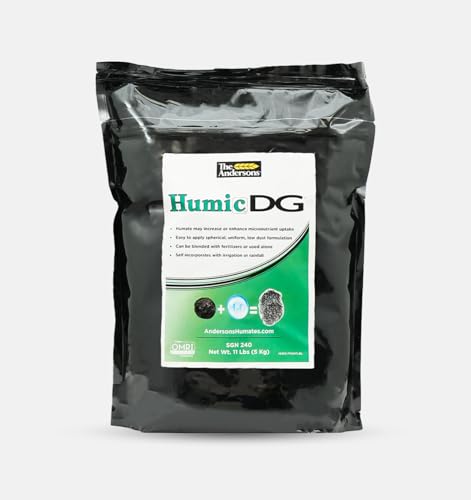
A humic powerhouse that feeds soil microbes and unlocks trapped nutrients so your plants can get at them.
What makes this conditioner stand out is the 70% humic content (measured by the A&L method) — that is a very high concentration of the organic carbon compounds that feed beneficial soil bacteria and help “chelate” (grab and hold) nutrients so plant roots can absorb them more easily. One reviewer noted it “improves soil dynamics, boosts beneficial bacteria, increases yields of flowers/fruits/veggies (notably tomatoes).”
Unlike bagged compost that adds bulk, the Humic DG is a concentrated granule designed to be blended with your existing fertilizer program or used alone. The “DG” stands for “Dispersion Granule” — when water hits the pellet, it breaks apart into fine particles that move through the soil profile rather than sitting on top. An 11-pound bag covers up to 10,000 square feet, which means a little goes a long way. One buyer mentioned their lawn “revived in 2 weeks with twice-daily 30-min watering” after the product helped correct damage from weed and feed.
What wins with roots
- 70% humic content feeds carbon-starved soil
- 11 pounds covers up to 10,000 square feet
- OMRI-listed for organic use
The honest trade-offs
- Higher price per bag than basic conditioners
- Best used annually for 2-3 years before switching to maintenance
Best for rebuilding tired lawn soil: If your lawn has been hammered by synthetic fertilizers or you want deeper root growth without adding bulk, the Humic DG is the targeted solution.
Look elsewhere if: You just need a quick clay-breaker or a moisture-holding amendment — humic acid improves chemistry, not physical structure.
3. Fish Head Farms Organic Liquid Soil Conditioner

A concentrated liquid with billions of active microbes per dose that revives your soil’s biology fast.
This is not a mineral or a compost — it is straight biology in a bottle. The Fish Head Farms formula packs over 4,000 microbial species and billions of active microbes into every dose. Its entire job is to reactivate the soil food web so existing nutrients in your dirt become available to plant roots. Owners mention it “greatly improved nutrient uptake, revived stressed plants, and enhanced harvest and flavor.”
You mix just 2 teaspoons per gallon of water and apply with regular watering, making it incredibly easy to use — especially for container plants, houseplants, or hydroponic setups where you cannot dig in a bagged product. It is OMRI-listed, USDA Bio-preferred certified with a 95% carbon-based renewable rating, and safe around children and pets. Unlike some liquid conditioners, customers note it has “no overpowering smell.”
Why it stands apart
- Over 4,000 microbial species in a single dose
- Highly concentrated — 2 tsp per gallon
- No offensive odor and safe for waterways
The honest trade-offs
- Small 250 ml bottle; frequent reapplication needed for sustained effect
- Not a structural soil amendment — does not change clay or sand texture
Reach for this if: You grow indoor plants, vegetables in containers, or run a small hydroponic garden and want a quick biological boost without amending the whole soil volume.
skip it if: Your main issue is heavy clay that needs physical loosening — you need gypsum or organic bulk, not liquid microbes.
4. Espoma Organic Garden Gypsum Soil Conditioner

Pelletized gypsum that cracks open heavy clay without changing your soil’s pH.
If your soil turns into a brick when dry and soup when wet, gypsum is the classic cure — it exchanges calcium for sodium in clay particles, causing them to flocculate (clump together into larger crumbs) so water and roots can penetrate. Unlike lime, gypsum does not raise the pH, so you can use it on alkaline soils without worry. The Espoma version is pelletized (easy to spread with a broadcast spreader) and made from all-natural mined gypsum with no fillers or additives.
One buyer described a real-world result: “A combination of the gypsum & magnesium sulfate in tandem with Neem spray has fully rejuvenated my languishing avocado saplings/trees.” Another reviewer with heavy clay soil used it for four years alongside Hollytone and said their shrubs “are now a beautiful, healthy green, and have new growth.” It is approved for organic gardening and registered as an Organic Input Material.
The reasons to choose it
- Pelletized form works with any broadcast spreader
- Cures turf burn from ice-melt salts and pet spotting
- Will not raise soil pH
The honest trade-offs
- Slow-release — results build over weeks, not days
- 6-pound bag covers less area than bulk gypsum options
The 6-pound bag is a practical size for medium garden beds or targeted lawn patches, but buyers who need to cover a full acre report it goes fast.
5. Back to the Roots Organic Worm Castings for Plants

Pure worm castings that feed plants gently without any risk of burning roots.
Worm castings are a gold-standard soil conditioner because they deliver slow-release nutrients plus beneficial microbes without any risk of burning plant roots — you can sprinkle them directly on seedlings or mix them into potting soil at any ratio. Back to the Roots packages pure USA vermicompost in a resealable bag, and reviewers point out it is “rich, clean organic worm castings [that] blend easily into chunky soil (coco chips, perlite, charcoal).” The granules keep your soil mix airy rather than compacting it, which is critical for container plants.
Because worm castings hold a lot of moisture, one reviewer advised “be wary of that when using as an amendment” if you tend to overwater. The 5-pound bag is a practical size for a medium vegetable garden or a season’s worth of top-dressing on houseplants. Several reviewers mentioned their gardens are “thriving” and that it is a “great fertilizer for milkweed, safe for monarchs.”
What makes it a go-to
- Cannot burn plants — safe for delicate seedlings and monarch habitat
- Slow-release nutrients keep soil airy
- Resealable bag for easy storage
What to watch for
- High moisture retention can lead to overwatering issues
- 5-pound bag goes fast if you are amending large raised beds
If you are a beginner or grow in containers, this is your simple to use amendment. For heavy clay that needs physical breaking, the Espoma Garden Gypsum is the better tool.
6. Alpha Chemicals Calcium Sulfate Dihydrate (Gypsum Powder)

Fine gypsum powder for users who want precise control over their calcium and sulfur levels.
This is not a general lawn product — it is a lab-grade, feed-grade gypsum in a very fine powder form. Buyers describe it as “fine powder dissolves well in hot water (2/3 cup per 5 gallons), though some settles on cooling.” That level of solubility makes it ideal for mixing your own liquid fertilizers or for mushroom cultivation, where precision matters more than ease of spreading. The 5-pound bag is also a good match if you want to treat raised beds and container tomatoes for blossom end rot (a calcium deficiency issue), as one reviewer confirmed doing.
The catch is practicality: because this is a fine powder, it lacks the soil-clinging additives that help pelletized gypsum stay in the root zone, and it is not designed for broadcast spreading on a lawn. One user on thick clay said their “main complaint [was] low quantity for price,” noting the 5-pound bag goes quickly when amending a whole yard. Compared to the 24-pound Espoma compost or even the 6-pound pelletized gypsum, the total weight is light, but for targeted use, the purity is the selling point.
Why precision matters
- Feed-grade purity for custom mixing
- Fine powder dissolves readily in hot water
- Good source of calcium for raised-bed tomatoes
Where it comes up short
- Not practical for large lawn or garden broadcast application
- 5-pound bag is small — shoppers say limited coverage for the price
Reach for this if: You mix your own fertilizers, run a mushroom grow, or need high-purity calcium for a few raised beds and want control over every gram.
Look elsewhere if: You are amending a clay lawn or large garden — the pelletized Espoma gypsum is far easier to spread and covers more ground per bag.
7. PVP Industries Medium Vermiculite (4 Cubic Feet)
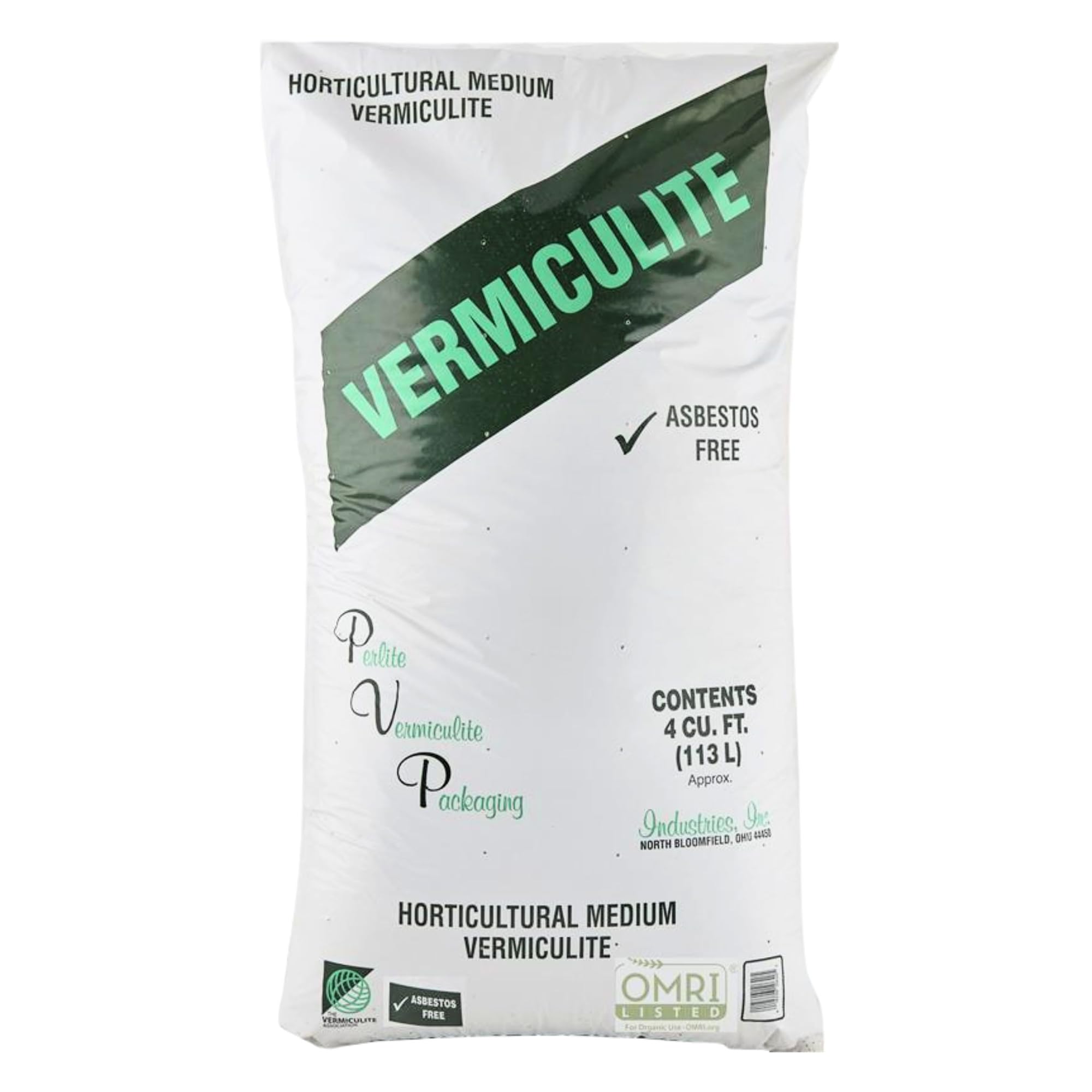
A 4-cubic-foot bag of mineral granules that hold over three times their volume in water.
Vermiculite is not a nutrient or a biology booster — it is a naturally occurring mineral that expands when heated, creating lightweight, sponge-like granules. Mixed into soil, it absorbs over 3 times its volume in water, then releases that moisture slowly as the soil dries. This makes it the best pick for gardeners who struggle with sandy soil that drains too fast, or for anyone mixing their own seed-starting or potting blends. It is pH neutral, sterile, and mold-resistant.
At 4 cubic feet (103 quarts), this bag is enormous compared to the other products in this roundup. It is designed for large raised beds, wholesale potting mix, or storing bulbs over winter. One owner reported they were “thrilled to find such a large bag to make the soil mixture for my 3 foot tall raised garden beds.” The main practical downside is dust — buyers report “quite a bit of dust when pouring,” so work outside or wear a mask when opening the bag.
Why volume matters
- Absorbs over 3x its volume in water
- 4 cubic feet covers large raised beds or multiple seed-starting mixes
- pH neutral and sterile
The honest trade-offs
- Dusty when pouring — work in a ventilated area
- No nutrient content — purely a physical soil conditioner
Who needs this: Gardeners with sandy, fast-draining soil who need serious water retention, or anyone building large batches of custom potting mix for raised beds and containers.
pass on it if: Your soil is heavy clay that needs breaking up, or you need a nutrient-rich amendment — vermiculite changes texture, not fertility.
Understanding the Specs
Humic Acid Content
This is the percentage of organic carbon compounds in a conditioner that feed soil microbes and help hold nutrients in the root zone. The higher the percentage (70% in the Andersons Humic DG), the more concentrated the biology-boosting power. A high number means you need less product to get a result.
Microbial Species Count
Liquid biological conditioners list the number of different microbe species and active microbes per dose. More species (like the 4,000+ in the Fish Head Farms formula) means a more diverse soil food web, which helps break down organic matter and cycle nutrients for your plants.
Mycorrhizae (Endo vs Ecto)
Mycorrhizae are beneficial fungi that attach to plant roots and extend their reach for water and nutrients. “Endo” mycorrhizae penetrate root cells and are best for vegetables, grasses, and flowers. “Ecto” mycorrhizae wrap around root tips and are better for trees and shrubs. Products like the Espoma Land and Sea compost include both types for broad coverage.
Gypsum Form: Pelletized vs Powder
Pelletized gypsum is rolled into small beads that you can spread with a regular lawn spreader — it dissolves slowly over weeks. Fine powder gypsum dissolves faster in water and is better for precision mixing or liquid applications, but it is messy to broadcast and can blow away in the wind.
FAQ
Can I use gypsum and worm castings together?
How often should I apply humic acid to my lawn?
Will liquid soil conditioner replace my regular fertilizer?
Is vermiculite better than perlite for water retention?
Do I need to mix gypsum into the soil or can I top-dress it?
Can worm castings cause nutrient burn?
How do I apply liquid soil conditioner to houseplants?
Is vermiculite sterile and safe for seed starting?
Can I use lobster and crab compost on acid-loving plants?
What is the difference between soil conditioner and fertilizer?
Final Thoughts: The Verdict
For most people, the soil conditioners winner is the Espoma Organic Land and Sea Gourmet Compost because it combines slow-release nutrients from lobster and crab meal with both types of mycorrhizae in a single 24-pound bag, making it the most complete all-around amendment for vegetable gardens, flowers, trees, and shrubs. If you want living biology in an easy-to-use liquid, grab the Fish Head Farms Organic Liquid Soil Conditioner. And for breaking up heavy clay soil without changing the pH, the standout is the Espoma Organic Garden Gypsum.
How We Picked
We do not accept paid placement. Every pick is matched to a real buyer and a real use-case; we do not hands-on test units.
Sources & Methodology
Specifications: manufacturer listings and product documentation. Review insights: verified customer reviews, as of July 2026. Pricing: not shown on this page (it changes often); check the current price via the retailer link.
As an Amazon Associate, Lawn Gear Lab earns from qualifying purchases. This does not affect which products we feature.