
Amending vegetable garden soil isn’t just about dumping a bag of generic fertilizer on the ground; it’s about engineering a living substrate that delivers steady, specific nutrition directly to hungry roots without shocking them. A poor amendment choice can lock up micronutrients, repel water, or even burn tender transplants, undoing weeks of careful planning.
I’m Rikta — the co-founder and writer behind Lawn Gear Lab. My research focuses on breaking down NPK ratios, organic certification standards, and microbial additive data to help you match the right amendment to your specific crop needs and soil conditions.
After analyzing over a hundred products based on ingredient transparency, nutrient analysis, and organic input verification, I’ve narrowed the field to seven proven options that define the best performing soil amendments for vegetable garden success this season.
How To Choose The Best Soil Amendments For Vegetable Garden
Not all amendments serve the same purpose. Some are designed for soil building and microbial life, while others are formulated for rapid fruit and flower production. Understanding what you’re buying starts with reading three core metrics.
NPK Ratio and Calcium Content
The three numbers on the bag (Nitrogen-Phosphorus-Potassium) tell you what the amendment prioritizes. A higher middle number (phosphorus) supports fruiting, which is critical for tomatoes, peppers, and squash. A nitrogen-heavy mix can produce lush leaves but few vegetables. Equally important is calcium — look for amendments with at least 3-5% calcium to prevent blossom end rot, a common failure point in vigorous feeders.
Organic Certification and Ingredient Sourcing
OMRI-listed products have been verified for organic production, meaning no synthetic pesticides, sewage sludge, or prohibited chemicals. That matters when you’re growing edible crops. Pay attention to the base ingredients: feather meal, bone meal, fish bone meal, langbeinite, and kelp meal are high-quality slow-release sources. Shredded bark or wood fines appear in cheaper blends and provide minimal nutrition.
Microbial Additives and Soil Structure
An amendment that only feeds the plant but ignores the soil biology is a short-term fix. Ingredients like endo and ecto mycorrhizae, worm castings, and compost directly improve root efficiency, water retention, and aeration. If you’re working with compacted or sandy soil, prioritize a product that includes these biological builders over a straight mineral fertilizer.
Quick Comparison
On smaller screens, swipe sideways to see the full table.
| Model | Category | Best For | Key Spec | Amazon |
|---|---|---|---|---|
| FoxFarm Happy Frog 5-7-3 | Granular | Vigorous fruiting | 5% Calcium + Mycorrhizae | Amazon |
| Espoma Garden-Tone 3-4-4 | Granular | Monthly feeding | Bio-tone microbes + 5% Ca | Amazon |
| Down To Earth 4-6-2 | Granular | All-purpose organic | Greensand + Kelp Meal | Amazon |
| Sustane 5-Pound | Granular | Soil biology boost | Pelleted chicken manure | Amazon |
| Espoma Land & Sea Compost | Compost | Transplanting | Lobster & Crab Meal | Amazon |
| Wiggle Worm Castings 40lb | Castings | Living soil | Includes worm egg material | Amazon |
| Blue Ribbon Organic Compost | Compost | Premium conditioning | OMRI certified, 7.9 gal | Amazon |
In‑Depth Reviews
1. FoxFarm Happy Frog Tomato & Vegetable Fertilizer 5-7-3

FoxFarm’s Happy Frog blend delivers a 5-7-3 NPK that shifts priority to phosphorus for fruit set while maintaining moderate nitrogen for leafy growth. The critical differentiator here is the 5% calcium content, which directly addresses blossom end rot in tomatoes and peppers — a problem that often emerges mid-season when plants are rapidly consuming calcium from the soil. The addition of mycorrhizal fungi improves root surface area, meaning the plant pulls more water and micronutrients from whatever base soil you provide.
The granular format is easy to broadcast or side-dress, and the four-pound bag covers a standard raised bed or a row of heavy feeders. Customer reports show noticeable results within two weeks on pale or flimsy transplants, and the lack of a fishy or chemical smell makes it pleasant to handle. Because it’s designed for vigorous feeders, gardeners with compacted or low-fertility soil will see the most dramatic improvement.
Some users note the price per pound is higher than commodity blends, but the combination of calcium and mycorrhizae eliminates the need for separate supplements. If you’re growing tomatoes, peppers, or berries and want a formula that covers both nutrition and root efficiency, Happy Frog is the most complete single-bag solution in this group.
What works
- Prevents blossom end rot with 5% calcium
- Mycorrhizae enhance root uptake in poor soil
- No strong odor, easy to side-dress
What doesn’t
- Higher cost per pound than basic blends
- May require supplemental nitrogen for leafy greens
2. Espoma Organic Garden-Tone 3-4-4

Espoma’s Garden-Tone uses a 3-4-4 analysis paired with 5% calcium and their proprietary Bio-tone microbial blend, making it a well-rounded monthly feeding option for both cool-season crops like kale and warm-season giants like squash and melons. The lower nitrogen number prevents excessive leaf growth at the expense of fruit, which is a common mistake new gardeners make when using high-nitrogen lawn fertilizers on vegetable beds.
The two-bag pack covers a large plot or provides enough material for an entire season of monthly applications without needing to reorder. Reviews consistently mention that over-application doesn’t result in root burn — a critical safety margin for beginners who are still calibrating their application rates. Espoma has been producing organic inputs since 1929, and the ingredient list (feather meal, bone meal, sulfate of potash) is transparent and free of sludge or synthetic extenders.
On the downside, some users report a noticeable manure-like odor for the first day after application, though it dissipates quickly. This product also lacks the mycorrhizae found in the FoxFarm blend, so gardeners with dead or compacted soil may want to add a separate inoculant. For consistent, budget-friendly maintenance of an established vegetable garden, Garden-Tone is hard to beat.
What works
- Forgiving formula won’t burn roots
- Two-bag pack covers full season
- Contains 5% calcium for fruit health
What doesn’t
- Temporary odor after application
- No mycorrhizae included
3. Down To Earth All Natural 4-6-2 Tomato & Vegetable Mix

Down To Earth’s 4-6-2 formulation includes fish bone meal, blood meal, feather meal, rock phosphate, langbeinite, greensand, humates, and kelp meal — a diverse ingredient list that provides both macronutrients and trace minerals. The greensand adds potassium and iron while improving the soil’s moisture-holding capacity, which is particularly valuable for sandy or loamy beds that drain too fast.
The five-pound bag is OMRI-listed for organic production, and the granules are fine enough to mix into potting soil or broadcast across established rows. Users consistently report that plants show noticeable greening and vigor within two weeks of application, even after only a single feeding. The presence of humates helps buffer soil pH fluctuations, which reduces the risk of nutrient lockout in variable water conditions.
The major trade-off is the strong odor inherent to blood and fish meal ingredients. The smell is potent for the first few days after application and may attract wildlife if not worked into the soil. Despite the scent, this is one of the most complete all-around blends for a gardener who wants a single product that feeds both the plant and the soil microorganisms.
What works
- Diverse organic ingredients for trace minerals
- Greensand improves water retention
- Humates stabilize soil pH
What doesn’t
- Strong odor for several days
- May attract animals if left on surface
4. Sustane All Natural Flower and Vegetable Plant Food

Sustane uses composted pelleted chicken manure as its base, which provides a balanced nutrient profile while also feeding soil bacteria and fungi. The pelletized format is less dusty than loose powders and integrates quickly into the top six inches of soil without clumping. Users report that mix of Sustane with perlite, compost, and coconut coir produced explosive growth in raised beds, with vegetables growing at a pace noticeably faster than with standard synthetic granular feeds.
The five-pound bag provides approximately 80 ounces of product, and independent research cited by the manufacturer suggests this formulation produces more fruit and blooms than comparable organic and synthetic fertilizers. The pellets break down steadily over several weeks, providing a consistent nutrient supply without the spike-and-crash pattern associated with water-soluble feeds. It’s also an excellent choice for container vegetables where leaching is a concern because the slow-release nature reduces nutrient runoff.
The main limitation is that Sustane’s base is chicken manure, which some growers find relatively mild compared to blends with higher phosphorus numbers. If you’re growing heavy feeders like indeterminate tomatoes in poor soil, you may need to supplement with a targeted bloom booster during fruit set.
What works
- Slow-release pellets prevent nutrient leaching
- Feeds soil microbes effectively
- Low dust, easy to incorporate
What doesn’t
- Phosphorus may be low for heavy feeders
- Bag size is small for large gardens
5. Espoma Organic Land and Sea Gourmet Compost

Espoma’s Land and Sea Compost is not a fertilizer in the traditional NPK sense; it’s a soil conditioner rich in lobster and crab meal that provides chitin, calcium, and trace marine minerals. The one-cubic-foot bag weighs about 24 pounds and includes Myco-Tone, a proprietary blend of endo and ecto mycorrhizae that colonize roots immediately after transplanting. This is the go-to product for setting transplants into poor native soil where establishing root systems is the primary challenge.
Gardeners using this as an amendment for tomatoes, squash, and leafy greens report visibly larger fruit and healthier foliage compared to standard compost or bare soil. The chitin from crustacean shells also feeds beneficial soil fungi that suppress root-feeding nematodes — a hidden bonus for beds with a history of root pests. The texture is dry and light, so it blends easily into container mix or garden beds without compacting.
The cost per cubic foot is higher than standard compost, and the lobster and crab meal can attract dogs or raccoons if left on the surface. You’ll want to incorporate it fully into the soil. For gardeners focused on soil biology and transplant success rather than just quick nutrient numbers, this is the most effective biological amendment in the lineup.
What works
- Chitin from crustacean meal suppresses nematodes
- Myco-Tone colonizes roots quickly
- Light texture blends easily
What doesn’t
- May attract wildlife if surface applied
- Premium cost versus standard compost
6. Wiggle Worm 100% Pure Worm Castings 40lb
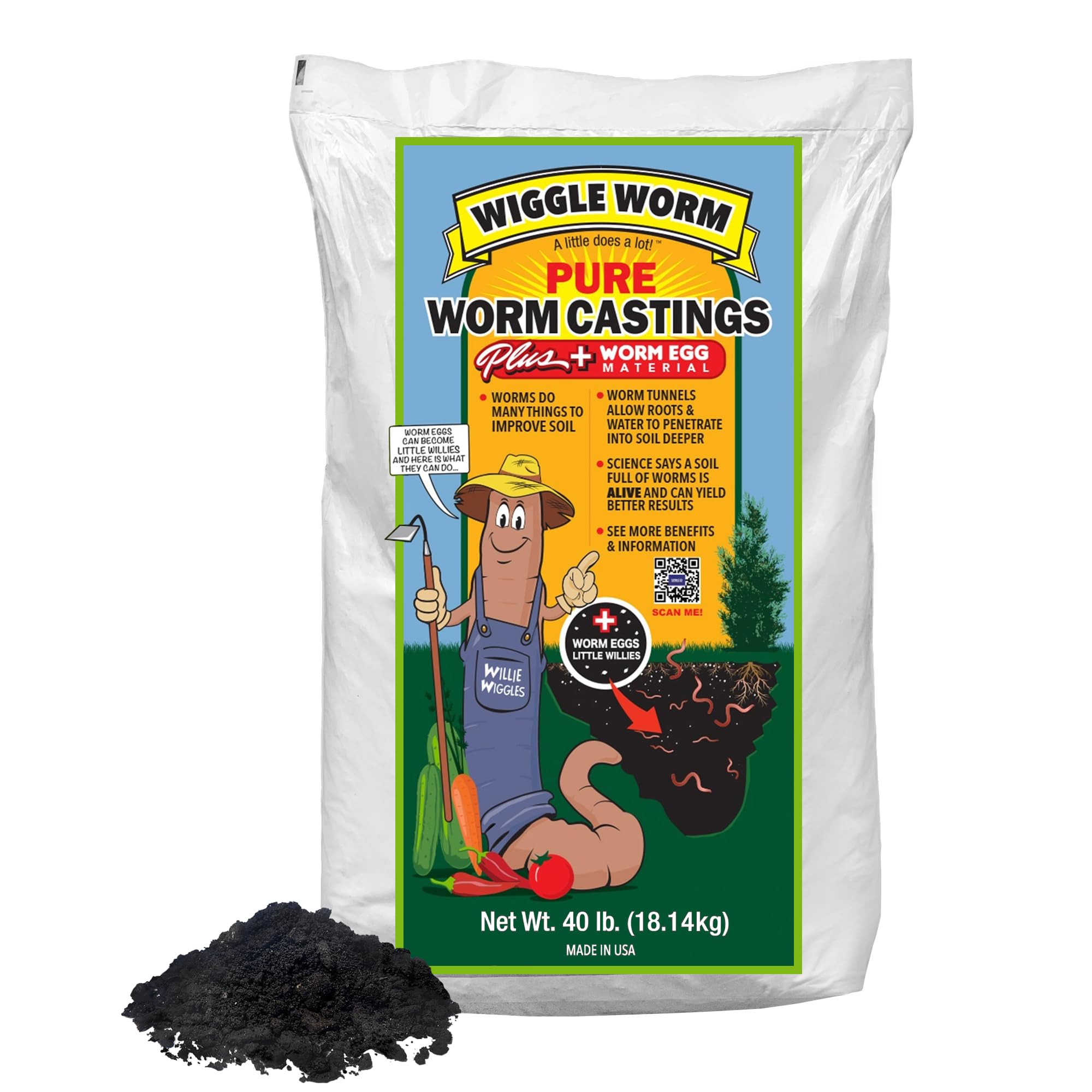
Wiggle Worm castings are sifted to a fine, consistent texture with no filler material, and the 40-pound bag includes worm egg material that can hatch in your soil, establishing a self-sustaining worm population. Live worms aerate the soil, drain excess water, and produce additional castings over time — turning a one-time amendment into a long-term biological investment. The product is virtually odorless and won’t burn roots regardless of application rate.
Users in harsh climates — including desert environments with triple-digit summer temperatures — report that plants amended with these castings survive stress periods that kill untreated neighbors. The castings improve drainage in clay soil and increase moisture retention in sand, making them one of the most versatile physical amendments available. They pair well with any other fertilizer in this list because they add biological activity without throwing off NPK balance.
The upfront cost is the highest per-pound in this group, and the bag is heavy to handle. Some users find small rocks or debris in the sifted material, though this is a minor issue given the overall quality. For anyone building a living soil system from scratch, the 40-pound bag of Wiggle Worm castings is the essential base layer.
What works
- Worm eggs can establish self-sustaining population
- Zero burn risk, safe at any concentration
- Improves both drainage and water retention
What doesn’t
- High upfront cost per bag
- Occasional small rocks in sifted material
7. Blue Ribbon Organics OMRI Certified Organic Compost

Blue Ribbon Organics produces a dark, rich compost with an earthy smell and no visible contaminants like plastic, glass, or metal fragments — a common issue with bulk compost sources. The 7.9-gallon bag (weighing between 32 and 35 pounds) is OMRI-certified for organic use and can be mixed at any concentration without risk of burning plants. Reviews consistently describe it as “black gold” for its ability to transform even poor native soil into a productive growing medium.
This compost is particularly effective when mixed with worm castings or a slow-release fertilizer to create a complete soil base. Users using it for container gardening, raised beds, and seed starting report excellent results with greens, root crops, and nightshades. The material rehydrates easily even if the bag dries out in storage, and it maintains a fluffy structure that prevents compaction in pots.
The primary drawback is the cost relative to bag size — you’re paying a premium for the certified organic quality and the convenience of a contaminant-free product. It also doesn’t provide the targeted NPK boost you’d get from a fertilizer blend, so you’ll need to pair it with an amendment like FoxFarm or Garden-Tone for heavy feeders. For a clean, reliable organic compost that improves soil structure immediately, Blue Ribbon is the benchmark.
What works
- Completely contaminant-free, rich texture
- OMRI certified for organic production
- Rehydrates easily, won’t compact
What doesn’t
- Expensive per cubic foot
- Needs added fertilizer for heavy feeders
Hardware & Specs Guide
NPK Ratio Understanding
The three numbers indicate percentage by weight of Nitrogen (leaf growth), Phosphorus (root and fruit development), and Potassium (overall plant function and disease resistance). For vegetable gardens, a middle number around 6-8 is ideal for fruiting crops, while a balanced 4-6-2 works for general soil building. Avoid ratios above 10 for nitrogen unless you’re growing leafy greens exclusively.
Mycorrhizae and Bio-Tone
Endo and ecto mycorrhizae are beneficial fungi that attach to plant roots and extend their reach, improving water and mineral absorption. Products that include these (FoxFarm Happy Frog, Espoma Land and Sea) can help plants establish faster in marginal soil, reducing the need for frequent watering and preventing transplant shock.
FAQ
Can I use these amendments together in the same bed?
How often should I apply a granular amendment like Down To Earth 4-6-2?
Final Thoughts: The Verdict
For most gardeners, the soil amendments for vegetable garden winner is the FoxFarm Happy Frog 5-7-3 because it delivers the right phosphorus ratio, added calcium, and mycorrhizae in one bag. If you want a budget-friendly monthly feed, grab the Espoma Garden-Tone 3-4-4. And for building a true living soil with long-term biological benefits, nothing beats the Wiggle Worm 40lb Castings.