
A full day of landscaping—hauling mulch, edging beds, and standing on uneven terrain—quickly separates decent footwear from bad ones. The wrong sole slips on wet grass, the wrong upper soaks through after a sprinkler pass, and insufficient arch support leaves you aching before lunch. Choosing the right pair directly affects your grip stability, foot fatigue level, and how many seasons the shoe survives before the tread goes slick.
I’m Rikta — the co-founder and writer behind Lawn Gear Lab. Over the past months, I’ve compared outsole rubber compounds, waterproof membrane specifications, and integrated shank stiffness across dozens of models, cross-referencing owner feedback from thousands of hard-use hours on real job sites.
This guide breaks down traction design, water resistance construction, and underfoot support benchmarks so you can confidently choose the best shoes for landscaping that match your work conditions and budget.
How To Choose The Best Shoes For Landscaping
Landscaping demands a shoe that handles wet grass, loose soil, and heavy loads without slipping. The three factors below directly determine whether a shoe performs on the job or fails before the season ends.
Sole Traction and Tread Design
The outsole pattern dictates grip on shifting surfaces. Multi-directional lugs with deep, wide spacing shed mud effectively and bite into soft ground, while a flat wedge sole with siping provides stability on smooth concrete and dry packed dirt. Avoid shallow, densely packed tread patterns that clog with mud and lose traction on wet grass.
Water Resistance and Breathability
Landscaping exposes shoes to water constantly, from watering hoses to morning dew. A waterproof membrane like Gore-Tex keeps feet dry but reduces airflow, making the shoe hotter in summer. Seam-sealed leather or fabric with a DWR coating offers a lighter, more breathable alternative that handles light moisture but will soak through in standing water. Choose based on your climate and how much direct water contact you face daily.
Arch Support and Cushioning
Hours of standing and walking on uneven ground require a supportive midsole and a stable heel wedge. A shoe with a removable cushioned insole allows you to swap in orthotics if needed. Stiffer shanks provide torsional stability when carrying heavy loads, while softer midsoles reduce fatigue on long days. The right balance prevents plantar fascia strain and lower back pain.
Quick Comparison
On smaller screens, swipe sideways to see the full table.
| Model | Category | Best For | Key Spec | Amazon |
|---|---|---|---|---|
| Carhartt Ground Force 10” Wellington | Premium Wellington Boot | Heavy-duty wet site work | Composite toe, EH rated, EVA midsole | Amazon |
| Danner Vicious 8” Waterproof | Premium Lace-Up Boot | Long-lasting construction work | Full-grain leather, Gore-Tex lining | Amazon |
| Georgia Boot Low Heel Logger | Insulated Logger Boot | Cold-weather rugged terrain | GORE-TEX waterproof, brass fittings | Amazon |
| ARIAT Turbo Chelsea | Chelsea Safety Boot | Quick slip-on workdays | Carbon toe, EH rated, waterproof | Amazon |
| Georgia Boot Wedge Industrial | Pull-On Wedge Boot | Muddy job sites | Cushioned wedge sole, Goodyear welt | Amazon |
| Kujo Yardwear Yard Shoe | Athletic Work Shoe | All-day comfort in dry conditions | Waterproof, breathable mesh upper | Amazon |
| Skechers Terraform Selvin | Low-Top Oxford | Light-duty walking and trails | Slip resistant, water resistant | Amazon |
In‑Depth Reviews
1. Carhartt Ground Force 10” Waterproof Wellington Boot

The Carhartt Ground Force delivers a premium rubber Wellington construction with a composite safety toe and EH rating, making it a top choice for landscaping that involves water, mud, and heavy equipment. The 10-inch shaft keeps debris and moisture out during hours spent walking through wet grass or standing in flooded beds. The EVA midsole provides excellent shock absorption, reducing fatigue on long days without significantly adding weight to the boot.
Reviewers consistently note zero break-in time, a rare attribute for a tall rubber work boot. Many compare it favorably against Red Wing alternatives, citing equal durability at a more accessible entry point. The wedge outsole sheds mud effectively and offers stable traction on flat, wet surfaces. A few users report that removal can be difficult after muddy shifts, but the overall construction quality and waterproofing hold up well over multiple seasons.
For landscaping professionals who need a high-top, safety-rated boot that resists punctures and water intrusion, the Carhartt Ground Force is the most balanced choice. It excels in wet and gritty environments where a low-top shoe would fail within weeks.
What works
- Zero break-in required, comfortable on day one
- Composite toe and EH rating meet job site safety standards
- Well-above-average waterproofing for wet conditions
What doesn’t
- Tall shaft can make removal difficult after muddy work
- Not ideal for hot, dry climates due to reduced breathability
2. Danner Vicious 8” Waterproof Work Boots

The Danner Vicious is a premium 8-inch lace-up boot built with full-grain leather and a Gore-Tex membrane for reliable waterproofing. The speed lace system allows quick adjustments on site, and the non-slip heeled outsole provides secure footing on sloped lawns and uneven terrain. At 4.5 pounds per pair, it remains lighter than most logger-style boots while still offering robust protection.
Long-term owner feedback is impressive: many users report 1.5 to 5 years of heavy construction use before the Gore-Tex lining begins to lose effectiveness. The Vibram-style sole holds up well against abrasion from gravel and concrete, though the leather does show cosmetic scuffs over time. The composite toe adds protection without the weight of steel. Some users mention the boot is not as plushly cushioned as competitors, but the stable platform and build quality justify the higher price.
For landscapers who prioritize longevity and a trusted waterproof membrane, the Danner Vicious represents a long-term investment. It fits best for those who work in mixed conditions and want a boot that can be resoled and last for years.
What works
- Gore-Tex lining provides long-lasting waterproof performance
- Durable sole construction with multi-year lifespan reported
- Speed lace system saves time during workdays
What doesn’t
- Leather scuffs and discolors over time
- Not the most cushioned boot for standing all day
3. Georgia Boot Men’s Low Heel Logger GORE-TEX Waterproof Insulated Work Boots
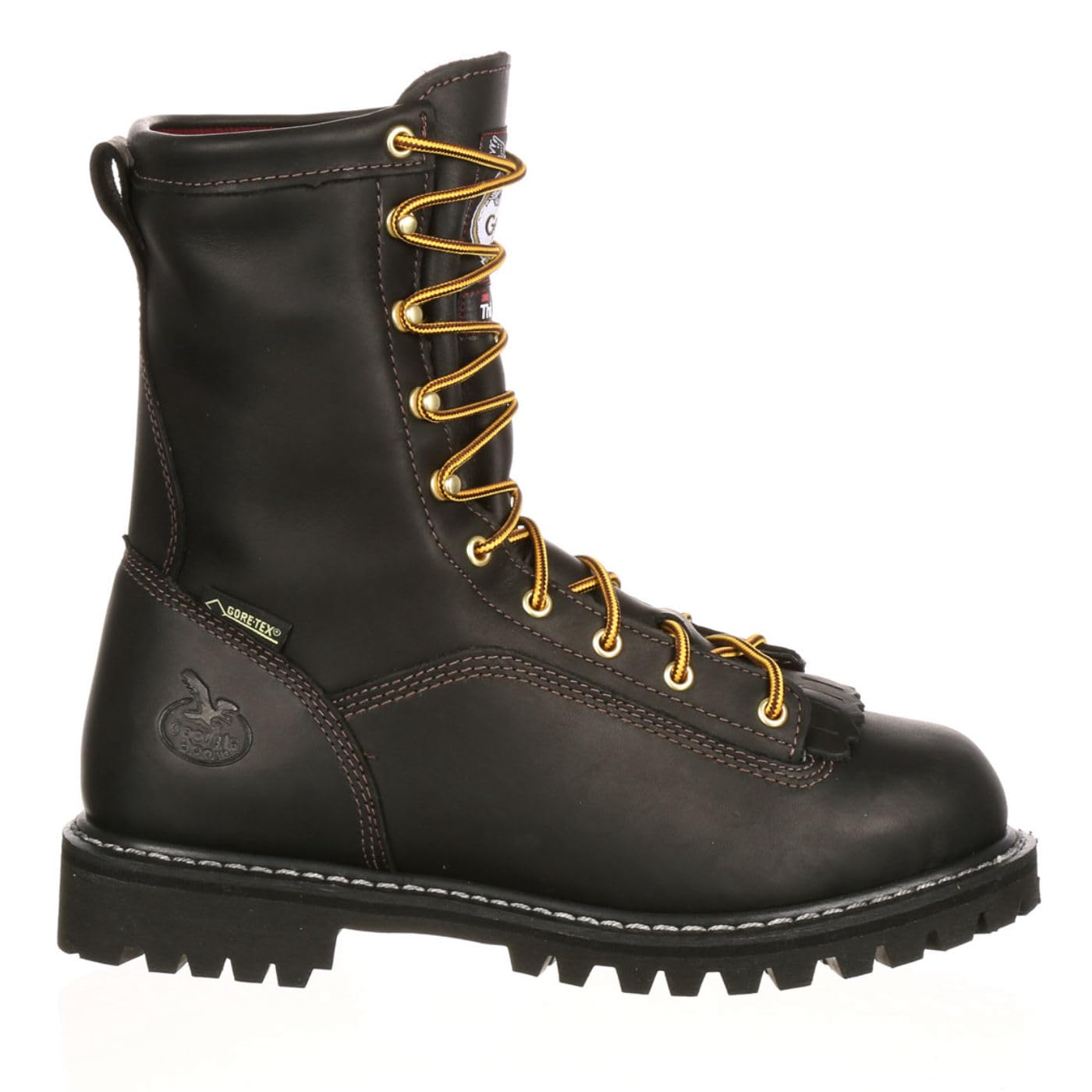
The Georgia Boot Low Heel Logger combines traditional welted construction with modern GORE-TEX waterproofing. The raised heel and aggressive tread pattern are designed for traction on loose soil, steep slopes, and muddy conditions. The insulation layer adds warmth for cold-weather landscaping, making this boot a specialist for early spring and late fall work. Brass hardware and red stitching give it a durable, classic look that withstands repeated exposure to moisture and dirt.
Users report a stiff ankle and a longer break-in period, typically around two weeks of daily wear, before the leather softens. After that, the boot becomes comfortable and stable for long days. The leather is thinner than premium competitors like Danner Rainforest, but at a lower price point the Georgia Logger offers very strong value. The sole shows minimal wear after months of use, and the waterproofing holds up throughout the first season and beyond.
For landscapers who work in cooler climates and need a boot that locks onto uneven ground while keeping feet warm and dry, this is a solid mid-premium choice that holds up over time.
What works
- GORE-TEX membrane insures reliable waterproof performance
- Welted construction allows for resoling down the line
- Aggressive tread pattern excels on loose and sloped terrain
What doesn’t
- Requires a 1-2 week break-in for ankle comfort
- Heavier and less breathable in warm conditions
4. ARIAT Turbo Chelsea Waterproof Carbon Toe EH

The ARIAT Turbo Chelsea is a pull-on boot that combines a carbon composite safety toe with an EH rating in a sleek Chelsea silhouette. This design makes it exceptionally easy to slip on and off between tasks, eliminating the time wasted retying laces. The waterproof construction keeps feet dry in wet grass and light rain, while the lightweight build reduces fatigue during long shifts.
Owner feedback highlights the minimal break-in period: many reviewers report all-day comfort from the first wear, even during 9-hour standing shifts. The durability is impressive, with multiple users confirming the boot survived 18 months of daily hard use, including one incident of being run over by a zero-turn mower. The composite toe does slightly reduce interior space compared to steel toe versions, requiring a few days of adjustment for some. A few users note that the outsole can feel slick on inclined steel surfaces, so caution is warranted on wet metal grating or slopes.
The ARIAT Turbo Chelsea is ideal for landscapers who frequently step in and out of vehicles or equipment and want a safety-rated boot that doesn’t compromise on convenience or comfort.
What works
- No laces required, quick to slip on and off
- Carbon toe and EH rating for safety compliance
- Minimal break-in with all-day comfort reported
What doesn’t
- Grip can be unreliable on inclined steel surfaces
- Composite toe reduces toe box space versus steel toe
5. Georgia Boot Men’s Wedge Industrial Boot

The Georgia Boot Wedge Industrial is a pull-on work boot featuring a cushioned wedge sole and Goodyear welt construction. The wedge sole design hides dirt well and does not collect mud like lugged patterns, making it a practical choice for landscapers who work in wet, muddy conditions and want a boot that wipes clean easily. The Barracuda Gold leather is well-tanned and durable, offering a rugged look that ages gracefully.
Reviewers praise the true-to-size fit, though some users with wide feet note that the boot may run slightly large in width. The wedge sole provides excellent shock absorption and arch support, softening over time without losing stability. The pull-on design with a tight boot neck prevents foot sliding during active work. The leather does scratch relatively easily, and the light neutral color shows marks, but this is cosmetic and does not affect performance.
For landscapers who prefer a wedge sole for its clean-shedding properties and stable platform, the Georgia Boot Wedge Industrial delivers trustworthy performance at a mid-range price point, with Goodyear welt construction allowing for future resoling.
What works
- Wedge sole sheds mud and cleans off easily
- Goodyear welt enables resoling for extended life
- Comfortable from the first wear with good arch support
What doesn’t
- Leather scratches and shows marks readily
- Width may run slightly large for some foot shapes
6. Kujo Yardwear Yard Shoe for Landscaping
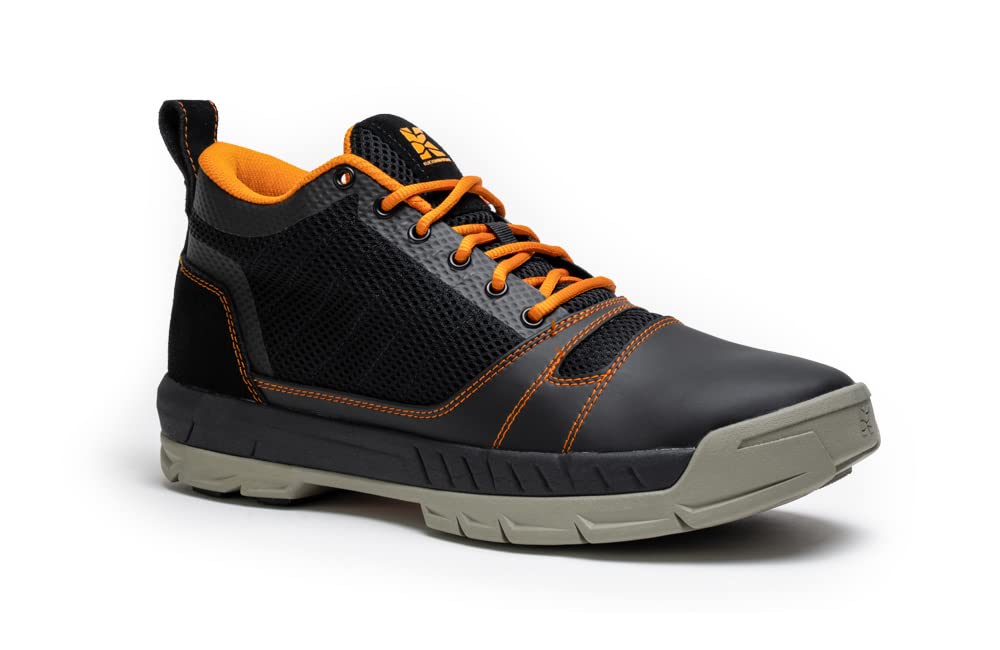
The Kujo Yardwear Yard Shoe is a lightweight, breathable athletic-style shoe purpose-built for landscaping. The upper uses a waterproof mesh that keeps feet dry during light rain and morning dew while allowing airflow to prevent overheating on warm days. The outsole features a multi-directional tread pattern that provides superior traction on dry grass and packed dirt, making it ideal for summer mowing and planting tasks.
Many reviewers highlight the shoe’s comfort straight out of the box, with a snug fit that works well for narrow to medium-width feet. The curved toe design aids in digging and kneeling motions common in gardening. However, several buyers with wider feet report the shoe runs extremely tight, even after sizing up. The rear pull tab is a known weak point, tearing after a few months. The laces also require double knotting to stay secure. Despite these drawbacks, the shoe remains popular for its lightweight feel and easy-clean upper.
The Kujo Yardwear is a strong entry-level option for dry-weather landscaping where heavy-duty protection is not required. It excels as a comfortable, breathable second pair for warm months.
What works
- Lightweight and breathable for hot weather comfort
- Waterproof mesh handles morning dew and light rain
- Multi-directional tread grips well on dry grass
What doesn’t
- Very tight fit for wide feet, even when sizing up
- Rear pull tab tears with regular use
7. Skechers Men’s USA Terraform – Selvin Low Profile Lace Up
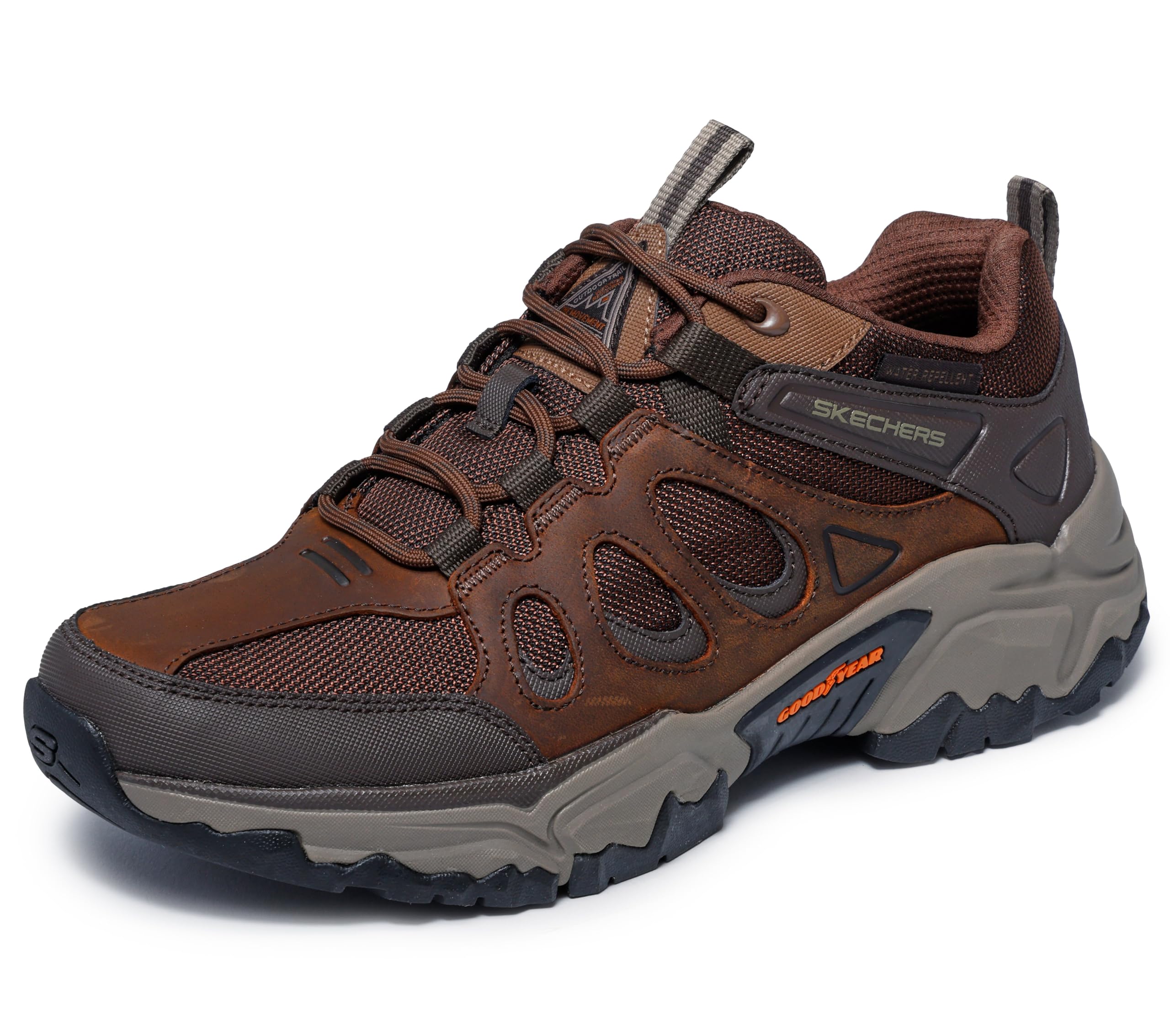
The Skechers Terraform Selvin is a low-profile oxford that brings comfort and traction at an entry-level price point. The slip-resistant outsole provides reliable grip on pavement and dry grass, while the water-resistant finish offers light protection against dew and short exposure to wet soil. The lace-up closure ensures a secure fit, and the neutral brown color works for both work and casual wear.
Customer feedback emphasizes the shoe’s immediate comfort and true-to-size fit, with many noting that the included orthopedic insoles offer solid arch support for walking. The upper material feels durable enough for light-duty landscaping tasks like trail walking and light trimming, but it is not built for heavy digging or prolonged water exposure. A few reviewers mention the shoelaces come undone easily and require double knotting. The shoe is noticeably lightweight, which reduces fatigue but also signals less structural support than heavier work boots.
The Skechers Terraform Selvin is a solid budget-friendly option for light landscaping duties where cost is the primary constraint. It works best as a walking shoe for property maintenance or as a backup pair for quick outdoor tasks.
What works
- Immediate comfort with supportive orthopedic insoles
- Slip-resistant outsole grips well on pavement and dry grass
- Highly affordable for a water-resistant walking shoe
What doesn’t
- Shoelaces come undone easily without double knotting
- Not waterproof, only water-resistant for light exposure
Hardware & Specs Guide
Water Resistance Construction
Landscaping shoes use one of three water resistance methods: a waterproof membrane like Gore-Tex, which seals out water while allowing vapor to escape; a seam-sealed fabric with a DWR coating, which repels light moisture but fails under pressure; or a full rubber Wellington construction, which offers total immersion protection at the cost of breathability. Gore-Tex-lined boots tend to hold up longest under recurrent wet conditions, while DWR-treated shoes are better suited for dry climates with occasional morning dew.
Tread Pattern and Outsole Rubber
Traction in landscaping depends on both tread design and rubber compound. Multi-directional lugs 5mm to 8mm deep provide reliable grip on loose soil and grass, but they clog in thick mud. Wedge soles with a flat surface and siping shed mud instantly but offer less bite on slopes. Softer rubber compounds yield better grip on wet surfaces but wear faster on concrete. Landscapers who transition between grass, gravel, and pavement benefit most from a medium-durometer rubber with a mixed-lug pattern.
FAQ
When should I choose a Wellington boot over a lace-up boot for landscaping?
How do I tell if a shoe’s waterproofing will actually hold up for a full season?
Can I use a hiking shoe instead of a dedicated landscaping shoe?
Final Thoughts: The Verdict
For most gardeners and landscaping professionals, the shoes for landscaping winner is the Carhartt Ground Force 10” Wellington because it combines complete waterproof protection, a composite safety toe, and zero break-in comfort in a package that handles the wettest and muddiest conditions. If you want the lightest, most breathable option for summer dry work, grab the Kujo Yardwear Yard Shoe. And for all-day standing and quick changes between tasks, nothing beats the ARIAT Turbo Chelsea for its pull-on convenience and safety ratings.