
A rose trellis isn’t just garden decor—it’s the structural backbone for your climbing roses, clematis, and heavy vines. Pick the wrong one and you’ll spend next season untangling collapsed plants from a bent frame. The right trellis delivers years of support, elevates your garden’s vertical structure, and lets your roses perform their natural upward display.
I’m Rikta — the co-founder and writer behind Lawn Gear Lab. I’ve spent hundreds of hours cross-referencing metal composition, powder-coat thickness, stake depth, and assembly complexity to separate trellises that genuinely support a mature rose canopy from those that buckle under the first strong breeze.
Whether you’re training a vigorous climbing rose against a wall or framing a garden entrance with an elegant arch, finding the best rose trellis means matching material durability to your plant’s mature weight and your site’s specific wind exposure.
How To Choose The Best Rose Trellis
A rose trellis must support substantial weight as the plant matures and experiences wind loading. Focus on these four factors to pick a structure that lasts longer than a single bloom cycle.
Material and Finish
Look for trellises made from heavy-gauge iron or steel with a powder-coated finish. Powder coating bonds to the metal and forms a thicker protective layer than basic spray paint, resisting chipping and rust even when scratched by rose thorns. A purely painted or bare metal trellis will begin corroding within one to two seasons in moist soil contact.
Height and Stake Depth
Climbing roses easily reach 6 to 10 feet tall. A trellis shorter than 60 inches will outgrow its purpose within two years. Equally important: ground stakes should penetrate at least 6 inches into the soil. Shorter stakes or stake-less designs rely on top-heaviness and tip over when the rose canopy catches wind. Measure the exposed height after insertion—some models lose 6 to 8 inches to the ground spikes.
Assembly and Adjustability
Many mid-range and premium trellises ship in multiple pieces with pre-drilled holes and hardware. A clean design uses reinforced insert nuts and universal screw heads so you don’t need a full tool kit. Avoid trellises that require permanent riveting or welding—modular assembly allows you to disassemble for off-season storage or repositioning as the rose expands.
Design and Panel Shape
Obelisk shapes work well in large pots and focal-point beds. Flat panel trellises attach to walls or fences and suit espaier training. Arch arbors create walk-through garden entrances. The panel spacing should be wide enough for your fingers to weave rose canes through, but narrow enough (3 to 5 inches between bars) to provide continuous lateral support without the plant flopping between gaps.
Quick Comparison
On smaller screens, swipe sideways to see the full table.
| Model | Category | Best For | Key Spec | Amazon |
|---|---|---|---|---|
| Outvita 7FT Garden Arch | Arch Arbor | Walkway entrance & heavy roses | 83.86 in height, 8 ground stakes | Amazon |
| LZRS 2 Pack 71in Arch | Flat Panel | Side-by-side coverage for wide walls | 71 in height, 2-pack iron panels | Amazon |
| Macteyia 86.7in Trellis | Flat Panel | Tall vertical coverage with decorative bird pattern | 86.7 in height, 12 lb weight | Amazon |
| Sunnydaze 48in Diamond | Flat Panel | Compact patio or potted rose support | 48.25 in height, no assembly needed | Amazon |
| VEVOR 71in 2-Pack | Flat Panel | Budget-friendly pair for clematis & roses | 71 in height, 12.13 lb per pair | Amazon |
| VINGLI Garden Arbor | Arch Arbor | Wedding decoration & entry trellis | 75 in height, iron with lattice sides | Amazon |
| LeJoy Garden Obelisk | Obelisk | Container roses & focal-point beds | 75.6 in height, 4.9 lb weight | Amazon |
In‑Depth Reviews
1. Outvita 7FT Garden Arch Arbor

The Outvita arch stands nearly 7 feet tall (83.86 inches) with a double-layer iron frame that sets it apart from single-panel arches. It uses eight ground stakes that penetrate 7.8 inches into the soil—enough to anchor a mature climbing rose or heavy Lady Banks vine through storm winds. The powder-coated finish resists chipping, and owners report it surviving blizzards and heavy rain without shifting.
Assembly takes about 30 minutes using pre-drilled holes and reinforced insert nuts; the instructions rely mostly on pictures, so pay attention to screw sizes. The arch is wide enough (52 inches) to walk through comfortably, making it a natural choice for garden entrance framing or wedding arch decor. Some users add cinder blocks for extra height over a walkway.
It’s not designed for lightweight annuals—this arbor is built for the real weight of a rose canopy. The only friction point is the assembly guide clarity, but the structural payoff justifies the extra few minutes of puzzling. This is the premium pick for gardeners who want a permanent arch that handles heavy climbers without wobbling.
What works
- Double-layer iron frame with 8 stakes for exceptional wind resistance
- 7.8-inch ground penetration for stable anchoring in soft soil
- Wide 52-inch span fits as a walk-through entrance
What doesn’t
- Assembly instructions are picture-only and can be confusing on screw selection
- Heavier than single-panel arches; not ideal for frequent repositioning
2. LZRS 2 Pack 71x20in Rustic Iron Arch Trellis

This LZRS set gives you two 71-inch tall iron panels that can be installed side by side for wide-wall coverage or spaced apart for separate climbing roses. The special hook design lets you adjust the angle between panels, which is rare at this price tier and allows you to create a semi-enclosed climbing pocket for aggressive vines. The black powder coating has held up well in owner reports across multiple seasons.
Assembly is straightforward—connect the top and bottom pieces with screws, then stake into the ground or a planter. Each panel weighs about 4.35 kg (9.6 lb), so they’re solid enough for full-sized climbing varieties without being immovable. Owners use them for autumn clematis, climbing camellias, and rose bushes; the height is sufficient for most medium climbers but full-height roses may outgrow the top.
A few units arrived with minor cosmetic marks on the coating, which is a QC concern for an otherwise well-made product. The ground stakes reduce the effective height to around 63 inches after insertion, so factor that into your plant planning. For the price of a two-pack, this is a strong mid-range option for covering more ground without spending arch-level money.
What works
- Two panels included for wide or separated installation
- Adjustable hook system for custom angles
- Rust-proof powder coating holds up in wet conditions
What doesn’t
- Ground stakes consume about 8 inches of usable height
- Occasional cosmetic coating imperfections on arrival
3. Macteyia 2 Pack 86.7in Metal Garden Trellis
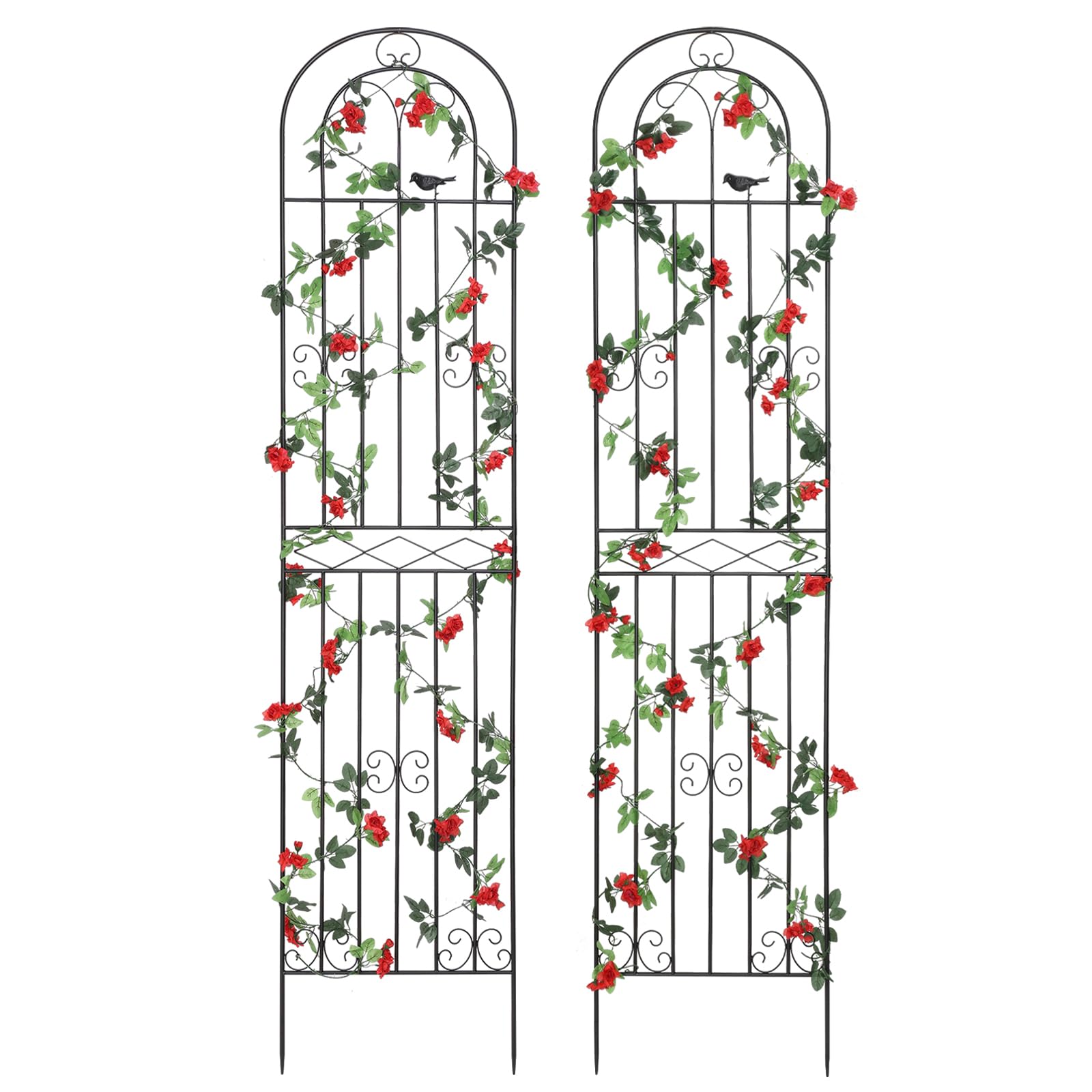
At 86.7 inches, this Macteyia trellis is the tallest flat-panel option in the roundup—ideal for covering full wall height or supporting roses that naturally climb 8 feet or more. The semicircular top with a decorative bird silhouette adds a stylistic touch that looks complete even before the vine fills in. The panels weigh 12 pounds combined and use 8.46-inch ground spikes for stability in wind.
The powder-coated iron finish is designed for outdoor corrosion resistance, and owners consistently note its sturdiness once staked. Assembly involves attaching the top and bottom halves with screws and wing nuts; the wing nuts sit facing outward, which some users find visually distracting but functionally fine. The included plant tie tape is a nice convenience for initial training.
One limitation: the semicircular top shape means the climbing surface narrows at the peak, so very wide roses may spill over the sides. The decorative bird pattern is fixed in orientation—you cannot flip one panel to make the birds face each other without altering the screw holes. For straight-wall vertical gardening with a tall clearance, this is a premium pick that justifies its height with real structural mass.
What works
- Full 86.7-inch height for tall climbing rose support
- Heavy 12 lb weight and deep spikes for wind stability
- Attractive bird silhouette adds instant garden interest
What doesn’t
- Wing nuts on the front are visible from the line of sight
- Decorative bird pattern orientation is not reversible
4. Sunnydaze 2-Piece Chic Diamonds Garden Trellis

The Sunnydaze Diamond trellis comes fully assembled right out of the box—no screws, no instructions, just stake it into the ground or a planter. Each panel measures 12 inches wide by 48.25 inches tall (42 inches in-ground after the 6.25-inch stake), making it a compact solution for patio pots, small rose bushes, or climbing vegetables. The heavy-duty steel wire with black powder coating feels denser than its 4-pound weight suggests.
The diamond lattice pattern provides even lateral support without wide gaps that allow canes to slip through. Owners use it for passion fruit vines, roses, and clematis in contained spaces. Because the two panels slide together without permanent fastening, you can separate them for winter storage or expand the width by spacing them apart—a flexible design for changing layouts.
The short stature (42 inches above ground) limits its use to shorter climbing rose varieties or small floral displays. Full-height climbing roses will outgrow it in one season. The two-piece slide connection can feel slightly loose, though it remains functional once staked. This is the right choice for gardeners who want zero assembly and a clean diamond aesthetic for small vertical spaces.
What works
- Ready to use with no assembly or tools required
- Diamond pattern provides uniform support for small climbers
- Separates for easy winter storage or layout adjustment
What doesn’t
- 42-inch in-ground height is too short for full-size climbing roses
- Two-piece slide joint could be more snug in fit
5. VEVOR 71 x 20 in 2-Pack Metal Garden Flower Trellis
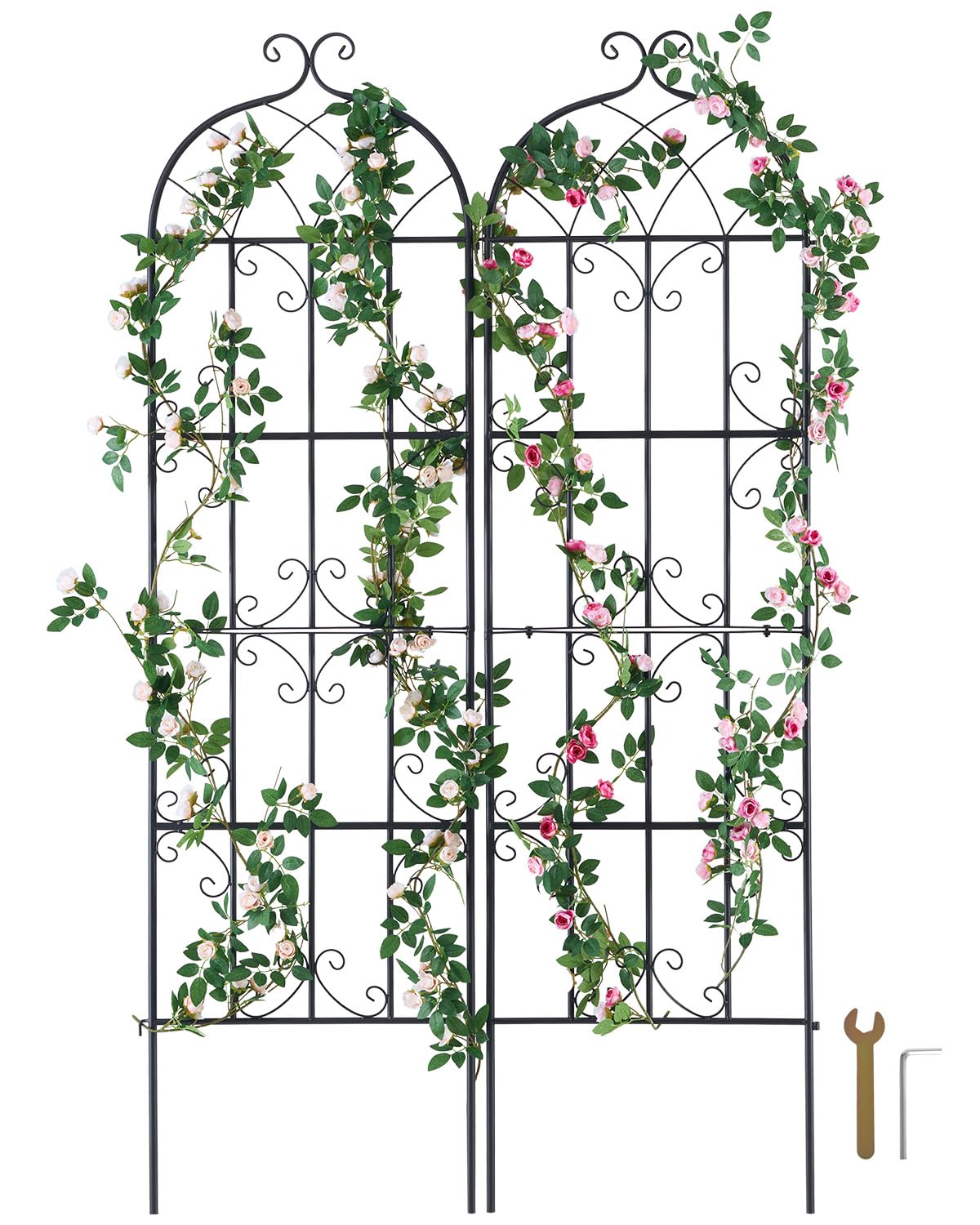
The VEVOR two-pack delivers a solid 71-inch height per panel at a price that undercuts most competitors while maintaining Q195 steel construction with powder-coated finish. Each panel weighs about 6 pounds individually, so the pair is sturdy enough for clematis, roses, and cucumber vines without feeling flimsy. The black coating is applied consistently and owners report no rust issues in the first year of use.
Assembly is one of the simplest in this lineup—no special tools needed, and the panels connect with straightforward hardware. The 20-inch width per panel works well for training a single rose bush per trellis. Owners consistently describe them as “sturdy and beautiful,” with several buying additional sets after the first installation. The reported height after insertion is around 63 inches, which is adequate for medium-climbing roses.
The main trade-off is that the VEVOR lacks the decorative detailing of higher-priced options—the design is clean but plain. Some users felt the panels were slightly shorter than expected once staked into the ground. For a budget-friendly approach that still gives you two functional trellises with good height and easy assembly, this is the value option that doesn’t compromise on basic structural integrity.
What works
- Two full 71-inch panels for a very competitive price per unit
- Q195 steel with powder coating for weather resistance
- Quick, tool-free assembly suitable for beginners
What doesn’t
- Simple design lacks decorative ornamentation
- Effective height drops to about 63 inches after staking
6. VINGLI Garden Arbor Archway
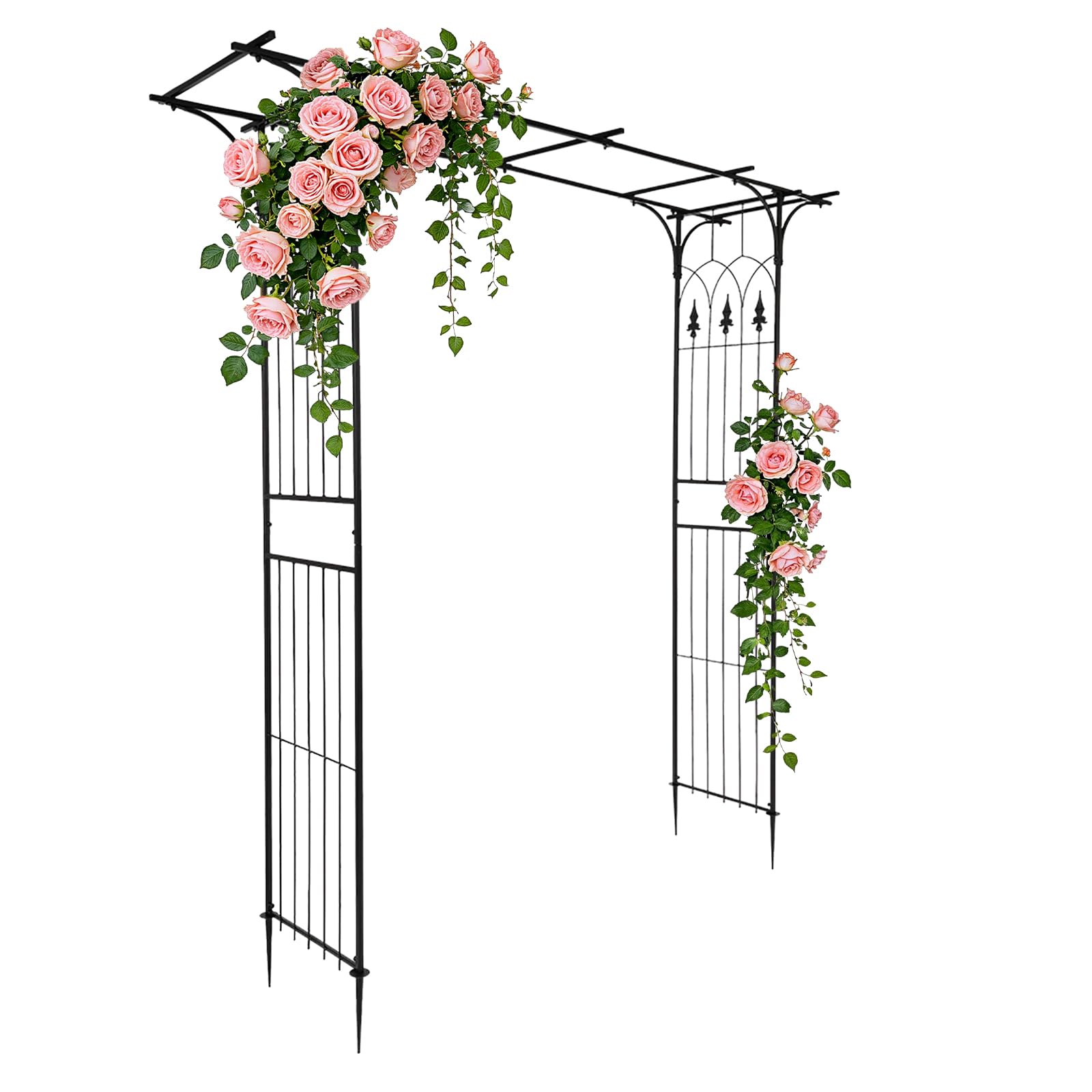
The VINGLI arbor brings an elegant squared-lattice design to garden entrances and wedding backdrops at a mid-range price point. The iron frame stands 75 inches tall with a 28-inch width, featuring side lattice panels that add visual density even before the roses climb. The powder-coated finish offers basic weather protection, and owners report the structure handling high winds once properly staked with the long nails included.
Assembly is the main challenge—the instructions are picture-only with overlapping part letters, and many reviewers recommend a second person for the awkward fitting steps. The top panel must be built first, then attached to the side panels. Estimated build time ranges from 30 minutes for experienced assemblers to 2.5 hours for solo first-timers. Missing hardware is a rare but possible issue due to packaging vulnerability.
This is a medium-duty arbor best suited for clematis, annual vines, or lighter rose varieties rather than heavy wisteria or deep-rooted climbers. The side panels create a narrower climbing area than the Outvita arch, which limits very wide plants. For a decorative arch that serves double duty as event decor and functional trellis, the VINGLI delivers strong visual value if you have patience with assembly.
What works
- Elegant squared lattice design enhances garden aesthetics
- Stands 75 inches tall with powder-coated weather protection
- Works as both trellis and wedding/event archway
What doesn’t
- Assembly instructions are confusing and often need two people
- Medium-duty frame not ideal for heavyweight climbers like wisteria
7. LeJoy Garden 6.3ft Metal Obelisk Trellis

The LeJoy Obelisk offers a classic tiered silhouette at a budget-friendly price point, standing 75.6 inches tall with a 17.76-inch base width. The metal tubing is epoxy-coated in a bronze finish that mimics wrought iron without the weight—the total unit is 4.9 pounds, making it easy to move but lighter than premium obelisks. The four integrated ground stakes provide basic anchoring for medium-weight climbers.
Assembly is straightforward: the circular rings are pre-molded (no assembly required for those), while the vertical tubes connect with pre-drilled holes and screws. A 15-minute build time is realistic. The bronze color has drawn consistent praise for its attractive matte texture, and owners report the structure lasting three-plus seasons with only minor surface rust on the stakes where the epoxy was scratched during insertion.
The light weight (under 5 pounds) means this obelisk works best in sheltered beds or large pots rather than open windy areas with heavy roses. The climbing surface area is limited by the tapered obelisk shape—very wide spreading roses may not find enough lateral support. For a decorative pot obelisk or a budget-friendly trial before committing to a permanent structure, the LeJoy delivers surprisingly good aesthetics and functional support for the money.
What works
- Classic obelisk shape with an attractive bronze epoxy finish
- Quick 15-minute assembly with pre-molded rings
- Lightweight and easy to reposition for seasonal display changes
What doesn’t
- Under 5 pounds; not stable enough for heavy climbers in windy spots
- Tapered shape provides limited climbing width for spreading roses
Hardware & Specs Guide
Powder Coating vs. Epoxy Coating
Powder coating uses electrostatically applied dry powder that’s cured under heat, forming a thick, chip-resistant barrier. It’s the preferred finish for outdoor rose trellises because it withstands UV exposure and physical abrasion from thorns. Epoxy coating (used on the LeJoy obelisk) bonds as a liquid and cures chemically; it’s cheaper and still rust-resistant, but chips more easily if the trellis is accidentally struck with a shovel or pruner. For long-term ground contact, powder-coated iron is the more durable choice.
Ground Stake Depth and Soil Type
A trellis is only as stable as its footing. Stakes should penetrate at least 6 inches into the soil (7.8 inches on the Outvita arch). In loose or sandy soil, the effective holding power is reduced because the earth doesn’t grip the stake tightly. In heavy clay, driving the stake deeper may require a mallet but provides superior hold. If you’re installing on a hard-packed slope or shallow topsoil, consider cementing the base or using a planter box as an anchor weight.
Iron vs. Steel Comparison
Both materials are used in rose trellises. Iron (used in the VINGLI and Outvita arches) is heavier and more rigid—it resists bending under a fully grown rose canopy but can crack if over-stressed. Steel (used in the Sunnydaze panels) is more flexible and lighter, allowing some movement without permanent deformation. For freestanding arches, iron’s rigidity is an asset. For wall-mounted flat panels, steel’s flexibility reduces stress on mounting points during wind gusts.
Panel Spacing and Cane Training
The distance between horizontal or vertical bars determines how easily you can weave rose canes through the trellis. Ideal spacing is 3 to 5 inches between bars—wide enough to pass mature canes through, narrow enough that the plant doesn’t sag between support points. Wide lattices (over 6 inches) cause roses to flop outward and require additional tying. Diamond patterns naturally create multiple crossing points that catch canes, reducing the need for individual ties.
FAQ
How tall should a rose trellis be for a climbing rose?
Can a rose trellis be used in a large pot or container?
What is the best material for an outdoor rose trellis?
How do I prevent my rose trellis from rusting?
Final Thoughts: The Verdict
For most gardeners, the rose trellis winner is the Outvita 7FT Garden Arch Arbor because its double-layer iron frame and 7.8-inch ground stakes provide the best stability for heavy climbing roses in open garden spaces. If you need tall wall coverage, grab the Macteyia 86.7in Trellis for its unmatched height and decorative bird pattern. And for a budget-friendly two-pack that doesn’t skimp on height or steel quality, nothing beats the VEVOR 71-inch Pair for covering multiple planting spots without breaking your budget.