
Landscape beds lined with deep black mulch create an instant visual anchor that makes foliage colors pop and gives any property a professionally finished look. But choosing the wrong material—whether it blows away, fades to gray in weeks, or fails to suppress weeds—turns that vision into a recurring chore. The ideal ground cover needs to lock in moisture, block sunlight from germinating seeds, and hold its color through rain and sun without requiring annual replacement.
I’m Rikta — the co-founder and writer behind Lawn Gear Lab. I’ve spent hundreds of hours studying horticultural soil-cover data, comparing water-retention rates, breakdown timelines, and pH effects across organic and synthetic options, and analyzing verified owner feedback to build this guide.
Whether you are refreshing a front-yard flower bed or protecting a vegetable garden’s root zone, the right choice starts with understanding which black mulch for landscaping actually delivers on its promises without introducing new problems.
How To Choose The Best Black Mulch For Landscaping
Mulch is not a one-size-fits-all material. The right choice depends on whether you prioritize long-term color stability, water conservation, soil amendment, or pet safety. Below are the three decisive factors that separate effective ground cover from wasted effort.
Material Composition and Breakdown Rate
Organic options like coconut husk chips and aspen bark decompose over time, adding organic matter back into the soil. Cocoa bean shells break down faster and release a mild nutrient boost (2.5-1-3 NPK) but require careful placement away from pets. Rubber mulch does not decompose, making it a permanent solution for playgrounds or high-traffic areas, but it offers zero soil benefit and may produce a strong rubber odor in heat.
Water Retention and Root-Zone Impact
Coconut coir chips can absorb up to ten times their weight in water, releasing it slowly as the soil dries. This reduces watering frequency significantly. Aspen bark and cocoa shells also hold moisture but dry out faster in direct sun. Rubber mulch sheds water and does not hydrate the soil—good for drainage, but poor for keeping roots cool and damp during summer droughts.
Expanded Volume and Coverage Reality
Compressed coco bricks advertise a final expanded volume in quarts or cubic feet. A 10-pound brick typically yields 2 cubic feet or roughly 72 quarts once hydrated. Always calculate your bed’s square footage and desired depth (1.5 to 2 inches is standard) before buying. One brick covering 17.5 square feet at 1.5 inches deep is a reliable baseline for planning.
Quick Comparison
On smaller screens, swipe sideways to see the full table.
| Model | Category | Best For | Key Spec | Amazon |
|---|---|---|---|---|
| PlantBest Coco Mulch | Compressed Coco | Long-lasting moisture control | 64 quarts expanded volume | Amazon |
| Hull Farm Cocoa Bean Shell | Cocoa Shell | Chocolate scent & visual appeal | 2.5-1-3 NPK fertilizer value | Amazon |
| Back to the Roots Coco Mulch | Compressed Coco | OMRI organic vegetable gardens | 2 cubic feet expanded volume | Amazon |
| Plantonix Coco Chips | Compressed Coco | High CEC for nutrient retention | 15 gallons expanded volume | Amazon |
| Brut Organic Aspen Mulch | Aspen Bark | Odor-free fine-texture beds | 10 quarts volume | Amazon |
| Halatool Coco Husk Chips | Compressed Coco | Budget-friendly bulk coverage | 72 quarts expanded volume | Amazon |
| Rubberific Shredded Rubber Mulch | Shredded Rubber | Permanent no-maintenance areas | 12-year color warranty | Amazon |
In‑Depth Reviews
1. PlantBest Coco Mulch Compressed Block
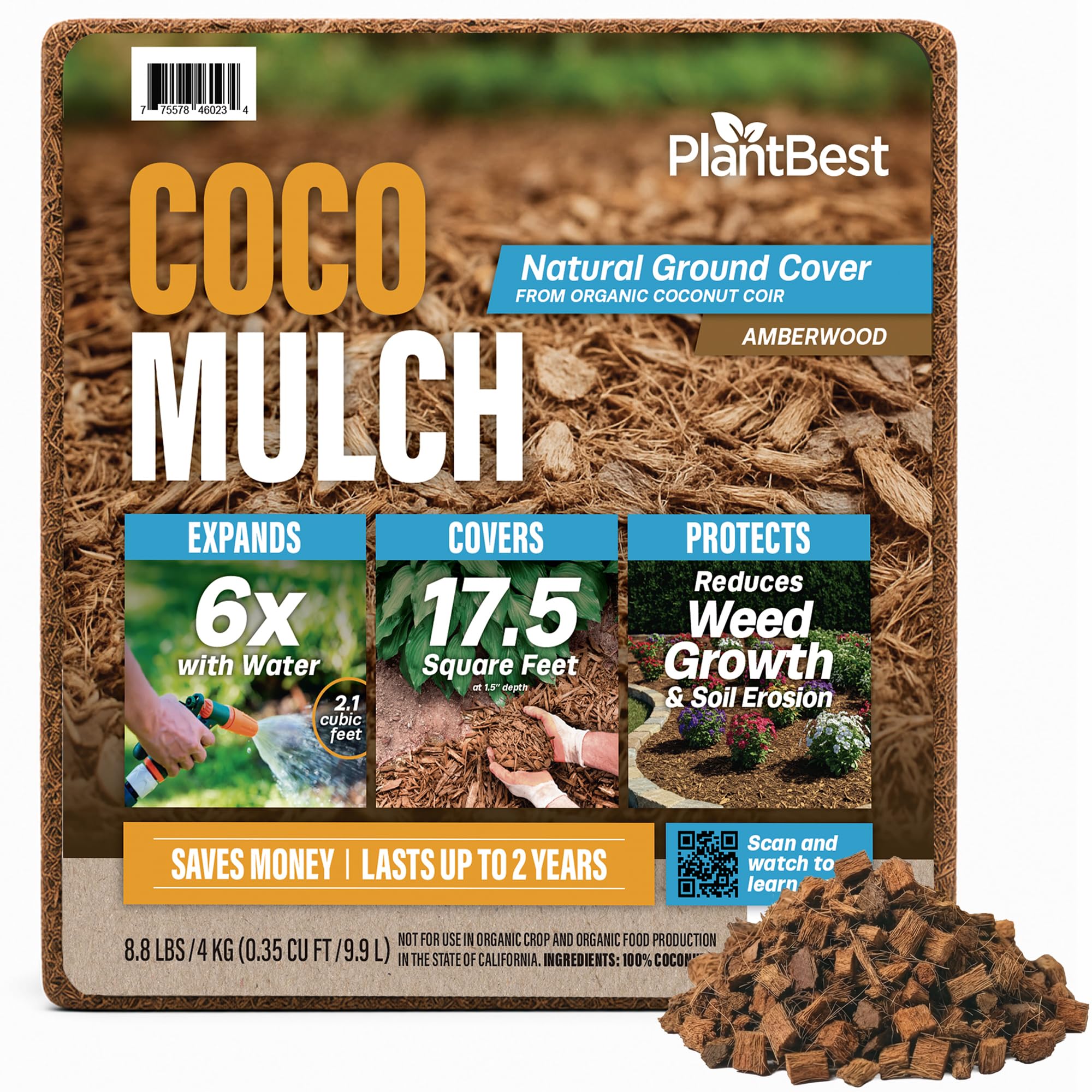
The PlantBest compressed block delivers an exceptional balance of coverage and durability. A single 9.1-pound brick expands to 64 quarts—enough to cover 17.5 square feet at the recommended 1.5-inch depth—making it one of the most efficient options per unit of labor. Users consistently report that the cocoa fibers interlock well, reducing soil erosion on slopes and suppressing weeds through two full growing seasons in moderate climates.
Water retention stands out as the primary performance advantage. The coconut coir structure absorbs and slowly releases moisture back into the root zone, which translates into noticeably fewer watering cycles during dry spells. The material is completely dye-free and chemical-free, so it won’t leach anything unwanted into vegetable beds or ornamental plantings.
The main handling consideration is preparation time. The compressed block requires thorough soaking—ideally overnight in a wheelbarrow or tub—before it can be spread evenly. Some users also note that the irregular chip sizes can make uniform hand placement tedious, especially around delicate seedlings. But for overall longevity and natural moisture regulation, this is the most reliable mid-range performer in the category.
What works
- Lasts up to two seasons before noticeable breakdown
- Excellent moisture retention reduces watering frequency
- Interlocking fibers stay put on slopes and resist erosion
What doesn’t
- Requires overnight soaking before application
- Irregular chip sizes make precise spreading difficult
2. Hull Farm 50150 Cocoa Bean Shell Mulch

The Hull Farm cocoa bean shell mulch is the sensory standout of this guide. It emits a strong chocolate aroma that fills the air around beds for the first week, making it a favorite for small courtyard gardens or container clusters where fragrance matters. Beyond the smell, the shells deliver a mild fertilizer boost with an NPK value of 2.5-1-3 without risking root burn, providing a gradual nutrient release as they break down.
Moisture retention is effective but less dramatic than coco coir options. The shells form a light, porous layer that holds moisture well once watered in, but the material is naturally lightweight and can blow away on windy days before it gets fully saturated. Users in dry, hot climates report that the chocolate scent persists through heat waves, though it fades noticeably after about two weeks.
The biggest limitation is safety. Cocoa mulch contains theobromine, which is toxic to dogs if ingested in quantity. Several verified reviews mention that the bag lacked a clear pet warning, so this product should only be used in areas completely inaccessible to pets. Additionally, the cost per cubic foot is higher than most organic alternatives, making it a luxury choice for small, high-visibility beds only.
What works
- Strong chocolate aroma is pleasant and long-lasting in heat
- Gentle NPK fertilizer value feeds soil as shells decompose
- Holds moisture well after initial watering
What doesn’t
- Contains theobromine and is toxic to dogs if eaten
- Lightweight material can blow away before saturated
- Premium cost limits it to small decorative areas
3. Back to the Roots 100% Organic Mulch
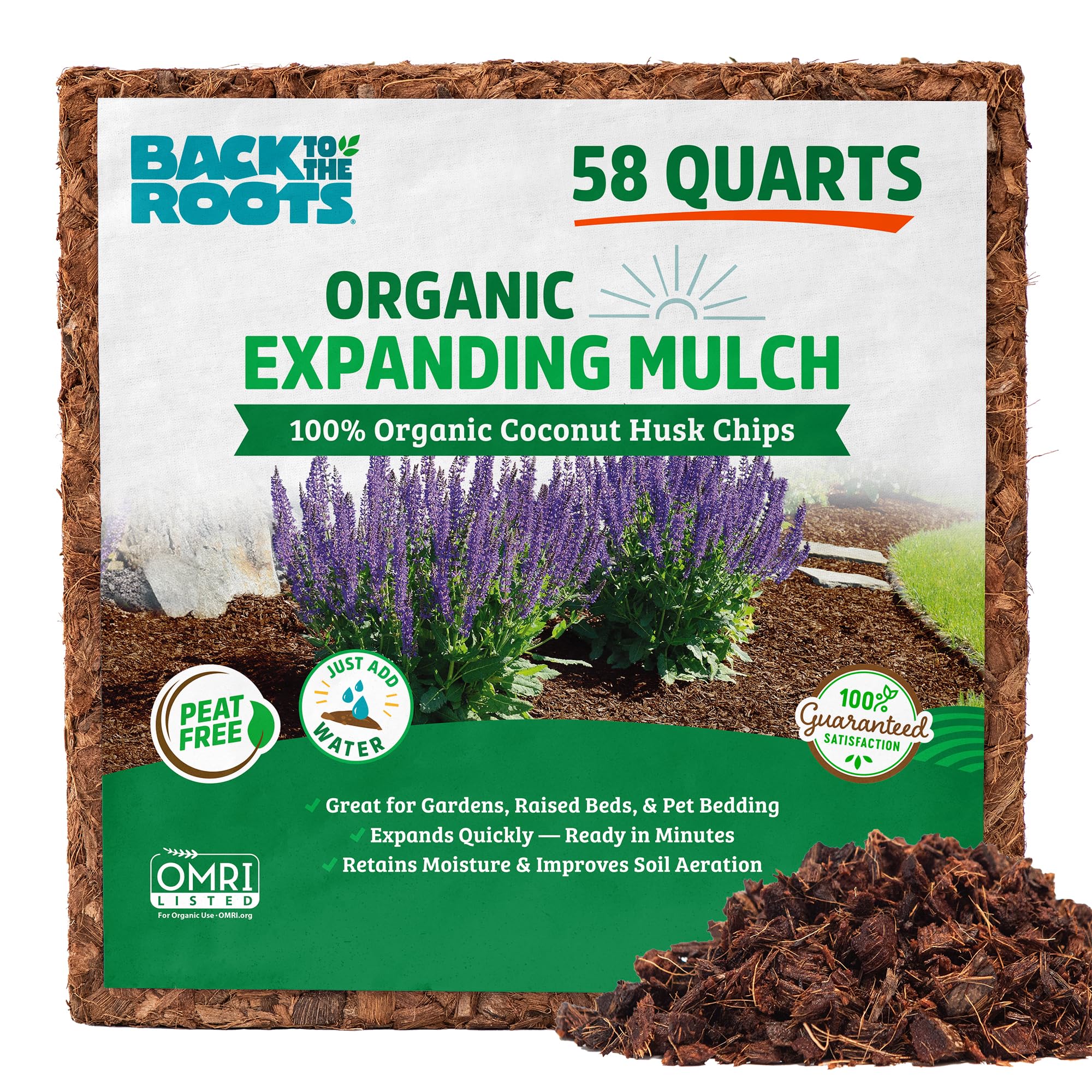
Back to the Roots carries the OMRI listing for organic production, which makes this compressed coco block the top choice for certified organic vegetable gardens. The 10-pound brick expands to exactly 2 cubic feet—enough to fill a standard wheelbarrow three-quarters full—and the dark natural color deepens when hydrated, giving beds a rich, uniform appearance that complements green foliage.
The moisture-holding capacity is identical to other high-quality coco coir products, but the real differentiator here is the company’s GrowOneGiveOne program. Users can share a garden photo and Back to the Roots donates a school STEM curriculum kit, adding a community benefit that goes beyond the bag. Verified reviews consistently highlight how much easier the compressed brick is on the back compared to hauling wet bags from a garden center.
On the downside, the coverage claims are accurate but modest—2 cubic feet goes fast if you are mulching multiple raised beds. Several users reported ordering two or three bricks to finish a single medium-sized project. The blocks also require the same soaking ritual as other compressed coco products, so planning ahead is essential for same-day application.
What works
- OMRI listed for organic gardening without synthetic chemicals
- Compressed brick saves storage space and is easy to carry
- Community program adds philanthropic value to purchase
What doesn’t
- Coverage is only 2 cubic feet—bricks go fast on large beds
- Requires pre-soaking before application
4. Plantonix Organic Coco Chips

Plantonix stands out for its high cation exchange capacity (CEC), which means these coco chips hold onto fertilizer nutrients longer than standard coir products. This is a critical advantage for gardeners using liquid feeds in raised beds or containers where nutrient leaching is common. The neutral pH also prevents the soil acidification that can occur with pine bark or peat-based mulches.
The compressed brick expands to 15 gallons, producing chips that are notably larger than typical coco coir dust. These chips create visible air pockets in the soil, improving oxygen flow to root systems and reducing compaction over time. Users mixing this into potting soil report that it maintains a loose, fluffy texture well past the first watering cycle.
One significant caveat emerged from user feedback: non-buffered coco coir can absorb nutrients rather than holding them available for plants. A verified 5-star review explicitly warns that unbuffered chips can cause nutrient lock-up and promote bacterial issues. Buyers should confirm whether the specific batch is buffered or plan to pre-charge the chips with a calcium-magnesium solution before use.
What works
- High CEC retains nutrients in the root zone effectively
- Neutral pH prevents soil acidification over time
- Large chip size improves aeration and reduces compaction
What doesn’t
- Unbuffered coco can leach nutrients instead of releasing them
- Requires pre-charging with calcium-magnesium for best results
5. Brut Organic Aspen Mulch
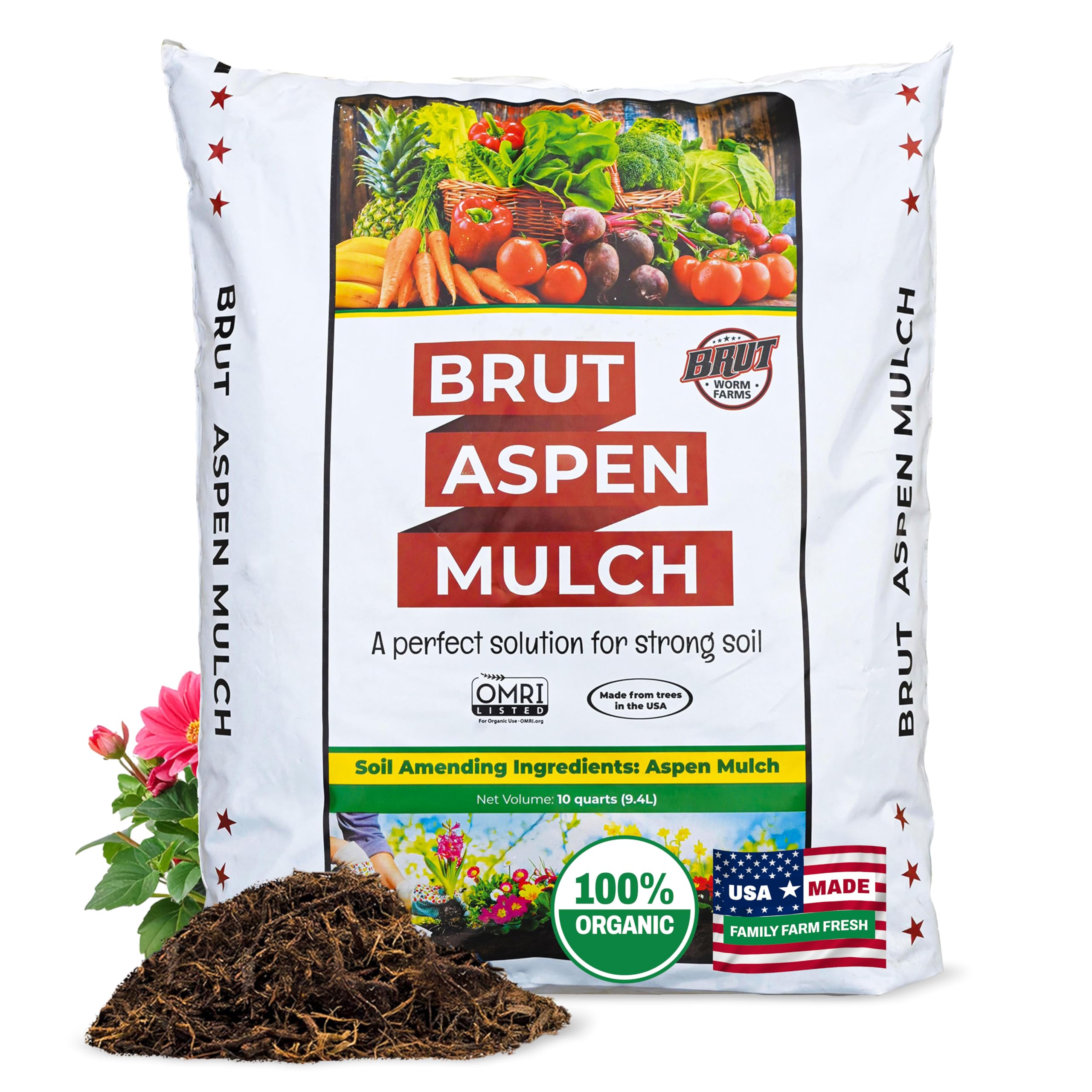
Brut Organic Aspen Mulch offers a completely different texture from the coco coir products in this guide. The fine aspen bark particles create a uniform, lightweight layer that looks clean and polished without the chunky appearance of wood chips or the stringy look of coco fiber. It is OMRI-listed and formulated with 30 percent natural carbon to feed beneficial soil microbes over time.
The moisture-retention performance is solid for a bark-based product—users report cutting watering frequency by roughly half for container herbs and tomatoes. The mulch is odor-free, which is a meaningful advantage over rubber or cocoa shell mulches that produce strong smells. It also stays in place better than coarse wood chips during rain, making it a practical choice for container gardens and small raised beds.
The biggest drawback is the quantity-to-price ratio. At only 10 quarts per bag, the coverage is significantly less than comparably priced coco bricks that yield 64 quarts. Several verified reviews noted that the bag appeared smaller than expected, and the cost per square foot is high relative to other organic options. This works best as a premium top-dressing for visible containers rather than large-scale ground coverage.
What works
- Fine, uniform texture creates a polished finished look
- Odor-free formula works well near seating or entry areas
- 30 percent natural carbon supports soil microbe activity
What doesn’t
- Only 10 quarts per bag—limited coverage for the price
- Cost per square foot is higher than bulk alternatives
6. Halatool 10LB Coco Husk Chips
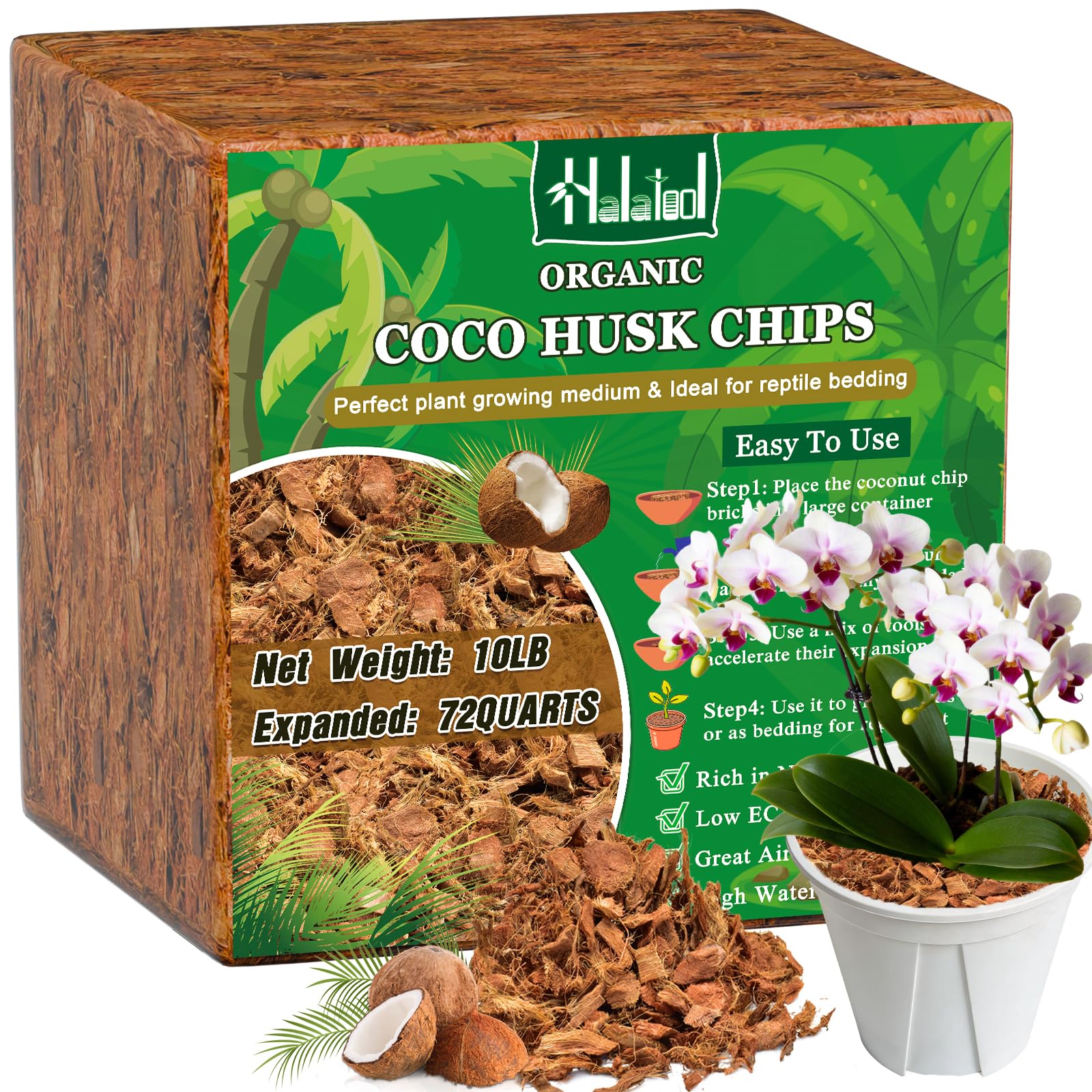
Halatool’s coco husk chips are the most cost-efficient option in this lineup when measured by expanded volume per dollar. The 10-pound compressed brick expands to 72 quarts, providing enough material to cover a substantial bed at a price that undercuts most comparable products. Users describe the organic chips as excellent for a “mulch sandwich” method—layering cardboard or paper beneath the chips to maximize weed suppression.
The chips retain moisture effectively, staying in place even during high-wind conditions according to verified reviews. The dry bricks are lightweight and easy to store, which eliminates the heavy lifting associated with wet bagged mulch. Several users have successfully used it as a potting soil amendment for orchids and as a water-retaining top-dress for vegetable gardens.
The main downside is the compressed brick format itself—it requires soaking time and a large container to expand fully. Users who need same-day application will need to plan ahead. Additionally, the chips are natural and undyed, meaning the color is a warm brown rather than the true black that some homeowners expect from a black mulch aesthetic.
What works
- Excellent expanded volume for the price—72 quarts per brick
- Stays in place during wind and heavy rain
- Lightweight dry bricks are easy to store and transport
What doesn’t
- Requires pre-soaking in a large container before use
- Natural brown color rather than deep black
7. Rubberific Premium Shredded Rubber Mulch

Rubberific shredded rubber mulch is a completely different product category. It never decomposes, never fades, and carries a 12-year color warranty that guarantees it will hold its deep black tone. For homeowners who want to mulch a bed once and never touch it again, this eliminates the annual reapplication cycle that organic mulches require.
The shredded texture mimics real wood mulch closely enough that casual visitors might not notice the difference at a glance. It provides a cushioned surface that is ideal for playground areas or pathways where fall protection matters. Users also report that dogs and cats avoid walking or defecating on the rubber surface, which is a practical benefit for urban garden spaces.
The trade-offs are significant. Rubber mulch does nothing to improve soil health—it does not add organic matter, does not retain moisture for roots, and can trap heat, raising soil temperatures in direct summer sun. The rubber odor is noticeable, especially during the first few hot days, and several verified reviews mention the strong smell as a drawback. It is also heavy at 27 pounds per bag and costs more upfront than any organic alternative.
What works
- Never decomposes or requires annual replacement
- 12-year color warranty prevents fading over time
- Deters pets from digging and eliminates weed regrowth
What doesn’t
- Strong rubber smell present during hot weather
- No soil health benefits—does not retain moisture or add nutrients
- Heavy bags and higher upfront cost per square foot
Hardware & Specs Guide
Expanded Volume vs. Compressed Weight
Compressed coco bricks are sold by dry weight, but the real value is in the expanded volume after hydration. A 10-pound brick typically yields 2 to 2.5 cubic feet (roughly 64 to 72 quarts). Bark and shell mulches are sold by pre-expanded bag volume—always check the quarts or cubic feet to compare coverage accurately.
pH Level and Soil Compatibility
Coconut coir mulch has a naturally neutral pH between 5.8 and 6.8, making it compatible with most garden soils without altering acidity. Cocoa shell mulch is slightly alkaline, and aspen bark tends to be near-neutral. Never assume pH neutrality—read the label if you are growing acid-loving plants like blueberries or azaleas.
FAQ
Does black mulch absorb more heat and harm plant roots in summer?
How often should I replace coco coir mulch compared to rubber mulch?
Final Thoughts: The Verdict
For most gardeners, the black mulch for landscaping winner is the PlantBest Coco Mulch Compressed Block because it delivers the best balance of coverage, water retention, and soil compatibility at a price that makes sense for medium to large beds. If you want the unmistakable chocolate scent and don’t mind a premium cost for small decorative areas, grab the Hull Farm Cocoa Bean Shell Mulch. And for permanent, zero-maintenance ground cover where soil health is not a concern, nothing beats the Rubberific Shredded Rubber Mulch.