
The difference between a succulent cutting that shrivels up and one that transforms into a full, plump rosette often comes down to a single factor: root initiation. Succulents and cacti are naturally slow to root in soil or water, and without a targeted hormonal trigger, many cuttings simply stall, rot at the base, or fail to absorb moisture altogether. A carefully formulated rooting hormone bypasses that bottleneck by delivering the exact auxin concentration—usually Indole-3-Butyric Acid (IBA)—that signals dormant cells along the stem to begin root development within days rather than weeks.
I’m Rikta — the co-founder and writer behind Lawn Gear Lab. Over the past several weeks, I’ve compared the IBA percentages, application forms (liquid versus powder versus paste), dilution ratios, and microbial content of seven leading rooting hormones, cross-referencing technical specifications with hundreds of verified owner reports to understand which formulas actually deliver consistent results on fleshy-leaved succulents like Echeveria, Haworthia, and Jade.
This guide cuts through the marketing noise to give you a data-backed breakdown of the best rooting hormone for succulents so you can propagate with confidence and stop losing cuttings to rot and failed rooting.
How To Choose The Best Rooting Hormone For Succulents
Succulents store water in their leaves, which means traditional rooting hormones designed for woody stems can oversaturate the cutting with moisture and trigger rot. The right formula balances auxin strength with a delivery method that respects the plant’s low-water biology. Here are the three most important factors to consider before buying.
IBA concentration and plant sensitivity
Indole-3-Butyric Acid (IBA) is the standard synthetic auxin used in commercial rooting hormones. For soft, fleshy succulent stems, a concentration between 0.05% and 0.10% IBA is generally safe—strong enough to kickstart root formation without burning the tender tissue. Higher concentrations like 0.30% or 0.80% are designed for hardwood cuttings and evergreens and can actually suppress rooting in succulents or cause stem tip necrosis. Always check the label for the exact IBA percentage before applying to a jade plant or aloe offset.
Liquid drops versus powder dusting
Liquid rooting hormones mix easily into water for soil drenches or soak sessions, which makes them ideal for leaf propagations and water-rooting setups where you want even distribution. Powders, on the other hand, provide a direct dip-and-plant method that coats the cut surface with a controlled dose—useful for thicker stems where you want to avoid diluting the hormone. The drawback with powder on succulents is that excess powder can clump on a moist cut and trap water against the stem, increasing rot risk. Liquids give you more control over the dosage per drop.
Additional ingredients beyond auxin
Some rooting hormones add kelp extract, Vitamin B1, or beneficial soil microbes to reduce transplant shock and support cellular growth. These additives can be helpful when moving a rooted cutting from water to soil, but they are not a substitute for the primary auxin trigger. For succulents specifically, a formula that includes mild antifungal properties or rooting stimulants like cytokinins (common in keiki pastes) can encourage both root and shoot development from the same node. Be cautious with nitrogen-heavy fertilizers—they push leaf growth at the expense of root initiation on a fresh cutting.
Quick Comparison
On smaller screens, swipe sideways to see the full table.
| Model | Category | Best For | Key Spec | Amazon |
|---|---|---|---|---|
| Rooting Elixir Prop Drops | Liquid | Fast water propagation | 0.05% IBA with Kelp & B1 | Amazon |
| Hormex Rooting Powder #1 | Powder | Precise dip for delicate stems | 0.10% IBA powder | Amazon |
| Southside Plants Root Drops | Liquid | All-round houseplant rooting | IBA + vitamins liquid | Amazon |
| Vathery Liquid IBA Rooting Hormone | Liquid | Budget-friendly drops | IBA liquid concentrate | Amazon |
| Berkland Keiki Paste | Paste | Cloning nodes on thick stems | Cytokinin + auxin gel | Amazon |
| Grow Queen Succulent Fertilizer | Powder | Long-term root & soil health | OMRI organic slow-release | Amazon |
| OHP Hormodin #3 | Powder | Hardy succulent stem cuttings | 0.80% IBA powder | Amazon |
In‑Depth Reviews
1. Rooting Elixir Prop Drops
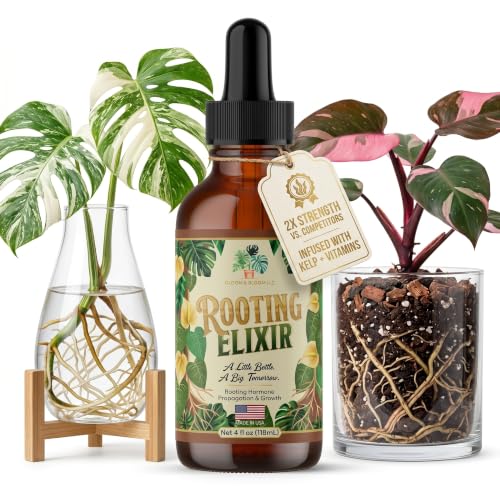
The Rooting Elixir Prop Drops hit a near-perfect balance for succulent propagation. At 0.05% IBA, the concentration is high enough to trigger root development on fleshy leaves and stems, yet gentle enough to avoid burning delicate tissue. Users report seeing root tips on Monstera and Pothos cuttings within 24 hours of application, and the addition of kelp extract and Vitamin B1 gives cuttings an extra resilience boost when transitioning from water to soil — a common point where succulents stall.
This is a double-strength liquid concentrate: a single 4 fl oz bottle yields gallons of working solution at the recommended rate of 1–2 drops per cup of water. That economy matters if you propagate multiple cuttings across several cycles. The formula is handcrafted in small batches in the USA and works across water, soil, LECA, and sphagnum moss, giving you flexibility regardless of your preferred rooting medium.
Where this product truly stands out is the consistency of the results. Verified buyers with years of propagation experience note that this outperforms more expensive competitors, especially for stubborn nodes on variegated Monstera and rare Philodendrons. For succulent leaf pulls and stem cuttings, the rapid root initiation reduces the window during which rot can set in, dramatically raising success rates.
What works
- Double-strength IBA triggers roots in 1–2 days on most cuttings.
- Kelp and B1 reduce transplant shock when moving rooted cuttings to soil.
- Ultra-concentrated; one bottle makes gallons of rooting solution for dozens of propagations.
What doesn’t
- Coverage is relatively low per bottle if you apply as a full soak rather than drops.
- The dropper opening can drip if not stored upright after use.
2. Hormex Rooting Powder #1
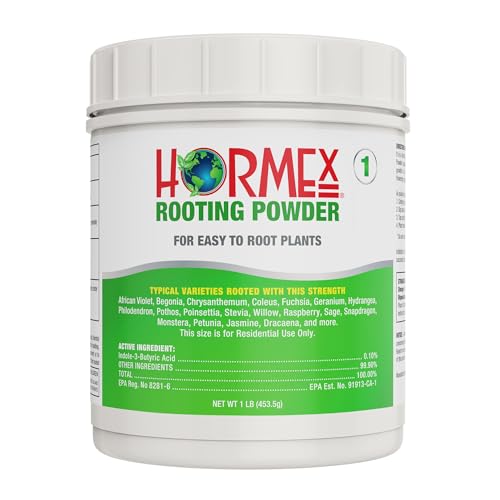
Hormex Rooting Powder #1 is the go-to choice for propagators who want a precise, dry application method. With 0.10% IBA, it sits right at the upper boundary of what is safe for soft succulent stems — anything higher would risk burning the cutting. The powder format lets you dip the freshly cut stem end directly into the hormone, coating only the exposed tissue without saturating the entire leaf base with water.
This product is available in a 1-pound bulk container, which is massive for a home propagator but makes sense if you are rooting dozens of cuttings at once or running a small nursery. Hormex has been on the market for over 65 years, and the brand’s reputation for clean formulations — no alcohol, dyes, or preservatives — means you are getting a pure auxin trigger without extra chemicals that could interfere with delicate succulent metabolism.
Buyers consistently report that this powder works well on semi-hardwood houseplants, garden herbs, and succulent cuttings. The biggest advantage over liquid forms is control: you can see exactly how much powder adheres to the stem and tap off any excess. Just be careful not to leave the powder sitting on a damp cutting for too long, as moisture can cause clumping that traps water against the stem.
What works
- 0.10% IBA is the optimal strength for fleshy succulent stems without burning tissue.
- Dry powder format gives complete control over application dose.
- 1 lb container offers exceptional value for high-volume propagation projects.
What doesn’t
- Bulk size takes up storage space and may expire before a casual user finishes it.
- Powder can clump on wet cuttings, increasing rot risk if not shaken off properly.
3. Southside Plants Root Drops
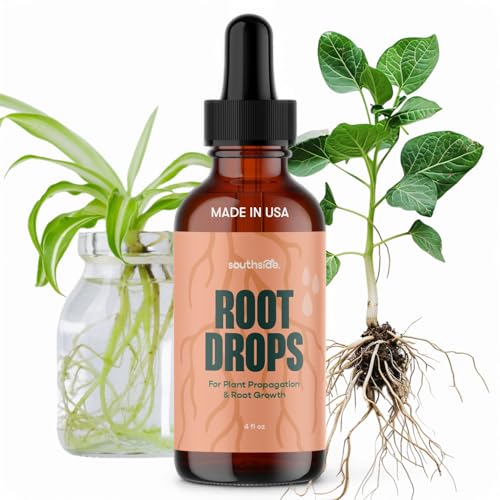
Southside Plants Root Drops are built around a simple premise: a few drops per cup of water deliver all the rooting stimulation a cutting needs without any complicated mixing or measuring. The liquid formula contains IBA paired with vitamins, and the brand emphasizes all-natural ingredients — a selling point for gardeners who prefer to avoid synthetic-heavy products on their indoor plants.
Verified users report seeing water root growth on Monstera cuttings within days and note that the formula works equally well across water, soil, LECA, and sphagnum moss. The 4 oz bottle lasts a long time because the recommended dosage is just 2 drops per cup. For succulent leaf propagations placed over a water dish or directly in soil, this means a single bottle can support dozens of cycles before running out.
One of the most appreciated aspects is how well Root Drops reduces transplant shock — buyers moving rooted cuttings from water to soil note that plants adjust faster and show less leaf droop. The formula is handcrafted in the USA by a two-sister team, which adds a personal touch, but the real value lies in the consistency of the drops: no nozzle clogs, no powder dust, just a clean dropper bottle that delivers the same dose every time.
What works
- All-natural formula with IBA and vitamins for clean propagation without harsh chemicals.
- 2 drops per cup dosage makes the bottle economical for dozens of propagation cycles.
- Reduces transplant shock noticeably when moving rooted cuttings to pots.
What doesn’t
- Some buyers find the glass bottle fragile if knocked over on a hard surface.
- Results on very tough succulent varieties like Haworthia can take longer than advertised.
4. Vathery Liquid IBA Rooting Hormone
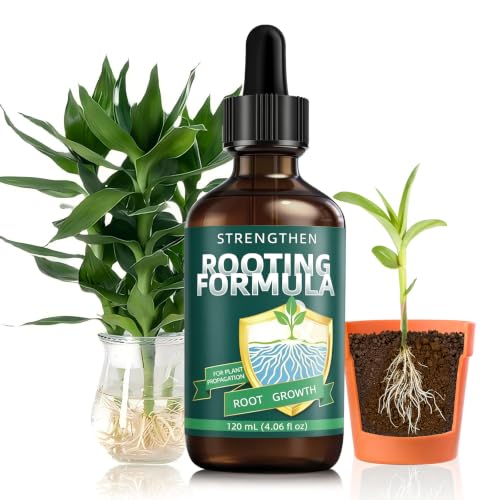
Vathery’s Liquid IBA Rooting Hormone competes directly with premium drops at a lower entry cost without sacrificing the core IBA mechanism. The formula contains a scientifically balanced dose of Indole-3-Butyric Acid and is designed to work across water, soil, moss, and LECA setups. For succulent propagators on a tighter budget, this product delivers the same auxin trigger as higher-priced competitors — just without the added kelp or Vitamin B1 boosters.
Buyer experiences highlight that this hormone speeds up root appearance significantly compared to plain water. One verified reviewer noted that shrubs which normally take 3 weeks to root showed root tips in just 1 week after using Vathery drops. The 4 oz bottle uses a standard dropper, and the recommended dose is 1–2 drops per cup of water — identical to pricier alternatives. This makes Vathery a straightforward, no-frills option for anyone who just wants IBA in water without additional bells and whistles.
Where this product falls slightly short is the lack of any transplant shock reducer or antifungal agent. For succulents that are prone to stem rot — like certain Echeveria and Sedum varieties — you will need to be extra disciplined about changing the water every 4–5 days and ensuring the cutting isn’t sitting in stagnant solution. It works well as a root accelerator but offers less margin for error than formulas with added microbial support.
What works
- Concentrated IBA triggers fast root formation—visible results in as little as 5–7 days on many cuttings.
- Budget-friendly entry point for succulent propagation without sacrificing auxin potency.
- Simple 1–2 drops per cup dosage works across multiple substrates.
What doesn’t
- No added vitamins or kelp to help cuttings resist transplant shock during soil transition.
- Lacks antifungal properties, so water must be changed every 4–5 days to prevent rot on sensitive cuttings.
5. Berkland Keiki Paste
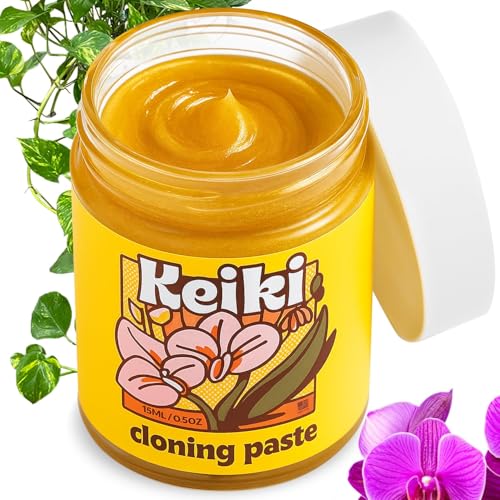
Keiki Paste is fundamentally different from standard IBA-based rooting hormones. Instead of only stimulating root growth, this cytokinin-rich gel encourages dormant nodes to produce new shoots and roots simultaneously — making it ideal for cloning a specific branch or filling out a leggy succulent stem. Berkland’s version contains 2X the paste of competing brands in the same 0.5 oz jar, and a single rice-grain-sized dab per node is sufficient.
This product shines on succulents with thick, woody stems like Jade plants, Rubber trees, and certain Crassula species where you want to force branching from a bare stem. Users report seeing new sprouts 2–4 weeks after application. It also works exceptionally well on orchids, Monsteras, and Philodendrons. One verified buyer saved a dying Monstera with root rot by applying the paste to the remaining healthy nodes and got four separate sprouts from a single vine.
The paste format is sticky and requires a q-tip or small spatula for application, which adds a step compared to liquid drops. However, the precision is unmatched: you can target a specific node without soaking the entire cutting. For succulent propagators trying to clone a prized variegated plant or salvage a damaged stem, Keiki Paste provides a targeted cloning solution that standard rooting drops cannot replicate.
What works
- Cytokinin + auxin dual action triggers both root and shoot formation from a single node.
- 2X the product volume compared to other keiki pastes at the same price tier.
- Works on thick succulent stems, orchids, and woody houseplants where standard drops struggle.
What doesn’t
- Results can take 7+ months on slow-growing succulents; not an instant fix.
- Sticky consistency requires careful application with a q-tip rather than a simple dropper.
6. Grow Queen All-In-One Organic Succulent Fertilizer
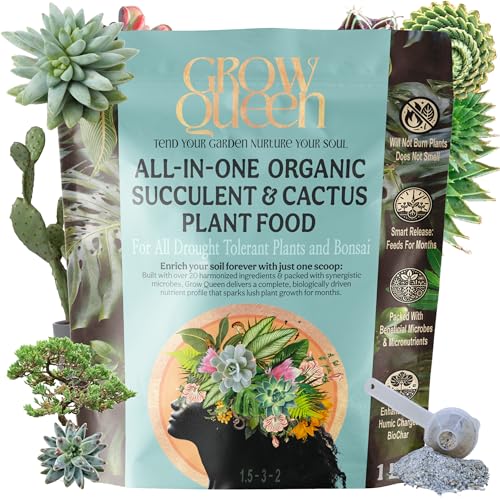
Grow Queen is not a rooting hormone in the strict auxin sense, but it plays a critical role in the propagation cycle once the cutting develops its first roots. This OMRI-listed organic powder contains living beneficial soil microbes, a balanced nutrient profile, and a slow-release mechanism that feeds succulents for up to 8 months from a single application. For succulent propagators who want to transition cuttings into thriving plants, this fertilizer provides the sustained nutrition that liquid hormones alone cannot deliver.
The powder comes in single-serving packets — 25 servings per 1 lb bag — and each serving feeds up to 4 succulents. Just mix one scoop into the top layer of soil and water. The formula includes micronutrients, calcium, and beneficial microbes that improve soil structure and root immune function. Verified users note that their Christmas cactus cuttings revived from shipping stress and produced strong stems and abundant blooms within three months of the first application.
One unique aspect is its odorless, non-burning formula — you can over-apply slightly without fear of root burn, which is not the case with liquid synthetic fertilizers. The microbes may produce a white film on the soil surface after application, which is actually beneficial fungal growth and a sign the soil biology is active. Pair this with an IBA-based rooting hormone for the first week, then switch to Grow Queen for the long-term health of your succulent collection.
What works
- OMRI-listed organic formula is safe for pets and indoor use with no foul odor.
- Single serving packets make application foolproof; no measuring or mixing guesswork.
- Slow-release design feeds succulents for up to 8 months without requiring frequent reapplication.
What doesn’t
- Does not contain IBA or any auxin — it is a post-rooting fertilizer, not a root initiator.
- White microbial film on the soil surface can be mistaken for mold and surprise some users.
7. OHP Hormodin #3

OHP Hormodin #3 is a professional-grade rooting powder with 0.80% IBA — a concentration designed specifically for difficult-to-root varieties, evergreens, and dormant leafless cuttings. This is not a product for tender succulent leaf pulls; it is best reserved for thick, woody succulent stems like mature Agave offsets, large Aloe pups, and cactus cuttings where the cutting has enough mass to handle the high auxin load without burning.
Buyer reports confirm that Hormodin #3 works exceptionally well on grapevine clippings and cactus cuttings. One verified reviewer specifically noted that dusting cactus cuttings before potting prevented root rot and produced fast root development within weeks. The powder format is standard for professional nursery use — you dip the moistened cut end into the powder, tap off the excess, and plant immediately. The 8 oz container is a moderate size for hobbyist and semi-professional propagators.
The key constraint is precision. At 0.80% IBA, even a slightly heavy coating can suppress rooting on delicate succulents. This product demands that you know your plant’s sensitivity level before applying. For the average succulent enthusiast propagating Echeveria leaves or Haworthia offsets, a lighter formula like 0.05% or 0.10% IBA is safer. Hormodin #3 is best left for experienced propagators working with dense-stemmed cactus and woody succulent species.
What works
- 0.80% IBA is powerful enough to root stubborn woody succulent stems and dormant cuttings.
- Powder format allows precise coating of the cut end for controlled application.
- Used by professional nursery owners; proven track record on cactus and evergreen propagation.
What doesn’t
- Excessively strong for tender succulent leaves; risk of tissue burn if over-applied.
- Not suitable for soft-stemmed Echeveria, Haworthia, or Sedum cuttings at full strength.
Hardware & Specs Guide
IBA Concentration and Succulent Tolerance
The active ingredient in virtually every rooting hormone on this list is Indole-3-Butyric Acid (IBA), a synthetic auxin that mimics the plant’s natural root-forming signal. Succulent stems store water and have a lower metabolic rate than leafy houseplants, so they respond best to IBA concentrations between 0.05% and 0.10%. Concentrations above 0.30% — like the 0.80% found in OHP Hormodin #3 — are designed for hardwood cuttings and can actually inhibit root formation on soft succulent tissue. Always match the IBA percentage to your cutting’s stem density: thin, fleshy Echeveria stems want the lowest end, while thick Agave and cactus stems can tolerate mid-range strengths.
Liquid vs Powder vs Paste: Choosing the Right Delivery System
Liquid rooting hormones are the most versatile option for succulent propagation because you can control the exact dilution ratio and apply the solution as a soil drench, water soak, or surface dip. Powders give you a dry coating on the cut stem — useful for thick cuttings where you want the hormone to stay put — but any excess moisture on the stem can turn the powder into a paste that traps water and encourages rot. Pastes like Keiki formulations are unique because they combine cytokinins with auxins to force node branching, making them the best choice when your goal is to clone a specific branch rather than root a leaf. For general succulent propagation, start with a liquid formula and switch to powder or paste only once you need the specific benefits those formats provide.
FAQ
Can I use regular rooting powder on succulent leaves?
How long does it take for succulent cuttings to root with hormone?
Should I use rooting hormone on cactus cuttings?
Final Thoughts: The Verdict
For most succulent propagators, the rooting hormone for succulents winner is the Rooting Elixir Prop Drops because its 0.05% IBA concentration with kelp and Vitamin B1 delivers fast root initiation without burning tender fleshy stems. If you want a dry dip application for thicker cactus stems, grab the Hormex Rooting Powder #1. And for cloning a specific succulent node or saving a damaged stem, nothing beats the targeted shoot-and-root stimulation of Berkland Keiki Paste.