
Specs are compiled from manufacturer listings and verified buyer reviews and can change over time — please confirm the key details on the product page before buying.
Every pumpkin grower hits the same wall: lush green vines that refuse to set fruit, or pumpkins that stall at softball size. The right feed changes that, and this guide sorts through the formulas — granule, liquid, and slow-release packs — to match your planting style. You’ll see exactly what each product does for vine growth, fruit set, and soil health before you spend a cent.
I’m Rikta — the founder and writer behind Lawn Gear Lab. This guide is built by comparing the manufacturers’ published specifications and the patterns across verified customer reviews, so you get each pick’s real strengths and trade-offs instead of marketing spin.
Let’s dig into the crowd favorite — a 4.6-star granule feed — and see if it beats the specialty liquids when you’re choosing the best Pumpkin Fertilizer for a record-breaking harvest.
Our Picks at a Glance

How To Choose The Best Pumpkin Fertilizer
Pumpkins are heavy feeders that need a steady diet from seedling to harvest. The choice starts with how the food reaches the roots: granules you work into the soil, liquids you mix and pour, or pre-measured packs you drop in the hole at transplanting.
N-P-K Ratio: The Growth vs. Fruit Trade-Off
The three big numbers on any label are nitrogen (N), phosphorus (P), and potassium (K). Early on, you want more nitrogen to push out leaves and long vines. When flowers appear, you want that middle number (phosphorus) and the last one (potassium) to rise, because those drive blooming and fruit size. A balanced feed like 5-1-5 or an 11-8-5 blend each handles a different stage.
Granules vs. Liquid vs. Pre-Measured Packs
Granules sit in the soil and release food slowly, which suits anyone who wants a “low-maintenance” season. Liquids act fast because they deliver nutrients straight to the roots or leaves, but they need re-mixing every week or two. Pre-measured packs sit under the transplant and feed for months without any measuring at all.
Quick Comparison
| Model | Best For | Form | N-P-K Ratio | Feeding Duration | Amazon |
|---|---|---|---|---|---|
| Miracle-Gro Shake ‘N Feed★ Best Overall | Low-effort all-season feeding | Granules | — | Up to 3 months | Amazon |
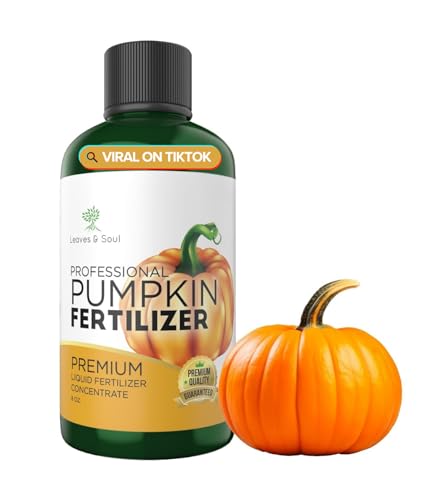
| Leaves & Soul 5-1-5Vine Booster | Container and backyard patch | Liquid Concentrate | 5-1-5 | Per watering | Amazon |
| Wallace Super Starter Packs | Transplanting & competition fruit | Granule Packs | 10-3-6 | Up to 5 months | Amazon |
| TPS Nutrients Liquid | Reviving struggling vines | Liquid Concentrate | — | Per watering | Amazon |
| Pendelton Pumpkin Juice | Boosting fruit size pre-harvest | Liquid Concentrate | 11-8-5 | Season-long | Amazon |
| Wallace Soil & Plant Booster | Soil amending & root health | Granules | 6-2-3 | Up to 4 months | Amazon |
In-Depth Reviews
1. Miracle-Gro Shake ‘N Feed Tomato, Fruit & Vegetable Plant Food
Our pick — over 4.5★ from 10,500+ verified ratings; the strongest balance of quality and price.
The shake-and-sprinkle granule that keeps a whole garden fed for a quarter of the year.
The defining move here is patience: you sprinkle these granules onto the soil, work them into the top 1-3 inches, water once, and the feed keeps releasing for up to 3 months. Owners describe the application as genuinely mess-free — no mixing jugs, no measuring scoops, just a shake and a sprinkle, which is why ease of use gets so much praise. One 4.5 lb container covers up to 128 sq. ft., so a single bag handles a good-sized backyard patch.
The formula carries calcium, which works to build stronger cell walls in the fruit. In plain terms, that translates to firmer pumpkins that hold up better on the vine and last longer after picking. Buyers report plants doubling or tripling in size with new growth and plenty of flowers, and the reviews consistently call out how simple it is to keep on hand for overall feeding.
The recurring note of caution is overapplication — it is easy to get heavy-handed with a shake-on feed, and too much can stress plants. For indoor pots, the guidance is to use a tiny bit: roughly half a teaspoon for a 6-inch pot and 1 to 1.5 teaspoons for a 10-inch pot, reapplied every 3 months.
Why Owners Stay Loyal
- No mixing or measuring — shake onto the soil and work into the top 1-3 inches
- Calcium in the mix supports stronger, longer-lasting produce
- One 4.5 lb bag covers up to 128 sq. ft.
Where to Stay Careful
- Easy to overdo it — follow the dosage for pot size
- For in-ground beds, you need to work it into the top few inches
Reach for this if: you want a single, low-effort feed that carries your pumpkins through most of the season without a weekly mixing routine.
Look elsewhere if: you’re chasing record-breaking fruit weight and want a high-potassium booster at the end of the season.
2. Leaves & Soul Pumpkin Fertilizer Liquid Organic Pumpkin Food 5-1-5
A concentrated liquid that put female flowers on struggling vines within days.
This 8 oz bottle is built specifically for pumpkins, and its 5-1-5 formula leans on potassium to drive flowering and fruit development. Because it is a liquid, it mixes easily with water and feeds straight through the roots — owners note the clear, odorless concentrate is far less chemical-feeling than granular salts. The most striking review claim: a tiny backyard garden that had been losing flowers went on to produce 5 medium-large pumpkins after switching to this feed.
There is a real math catch here. At the seedling rate of 1 tablespoon per gallon, one bottle stretches to 16 gallons; at the mature-plant rate of 4 tablespoons per gallon, it makes just 4 gallons. Fast-growing pumpkin vines burn through a bottle quickly, and the honest reviews admit repurchasing mid-season. The upside is that you control the strength, so you can match feeding to how your plants actually respond.
Owners mention it works across cucumbers too, not just pumpkins, and the feedback loop is fast — fuller vines and healthier leaves show up within a couple of weeks. The value argument is strong if you have a small patch; it just may not be the cheapest way to feed a large pumpkin field.
Fast, visible results: the standout praise is the jump in female flowers — the exact flowers that turn into pumpkins — which is what separates this from a generic all-purpose feed.
Budgets beware: the 8 oz bottle is concentrated, but mature vines need 4 tablespoons per gallon, so heavy growers should plan on a second bottle.
3. Wallace Organic Wonder Super Starter Packs (24 Count)

Drop-in packs that feed transplants for five months with zero measuring.
For transplanting day, the standout is the simplicity of these pre-measured granule packs. You drop one in the hole, set the seedling on top, and the 10-3-6 formula releases slowly for up to 5 months — owners describe it as “once and done” fertilizing. The brand’s own history backs the concept: a 9.65-pound world-record tomato was grown using these packs, and a Guinness record of 839 tomatoes on a single stem followed in 2021.
The packs contain Mycorrhizae, a beneficial fungus that teams up with roots to pull in more water and nutrients. Customers note vegetables coming in beautiful with big harvests and leaves turning a healthy dark green, and several say it is the most effective fertilizer they have ever used. The guidance for giant pumpkins is to use up to 4 packs per plant, while tomatoes need just 2.
The honest wrinkle is the “organic” label. One owner read the fine print and found ammonium nitrate among the ingredients, calling the organic claim misleading. If certified organic matters to you, read the label carefully before trusting the name.
The No-Fuss Appeal
- No measuring, no mixing, no guesswork at planting time
- Slow-release formula keeps feeding up to 5 months
- Mycorrhizae in every pack to boost root growth
The Fine Print
- “Organic” in the name is disputed — the label lists ammonium nitrate
- Packs are positioned as a premium option
Who it beats: anyone mixing soluble powders at transplant time — these packs remove the entire measuring step and feed for five months.
One honest limitation: if you demand a certified-organic input, the ingredient label here may not match the name on the box.
4. TPS Nutrients Pumpkin Fertilizer Liquid Plant Food, 32 oz
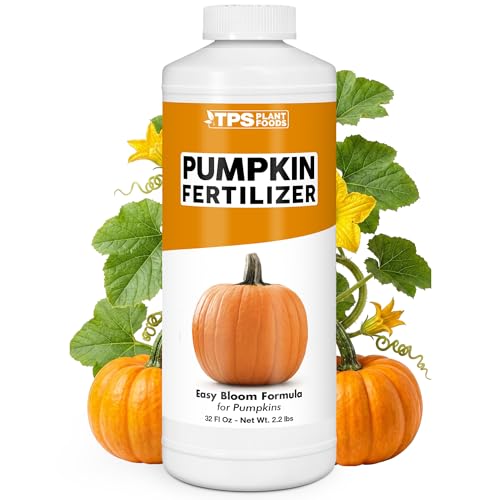
The rescue bottle that turned yellow, struggling vines lush green in a single week.
When your pumpkin leaves start yellowing and growth stalls, this 32 oz liquid concentrate is the emergency response. Owners describe a dramatic turnaround: vines that were struggling and turning yellow became thriving, lush, and green within about a week of feeding. The high-potassium formula is aimed squarely at fruit set and consistent pumpkin formation, and it works as either a foliar spray (onto the leaves) or a soil drench, whichever fits your routine.
For container growers, it earned the memorable line that it turned a planter into a front-yard patch — long vines and steady, if small, pumpkins. The feedback on vine growth is strong, though a few owners noticed more male blooms than female ones, a balance that can be influenced by heat as much as nutrition. The brand is TPS Nutrients, and the bottle is made in the USA.
There is one hard rule owners repeat: this is concentrated, and overdosing can kill plants. Follow the mixing directions and resist the urge to add extra in pursuit of bigger fruit; more is not better here.
Rescue specialist: the fastest feedback loop in this lineup — several owners saw visible recovery inside a week, which is the whole point of a liquid feed.
Handle with care: a concentrated formula that punishes sloppy measuring, so treat the label like a contract.
5. Pendelton Turf Supply Pumpkin Juice 11-8-5, 1 Quart

The high-test formula serious growers lean on when they want heavier pumpkins on the vine.
This is the strongest feed in the lineup, an acidic foliar fertilizer with an 11-8-5 guaranteed analysis — 11% nitrogen, 8% phosphorus, 5% potassium — plus a trace of boron, iron, manganese, and zinc. The micro-nutrients matter because pumpkins pull a lot from the soil, and reviewers point out dramatic results: one vine tripled in size within a week of biweekly feeding. The squeeze bottle lets you measure and pour a specific dose without a separate cup.
The concentration is the value story. At 1-2 ounces per gallon of water, a single 32-ounce bottle makes up to 32 gallons of fertilizer, so it stretches far across a season. Buyers who have used it for years describe it as the key to their personal-best pumpkin weights, and it complements other fertilizers for season-long feeding. The glowing reviews talk about guaranteeing flower production within a week and plants turning visibly greener and healthier.
Not every grower sees magic, though. One owner found their plants actually responded better to a standard Miracle-Gro feed and saw no difference after switching to this. If your vines are already thriving, this reads as a finisher rather than a replacement for your base feed.
Built for Big Fruit
- High 11-8-5 ratio with boron, iron, manganese, and zinc
- One quart makes up to 32 gallons of fertilizer
- Works through both roots and leaves
Not a Universal Win
- Some owners saw no edge over their regular feed
- Acidic formula may not suit every soil profile
Reach for this if: you’re in the final push for size and want a high-potassium, micronutrient-packed finisher that stretches across a whole season.
Look elsewhere if: your vines are already perfect — this is a finisher, not a rescue feed for struggling plants.
6. Wallace Organic Wonder Soil and Plant Booster, 2.2 lb
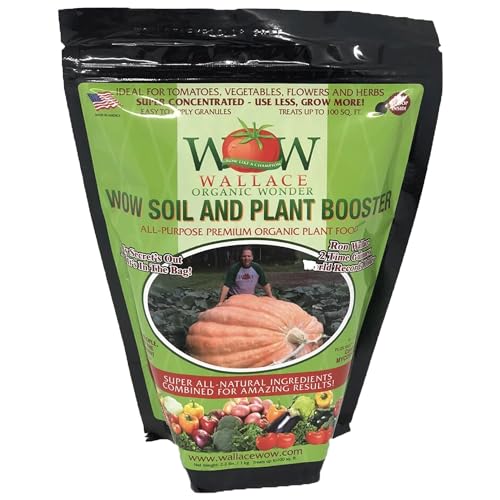
A 100% natural granular booster that packs 85,000 root-building microbes into every bag.
This is the soil-first approach to pumpkin growing. The 6-2-3 organic granules work into the soil at planting, feeding both the plant and the soil food web over time. The headline feature is the 25% Mycorrhizae — beneficial fungi that latch onto roots and dramatically improve how much water and nutrients the plant can pull up, which owners see as explosive root growth. The 2.2 lb bag treats up to 100 sq ft or 28 one-gallon plants for up to 4 months.
Calcium is added specifically to protect against blossom end rot, the black sunken patch that ruins fruit. Because it is slow-release and 100% natural with no GMOs, it will not burn plants when used as directed. Buyers use it on pumpkins, mint, and general crops, describing excellent growth and the biggest leaves they have ever seen within just a few weeks.
The catch is patience. A slow-release granular booster works beneath the surface, so it rewards growers who prepare soil before planting rather than those looking for a quick mid-season fix. The instruction to water after applying is not optional — the product must contact the root system to deliver its benefit.
The Soil-First Advantage
- 100% natural with no GMOs and safe around people and pets
- 25% Mycorrhizae plus kelp and humates for root health
- Calcium in the mix guards against blossom end rot
Plan Ahead
- Slow-release action means results build over weeks, not days
- Must contact the root system and be watered in well
Who it suits: the grower who preps beds properly and wants long-term soil health rather than a quick green-up.
Who should skip: impatient gardeners — if you need visible results this weekend, a liquid feed will get you there faster.
Understanding the Specs
N-P-K Ratio
These three numbers show the percentage of nitrogen, phosphorus, and potassium in the mix. Nitrogen drives leafy vine growth early on. Phosphorus and potassium take over once flowers appear, fueling fruit set and final pumpkin size. A balanced 5-1-5 liquid feeds steadily, while an 11-8-5 concentrate delivers a heavier punch for the size-focused final stretch.
Granules vs. Liquid vs. Packs
Granules release slowly over months, which suits busy gardeners who water weekly. Liquids act within days because nutrients reach roots immediately, but they need re-mixing throughout the season. Pre-measured packs sit under a transplant and feed for up to 5 months with zero measuring — the easiest route for planting day.
FAQ
When should I start feeding pumpkin seedlings?
What is the best N-P-K ratio for pumpkins?
How often should I apply liquid pumpkin fertilizer?
Can I use tomato fertilizer on pumpkins?
What causes blossom end rot on pumpkins?
Is granular or liquid fertilizer better for giant pumpkins?
How long does granular pumpkin fertilizer last?
Will fertilizer burn my pumpkin plants?
Can I feed pumpkins growing in containers?
Final Thoughts: The Verdict
For most growers, the best Pumpkin Fertilizer is the Miracle-Gro Shake ‘N Feed because it removes the measuring and mixing entirely — one sprinkle feeds up to 3 months and covers up to 128 sq. ft. If you want to chase bigger fruit at the end of the season, pair it with the Pendelton Pumpkin Juice, a high-potassium finisher that stretches into 32 gallons. And if you are planting transplants and want to skip every measuring step, the Wallace Super Starter Packs sit under the seedling and feed for 5 months while you focus on watering.
How We Picked
We do not accept paid placement. Every pick is matched to a real buyer and a real use-case; we do not hands-on test units.
Sources & Methodology
Specifications: manufacturer listings and product documentation. Review insights: verified customer reviews, as of August 2026. Pricing: not shown on this page (it changes often); check the current price via the retailer link.
As an Amazon Associate, Lawn Gear Lab earns from qualifying purchases. This does not affect which products we feature.