
The difference between a ragged, tearing cut and a clean, scissor-like slice is the difference between a plant that heals quickly and one that invites disease. That edge – literally – is what separates a frustration from a pleasure in the garden. The right pair of shears or loppers transforms a heavy chore into a crisp, satisfying snap.
I’m Rikta — the co-founder and writer behind Lawn Gear Lab. I spend countless hours comparing specifications, studying horticultural data on cutting mechanics, and analyzing aggregated owner feedback to find which pruning tools deliver on their promises and which leave you with a handful of splintered wood.
This research-driven guide cuts through the noise to identify the shears, loppers, and tree pruners that earn their place in your shed. If you are looking for the best pruning tools, these picks set the standard for blade retention, leverage, and all-day comfort without breaking your budget.
How To Choose The Best Pruning Tools
The right pruning tool depends entirely on what you are cutting: a live green rose cane, a dry dead branch, or a limb 20 feet up. Matching the blade type, handle length, and cutting mechanism to your specific task determines whether the job takes five minutes or thirty.
Blade Type: Bypass vs. Anvil
Bypass blades slide past each other like scissors, producing a clean cut that heals quickly on living plants. This is the standard for most hand pruners and loppers. Anvil blades slam a sharp edge against a flat base, crushing the stem slightly; they are better for dead, dry wood where crushing is less harmful but brute force is needed. Some anvil tools claim bypass performance on their label, so check the blade overlap before buying.
Cutting Capacity and Handle Length
Cutting capacity is measured in the maximum branch diameter the tool can sever. Hand pruners typically cap out at 1 inch; loppers and tree pruners push past 2 inches. Handles on loppers range from 20 to 40 inches — longer handles multiply leverage but add weight. A 1-inch steel branch in year three of a shrub’s growth demands far more leverage than a soft green tip, so match the handle length to the thickest material you regularly encounter.
Blade Steel and Maintenance
High-carbon steel holds a razor edge far longer than stainless steel, but it rusts if neglected. Japanese-grade carbon steel, as used in the ARS 140DXR, is the gold standard for edge retention. Titanium coatings reduce friction and slow corrosion but cannot fix a poorly heat-treated blade beneath. All pruning tools benefit from wiping the blade dry and applying a thin layer of oil after every session.
Quick Comparison
On smaller screens, swipe sideways to see the full table.
| Model | Category | Best For | Key Spec | Amazon |
|---|---|---|---|---|
| Felco F2 | Hand Pruner | All-day professional pruning | 1-inch capacity / 9.25″ length | Amazon |
| Corona BP 6250 | Hand Pruner | Value-packed heavy cutting | 1-inch capacity / forged steel blade | Amazon |
| FELCO F211-50 | Loppers | Lightweight precision lopping | 1.2-inch / 20″ I-beam handles | Amazon |
| Haus & Garten EnduroPRO | Hand Pruner | Ergonomic budget-friendly shears | 1-inch / titanium-coated carbon steel | Amazon |
| Kings County Ratcheting Lopper | Loppers | Extending reach & extra torque | 2-inch / 26″-40″ telescoping handles | Amazon |
| Corona TP 6870 Tree Pruner | Pole Pruner | Ground-based high limb cutting | 14-ft reach / 13″ saw blade | Amazon |
| ARS 140DXR | Specialty Trimmer | Livestock hoof & garden detail | 1.75-inch / Japanese steel blade | Amazon |
In‑Depth Reviews
1. Felco F2 Pruning Shears
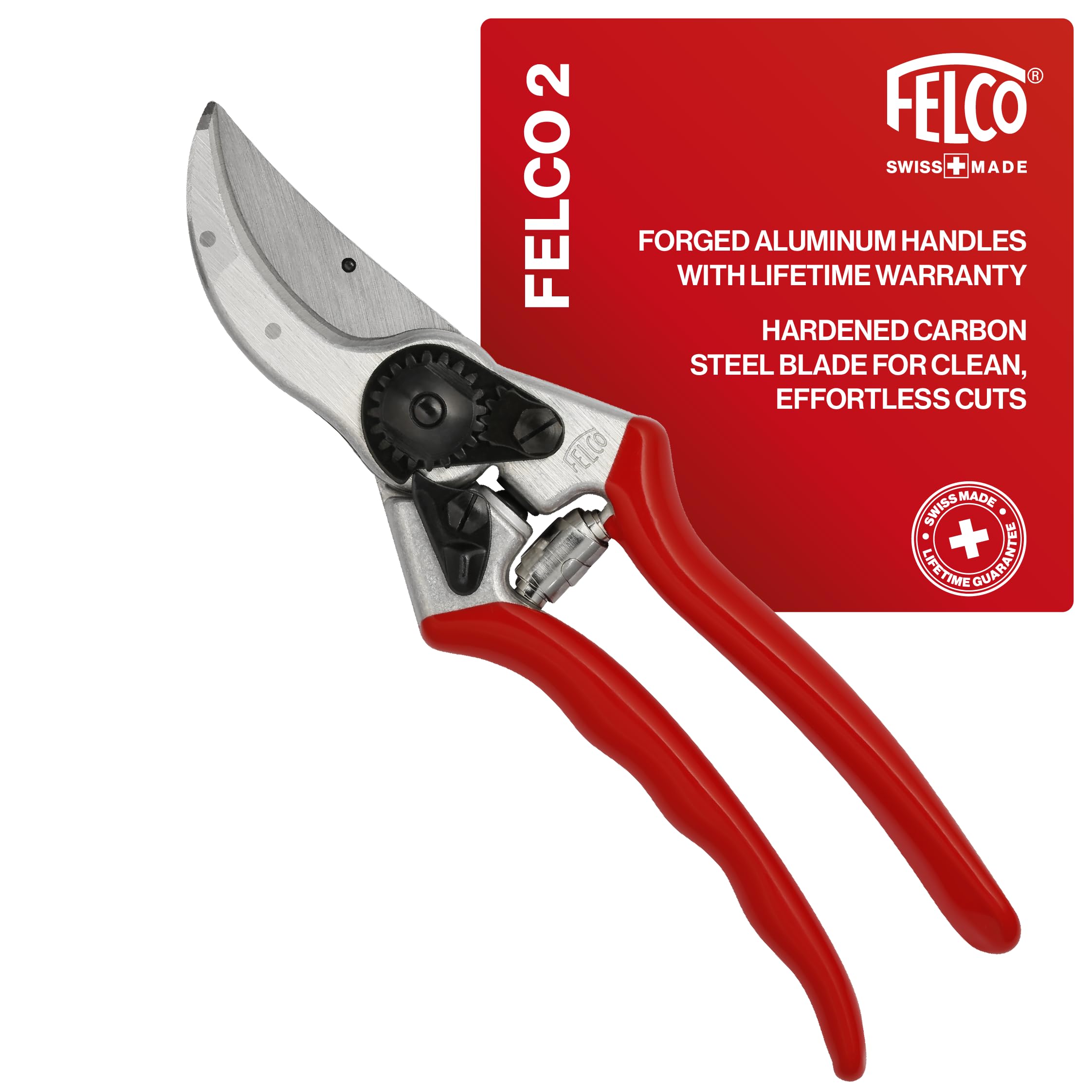
The Felco F2 is the benchmark that every other hand pruner is measured against. Forged aluminum handles keep the weight to a nimble level while providing enough leverage to slice through a full 1-inch live branch without hesitation. The carbon steel blade arrives shaving sharp and, with routine cleaning and oiling, holds that edge far longer than the stamped steel found on budget alternatives.
The ergonomic angled head and rubber grip reduce wrist strain noticeably during a two-hour pruning session. Unlike many designs, every component — blade, spring, bolt, anvil — is sold as a spare part, meaning this tool can literally last decades. Owners consistently report that this is the last pruner they will ever need to buy, and the Swiss machining means the pivot stays tight without wobble.
One detail that surprises new users: the Felco F2 is built for right-handed use. The blade offset is not symmetrical, so left-handed buyers should look for the Felco F6 or F9 models. The spring action is smooth and powerful, and the safety catch clicks firmly into place for storage. This is a professional-grade tool that earns its reputation through daily reliability.
What works
- Exceptional blade edge retention through hardened carbon steel.
- Full parts support for indefinite maintenance and repair.
- Comfortable ergonomic grip reduces fatigue over long sessions.
What doesn’t
- Right-hand only design limits ambidextrous use.
- Premium price point is an upfront investment.
2. Corona Tools BP 6250 MAXFORGED Bypass Pruner
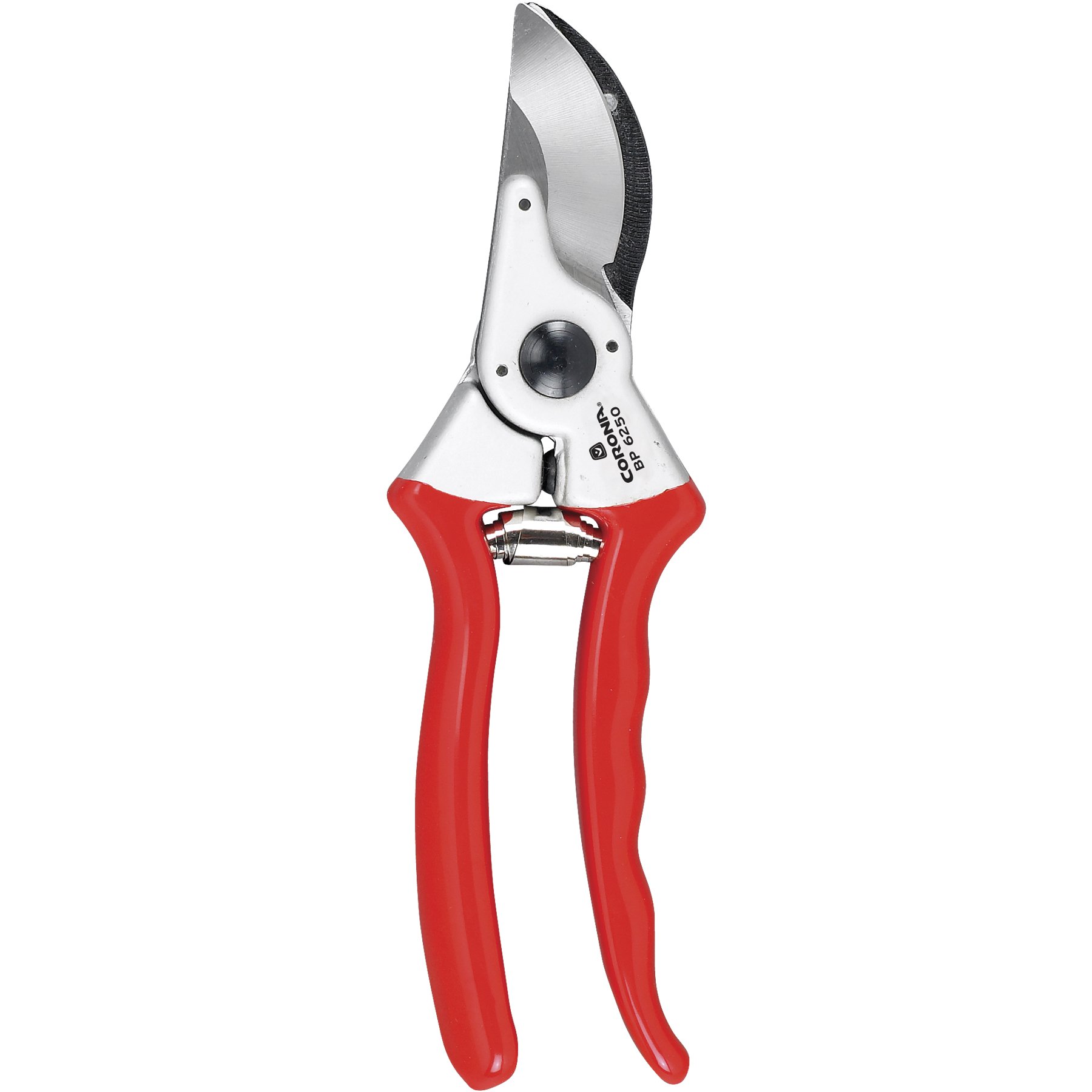
The Corona BP 6250 delivers performance that seasoned gardeners compare to the Felco F2 but at roughly half the cost. The forged, high-carbon steel blade cuts live branches up to 1 inch thick with a clean, scissor-like action that minimizes crushed cambium. The narrow-profile hook and self-cleaning sap groove prevent gumming during heavy use on sticky conifers and fruit trees.
Aluminum handles keep the overall weight to 0.6 pounds, and the contoured red grips offer a non-slip hold even when your hands are sweaty or muddy. The built-in thumb lock is simple and secure, and the adjustable pivot bolt lets you tighten the blade tension as the tool breaks in. Owners who use these for hours at a time report minimal hand fatigue, and the replaceable blade extends the tool’s lifespan considerably.
The serrated edge on the hook side provides extra grip on woody stems, preventing the branch from slipping out during the cut. A shock-absorbing bumper reduces jarring at the end of each stroke, and a wire-cutting notch adds surprising utility for light fence work. For the gardener who wants professional-grade results without paying for a Swiss brand name, this is the hardest-working pruner in its class.
What works
- Excellent cut quality rivals pruners costing twice as much.
- Lightweight aluminum construction with replaceable blade.
- Self-cleaning sap groove prevents blade sticking.
What doesn’t
- Carbon steel blade requires diligent cleaning and oiling.
- No left-handed model or offset handle option.
3. FELCO F211-50 Loppers
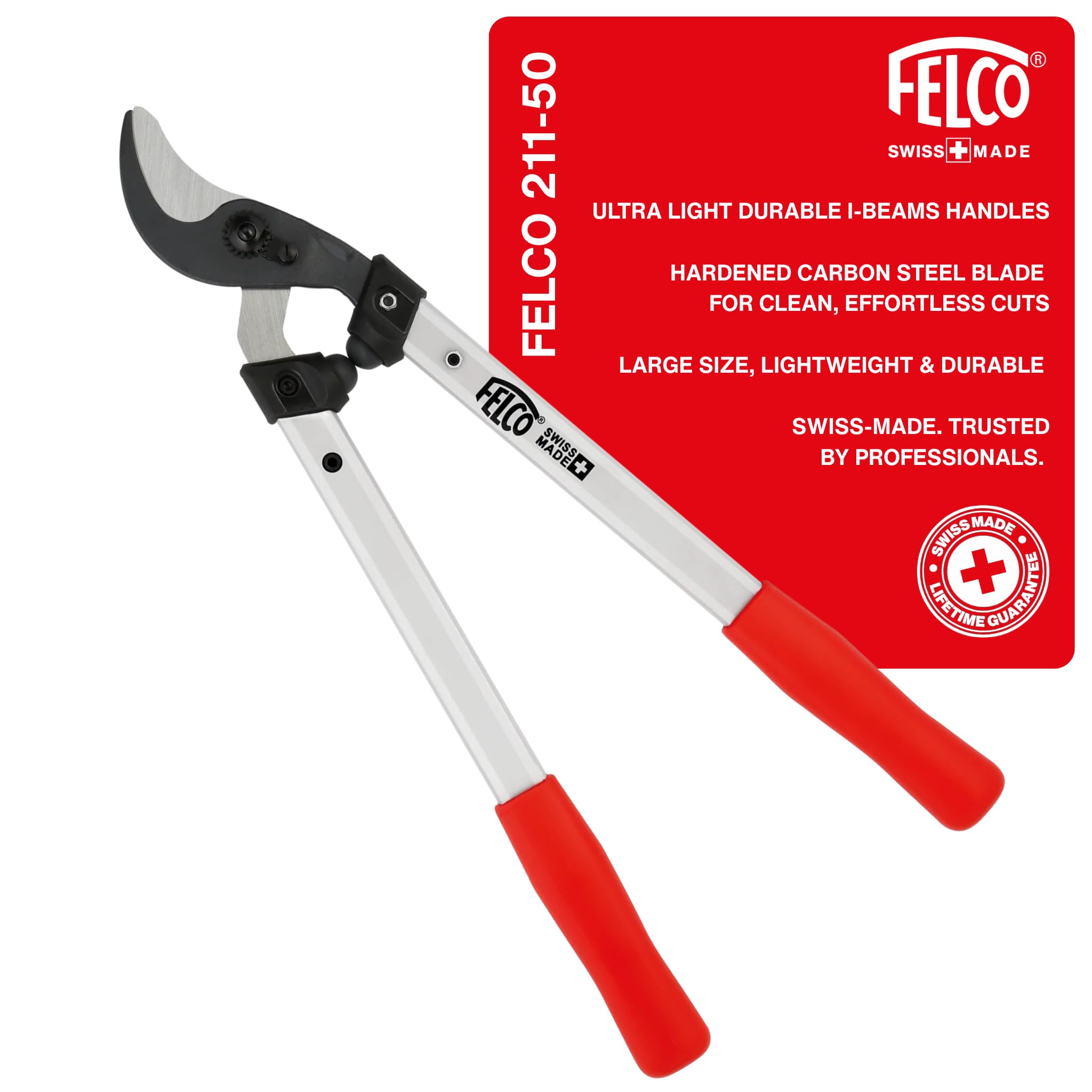
For lopping tasks that demand precision without the fatigue of a heavy head, the FELCO F211-50 is the lightest 20-inch lopper in the premium category. The I-beam aluminum handles provide exceptional stiffness for their weight, allowing clean cuts on branches up to 1.2 inches thick with noticeably less user exertion. The curved bypass blade snips green wood cleanly, reducing the risk of torn bark.
FELCO’s micrometric adjustment mechanism lets you dial in blade tension with a supplied tool, compensating for normal wear without loosening during use. All parts are replaceable and available through FELCO’s global network, which is critical for anyone who uses loppers daily. The phosphate-free grips resist UV degradation and stay comfortable in cold weather, though some users find the handle diameter slightly narrow for large hands.
Owners praise the smooth cutting action and the effective bumper guards that prevent hand pinching when the jaws close. At the 1-inch branch size, the F211-50 cuts with the same effortlessness as a much heavier tool. For the home orchardist or serious gardener who wants Felco quality in a lopper format, this model justifies its premium with precision and longevity that budget loppers cannot match.
What works
- Extremely lightweight I-beam handles reduce arm fatigue.
- Micrometric tension adjustment maintains optimal blade feel.
- Every part is replaceable for decades of service.
What doesn’t
- 1.2-inch capacity limits use on thicker hardwood limbs.
- Higher price point than comparable anvil-style loppers.
4. Haus & Garten EnduroPRO Bypass Pruners
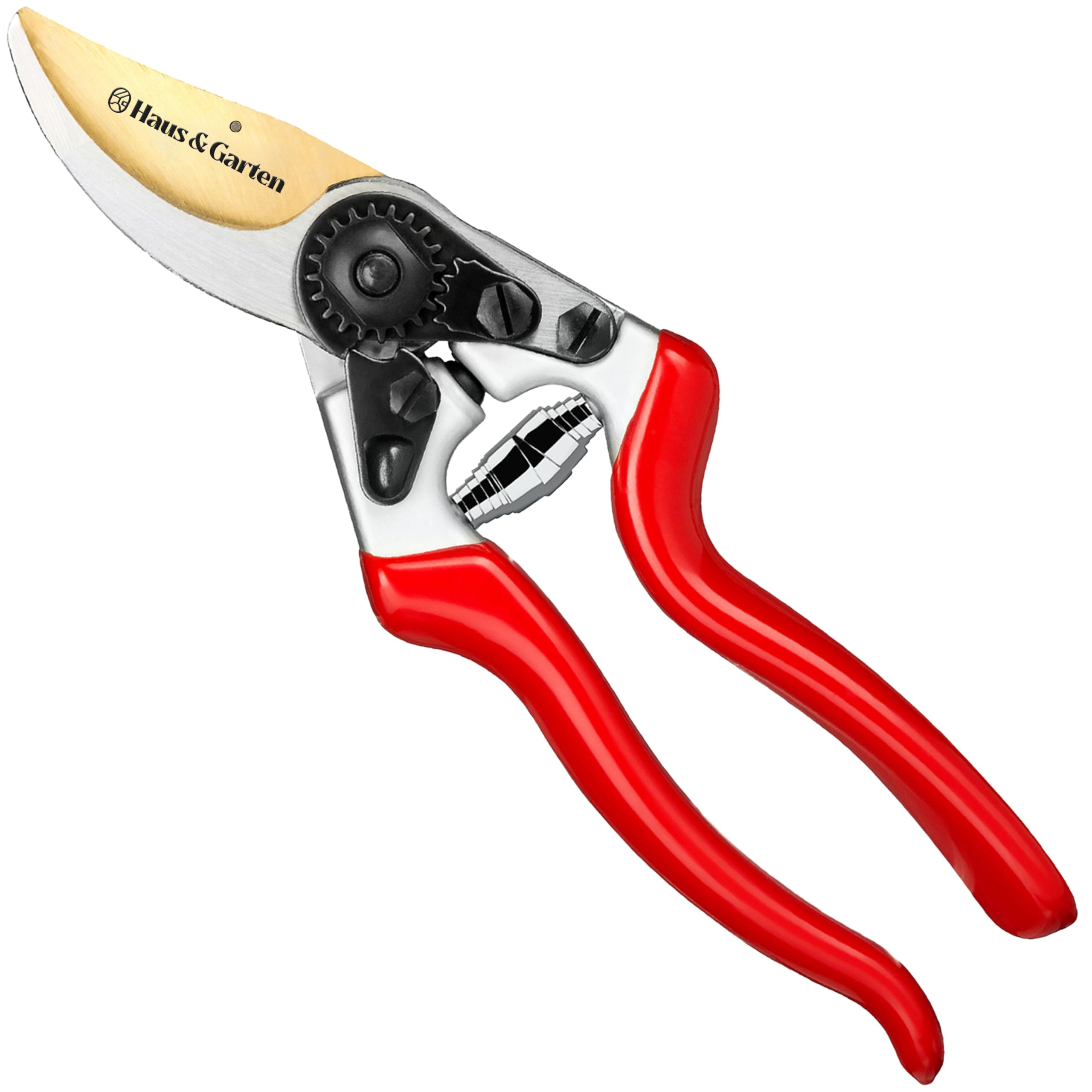
The EnduroPRO pruners prioritize hand comfort without sacrificing cutting performance. The ergonomic handle angles the wrist into a neutral position, significantly reducing strain for gardeners with arthritis or weaker grip strength. The Japanese-grade high-carbon steel blade receives a titanium coating that reduces friction and provides a first layer of rust resistance, which is a real advantage in humid climates or when cutting wet greenery.
The drop-forged aluminum body feels solid without being heavy at 8.6 ounces. Owners describe the cutting action as “effortless” through twigs and small branches up to the rated 1-inch capacity. The anti-slip rubber grips remain secure even when wet, and the red color makes the tool easy to spot if dropped in leaf litter or mulch.
Long-term durability depends on blade care, as the titanium coating is a surface treatment that can wear with heavy use. A few users with larger hands wish the handles were slightly longer for a full-hand grip. For the entry-level investment, this pruner delivers a comfortable, sharp cutting experience that holds up to regular seasonal pruning without the sticker shock of Swiss imports.
What works
- Highly ergonomic handle reduces wrist fatigue significantly.
- Titanium coating improves corrosion resistance and cut smoothness.
- Lightweight build is easy to handle for extended sessions.
What doesn’t
- Smaller handle size may not fit larger hands comfortably.
- Titanium coating is not a substitute for core blade quality.
5. Kings County Tools Ratcheting Bypass Loppers
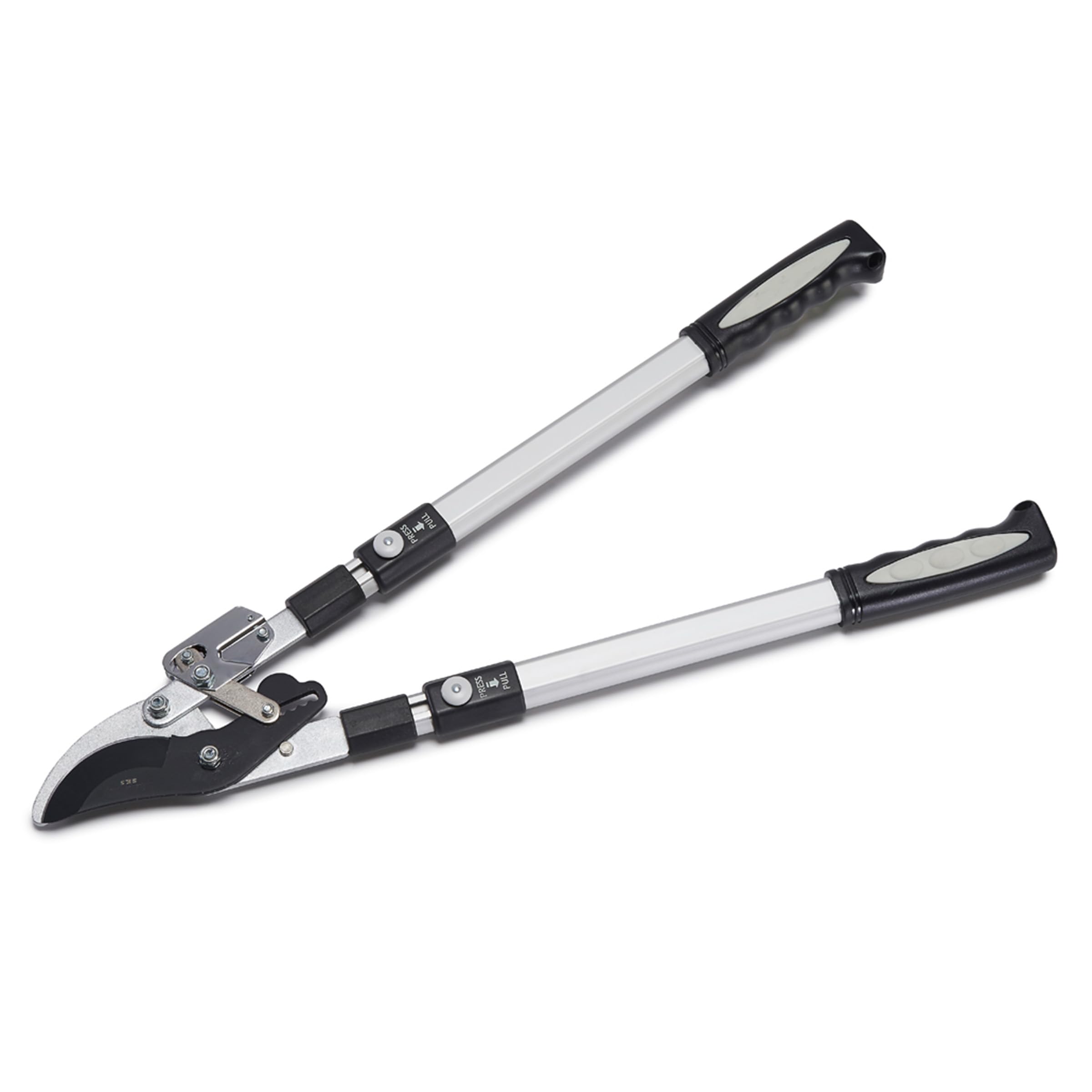
When a branch is too thick for hand pruners and too high for standard loppers, the Kings County ratcheting lopper bridges the gap. The double ratcheting mechanism multiplies your grip force in stages, allowing a 2-inch live branch to be cut with bodyweight pressure that would normally require a much heavier tool. The telescoping handles extend from 26 to 40 inches, giving you the reach to access upper canopy branches without a ladder.
The bypass blade design is suited specifically for green, living wood, and the six pin-locked position stops let you adjust the handle spread for tight spaces. The alloy steel blade and rubber grips feel substantial, and owners confirm the cut quality is excellent on branches up to 1.25 inches, though the full 2-inch capacity requires the ratcheting action to step through the cut. The extension mechanism is push-button and locks securely at each length.
The trade-off for the reach and power is weight — at nearly 4 pounds, this lopper is significantly heavier than fixed-handle models. Extended overhead use will fatigue the shoulders. One owner reported a blade failure on a dead branch, which the manufacturer replaced promptly. For the gardener with tall shrubs or a small orchard, the combination of ratcheting torque and telescoping reach is a genuine labor-saver.
What works
- Ratcheting action provides massive cutting leverage.
- Telescoping handle extends reach by 14 inches.
- Clean bypass cuts on green wood up to 2 inches thick.
What doesn’t
- Heavy build causes fatigue during extended overhead use.
- Some durability concerns on dead, brittle wood.
6. Corona TP 6870 MAX RazorTOOTH Tree Pruner
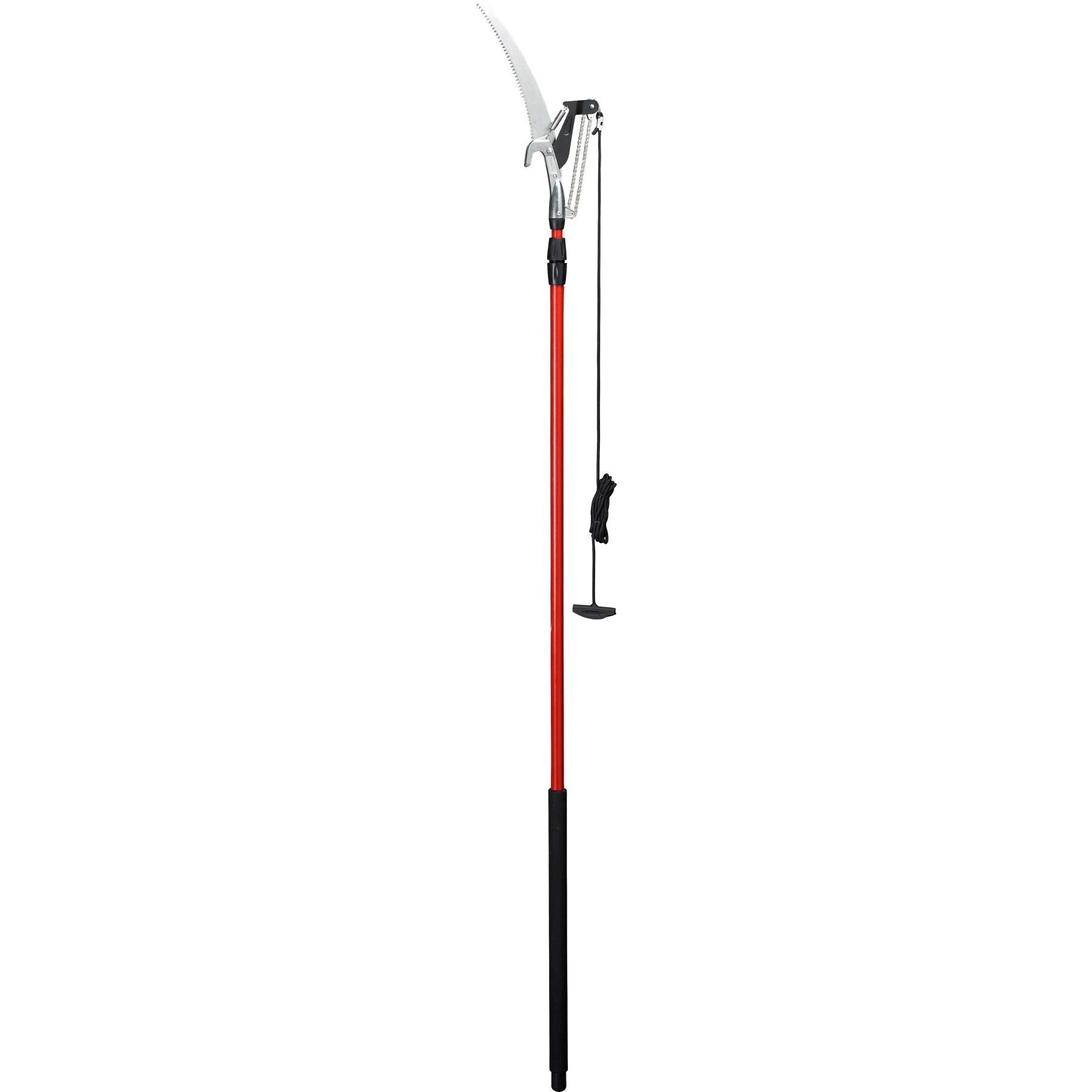
The Corona TP 6870 is the correct answer when a limb is too high to reach with loppers and too dangerous to get to with a ladder. The 14-foot fiberglass pole supports a compound-action lopper head and a 13-inch RazorTOOTH saw blade. The dual-compound mechanism uses a chain drive to multiply the rope pull force, making cuts on branches up to 1.5 inches thick possible from the ground. The saw blade cuts through thicker limbs quickly with aggressive, sharp teeth.
The 24-inch foam grip provides a comfortable hold for extended pruning sessions, and the Powerglide rope pull system reduces friction compared to bare rope. Owners consistently praise the sturdiness of the fiberglass pole, which remains controllable at full extension without excessive flex. The lopper head hooks onto branches securely, and the saw is ideal for limbs beyond the lopper’s capacity. The curved blade design cuts on the pull stroke for maximum efficiency.
Minor compromises include a non-extendable pole that cannot exceed its 14-foot length, and some reports of the cutting head’s spring wearing out over heavy use. A few units arrive with minor shipping damage to the foam handle. For anyone who regularly prunes medium to large trees, this tool eliminates ladder risk and turns a two-person job into a one-person task. The Corona lifetime warranty provides additional confidence in the investment.
What works
- Eliminates ladder risk for high branch removal.
- Sharp 13-inch saw handles thick limbs fast.
- Compound action lopper head multiplies cutting force.
What doesn’t
- Non-extendable pole limits flexibility for varied heights.
- Cutting head spring may require replacement over time.
7. ARS 140DXR Smooth Blade Trimmer

The ARS 140DXR occupies a unique niche as a trimmer built for livestock hoof care but equally effective as a garden pruning detail tool. Its Japanese carbon steel blade is exceptionally sharp, slicing through goat hooves and thick plant stems with the same effortless stroke. The rounded blade tip makes it safe for probing and cleaning sensitive areas, which translates to precise deadheading and close-work trimming in the garden without accidentally stabbing tender shoots.
The smooth, straight blade edges produce a shear cut rather than a bypass scissor action, which some gardeners prefer for snipping flowers, herbs, and light shrubbery. The plastic handles are strong and comfortable for both left- and right-handed users, and the spring return is gentle enough not to fatigue the hand during repetitive use. Owners of small livestock praise how much faster these cut than standard farrier tools.
The main consideration is the cutting capacity — rated at 1.75 inches, but the straight edge design works best on softer, thinner material. Thick, woody branches can cause the blades to bind. This is not a replacement for a dedicated bypass pruner; it is a specialized tool for gardeners who also trim hooves or who want an ultra-sharp, precision detail blade for light pruning tasks. The edge retention out of the box is among the best in its price tier.
What works
- Japanese steel holds a remarkably sharp edge for a long time.
- Safe rounded tip enables detailed, precise garden work.
- Ambidextrous design suits both left- and right-hand users.
What doesn’t
- Straight blade design struggles with thick, woody branches.
- Plastic handle construction lacks the premium feel of metal.
Hardware & Specs Guide
Blade Types Explained
Bypass blades — used on the Felco F2, Corona BP 6250, and Kings County loppers — produce the cleanest cut for live wood because the blades slide past each other without crushing the stem. Anvil blades, like those on some FELCO models, are better for dead dry wood where crushing is acceptable. A serrated edge on the lower hook of bypass pruners (Corona BP 6250) helps grip slippery stems and prevents the branch from sliding out mid-cut.
Cutting Mechanisms
Standard manual pruners rely on leverage from handle length and blade geometry. Ratcheting mechanisms, as featured on the Kings County lopper, multiply applied force by stepping the cut through a gear-like progression — useful for users with limited hand strength. Compound-action pole pruners, like the Corona TP 6870, use a chain or cable drive to increase the force transmitted from the rope pull to the cutting head, allowing a ground-level user to cut branches over an inch thick.
FAQ
What is the difference between bypass and anvil pruning shears for live wood?
How often should I sharpen and oil my pruning tools to maintain their edge?
Can ratcheting loppers cut thicker branches than standard loppers of the same handle length?
Final Thoughts: The Verdict
For most gardeners, the best pruning tools winner is the Felco F2 because it combines Swiss precision, replaceable parts, and an ergonomic design that makes daily pruning comfortable and accurate. If you want the best value with professional-level cut quality, grab the Corona BP 6250. And for reaching high branches safely from the ground without a ladder, nothing beats the Corona TP 6870 tree pruner.