
Sandburs turn a summer lawn into a minefield of painful, tenacious seed heads that clump in socks, lodge in pet paws, and resist most over-the-counter weed control. The key is not pulling these annual invaders after they emerge — it is preventing them from breaking the soil surface in the first place with a pre-emergent barrier applied at the precise soil temperature window. Without the right chemistry deployed at the right calendar moment, sandburs will dominate thin or patchy turf and make barefoot lawn use impossible until deep frost.
I’m Rikta — the co-founder and writer behind Lawn Gear Lab. I spend my time comparing herbicide active ingredients, studying application timing windows for warm-season annual grasses, and analyzing hundreds of owner reports on how well each product suppresses sandburs through a full spring-to-fall cycle.
After matching label chemistry against the specific germination triggers of sandburs, I have built a shortlist that stops these painful stickers cold. This guide reviews the seven most effective options for a pre emergent for sandburs so you can enjoy a sticker-free lawn this season.
How To Choose The Best Pre Emergent For Sandburs
Sandburs (genus Cenchrus) germinate when soil temperatures climb above 55°F, typically earlier than crabgrass. A pre-emergent must be down and watered in before that window opens — usually 4 to 6 weeks before your historical last frost date. Choosing the right formulation depends on your turf type, desired coverage area, and whether you need a combination fertilizer or a standalone concentrate.
Active Ingredient Targeting
Prodiamine and mesotrione are the two heavy hitters for sandbur prevention. Prodiamine (found in Barricade and generic equivalents) provides 8 to 12 weeks of residual control per application, making it ideal for a split-spring-and-fall program. Mesotrione offers both pre- and post-emergent activity, which is valuable if you missed the pre-emergent window and need to catch early sandbur seedlings before they develop mature stickers.
Application Method and Ease
Granular products (spreader-applied) work well for large lawns and provide even coverage without mixing. Liquid concentrates require a pump sprayer (never a hose-end sprayer for mesotrione) but allow precise control over dosage and can be spot-applied in problem areas. The Andersons DG granules dissolve rapidly after watering, pushing the active ingredient into the soil profile where sandbur seeds lie.
Turf Compatibility
Not all pre-emergents are safe on all grass types. Mesotrione is labeled for St. Augustine (sod only), centipede, and tall fescue but can damage or discolor bermudagrass and zoysia if applied outside dormancy. Prodiamine is safer across warm-season turf species including bermudagrass and zoysia, which makes it the first choice for southern lawns where sandburs are most aggressive.
Quick Comparison
On smaller screens, swipe sideways to see the full table.
| Model | Category | Best For | Key Spec | Amazon |
|---|---|---|---|---|
| Prodiamine 65 WDG | Granule | Largest coverage per dollar | 65% prodiamine WDG | Amazon |
| Andersons Barricade 50 lb | Granule | Pro-grade season-long control | 0.48% prodiamine / 14,200 sq ft | Amazon |
| Andersons 18-0-4 Barricade Fertilizer | Granule | Pre-emergent + spring feeding | 0.426% prodiamine / 10,000 sq ft | Amazon |
| Liquid Harvest Mesotrione 32oz | Liquid | Pre + early post-emergent catch-up | Mesotrione 8 oz concentrate | Amazon |
| Barricade 4FL | Liquid | Small-lawn precision spraying | Prodiamine 4 fl oz concentrate | Amazon |
| Liquid Harvest Mesotrione 8oz | Liquid | Budget entry for targeted spots | Mesotrione 8 oz concentrate | Amazon |
| Hi-Yield Turf & Ornamental Weed & Grass Stopper | Granule | Late-spring sandbur salvage | Dimension / 5,000 sq ft | Amazon |
In‑Depth Reviews
1. Quali-Pro Prodiamine 65 WDG
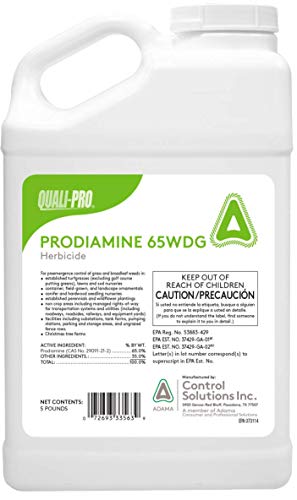
The highest concentration of prodiamine on this list (65% wettable dispersible granule) makes this the most cost-efficient option when treating large acreage. A single 5-pound bag mixes into dozens of spray applications, covering thousands of square feet at the labeled sandbur rate. Users report applying this early March or late fall with a spray dye indicator for overlap prevention, then watering in within 24 hours for immediate soil bonding.
Bermudagrass and St. Augustine lawns show zero discoloration at label rates, and the residual barrier holds for roughly 8 to 12 weeks — long enough to cover the primary sandbur germination window with two split applications. The dry granule formulation stores indefinitely as long as it stays dry, which matters if you buy in bulk for multi-season use.
Owner reports consistently mention that rotating this with a mesotrione product every other year prevents resistance buildup. The flexible mixing rate (0.185 to 0.55 ounces per gallon per 1,000 square feet) means you can dial in light maintenance or heavy infestation levels.
What works
- Highest active concentration available for maximum coverage per dollar
- Turf-safe on bermudagrass, zoysia, and St. Augustine when applied at label rates
- Dry granule stores well across multiple seasons
What doesn’t
- Must be mixed and sprayed — not a simple walk-behind spreader product
- Heavy rain immediately after application can wash the barrier below the seed zone
2. The Andersons Barricade Pre-Emergent 50 lb
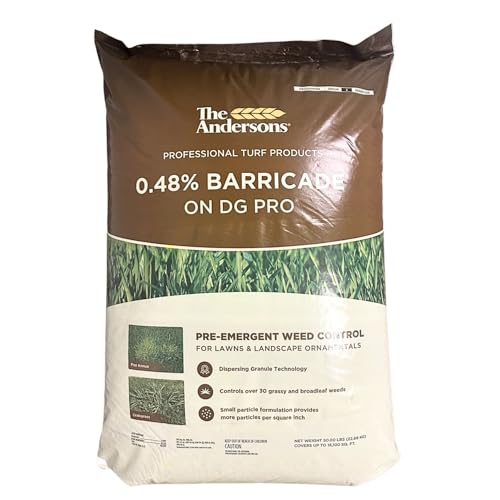
The Andersons DG Pro formulation releases tiny, fast-dissolving granules that break down within minutes of watering, pushing prodiamine into the top half-inch of soil where sandbur seeds wait to germinate. A 50-pound bag covers 14,200 square feet at the standard rate, making this the most straightforward spreader option for large southern lawns with aggressive field sandbur pressure.
Because it contains no fertilizer, you can apply this in early spring and again in late fall without over-feeding the turf. Users in zoysia and bermudagrass lawns report nearly complete sandbur suppression after two consecutive seasons of split application — spring when soil reaches 55°F and fall after the first hard freeze.
The DG Pro technology means fewer white granules visible on the lawn after application and faster soil integration compared to traditional clay-based carriers. Multiple reviews note that this product outlasts cheaper granular competitors by a full 4 to 6 weeks of residual activity.
What works
- DG Pro granules dissolve rapidly for immediate soil barrier formation
- Large coverage area per bag reduces number of applications
- No fertilizer means flexible timing without overfeeding turf
What doesn’t
- Requires 0.5 inches of water within 24 hours for activation
- Clover suppression is weaker than with mesotrione-based products
3. The Andersons 18-0-4 Barricade Fertilizer 40 lb
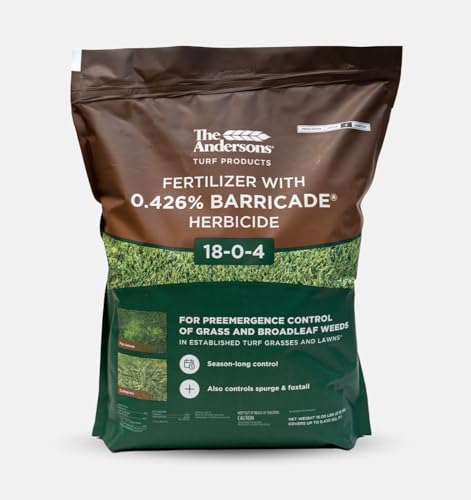
This combination product saves a trip across the lawn by delivering a spring nitrogen boost (18-0-4) alongside a full pre-emergent dose. The 0.426% prodiamine concentration is tuned for 10,000 square feet, and the patented DG Technology — identical to the stand-alone Barricade — ensures the granules dissolve and migrate into the soil profile quickly so the barrier forms before sandbur germination begins.
Zoysia and St. Augustine lawns respond well to the balanced 18-0-4 fertilizer without excessive top growth, and the pre-emergent stops sandburs, crabgrass, goosegrass, and henbit simultaneously. Early spring is the ideal window: apply when nighttime lows hit 50°F consistently, water in within 48 hours, and the barrier holds for roughly 8 weeks.
Owner reviews highlight that this product simplifies the spring lawn program into a single spreader pass. The slow-release nitrogen feeds the turf gradually, avoiding the rapid flush that can encourage early-season fungal issues.
What works
- Single-application combines pre-emergent with balanced spring nitrogen
- DG Technology creates fast soil-level barrier for emerging sandburs
- Large 40-pound bag provides full-season coverage for average lawns
What doesn’t
- Cannot be used in late fall since the fertilizer component stimulates unnecessary growth
- Prodiamine concentration is lower than the stand-alone 50 lb Barricade bag
4. Liquid Harvest Mesotrione 32oz

This 32-ounce bottle provides enough mesotrione concentrate for multiple seasons of spot and blanket applications. Mesotrione works uniquely compared to prodiamine: it inhibits the HPPD enzyme in susceptible plants, causing them to bleach white and die over 2 to 3 weeks. It stops sandbur seeds from germinating while also killing very young sandbur seedlings that slipped past a first application.
The flexibility is critical for sandbur control because the germination window can stretch over 6 to 8 weeks in cool spring soils. If your spring application timing was slightly early, this product catches the stragglers without requiring a second pre-emergent dose. It is labeled for centipede, tall fescue, and St. Augustine sod, but avoid use on bentgrass or actively growing bermudagrass.
Owner reports confirm that mesotrione is seed-safe — you can overseed immediately after application — but the bleaching effect on turf is temporary and reverses with the next fertilizer cycle. Using a battery-powered 2-gallon sprayer with a dye indicator prevents costly overlap.
What works
- Dual pre-emergent and early post-emergent action catches late-germinating sandburs
- Seed-safe — overseed immediately without waiting for a window
- Bleaches and kills early sandbur seedlings before they form stickers
What doesn’t
- Causes temporary white bleaching on turf that can alarm new users
- Not safe for bermudagrass, zoysia, or bentgrass outside labeled conditions
5. Syngenta Barricade 4FL Herbicide
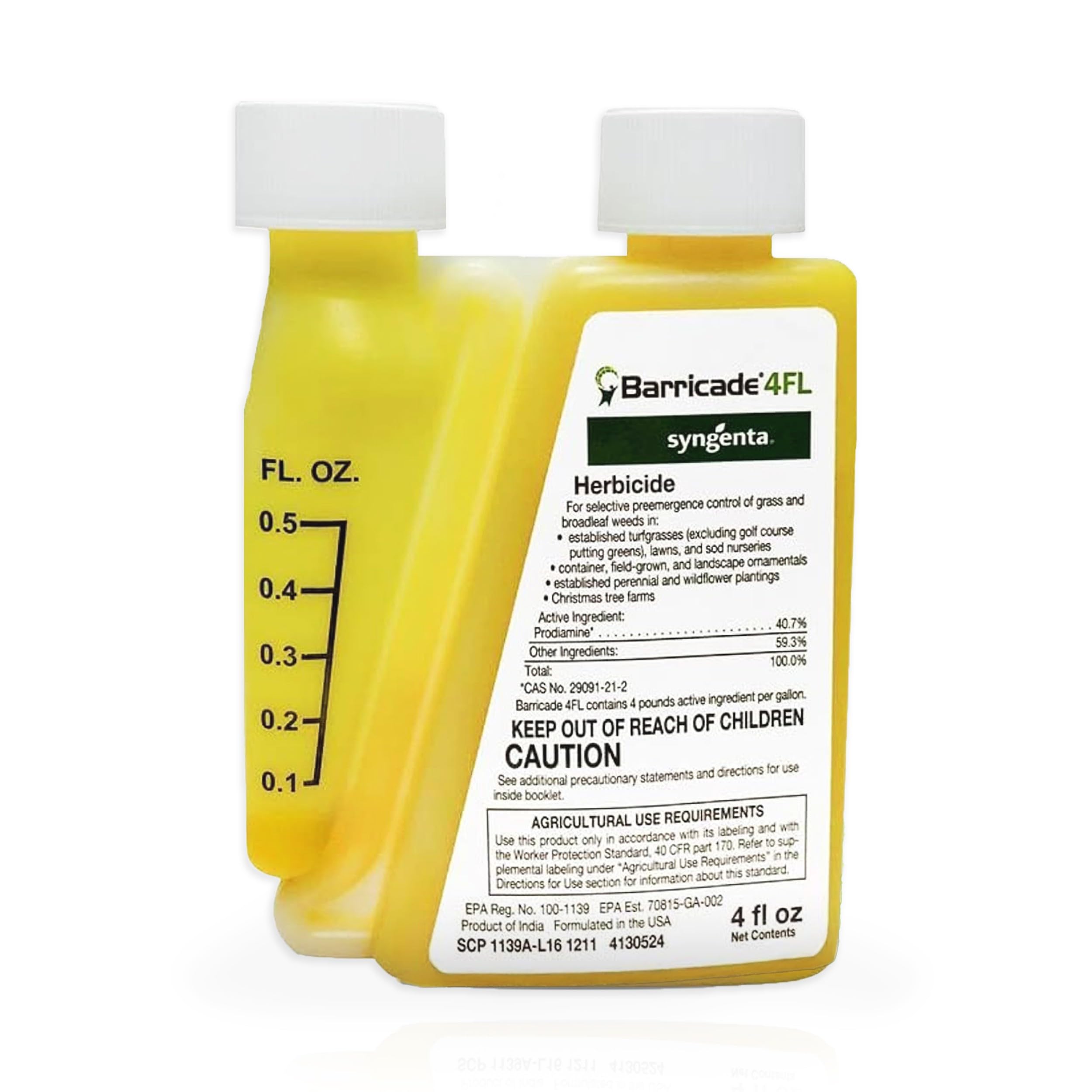
Syngenta’s Barricade 4FL is a concentrated liquid prodiamine formulation that gives you exact control over your application rate per square foot. At the labeled sandbur suppression rate, one 4-ounce bottle mixes into enough spray solution to cover an average suburban lawn. The liquid format is especially useful for targeting sandbur-prone edges, driveways, and thin turf zones where granular spreaders cannot apply evenly.
Prodiamine from Syngenta is the same active ingredient used in many professional lawn care programs, and the 4FL formulation stays suspended in water for even tank-mixing with surfactant or spray dye. It suppresses over 30 grass and broadleaf weed species, including sandburs, and provides 8 to 12 weeks of residual control per application.
Owners who apply this product in February or early March (depending on zone) and again in early fall report that sandbur density decreases significantly by the second year. The bottle stores well if resealed tightly, making it a good option for smaller lawns that would waste a 5-pound granular bag.
What works
- Liquid concentrate allows precise spot treatment of sandbur hot zones
- Season-long residual with a single well-timed application
- Excellent tank-mix compatibility with spray dye for even coverage
What doesn’t
- Small bottle size means higher per-ounce cost than dry prodiamine
- No post-emergent activity — must be applied before sandbur germination
6. Liquid Harvest Mesotrione 8oz

The 8-ounce bottle is the same mesotrione chemistry as the larger 32-ounce option above but sized for small yards or spot treatment of sandbur patches. At the recommended mixing rate of 1 teaspoon per 2 gallons of water, the bottle supports multiple spray sessions across a season. The active ingredient absorbs immediately upon application and requires water activation within 10 days if no rainfall occurs.
Mesotrione’s bleaching mechanism is particularly visible on sandbur seedlings — you will see the young plants turn white and stop growing within 7 to 10 days. This gives you visual confirmation that the product is working, unlike shorter residual pre-emergents that provide no such feedback. Users report that repeated applications over 2 springs virtually eliminate sandbur populations from centipede and tall fescue lawns.
Avoid hose-end sprayers with this concentrate; the dilution ratio is specific, and uneven distribution can cause turf damage on St. Augustine. A 2-gallon backpack sprayer with a fan tip offers the best control.
What works
- Low entry cost for testing mesotrione before buying bulk
- Visual bleaching confirms the product is actively killing sandbur seedlings
- Seed-safe — overseed immediately without residual interference
What doesn’t
- Requires careful sprayer mixing — not compatible with hose-end applicators
- Small bottle may not cover a full acre at labeled rates
7. Hi-Yield Turf & Ornamental Weed & Grass Stopper

Hi-Yield uses the active ingredient dithiopyr (Dimension), which offers a key advantage for sandbur control: it can be applied up to 4 weeks later than standard prodiamine products and still prevent germination. If you miss the early spring window because of weather or scheduling, this product gives you a second chance at establishing a barrier before the primary sandbur emergence. The 12-pound bag covers 5,000 square feet at standard rates.
Dithiopyr also provides early post-emergent activity on very young sandbur seedlings, which means it can kill small sandburs that have already sprouted if applied within about 2 weeks of their emergence. This dual window — late pre-emergent plus early post-emergent — makes it a reliable backup option for homeowners dealing with erratic spring temperatures.
Owner reports confirm that the granules apply smoothly through a standard broadcast spreader and activate with normal rainfall. The downside is that the residual duration is shorter than prodiamine, typically 6 to 8 weeks, which may require a third application if your growing season stretches into October.
What works
- Can be applied 4 weeks later than most pre-emergents — second-chance window
- Early post-emergent activity kills young sandbur seedlings
- Easy granular application with any broadcast spreader
What doesn’t
- Shorter residual duration requires careful reapplication timing
- Granules may bridge on uneven spreader settings
Pre-Emergent Chemistry Guide
Prodiamine: The Gold Standard
Prodiamine (the active ingredient in Barricade and Quali-Pro products) inhibits cell division in germinating sandbur seeds, preventing root development before the shoot emerges. At label rates for warm-season turf, it provides 8 to 12 weeks of residual activity. It is safe on bermudagrass, zoysia, centipede, and St. Augustine and is the most cost-effective choice for large lawns. The one limitation: it has zero post-emergent activity, so 100% of its value depends on early and accurate application timing.
Mesotrione: The Dual-Action Option
Mesotrione (the active ingredient in Liquid Harvest products and Tenacity) works by inhibiting the HPPD enzyme, which bleaches susceptible plants white and stops both germination and early seedling growth. It is seed-safe — you can overseed rye or fescue immediately — and its post-emergent component can rescue a season if spring rains delayed your first application. The downside is turf sensitivity: it can temporarily bleach or stunt cool-season grasses and is not safe on all warm-season species. Always check the label for your specific grass type.
FAQ
What is the best active ingredient for stopping sandburs?
When should I apply pre-emergent for sandburs in my lawn?
Can I kill sandburs after they have already grown stickers?
Final Thoughts: The Verdict
For most gardeners, the pre emergent for sandburs winner is the Quali-Pro Prodiamine 65 WDG because the 65% prodiamine concentration delivers the longest residual barrier per dollar, and the dry granule stores indefinitely without degradation. If you want a dual pre- and post-emergent safety net, grab the Liquid Harvest Mesotrione 32oz. And for a simple spring fertilizer-plus-barrier in a single lawn pass, nothing beats the The Andersons 18-0-4 Barricade Fertilizer.