
The difference between a lilac bush that struggles to set a dozen blooms and one that absolutely smothers itself in fragrant panicles often comes down to a single granular choice made in early spring. An unbalanced fertilizer pushes leggy green growth at the expense of flowers, while the wrong slow-release rate starves the buds when they need phosphorus most. A precisely balanced 10-10-10 mix delivers exactly the even NPK ratio that lilacs require to build strong root structure, thicken wood for next year’s flower nodes, and still produce those iconic purple clusters in the current season.
I’m Rikta — the co-founder and writer behind Lawn Gear Lab. I’ve spent hundreds of hours cross-referencing horticultural trial data, breaking down ingredient purity reports, and comparing how each granular formula interacts with neutral to slightly alkaline soil pH that lilacs prefer, so you skip the guesswork and buy the right bag the first time.
Whether you are feeding a single mature shrub or a hedge of new transplants, finding the right 10-10-10 fertilizer for lilacs means matching the release rate and secondary micronutrients to your soil’s real condition and your shrub’s specific growth stage.
How To Choose The Best 10-10-10 Fertilizer For Lilacs
Lilacs are moderate feeders that respond best to a balanced diet. Picking the wrong bag can delay blooming for a full season. Here is what to evaluate before you pour.
Release Rate: Slow vs. Fast Granular vs. Liquid
Lilac roots are shallow and fibrous. A slow-release granular formula that meters nitrogen over 6–8 weeks prevents a sudden leafy flush that crowds out flower buds. Fast-release granules work for a quick spring green-up but require careful watering to avoid root burn. Liquid 10-10-10 penetrates faster for immediate correction of deficiency symptoms but demands more frequent reapplication.
Secondary Micronutrients: Iron and Calcium
Lilacs thrive in neutral to slightly alkaline soil, which can lock up iron availability. A 10-10-10 blend that includes chelated iron helps prevent interveinal chlorosis on new foliage. Calcium supports cell wall strength in developing flower panicles. If your fertilizer omits these, consider a separate micronutrient supplement.
Bag Size and Coverage for Mature Shrubs
A single mature lilac (6–8 feet tall) needs roughly ½ to 1 cup of 10-10-10 per application. For a hedge of 3–5 shrubs, a 4-pound bag covers about two feedings per season. A 5-pound or larger bag is more economical for multiple shrubs or if you also feed trees and vegetable beds.
Quick Comparison
On smaller screens, swipe sideways to see the full table.
| Model | Category | Best For | Key Spec | Amazon |
|---|---|---|---|---|
| Espoma Garden Food 10-10-10 | Premium Granules | Established lilac hedges & heavy bloomers | 2 x 6.75-lb bags, 13.5 lb total | Amazon |
| Southern Ag All Purpose 10-10-10 | Mid-Range Granules | Single large shrubs & fruit trees | 5 lb bag, homogenous granules | Amazon |
| Lilly Miller 10-10-10 All Purpose | Mid-Range Granules | Steady growth for potted lilacs | 4 lb bag, slow-release formula | Amazon |
| Gardenera 10-10-10 Plant Fertilizer | Entry-Level Granules | Small gardens & containers | 64 oz (2 qt), fast-release | Amazon |
| Cz Garden Supply 10-10-10 | Value Granules | Budget-friendly for multiple plantings | 4 lb resealable pouch, +2% iron | Amazon |
| Bigmeta 10-10-10 Slow-Release | Budget Granules | Delicate seedlings & new shrub starts | 32 oz resealable container | Amazon |
| TPS Nutrients Liquid 10-10-10 | Liquid Formula | Quick correction for nutrient deficiency | 32 oz liquid, covers 160-320 sq ft | Amazon |
In‑Depth Reviews
1. Espoma Garden Food 10-10-10
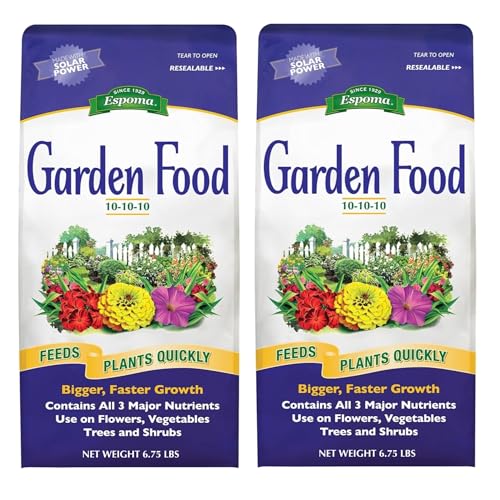
The Espoma 10-10-10 Garden Food arrives as a two-pack of 6.75-pound bags, giving you 13.5 pounds of uniformly blended agricultural-grade granules. That volume is ideal for feeding a row of mature lilac shrubs across two spring applications without needing to reorder mid-season. The 1:1:1 ratio delivers nitrogen for early green growth, phosphorus for the thick flower clusters lilacs are known for, and potassium for winter hardiness.
Real growers report that this formulation revived a lightning-damaged magnolia and produced an astonishing fruit set on a fig tree, which speaks to the potency of the base ingredients. For lilac care, the granular form requires no mixing — just apply around the drip line and water in. The release rate is fast enough to show results within weeks but not so aggressive that it burns shallow lilac roots in neutral soil.
One user in Washington state specifically noted that this brand meets strict state certification standards, making it a reliable choice when local regulations limit fertilizer choices. The only trade-off is the lack of added micronutrients like iron, so if your lilac leaves show chlorosis, you may need a separate iron supplement.
What works
- Generous 13.5-pound total for large hedges
- Fast-acting agricultural-grade granules
- Trusted brand that meets strict state certifications
What doesn’t
- No chelated iron for alkaline soil chlorosis
- Single-bag packaging can be bulky to store
2. Southern Ag All Purpose Granular 10-10-10

The Southern Ag 10-10-10 comes in a straightforward 5-pound bag of homogenous granules that include 10% nitrogen, 10% phosphorus, and 10% potassium plus a small dose of minor elements. The application guidelines are refreshingly specific for lilac owners: for large shrubs, you broadcast 2 to 2.5 cups per 4 feet of height — exactly the clarity you need when feeding an overgrown lilac thicket.
Customer feedback highlights that this fertilizer gave a noticeable boost to lawns and gardens within two weeks, and dogwood owners specifically praise it for promoting healthy growth. For lilacs, the homogenous blend ensures every handful contains the same NPK ratio — no settling or separation in the bag. The granules are uniform in size, which makes even broadcasting by hand or with a spreader simple.
The main drawback is the non-resealable bag. Once opened, the 5 pounds of granules need to be stored in a separate airtight container to keep moisture out. The lack of a resealable zipper means you will want a dedicated bucket or clip for long-term storage between spring and fall feedings.
What works
- Homogenous granule blend for consistent feeding
- Clear dosing for shrubs up to 4 feet tall
- Noticeable results within two weeks
What doesn’t
- Bag lacks a resealable closure
- Absent slow-release coating — can leach faster in sandy soil
3. Lilly Miller All Purpose 10-10-10
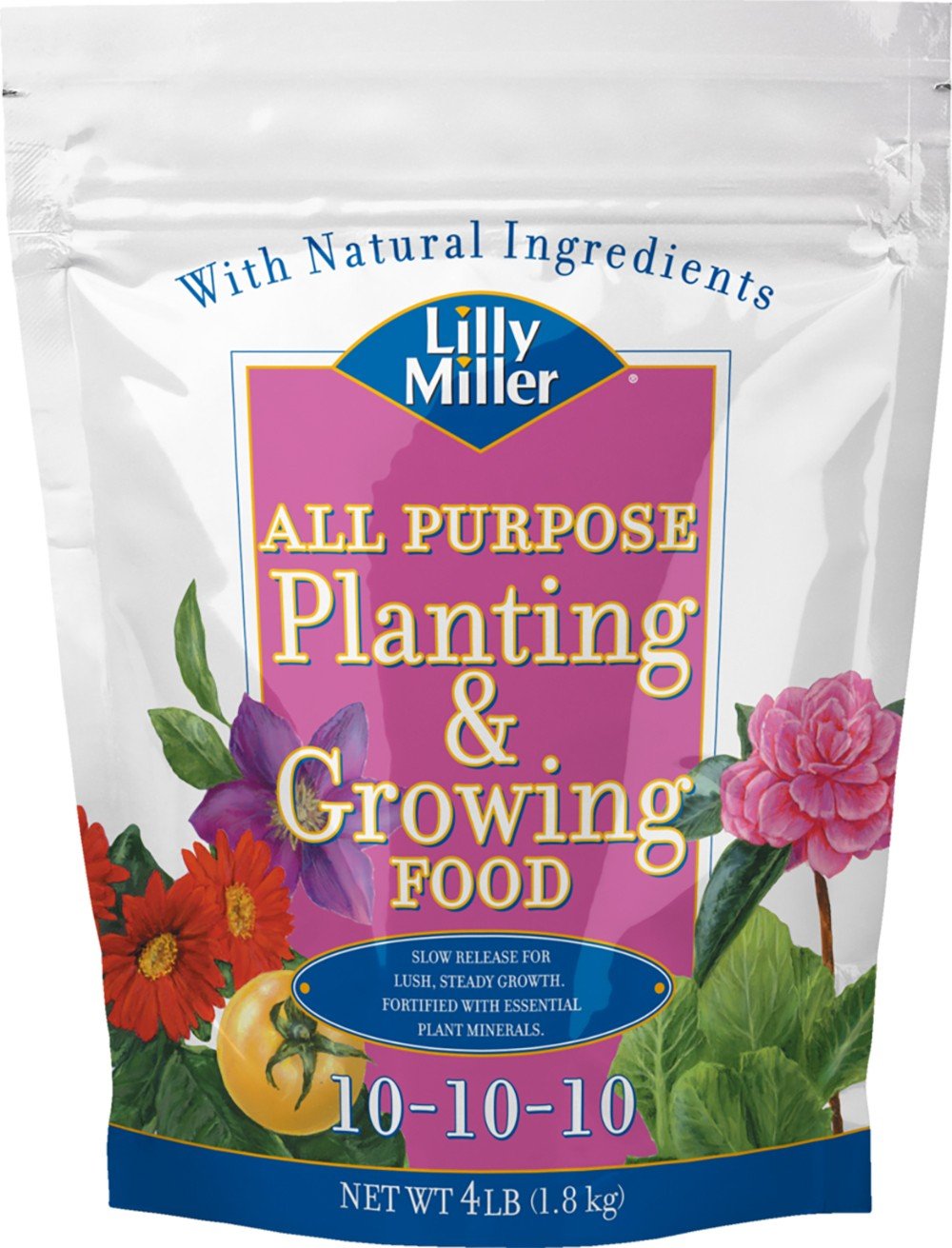
Lilly Miller positions its 10-10-10 as a concentrated, fast-acting formula with a slow-release mechanism for lush, steady growth — precisely the dual behavior lilacs appreciate. The nitrogen is released gradually enough to avoid a weak, floppy branch structure while the phosphorus is immediately available to support bud differentiation in early spring. Experienced users note that one bag kept indoor basil and tomato plants going for years, suggesting the granular breakdown is exceptionally efficient.
For outdoor lilacs, the recommended application is simple: sprinkle a handful per square yard and water in. Users report that their flower bushes grew substantially and produced vibrant colors within a season. The 4-pound bag is compact enough to store easily on a shelf in a garage or shed, making it practical for the home gardener with three to five shrubs.
The only consistent complaint is a mild odor from the dry fertilizer and the need to wear a dust mask during application, which is standard for any granular fertilizer. The bag is not resealable, so transferring the remaining product to a sealed container is advised for maintaining potency.
What works
- Slow-release nitrogen for steady lilac growth
- Compact 4-pound size for small storage spaces
- Proven results on both indoor and outdoor plants
What doesn’t
- Dusty application requires a mask and gloves
- Bag is not resealable for long-term storage
4. Gardenera 10-10-10 Plant Fertilizer
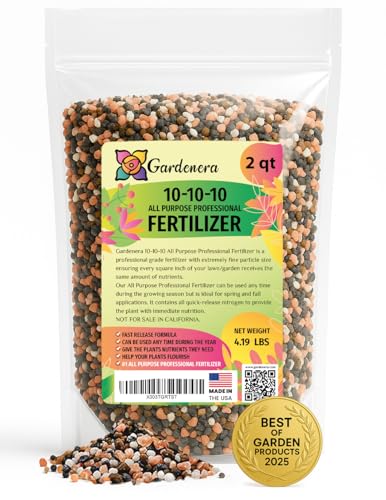
The Gardenera 10-10-10 is a fast-release granular fertilizer sold in a 64-ounce container (2 quarts) that covers approximately 100 square feet. This volume is perfectly sized for a single large lilac or a couple of young transplants, making it an entry-level option for someone who does not want to commit to a 5-pound or larger bag. The 1:1:1 NPK ratio is standard, and the small granule size dissolves quickly in water after watering in.
Users with citrus trees, Swedish ivy, and rubber plants all reported strong results, and one reviewer noted that flowers looked “amazing” with only two applications per season. For lilacs, the fast-release nature means you will need to water thoroughly after application to move the nitrogen into the root zone before it volatilizes. The modest coverage area is fine for a small urban garden with one featured lilac shrub.
The biggest limitation is the package size. Some buyers missed that this is a 64-ounce container, not a multi-pound bag, and found it insufficient for a row of fruit trees. For lilac purposes, if you have more than three mature shrubs, you will need to reorder frequently or step up to a larger format.
What works
- Compact container perfect for one or two shrubs
- Small granules dissolve and absorb quickly
- Two applications per season sufficient for good blooms
What doesn’t
- Coverage is limited for multiple shrubs
- Fast-release requires diligent watering to prevent burn
5. Cz Garden Supply 10-10-10 All Purpose
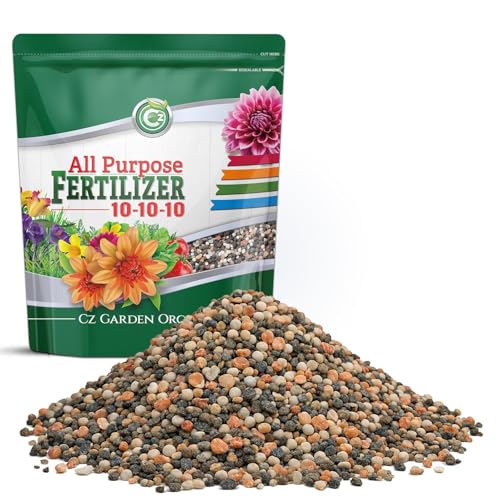
The Cz Garden Supply 10-10-10 stands out from the pack because it includes 2% iron plus a suite of micronutrients — a meaningful advantage for lilacs growing in alkaline soil where iron availability is naturally low. This 4-pound pouch is manufactured in the USA and comes in a heavy-duty resealable pouch, a practical feature that keeps the granules dry between seasonal applications.
Customer reports indicate rapid results: one reviewer described it as “an energy drink for my garden,” while others praised the consistent growth on fruit trees and vegetables. For lilacs, the added iron helps maintain deep green foliage without the yellowing that often appears between leaf veins in late spring. The resealable pouch also means you can open it, use a cup for your lilac, and seal it back up without needing a separate container.
The 4-pound weight is a mid-range option — enough for a small hedge of three to four lilacs across two feedings, but not the bulk you would want for a full landscape project. A few users noted they had to apply more frequently than every three months, suggesting the release rate is moderate rather than extended.
What works
- 2% iron content combats alkaline-soil chlorosis
- Resealable heavy-duty pouch for easy storage
- Made in the USA from quality ingredients
What doesn’t
- Moderate release may require more frequent application
- 4 pounds is not a bulk value for large properties
6. Bigmeta 10-10-10 Slow-Release Premium Fertilizer
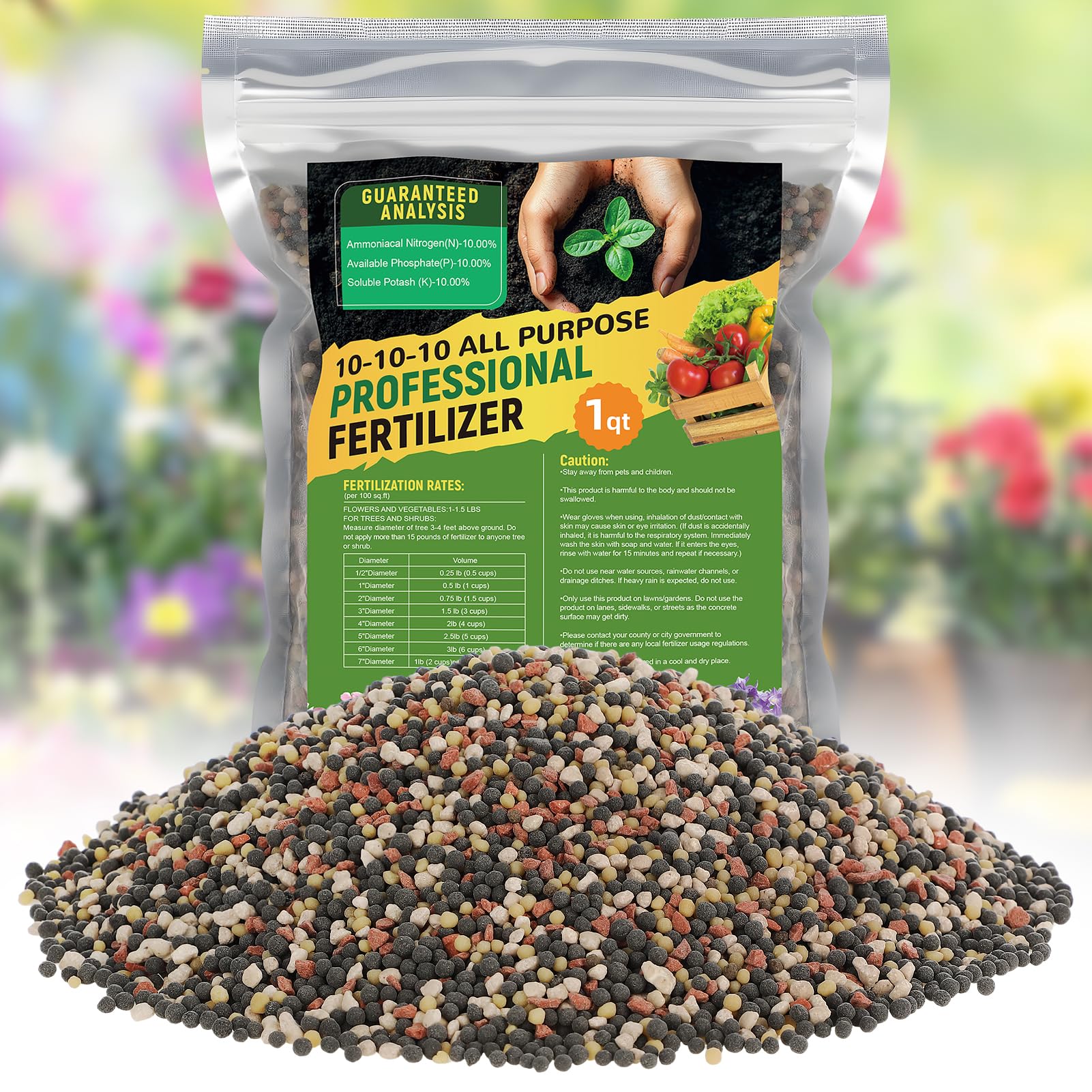
The Bigmeta 10-10-10 is marketed as a slow-release formula that delivers a steady stream of nutrition for up to 8 weeks, which maps well to the early-spring feeding window that sets lilac flower buds. The 32-ounce resealable container is the smallest on this list, but it is also the most accessible for the beginner who has a single lilac bush and wants to avoid committing to a larger bag.
Owners of magnolia trees and small trees on the brink of death reported that this fertilizer turned things around, and one reviewer specifically noted wearing a mask and gloves as instructed. The slow-release technology is designed to prevent the “nutrient spike” that causes root burn, making this a safe choice for young lilac transplants or when you are uncertain about your soil’s existing nutrient levels.
The trade-off for that safety margin is the small volume. Experienced users noted the package was “smaller than anticipated.” For a single mature lilac measuring 6 feet tall, the 32-ounce container provides roughly two full applications — enough to evaluate whether your shrub responds before buying a larger size for the rest of your landscape.
What works
- Slow-release coating protects against root burn
- Resealable container keeps granules dry
- Safe for delicate and newly planted shrubs
What doesn’t
- 32 ounces is a small volume for multiple shrubs
- Release duration may not cover late-summer needs
7. TPS Nutrients Liquid 10-10-10 Fertilizer

The TPS Nutrients Liquid 10-10-10 breaks from the granular format with a 32-ounce liquid concentrate that you mix at 1–2 ounces per gallon of water. This liquid form is the fastest way to correct a nutrient deficiency in lilacs — if your shrub is showing pale leaves or weak growth in midsummer, a liquid drench reaches the root zone within days rather than weeks. The formula also includes iron and micros, addressing the chlorosis problem common in alkaline soils.
Specific feedback from oak tree owners noted a marked increase in growth after years of stagnation, and oleander plants greened up quickly after application. For lilacs, the liquid form allows precise dosing around the drip line without the uneven distribution that sometimes happens with hand-broadcasted granules. The 32-ounce bottle covers 160–320 square feet, which is enough for several mature shrubs per season.
The downside is the labor — you need a watering can or hose-end sprayer and must repeat applications every few weeks during the growing season. One reviewer reported no visible results yet after a single application, highlighting that liquid feeding demands consistency. It is best used as a supplement to a granular base feeding rather than a standalone regime for lilacs.
What works
- Fast-acting liquid reaches roots in days
- Includes iron for alkaline-soil chlorosis
- Covers a wide area per bottle
What doesn’t
- Requires repeated applications for sustained feeding
- Needs mixing and a watering can or sprayer
Hardware & Specs Guide
NPK Ratio Precision
The 10-10-10 designation means exactly 10% nitrogen, 10% available phosphate (P2O5), and 10% soluble potash (K2O) by weight. Lilacs respond best to this equal balance because nitrogen drives foliage, phosphorus stimulates flower bud development, and potassium strengthens wood for winter survival. Avoid blends with a higher first number (e.g., 30-10-10) as they push leafy growth at the expense of blooms.
Granule Size and Uniformity
Homogenous granules ensure every scoop contains the same NPK ratio. Blended fertilizers where nutrients are mixed separately can separate during shipping, causing the first handful to be nitrogen-heavy and the last phosphorus-heavy. Products like Southern Ag and Espoma use a homogenous process, giving your lilac consistent nutrition from the first cup to the last.
FAQ
How much 10-10-10 do I apply to a single lilac bush?
Can I use a 10-10-10 fertilizer on lilacs that are not blooming?
Should I choose slow-release or fast-release 10-10-10 for lilacs?
Is liquid 10-10-10 better than granular for lilacs in alkaline soil?
Final Thoughts: The Verdict
For most gardeners, the 10-10-10 fertilizer for lilacs winner is the Espoma Garden Food 10-10-10 because the 13.5-pound total volume covers an entire hedge for two full seasons, and the agricultural-grade granules produce reliable bloom density. If you want added iron to combat alkaline-soil chlorosis, grab the Cz Garden Supply 10-10-10. And for a quick corrective feed in midsummer, nothing beats the TPS Nutrients Liquid 10-10-10.