
Raised bed growing solves drainage, compaction, and soil quality issues — but only if you start with the right mix. A generic potting blend often compacts too fast, while heavy topsoil drowns delicate root systems. You need a formulation that stays loose, drains readily, and delivers steady nutrition across an entire season of vegetables and flowers.
I’m Rikta — the co-founder and writer behind Lawn Gear Lab. I spend my days comparing soil formulations, studying pH buffers, analyzing NPK ratios, and cross-referencing thousands of owner reviews to isolate the mixes that actually perform in real beds.
Whether you are filling a new cedar frame or refreshing a tired bed, choosing the right potting soil for raised beds directly determines how strong your roots grow and how many baskets you harvest by mid-summer.
How To Choose The Best Potting Soil For Raised Beds
Raised beds create a unique growing environment: elevated temperature swings, faster drainage, and concentrated root zones. A mix that works in ground or in a standard planter often fails here within weeks. You need a formulation built for the physics of a contained, elevated bed.
Texture & Aeration: The Non-Negotiable Base
Compaction is the number one killer in raised beds. Look for a blend that includes coarse aged bark, coconut coir, perlite, or pumice. These particles create air pockets that allow oxygen to reach root hairs and let excess water escape. A mix that holds together in a tight ball when squeezed is too dense for long-term raised bed success.
Organic Matter & Nutrient Longevity
Your plants will pull heavily from a confined soil volume for three to six months. The best raised bed mixes include slow-release nitrogen sources like feather meal, alfalfa meal, kelp meal, or earthworm castings. Avoid blends that rely solely on fast-release synthetic fertilizers — they peak early and leave your midsummer tomatoes starving.
pH & Mycorrhizae: The Hidden Helpers
Most vegetable crops prefer a soil pH between 6.0 and 7.0. Many quality mixes include dolomitic lime to buffer acidity from peat moss. Mycorrhizal fungi — especially a blend of endo and ecto species — form symbiotic relationships with roots, improving phosphorus uptake and drought tolerance. If your chosen mix lacks mycorrhizae, consider adding a separate inoculant at planting time.
Quick Comparison
On smaller screens, swipe sideways to see the full table.
| Model | Category | Best For | Key Spec | Amazon |
|---|---|---|---|---|
| Wiggle Worm Raised Bed Mix | Premium | Worm-powered soil building | 120 lbs total (3×40 lb bags) | Amazon |
| Coast of Maine Castine Blend | Premium | Lobster compost boost | 4×1 cu ft bags (4 cu ft total) | Amazon |
| FoxFarm Raised Bed Planting Mix | Premium | Balanced all-purpose blend | 1.5 cu ft, oyster shell & castings | Amazon |
| Espoma Organic Raised Bed Mix | Mid-Range | Ready-to-use formulated mix | 1.5 cu ft, Myco-Tone included | Amazon |
| Espoma Veg & Flower Garden Soil | Mid-Range | Mixing with native garden soil | 1 cu ft, earthworm castings | Amazon |
| Verdana Coco Coir Brick | Value | DIY custom blends on a budget | Expands to 18 gal, low EC/ salt | Amazon |
| Michigan Peat Garden Magic | Value | Budget topsoil amendment | 40 lb bag, reed sedge peat | Amazon |
In‑Depth Reviews
1. Wiggle Worm Raised Bed Mix
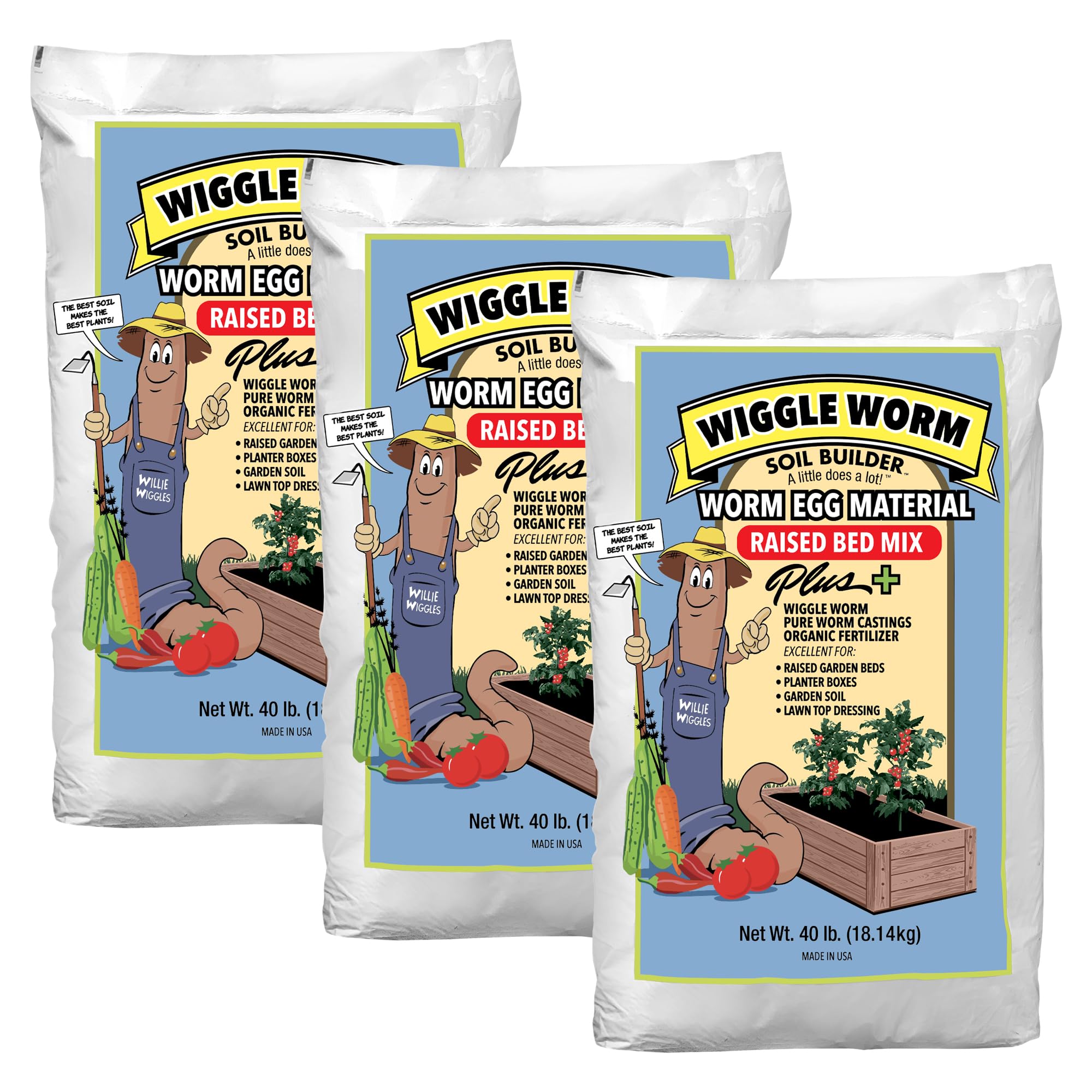
The Wiggle Worm Raised Bed Mix delivers 120 pounds of material spread across three 40-pound bags, making it one of the highest-volume premium options for serious bed fillers. This is not a light, fluffy peat-based mix — it is a dense compost-worm casting blend that weighs noticeably more per scoop than standard potting soils. The texture feels rich and heavy, and multiple reviewers note that plants take off aggressively after transplanting into this medium.
A defining feature here is the inclusion of worm egg material alongside the castings. As the eggs hatch, live worms begin tunneling through the bed, creating natural aeration channels and breaking down organic matter into plant-available nutrients. Seasoned gardeners who reapply this mix annually report visibly higher worm populations in their beds by the second season. The 4.1-star aggregate across over 300 reviews reflects consistent results, though a small minority flagged occasional rocks and twigs that required sifting.
For growers who want a soil-building ecosystem rather than a static growing medium, this mix offers long-term fertility that few bagged blends can match. The upfront volume and weight make it most practical for owners of multiple beds or larger 4-by-8-foot frames. Solo gardeners with a single 4-by-4 bed may find the three-bag minimum more than they need in one season.
What works
- Live worm eggs create ongoing aeration and nutrient cycling
- High compost density holds moisture better than peat blends
- Enough volume to fill multiple beds in one order
What doesn’t
- Some bags contain rocks and woody debris requiring sifting
- Heavy wet weight makes handling difficult for some gardeners
- Three-bag minimum may be excessive for small single beds
2. Coast of Maine Castine Blend Raised Bed Mix
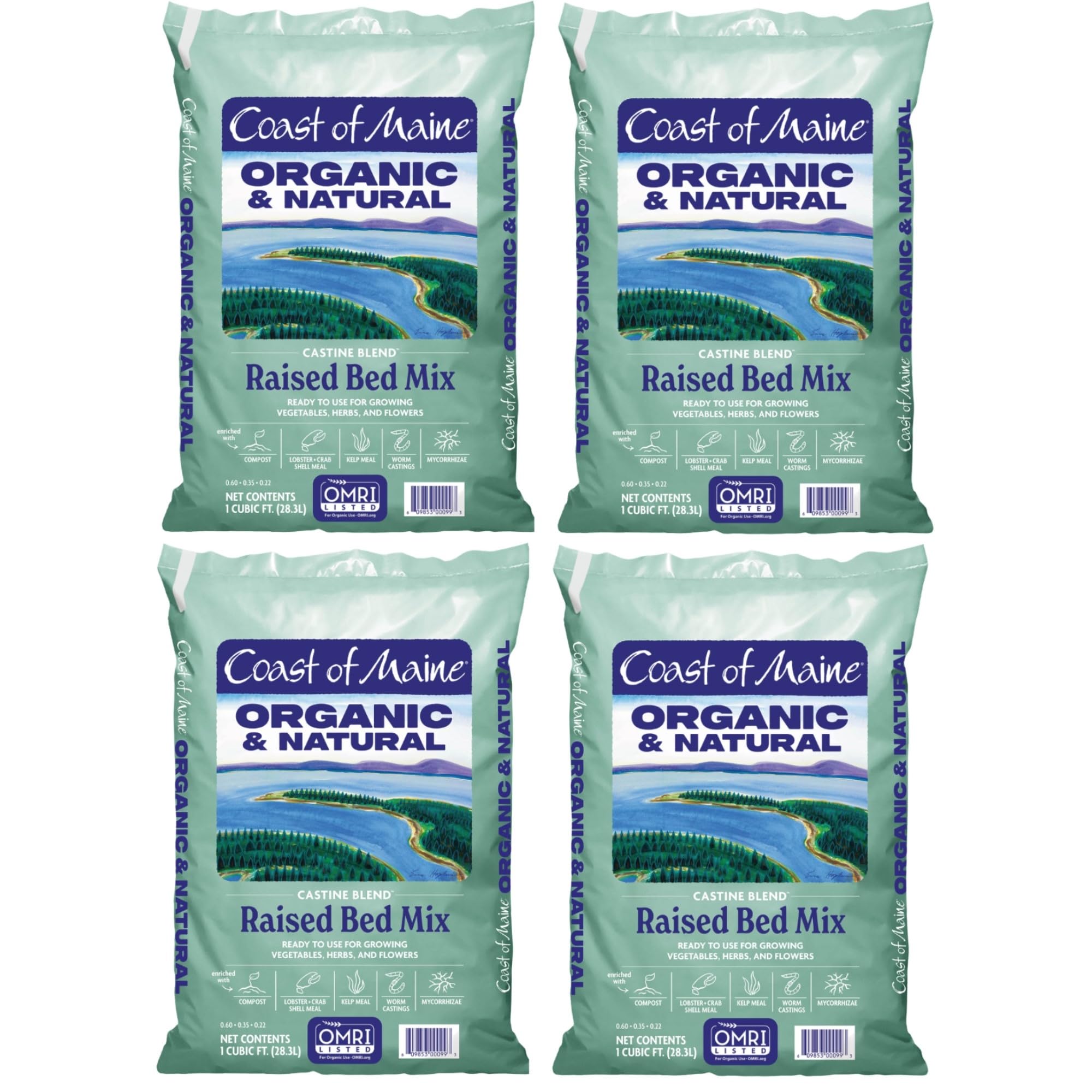
The Coast of Maine Castine Blend arrives as a four-pack of one-cubic-foot bags, giving you four total cubic feet of ready-to-use raised bed mix right out of the box. The formula is built around lobster and crab shell compost, which provides 0.6 percent slowly available nitrogen — a rate low enough to avoid burning seedlings but steady enough to carry leafy greens and brassicas through a full growing cycle without supplemental feeding.
Wood biochar runs through the blend as a structural backbone, improving cation exchange capacity and locking in moisture during dry spells. Aged bark and sphagnum peat moss round out the texture, keeping the mix loose enough for root penetration while preventing the surface from crusting over after rain. Reviewers consistently describe the soil as exceptionally fine and consistent, with no large filler fragments. The 4.5-star rating across a smaller sample of 30 reviews suggests a very high quality-control standard.
If you garden in a region with sandy soil that drains too fast or heavy clay that stays wet too long, this mix acts as a reliable buffer. The marine-sourced compost also introduces trace minerals — calcium, magnesium, and potassium — that are often missing in generic peat blends. For raised bed growers who prefer a precise, predictable medium, this is one of the most thoughtfully constructed options available.
What works
- Lobster shell compost provides slow-release marine minerals
- Wood biochar improves moisture retention and nutrient exchange
- Extremely fine, consistent texture with no filler fragments
What doesn’t
- Higher cost per cubic foot compared to regional bulk options
- Only 30 reviews on Amazon — limited long-term crowd feedback
- Four-bag pack may be more than a small single-bed gardener needs
3. FoxFarm Raised Bed Planting Mix
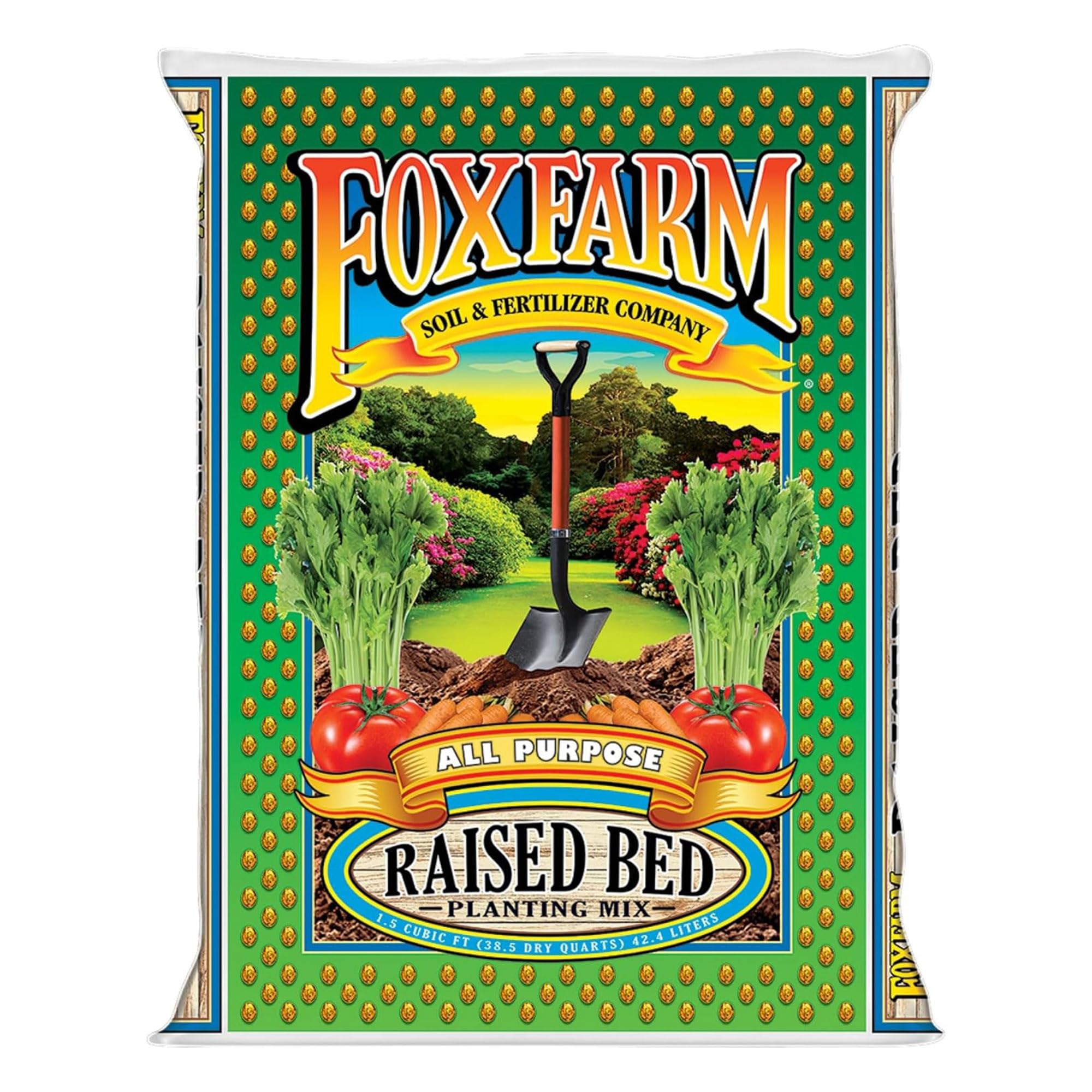
FoxFarm has built a reputation among container and raised bed growers for consistent, biologically active soils, and this Raised Bed Planting Mix continues that legacy. The 1.5-cubic-foot bag contains 50 to 60 percent aged forest products — composted tree bark and woody residues — that create a chunky, porous structure ideal for oxygen exchange at root depth. Sphagnum peat moss buffers the mix against rapid drying, while oyster shell and dolomite lime keep the pH in the 6.3-to-6.8 range where most vegetables thrive.
Earthworm castings provide a gentle, soluble nitrogen source and introduce beneficial microbial life that helps break down organic matter into plant-accessible forms. The ready-to-use formulation requires no additional mixing — you open the bag, pour it into your bed, and plant immediately. Multiple long-term FoxFarm users report that this mix supports strong root systems from transplant through fruiting stages without the mid-season slump common in lower-cost blends.
A practical consideration for savvy shoppers: some local garden centers and independent nurseries carry this product at a lower per-bag price than Amazon, so checking regional availability before ordering in bulk can save a meaningful amount. The 40-pound weight of each bag is manageable for most adults, and the consistent 5-star reviews reflect near-universal satisfaction among buyers who value a fuss-free, reliable medium.
What works
- High aged-forest-product content creates excellent aeration
- Oyster shell and dolomite lime stabilize pH for vegetable growth
- True ready-to-use formula — no mixing, screening, or amendments needed
What doesn’t
- Often cheaper at local garden centers than on Amazon
- Single 1.5 cu ft bag only fills about half a standard 4×4 bed
- No mycorrhizal inoculant added — consider supplementing for heavy feeders
4. Espoma Organic Raised Bed Mix

The Espoma Organic Raised Bed Mix is one of the few products in this category that is specifically formulated for raised beds rather than adapted from a general garden or potting soil formula. The 1.5-cubic-foot bag contains a blend of earthworm castings, alfalfa meal, kelp meal, and feather meal — four slow-release organic nitrogen sources that feed at different rates across the growing season. This staggered nutrient release reduces the risk of early-season leaf burn while maintaining steady growth into late summer.
Espoma includes its proprietary Myco-Tone blend of endo and ecto mycorrhizae, which colonize root systems to improve phosphorus and micronutrient uptake. For gardeners who typically skip adding mycorrhizal inoculants as a separate step, this built-in biological component removes that hassle. Reviewers report successful germination of everything from eggplant and green beans to zinnias and strawberries directly in this mix, with low pest pressure and no manure odors.
A common theme across feedback is that the mix retains moisture well without becoming waterlogged — a crucial balance for raised beds that dry out faster than in-ground plots but can also develop anaerobic pockets if drainage is inadequate. The price per cubic foot lands in the approachable mid-range territory, making this a strong candidate for gardeners who want a formulated, organic, mycorrhizae-enhanced medium without stepping up to the premium tier.
What works
- Four slow-release organic nitrogen sources feed across the season
- Built-in Myco-Tone mycorrhizae save a separate purchase step
- Excellent moisture balance — holds water without sogginess
What doesn’t
- Higher per-cubic-foot cost than mixing individual components yourself
- Single bag barely fills a 4×4 frame to the recommended depth
- Some users note the price climbs quickly when filling multiple beds
5. Espoma Organic Veg & Flower Garden Soil

This Espoma formulation is designed as an in-ground soil amendment rather than a standalone raised bed fill, which changes how you should use it for elevated beds. The 1-cubic-foot bag contains a rich blend of organic ingredients and Myco-Tone mycorrhizae, but the texture is denser and heavier than dedicated raised bed mixes. If you pour this straight into a raised frame without mixing in perlite, coarse sand, or coconut coir, the medium can compact and restrict root development over a full growing season.
Where this product shines is as a 50-50 mix component — blend one bag of this with one bag of aeration material like the Verdana coco coir brick below, and you get a nutrient-dense, well-draining raised bed medium at a lower combined cost than most premium one-bag solutions. Reviewers consistently note that plants grown with this mix outperform those in store-brand organic soils, particularly when the Espoma is used to improve poor native soil. The 16-ounce bag weight listed on the technical specs is almost certainly an error (the actual bag is heavy, typical of a one-cubic-foot volume), so trust the physical product rather than the catalog dimension.
For gardeners who already have a stock of perlite, vermiculite, or coarse sand on hand, this mix offers a way to build a custom raised bed blend without paying for the aeration components that are pre-loaded into more expensive products. It is also a fine choice for top-dressing existing beds mid-season when plants show signs of nutrient exhaustion.
What works
- Myco-Tone mycorrhizae boost phosphorus uptake for flowering crops
- Plant performance reliably outperforms generic store-brand soils
- Ideal as a nutrient-dense base for custom raised bed blends
What doesn’t
- Too dense for standalone raised bed use — requires aeration amendment
- Bag weight listed as 16 ounces is a technical data error
- Small volume (1 cu ft) goes quickly when filling elevated frames
6. Verdana Coco Coir Potting Soil Brick
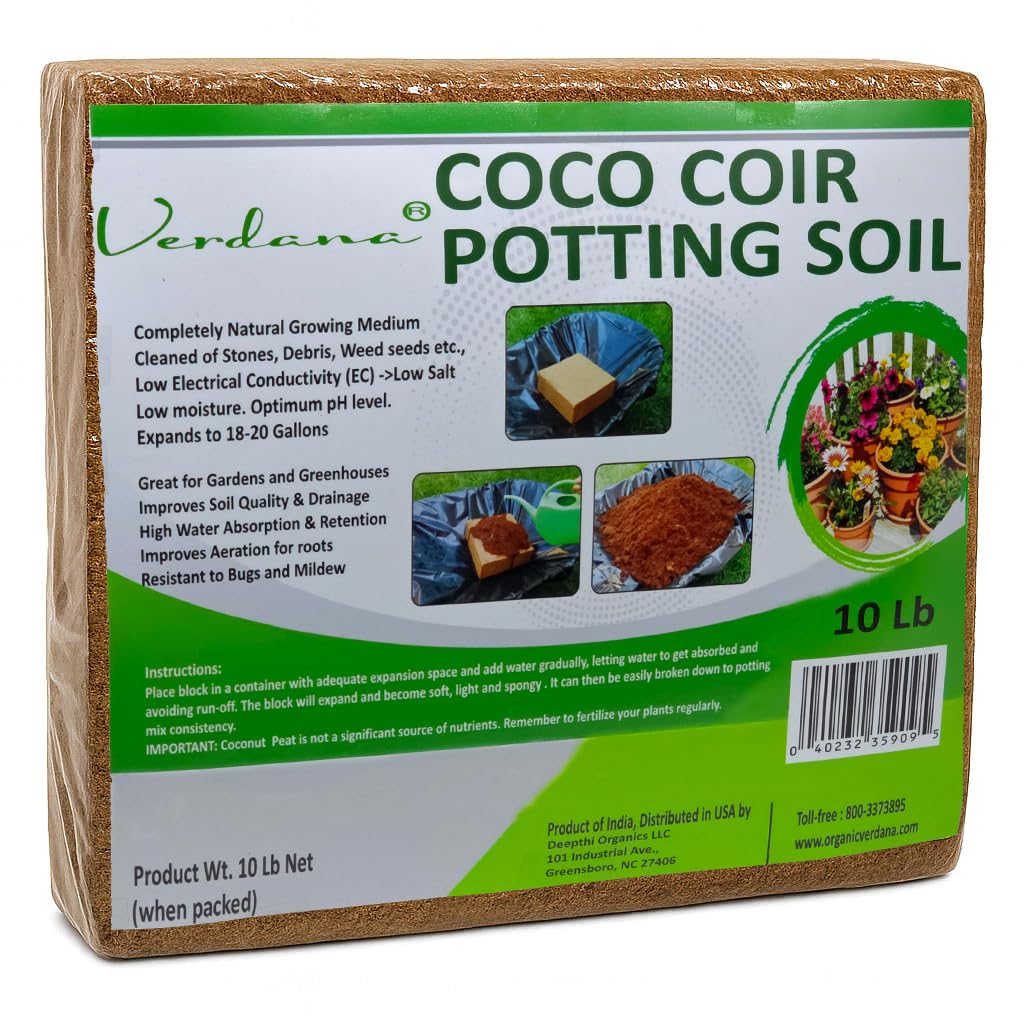
The Verdana Coco Coir Brick is not a complete raised bed soil — it is a concentrated 10-pound block of compressed coconut coir that expands to roughly 18 gallons (72 quarts) when hydrated. What makes this product valuable for the raised bed gardener is its role as a structural backbone in DIY soil blends. Coir provides a sponge-like moisture reservoir while maintaining the loose, fibrous structure that prevents the compaction common in peat-only or straight-compost mixes.
This brick has a low electrical conductivity (EC) and low salt content, which matters because many compressed coir products carry residual marine salts that can burn sensitive seedlings. Verdana pre-buffers the coir to a near-neutral pH, so it blends cleanly with compost, worm castings, and mineral amendments without requiring pH adjustment. Reviewers report that mixing this hydrated coir 50-50 with a rich compost or potting soil noticeably improves drainage and reduces watering frequency compared to using either component alone.
Storage is a major logistical advantage: a single 10-pound brick takes up less shelf space than one 8-quart bag of potting mix, yet it produces the volume of several bags. For gardeners who mix their own raised bed soil in batches, keeping a few coir bricks on hand allows you to adjust texture on demand. Just note that coir contains no nutrients on its own — it must be blended with a fertilized medium or amended with organic fertilizers before planting.
What works
- Low EC and low salt content — safe for seedlings out of the brick
- Compact storage; single brick replaces bulky bags of potting mix
- Neutral pH blends readily with compost, castings, and fertilizers
What doesn’t
- Zero inherent nutrients — must be mixed with fertilized components
- Expansion requires a large container and patience for full hydration
- Fluffy texture alone does not provide enough weight for tall raised beds
7. Michigan Peat Garden Magic Potting Top Soil
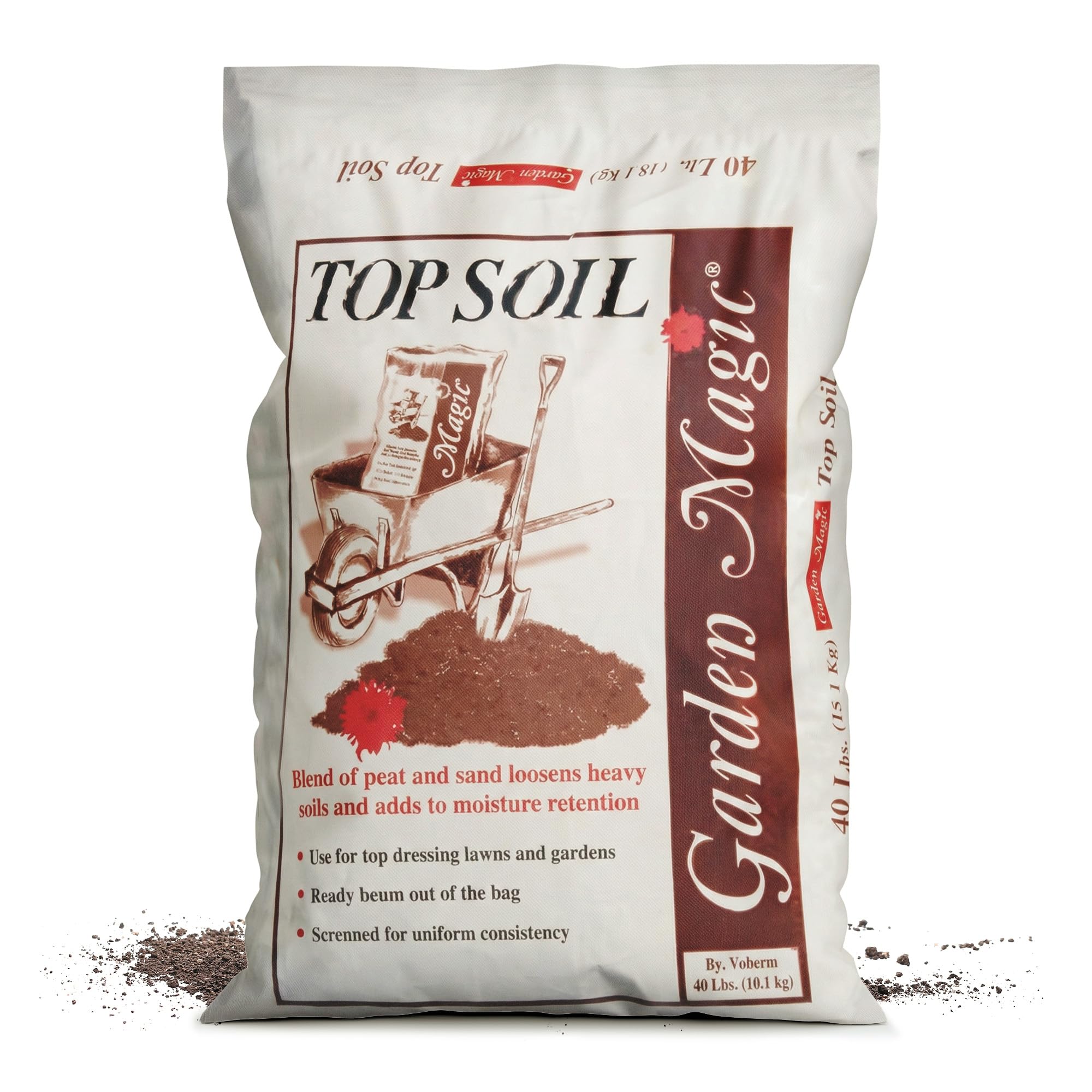
The Michigan Peat Garden Magic is a straightforward, no-frills blend of reed sedge peat and sand that performs adequately as a top-dressing or bulking agent but falls short as a standalone raised bed medium. At 40 pounds per bag, it delivers a lot of weight for the money, but the texture is noticeably stickier and denser than coir- or bark-based blends. Multiple reviewers report finding sticks several inches long in the mix, and one bag filled only two 5-pound grow bags — suggesting the volumetric yield is lower than expected for the bag size.
The primary use case for this product is blending into heavy clay in-ground soils to improve texture and water infiltration, not filling elevated beds. If you do use it in a raised frame, plan on amending it with at least 30 to 50 percent perlite, pumice, or coco coir to achieve adequate drainage. Used straight, the mix can hold too much moisture at the bottom of a deep bed, leading to anaerobic conditions around deeper roots.
For the budget-conscious gardener who already has bulk aeration materials and wants a cheap base to extend them, this bag works. But for anyone expecting a ready-to-use raised bed mix, the amount of self-screening and amendment required will likely offset the initial savings. The 4.5-star average across reviews reflects its effectiveness as a topsoil amendment rather than a precision growing medium.
What works
- Very low cost per pound for a bulk peat-sand blend
- Reed sedge peat improves moisture retention in dry native soil
- Rich black color suggests high organic matter content
What doesn’t
- Contains visible sticks and woody debris — requires sifting
- Too dense for standalone raised bed use without heavy aeration amendment
- Bag volume fills fewer containers than the weight implies
Hardware & Specs Guide
Texture & Particle Size
Raised bed roots need air gaps. Mixes built with aged bark, coarse coir, or pumice create macro-pores that drain excess water and allow oxygen diffusion. Blends dominated by fine peat or sand alone lack this structure and compact under the weight of irrigation and settling. Look for visible particles ranging from 1/8 inch to 1/4 inch in the bag — if the mix feels like dust or clumps into a solid mass when squeezed, it lacks sufficient aeration.
Organic Nitrogen Sources
Fast-release synthetic nitrogen causes a flush of early leafy growth followed by mid-season exhaustion. The most effective raised bed mixes use feather meal, alfalfa meal, kelp meal, and earthworm castings — each with a different mineralization rate. Feather meal releases over 4 to 6 months, while alfalfa meal breaks down faster. This staggered curve keeps nitrogen available through fruit set without requiring frequent liquid feeding.
pH Buffering & Lime Content
Peat-based mixes are naturally acidic (pH 3.5 to 4.5) and require added lime to reach the 6.0 to 7.0 range preferred by most vegetables. Dolomitic lime supplies both calcium and magnesium, preventing blossom end rot in tomatoes and peppers. If the bag does not list pH or lime, test the mix yourself before planting — raising pH after plants are in the ground is difficult and slow.
Mycorrhizal Inoculation
Endomycorrhizae penetrate root cells and are essential for most vegetables, while ectomycorrhizae form sheaths around roots of woody plants. Only a few products — notably the Espoma Raised Bed Mix — include both types. If you purchase a mix without mycorrhizae, you can add granular inoculant at planting time. The fungi form visible white threads in healthy soil and significantly reduce transplant shock in hot weather.
FAQ
Can I use standard potting soil in a raised bed?
How much soil do I need to fill a 4×8 raised bed?
Is coco coir better than peat moss for raised beds?
Should I add fertilizer to my raised bed soil at planting time?
How often should I replace raised bed soil?
Final Thoughts: The Verdict
For most gardeners, the potting soil for raised beds winner is the Wiggle Worm Raised Bed Mix because its live worm egg component creates a self-improving soil ecosystem that gains fertility each season. If you want a precise, tested formula with marine mineral benefits, grab the Coast of Maine Castine Blend. And for the budget-conscious DIY mixer who wants full control over texture and nutrition, nothing beats the Verdana Coco Coir Brick as a base ingredient.