
Overwatering is the number one killer of houseplants, and most generic garden soils trap moisture against delicate roots, turning your favorite pothos or monstera into a sad, yellow mess. The right mix for containers must balance water retention for hydration with fast drainage and aeration, a feat accomplished through precise ratios of peat moss, coco coir, perlite, and other structural components rather than heavy field dirt.
I’m Rikta — the co-founder and writer behind Lawn Gear Lab. I’ve spent hours cross-referencing bag ingredients, studying soil science principles, and analyzing real-world owner experiences to isolate the mixes that actually perform for the unique demands of indoor container gardening.
Whatever type of houseplant you own, from easy-going pothos to finicky calathea, finding the right growing medium is the single biggest step toward a thriving collection, and this guide to the best potting soil for indoor plants breaks down the top options by texture, moisture behavior, and ingredient quality.
How To Choose The Best Potting Soil For Indoor Plants
You cannot simply scoop dirt from the yard into a pot and expect great houseplants. Indoor containers create a closed ecosystem where drainage, aeration, and nutrient density determine success or failure. The wrong substrate can stay soggy, attract pests, or starve roots of oxygen. Here is what to look for on the bag.
The Drainage & Aeration Balance
Indoor soils must drain quickly enough to prevent waterlogged roots yet retain enough moisture between waterings. Ingredients like perlite, pumice, and coarse sand create air pockets, while sphagnum peat moss and coco coir hold water. A mid-range mix offers roughly 30-40% drainage components by volume; too much peat alone leads to compacted, soggy media.
Ingredient Quality & Pest Prevention
Many budget mixes contain unsterilized compost or bark fines that harbor fungus gnat eggs. Premium indoor blends use sterilized peat, heat-treated coir, and washed perlite to minimize contamination. If you have struggled with gnats, look for blends explicitly stating “no compost or bark” in the description, as these ingredients are common gnat breeding grounds.
pH And Nutrient Content
Most houseplants prefer a slightly acidic pH between 5.5 and 6.5. Peat moss naturally acidifies the mix, while garden lime is often added to buffer the pH upward for plants that need a more neutral environment. For specialized plants like African violets or succulents, buy a blend with a tailored pH range rather than hoping a general mix works.
Quick Comparison
On smaller screens, swipe sideways to see the full table.
| Model | Category | Best For | Key Spec | Amazon |
|---|---|---|---|---|
| Miracle-Gro Indoor (2-Pack), 6 qt. | All-Purpose | General houseplants & herbs | Feeds for 6 months | Amazon |
| DUSPRO 8in1 Aroid Mix, 2 qt. | Specialty | Monstera, philodendron, alocasia | 8 chunky components | Amazon |
| Perfect Plants Indoor Soil, 4 qt. | All-Purpose | Versatile indoor potting | Organic materials blend | Amazon |
| Miracle-Gro Organic Indoor (2-Pack), 8 qt. | Organic | Overwater-prone owners | OMRI listed organic | Amazon |
| Midwest Hearth Premium Mix, 4 qt. | All-Purpose | Seed starting & small pots | pH controlled formula | Amazon |
| Midwest Hearth African Violet, 4 qt. | Specialty | African violets & gesneriads | pH tailored for violets | Amazon |
| Miracle-Gro Cactus/Palm/Citrus (3-Pack), 8 qt. | Specialty | Succulents & cacti | Fast-draining formula | Amazon |
In‑Depth Reviews
1. Miracle-Gro Indoor Potting Mix for All Plants, 6 qt. (2-Pack)
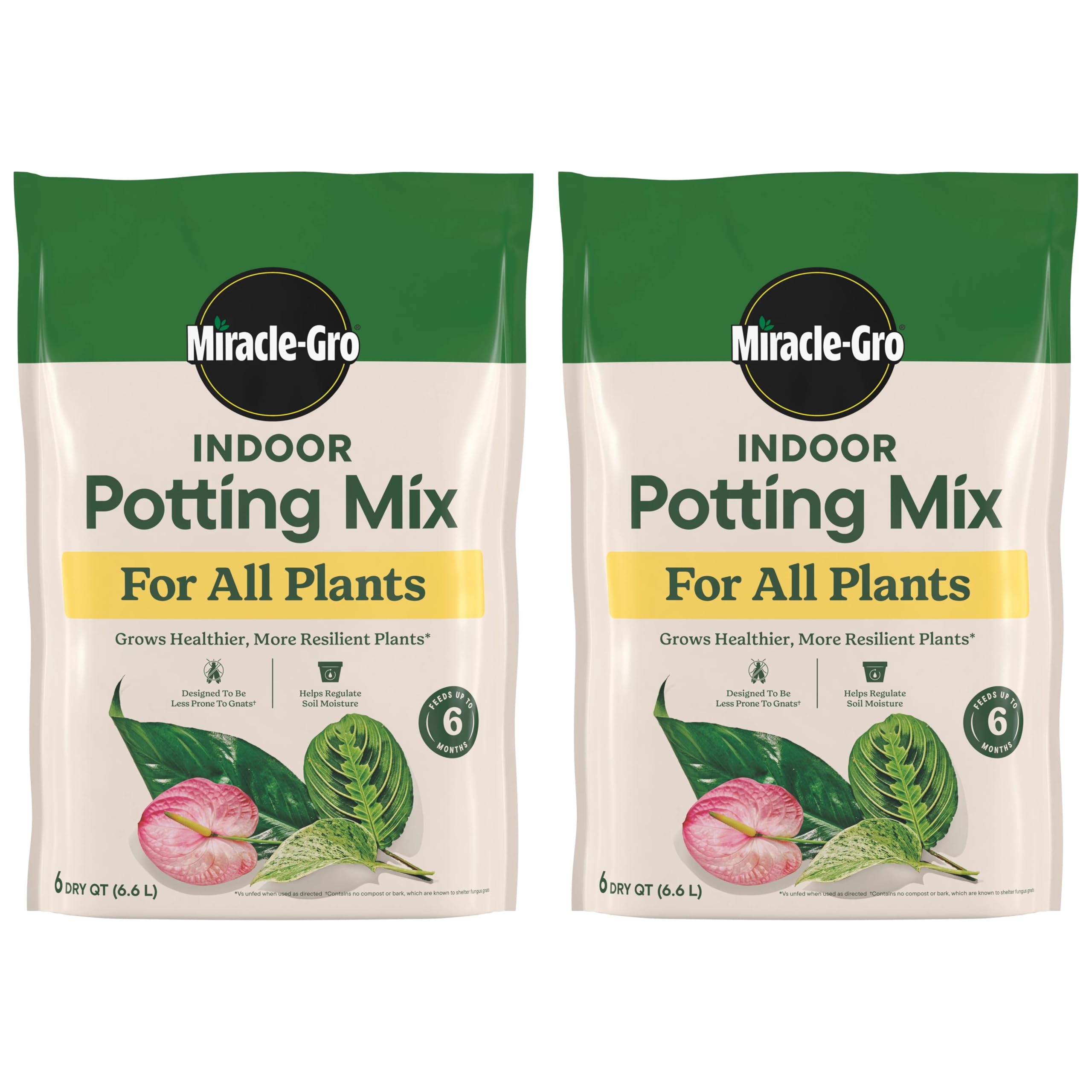
The standard-bearer for general houseplant care, this bagged mix from Miracle-Gro is engineered specifically for containers and solves the biggest pain point: fungus gnats. The manufacturer omits compost and bark from the ingredient deck, replacing those with sphagnum peat moss, coconut coir, and perlite. Without organic debris that typically harbors gnat eggs, owners consistently report a drastic reduction in pest pressure after switching to this formula.
Texture-wise, the soil is noticeably lighter and fluffier than garden-grade products. The perlite content is generous, creating visible air pockets that prevent compaction over a full growing season. Each 6-quart bag in the two-pack fills four 6-inch containers, giving enough volume to refresh a small-to-medium collection. The built-in fertilizer feeds for six months, removing the guesswork of liquid feeding for casual owners.
A handful of users note the mix arrives dusty — a minor annoyance solved by lightly misting the soil before handling. Cactus and succulent growers should avoid using it straight; the moisture retention is simply too high unless you cut it with sand or extra perlite. For standard foliage plants, pothos, dracaena, and flowering houseplants, this remains the most reliable entry point in the category.
What works
- Specifically formulated to avoid compost that breeds fungus gnats
- Built-in slow-release feed supports growth for six months
- Light, well-draining texture resists compaction
What doesn’t
- Can be dusty out of the bag
- Too moisture-retentive for succulents and cacti without amendments
2. DUSPRO 8in1 Aroid Potting Mix, 2 qt.
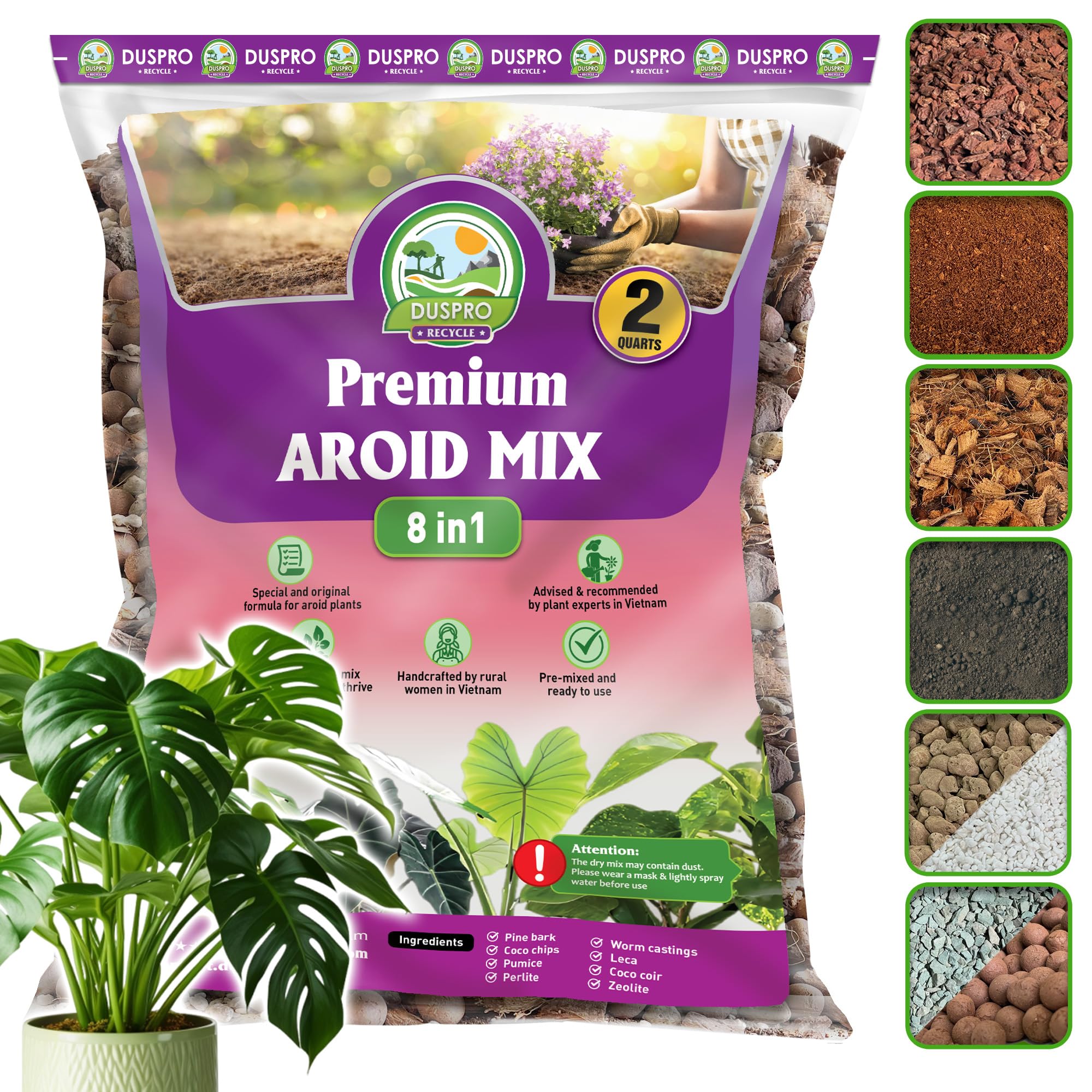
Monstera, philodendron, and alocasia owners know that standard bagged soil compacts around thick aerial roots and blocks airflow. DUSPRO solves this by combining eight distinct components — pine bark, coco chips, pumice, LECA clay pebbles, fine perlite, coir, zeolite, and worm castings — into a deliberately chunky, open structure. The aggregate pieces create macro-pores that remain stable for years, unlike peat which decomposes and collapses after a few watering cycles.
Roots in this mix can breathe. The coarse bark and clay pebbles prevent the medium from settling into a dense cake, a critical advantage for aroids that develop thick, fleshy root systems. The worm castings provide a gentle, natural nitrogen boost without the burn risk of synthetic salt-based fertilizers. Users repotting root-bound plants note that roots spread into the new mix within days rather than weeks.
The biggest practical complaint is bag size: the 2-quart volume is generous for a single repot of a medium monstera but runs out fast for large collections. The bag produces fine dust near the bottom, so wearing a mask during handling is advisable. For anyone tired of dense soil suffocating their tropical plants, this specialty blend delivers the texture that plants bred for tree bark and forest floors actually need.
What works
- Unmatched aeration from eight different structural components
- Worm castings supply gentle organic nutrition
- Long-lasting structure resists compaction cycles
What doesn’t
- Small bag size limits use for large collections
- Dusty tailings at bottom of bag require mask use
3. Perfect Plants Indoor Plant Soil, 4 qt.

Perfect Plants positions itself as the all-purpose, professional-grade alternative to mass retail brands. The mix combines pine bark, coco coir, perlite, sand, and garden lime into a blend that works across the houseplant spectrum, from aloe and spider plants to African violets and monstera. Each ingredient serves a function: the sand adds weight and improves drainage, the lime buffers the acidic peat to a neutral pH, and the pine bark provides long-lasting structure.
Owner feedback highlights the absence of fungus gnats as a decisive advantage. Several users switched from major-brand mixes after fighting gnat infestations and report that this soil broke the cycle immediately. The texture is light and airy without being dusty, and the 4-quart bag includes a heavy-duty resealable closure that keeps unused contents fresh between repotting sessions — a practical touch for apartment dwellers with limited storage.
The bag size is the primary constraint. Four quarts is enough to repot four to five 6-inch pots, but heavy collectors will find themselves ordering frequently. The price per quart is higher than commodity blends, but the consistent quality control and pest-free guarantee justify the premium for anyone who has lost plants to soil-borne pests. It is a strong middle-ground option that handles most houseplants without needing custom amendments.
What works
- Consistently reported as free of fungus gnat eggs
- Resealable bag design preserves moisture and cleanliness
- Balanced pH with garden lime suits a wide plant range
What doesn’t
- Higher cost per quart than basic options
- Bag size insufficient for large pot collections
4. Miracle-Gro Organic Indoor Potting Mix, 8 qt. (2-Pack)

This OMRI-listed formulation targets growers who want organic certification without sacrificing the moisture regulation technology that Miracle-Gro builds into its synthetic lines. The key ingredients — responsibly sourced sphagnum peat, coir, and a quick-start natural fertilizer — work together to buffer moisture extremes. The coir fibers absorb water and release it slowly, creating a forgiving medium for owners prone to over- or under-watering.
The texture is denser than the standard Miracle-Gro Indoor mix, with less visible perlite and more fine particles. This makes it excellent for moisture-loving plants like ferns and calatheas that wilt quickly in fast-draining soils. The 8-quart two-pack provides generous coverage, filling up to four 8-inch containers per bag. Users transitioning from hydrophobic soils note how easily the organic mix rewets after drying out, reducing the frustration of water channeling down the side of the pot.
A consistent critique is that this mix stays too wet for plants requiring drier conditions between waterings. Monstera and snake plant owners should add at least 20% perlite to improve drainage. Additionally, the organic fertilizer has a mild earthy smell that some users find stronger than synthetic blends. For those committed to organic gardening and growing herbs or edible crops indoors, this is the best OMRI-compliant option in the lineup.
What works
- OMRI-listed organic certification for edible plants
- Coir and peat combination regulates moisture swings
- Easily rewets after drying out completely
What doesn’t
- Too moisture-retentive for succulents or snake plants
- Organic fertilizer may produce a noticeable earthy aroma
5. Midwest Hearth Premium Potting Soil Mix, 4 qt.

Midwest Hearth formulates its premium mix with the same recipe professional growers use, balancing peat moss, perlite, and vermiculite. The inclusion of vermiculite is the distinguishing feature here — unlike perlite which creates passive air pockets, vermiculite acts as a moisture sponge that swells when wet and releases water slowly. This dual-action makes the mix ideal for seed starting and propagation, where consistent surface moisture is critical for germination rates.
The texture is noticeably light and fluffy straight from the bag, with no clumps or compacted chunks. The pH is pre-adjusted to a neutral range suitable for most indoor plants, removing the guesswork of testing and amending. Users rooting petunia seeds and jade plant cuttings report near-100% strike rates, attributing success to the even moisture distribution that prevents damping-off disease. The 4-quart size is perfect for small projects or refreshing two to three medium pots.
The main limitation is quantity. At 4 quarts, the bag is best suited for targeted use rather than a full collection overhaul. Some users find the price per quart high compared to bulk options, but the professional-grade consistency and vermiculite content deliver results that justify the cost for propagation work. For anyone starting a herb garden from seed or rooting rare cuttings, this mix provides the sterile, stable environment that seedlings demand.
What works
- Vermiculite improves moisture consistency for seed starting
- Pre-adjusted pH range suits broad plant types
- Light, fluffy texture with zero compaction out of bag
What doesn’t
- Small bag size limits use for large collections
- Price per quart is higher than generic alternatives
6. Miracle-Gro Organic Indoor Potting Mix, 8 qt. (2-Pack)
This OMRI-listed formulation targets growers who want organic certification without sacrificing the moisture regulation technology that Miracle-Gro builds into its synthetic lines. The key ingredients — responsibly sourced sphagnum peat, coir, and a quick-start natural fertilizer — work together to buffer moisture extremes. The coir fibers absorb water and release it slowly, creating a forgiving medium for owners prone to over- or under-watering.
The texture is denser than the standard Miracle-Gro Indoor mix, with less visible perlite and more fine particles. This makes it excellent for moisture-loving plants like ferns and calatheas that wilt quickly in fast-draining soils. The 8-quart two-pack provides generous coverage, filling up to four 8-inch containers per bag. Users transitioning from hydrophobic soils note how easily the organic mix rewets after drying out, reducing the frustration of water channeling down the side of the pot.
A consistent critique is that this mix stays too wet for plants requiring drier conditions between waterings. Monstera and snake plant owners should add at least 20% perlite to improve drainage. Additionally, the organic fertilizer has a mild earthy smell that some users find stronger than synthetic blends. For those committed to organic gardening and growing herbs or edible crops indoors, this is the best OMRI-compliant option in the lineup.
What works
- OMRI-listed organic certification for edible plants
- Coir and peat combination regulates moisture swings
- Easily rewets after drying out completely
What doesn’t
- Too moisture-retentive for succulents or snake plants
- Organic fertilizer may produce a noticeable earthy aroma
7. Midwest Hearth Premium Potting Soil Mix, 4 qt.
Midwest Hearth formulates its premium mix with the same recipe professional growers use, balancing peat moss, perlite, and vermiculite. The inclusion of vermiculite is the distinguishing feature here — unlike perlite which creates passive air pockets, vermiculite acts as a moisture sponge that swells when wet and releases water slowly. This dual-action makes the mix ideal for seed starting and propagation, where consistent surface moisture is critical for germination rates.
The texture is noticeably light and fluffy straight from the bag, with no clumps or compacted chunks. The pH is pre-adjusted to a neutral range suitable for most indoor plants, removing the guesswork of testing and amending. Users rooting petunia seeds and jade plant cuttings report near-100% strike rates, attributing success to the even moisture distribution that prevents damping-off disease. The 4-quart size is perfect for small projects or refreshing two to three medium pots.
The main limitation is quantity. At 4 quarts, the bag is best suited for targeted use rather than a full collection overhaul. Some users find the price per quart high compared to bulk options, but the professional-grade consistency and vermiculite content deliver results that justify the cost for propagation work. For anyone starting a herb garden from seed or rooting rare cuttings, this mix provides the sterile, stable environment that seedlings demand.
What works
- Vermiculite improves moisture consistency for seed starting
- Pre-adjusted pH range suits broad plant types
- Light, fluffy texture with zero compaction out of bag
What doesn’t
- Small bag size limits use for large collections
- Price per quart is higher than generic alternatives
Hardware & Specs Guide
Peat Moss vs. Coco Coir
Peat moss holds up to 20 times its weight in water and naturally acidifies soil to a pH of 3.5-4.5, making it ideal for acid-loving plants but requiring lime buffering for general use. Coco coir is more sustainable, rewets easier after drying, and has a neutral pH, but it provides less long-term structure and may contain excess salts that need rinsing before use.
Perlite & Aeration
Perlite is volcanic glass expanded by heat into lightweight white pellets that create permanent air channels in the soil. Standard indoor mixes contain 10-30% perlite by volume. More perlite equals faster drainage and more oxygen to roots, but too much can make the mix too light to support tall plants. For heavy feeders or plants sensitive to root compaction, 30-40% is ideal.
FAQ
Why do my indoor plants get fungus gnats from bagged soil?
Can I use cactus soil for regular indoor plants?
Final Thoughts: The Verdict
For most gardeners, the potting soil for indoor plants winner is the Miracle-Gro Indoor Potting Mix because it combines reliable gnat prevention, built-in slow-release feed, and excellent drainage for the widest range of common houseplants. If you want a chunky, airy texture for finicky aroids, grab the DUSPRO 8in1 Aroid Mix. And for an organic, OMRI-listed formula that forgives watering mistakes, nothing beats the Miracle-Gro Organic Indoor Potting Mix.