
Microgreen growers know the frustration of a tray that starts strong only to collapse into a patch of mold or leggy, weak stems. The difference between a vibrant harvest and a wasted tray almost always comes down to the medium beneath the seed — its texture, water-holding capacity, and biological cleanliness determine whether those tiny roots can push through without suffocating or rotting.
I’m Rikta — the co-founder and writer behind Lawn Gear Lab. I’ve spent countless hours cross-referencing soil particle sizes, pH ranges, and drainage rates while analyzing aggregated owner feedback to isolate the specific mixes that consistently outperform generic potting soil in microgreen production.
Whether you are layering a dense carpet of sunflower shoots or coaxing delicate amaranth to germinate, the right substrate directly influences your yield density and shelf life. This guide breaks down the seven strongest candidates to help you choose the best microgreen soil for your tray setup and harvest frequency.
How To Choose The Right Microgreen Soil
Microgreens complete their cycle in 7 to 14 days, so the soil needs to support rapid germination and shallow root anchorage without contributing to fungal growth. The three most critical factors are texture, sterility, and pH.
Texture and Water Retention vs. Drainage
A mix that holds too much water encourages pythium and damping-off, while a mix that drains too fast leaves seeds dry between waterings. Ideal microgreen soil uses fibrous components — coco coir, peat, or fine bark — that hold moisture internally while allowing excess to exit through the tray holes.
Sterility and Biological Load
Microgreens are eaten raw, so any mold spores or bacteria in the medium can ruin an entire batch. Many growers prefer coco coir because it is naturally resistant to fungal colonization. Peat-based mixes should be pasteurized or certified organic to minimize introduced pathogens.
pH and Salt Content
Seedlings are sensitive to high salt levels. A pH between 5.5 and 6.5 is ideal. Many high-end potting soils contain added fertilizers that burn tender microgreen roots. For microgreens, look for a low-EC (electrical conductivity) medium with minimal added nutrients — the seed itself provides enough energy for the first week.
Quick Comparison
On smaller screens, swipe sideways to see the full table.
| Model | Category | Best For | Key Spec | Amazon |
|---|---|---|---|---|
| Minute Soil (3 Pack) | Coco Coir Brick | Large-volume microgreen trays | Expands to 4.5 gallons | Amazon |
| Grow Queen Aroid 4QT | Chunky Mix | Longer-duration sprout varieties | Peat and perlite free | Amazon |
| Grow Queen Aroid 2QT | Chunky Mix | Small-batch microgreen trials | Includes NZ tree fern fiber | Amazon |
| ZeeDix 55 Pack Pellets | Compressed Pellets | Single-cell seed starting | 30mm diameter per pellet | Amazon |
| ZESTIGREENS Coco Discs (16 Pack) | Coco Coir Discs | Small pot microgreens | Expands to 2 cups each | Amazon |
| Miracle-Gro Organic Indoor Mix | Peat-Coir Blend | Houseplant-adjacent microgreen projects | 8 quarts per bag (2-pack) | Amazon |
| Hoffman Cactus & Succulent Mix | Fast-Draining Sand Mix | Drainage-sensitive sprout species | pH balanced for cacti | Amazon |
In‑Depth Reviews
1. Minute Soil – Compressed Coco Coir Fiber Grow Medium (3 Pack)

This three-brick bundle from Mountain Valley Seed Company produces 4.5 gallons of pure coco coir — a volume that can fill multiple 10×20 microgreen trays with a consistent, uncompacted layer. The OMRI listing for organic production gives commercial growers confidence that no chemical residues will transfer to the tender shoots.
Each brick requires roughly 10 cups of water and expands to 1.5 gallons of fluffy, aerated fiber. The raw, non-amended composition means you get zero fertilizer salts that might burn delicate roots during the first 72 hours of germination. Users report two-week germination windows for seeds like broccoli and radish, with no signs of mold when bottom-watered.
One practical constraint is that each brick must be hydrated as a whole unit — you cannot break off a partial piece easily. The packaging can also tear during shipping, so it helps to have a bucket or zip bag ready for rehydration. For growers running multiple trays simultaneously, this brick format delivers the best cost-per-gallon in the list.
What works
- Highest volume-per-dollar ratio
- Zero added salts or fertilizers
- Excellent aeration for dense root mats
What doesn’t
- Bricks must be rehydrated entirely at once
- Plastic wrap can rip in transit
2. Grow Queen Craft Aroid Potting Mix (4QT)
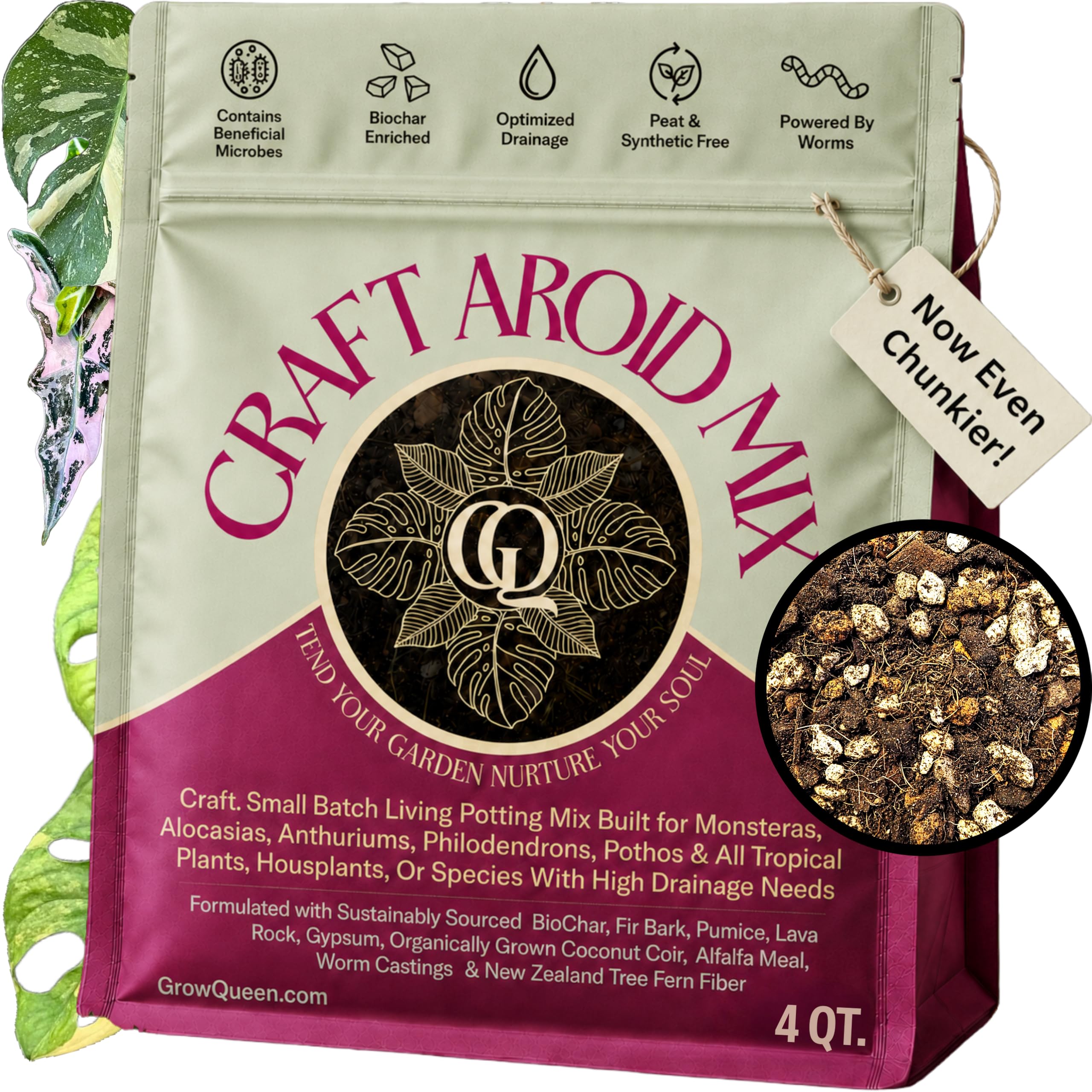
This 4-quart blend uses Douglas fir bark fines, lava rock, and pumice to create a chunky, open structure that water flows through instantly. The New Zealand tree fern fiber naturally buffers the pH down to 6.0, which matches the preference of many microgreen varieties that dislike alkaline conditions. The living beneficial microbes in the worm castings provide a subtle biological boost without overwhelming the seedlings.
Because the mix is pre-moistened and ready to use straight from the bag, you save the 15-minute rehydration step that bricks and pellets require. Several reviewers noted zero pest introductions after a month of use — a strong indicator of the cleanliness of the production process. The large particle sizes also mean the soil stays loose even after repeated bottom-watering cycles.
The trade-off is that this is formulated as an aroid mix rather than a pure seed-starting medium. The bark fines are larger than typical coir fibers, so very tiny seeds like amaranth may fall between the gaps. For robust microgreens like peas, sunflowers, and buckwheat, the drainage and airflow produce noticeably thicker stems.
What works
- Instant drainage prevents root rot
- pH buffered to 6.0
- No mold, bugs, or chemical odor reported
What doesn’t
- Particles too large for very fine seeds
- Smaller volume than coco bricks
3. Grow Queen Craft Aroid Potting Mix (2QT)
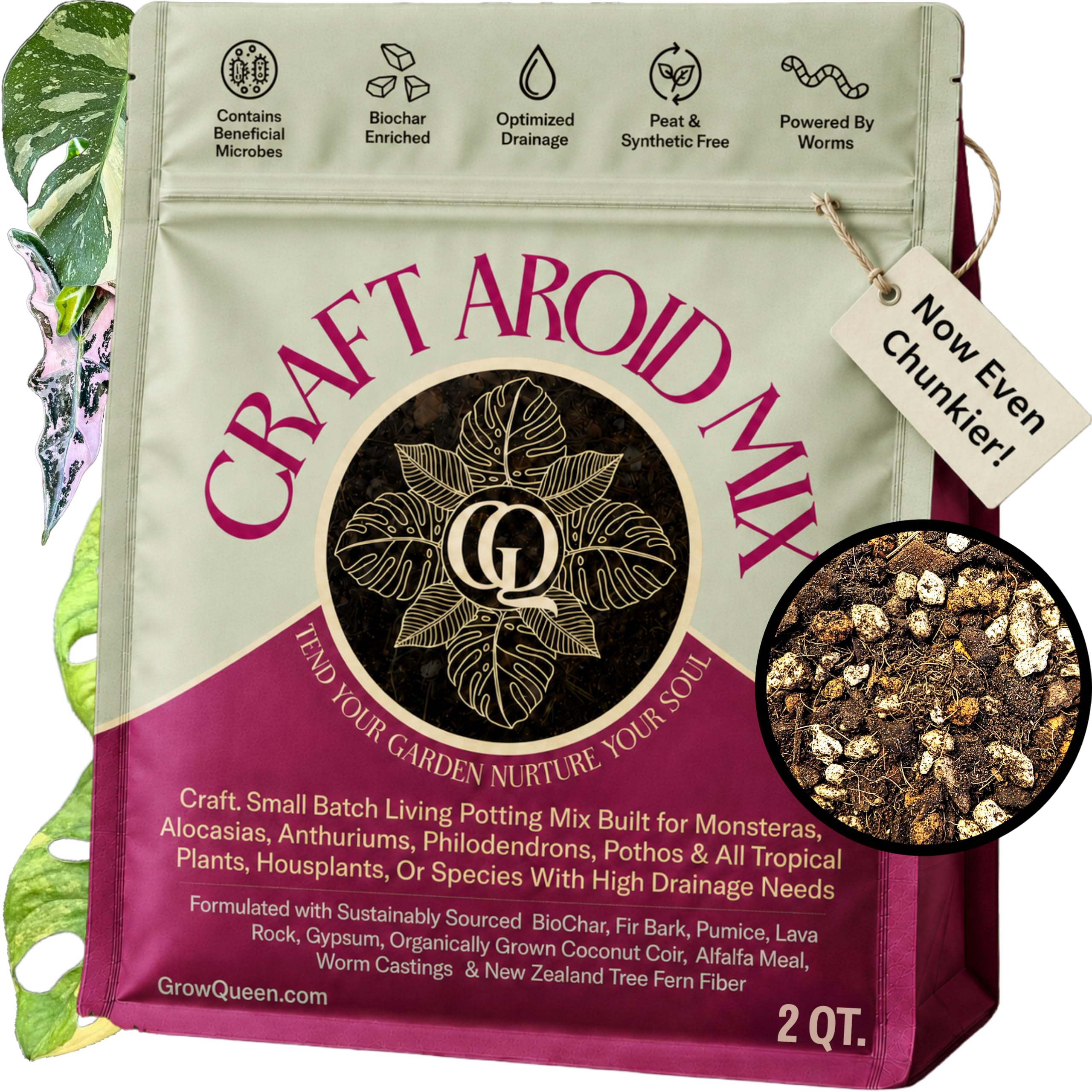
The 2-quart version of the same Grow Queen formula delivers the identical chunky texture and peat-free, perlite-free composition in a smaller package. This size is ideal for growers who want to test the mix on a single tray before committing to a larger bag. The inclusion of New Zealand tree fern fiber is a distinctive touch — it acts as a natural soil conditioner and pH neutralizer that keeps the environment stable for the entire 10-day microgreen cycle.
The mix arrives moist and ready to scoop, with no dust cloud when pouring. Multiple reviewers praised the absence of compaction over several watering cycles — a common issue with standard potting soils that turn into mud after a week. The Douglas fir bark fines create enough air space that roots can spread laterally, which is exactly what a shallow tray of microgreens needs.
Just like the 4QT sibling, this mix is better suited to larger seeds. Broccoli, kale, and cabbage germinate perfectly, but tiny seeds may need a top-dressing of finer coir to ensure good seed-to-soil contact. The bag volume is limited to roughly two standard 1020 trays at a 1-inch depth, so plan your tray count accordingly.
What works
- Identical high-quality blend as the 4QT version
- No compaction after repeated watering
- Ideal for testing small batches
What doesn’t
- Small volume limits large tray operations
- Insufficient for fine-seed species
4. ZeeDix 55 Pack 30mm Organic Coco Coir Seed Starter Pellets
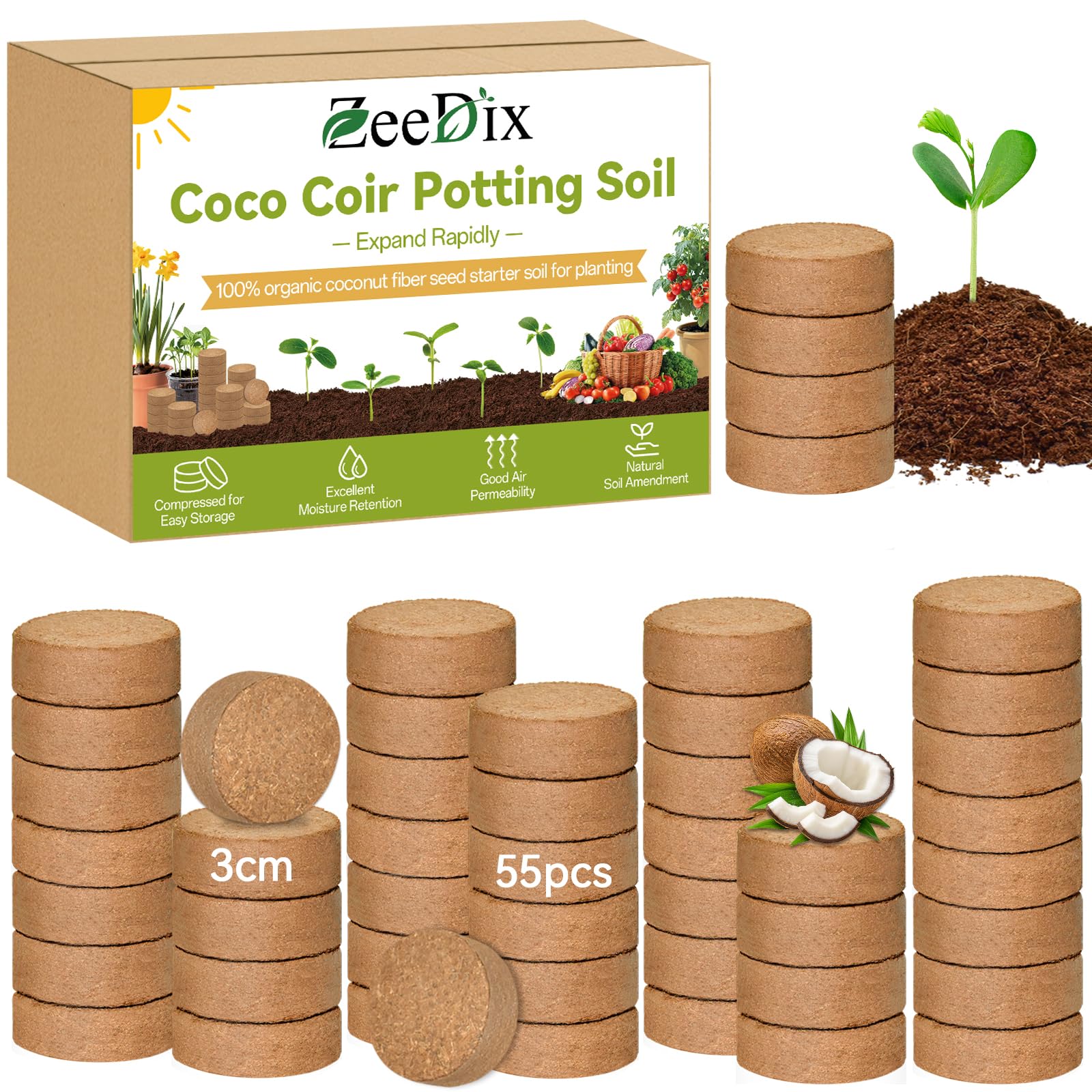
These 30mm compressed coco coir pellets offer a self-contained growing unit for microgreen experiments. Each pellet expands into a small cylinder of fibrous soil that fits neatly into a standard seed-starting cell. The low EC and balanced pH ensure that even sensitive sprouts like basil and cilantro germinate without tip burn or discoloration.
The 55-count pack provides enough pellets for several small-scale trials or a single large batch if you break the pellets apart after expansion. Users liked that the pellets expand significantly with just a few tablespoons of water per unit, and the leftover medium can be dried and stored for later use. The coco coir texture stays light and airy — roots penetrate easily without becoming waterlogged.
These pellets are best for growers who want to test multiple microgreen varieties simultaneously in individual cells. For continuous tray production, the pellet format becomes tedious because each one must be hydrated separately. A few reviewers noted that the outer mesh bag can tear during shipping, spilling pellets, so inspect the package on arrival.
What works
- Good for multi-variety experiments
- Light, airy coco coir texture
- Leftovers can be dried and stored
What doesn’t
- Time-consuming to hydrate individually
- Mesh packaging can open during transit
5. ZESTIGREENS 16 Pack Expanding Organic Fiber Soil Discs

These 2-inch coco coir wafers from ZESTIGREENS expand to 2 cups of soil each when hydrated with 5 ounces of water, yielding 32 cups total from the 16-pack. The renewable nature of coconut coir makes this a strong eco-friendly alternative to peat-based mixes, and the slightly acidic pH is well within the 5.5 to 6.5 sweet spot for microgreen germination. Users observed that the coir maintains moisture noticeably longer than standard premium soils, reducing the frequency of misting.
Each disc comes shrink-wrapped to preserve freshness, which is helpful for growers who do not use all 16 discs at once. The versatility of straight coir allows you to use it as a standalone medium or blend it with garden soil for outdoor trays. One reviewer noted that leftover discs stored in a self-watering planter grew white fur — a reminder that any moist organic medium can support mold if left without airflow.
Like other disc formats, the expansion time is roughly 3 to 5 minutes with warm water, but cold water will slow the process. The coir fibers are fine enough to cradle minuscule microgreen seeds, making this a solid choice for growers focusing on small-seed species like chia or amaranth. For large tray setups, the disc-by-disc method adds labor compared to loose coir bricks.
What works
- Renewable, peat-free source
- Fine texture suits small seeds
- Moisture retention reduces watering frequency
What doesn’t
- Individual discs are slower to prepare than bulk coir
- Can grow mold if left wet without airflow
6. Miracle-Gro Organic Indoor Potting Mix (8 qt. 2-Pack)

This two-bag bundle from Miracle-Gro offers 16 total quarts of OMRI-listed organic potting mix formulated for indoor container plants. The blend of responsibly sourced sphagnum peat moss and coir creates a balanced water-holding profile that protects against both overwatering and underwatering — a useful safety net when you are dialing in your microgreen watering schedule. The quick-start natural fertilizer is minimal enough that it did not cause burn symptoms in most seedling trials.
Several reviewers mentioned that switching to this mix resolved fungus gnat infestations they had experienced with other brands, likely because the peat-to-coir ratio dries evenly on the surface between waterings. The mix works well for seed starting and transplanting microgreens into small pots for extended growth. The two 8-quart bags give you 16 quarts total, which can fill roughly four 1020 trays at a 1-inch depth.
The downside is that this is a general-purpose indoor mix, not a dedicated microgreen medium. The particle size is finer than pure coir, which can compact if you overwater or press the soil too firmly. Some growers add perlite to increase aeration, but that adds an extra step and expense. For quick-turnaround microgreens that you plan to harvest in 7 days, the moisture control system works well — just avoid heavy compaction during filling.
What works
- OMRI listed for organic production
- Moisture control reduces overwatering risk
- Gypsum content helps prevent surface crust
What doesn’t
- Finer texture can compact easily
- Contains added fertilizer, not ideal for all microgreen varieties
7. Hoffman Organic Cactus and Succulent Soil Mix (4 Quarts)

Hoffman’s organic cactus and succulent mix is formulated for fast drainage, which sounds wrong for microgreens but actually works well for growers prone to overwatering. The blend of peat moss, compost, and sand creates a porous structure that water flows through rapidly, preventing the stagnant conditions that lead to damping-off. The pH is balanced to support root development, and the mix encourages bloom formation even in short-duration crops.
After repotting struggling snake plants and ivies, users reported visible recovery within days — a testament to the mix’s ability to rescue plants from wet root conditions. For microgreens, this translates to a lower risk of mold if your environment is humid or your watering schedule is inconsistent. The sand component adds weight, which can help anchor taller microgreens like sunflower shoots that might otherwise tip over in lightweight coir.
The main limitation is volume — 4 quarts is enough for only one or two trays, depending on depth. The mix also contains compost, which may introduce organic matter that breaks down faster than pure coir, potentially affecting consistency over multiple uses. For first-time growers who want a forgiving, well-draining medium that compensates for beginner watering mistakes, this is a low-risk entry point.
What works
- Excellent drainage prevents root rot
- Light, fluffy texture straight from the bag
- Good for rescue operations with overwatered seedlings
What doesn’t
- Small bag size limits tray volume
- Sand content can feel gritty during handling
Hardware & Specs Guide
Coco Coir Fiber Size
The physical length and diameter of coir fibers influence how water spreads through the medium. Fine, short fibers (like those in the ZeeDix and ZESTIGREENS pellets) wick moisture upward quickly, ideal for shallow trays. Longer fibers (in Minute Soil bricks) create more air channels but may require a slightly deeper soil bed to ensure even hydration.
Electrical Conductivity (EC)
EC measures the salt concentration in the soil. Microgreen roots are hypersensitive to salts. The ideal EC for a seed-starting medium is below 0.5 mS/cm. Products like the Grow Queen Aroid mix and Minute Soil bricks report low EC values because they avoid synthetic fertilizers. Higher EC mixes, such as the Miracle-Gro blend, work fine for houseplants but can slow germination in microgreens.
pH Range and Buffering
Most microgreens prefer a pH between 5.5 and 6.5. Coco coir naturally sits around 5.8 to 6.2, while peat-based mixes can be more acidic (4.5 to 5.5) and may require lime. The Grow Queen mix uses New Zealand tree fern fiber to buffer pH to 6.0, reducing the need for adjustments. Hoffman’s cactus mix is pH-balanced specifically to avoid root burn in moisture-sensitive plants.
Bulk Density and Weight
Bulk density affects how much medium you need to fill a tray at a given depth. Pure coco coir (like Minute Soil and ZESTIGREENS) has a very low bulk density of roughly 0.1 g/cm³ when dry, rising to about 0.3 g/cm³ when hydrated. The Hoffman mix, which contains sand and compost, has a higher bulk density, which provides more physical stability for top-heavy microgreens but adds weight to each tray.
FAQ
Can I reuse microgreen soil for a second batch?
Why does my microgreen soil grow white mold on the surface?
Should I add fertilizer to my microgreen soil?
Final Thoughts: The Verdict
For most growers, the microgreen soil winner is the Minute Soil 3-Pack because it delivers the highest volume per transaction with zero added fertilizers, making it ideal for repeated tray cycles. If you want a premium, ready-to-use blend with superior drainage for larger seeds, grab the Grow Queen Aroid Mix (4QT). And for budget-conscious beginners who want to test multiple varieties without a big commitment, the ZeeDix 55 Pack Pellets offer a low-risk entry into consistent germination.