
Aloe vera needs soil that drains fast — not the dense, moisture-retaining kind used for regular houseplants. The wrong mix holds water against the roots, and within days you are dealing with root rot, yellowing leaves, and a plant that slowly collapses. This guide breaks down the seven best soil mixes specifically formulated for aloe vera and other succulents, comparing drainage speed, volume, and what real buyers experience after repotting.
I’m Rikta — the co-founder and writer behind Lawn Gear Lab. This guide is built by comparing the manufacturers’ published specifications and the patterns across verified customer reviews, so you get each pick’s real strengths and trade-offs instead of marketing spin.
Unlike generic potting soil that suffocates succulent roots, the best potting soil for aloe vera uses coarse sand, pine bark, and perlite (volcanic glass that creates air pockets) to create an airy structure that lets water drain through in seconds and keeps roots healthy.
How To Choose The Best Potting Soil For Aloe Vera
Aloe vera is a succulent — a plant that stores water in its fleshy leaves. The roots cannot handle sitting in wet soil. The right mix feels coarse and gritty, not soft and muddy. Here is what to look for.
Drainage Speed Is Everything
The number one killer of aloe vera is overwatering, and the soil dictates how fast water leaves the pot. You need a mix that includes coarse sand, perlite (volcanic glass that creates air pockets), pine bark, or pumice (volcanic rock that improves aeration). These ingredients create large pores so water flows through in seconds rather than pooling at the bottom — this stops the roots from rotting.
Volume: How Much Soil You Need
A standard 4-inch aloe vera pot needs roughly 1 to 1.5 quarts. A 6-inch pot needs about 2 to 3 quarts. If you repot a single plant, a 2-quart bag is usually enough. If you have multiple succulents, go for an 8- or 10-quart bag to avoid buying more later.
Ingredient Red Flags
Peat moss is common in potting mixes, but it holds water like a sponge. Some aloe vera soils rely too heavily on peat moss, and buyers report the soil stays wet for days after watering. If a mix lists peat moss as the first ingredient, plan to add perlite or coarse sand yourself to improve drainage.
Quick Comparison
On smaller screens, swipe sideways to see the full table.
| Model | Category | Best For | Key Spec | Amazon |
|---|---|---|---|---|
| NOVA-TERRA Aloe Vera Potting Soil | Mid-Range | Single pot repotting | 2.4 Quarts | Amazon |
| Leaves and Soul Professional Aloe Soil | Mid-Range | Root health after repotting | 2.2 Quarts | Amazon |
| Miracle-Gro Succulent Potting Mix | Mid-Range | Budget-friendly brand trust | 4 Quarts | Amazon |
| Midwest Hearth Cactus Succulent Mix | Mid-Range | Multiple plant projects | 8 Quarts | Amazon |
| Rosy Soil Cactus & Succulent Mix | Premium | Peat-free organic growing | 8 Quarts (2 bags) | Amazon |
| Miracle-Gro Cactus, Palm & Citrus Mix | Premium | Multiple succulent types | 24 Quarts (3 bags) | Amazon |
| Hoffman Organic Cactus Mix | Premium | Large volume value | 10 Quarts (2 bags) | Amazon |
In‑Depth Reviews
1. NOVA-TERRA Potting Soil for Aloe Vera Plants Indoor
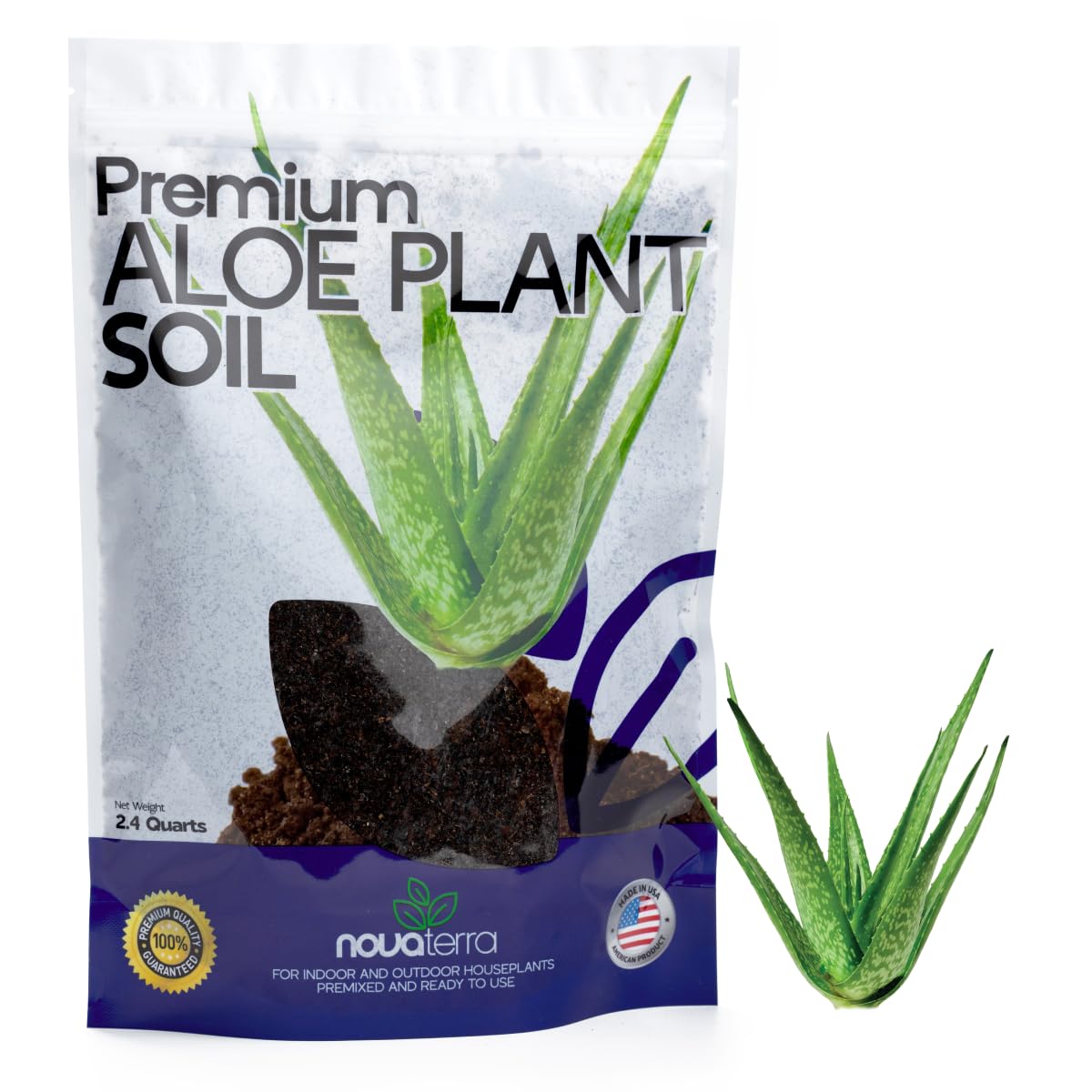
2.4 quarts of a mix specifically labeled for aloe vera — not a general succulent soil — makes this the top pick for anyone repotting a single standard aloe plant. This NOVA-TERRA bag blends coarse sand, Canadian peat, and pine bark into a texture where water drains fast and roots get oxygen instead of sitting in moisture. Owners mention it comes in a sealed stand-up bag and that it contains “enough for one medium size container,” which fits a standard aloe plant exactly.
The formula works as a cactus soil and even as a seed-starting mix, so you can use it for multiple plant types without buying separate bags. At 2.08 pounds, it is dense enough to anchor a top-heavy aloe but light enough to feel airy when you pour it into a pot. The peat in the blend helps with moisture retention just enough — not so much that the soil stays wet for days.
For a single repotting job, this is the mix that matches the plant’s needs with no guesswork. If you have multiple aloe plants or offsets (pups) to repot, you will need more than one bag. For one aloe, this bag is the perfect match.
Why it’s great
- Formulated specifically for aloe vera with coarse sand and pine bark
- Sealed stand-up bag keeps soil fresh during storage
- Works as cactus, succulent, and seed-starting soil too
Good to know
- 2.4 quarts is enough for just one medium container
- Contains peat, which some buyers prefer to avoid
2. Leaves and Soul Professional Aloe Plant Soil Mix
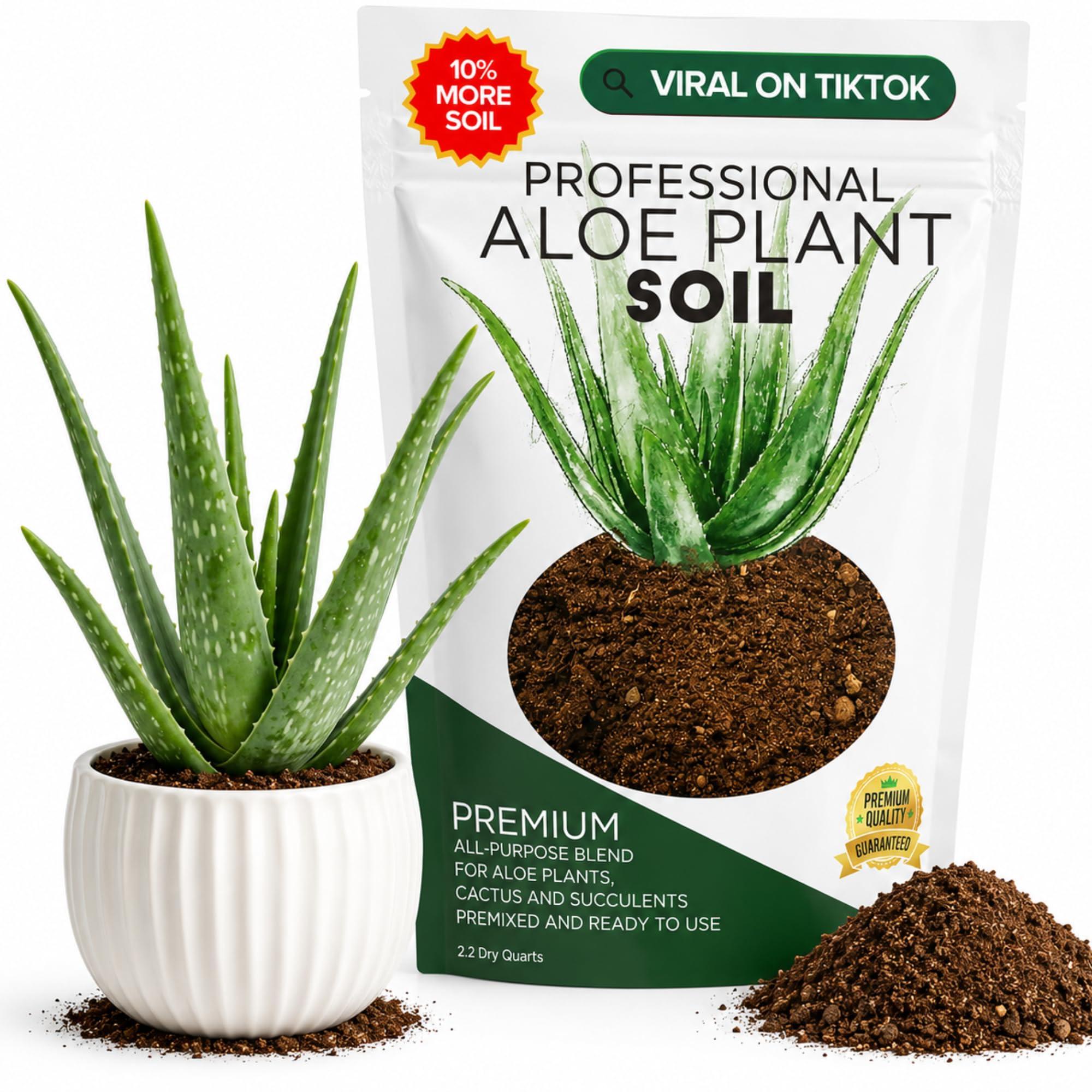
Compared to the NOVA-TERRA mix, this Leaves and Soul soil gives you a slightly smaller volume (2.2 quarts vs. 2.4 quarts) but comes in a resealable bag that keeps the mix fresh between uses — a real advantage if you only repot part of the bag at a time and want to store the rest.
The formula uses pine bark, peat, and coarse sand to promote fast drainage and reduce the risk of root rot. It is made in the USA, and customers note using it successfully for bonsai, African violets, and even orchid recovery, not just aloe. The resealable packaging is a practical convenience for indoor gardeners who store soil between sessions.
Choose this over the NOVA-TERRA pick if you appreciate a resealable bag for storage, or if you plan to use the same soil for other drought-tolerant plants like snake plants, jade, or Christmas cactus. The slightly smaller volume fits a standard 6-inch pot perfectly with almost no leftover waste, and that same convenience is its limitation if you have a larger collection.
Where it shines
- Resealable bag keeps soil fresh during storage
- Fast-draining formula with pine bark, peat, and coarse sand
- Made in the USA and versatile for multiple plant types
Worth noting
- 2.2 quarts is the smallest volume on the list
- Soil can separate during shipping and needs a quick remix
3. Miracle-Gro Succulent Potting Mix

Imagine you have a few succulents on your windowsill and you want a bag you can grab at the store without overthinking it — this Miracle-Gro mix is exactly that scenario. It comes in a 4-quart bag (double the volume of the NOVA-TERRA and Leaves and Soul options) and costs about the same, so you get more soil per dollar. It is formulated for aloe vera, cacti, echeverias, and houseleeks, with Miracle-Gro plant food already blended in.
The catch is the ingredient list: the primary component is sphagnum peat moss. One reviewer noted the soil stays “wet 4 days after watering” and that it needs added perlite to improve drainage. If you are careful with watering — letting the soil dry out completely between waterings — this mix can work fine. Without added perlite, it risks holding too much moisture for aloe vera’s liking. Buyers also note it has no odor and is very easy to use straight out of the bag.
The 4-quart bag fills one 8-inch container, so if you have one aloe plant in a large pot, this gives you the volume you need in a single purchase. Just be prepared to mix in extra perlite or coarse sand if you live in a humid climate or tend to water generously.
What stands out
- 4 quarts gives you double the volume of smaller bags at a similar price
- Contains Miracle-Gro plant food for built-in nutrition
- No odor and easy to handle
The trade-offs
- Mostly peat moss; retains moisture and may need added perlite
- Not ideal for heavy-handed waterers without amendment
4. Midwest Hearth Cactus Succulent Natural Potting Soil Mix
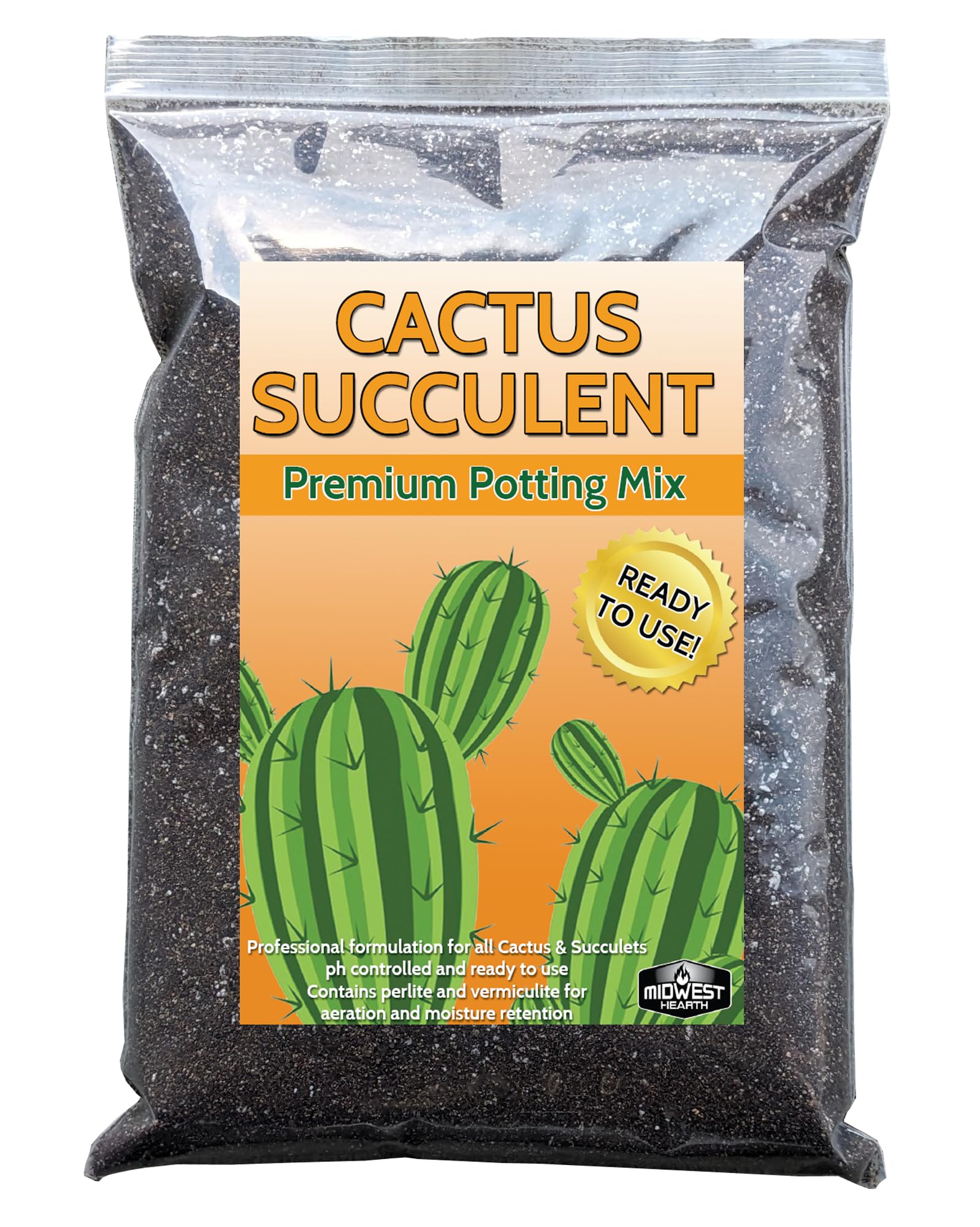
The single number that matters most in this category is 8 quarts—this bag holds over three times the volume of the 2.4-quart NOVA-TERRA bag, making it the clear choice for repotting multiple succulents, building dish gardens, or propagating aloe pups without needing a second bag.
The downside is the texture: the mix is light and fluffy because it contains peat moss, perlite, and vermiculite (a mineral that helps with aeration and moisture control). Some reviewers point out that dry top particles blow away when the bag is near an open window, creating a mess that requires daily vacuuming. The pH level is balanced specifically for cacti and succulents, a detail many budget mixes skip.
At this price per quart, it offers the best value for volume if you have multiple plants—just be mindful of the dusty top layer and store the bag in a closed cabinet or use it in a low-draft area to avoid the airborne particles.
The upsides
- 8 quarts is enough for multiple pots or dish gardens
- pH balanced specifically for cacti and succulents
- Contains perlite and vermiculite for aeration
Keep in mind
- Dry, lightweight particles can blow around near open windows
- Peat-based, so it holds some moisture
5. Rosy Soil Cactus & Succulent Potting Mix
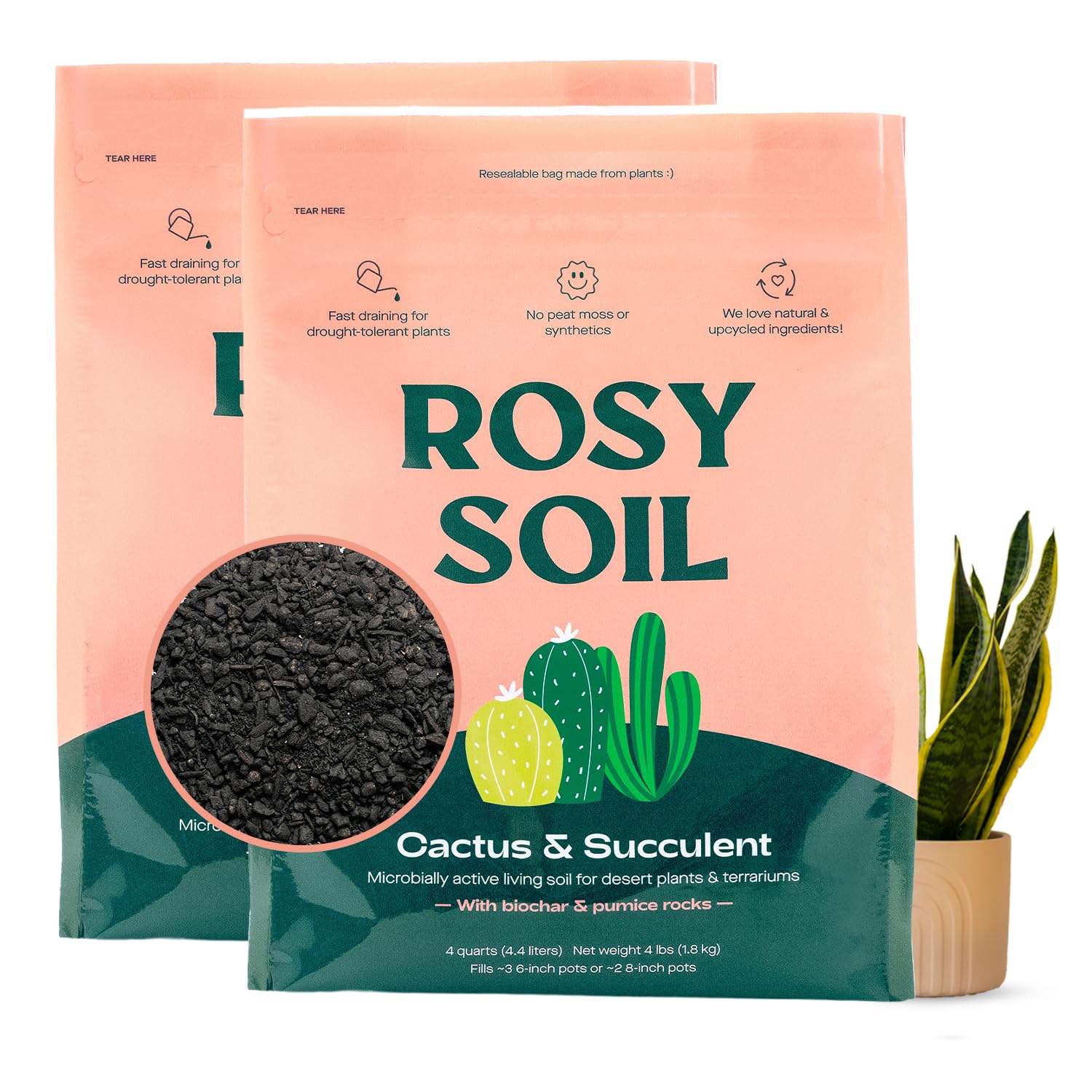
At this lower price, you get two 4-quart bags (8 quarts total) of a completely different approach: peat-free, chunky, living soil that comes pre-loaded with beneficial fungi, microorganisms, and worm castings. This means you get a thriving underground ecosystem that feeds roots without synthetic fertilizers — a major advantage if you want organic, sustainable soil. Shoppers say their “succulents thriving after 1 month” and that the soil has a “clean, dark, even appearance” with no bugs across multiple bags.
What you give up is a finer, predictable texture. The chunky formula means the mix stays very loose and airy — roots can breathe and excess water drains fast — but one buyer mentioned it still needs additional perlite and bonsai soil for older plants that require even grittier conditions. The packaging is plastic-neutral and resealable, though a buyer found the resealable closure hard to close properly, risking moisture loss.
The real value here is the peat-free formula: peat moss is environmentally costly to harvest, and skipping it means the soil drains more freely. For eco-conscious growers who want a ready-to-use organic mix that supports root biology, this is the perfect option for the budget buyer who prioritizes sustainability over price.
Why we’d pick it
- Peat-free, organic formula with worm castings and microbes
- Chunky texture stays loose and drains fast
- Plastic-neutral, resealable packaging
A few caveats
- May still need added perlite or bonsai soil for very gritty-loving plants
- Resealable bag can be tricky to close fully
6. Miracle-Gro Cactus, Palm and Citrus Potting Mix

This 3-pack of 8-quart bags gives you a total of 24 quarts — the highest overall volume on the list — making it the clear choice if you have a succulent collection, several aloe plants, or palms and citrus that need the same fast-draining formula. Each 8-quart bag fills two 8-inch containers, so the bundle covers a lot of ground. The formula is enriched with Miracle-Gro Plant Food and designed for cacti, palms, citrus, and succulents, including aloe vera.
Buyers love using this mix for Christmas cactus, Thanksgiving cactus, and Easter cactus, reporting “beautiful growth” after repotting. One reviewer shared a detailed recipe: half cactus mix, half Miracle-Gro potting soil, plus optional fertilizer. The mix works well straight out of the bag, but some buyers find it expensive compared to mixing your own blend.
The honest limit here is the same as the standard Miracle-Gro Succulent mix: it is peat-based, so it retains more moisture than chunky, grit-heavy blends. If you water sparingly and let the soil dry between waterings, it works fine. But for aloe vera in humid climates or low-light conditions, you may want to add perlite for extra drainage.
Strong points
- 24 quarts total — the highest volume for large succulent collections
- Fast-draining formula with Miracle-Gro Plant Food
- Works well for Christmas cactus, Thanksgiving cactus, and more
Before you buy
- Peat-based; may retain moisture in humid conditions
- Some buyers find it too expensive for the volume
7. Hoffman 10410 Organic Cactus and Succulent Soil Mix

At the lower end of the price spectrum, Hoffman gives you two bags totaling 10 quarts — a solid volume for the money without the premium cost of smaller specialty bags. The mix is organic and arrives ready to use with no mixing required. Buyers consistently describe it as “good quality soil for succulents” that “drains extremely well” and “dries quickly,” with one reviewer saying their “succulents look best ever” after using it.
What you give up is precise consistency: some buyers report the soil “retains a lot of moisture for cactus/succulent soil” and feels “compacted like regular potting soil” instead of airy and gritty. To use it for aloe vera, you will likely need to mix in perlite or pumice (volcanic rock that improves aeration) to get the drainage aloe roots need. The soil is described as “very fine, not bulky,” which means it can settle into a dense layer over time.
This is the perfect buy for budget-conscious growers who have multiple succulents and are willing to amend the soil with extra perlite. If you want a grab-and-go solution with no mixing, the NOVA-TERRA or Leaves and Soul options are better suited. But for the price per quart, Hoffman wins on value.
What we like
- 10 quarts total for a low price — great value per quart
- Organic, ready-to-use, with no peat moss
- Drains well and dries quickly according to most reviewers
The downsides
- Fine texture can feel compacted; needs added perlite for aloe
- Some bags may retain more moisture than expected
Understanding the Specs
Volume (Quarts)
This is the most practical spec for choosing the right bag, because you buy just enough soil for your project. A 2-quart bag handles one 6-inch aloe pot. A 4-quart bag covers one 8-inch pot or two smaller pots. An 8-quart bag can repot 3 to 5 medium containers. Buy the smallest bag that matches your current project — soil degrades in storage over months.
Drainage Ingredients
The three ingredients that make soil drain fast for aloe vera are coarse sand, perlite (volcanic glass that creates air pockets), and pine bark (tree bark that adds structure). Coarse sand creates large pores that water flows through quickly. Perlite keeps the soil from compacting. Pine bark resists breaking down. If a mix lists peat moss as its first ingredient, it will hold water longer than aloe vera prefers, so plan to add perlite yourself.
FAQ
Can I use regular potting soil for aloe vera?
How often should I water aloe vera in succulent soil?
Should I add perlite to potting soil for aloe vera?
How much soil does one aloe vera plant need?
Final Thoughts: The Verdict
For most buyers, the best potting soil for aloe vera winner is the NOVA-TERRA Aloe Vera Potting Soil because it is the only mix specifically formulated for aloe vera with coarse sand and pine bark, in a practical 2.4-quart size for a single repotting. If you want a resealable bag for storage and a lighter texture, grab the Leaves and Soul Professional Aloe Soil. And for eco-conscious growers who want peat-free, organic soil with living microbes, the standout is the Rosy Soil Cactus & Succulent Mix.