
Walking out to a tomato plant loaded with fruit only to find blossom-end rot on the bottom of every beefsteak is a crushing experience. The difference between that disappointment and a basket of flawless, sweet slicers often comes down to one decision: what you feed them. Tomato plants are heavy feeders with specific nutrient demands that generic all-purpose fertilizers rarely meet, and choosing the wrong formula can sabotage weeks of careful watering and pruning.
I’m Rikta — the co-founder and writer behind Lawn Gear Lab. I’ve spent dozens of hours dissecting NPK ratios, reading through hundreds of verified buyer experiences, and cross-referencing organic certifications to isolate which formulas actually deliver on their label claims for heavy-fruiting tomato varieties.
Whether you are growing determinate varieties in containers or sprawling indeterminate vines in raised beds, finding the right plant food for tomatoes means understanding the specific nutrient balance that supports fruit set without burning roots or encouraging excessive foliage at the expense of yield.
How To Choose The Best Plant Food For Tomatoes
Tomatoes are biological machines that pull massive amounts of macronutrients and micronutrients from the soil over a single growing season. A formula designed for leafy greens or flowering ornamentals will not cut it. Here are the decisive factors that separate effective tomato feeds from the rest.
Macronutrient Ratios Tailored to Fruiting
Tomatoes need a phosphorus boost relative to nitrogen to shift energy from leaf production into flower and fruit development. Look for a middle number in the N-P-K ratio that equals or exceeds the first. Formulas with a ratio like 5-7-3 or 4-6-2 signal that the manufacturer understands the fruiting stage. Ratios with nitrogen far higher than phosphorus, such as 10-5-5, will produce tall, dark green plants with very few tomatoes.
Calcium Content and Blossom End Rot Prevention
Blossom end rot is not a disease — it is a calcium deficiency caused by inconsistent watering or insufficient available calcium in the root zone. A tomato-specific feed should contain supplementary calcium that remains plant-available through the fruiting phase. Products that list calcium as a guaranteed analysis ingredient or include ingredients like langbeinite or rock phosphate are addressing this directly.
Release Mechanism: Granular vs. Liquid
Granular fertilizers provide a steady nutrient release over weeks, which works well for soil-based gardens where you want to build fertility over time. Liquid concentrates deliver nutrients instantly and are better for container plants where soil volume is limited and nutrients leach out faster. Many serious growers use a combination: a granular slow-release at planting and a liquid boost weekly once fruit begins setting.
Organic Certification and Ingredient Transparency
Certified organic ingredients like fish bone meal, feather meal, kelp, and humates feed the soil microbiome as well as the plant. OMRI-listed products guarantee no synthetic chemicals or sewage sludge. If you are growing for your family kitchen, the organic path also avoids the risk of chemical residues on the fruit skin.
Quick Comparison
On smaller screens, swipe sideways to see the full table.
| Model | Category | Best For | Key Spec | Amazon |
|---|---|---|---|---|
| FoxFarm Happy Frog | Granular | Preventing blossom end rot | 5-7-3 + calcium + mycorrhizae | Amazon |
| Down To Earth All Purpose Mix | Granular | OMRI organic soil building | 4-6-2, 5 lb bag | Amazon |
| Espoma Plant-Tone | Granular | Long season feeding | 5-3-3 with Bio-tone microbes | Amazon |
| MaterAid Tomato Fertilizer | Liquid | Rapid root uptake | 1 oz/gal, 32 oz bottle | Amazon |
| Bloom City Tomato & Veggie | Liquid | Container garden convenience | 32 oz ready-to-use liquid | Amazon |
| Neptune’s Harvest Organic | Liquid | Foliar + root feeding | 2-4-2, fish/seaweed base | Amazon |
| Old Farmer’s Almanac Mini Spikes | Spikes | No-measure, mess-free feeding | 6-4-6, 24 mini spikes | Amazon |
In‑Depth Reviews
1. FoxFarm Happy Frog Tomato & Vegetable Fertilizer

FoxFarm formulated Happy Frog with a 5-7-3 ratio that delivers more phosphorus than nitrogen, steering the plant’s energy directly into flower cluster development and fruit formation rather than runaway vine growth. The addition of calcium targets blossom end rot prevention, and the mycorrhizal fungi colonies expand the root system’s access to water and nutrients in the soil profile.
Tester reports show that this granular feed produces dark, broad leaves within days of application, followed by a heavy flush of blooms. The 4-pound bag covers multiple planting holes or raised beds, and the blend is water-soluble enough that it begins breaking down with the first irrigation without leaving a sticky residue on the soil surface. Gardeners using it in container systems alongside FoxFarm Ocean Forest soil saw the most dramatic results, with fruit sizing up faster than with any other single input.
Compared to other premium organic blends, Happy Frog edges ahead because it targets the specific physiological bottleneck of heavy-feeding tomatoes — calcium transport — while keeping the N-P-K tight enough to avoid nitrogen burn even on young transplants. The lack of fish-based ingredients means no odor attracts raccoons or neighborhood dogs to dig up the root zone.
What works
- Calcium inclusion directly prevents blossom end rot on vulnerable varieties like Roma and Brandywine.
- Mycorrhizal fungi improve root efficiency in both native soil and container mixes.
- No strong odor makes application pleasant even in tight garden spaces.
What doesn’t
- Price per pound runs higher than basic all-purpose organic blends.
- Requires reapplication every three to four weeks on heavy-feeding indeterminate varieties.
2. Down To Earth All Natural Fertilizers Organic All Purpose Tomato & Vegetable Mix

Down To Earth’s 4-6-2 blend relies on fish bone meal, blood meal, feather meal, rock phosphate, langbeinite, greensand, humates, and kelp meal to build a broad mineral foundation for tomato plants. The seven-ingredient composition means the soil receives a range of secondary nutrients like magnesium, sulfur, and trace minerals that typical three-number synthetics ignore entirely.
The 5-pound box feeds a substantial garden area for the entire season when applied as a side dressing every six weeks. Growers report that pale, flimsy transplants regained deep green color within two weeks of incorporation into the top inch of soil. The non-burning formula allows direct contact with root balls during transplanting without the risk of chemical burn, which is essential for tender starts moving into warm soil.
OMRI listing confirms that every granule meets organic production standards, and the lack of synthetic coating means microbial activity in the soil accelerates the breakdown process. The only trade-off is a noticeable mealy odor during application that dissipates within a few days after watering in.
What works
- Seven-ingredient spectrum covers micronutrients missing from simpler blends.
- Non-burning composition safe for direct root contact during transplanting.
- OMRI listing assures organic compliance for certified gardens.
What doesn’t
- Strong initial odor that may draw curiosity from pets until it dissipates.
- Granules need adequate soil moisture to begin breaking down effectively.
3. Espoma Organic Plant-Tone 5-3-3 All Purpose Plant Food

Espoma Plant-Tone carries a 5-3-3 ratio with a guaranteed 5% calcium content, making it one of the most calcium-dense organic options available for tomato growers fighting blossom end rot. The proprietary Bio-tone formula includes beneficial microbes that colonize the root zone and help break down organic matter into plant-available nutrients over the entire growing season.
The 4-pound bag format comes as a two-pack, providing enough material to feed a medium-sized vegetable patch from spring through fall. Gardeners using Plant-Tone on tomatoes, peppers, and squash report visible improvement in foliage density within two weeks of application and a reduction in fruit deformities compared to seasons when they used generic 10-10-10 formulas. The slow-release granular form works best when worked into the top two inches of soil and watered thoroughly after application.
This blend is not tomato-specific — it works across flowers, shrubs, and trees — but the calcium and microbial package makes it especially effective on solanaceous crops that suffer from calcium transport issues. The cost per pound is lower than boutique tomato blends, making it a practical choice for large gardens where budget matters.
What works
- High calcium percentage directly addresses blossom end rot in heavy-fruiting varieties.
- Bio-tone microbes improve long-term soil fertility between seasons.
- Budget-friendly per-pound cost for large garden applications.
What doesn’t
- 5-3-3 ratio is lower in phosphorus than dedicated tomato blends.
- Requires consistent soil moisture to activate the organic breakdown process.
4. MaterAid Tomato Fertilizer by GS Plant Foods
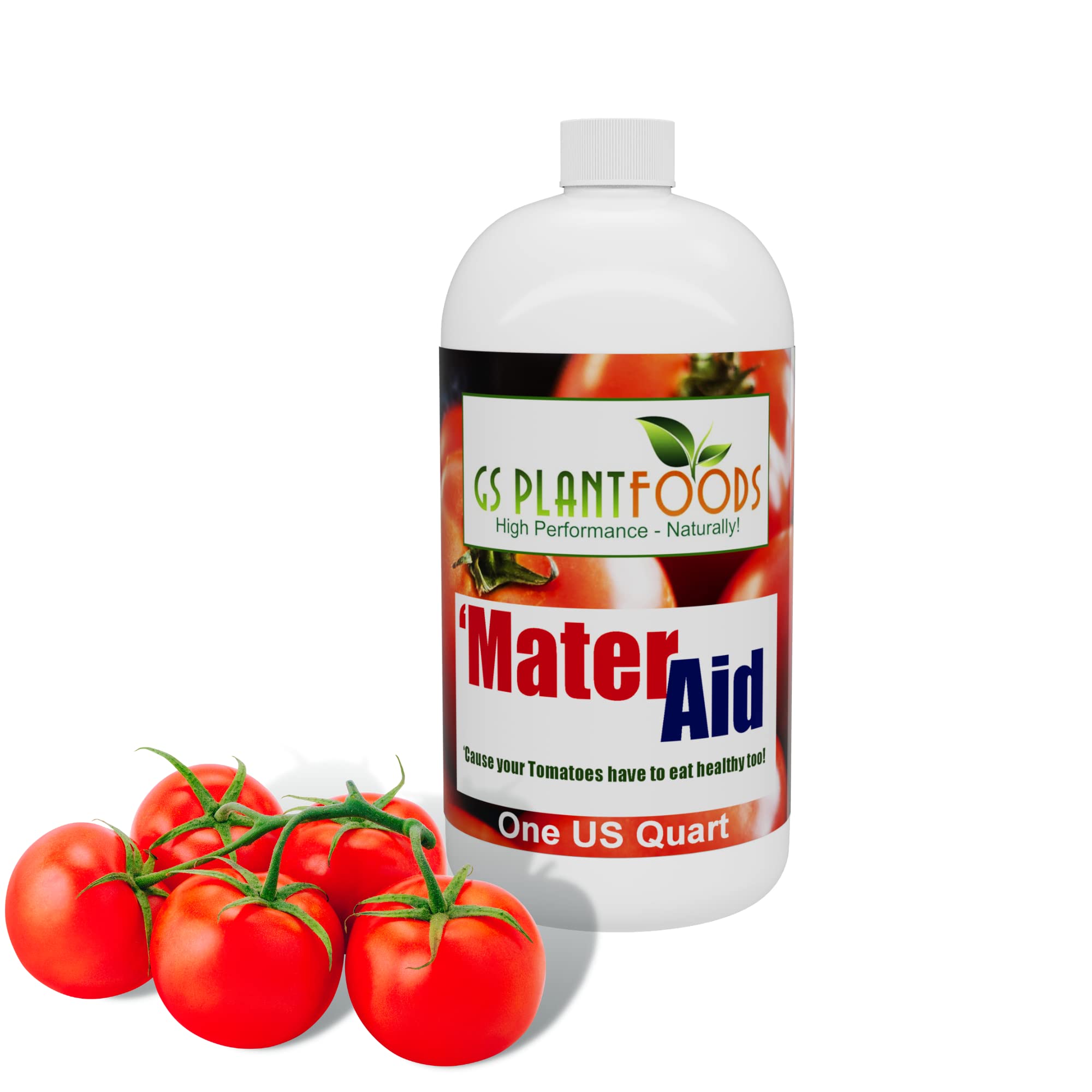
MaterAid is a liquid concentrate specifically designed around the mineral needs of tomato plants, with a formula that includes magnesium, calcium, and sulfur alongside the primary N-P-K macro-nutrients. The 1-ounce-per-gallon mixing ratio makes the 32-ounce bottle stretch a long way, and the water-soluble form is absorbed at the root zone within hours of application rather than waiting for microbial breakdown.
Users consistently report explosive growth after the first application, with one documented case of a plant outgrowing its container within days and setting flowers within a week. The calcium and magnesium content supports firm fruit walls and helps prevent the internal bruising that often accompanies rapid growth on varieties like San Marzano and Amish Paste. The recommended schedule of every two weeks through fruit set, then weekly after fruit appears, aligns well with the nutrient drawdown curve of heavy-bearing indeterminate plants.
The lack of strong odor compared to fish-based liquid fertilizers makes it more palatable for container gardening near doors or patios. Environmentally, the water-soluble nutrients are immediately plant-available, which reduces the risk of runoff if applied according to label rates.
What works
- Immediate nutrient uptake corrects deficiencies within days of first feeding.
- Magnesium and calcium blend supports fruit firmness and flavor development.
- Low odor formula suitable for container gardens in living spaces.
What doesn’t
- Requires consistent weekly measuring and mixing during peak fruiting.
- Liquid format means more frequent feeding than granular slow-release options.
5. Bloom City Tomato & Veggie Plant Food

Bloom City’s liquid formula comes in a ready-to-use 32-ounce bottle that eliminates the mixing step, making it the most convenient option for gardeners who want to feed without carrying measuring cups and gallon jugs to each plant. The formulation is designed to support fruit development without overstimulating foliage, which matters for determinate varieties that have a limited window for fruit set.
User experiences show that a single bottle feeds one mature tomato plant for an entire growing season when applied weekly, making the per-plant cost competitive with concentrates that require measuring. The liquid flows easily through hose-end sprayers and watering-can roses without clogging, and it does not leave a sticky residue on foliage if used as a root drench. Gardeners growing in containers where fertilizer washes out with every watering appreciate the ability to add a small maintenance dose with every irrigation cycle.
Bloom City positions this as a general vegetable feed, but the balance leans toward blossom support rather than green growth. It is less concentrated than MaterAid, so heavy feeders in poor soil may need a supplemental calcium source to prevent blossom end rot on large-fruited varieties.
What works
- No mixing required simplifies feeding for beginners and container growers.
- Prevents overstimulation of foliage that delays fruit set in determinate types.
- Compatible with hose-end sprayers for quick application across multiple plants.
What doesn’t
- Lacks supplemental calcium for varieties prone to blossom end rot.
- Less concentrated than alternatives, requiring more frequent purchase for large gardens.
6. Neptune’s Harvest Organic Tomato & Vegetable Fertilizer
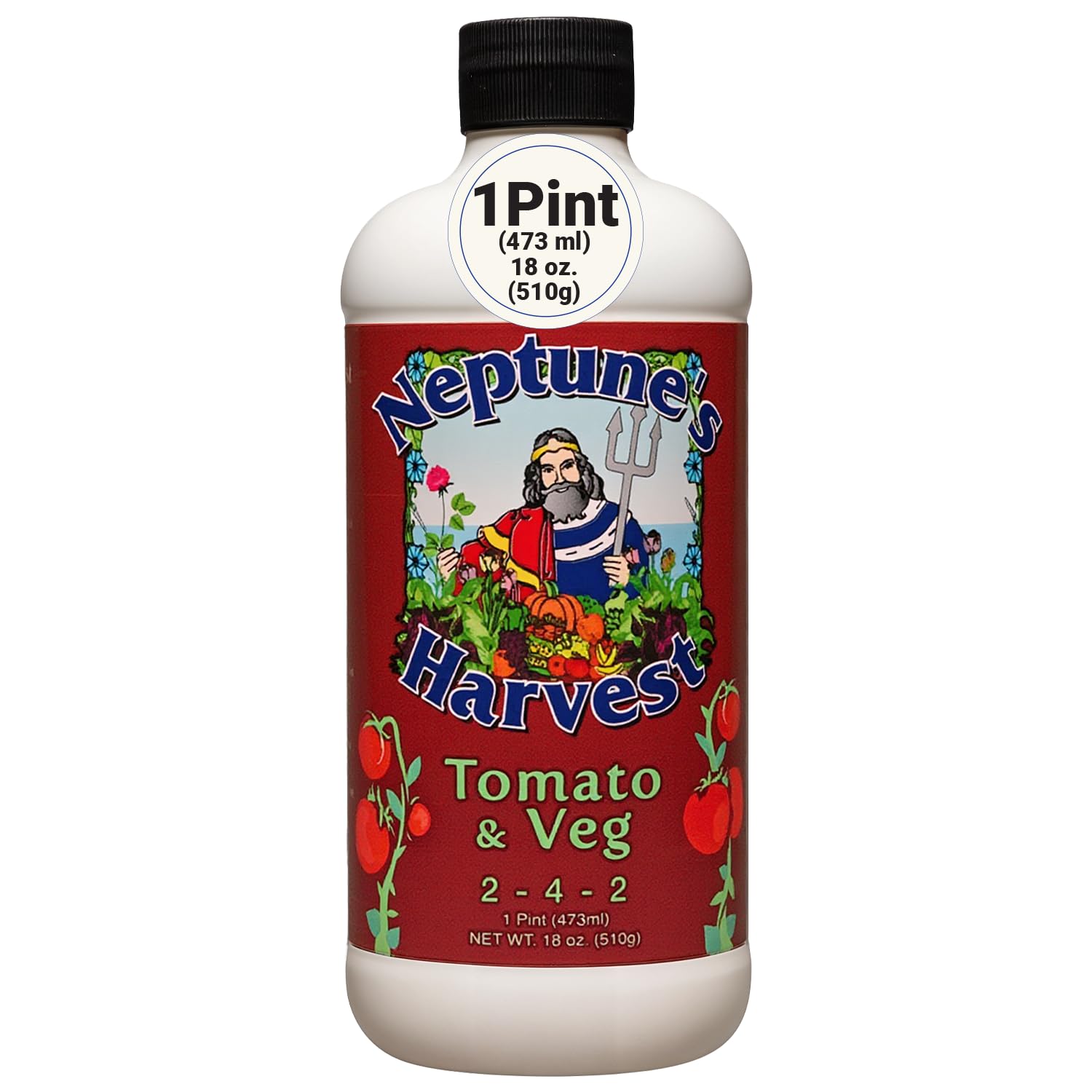
Neptune’s Harvest combines fresh fish, seaweed, molasses, yucca extract, and humic acids into a 2-4-2 liquid concentrate that functions both as a root drench and a foliar feed. The fish and seaweed base provides enzymes, amino acids, and natural growth hormones that granular blends cannot replicate, and the yucca extract acts as a natural wetting agent that helps nutrients penetrate the soil surface more evenly.
The 2-4-2 ratio is deliberately lower in nitrogen to prevent the excessive vegetative growth that delays flowering, while the phosphorus supports robust blossom clusters. Users report that foliage takes on a noticeably darker green within three days of the first application, and the fruit produced has a deeper, more complex flavor profile compared to plants fed with synthetic tomato feeds. The concentrate dilutes at 1 ounce per gallon, and the pint bottle provides enough solution for multiple feedings across a 50-square-foot garden bed.
The odor is the limiting factor. The fish-based formula has a strong smell during mixing that lingers on hands and sprayer parts, and some users report that the scent attracts raccoons and other wildlife that disturb the soil around plants. Once worked into the soil and watered in, the smell dissipates within 24 hours.
What works
- Seaweed and humic acids improve soil biology and root zone activity.
- Yucca extract enhances water penetration in compacted or clay-heavy soil.
- Foliar application capability provides rapid nutrient absorption during stress periods.
What doesn’t
- Strong fish odor lingers during mixing and may attract digging wildlife.
- Low 2-4-2 ratio means more frequent feeding during heavy fruit production.
7. The Old Farmer’s Almanac Tomato & Vegetable Plant Food Mini Spikes

The Old Farmer’s Almanac Mini Spikes deliver a 6-4-6 ratio in a solid spike format that you press directly into the soil next to the root zone. The higher nitrogen content is useful during the early vegetative stage when the plant is building stem and leaf mass before flowering begins. Each spike releases nutrients over a 6-to-8-week window, making them the lowest-maintenance feeding option in this lineup.
The 24-spike pack covers eight to twelve plants depending on spacing, and the patented TruSpike design means they push into damp soil without breaking, chipping, or leaving dusty fragments on the surface. Users report that in-ground tomato plants reached 10 feet in height with one application per season, though some crops with different growth patterns showed varying results. The spikes are particularly effective for gardeners who travel during the growing season and cannot maintain a weekly liquid feeding schedule.
The drawback is reduced control over nutrient timing. Once a spike is in the ground, you cannot adjust the release rate if the plant shows signs of needing more or less nitrogen. For container plants where root volume is limited, the spike concentration may be too high for small pots, so measure the container size against the spike coverage guidelines.
What works
- Zero measuring, mixing, or spraying required for the entire 8-week feeding window.
- Patented spike material resists breaking and crumbling during insertion.
- Continuous nutrient release works well for gardeners with inconsistent schedules.
What doesn’t
- Fixed 6-4-6 ratio leans heavily on nitrogen, less optimal during fruit set.
- Not adjustable if plants show deficiency or oversupply symptoms mid-season.
Hardware & Specs Guide
N-P-K Ratio Decoding for Tomatoes
The three numbers on any fertilizer label represent nitrogen, phosphorus, and potassium by percentage weight. For tomatoes, phosphorus is the critical driver of flower development and fruit set. A ratio where the middle number equals or exceeds the first — such as 5-7-3 or 4-6-2 — signals that the formula prioritizes fruit production. Ratios with nitrogen significantly higher, like 10-5-5, push the plant to grow tall foliage at the expense of blossoms, resulting in fewer tomatoes despite lush appearance.
Calcium and Blossom End Rot Prevention
Blossom end rot appears as a dark, sunken lesion on the bottom of the fruit and is caused by calcium deficiency at the growing tip. Consistent watering and a fertilizer that supplies calcium in plant-available form are the two best prevention strategies. Ingredients like langbeinite, rock phosphate, and calcium sulfate provide calcium that remains accessible through the fruiting stage. Products listing calcium in their guaranteed analysis — at least 3% to 5% — offer the most reliable protection for large-fruited varieties.
FAQ
How often should I feed tomato plants during the growing season?
Can I use a general all-purpose fertilizer on my tomatoes instead of tomato-specific feed?
Is liquid fertilizer better than granular for tomato plants?
What causes tomato leaves to turn yellow after fertilizing?
Final Thoughts: The Verdict
For most gardeners, the plant food for tomatoes winner is the FoxFarm Happy Frog Tomato & Vegetable Fertilizer because the 5-7-3 ratio combined with added calcium and mycorrhizal fungi covers every major nutritional need of heavy-fruiting tomato varieties. If you want rapid correction of deficiencies and explosive growth in containers, grab the MaterAid Tomato Fertilizer. And for a budget-friendly, OMRI-certified organic option that builds soil health season after season, nothing beats the Down To Earth All Natural Blend.