
Pothos is one of the most forgiving houseplants, but even a resilient vining plant needs targeted nutrition to produce its signature trailing stems and glossy, variegated leaves. Without the right balance of nitrogen, phosphorus, and potassium, you will see stunted growth, faded coloring, and a sad, leggy appearance instead of a lush, cascading display.
I’m Rikta — the co-founder and writer behind Lawn Gear Lab. I focus on houseplant nutrition science, digging through NPK ratios, organic certifications, and dilution math so you can skip the guesswork and find the ideal feed for your specific vines.
After analyzing hundreds of customer experiences and contrasting the chemical profiles of liquid concentrates from premium specialists to budget-friendly staples, you will find the definitive plant food for pothos that matches your watering style, plant collection size, and ethical preferences.
How To Choose The Best Plant Food For Pothos
Pothos are heavy feeders during their growing season, but they are also sensitive to salt buildup from over-fertilization. Choosing the wrong product can lead to chemical burns on root tips or nutrient lockout that halts growth for weeks.
NPK Ratio — The Nitrogen Priority
Pothos foliage thrives on nitrogen for chlorophyll production and leaf expansion. Look for a formula where the first NPK number (nitrogen) is clearly the highest. A ratio like 6-2-4 or 10-4-5 provides the leaf-building energy Pothos needs, while a balanced 2-2-2 is better suited for maintenance than active growth. Avoid high-phosphorus bloom formulas — your Pothos is not a flowering plant.
Concentration and Dilution Yield
An 8-ounce bottle that makes 96 gallons of feed is dramatically more economical than a 16-ounce bottle that only makes 16 gallons, even if the smaller bottle has a lower shelf price. Calculate the mixed gallons per ounce — this metric reveals the true value and how often you will need to repurchase. For a multi-plant collection, high-concentration liquids save money and storage space.
Organic vs. Synthetic Formulation
Organic options like those with kelp extracts, humic acids, or CDFA certification feed the soil microbiome, providing slow, steady nutrition that is nearly impossible to overdo. Synthetic formulas deliver fast, visible results but require precise measurement to avoid salt damage. For Pothos grown in low-light interiors, organic blends are generally safer because they release nutrients in response to microbial activity rather than overwhelming the root zone.
Quick Comparison
On smaller screens, swipe sideways to see the full table.
| Model | Category | Best For | Key Spec | Amazon |
|---|---|---|---|---|
| FoxFarm Grow Big | Synthetic Liquid | Maximum vegetative speed | 6-4-4 NPK, Quart size | Amazon |
| Smart Grower Genius+ | Synthetic Liquid | Mess-free pump dosing | 10-4-5 NPK, 96 gallons | Amazon |
| Cute Farms Houseplant Food | Synthetic Liquid | Gentle every-watering feed | 80+ gallons, 16 fl oz | Amazon |
| HiThrive Monstera Food | Synthetic Liquid | Cost-per-gallon value | 6-2-4 NPK, 96 gallons | Amazon |
| Houseplant Resource Center Monstera | Synthetic Liquid | Monstera and tropical specific | 5-2-3 NPK, 8 fl oz | Amazon |
| Flourish Organic Plant Food | Organic Liquid | Eco-friendly micro-dosing | 3-3-2 NPK, CDFA organic | Amazon |
| Espoma Organic Grow! | Organic Liquid | Organic soil-building | 2-2-2 NPK, kelp + humic | Amazon |
In‑Depth Reviews
1. FoxFarm Grow Big Liquid Plant Food 6-4-4

FoxFarm Grow Big delivers the highest nitrogen concentration in this lineup at 6-4-4, which directly fuels the rapid vine extension and lush leaf production that Pothos owners crave. The quart-size bottle contains 946 milliliters of concentrate, giving you far more mixed gallons than any 8-ounce competitor — you can feed a collection of twenty Pothos for months before needing a refill. The low-pH formula keeps micronutrients like iron and manganese soluble, preventing the yellow interveinal chlorosis that often plagues indoor Pothos grown in tap water.
Growers report that this liquid feed snaps Pothos out of stunted growth cycles within two weeks, producing new leaves that unfurl larger and with more pronounced variegation than before. The fast-uptake synthetic design means you see results quickly, but it also demands precise measurement of 2-3 teaspoons per gallon to avoid salt buildup. Many long-term users appreciate that this same bottle works equally well for their vegetable seedlings and outdoor tomatoes, making it a versatile staple for anyone who grows multiple plant types alongside their Pothos.
Customer feedback highlights a dramatic 22-day turnaround for vegetables after cold stress, and indoor herb growers report thriving plants after nine months of consistent use. The trade-off is that this is a non-organic synthetic formula — if you prioritize OMRI certification or soil microbiome health, the FoxFarm may feel too aggressive for a low-light Pothos cabinet. For pure vegetative speed and volumetric value, though, it is difficult to beat.
What works
- Highest nitrogen (6-4-4) drives fast leaf and vine growth
- Quart-size concentrate provides exceptional mixed-gallon value
- Low pH formulation keeps micronutrients bioavailable
What doesn’t
- Synthetic salts require careful measurement to avoid root burn
- May leave chemical taste residue on edible crops if not flushed
2. Smart Grower Genius+ 10-4-5 Houseplant Food
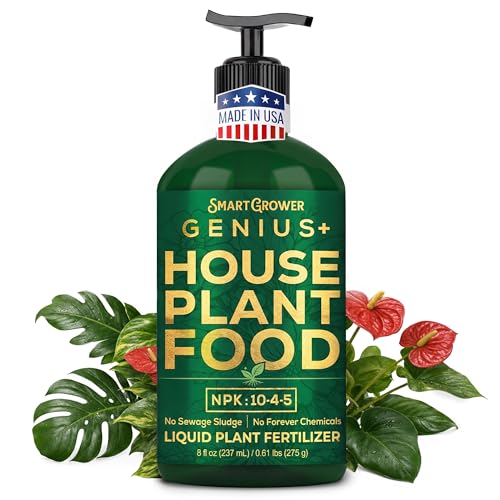
The Smart Grower Genius+ rethinks the feeding experience with an integrated pump that dispenses exactly one squirt per gallon, eliminating the need for measuring spoons or capfuls. This 8-ounce bottle packs a punch with a 10-4-5 NPK ratio — the highest nitrogen concentration in this guide — and still yields 96 gallons of mixed feed, matching the volumetric output of much larger competitors. The formula explicitly excludes sewage sludge, biosolids, and PFAS chemicals, addressing the “forever chemicals” concern that has emerged in some budget fertilizers.
Users transitioning their Pothos from granular time-release feeds to liquid notice an immediate difference in leaf turgidity and stem firmness after just two weekly waterings. The pump mechanism solves the overflow problem that plagues narrow-neck bottles — as long as you squeeze the pump before inserting it into a full bottle, you avoid the messy spill that some early buyers reported. The scent profile is mild and plant-like, a relief for anyone who has endured the manure odor of organic kelp blends in a small apartment.
Reviewers consistently call this their new go-to for Pothos, Monstera, and philodendron, citing two new leaves per plant within two months of consistent use. The concentrated nature means a single 8-ounce bottle can feed a modest collection for an entire growing season. The only catch is the overflow risk on the first pump insertion — work over a sink or use a few squirts into a separate container before seating the pump fully.
What works
- Built-in pump eliminates measuring guesswork and mess
- Ultra-high 10-4-5 NPK drives aggressive foliage growth
- Clean formula with no PFAS, sludge, or synthetic dyes
What doesn’t
- Bottle ships very full — pump insertion can cause overflow
- Higher nitrogen concentration requires caution with sensitive plants
3. Cute Farms Houseplant Food Concentrate
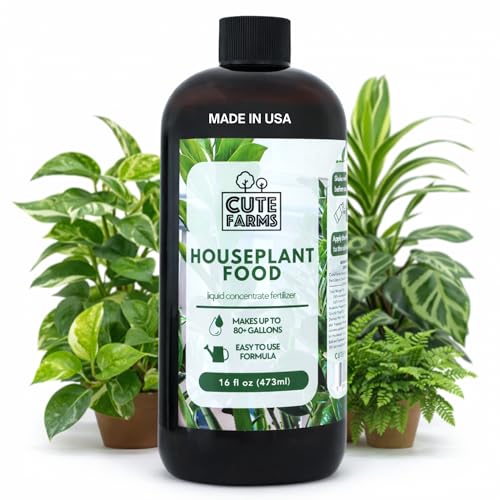
The formula is balanced to be gentle enough for every-watering application, which is ideal for Pothos owners who prefer to fertilize weakly-weekly rather than memorizing a separate feeding schedule. The one-cap-per-gallon dilution ratio is about as simple as liquid feeding gets — no fractions, no syringes, just a straight capful.
Customer reports consistently mention that this food revived Pothos that had stopped producing new leaves for months, with one user noting their plant grew “out of control” after switching from a generic brand. The gentle formulation means you can use it on succulents and African violets from the same bottle, though the Pothos-specific benefit is the steady supply of nitrogen that keeps trailing vines from going bald at the base. A single bottle lasted one reviewer over four months of regular feeding on a collection of twenty houseplants.
Some users observe a slight film on the water surface after mixing, which may be a minor aesthetic annoyance if you bottom-water and want crystal-clear reservoirs. The bottle does not include a measuring cup or pump — you need to use the cap as your dosing tool. For the sheer number of mixed gallons per dollar, combined with the forgiving strength that works with every watering, this is the most economical pick for a large Pothos collection.
What works
- Makes 80+ gallons from a single 16 oz bottle
- Gentle enough for every-watering application
- Simple one-cap-per-gallon dilution ratio
What doesn’t
- Can leave a visible film on standing water
- No integrated measuring pump — uses screw cap only
4. HiThrive Monstera Plant Food 6-2-4
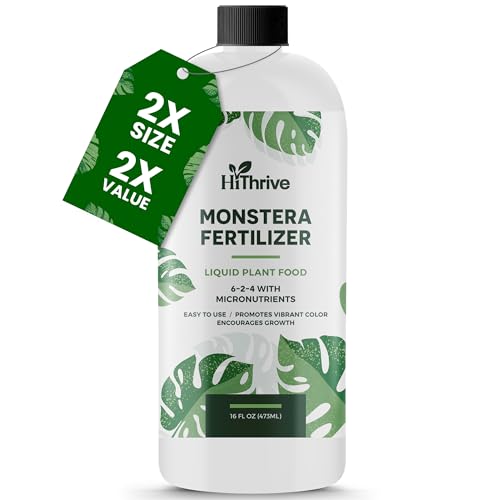
HiThrive built this 6-2-4 formula specifically for aroid plants, and Pothos respond to the nitrogen-heavy profile with the same vigor as Monsteras. The 16-ounce bottle makes 96 gallons at the standard feed rate of one teaspoon per gallon, matching the top-tier concentration value in this guide. Potassium at 4% supports climbing ability and stress resilience, which directly translates to longer, more robust trailing vines that hold their leaves without yellowing at the base.
Florida growers using this on indoor Pothos report increased leaf production and a deeper, richer green on the foliage within two weeks of first use. The instant-feeding formulation means the nutrients are available for root uptake immediately after watering, which is critical for Pothos grown in well-draining aroid mixes that flush through quickly. The bottle also includes a nutrient deficiency feed rate of two teaspoons per gallon for plants that look pale and leggy — a useful rescue protocol for neglected Pothos.
While the label says “Monstera,” the 6-2-4 ratio is actually more appropriate for Pothos than many all-purpose houseplant foods because it prioritizes nitrogen without excessive phosphorus that can accumulate in potting soil. The primary downside is the lack of organic certification — this is a synthetic soluble formula. For a budget-friendly, high-yield concentrate that targets the exact nutritional needs of vining aroids, HiThrive delivers reliable performance.
What works
- 96-gallon yield from a single 16 oz bottle
- Dual feed rate — standard and deficiency rescue protocols
- Potassium supports climbing habit and stress tolerance
What doesn’t
- Not organic or OMRI certified
- Labeled for Monstera — may confuse buyers seeking Pothos-specific branding
5. Houseplant Resource Center Monstera Food 5-2-3
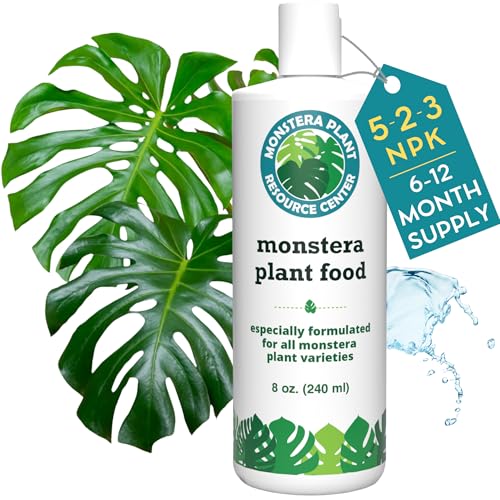
The Houseplant Resource Center formula uses chelated nutrients for superior bioavailability, meaning the nitrogen, phosphorus, and potassium remain soluble and accessible to Pothos roots even in pH-neutral tap water. The 5-2-3 NPK ratio is slightly lower in nitrogen than the top performers, but the chelation technology compensates by reducing nutrient lockout, which is a common issue when feeding Pothos in bark-heavy aroid mixes. This product is explicitly tested on Monstera, Pothos, and snake plants, giving it a targeted formulation rather than a generic all-purpose blend.
One remarkable user report describes a dormant Albo Monstera that had not produced a leaf in five months pushing out new growth just two weeks after the first feeding. For Pothos specifically, the formula promotes the large, fenestrated leaf development that variegated varieties like Marble Queen and Manjula struggle to maintain under low light. The bottle is backed by a small family business that publishes zero-waste production methods, appealing to environmentally conscious plant parents.
The 8-ounce bottle is the smallest in this guide, and while it is concentrated, the mixed-gallon yield is lower than the 16-ounce options from HiThrive and Cute Farms. Some users find the instruction to mix 1 teaspoon with “at least 2 cups of water” ambiguous — the safer interpretation is 1 teaspoon per quart. For precision and targeted chelated nutrition in a premium, pet-safe formulation, this bottle earns its place for collectors who prioritize quality over bulk volume.
What works
- Chelated nutrients prevent lockout in bark-based soils
- Specifically formulated for aroids including Pothos
- Small family business with zero-waste production
What doesn’t
- 8 oz bottle yields fewer mixed gallons than competitors
- Dilution instructions leave room for interpretation
6. Flourish Organic All-Purpose Plant Food 3-3-2
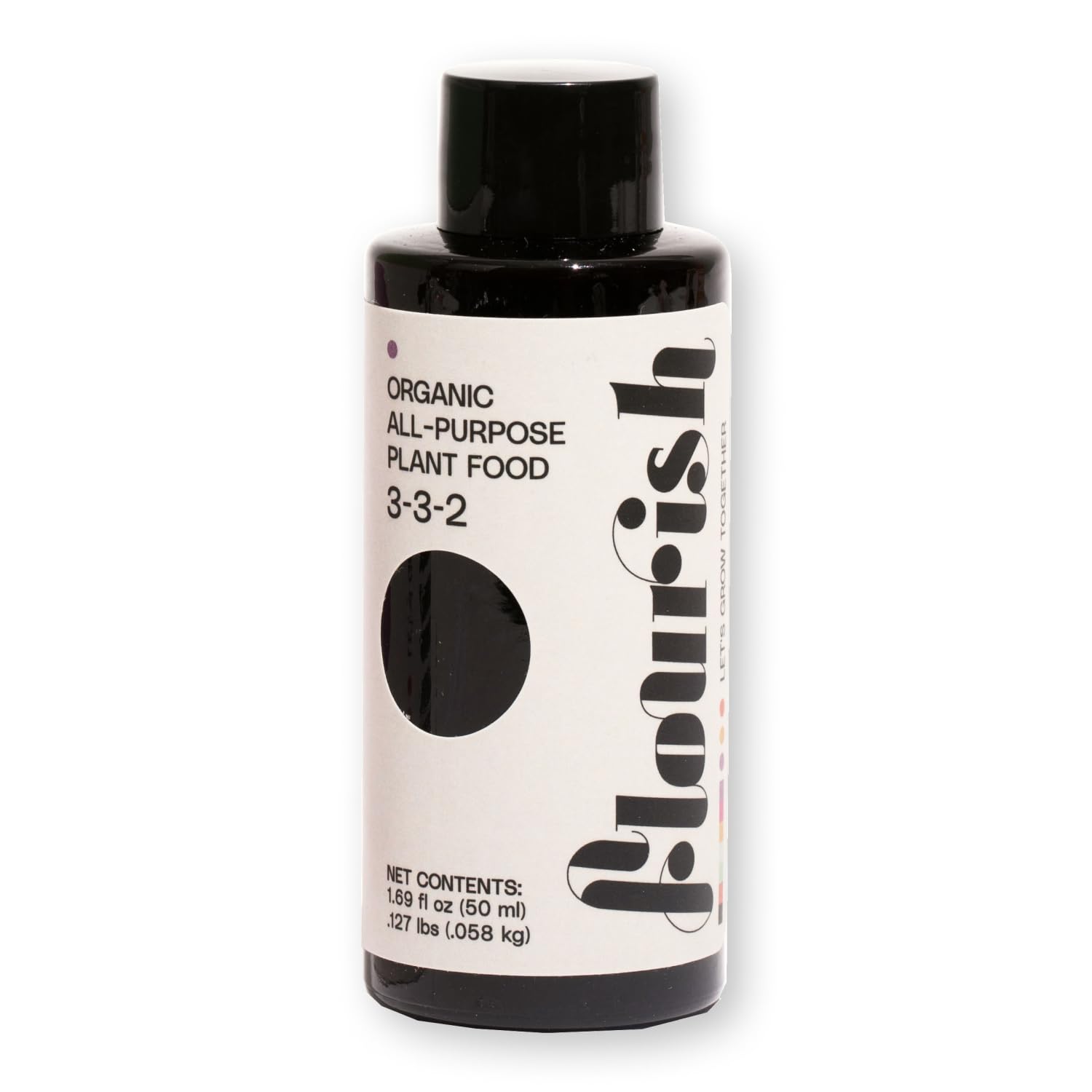
Flourish is the only product in this guide certified organic by the California Department of Food and Agriculture, and its ingredients are derived from food-waste byproducts — an innovative circular-economy approach that keeps landfill-bound scraps out of the waste stream. The 3-3-2 NPK is modest compared to synthetic competitors, but organic formulas deliver nutrition through microbial breakdown rather than direct salt absorption, making it nearly impossible to overfeed your Pothos. Each 1.69-ounce bottle provides 20-30 servings, which is enough for a small collection feeding once per week for two months.
Users report that this food revived a severely stressed fiddle leaf fig and promoted new growth within days, and the same response applies to Pothos grown in organic potting mixes. The food-waste origin gives the liquid a milder scent than traditional manure-based organics, though some sensitive noses still detect a lingering odor that dissipates after the soil dries. One reviewer noted that the formula is potent enough to trigger mushroom fruiting bodies in the soil — a sign of healthy microbial activity rather than a problem.
The tiny bottle size is the primary limitation — 1.69 ounces is inconvenient for anyone feeding more than five or six plants regularly, and the dispensing cap can be messy if you pour too fast. For the eco-conscious single-plant owner who wants a CDFA-certified, woman-owned product that proves sustainability and plant growth can coexist, Flourish is the most ethical option. Just be prepared to repurchase frequently if your Pothos collection expands.
What works
- CDFA certified organic from food-waste ingredients
- Woman-owned brand with sustainable production
- Gentle organic formula eliminates burn risk
What doesn’t
- Very small bottle — only 1.69 fl oz total
- Distinct organic odor lingers on damp soil
7. Espoma Organic Grow! Liquid Concentrate 2-2-2

Espoma Organic Grow! brings a 2-2-2 NPK balanced formula that prioritizes soil health over aggressive foliage push, making it ideal for maintenance feeding of established Pothos that already have good structure. The organic ingredients include kelp extracts and humic acids that stimulate beneficial soil bacteria and improve nutrient cycling in the root zone. As a registered Organic Input Material, it meets the requirements for organic production, and Espoma has been a trusted name in organic gardening since 1929.
Users frequently describe this as the product that “saved their houseplants after a move” or revived sun-damaged indoor plants, indicating its gentle restorative properties rather than aggressive growth forcing. The recommended schedule is every 2-4 weeks during the growing season, which aligns well with Pothos care routines that already water on a 7-10 day cycle. The 16-ounce bottle provides ample servings for a medium-sized collection, and the concentrate stores well if you mix only what you need for each watering.
The most common complaint is the strong manure-like odor that hits when you open the bottle and lingers briefly after application. This is characteristic of organic feed derived from natural proteins and kelp, but it can be off-putting in a kitchen or bedroom setting where Pothos are often displayed. Some users switch to dry granular organics specifically to avoid the smell. For organic purists seeking a time-tested brand at a budget-friendly entry point, Espoma delivers reliable, gentle feeding with the trade-off of a stinky mixing experience.
What works
- OMRI-listed organic with kelp and humic acids
- Very gentle — safe for seedlings and stressed plants
- Trusted brand with decades of organic gardening history
What doesn’t
- Strong manure-like odor during mixing and application
- 2-2-2 NPK is too low for pushing aggressive new growth
Hardware & Specs Guide
NPK Ratio — The Three Numbers
Every fertilizer label displays three hyphenated numbers representing the percentage by weight of nitrogen (N), phosphorus (P), and potassium (K). For Pothos, nitrogen is the primary driver of leaf and stem growth, so you want the first number to be the highest. A 6-2-4 or 10-4-5 ratio provides aggressive foliage push, while a balanced 2-2-2 is better for ongoing maintenance without forcing weak, leggy growth. Avoid bloom-boosting formulas with a high middle number.
Concentration Yield — Gallons Per Bottle
The most deceptive metric in liquid plant food is the bottle size versus the number of mixed gallons it produces. An 8-ounce bottle of 10-4-5 concentrate can yield 96 gallons of feed if the dilution rate is 1 teaspoon per gallon, whereas a 16-ounce bottle of 2-2-2 concentrate might only yield 16 gallons if the recommended dose is a full capful per quart. Always divide the total mixed gallons by the bottle size to calculate the true value per fluid ounce.
FAQ
Should I use a high-nitrogen fertilizer on variegated Pothos varieties like Marble Queen?
Can I use Monstera-specific plant food on my Pothos without harming it?
What causes white crust on the soil surface after fertilizing my Pothos?
Final Thoughts: The Verdict
For most gardeners, the plant food for pothos winner is the FoxFarm Grow Big 6-4-4 because it combines the highest nitrogen concentration for rapid vine development with a quart-size bottle that delivers unmatched mixed-gallon value. If you want a mess-free dosing system that still packs a 10-4-5 punch, grab the Smart Grower Genius+. And for budget-friendly bulk feeding that is gentle enough for every watering, nothing beats the Cute Farms Houseplant Food.