
Specs are compiled from manufacturer listings and verified buyer reviews and can change over time — please confirm the key details on the product page before buying.
Walking past a bed of vibrant, overflowing annuals while your own plants struggle to put out a single bloom is a feeling no gardener enjoys. The difference usually depends on what you feed them, and with so many bags and bottles on the shelf, picking the right one can feel like a chemistry exam. This guide cuts through the numbers to show you exactly which formulas actually deliver the color and flower count you are after.
I’m Rikta — the founder and writer behind Lawn Gear Lab. This guide is built by comparing the manufacturers’ published specifications and the patterns across verified customer reviews, so you get each pick’s real strengths and trade-offs instead of marketing spin.
Whether you have a few hanging baskets or a full border of petunias and zinnias, the right plant food for annuals makes the difference between a so-so display and a head-turning one, and we have matched each formula to a specific gardening need.
Quick Picks
- True Organic Annuals & Perennials Food – 4lb Bag — Best Overall
- Fertilome All Purpose Water Soluble Plant Food 20-20-20 (3 lb.) — Top Performer
- Espoma Organic Flower-Tone 3-4-5 – 4 lb. Bag (2-Pack) — Bloom Booster
- Espoma Organic Bloom! 16-Ounce Concentrated Plant Food — Liquid Power
- FOOP Organic All-Purpose Liquid Plant Food – 32oz — Versatile Pick
- Nelson Plant Foods ColorStar 4-5 Month Fertilizer – 2 lb. — Set & Forget
How To Choose The Best Plant Food For Annuals
Annuals pack their entire life cycle into one season, so they need a steady supply of nutrients to keep pumping out flowers from spring until frost. Picking the wrong food means either lots of green leaves with no blooms, or a quick burn that sets the plant back. Here are the three things that matter most.
N-P-K Ratio — The Middle Number is for Blooms
The three numbers on the bag (Nitrogen-Phosphorus-Potassium) tell you what the food prioritizes. Nitrogen drives leaf and stem growth, Phosphorus supports root development and flower production, and Potassium boosts overall plant health. For annuals, you want a higher middle number or a balanced ratio — something like a 3-4-5 or a 20-20-20 — so the plant has the energy to keep forming buds instead of just getting taller.
Granular vs. Liquid — Effort vs. Control
Granular foods (like Espoma Flower-Tone or Nelson ColorStar) are sprinkled onto the soil and break down slowly over weeks or months, so you feed once and forget about it for a while. Liquid concentrates (like Espoma Bloom! or FOOP) mix with water and deliver nutrients immediately, which is great for a quick boost or for plants in containers where water flushes nutrients out fast. Your choice depends on whether you prefer a hands-off approach or want to adjust feeding every time you water.
Organic vs. Synthetic — Soil Health vs. Rapid Results
Organic fertilizers (like the True Organic and Espoma options here) are derived from natural materials like bone meal, fish emulsion, and kelp. They feed the soil microbes alongside the plant, which builds long-term soil structure. Synthetic formulas (like the Fertilome 20-20-20) use mineral salts that are immediately available to the roots, which can revive a struggling plant in hours — but they do little for soil biology. Both work fine for annuals, which you replace every season anyway, but organic options are gentler on the roots and less likely to burn.
Quick Comparison
On smaller screens, swipe sideways to see the full table.
| Model | Best For | N-P-K Ratio | Form | Item Weight | Amazon |
|---|---|---|---|---|---|
| True Organic Annuals & Perennials Food | Organic blooms on a budget | 4:4:6 | Granules | 4 Pounds | Amazon |
| Fertilome All Purpose 20-20-20 | Quick revival & balanced growth | 20:20:20 | Water-soluble granules | 3 Pounds | Amazon |
| Espoma Organic Flower-Tone 3-4-5 | Abundant, long-lasting blooms | 3:4:5 | Granules | 4.42 Pounds | Amazon |
| Espoma Organic Bloom! Liquid | Liquid bloom booster for containers | 1:3:1 | Liquid | 16 ounces | Amazon |
| FOOP Organic All-Purpose Liquid | Versatile organic liquid for garden & pots | N/A | Liquid | 32 Ounces | Amazon |
| Nelson Plant Foods ColorStar 4-5 Month | Set-and-forget season-long feeding | N/A | Granules | 2 lb. | Amazon |
In‑Depth Reviews
1. True Organic Annuals & Perennials Food – 4lb Bag
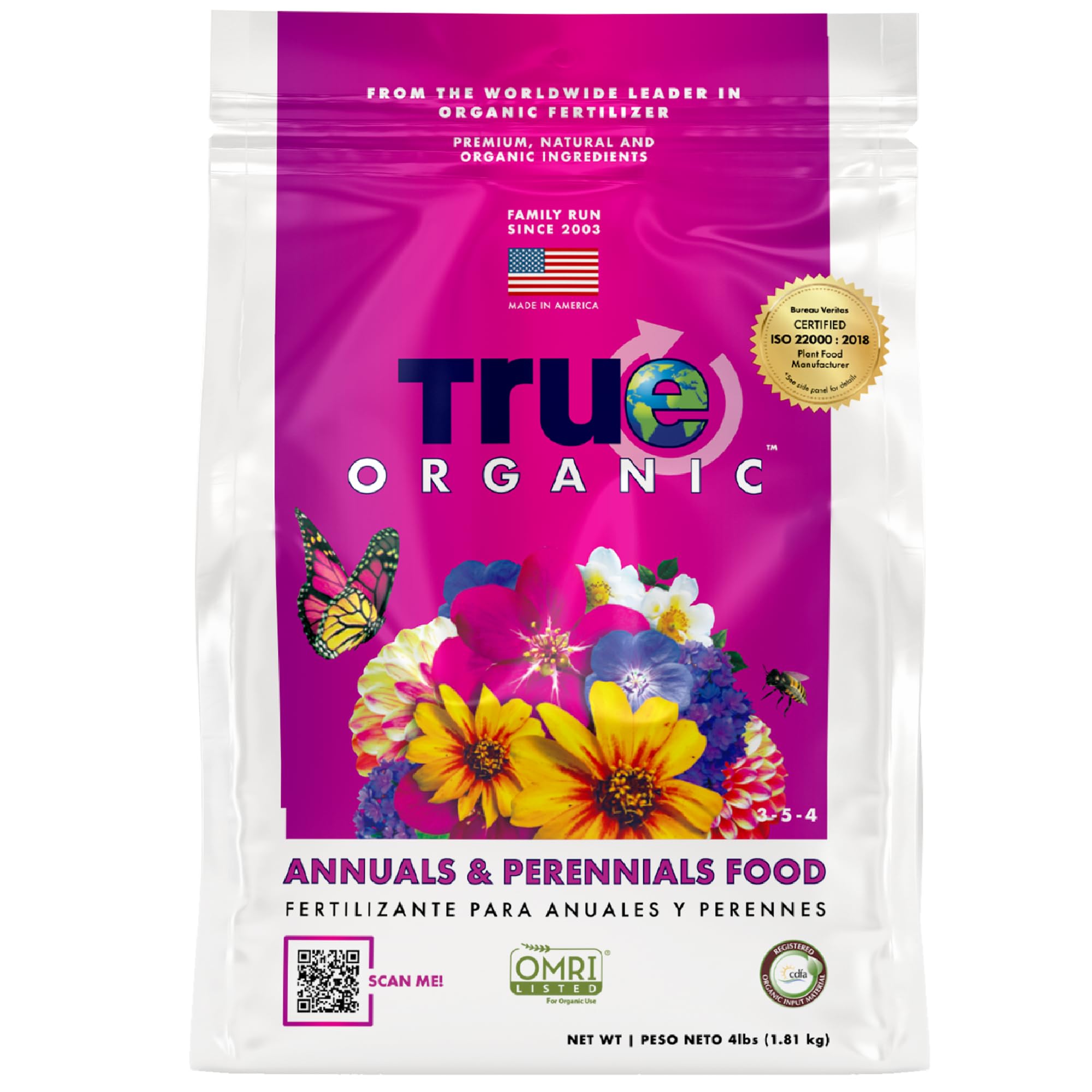
The budget-friendly organic granular that turned zinnias into giants in two weeks, according to buyers.
This 4-pound bag covers up to 70 sq. ft. and uses a 4:4:6 N-P-K ratio, which gives a slight potassium boost for overall plant stamina and disease resistance. Unlike the Espoma Flower-Tone (which uses a 3:4:5 ratio), this True Organic formula has a 33% higher first number, meaning it provides more nitrogen to support leafy growth alongside flower production — a smart balance for annuals that need to bulk up fast and then bloom.
Buyers report it revived struggling zinnias, pushing them to 4 ft tall in 2 weeks with the biggest blossoms and double blooms they had ever seen. The granules are easy to measure — reviewers mention using 1/4 cup per bush every 3-4 weeks — and they have an earthy, all-natural smell with no chemical odor. Made in the USA with organic inputs, this pick earns the top spot for delivering visible results without the premium price of the established organic brands.
The organic heavy lifter: This is the best entry point for anyone switching from synthetic to organic feeding. The 4:4:6 mix supports both foliage and flowers, and the 4-pound bag gives you plenty of coverage for a medium-sized garden.
Notable catch: It is a granular food that needs to be watered in after application, so it requires a bit more effort than a simple sprinkle-and-forget product. A few buyers wanted a larger bag size for bigger gardens.
Who it is for: Gardeners who want an affordable, organic granular that produces dramatic growth in annuals and perennials without harsh chemicals.
2. Fertilome All Purpose Water Soluble Plant Food 20-20-20 (3 lb.)

The water-soluble synthetic that revived a drooping Hosta within two hours of feeding, owners mention.
If you want immediate results, this synthetic granular mix delivers a perfectly balanced 20-20-20 N-P-K that is instantly available to plant roots. The 3-pound bag is significantly heavier (47% more) than the Espoma Flower-Tone alternative, providing more feedings for your money. You can use it as a soil drench (1-2 teaspoons per gallon of water) or as a foliar spray (1/4 to 1 teaspoon per gallon), which gives you two ways to correct deficiencies fast.
One reviewer noted it revived drooping, unfed Hosta within 2 hours of foliar feeding, and their indoor Philodendron leaves grew 5x larger using 1 tsp per gallon. Unlike organic options that need time to break down, this water-soluble powder works immediately, making it a go-to for rescuing heat-stressed or under-fed annuals in containers. It is also excellent for tropical plants — reviewers use it on everything from tomatoes to monstera.
The quick fix specialist: When your annuals look pale and weak, this is the product that turns them around before the end of the day. The 3-pound bag stores easily and mixes up in seconds.
Notable catch: As a synthetic fertilizer, it does not build soil health or feed beneficial microbes like organic options do. It is also easy to over-apply and burn plants, so you need to follow the mixing instructions carefully.
Best for: Experienced growers who want precise control over feeding and need a fast-acting rescue formula for declining annuals.
3. Espoma Organic Flower-Tone 3-4-5 – 4 lb. Bag (2-Pack)

The organic standby that customers note makes flowers bloom twice as much.
This is the most trusted name in organic flower feeding, and for good reason. The 3:4:5 N-P-K ratio has a higher middle number (phosphorus) than the True Organic pick, which specifically supports bigger, more abundant blooms rather than leafy growth. A single application — just sprinkle on the drip line and water — feeds for weeks, and the 2-pack gives you 4.42 pounds total.
Reviewers point out it is the best flower fertilizer they have used, claiming “it will make your flowers bloom twice as much.” Unlike the concentrated liquid Espoma Bloom! (which has a 16-ounce bottle and needs mixing), this granular form is completely ready to use — no measuring or mixing required. It is approved for organic gardening and contains 5% calcium, which helps prevent common issues like blossom end rot in flowers.
The bloom specialist: If your annuals are all leaves and no flowers, this formula shifts the energy to bud production. The 2-pack gives excellent value for larger flower beds.
Notable catch: The organic ingredients give it a strong manure smell that shoppers say can be pungent when first applied. It is best kept away from pets and not opened indoors.
Best for: Organic gardeners who prioritize flower quantity over fast green-up and want a no-mix, slow-release solution for annuals and roses.
4. Espoma Organic Bloom! 16-Ounce Concentrated Plant Food

The liquid concentrate that greatly improved flower vibrancy on everything from zinnias to gardenias, according to buyers.
This liquid plant food uses a 1-3-1 N-P-K ratio, which is heavily weighted toward phosphorus — the exact nutrient that drives flower development. Unlike the 3:4:5 granular Flower-Tone above, this is a liquid concentrate that you mix with water and apply immediately, so the nutrients are absorbed within hours rather than weeks. A single capful per gallon of water is all it takes, and you feed every 2-4 weeks during the growing season.
Buyers report it significantly improved the vibrancy and beauty of zinnias, gardenias, geraniums, azaleas, and hydrangeas. One buyer mentioned it worked fantastically on their lantanas, producing more flowers than ever. It is approved for organic gardening and enhanced with kelp extracts and humic acids, which help with nutrient uptake and soil conditioning.
The liquid booster: Perfect for hanging baskets and container annuals where water flushes out nutrients fast. The 1:3:1 ratio targets blooms directly.
Notable catch: The 16-ounce bottle is small, and buyers mention it does not last long for larger gardens — one reviewer uses it twice monthly on a 15,000 sq ft lot and wished for larger sizes. The product odor is also noted as pungent.
Best for: Container gardeners and anyone who wants a fast-acting organic liquid that delivers noticeable flower vibrancy within a couple of waterings.
5. FOOP Organic All-Purpose Liquid Plant Food – 32oz

The all-in-one organic liquid that buyers call a “standout” for reviving heat-damaged plants and supporting root growth.
At 32 fluid ounces, this bottle gives you twice the volume of the Espoma Bloom! liquid, and at a 1:32 mixing ratio, it makes 32 gallons of ready-to-use fertilizer — excellent value for a mid-sized garden. While the Espoma Bloom! has a bloom-specific ratio, this FOOP formula takes a broader approach with fish emulsion, kelp, mycorrhizae, and fish manure to feed everything from flowers and herbs to trees and shrubs.
Owners mention it is a “standout” for bringing plants back to life after heat damage; one reviewer called it the best plant food for consistently reviving unhealthy plants. The mild smell makes it more tolerable for indoor use compared to the stronger organic fish-based products. If you grow a mix of annuals, perennials, and vegetables in the same space, this single bottle covers everything without needing separate products.
The all-rounder organic: One bottle handles your flowers, herbs, and veggies, making it ideal for mixed gardens. The mycorrhizae content helps establish root systems in new plants.
Notable catch: The 32-ounce bottle is still small for large gardens, and some customers note it is expensive if you follow the recommended weekly feeding frequency. A few also mention the smell, though milder than other organic fish emulsions.
Best for: Home gardeners who want a single organic liquid that works on everything from annual flowers to vegetable crops without the overpowering fish smell.
6. Nelson Plant Foods ColorStar 4-5 Month Fertilizer – 2 lb.
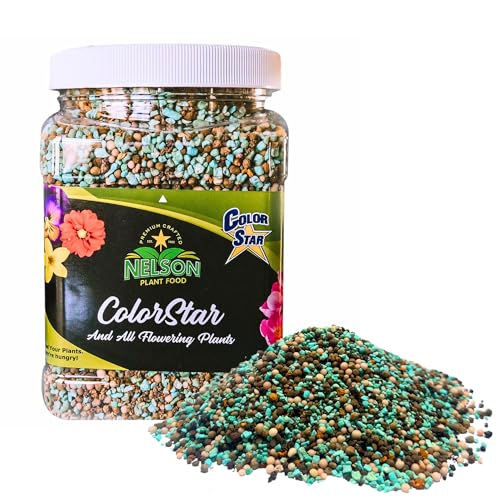
The granular that feeds your annuals for up to five months with a single application — a true set-and-forget solution.
For the ultimate hands-off approach, this time-release formula uses 6 different nitrogen sources, each with a different release characteristic, to feed plants consistently over a 4-5 month period. Unlike the liquid options (which need mixing every 2-4 weeks) or the Espoma granulars (which require monthly re-application), you apply this once in spring and it takes care of the whole season. It contains 25% bone and blood meal plus essential micronutrients like iron, zinc, copper, and manganese.
Reviewers point out it is a “great bloom booster” that produces immediate benefits — one user saw more hydrangea blooms than usual after a single spring application. It is specifically formulated to increase bloom size and quantity, making it a strong choice for annual bedding plants that need consistent feeding without your constant attention.
The lazy gardener’s dream: Apply once and enjoy blooms all season without remembering to feed again. The micronutrient blend ensures flowers have everything they need.
Notable catch: The 2 lb. jar is small for the price — multiple buyers comment that it is rather pricey given the jar size. The time-release mechanism also means you cannot adjust feeding if your plants show signs of deficiency mid-season.
Best for: Gardeners who want minimal effort and are willing to pay a premium for season-long continuous feeding without mixing or measuring.
Understanding the Specs
N-P-K Ratio
The three numbers on the label stand for Nitrogen (N), Phosphorus (P), and Potassium (K) — the three primary nutrients plants need. The first number drives green leaf and stem growth, the middle number supports root development and flower production, and the third number boosts overall plant health and disease resistance. For annuals, a balanced ratio like 20-20-20 feeds everything evenly, while a higher middle number like 3-4-5 or 1-3-1 shifts the plant’s energy toward making flowers instead of leaves.
Granules vs. Liquid
Granular fertilizers are dry pellets that you sprinkle on the soil and water in. They break down slowly, providing a steady supply of nutrients over weeks or months. Liquid concentrates are mixed with water and applied directly to the soil or as a foliar spray (sprayed onto the leaves). Liquids work faster because the nutrients are immediately available, but they need to be reapplied more often. Containers and hanging baskets benefit from liquids because water drains through quickly, washing nutrients away.
FAQ
What N-P-K ratio is best for annual flowers?
Should I use liquid or granular plant food for annuals in hanging baskets?
Is organic plant food better than synthetic for annuals?
How often should I feed my annuals?
Can I use tomato food on my annual flowers?
Why are my annuals getting lots of leaves but no flowers?
Can I mix different plant foods together?
How much plant food does a 4 lb bag cover?
Can I use plant food for annuals on indoor plants?
What is the difference between a bloom booster and an all-purpose fertilizer?
Final Thoughts: The Verdict
For the majority of shoppers, the plant food for annuals winner is the True Organic Annuals & Perennials Food because it combines a balanced 4:4:6 organic formula with dramatic results at a fair price, as shown by the zinnia growth reported by buyers. If you want a quick-acting synthetic that can revive struggling plants within hours, grab the Fertilome 20-20-20. And for a completely hands-off approach that feeds your flowers all season long with one application, the Nelson ColorStar is your best bet.
How We Picked
We do not accept paid placement, and we did not hands-on test every unit. Instead, we match each pick to a real buyer and use-case by comparing the manufacturers’ published specifications against the patterns in verified customer reviews — so you get each pick’s real strengths and trade-offs instead of marketing copy.
Sources & Methodology
Specifications: manufacturer listings and product documentation. Review insights: verified customer reviews, as of July 2026. Pricing: not shown on this page (it changes often); check the current price via the retailer link.
As an Amazon Associate, Lawn Gear Lab earns from qualifying purchases. This does not affect which products we feature.