
Finding a pest treatment that kills spider mites, aphids, and fungus gnats without scorching your fiddle leaf fig or contaminating your herb garden is the central struggle for every indoor plant owner. The wrong formula can leave sticky residues, fill your living space with fumes, or simply fail to break the pest life cycle.
I’m Rikta — the co-founder and writer behind Lawn Gear Lab. I’ve spent countless hours analyzing pesticide formulations, studying active ingredient efficacy against common indoor pests, and cross-referencing thousands of owner reports to separate the sprays that truly work from those that just smell like neem oil.
This guide breaks down the top contenders for the best pesticide for indoor plants, comparing contact killers, systemic options, and organic concentrates so you can match the right formula to your specific infestation.
How To Choose The Best Pesticide For Indoor Plants
Indoor environments amplify the stakes — poor ventilation traps chemical fumes, and confined roots are more sensitive to phytotoxicity. The right choice hinges on matching your pest’s feeding style (sucking vs. chewing) with the delivery method (contact vs. systemic) and the treatment’s safety profile for your specific plant species.
Active Ingredient & Mode of Action
Clarified hydrophobic neem oil works by smothering soft-bodied insects and disrupting fungal spore germination, making it a solid all-rounder. Rosemeric acid (found in SNS-209) creates a systemic barrier inside the plant, deterring chewing and sucking insects from the inside out. Pyrethrin-based formulas offer rapid knockdown but degrade quickly, requiring precise spray timing. Avoid products relying solely on soap surfactants for heavy infestations — they often lack the residual action needed to catch hatching eggs.
Application Method: Ready-to-Use vs. Concentrate
Ready-to-use trigger sprays are ideal for quick spot treatments on a few houseplants — no mixing, no measuring, and no risk of over-concentrating. Concentrates deliver far more treatments per dollar and give you control over dilution strength, which is critical for sensitive plants like ferns or succulents that may burn at full label rates. Systemics in granular form provide weeks of protection through root uptake, but they take 7–14 days to fully distribute, so they are a poor choice for an active, visible infestation.
Plant Safety & Indoor Suitability
Check the label for “phytotoxicity warnings” and always test a small leaf area 24 hours before full coverage. Products containing mineral oils or high surfactant loads can damage leaf cuticles, especially on ficus, calatheas, and seedlings. OMRI-listed or FIFRA 25(b) exempt formulations are your safest bet for edible indoor herbs like basil and mint — they leave no synthetic residues and can be used up to harvest day when applied correctly.
Quick Comparison
On smaller screens, swipe sideways to see the full table.
| Model | Category | Best For | Key Spec | Amazon |
|---|---|---|---|---|
| Athena IPM RTU | Liquid Spray | Commercial-grade indoor gardens | 32 oz, EPA 25(b) exempt | Amazon |
| Sierra SNS-209 | Systemic Concentrate | Preventative systemic protection | 16 oz, 100% rosemeric acid | Amazon |
| Garden Safe Fungicide3 | Triple-Action Liquid | Large collections & outdoor transfers | 128 oz, neem oil extract | Amazon |
| Grower’s Ally Crop Defender 3 | Triple-Action Spray | Organic nursery & seedlings | 24 oz, OMRI Listed blend | Amazon |
| Bonide Systemic Granules | Granules | Fungus gnat larvae control | 8 oz, imidacloprid | Amazon |
| Natria Neem Oil Spray | Ready-to-Use Spray | Quick fruit fly & whitefly knockdwn | 24 oz, 0.9% neem oil | Amazon |
| Evergreen Way Insecticide | Concentrate | Economical multi-plant treatment | 16 oz, bio-based concentrate | Amazon |
In‑Depth Reviews
1. Athena IPM Plant Pest Control RTU
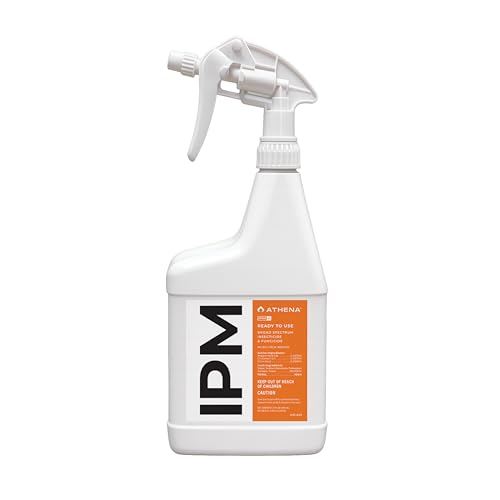
Athena IPM is a broad-spectrum, ready-to-use spray trusted by commercial cultivators for indoor grow rooms and hydroponic facilities, and the formulation reflects that pedigree. The active botanical oil blend kills spider mites, aphids, and thrips on contact while also suppressing powdery mildew, all without requiring any mixing or measuring — you just shake and spray. At 32 ounces, this bottle covers a substantial collection, and the fine mist nozzle delivers even coverage without drenching the soil.
Multiple verified buyers report that this spray eliminated stubborn spider mite infestations that resisted DIY solutions, and several highlight its pleasant, non-overpowering smell — a practical advantage for living room and bedroom plants. The FIFRA 25(b) exempt status means no synthetic pesticides, making it safe for use around pets and children when label directions are followed. For indoor gardeners who want professional-grade knockdown without the headache of concentrates, this is the gold standard.
The only trade-off is that, like all contact sprays, it must hit the pest directly to be effective, so thorough coverage — including leaf undersides and stem crevices — is mandatory. Reapplication every 5–7 days is recommended during active outbreaks, which means the 32 oz bottle may deplete quickly if you are treating a large, heavily infested area. Still, for sheer ease of use and reliability, this is the top pick for the serious indoor grower.
What works
- Professional-grade formula trusted by commercial growers
- Pleasant scent and non-toxic when used as directed
- No mixing required — spray straight from bottle
What doesn’t
- Contact-only action requires thorough coverage of leaf undersides
- Frequent reapplication needed for heavy infestations
2. Sierra Natural Science SNS-209 Systemic Concentrate

SNS-209 is a genuinely different approach to indoor pest control: rather than drowning pests on the leaf surface, it delivers rosemeric acid into the plant’s vascular system via root uptake. When a spider mite or thrip takes a bite, it ingests the compound and either stops feeding, moves on, or dies — making it a systemic deterrent rather than a contact poison. This is a game-changer for persistent pests that hide in soil crevices or under leaf curls where sprays cannot reach.
The concentrate must be diluted with water at every watering, and owners consistently report that using it weekly as a preventative keeps large collections of houseplants completely free of mealybugs, thrips, and fungus gnats. It mixes well with standard liquid fertilizer and produces no offensive odor — a major plus for indoor use. For anyone battling a recurring infestation that refuses to die to contact sprays, SNS-209 offers a long-term defense that actually works from the inside out.
The main drawback is the time to efficacy — the plant needs roughly two weeks to take up enough rosemeric acid to reach protective levels, so it is useless as a “rescue” remedy for an active bloom. Additionally, some users note that it functions more as a deterrent than a lethal pesticide, meaning extremely high pest pressure may still cause damage. It works best as a foundational layer in an integrated pest management routine, not as a standalone cure.
What works
- Internal protection reaches every part of the plant
- Safe for pets and mixes with fertilizer
- Effective preventative for large collections
What doesn’t
- Takes 1–2 weeks to build up protective levels
- Deterrent effect may not stop heavy infestations
3. Garden Safe Fungicide3
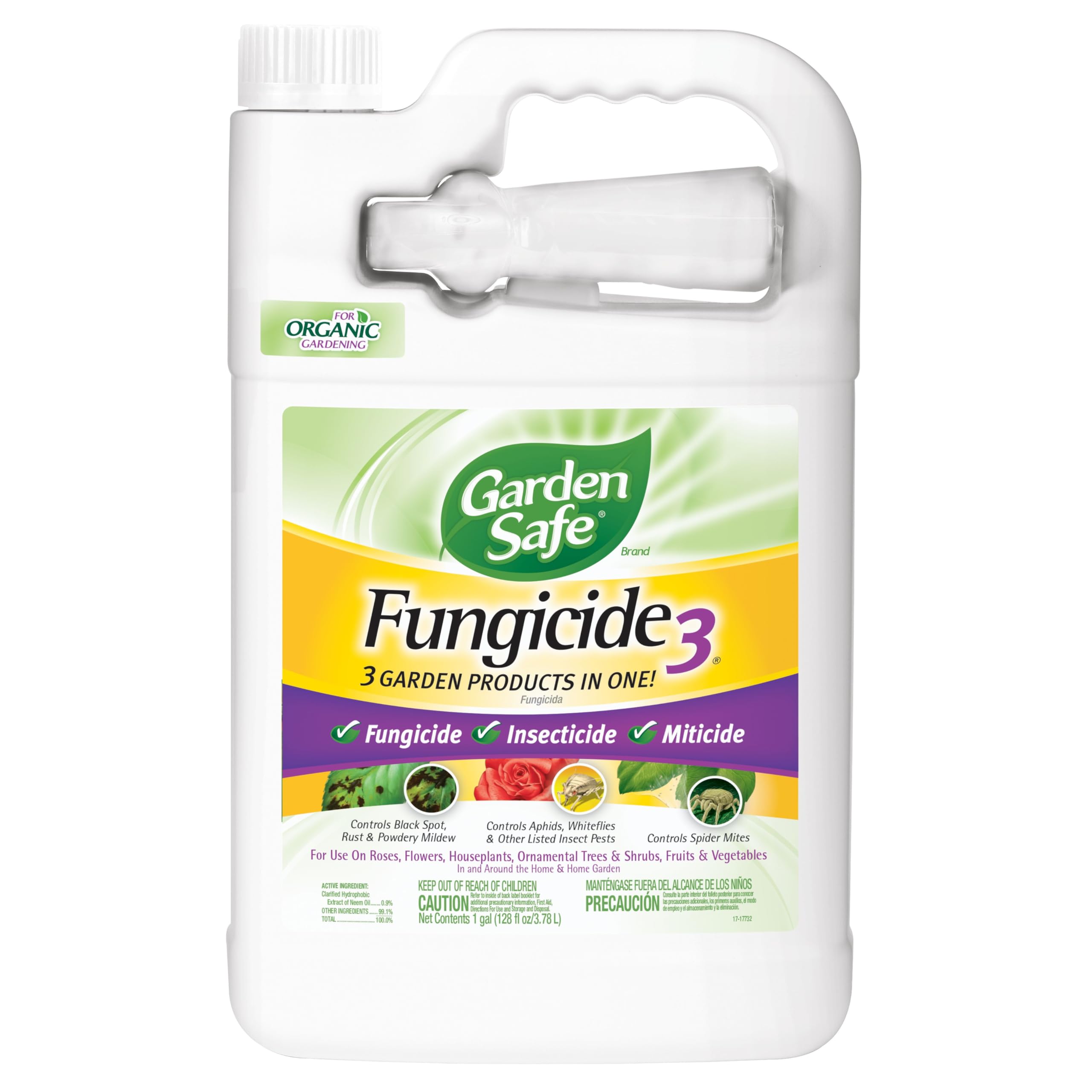
Garden Safe Fungicide3 delivers a full gallon of triple-action power for the same ballpark price as many 24-ounce competitors, translating to roughly four times the volume. The active ingredient is clarified hydrophobic extract of neem oil at a concentration high enough to function as a fungicide, insecticide, and miticide in one pass. It controls black spot, rust, powdery mildew, aphids, whiteflies, and spider mites, making it an all-in-one solution for anyone who brings outdoor plants indoors for the winter.
The gallon-sized container comes with a sprayer attachment, though several owners note the built-in hose is short and awkward for reaching plants clustered on shelves. Mixing is straightforward, and the product works well on sensitive species like orchids and tomatoes without leaf burn when applied at the correct dilution. For indoor gardeners with a large collection — say, 30+ pots — the per-application cost is hard to beat, and the neem oil base is organic-certified, which satisfies most “natural gardening” criteria.
The biggest complaint revolves around the sprayer design, which some users describe as impractical for precise indoor application — the coiled tube is only about four inches long. Plan to transfer the liquid to a separate trigger sprayer for comfortable use, which adds one extra step but does not detract from the formula’s effectiveness. Also note that neem oil can leave a sheen on foliage that attracts dust, so wipe leaves gently after the spray dries for best aesthetics.
What works
- Excellent per-ounce value for large collections
- Triple-action: kills insects, mites, and fungal diseases
- Works on sensitive orchids and edible vegetables
What doesn’t
- Included sprayer has short, awkward tube
- Neem oil leaves a visible sheen on leaves
4. Grower’s Ally Crop Defender 3
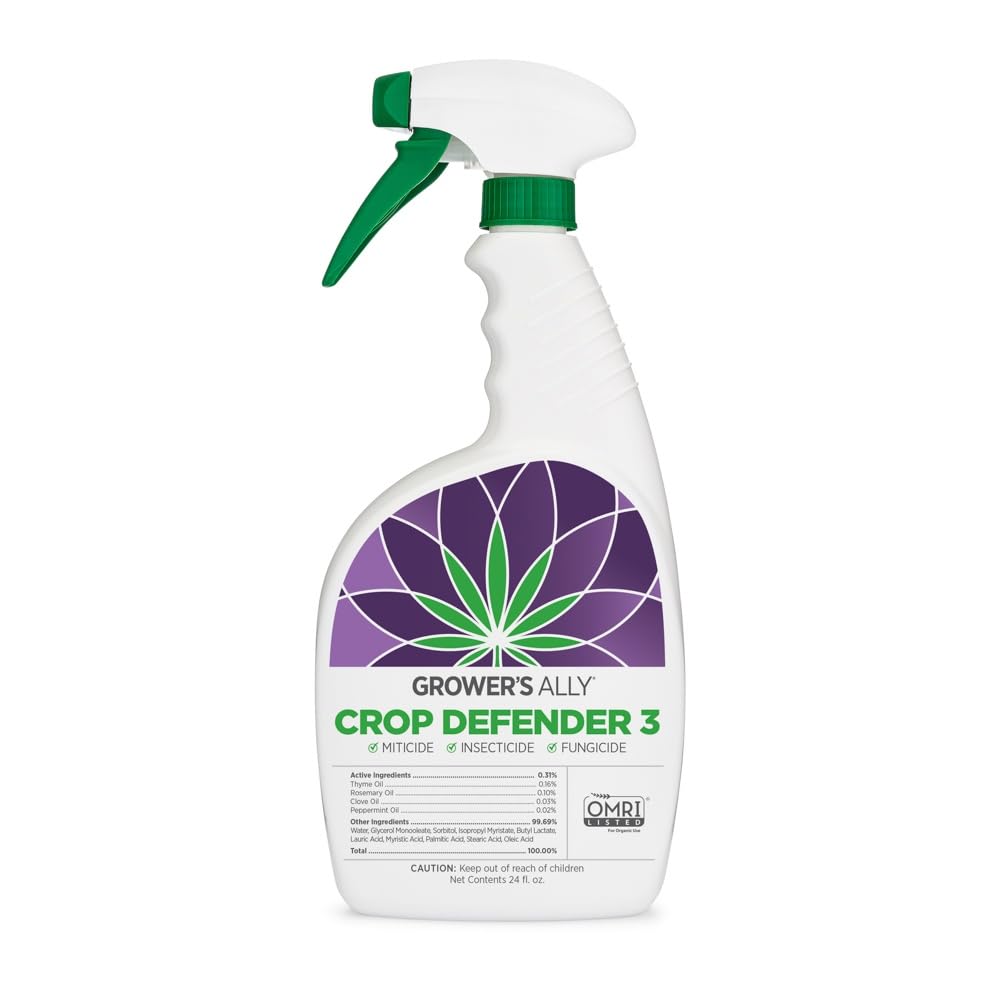
Grower’s Ally Crop Defender 3 is specifically formulated to avoid the leaf burn that often plagues neem oil and surfactant-based sprays on young or tender plants. The synergistic blend of botanical oils is OMRI Listed and FIFRA 25(b) exempt, meaning it contains zero synthetic pesticides, heavy metals, or residual solvents — important for indoor growers who are also cultivating culinary herbs or microgreens. The built-in surfactant ensures the spray beads up and clings to waxy leaf surfaces rather than rolling off.
Verified buyers consistently praise this product for eradicating spider mites and aphids on seedlings without any signs of phytotoxicity, a common problem with harsher formulas. The smell is frequently described as pleasant — a citrus-herbal note — which makes it far more tolerable for indoor spraying than traditional neem oil’s sulfurous odor. It is also bee-safe when dry, though that matters less indoors than the fact that it’s safe for beneficial soil mites.
The 24-ounce ready-to-use bottle treats a moderate collection, but users dealing with a large grow tent or multiple rooms may find the bottle size limiting. Like all contact sprays, it requires thorough coverage — including the undersides of leaves where thrips and mites hide — and weekly reapplication to break the egg hatch cycle. For indoor gardeners who prioritize plant safety and a clean scent, this is a top-tier choice.
What works
- Does not burn seedlings or sensitive leaves
- Pleasant scent compared to neem oil
- OMRI Listed and free of synthetic residues
What doesn’t
- Small bottle may deplete quickly on large collections
- Requires consistent weekly reapplication
5. Bonide Systemic Houseplant Insect Control Granules

Bonide Systemic Granules are the go-to solution for fungus gnat infestations that refuse to die to yellow sticky traps. The active ingredient, imidacloprid, is a neonicotinoid that is absorbed through the roots and distributed throughout the plant, killing larvae in the soil and adult gnats that feed on treated tissue. A single application sprinkled onto dry soil and watered in provides protection for roughly two months, which is far longer than any contact spray can manage.
Owner feedback is overwhelmingly positive regarding gnat eradication — multiple users report complete elimination within a week, even after months of failing with other methods. The granules are virtually odorless and cause no visible stress to the plant. They also work for aphids, whiteflies, and scale, making them a good all-rounder for preventative care.
The critical limitation is that imidacloprid is toxic to bees and aquatic life, so it should never be used on indoor plants that you plan to move outside during flowering season. It is also not recommended for edible herbs or vegetables grown indoors, as systemic uptake means the chemical remains in the plant tissue. For purely decorative houseplants battling fungus gnats, this is the most effective long-term solution available, but its use must be restricted to non-edible plants only.
What works
- Eliminates fungus gnat larvae at the soil level
- Single application lasts up to 2 months
- Odorless and causes no leaf stress
What doesn’t
- Not safe for edible herbs or vegetables
- Bottle is overpackaged — less product than expected
6. Natria Neem Oil Spray
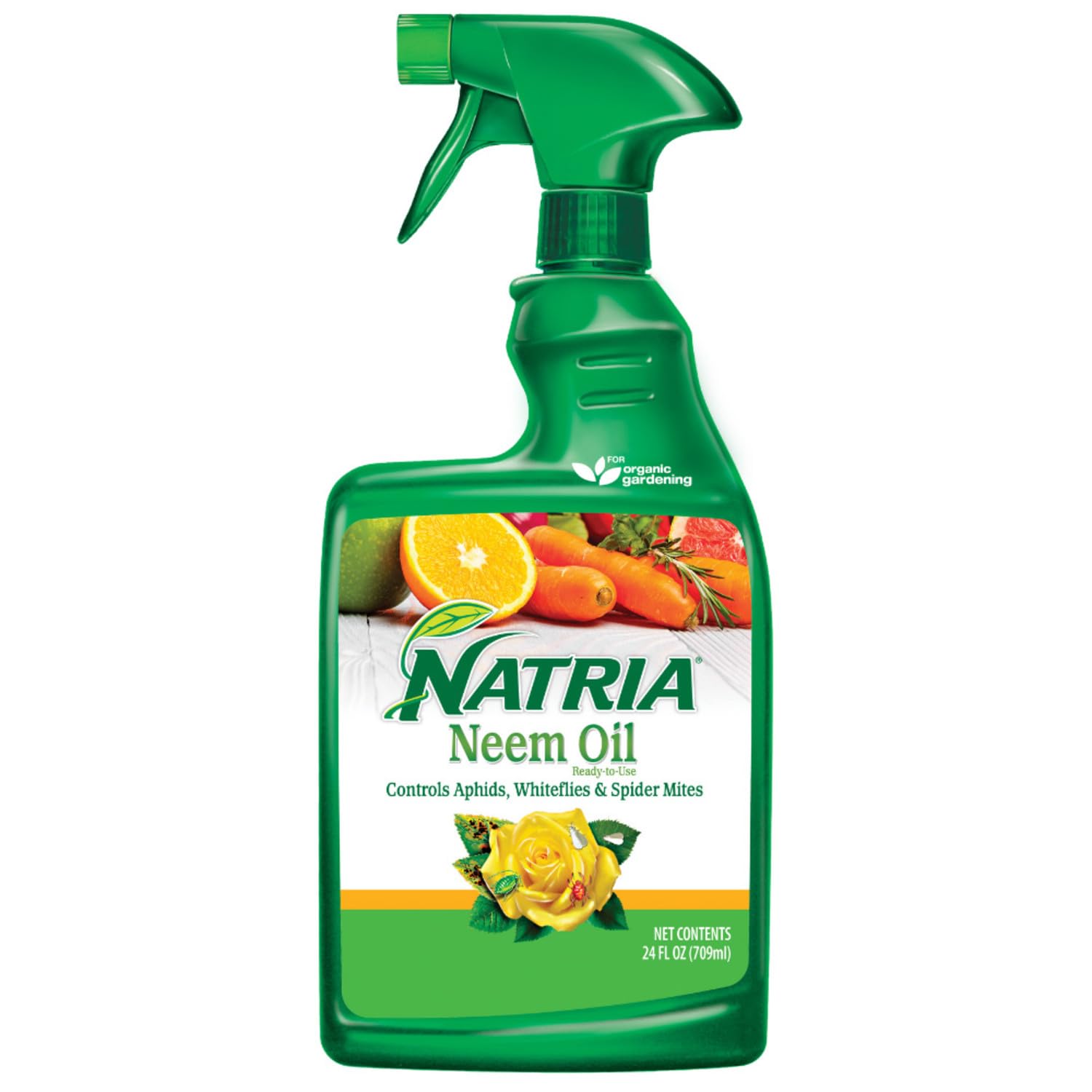
Natria Neem Oil Spray is the classic entry-level, ready-to-use option that delivers a clarified neem oil formulation at an approachable entry point, making it ideal for beginners who need a quick fix for fruit flies, whiteflies, or powdery mildew. The 0.9% clarified hydrophobic extract of neem oil is pre-diluted in a trigger spray bottle, so there is zero guesswork — just point, spray, and saturate. Users consistently report immediate knockdown of fruit flies and aphids, often after a single application.
The formula is EPA-approved for use up to the day of harvest on edible plants, which gives it versatility for the indoor herb gardener. Customers note the initial smell is strong but fades within a day or two, making it tolerable for indoor use. The 24-ounce bottle offers decent mileage for a small collection of 5–10 pots, and the natural base avoids the harsh synthetic chemical concerns that worry many indoor gardeners.
On the downside, the low neem oil concentration means it may require more frequent reapplication — every 4–5 days — compared to concentrated neem products. Some users report that while it reduces pest populations, it does not fully eliminate entrenched infestations of spider mites or thrips, which often require multiple treatment cycles with strict coverage. For light, early-stage problems, it is excellent; for heavy infestations, you will likely need something stronger.
What works
- Ready-to-use — no mixing required
- Safe for use on edible herbs up to harvest day
- Immediate knockdown of fruit flies and whiteflies
What doesn’t
- Low concentration may not eliminate heavy infestations
- Strong initial odor that lingers for a day
7. Evergreen Way Organic Insecticide & Fungicide Concentrate

Evergreen Way’s concentrate offers a bio-based formula that punches above its weight class when it comes to value — the 16-ounce bottle yields multiple gallons of ready-to-use spray when diluted at the recommended rate of roughly 10 drops per 32 ounces of water. This makes it the most economical pick for indoor gardeners with a sprawling collection or a dedicated grow tent. The formula targets both chewing insects (caterpillars, aphids) and fungal diseases (powdery mildew), covering the two most common indoor plant problems.
Verified buyers report immediate results — bugs dying within 5 to 10 seconds of contact — and no leaf burn even on sensitive species. The concentrate has a mild, inoffensive scent and mixes easily with water in any pump or hose-end sprayer. Several users switched to weekly maintenance applications and noted their plants transitioned from struggling to thriving once the pest pressure was removed. For the indoor gardener who wants maximum coverage per dollar, this is the clear win.
The trade-off is that mixing your own spray introduces a variable: if you mis-measure the concentrate, you risk reduced efficacy or, conversely, leaf stress at very high concentrations. The manufacturer’s instructions are clear, but beginners may appreciate a ready-to-use option more. Additionally, the concentrate is best used as a foliar spray and is not labeled as a systemic, so it will not protect new growth emerging after the spray dries — reapplication every 5–7 days is still required.
What works
- Extremely economical — 16 oz makes gallons of spray
- Fast knockdown of insects on contact
- No leaf burn on seedlings or sensitive plants
What doesn’t
- Requires careful measuring when mixing
- No systemic protection — must spray new growth
Hardware & Specs Guide
Active Ingredient Concentration
The most critical number on any pesticide label is the percentage of active ingredient — this determines how much product is needed for effective knockdown. Clarified neem oil products typically range from 0.9% (ready-to-use) to 70% (concentrate). Higher concentrations require careful dilution to avoid phytotoxicity, while lower concentrations need more frequent reapplication. For systemic products like SNS-209, the rosemeric acid content determines how much to add per gallon of water, so follow the labeled mixing table precisely.
Mode of Delivery: Contact vs. Systemic
Contact sprays (Athena IPM, Natria, Grower’s Ally) kill pests on direct contact but have no residual effect once dry, making thorough coverage of leaf undersides and stem joints essential. Systemic products (Bonide Granules, SNS-209) are absorbed by the plant and protect from the inside out, killing pests that feed on plant tissue. Systemics are superior for persistent soil-borne pests like fungus gnat larvae but take 1–2 weeks to build up protective levels — they are a prevention tool, not an emergency rescue.
FAQ
Can I use an outdoor pesticide on my indoor plants?
How do I treat fungus gnats without harming my plants?
Is neem oil safe for all houseplant species?
How often should I reapply pesticide for an active spider mite infestation?
Final Thoughts: The Verdict
For most gardeners, the best pesticide for indoor plants winner is the Athena IPM because it combines professional-grade efficacy with ready-to-use convenience and a pleasant scent, making it the easiest spray to actually use consistently. If you want systemic, long-term protection that prevents reinfestation, grab the SNS-209 Concentrate and add it to your watering routine. And for the budget-conscious grower treating a large collection without sacrificing performance, nothing beats the value of the Evergreen Way Concentrate — a few drops per spray bottle keep your whole indoor jungle pest-free for pennies per treatment.