
Scorching summer sun and relentless weed pressure can turn a productive raised bed into a maintenance nightmare. The right mulch for raised beds acts as a living regulator—keeping soil temperatures stable, locking in moisture, and smothering unwanted seedlings without introducing weed seeds or chemical binders into your vegetable garden. Choosing between compressed coconut husk bricks, lightweight wheat straw, or nutrient-rich cocoa bean shells depends on your specific crop cycle, local climate, and how often you want to water.
I’m Rikta — the co-founder and writer behind Lawn Gear Lab. I pour hours into cross-referencing horticultural data, analyzing particle-size distributions, and studying thousands of verified owner reports to separate effective mulches from overpriced fillers.
After reviewing compressed expansion ratios, pH stability figures, and real-world moisture retention claims, I’ve mapped out exactly which mulches earn a spot in your beds. This guide ranks the best mulch for raised beds so you can stop guessing and start growing.
How To Choose The Best Mulch For Raised Beds
Raised bed gardening creates a unique microclimate: the soil warms faster, drains more efficiently, and dries out quicker than in-ground plots. The mulch you select must balance moisture retention, weed suppression, and decomposition speed without robbing nitrogen from your vegetables or introducing persistent weed seeds. Here are the critical factors to evaluate.
Particle Size and Airflow Balance
Fine-textured mulches like screened cocoa bean shells or small coco coir chips settle into a dense mat that blocks light effectively but can restrict oxygen exchange at the soil surface. Coarser materials—chunky coconut husk chips—leave air gaps that support beneficial soil bacteria and prevent anaerobic conditions. For most raised beds, a particle size between ¼-inch and 1-inch delivers the best balance of light blocking and breathability.
Decomposition Rate and Nitrogen Impact
Fresh wood chips and uncomposted bark can temporarily tie up soil nitrogen as microbes break down the carbon-heavy material—a problem for heavy-feeding crops like tomatoes and corn. Coco coir chips and wheat straw decompose more slowly and do not cause a nitrogen drawdown. Cocoa bean shells offer a mild fertilizer value (approximately 2.5-1-3 NPK) and break down faster, releasing nutrients into the bed within a single growing season.
Compressed Volume vs. Actual Coverage
Many bagged mulches appear large but are mostly air at the point of sale. Compressed bricks—common with coco coir products—require hydration and can expand to five to seven times their dry size. A 2-cubic-foot compressed coco block can cover 50 to 80 square feet at a 2-inch depth, while an equivalently sized bag of loose straw may cover only 30 square feet. Calculate your bed dimensions and convert everything to expanded cubic feet before comparing unit prices.
Moisture Retention Specifics
Raised beds lose moisture faster than ground soil due to increased surface area and improved drainage. Coco coir chips absorb four to six times their dry weight in water and release it gradually, reducing watering frequency by up to 50 percent. Wheat straw also conserves water effectively but may require a thicker layer (3 inches versus 2 inches for coir) to achieve comparable evaporation reduction. Cocoa shells form a crust after wetting that slows surface evaporation but can become hydrophobic if allowed to dry out completely.
Organic Certification and Pest Attraction
If you grow edible vegetables, an OMRI-listed organic product eliminates concerns about synthetic additives. Coco coir products from Hydrofarm and Back to the Roots carry this certification. Cocoa bean shell mulch has a strong chocolate aroma that attracts dogs, rodents, and raccoons—potentially problematic for accessible raised beds. Wheat straw from reliable suppliers is thoroughly cleaned to minimize weed seeds, though some grass shoots may still appear in the first weeks after application.
Quick Comparison
On smaller screens, swipe sideways to see the full table.
| Model | Category | Best For | Key Spec | Amazon |
|---|---|---|---|---|
| Back to the Roots 100% Organic Mulch | Organic Coco Chips | Best Overall for Raised Beds | Expands to 2 cu ft per 10 lb block | Amazon |
| Hull Farm 50150 Cocoa Bean Shell Mulch | Cocoa Shells | Nutrient-Rich Cover | Fertilizer value 2.5-1-3 NPK | Amazon |
| Legigo 10 Pack Coco Coir Chips | Multi-Brick Coir | Versatile Indoor-Outdoor Use | pH 5.5–6.5, Low EC | Amazon |
| GROW!T JSCC2 – Organic Coco Coir Planting Chips | OMRI-Listed Coir | Mold-Resistant Mulch | 0.05 cu m per block | Amazon |
| Thrive Natural Gardens Coco Coir Chips Brick | Compressed Coir | Budget-Friendly Large Coverage | Expands to 50L / 1.8 cu ft | Amazon |
| HealthiStraw GardenStraw | Wheat Straw | Large Area Coverage | 3 cu ft bale covers up to 100 sq ft | Amazon |
| Rio Hamza Trading Houseplant Mulch | Small Bark Chips | Potted Plant Top Dressing | 8 quarts dry volume | Amazon |
In‑Depth Reviews
1. Back to the Roots 100% Organic Mulch
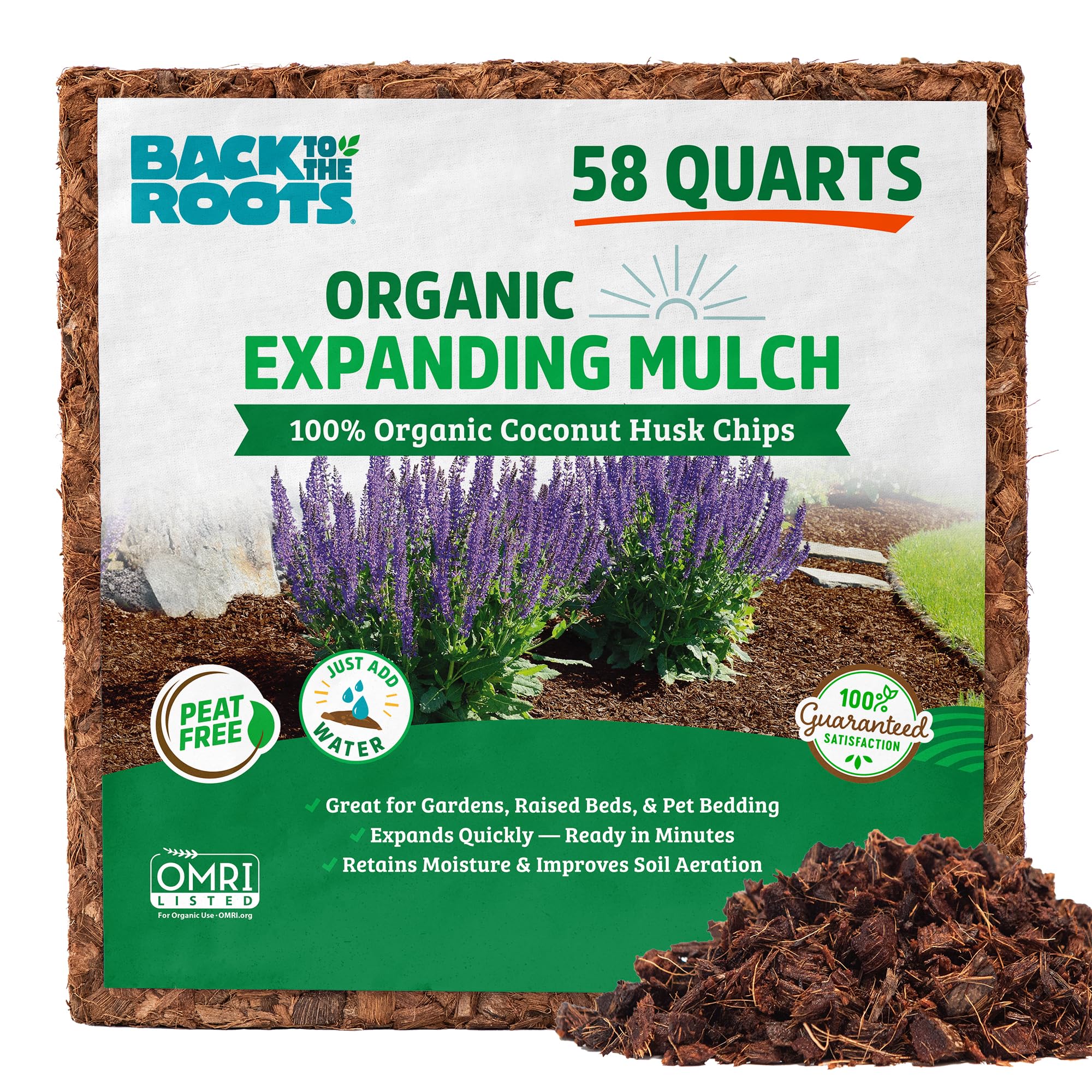
Back to the Roots delivers a 10-pound compressed coconut husk block that expands to over 2 cubic feet of organic mulch—enough to cover 50 to 80 square feet of raised bed surface at a 2-inch depth. The expansion ratio is consistently praised by owners who report filling a full wheelbarrow from a single brick after soaking. Because it is made entirely from coco coir, it does not tie up soil nitrogen like fresh wood chips, making it safe for heavy-feeding vegetables such as tomatoes, peppers, and squash.
The OMRI-listed organic certification gives edible gardeners confidence that no synthetic additives or growth enhancers touch the soil. Reviewers note that the material absorbs standing water effectively and suppresses weeds without introducing foreign seeds. The hydrated mulch has a natural dark brown color that visually polishes a bed without looking artificial. A single bag weighs only 10 pounds dry, reducing strain on your back compared to hauling wet, pre-expanded bark bags.
Some owners report that the compressed block requires thorough soaking with hot water to break apart evenly—cold water may leave dry pockets in the center. The product is also slightly pricier per cubic foot than generic straw alternatives, though the labor savings and consistent organic sourcing justify the premium for serious vegetable growers.
What works
- Expands massively with minimal physical effort
- OMRI listed for organic vegetable production
- Does not affect soil pH or cause nitrogen drawdown
What doesn’t
- Can be difficult to hydrate evenly without hot water
- Higher per-cubic-foot cost than loose straw
2. Hull Farm 50150 Cocoa Bean Shell Mulch

Hull Farm’s cocoa bean shell mulch offers a rare combination: a decorative top dressing that also delivers a mild fertilizer boost of approximately 2.5-1-3 NPK. The shells have a rich chocolate aroma that owners consistently describe as pleasant for the first week after application. Unlike wood-based mulches, cocoa shells break down relatively quickly within a single growing season, releasing nutrients directly into the raised bed soil for crops that require consistent feeding.
The shell pieces are lightweight when dry but form a crust after watering that stays in place better than bark nuggets. This crusting effect significantly reduces surface evaporation—particularly useful in hot, dry climates where raised beds can lose an inch of moisture per day. Multiple reviewers living in arid zones confirm that the mulch holds moisture much better than traditional bark or pine straw.
A critical safety consideration: the chocolate scent attracts dogs, raccoons, and squirrels. If your raised beds are accessible to pets or wildlife, this product may invite digging. It is also more expensive per cubic foot than coco coir or straw options. Some owners report that the smell fades completely within 7 to 10 days, and mold growth can appear in humid conditions—though the mold is harmless and beneficial to soil biology.
What works
- Provides mild fertilizer value that won’t burn plants
- Forms a moisture-retaining crust after watering
- Strong visual appeal with natural chocolate scent
What doesn’t
- Chocolate scent attracts dogs and wildlife
- High cost per cubic foot relative to alternatives
3. Legigo 10 Pack Coco Coir Chips
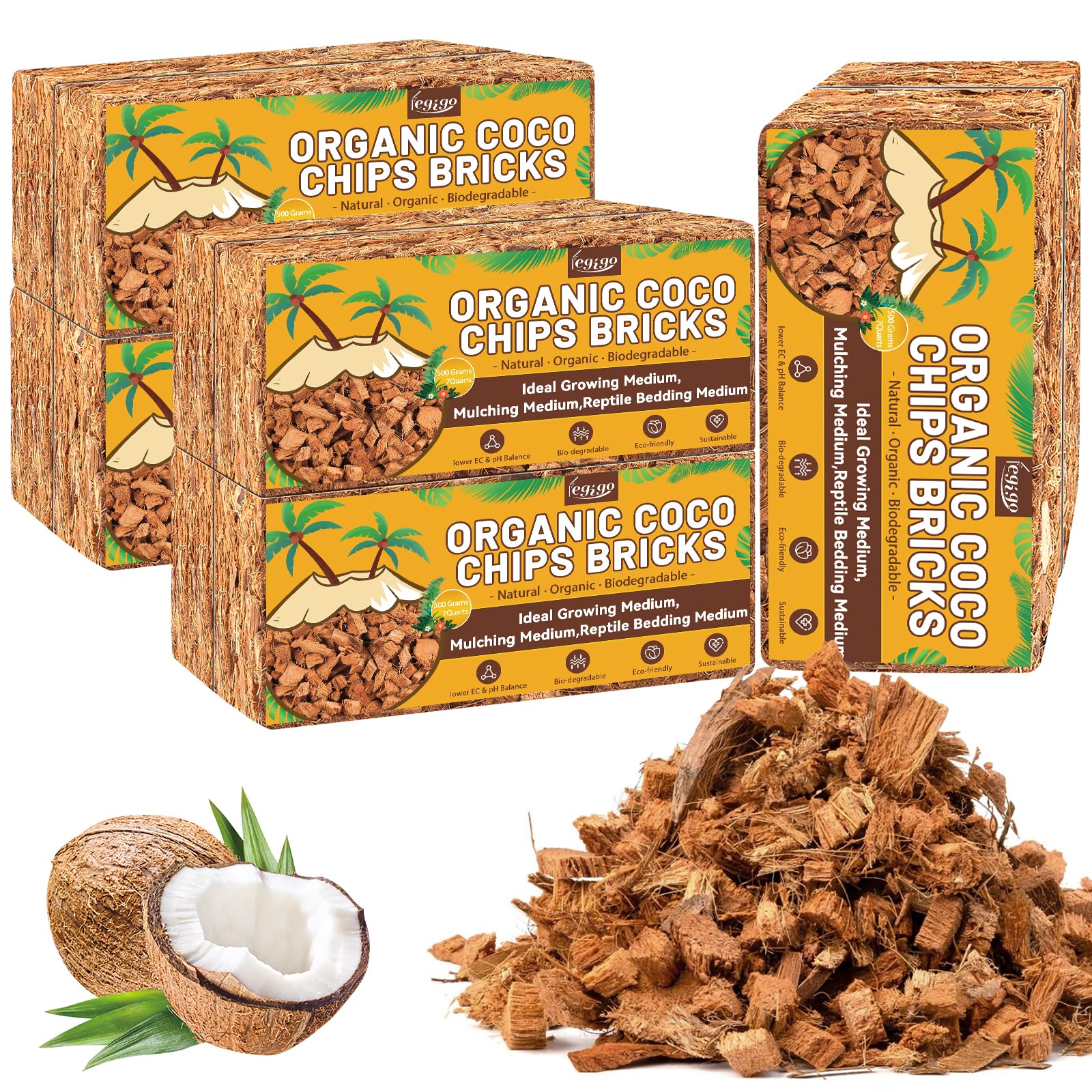
Legigo’s 10-pack delivers eleven pounds of individually wrapped coco coir bricks, each expanding five to seven times its dry size after hydration. The chips are screened to a consistent small-chunk size that works equally well as a raised bed top dressing, a soil amendment for improving aeration, or a standalone potting mix component for container vegetables. The low EC (electrical conductivity) value prevents root burn, and the stable pH range of 5.5 to 6.5 aligns perfectly with the needs of most garden vegetables.
Owners consistently praise the clean, dust-free nature of these bricks—a meaningful advantage over cheaper coir products that sometimes contain plastic fragments, foreign weed seeds, or mold spores. The chunky fibrous structure absorbs four to six times its weight in water, releasing moisture slowly to extend intervals between watering. Users growing moisture-sensitive crops like orchids or Hoyas specifically note that the chips improve drainage while preventing waterlogged roots.
The main drawback is that each individual brick is relatively small, so you will need to hydrate multiple blocks to cover a single large raised bed. The plastic packaging per brick also generates more waste than a single large compressed block. Some users recommend chipping off a piece of the dry brick with a knife before soaking to use a smaller portion without wetting the entire block.
What works
- Consistently clean with no dust, bugs, or mold
- Low EC prevents root burn even in sensitive plants
- Excellent water absorption and slow moisture release
What doesn’t
- Individual bricks are small; requires multiple blocks per bed
- Excess plastic packaging compared to single-block options
4. GROW!T JSCC2 – Organic Coco Coir Planting Chips

Hydrofarm’s GROW!T coco coir chips are OMRI-listed organic and engineered specifically to resist mold and fungal growth—a common complaint with some compressed coir products that arrive smelling sour. Owners repeatedly highlight the thick, consistent fiber structure that stays chunky without compacting into a muddy mat. The block expands significantly when hydrated with rainwater or distilled water, and the chips retain their shape longer than cheaper coir alternatives.
These chips are coarser than the Legigo product, making them ideal for top-dressing potted tropicals, filling the bottom of fabric grow bags, or mixing into raised bed soil as an aeration amendment. Reviewers report that the material contains no foreign plant particles, minimal dust, and—critically—no plastic contamination. The mold-resistant quality is especially valuable in humid climates where surface mulch can develop an unappealing white fungal layer within days of application.
The coarse particle size makes these chips less suitable for surface mulching of small-seeded crops like carrots or lettuce, where a finer texture is preferable to avoid interfering with seedling emergence. The block also requires a longer soak time—up to 30 minutes in warm water—to fully expand without dry pockets. Some users find the chips too large for tilling directly into soil mixes; they work best as a standalone top layer.
What works
- Resists mold and fungal growth better than competing coco products
- Thick, consistent chips that don’t compact easily
- OMRI listed organic for vegetable gardens
What doesn’t
- Coarse chips may be too large for fine-seeded crop mulching
- Requires longer soaking time to fully hydrate
5. Thrive Natural Gardens Coco Coir Chips Brick

Thrive Natural Gardens offers an 11-pound compressed coco coir brick that expands to 50 liters (approximately 1.8 cubic feet) when hydrated—competitive coverage for a mid-range price point. The coconut husk chips are washed and desalted during processing, reducing the risk of mineral burn that can affect sensitive seedlings. Multiple owners using this product as a raised bed top dressing confirm that it suppresses weeds effectively and reduces summer watering frequency compared to bare soil.
One standout benefit is that coco coir does not alter soil pH or tie up available nitrogen—a clear advantage over pine bark or fresh wood chips. The dry brick stores compactly and weighs little enough to carry in one hand, a practical detail for gardeners who order bulk mulch and need to move it from a delivery point to the beds. Reviewers also note that the material is clean enough for use as reptile bedding, a sign of thorough processing.
The main complaint centers on mineral salt content; a few owners recommend washing the expanded chips before application, especially for use in seed-starting mixes. The brick can be difficult to break apart evenly, and users recommend chipping off a dry piece with a knife for small projects rather than hydrating the entire block. Some batches may have higher dust levels than premium competitors like GROW!T.
What works
- Large expanded volume for the price point
- Does not affect soil pH or cause nitrogen drawdown
- Lightweight when dry, easy to transport
What doesn’t
- May contain higher salt content; washing recommended for seedlings
- Dustier than premium coir options
6. HealthiStraw GardenStraw, 3 cu ft
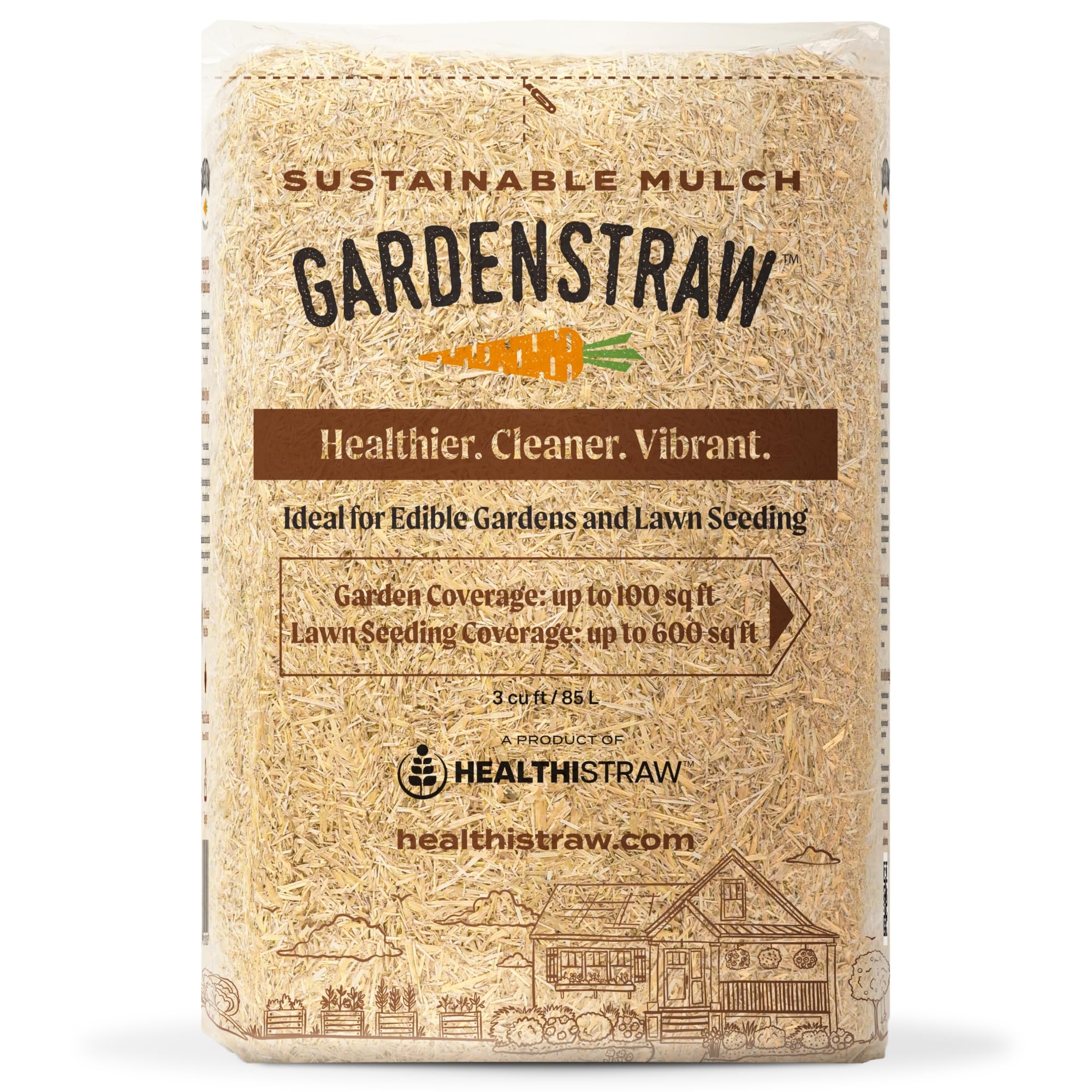
HealthiStraw GardenStraw is a 100 percent non-GMO wheat straw that has been mechanically cleaned to remove dust, dirt, and as many weed seeds as possible. The 3-cubic-foot compressed bale covers up to 100 square feet at a 2-to-3-inch layer, making it the most coverage-efficient option on this list for large raised bed gardens. The straw fibers are cut to a length that interlocks when watered, resisting wind dispersal and runoff without chemical binders.
For composting-oriented gardeners, straw is a clear winner: it breaks down over a single season into carbon-rich organic matter that feeds soil microbes and improves tilth. Owners appreciate that the material is lightweight even when spread, making it easy to refresh beds without heavy lifting. The manufacturer claims a 50 percent reduction in watering needs, and multiple users confirm that the straw holds moisture effectively while keeping the soil surface cool during heat waves.
The primary downside is weed seed presence. Although HealthiStraw filters aggressively, some grass seeds inevitably survive the process—several owners report volunteer grass shoots appearing in the first few weeks. The straw also has a shorter visual lifespan than coco coir or bark mulches, needing a fresh top-up halfway through a long growing season. If you live in a high-wind area, you may need to wet the straw immediately after spreading to keep it from blowing away before it settles.
What works
- Exceptional coverage area per bale for the price
- Breaks down into compostable organic matter
- Lightweight and easy to work with
What doesn’t
- Some grass seeds remain despite cleaning processes
- Requires mid-season reapplication as it decomposes
7. Rio Hamza Trading Houseplant Mulch

Rio Hamza Trading’s small bark wood chip mulch is designed for indoor containers and patio pots rather than full raised beds. The 8-quart bag contains fine-grained chips that create a tidy, uniform soil covering for potted vegetables, herb containers, or decorative planters. The chips are longer lasting than coconut coir or wood shavings, maintaining their visual structure for multiple growing cycles without breaking down into sludge.
Owners consistently note that this mulch does not introduce pests or mold—a critical requirement for indoor applications where airborne fungal spores can become a nuisance. The material pours directly from the bag and settles into a natural-looking top layer that minimizes soil splash during watering. For small raised bed applications like a single 2-by-4-foot elevated planter, one bag can cover the surface to a depth of roughly half an inch, though serious gardeners will need multiple bags for deeper coverage.
The product is expensive for the volume delivered, as multiple reviewers point out. At 8 quarts, it covers only two to three medium-sized pots adequately. For raised beds of any significant size, this mulch becomes cost-prohibitive compared to coco coir bricks or straw. The fine particle size also means it decomposes faster than chunkier wood chips, requiring more frequent replenishment.
What works
- Clean, pest-free material ideal for indoor use
- Pours easily and creates an attractive finished look
- Does not introduce mold or fungal spores
What doesn’t
- Very small volume; impractical for full raised beds
- High cost per cubic foot compared to bulk alternatives
Hardware & Specs Guide
Expanded Coverage Volume
The Back to the Roots block expands to 2 cubic feet, matching the Hull Farm cocoa shells in total volume. The Legigo 10-pack delivers roughly 3 to 4 cubic feet when all bricks are hydrated, while the HealthiStraw bale leads at 3 cubic feet of dry straw. Thrive Natural Gardens provides 1.8 cubic feet per brick. For small jobs, the Rio Hamza bag offers only 0.3 cubic feet—sufficient for container top dressing but not for raised bed surface coverage.
pH and Nutrient Impact
Coco coir products from Legigo, Thrive, Back to the Roots, and GROW!T all maintain a neutral pH range (5.5–6.5) and do not alter soil acidity. Hull Farm cocoa shells contribute a mild 2.5-1-3 NPK fertilizer value. HealthiStraw wheat straw is pH-neutral and adds organic carbon as it decomposes without changing soil chemistry. Rio Hamza bark chips are slightly acidic and may lower pH gradually over repeated applications.
Moisture Absorption Capacity
Coco coir chips absorb 4 to 6 times their dry weight, with the Legigo and Back to the Roots products leading in water-holding performance. Hull Farm cocoa shells form a surface crust that slows evaporation but absorbs less water internally. HealthiStraw straw retains moisture effectively but requires a thicker layer (3 inches minimum) for comparable evaporation reduction. Rio Hamza bark chips absorb minimal water and function primarily as a decorative top layer.
Organic Certification Status
Back to the Roots, GROW!T, and Legigo coco coir products are OMRI-listed organic, suitable for certified organic vegetable production. HealthiStraw GardenStraw is chemical-free and non-GMO but does not carry formal OMRI certification. Hull Farm cocoa shells have no organic certification label. Rio Hamza Trading bark chips are not certified organic and may contain untreated wood sourced from non-organic forestry operations.
FAQ
Will coco coir chips rob nitrogen from my raised bed soil?
How thick should I apply straw mulch to raised beds?
Is cocoa bean shell mulch safe for raised beds that dogs can access?
Can I mix coco coir chips directly into raised bed soil as an amendment?
Final Thoughts: The Verdict
For most gardeners, the mulch for raised beds winner is the Back to the Roots 100% Organic Mulch because it combines OMRI-listed organic certification, massive expansion from a lightweight 10-pound block, and zero nitrogen drawdown—making it safe for edible crops and easy on the back. If you want a nutrient boost with a decorative chocolate finish, grab the Hull Farm Cocoa Bean Shell Mulch. And for covering large bed areas on a budget while feeding your compost pile, nothing beats the HealthiStraw GardenStraw.