
Aphids cluster on new growth, draining the life from tender leaves while excreting sticky honeydew that invites sooty mold. A single missed colony can stunt an entire season’s harvest or ruin prized ornamentals in days. The right spray stops the outbreak fast without collateral damage to beneficial insects or surrounding plants.
I’m Rikta — the co-founder and writer behind Lawn Gear Lab. I’ve spent hundreds of hours dissecting product labels, comparing active ingredient concentrations, evaluating residual control windows, and cross-referencing thousands of verified owner reports to build this guide on choosing a truly effective Pesticide For Aphids.
Whether you need a gentle organic oil for edible gardens or a potent synthetic concentrate for a severe infestation, selecting the best pesticide for aphids depends on matching the active ingredient to your specific plants and growing environment.
How To Choose The Best Pesticide For Aphids
Not all aphid sprays work the same way. Some coat the insect in oil and suffocate it on contact. Others are absorbed into the plant’s vascular system so pests die when they feed. The choice between these modes determines whether you protect your garden today or shield it for weeks.
Mode of Action: Contact vs. Systemic
Contact pesticides kill aphids only where the spray lands. They require thorough coverage of every leaf surface and often need reapplication after rain. Systemic formulas, like acephate or beta-cyfluthrin, travel inside the plant tissue so even hidden aphids feeding on the underside of leaves receive a lethal dose. For heavy infestations on ornamentals, systemics offer superior long-term control.
Active Ingredient Concentration
The percentage of the active ingredient determines how much concentrate you need per gallon and how aggressive the control will be. A 55% malathion concentrate works at much lower dilution rates than a 0.9% neem oil ready-to-use spray. Higher concentrations usually mean stronger knockdown power, but they also demand careful measuring and can burn sensitive foliage if over-applied.
Residual Duration and Rainfastness
Some formulas remain active for four to six weeks after application, creating a protective barrier that kills newly hatched aphids. Others degrade within hours. If you live in a rainy climate or water overhead frequently, look for a pesticide labeled as rainfast within two hours and offering at least two weeks of residual control. This reduces the number of spray cycles needed per season.
Quick Comparison
On smaller screens, swipe sideways to see the full table.
| Model | Category | Best For | Key Spec | Amazon |
|---|---|---|---|---|
| Atticus Tirade Ultra SC | Synthetic Concentrate | Broad-spectrum indoor/outdoor control | 11.8% Beta-Cyfluthrin | Amazon |
| Grower’s Ally Crop Defender 3 | Organic Concentrate | Edible gardens and sensitive plants | OMRI Listed, harvest-same-day | Amazon |
| Bonide Systemic Insect Control | Systemic Concentrate | Stubborn infestations on ornamentals | Acephate-based, 16-gal mix | Amazon |
| Martin’s Permethrin 13.3% | Synthetic Concentrate | Perimeter and structural pest control | 13.3% Permethrin, 4-week residual | Amazon |
| Hi-Yield 55% Malathion Spray | Synthetic Concentrate | Fruit trees and vegetables | 55% Malathion concentrate | Amazon |
| Botanical Tradesman Neem Oil Kit | Organic Concentrate | Indoor plants and mild infestations | 100% cold-pressed neem, 3.4 oz | Amazon |
| Garden Safe Fungicide3 | Ready-to-Use | Quick spot treatment on ornamentals | Neem oil extract, 1-gal RTU | Amazon |
In‑Depth Reviews
1. Atticus Tirade Ultra SC Insecticide
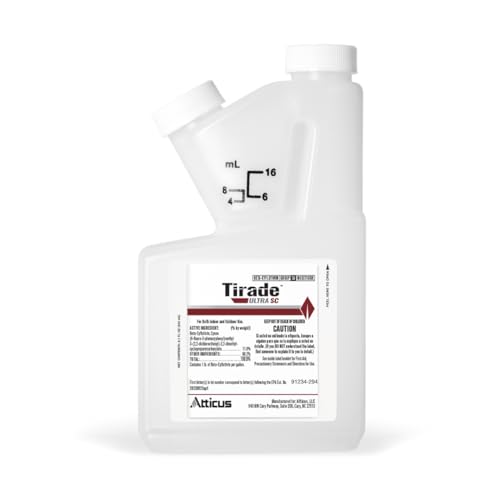
Atticus Tirade Ultra SC delivers the same beta-cyfluthrin active ingredient found in premium pest control brands, with an 11.8% concentration that packs serious knockdown power. One 240-mL bottle mixes into enough solution to treat a typical home perimeter plus interior crawl spaces. Owners report seeing dead aphids, ants, and spiders within hours of application, and the liquid suspension concentrate stays evenly mixed with simple agitation.
What separates this from cheaper synthetics is its odor profile — users consistently mention zero smell during and after application, which makes indoor use far more tolerable. The dried residue says people and pets can re-enter spaces as soon as the spray dries. For outdoor use, a two-gallon mix covers about 3,000 square feet of perimeter, creating a barrier that remains active for weeks.
The product is not registered for sale in Vermont, so buyers in that state need to check local availability. While beta-cyfluthrin is highly effective against aphids, it is a broad-spectrum pyrethroid that will also kill beneficial insects if sprayed directly onto blooms. Apply at dusk or dawn to minimize pollinator exposure and reserve spot treatments for infested foliage rather than blanket coverage.
What works
- Odorless formula allows comfortable indoor/outdoor use
- Fast-acting knockdown visible within hours
- Long residual control reduces reapplication frequency
What doesn’t
- Broad-spectrum nature kills beneficial insects on contact
- Not available for sale in Vermont
2. Grower’s Ally Crop Defender 3 Concentrate
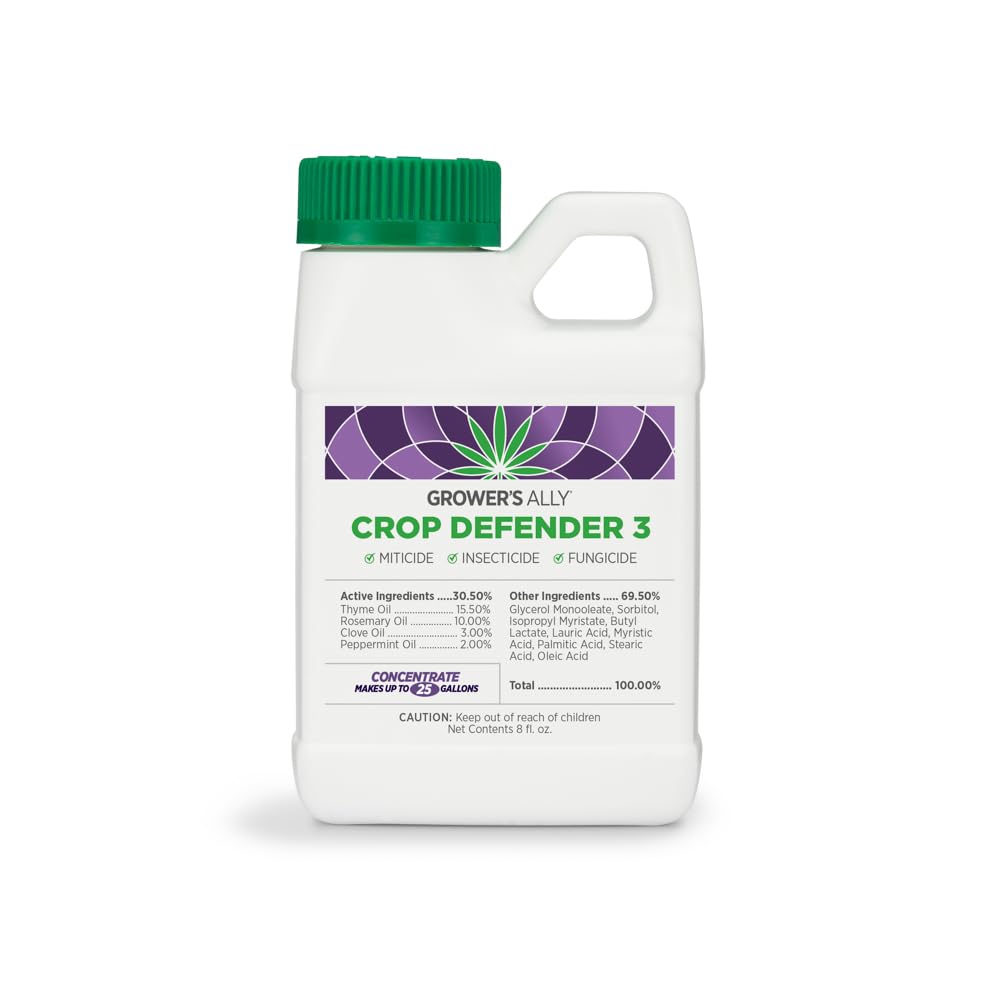
Grower’s Ally Crop Defender 3 is a triple-action concentrate that functions as a miticide, insecticide, and fungicide in one bottle. The synergistic blend of botanical oils coats soft-bodied insects like aphids and spider mites, causing suffocation and desiccation on contact. An 8-ounce bottle dilutes into 25 gallons of finished spray, offering exceptional value for gardeners with large plantings or frequent aphid cycles.
This formula is FIFRA 25(b) exempt and OMRI Listed, meaning it meets organic gardening standards and contains no synthetic pesticides, residual solvents, or heavy metals. Owners report it does not burn delicate leaves even on seedlings, which is a common frustration with harsher neem or sulfur-based products. The built-in surfactant eliminates the need for additional soap or wetting agents, so mixing is simply concentrate plus water.
Because Crop Defender 3 works by contact suffocation rather than systemic absorption, thorough spray coverage on both leaf surfaces is essential. Aphids tucked deep into curled new growth may survive if the oil does not reach them. The pleasant botanical scent is a welcome change from the chemical odors of conventional pesticides, and the product can be applied up to the day of harvest.
What works
- Safe for use on vegetables and herbs up to harvest day
- No leaf burn reported even on tender seedlings
- Strong concentrate makes 25 gallons from one 8-oz bottle
What doesn’t
- Contact-only mode requires thorough coverage of all leaf surfaces
- Less effective against aphids hidden inside tightly curled leaves
3. Bonide Systemic Insect Control Concentrate

Bonide Systemic Insect Control relies on acephate, a highly effective organophosphate that moves through the plant’s vascular system to kill aphids, thrips, and whiteflies from the inside out. A single 16-ounce bottle makes 16 gallons of finished spray, and many owners report seeing results within hours of application. The systemic action means aphids feeding on untreated parts of the plant still receive a lethal dose, which is critical for tackling hidden colonies.
The product is labeled exclusively for outdoor ornamental plants — flowers, shrubs, roses, and non-edible landscaping. It should never be used on vegetables, fruits, or herbs because acephate residues persist in edible tissues. The included measuring cup simplifies dilution, but the smell is unmistakable. Owners consistently describe the odor as extremely strong and unpleasant, comparable to rotting organic matter, which makes it best suited for outdoor applications away from living areas.
Some users report minor leaf spotting when spraying in direct sunlight, so apply during shaded hours or near sunset. Bonide can be tank-mixed with certain fungicides or fertilizers for a combined treatment pass, which saves time during peak pest pressure. For ornamentals suffering from chronic aphid invasions, this systemic delivers the most complete eradication of any option on this list.
What works
- Systemic action reaches aphids hidden in curled leaves
- Fast knockdown visible within hours of application
- Excellent value — one bottle treats a large garden area
What doesn’t
- Not safe for edible crops or vegetable gardens
- Extremely strong odor persists after application
4. Martin’s 32 oz Permethrin 13.3% Concentrate
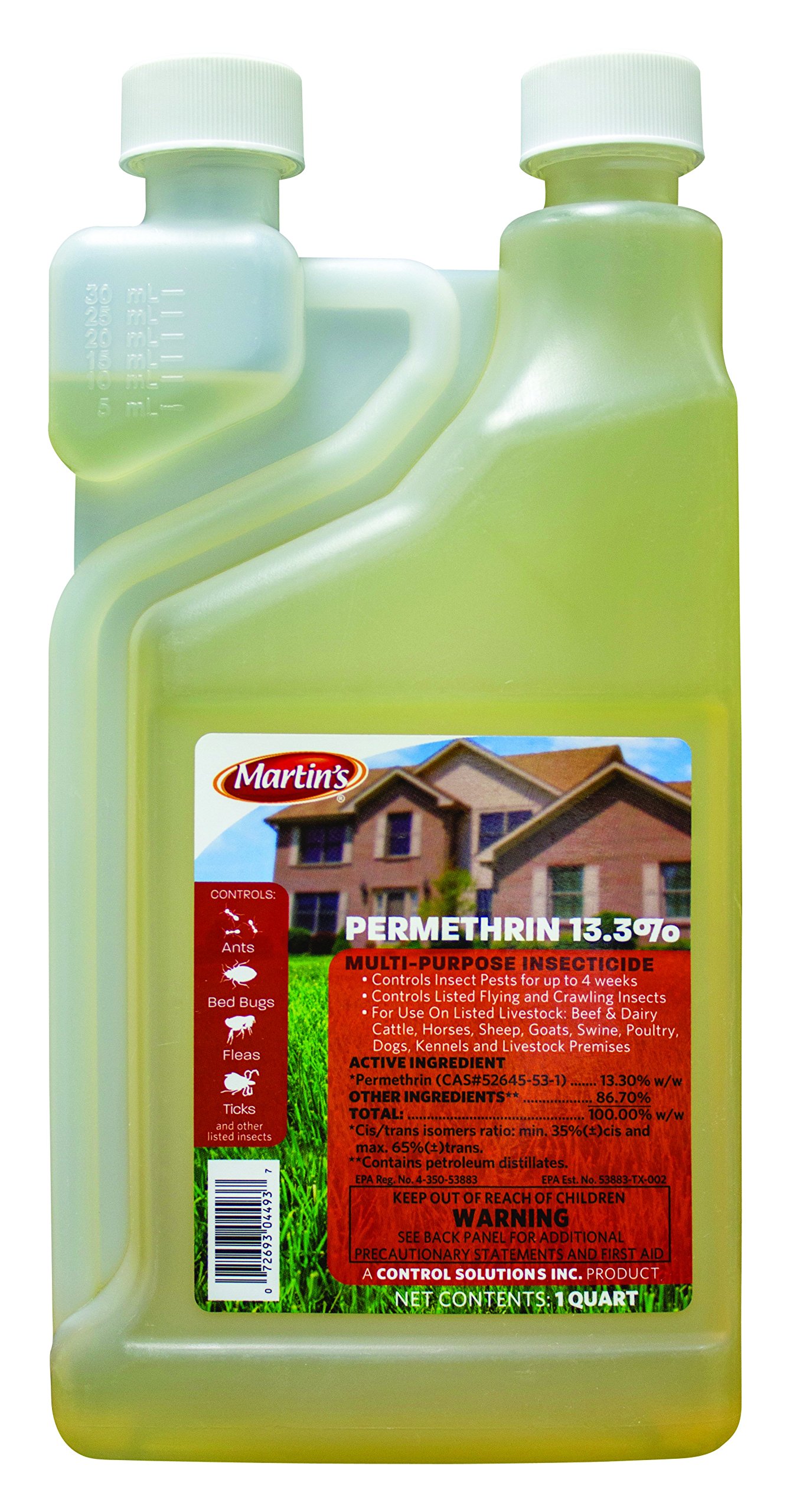
Martin’s Permethrin 13.3% is a synthetic pyrethroid concentrate that delivers a four-week residual barrier against aphids and a wide range of other pests. At four ounces per gallon, a single 32-ounce bottle produces eight gallons of finished spray — enough to treat extensive garden perimeters, chicken coops, and structural foundations. Owners using it for tick control confirm the residual remains active for four to six weeks in outdoor conditions.
The permethrin formulation is effective on contact and as a dried residue, meaning aphids that land on treated surfaces later still die. For best results, spray the foliage of infested ornamental plants thoroughly. The product has a noticeable chemical smell that some owners find stronger than earlier batches, so outdoor application is recommended. It shows reduced effectiveness against mosquitoes after about one week and is not reliable for ants, roaches, or spiders.
Martin’s is labeled for both indoor and outdoor use, but the strong odor and potential irritant properties make it better suited for outdoor perimeter treatments and non-living areas. When used around chicken coops or dog runs, it effectively reduces fly populations. For targeted aphid control on prized ornamentals, apply at dusk to protect bees and other pollinators that may visit the treated plants during daylight.
What works
- Four-week residual provides extended protection
- Effective on contact and as a dried barrier
- Versatile use on perimeters, livestock areas, and ornamentals
What doesn’t
- Strong chemical odor limits indoor application
- Not effective against ants, roaches, or spiders
5. Hi-Yield 55% Malathion Spray
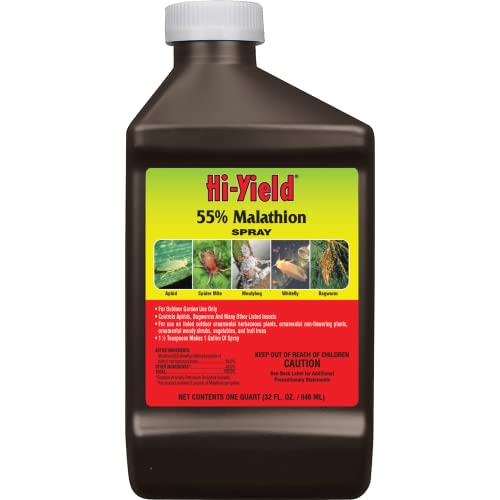
Hi-Yield 55% Malathion Spray is one of the most concentrated organophosphate options available to home gardeners. The 55% malathion content means a small amount of concentrate goes a very long way, treating aphids, thrips, spider mites, and lace bugs on vegetables, fruit trees, and ornamental plants. Owners who struggled with resistant pest populations report this product works where gentler options failed.
Malathion is a potent neurotoxin that requires careful handling. Protective gloves, long sleeves, and eye protection are non-negotiable during mixing and application. The label instructs users to spray in calm weather when no rain is expected for 24 hours, ensuring the product dries fully on leaf surfaces. Several reviewers emphasize that this should be a last-resort product due to its toxicity profile and potential environmental impact.
When used strictly according to the label, malathion provides exceptional control of aphids on fruit trees without damaging the edible crop. It is also effective against mosquitoes when applied to shrubbery and foundation plantings. The 32-ounce bottle stores well for multiple seasons, but the product has a shelf life and should be used within one to two years of purchase for full potency.
What works
- Extremely high concentration treats large areas with little product
- Works on resistant pest populations that other sprays miss
- Registered for use on fruit trees and vegetables
What doesn’t
- Requires full protective gear during mixing and spraying
- High toxicity raises concerns for wildlife and pet safety
6. Botanical Tradesman Neem Oil Kit

Botanical Tradesman’s Neem Oil Kit combines a 3.4-ounce bottle of 100% cold-pressed neem oil with a 16-ounce trigger sprayer, creating a complete ready-to-mix system that yields roughly 338 fluid ounces of finished spray. The neem oil is extracted exclusively from Indian neem nuts with no added vegetable oils or diluents, ensuring every drop delivers the full azadirachtin content that disrupts aphid feeding and molting cycles.
Mixing requires combining the neem oil with water and a few drops of mild liquid soap in the provided spray bottle. The oil is noticeably thick and does not emulsify easily — warming the closed bottle in hot water before measuring helps the concentrate blend more smoothly. Users report that regular weekly application reduced fungus gnat populations from three to eight per plant down to one or two after a four-week cycle, demonstrating effective gradual pest suppression.
The biggest downside of this neem oil concentrate is the strong, earthy aroma that many find unpleasant. Neem oil also degrades quickly under direct sunlight, so evening applications maximize its window of effectiveness. It is safe for indoor and outdoor ornamental plants, but testing on a small area first is wise because some sensitive foliage may show temporary spotting if oil concentration is too high.
What works
- Pure cold-pressed neem with no fillers or diluents
- Refillable sprayer system reduces plastic waste
- Safe for indoor plants and organic gardening
What doesn’t
- Thick oil is difficult to emulsify without hot water bath
- Strong neem odor lingers after application
7. Garden Safe Fungicide3 Ready-to-Use
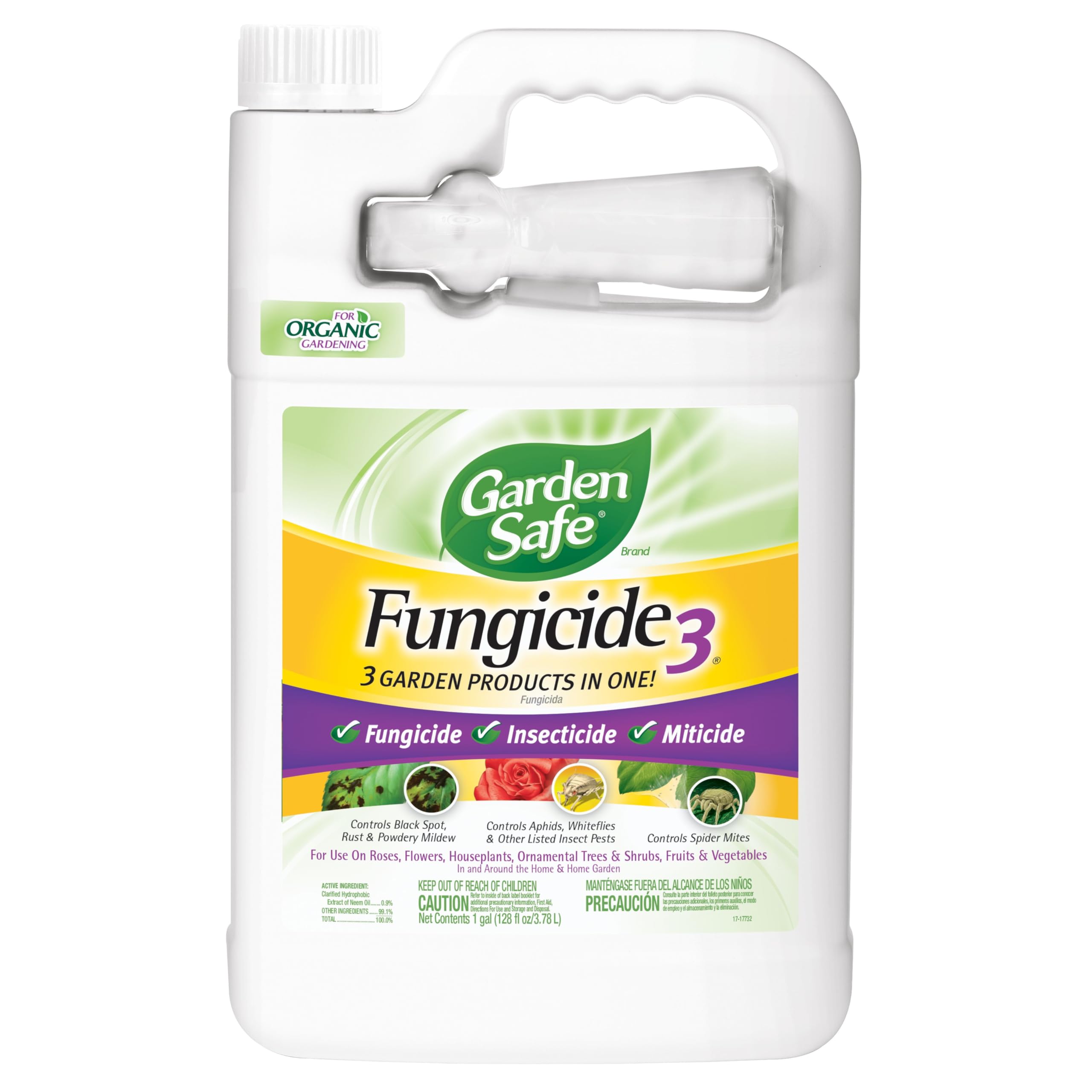
Garden Safe Fungicide3 is a ready-to-use spray that combines fungicidal, insecticidal, and miticidal properties in a single gallon jug. The active ingredient is clarified hydrophobic extract of neem oil, which controls aphids, whiteflies, spider mites, and common fungal diseases like black spot and powdery mildew. This three-in-one approach makes it a convenient choice for gardeners who want a single product that addresses multiple issues simultaneously.
The attached sprayer is a mixed blessing. Owners praise the convenience of the integrated wand for spot-treating roses, tomatoes, and blueberries, but many report the sprayer design is suboptimal — the coiled pickup tube provides only about four inches of reach, making it difficult to access the underside of foliage or the center of dense shrubs. Several users recommend decanting the liquid into a separate pump sprayer for better coverage.
Weekly application during the growing season, except during winter dormancy, effectively eliminated powdery mildew on hibiscus and improved overall foliage health on tomatoes and blueberries. The product is labeled for organic gardening and can be used on vegetables up to the day of harvest.
What works
- Triple-action fungicide, insecticide, and miticide in one bottle
- Convenient ready-to-use formula requires no mixing
- Safe for organic gardening and edible crops
What doesn’t
- Integrated sprayer has very short reach, limiting coverage
- Can burn foliage if applied at full strength in direct sun
Hardware & Specs Guide
Active Ingredient Concentration
The percentage of active ingredient determines how much concentrate you need to mix per gallon of water. Hi-Yield’s 55% malathion requires only a small dose compared to a 0.9% neem oil ready-to-use spray. Higher concentrations deliver faster knockdown but demand precise measuring to avoid phytotoxicity. Always check the label for the exact ounces per gallon before mixing.
Mode of Action: Systemic vs. Contact
Systemic insecticides like acephate in Bonide are absorbed into plant tissue, killing aphids that feed on any part of the plant. Contact pesticides like neem oil and permethrin kill only where the spray lands. For plants with dense foliage or curled new growth where aphids hide, a systemic option provides more complete control without requiring perfect spray coverage.
Residual Duration and Rainfastness
Permethrin-based formulas can remain active for four to six weeks on outdoor surfaces, creating a long-lasting barrier. Malathion and neem oil degrade more quickly, especially under UV light and rainfall. Products labeled as rainfast within two hours hold up better during wet seasons. Shorter residual products require more frequent reapplication but pose less risk to beneficial insect populations over time.
Plant Safety and Application Timing
Some pesticides cause leaf burn when applied during full sun or high temperatures. Neem oil and clarified neem extracts are generally gentler but can still damage sensitive foliage if over-concentrated. Pyrethroids and organophosphates carry higher burn risk. Apply any pesticide during the cooler hours of early morning or late evening, and test a small area before full coverage to gauge your plant’s tolerance.
FAQ
What is the difference between a contact and a systemic pesticide for aphids?
Can I use the same pesticide on my vegetable garden and my rose bushes?
How often should I reapply a pesticide for aphids during the growing season?
Will spraying for aphids kill bees and other beneficial insects?
Final Thoughts: The Verdict
For most gardeners, the pesticide for aphids winner is the Atticus Tirade Ultra SC because its odorless formula, fast knockdown, and weeks-long residual make it the most versatile indoor and outdoor solution. If you want an organic option safe for harvest-same-day use on edible gardens, grab the Grower’s Ally Crop Defender 3. And for a heavy systemic that eradicates aphids hiding in curled leaves on ornamentals, nothing beats the Bonide Systemic Insect Control.