
Succulents die from overwatering far more often than neglect, and a good top dressing or soil amendment is the first line of defense. The right pebbles create an air gap at the soil surface, prevent moisture from wicking into the stems, and suppress fungus gnat egg-laying. Choosing the wrong ones — like dust-heavy gravel or sealed polished stones that trap humidity — can undo all your careful watering habits.
I’m Rikta — the co-founder and writer behind Lawn Gear Lab. I’ve sifted through thousands of customer reviews, cross-referenced particle sizes against drainage benchmarks, and studied the mineral composition of dozens of stone blends to isolate the pebbles that actually improve aeration without compacting fine succulent soil.
Whether you are refreshing a potted echeveria, mixing a gritty custom substrate, or sealing the top of a terrarium, this guide digs into the seven best products on the market to help you find the ideal pebbles for succulents.
How To Choose The Best Pebbles For Succulents
Not all decorative gravel is suitable for succulent health. The wrong particle size, sharp edges that cut roots, or a non-porous seal can stagnate moisture at the crown. Understanding three basic criteria will prevent an expensive visual mistake from rotting your collection.
Particle Size & Drainage Effectiveness
Pebbles between 2mm and 8mm offer the best balance. Smaller than 2mm creates a dense cap that blocks evaporation; larger than 10mm leaves gaps that let potting soil wash through during watering. For a top dressing that stays put, look for bags labeled 3/8 inch or 2-6mm. For mixing into the substrate itself, a 3-8mm grit provides the pore space succulent roots crave.
Mineral Composition: Porous vs. Dense
Porous volcanic stones like lava rock and pumice absorb excess moisture and release it slowly, mimicking the arid grit succulent roots evolved in. Dense, polished river pebbles (quartz, marble, granite) look cleaner but offer zero moisture wicking — they seal the soil surface and increase rot risk in humid environments. For beginners, a porous mix reduces the consequences of overwatering far better than polished decorative stones.
Dust Content & Pre-Wash Needs
Many commercial pebble bags arrive with fine mineral dust that clogs substrate pores. If you shake the bag and see a visible cloud, plan to rinse the stones in a colander until the water runs clear. Bags with “pre-washed” claims still benefit from a quick rinse, while dust-heavy lava rock products may require three or four soaks before the water clears. Skipping this step can create a muddy layer that suffocates root tips.
Quick Comparison
On smaller screens, swipe sideways to see the full table.
| Model | Category | Best For | Key Spec | Amazon |
|---|---|---|---|---|
| CJGQ 3lb Mix Lava Rocks | Volcanic Blend | Mineral-rich substrate mix | 4-stone blend (lava, maifanitum) | Amazon |
| Avalution 2.4lb Gritty Mix | Pumice Lava Blend | Hydrophobic top dressing | Grey lava rock + pumice | Amazon |
| YISZM 5lb River Rocks | Polished River | Decorative top dressing | ~2-4mm round pea gravel | Amazon |
| FANTIAN 5lb Pea Gravel | River Stone Mix | Outdoor pot drainage layer | 1/4 inch mixed river rocks | Amazon |
| GASPRO 5lb Polished White | Premium Marble | Bright, clean aesthetic | 3/8-1/2 inch polished white | Amazon |
| Pulovin 5lb Polished Mix | Polished River | Small container display | 3/8-1/2 inch mixed colors | Amazon |
| GASPRO 5lb Mixed Color | Polished River | General indoor plant topper | 3/8 inch irregular shapes | Amazon |
In‑Depth Reviews
1. CJGQ 3lb Mix Lava Rocks for Plants

CJGQ’s blend combines red lava rock, black lava rock, maifanitum, and green mineral stones into a single 3-pound bag. The multi-mineral composition adds trace elements that gradually leach into the substrate, which is a genuine advantage for long-term potted succulents that rarely get repotted. The particle size range is well-suited to both a 1-inch top dressing and as a 20-30% amendment in a gritty mix, giving it dual-use versatility that single-stone products lack.
Customer reports note that the bag arrives with noticeable dust, requiring multiple rinses before the water runs clear. Once cleaned, the stones stay stable during watering and don’t float or shift. Owners of alocasia and semi-hydro setups have repurchased this bag multiple times, citing consistency in particle size across different batches — a sign of reliable sorting during production.
The 3-liter volume covers roughly three 4-inch pots with a half-inch top dressing layer, making it economical for a small collection. For growers who want a mineral-rich amendment that doubles as a decorative top dressing, this blend delivers functionality without sacrificing aesthetics. The only catch is the dust pretreatment required; plan to spend 10-15 minutes rinsing before first use.
What works
- Four-mineral composition provides trace nutrients
- Versatile as top dressing or soil amendment
- Consistent particle sizing across batches
What doesn’t
- Heavy dust content requires thorough pre-rinsing
- Small bag volume may not cover large planters
2. Avalution 2.4lb Mix Horticultural Lava Rock & Pumice

Avalution’s gritty mix leans heavily on grey lava rock and pumice, giving it the highest air porosity in this comparison. The 1.27-kilogram bag (roughly 2.4 liters) is aimed at hobbyists who actively mix their own substrate rather than just applying a decorative top dressing. When used as a 30-50% amendment in standard potting soil, the pumice component creates large pore spaces that drain within seconds, a critical spec for haworthia and lithops growers.
Reviewers consistently praise its low dust content relative to other lava rock products. Some users report needing only a light rinse to remove surface dirt, while others skip washing entirely when using it as a bottom drainage layer. The particle size lands in the 3-8mm sweet spot — large enough to resist compaction but small enough to mix evenly with fine succulent soil.
The main limitation is bag volume. At 2.4 pounds, this amount is best suited for a handful of small pots or a single medium terrarium. Enthusiasts mixing large batches of substrate may need to buy multiple bags, and the per-unit cost is higher than bulk alternative products. For targeted use as a top dressing for finicky species that demand maximum drainage, however, this blend outperforms most competitors.
What works
- Low dust content across multiple batches
- Pumice and lava create exceptional aeration
- Ideal 3-8mm particle range for substrate mixing
What doesn’t
- Small bag size limits large-project use
- Higher per-ounce cost than bulk alternatives
3. YISZM 5lbs Aquarium Gravel, 1/8″ Natural River Rocks
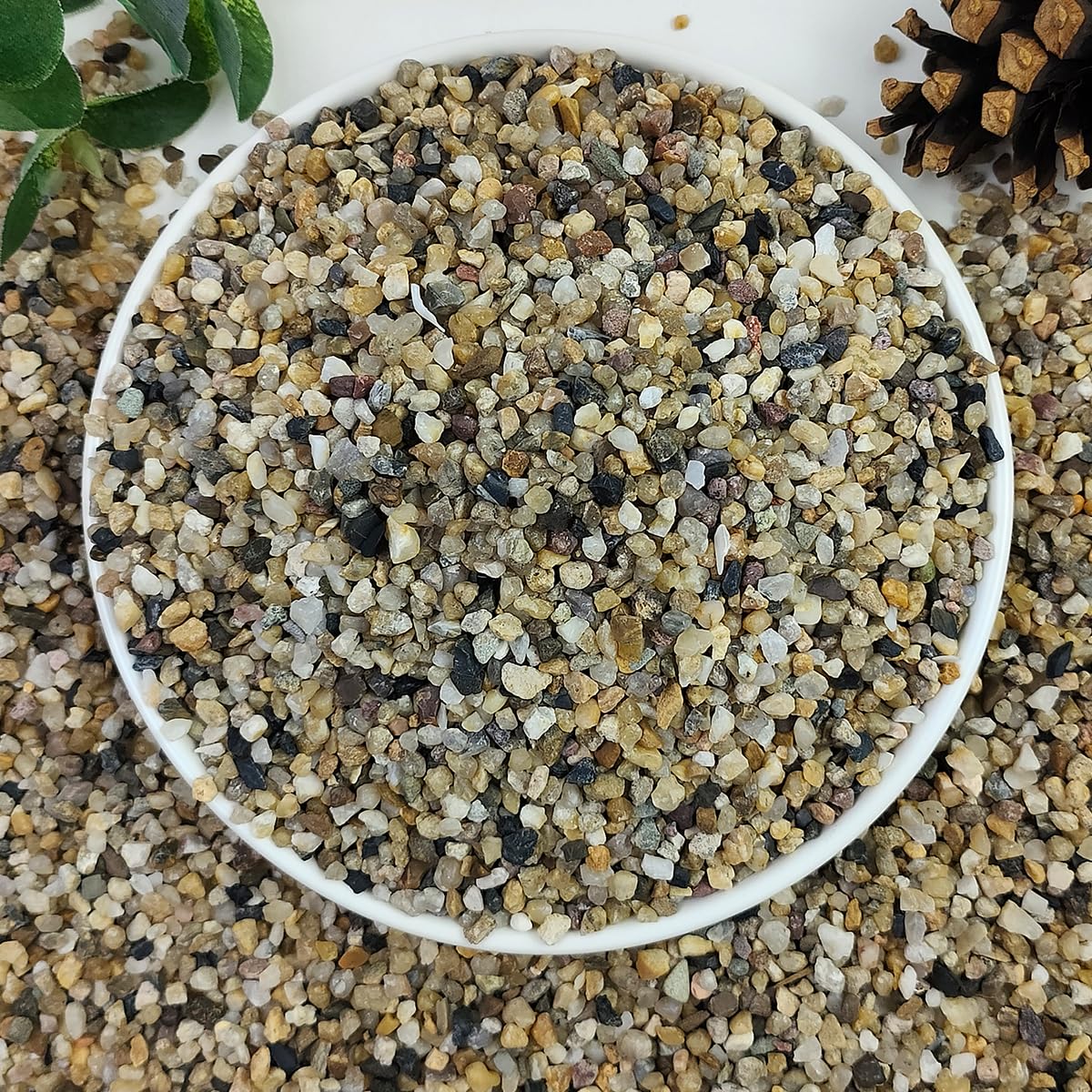
YISZM’s offering is a classic river-washed pea gravel in the 2-4mm range, polished to a smooth, non-porous finish. The earthy tones — tan, grey, and soft brown — work well as a top dressing for minimalist modern pots, and the round shape prevents any accidental stem abrasion. Because these are natural river stones with no added dyes, they are safe for setups that double as humidity trays with standing water.
The 5-pound bag provides generous coverage; a half-inch layer will fill several 6-inch pots. Customers note that the stones require virtually no rinsing, making them a low-mess option for quick repotting sessions. They are also heavy enough to resist floating during bottom-watering, a common issue with ultra-light pumice and perlite.
The trade-off is that polished river stones offer zero moisture wicking. They form a dense cap that slows evaporation from the soil surface, which can be problematic in high-humidity environments or for succulent species that prefer quick dry-back. For dry climate growers who prioritize aesthetics over moisture regulation, this is an excellent decorative choice, but it should not replace a porous top dressing for moisture-sensitive plants.
What works
- Pre-washed with virtually no dust
- Smooth round shapes safe for delicate stems
- Heavy enough to stay put during bottom watering
What doesn’t
- Non-porous surface traps soil moisture
- Uniform round shape lacks textural variety
4. FANTIAN 5 lbs Pea Gravel, 1/4 Inch Decorative River Rocks

FANTIAN’s river rocks average 1/4 inch (roughly 6mm), making them slightly larger than the YISZM option. The mixed-color palette includes earth tones that darken noticeably when wet, so the dry bag appearance may look lighter than the installed result. This product is positioned primarily for outdoor use — pot drainage layers, garden paths, and large planter covers — but it works adequately as a succulent top dressing for bigger pots.
Customer feedback highlights the variation in particle size; machine screening allows some oversized pieces to slip through, occasionally reaching 3/8 inch or larger. This inconsistency makes it less ideal for small 2-inch nursery pots where oversized pebbles look out of proportion. The 5-pound bag covers a good area for the price, but users note that the bag itself does not contain the full labeled weight — a discrepancy explained by US household scales that display lb:oz differently.
While the product works as a drainage layer, its relatively large particle size and uneven sorting make it a less refined option for indoor decorative use. For growers who need a cheap bulk option for big outdoor containers or as a bottom filler before potting, the FANTIAN bag offers strong value. For presentation-sensitive indoor succulent arrangements, the inconsistency detracts from the visual finish.
What works
- Cost-effective for large containers and outdoor use
- Natural colors blend well with garden settings
What doesn’t
- Inconsistent particle size with oversized pieces
- Dry appearance differs significantly from wet installed look
5. GASPRO 5 lb Highly Polished White Pebbles & Stones

GASPRO’s white pebbles are polished to a high-luster finish that reflects light and brightens darker pot interiors. The 3/8 to 1/2-inch size range is slightly larger than the category average, creating a bold visual contrast against dark succulent foliage. The bright white color stays consistent across the bag because the stones are naturally light-toned marble rather than dyed quartz, so there is no risk of color leaching during watering.
Customers report that the pebbles arrive clean with minimal dust, requiring only a quick rinse before use. The polished surface resists staining from soil splatter, keeping the white appearance intact even after repeated top-watering. Users have successfully used them in vase arrangements to stabilize bamboo stalks and as standalone humidity tray fillers.
The downside is purely functional: polished marble is completely non-porous, so these pebbles contribute nothing to moisture management or aeration. They form a dense, heavy cap that can seal the soil surface if applied too thickly. For growers who prioritize showroom aesthetics and are confident in their watering routine, the GASPRO white pebbles deliver unmatched visual appeal. For beginners who still struggle with overwatering, a porous alternative would serve better.
What works
- High-polish white finish creates a premium aesthetic
- Minimal dust, ready for immediate use
- Resists staining from soil splatter
What doesn’t
- Non-porous surface seals in soil moisture
- Larger size may look oversized on small 2-inch pots
6. Pulovin 5 lbs Pebbles for Indoor Plants, 3/8″ Mixed Color

Pulovin’s mixed-color pebbles include shades of white, grey, tan, and occasional pinkish tones, all polished to a smooth, glossy finish. At 3/8 to 1/2 inch, they match the GASPRO sizing but offer a varied color palette that works well for terrariums and mixed succulent arrangements where a monochrome look feels flat. The stones are marketed as natural, though some buyers suspect a clear sealant or light dye is applied to achieve the uniform glossy sheen.
Users note that a 5-pound bag provides a thin top dressing for a medium-sized pot — roughly enough for a 10-inch container. For deeper coverage or multiple pots, a second bag is likely necessary. The stones do not require washing before use, and their weight prevents them from shifting during bottom watering. They also prevent soil splashing onto leaves during top watering, a practical benefit for rosette-shaped succulents prone to rot if water sits in the crown.
The primary concern is the potential for painted or coated stones. Several customer reviews mention that zooming in reveals uneven color patches consistent with surface coating rather than natural mineral variation. While the product looks attractive on the shelf, long-term durability of the finish is uncertain — especially if the pebbles are exposed to direct sun or repeated moisture. For short-term decorative use, they perform well; for permanent mix-it-for-years substrate, untreated stone is safer.
What works
- Warm color variety adds visual depth to arrangements
- Clean and ready to use with no dust
- Heavy enough to anchor plants during watering
What doesn’t
- Possible surface coating may degrade over time
- Small bag volume for the price point
7. GASPRO 5 lb Decorative Pebbles for Plants, 3/8 Inch Mixed Color

The second GASPRO entry swaps the pure white look for a natural mixed-color palette with irregular shapes. These pebbles measure 3/8 inch on average but include oblong and angular pieces that create a more organic, less manufactured appearance on the soil surface. The irregular stacking leaves small air gaps between stones, which slightly improves surface evaporation compared to the uniform round shapes of polished river pebbles.
Customers consistently praise the consistent sizing across the bag, with very few undersized or oversized outliers. The polished finish resists dust and stays glossy after rinsing. Several reviewers use this product as a humidity tray filler and report that the stones do not discolor or develop mineral deposits over time. The 5-pound bag delivers reliable coverage for multiple small to medium pots.
The main drawback is similar to all polished pebbles: zero moisture management. The stones do not wick water away from the stem, and if applied as a thick layer (over 1 inch), they can trap moisture against the lower leaves. GASPRO lists “glass” as a material component, which raises a question about whether the polish is actually a thin glass coating. The product works fine as a decorative finish for confident waterers but should not be relied upon for drainage correction.
What works
- Consistent 3/8-inch sizing with minimal variation
- Irregular shapes create better air gaps than round pebbles
- Resists staining and mineral buildup over time
What doesn’t
- Non-porous and does not aid moisture management
- Glass component in material spec raises durability concerns
Hardware & Specs Guide
Particle Size (2-8mm)
This range is the sweet spot for succulent pebbles. Particles under 2mm create a dense cap that reduces evaporation and invites fungus gnats; particles over 8mm leave gaps large enough for potting soil to wash through during watering. Most commercial succulent pebbles fall between 3/8 inch (9.5mm) and 1/8 inch (3mm), with the best products clearly stating the size range on the label rather than just a weight.
Porosity & Moisture Wicking
Porous stones (lava rock, pumice, scoria) absorb water and release it slowly, buffering the soil against overwatering. Non-porous stones (polished quartz, marble, granite, river pebbles) form a waterproof seal that slows evaporation. For succulents grown indoors in standard potting mix, a porous top dressing reduces rot risk; for experienced growers using a fast-draining gritty substrate, polished stones are purely decorative and acceptable.
FAQ
Can I use aquarium gravel as succulent pebbles?
How thick should my pebble top dressing layer be?
Do I need to wash pebbles before using them with succulents?
Final Thoughts: The Verdict
For most gardeners, the pebbles for succulents winner is the CJGQ 3lb Mix Lava Rocks because the four-mineral composition feeds trace elements while providing the porous drainage structure succulents need. If you want a low-dust, high-aeration grit that doubles as a substrate component, grab the Avalution 2.4lb Gritty Mix. And for a purely decorative polished finish that brightens a modern pot display, nothing beats the GASPRO 5lb Polished White Pebbles.