
Tired of lackluster harvests from nutrient-depleted soil? The foundation of a thriving organic vegetable garden starts not with the seed, but with the living, breathing compost you put in the ground. Choosing the right amendment means the difference between weak, pest-prone plants and a bounty of robust, flavorful produce grown without synthetic inputs.
I’m Rikta — the co-founder and writer behind Lawn Gear Lab. I’ve spent countless hours cross-referencing horticultural data, analyzing organic certification standards, and spotlighting the specific NPK ratios, microbial activity, and source materials that separate a truly effective compost from a bag of inert dirt for your vegetables.
Whether you’re amending a raised bed or top-dressing container tomatoes, this guide cuts through the marketing to reveal the absolute best compost for organic vegetable garden use, ranked by real-world performance and verified grower feedback.
How To Choose The Best Compost For Organic Vegetable Garden
Selecting a compost for edibles requires more than grabbing any bag with an organic label. You need to verify certification, understand the source ingredients, and match the amendment to your specific soil’s texture and fertility needs. Here are the critical factors to evaluate before buying.
Check for Legitimate Organic Certification
The gold standard is the OMRI (Organic Materials Review Institute) seal, which confirms the product meets USDA organic production rules. Without OMRI or a comparable state-approved organic program listing, you risk introducing prohibited substances like sewage sludge or synthetic pesticides into your vegetable bed. Always look for the seal or a direct statement that the product is “approved for organic gardening.”
Evaluate Source Materials and Microbes
Not all compost is created equal. High-quality options use specific, traceable feedstocks like worm castings, lobster and crab meal, or poultry litter from organic farms. The presence of beneficial microbes and mycorrhizal fungi is a major plus — these organisms break down organic matter into plant-available nutrients and improve root efficiency. Avoid products that list “compost” without specifying the source.
Match the NPK and Application to Your Vegetables
Compost typically has a low, balanced NPK ratio (like 3-4-4 or 5-7-3) because it feeds the soil biology, not the plant directly. For heavy feeders like tomatoes and squash, look for a blend with higher phosphorus and potassium to support fruiting. For leafy greens, a balanced or slightly nitrogen-rich option works best. Always consider whether you need a pure compost for soil building or a concentrated fertilizer for a quick nutrient boost.
Quick Comparison
On smaller screens, swipe sideways to see the full table.
| Model | Category | Best For | Key Spec | Amazon |
|---|---|---|---|---|
| Blue Ribbon Organics Compost | Pure Compost | Premium soil amendment for any vegetable | OMRI Certified, 7.9 Gal | Amazon |
| Espoma Land and Sea Compost | Compost + Fertilizer | Soil building with lobster & crab meal | 24 lbs, Myco-Tone | Amazon |
| Espoma Garden-tone (2-Pack) | Organic Fertilizer | Monthly feeding for veggies & herbs | 3-4-4 NPK, Bio-tone | Amazon |
| FoxFarm Happy Frog | Organic Fertilizer | Heavy feeders: tomatoes, peppers | 5-7-3 NPK + calcium | Amazon |
| Sustane All Natural | Organic Fertilizer | General organic soil preparation | 5 lbs, all-natural ingredients | Amazon |
| Back to the Roots Worm Castings | Worm Castings | Seedlings, soil drench, starter soil | 5 lbs, pure vermicompost | Amazon |
| Harris Worm Castings | Worm Castings | Versatile indoor/outdoor soil superfood | 5 lbs, 4qt bag | Amazon |
In‑Depth Reviews
1. Blue Ribbon Organics OMRI Certified Organic Compost

If texture, purity, and certification are your top priorities, this is the defining product in the category. Blue Ribbon Organics delivers a 7.9-gallon bag of dark, crumbly, OMRI-certified compost that growers consistently call “black gold.” It is safe to use at any concentration without burning roots, making it equally effective for top-dressing raised beds or mixing into sensitive container blends for peppers and squash.
The physical quality sets it apart from big-box alternatives. Users report a rich, earthy smell with no contaminants like sticks, plastic, or glass — a common frustration with cheaper composts. It holds moisture well while improving aeration in heavy clay soil, and the presence of earthworms in the bag confirms the material is biologically alive and active.
It pairs exceptionally well with worm castings to create a premium planting mix. While the per-bag cost runs higher than bulk options, the concentration and purity mean you use less to see results. For growers who want the highest-quality base for their organic vegetable garden without guessing what’s inside the bag, this is the definitive choice.
What works
- OMRI certified with no synthetic contaminants
- Rich, dark texture that improves soil structure
- Biologically active with visible worms and microbes
What doesn’t
- Higher price point compared to bulk compost from local suppliers
- Bag size may be small for large raised beds
2. Espoma Organic Land and Sea Gourmet Compost

Espoma’s Land and Sea Compost is a unique hybrid — part soil amendment, part slow-release fertilizer — built from lobster and crab meal mixed with composted organic matter. This delivers a dose of chitin, which naturally deters soil-borne pests, along with a broad spectrum of trace minerals that support vigorous vegetable growth. The 24-pound bag provides generous coverage for planting and transplanting.
The inclusion of Myco-Tone, Espoma’s proprietary blend of endo and ectomycorrhizae, gives this compost a distinct edge. These fungi colonize root systems to dramatically increase water and nutrient absorption, which translates to bigger yields in tomatoes, zucchini, and leafy greens. Users consistently report noticeable improvements in fruit size and overall plant health after a single season of use.
It is best used when planting or transplanting directly into the soil, or to reinvigorate tired container mixes. Because it acts as both a compost and a fertilizer, you may need to supplement with a balanced granular feed later in the season for heavy feeders. The smell is more pronounced than standard compost, but that’s a natural result of the seafood-based ingredients.
What works
- Crab and lobster meal provides chitin for pest resistance
- Myco-Tone mycorrhizae boost root efficiency
- Improves fruit size and overall vegetable yield
What doesn’t
- Strong natural odor from seafood ingredients
- Works best as a soil builder, not a standalone high-NPK fertilizer
3. Espoma Organic Garden-tone 3-4-4 (2-Pack)

Garden-tone is an established staple in organic vegetable gardening, and getting a two-pack of 4-pound bags doubles your feeding power without doubling your cost. Its 3-4-4 NPK ratio is tailored for productive vegetables — higher in phosphorus and potassium to support flower and fruit development without pushing excessive leafy growth. The Bio-tone formula includes beneficial microbes that continue working in the soil long after application.
One of the strongest endorsements from the grower community is its safety margin. It’s designed for monthly application throughout the growing season, whether side-dressing tomato rows or sprinkling around the drip line of squash plants.
It works well on both cool-weather crops like kale and warm-season staples like melons. The two-bag format ensures you have enough to cover a medium-sized raised bed for the full season. While it’s technically a fertilizer rather than a pure compost, its organic matter content and microbial additives blur the line, making it a versatile addition to any organic soil program.
What works
- Low risk of fertilizer burn, safe for organic gardens
- Bio-tone microbes enhance long-term soil fertility
- Two-pack provides excellent value for the growing season
What doesn’t
- Has a noticeable natural odor that some users find strong
- Requires monthly reapplication for best results
4. FoxFarm Happy Frog Tomato & Vegetable Fertilizer

If your garden is built around tomatoes, peppers, and other heavy feeders, this is the targeted solution to reach for. FoxFarm’s Happy Frog fertilizer delivers a 5-7-3 NPK ratio with added calcium specifically to prevent blossom end rot — the single most common frustration in organic tomato growing. It includes mycorrhizal fungi to improve root function and nutrient uptake during both vegetative and flowering stages.
Users consistently praise it as “the best dry fertilizer around” for vegetable production. When blended with FoxFarm Ocean Forest soil and perlite, it creates a high-performance growing medium that produces bumper crops of squash and tomatoes. The fertilizer is odorless and water-soluble, making it easy to apply without disturbing nearby plants or attracting pests.
It is important to note that this is a concentrated granular fertilizer, not a pure compost. It should be used in conjunction with quality compost as a soil foundation. Some growers find it expensive compared to general-purpose organic blends, but the targeted formulation — especially the calcium boost — justifies the cost for growers battling blossom end rot.
What works
- Extra calcium prevents blossom end rot in tomatoes
- Mycorrhizal fungi enhance root efficiency
- Odorless formula, easy to apply dry or in solution
What doesn’t
- Higher price per pound than standard organic fertilizers
- Not a standalone compost; requires quality base soil
5. Sustane All Natural Flower and Vegetable Plant Food

Sustane stands out for its specific focus on building soil microbial biodiversity. Made from all-natural, pelletized chicken manure, it provides a full spectrum of essential plant nutrients while improving soil structure over time. Independent research referenced by the manufacturer indicates it produces more fruits and blooms than other organic and synthetic fertilizers in side-by-side trials.
Gardeners report phenomenal results when mixing Sustane into soilless blends of perlite, compost, and coconut coir. A modest half-cup per 2×6-foot raised bed mixed into the top six inches triggers a rapid growth response, with vegetables growing at a “breakneck pace.” It is also effective for regrowing kitchen scraps like onion ends and leeks in water, demonstrating its nutrient availability.
This product is ideal for overall organic soil building rather than targeted feeding. It works as a general soil preparation for vegetable and flower beds but may not provide the high phosphorus kick that heavy fruiting crops demand at peak bloom. Its granular form makes application simple, and it integrates well with other organic amendments.
What works
- Promotes rapid microbial biodiversity in soil
- Proven results in independent yield comparisons
- Versatile for both beds and soilless growing mixes
What doesn’t
- Lower NPK may require supplementation for heavy feeders in peak season
- Pelletized form takes a few weeks to fully break down in soil
6. Back to the Roots Organic Worm Castings

For a 100% pure vermicompost addition that carries zero risk of burning seedlings, Back to the Roots delivers a clean, finely granulated worm casting. Made in the USA, these castings are rich in beneficial microbes that suppress harmful soil pathogens while providing a gentle, slow-release nutrient profile. It’s a perfect starting amendment for new organic beds or for use in seed-starting mixes where root safety is paramount.
Growers appreciate that it blends easily into chunky soil mixes without compacting, making it ideal for aeration-sensitive blends with coco chips and perlite. It is also safe for beneficial insects like monarch caterpillars when used on milkweed. The resealable bag helps maintain moisture levels, though the castings themselves hold significant water — users note to adjust watering schedules accordingly to avoid oversaturation.
This is not a fertilizer in the traditional sense; it is a soil conditioner that provides biological richness over chemical power. For gardeners who want to supercharge their soil food web without risking nutrient burn on tender transplants, Back to the Roots is a reliable choice. Pair it with a balanced organic fertilizer for heavy feeders later in the season.
What works
- Zero burn risk, safe for delicate seedlings and transplants
- High microbial content protects against pathogens
- Blends into chunky mixes without compacting soil
What doesn’t
- High water retention can lead to overwatering if not adjusted
- Lower nutrient density than concentrated organic fertilizers
7. Harris Worm Castings Organic Fertilizer
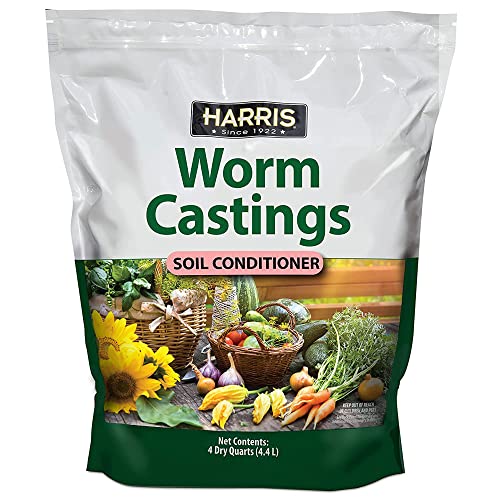
Harris brings a versatile worm casting that works both as a dry soil amendment and a liquid fertilizer. Simply mix three-quarters of a cup of castings per gallon of water to create a nutrient-rich tea that can be applied directly to houseplants, vegetables, and flowers. This dual-use capability makes it a practical choice for gardeners who want flexibility in how they feed their soil.
The castings are dark, rich, and moist with no detectable odor — a major advantage for indoor use or for growers sensitive to the smell of some organic products. They effectively improve water retention while promoting drainage, addressing the contradictory need to keep soil moist but not waterlogged. Users note that a little goes a long way, with even small applications producing visibly greener, healthier plants.
As with all worm castings, this is not a high-NPK fertilizer. It provides trace minerals and beneficial biology rather than a concentrated nutrient punch. It is best suited as a foundation amendment for regular soil maintenance or as a liquid starter for transplants. The bag size is generous, and for the price, it represents strong value in the worm casting category.
What works
- Dual-use: dry top-dress or liquid fertilizer tea
- Odorless and moist, pleasant to handle indoors
- Improves both water retention and drainage
What doesn’t
- Not a standalone solution for heavy-feeding vegetable crops
- Shipping box can tear; contents need proper packaging
Hardware & Specs Guide
OMRI Certification
The Organic Materials Review Institute (OMRI) seal is the definitive standard for organic gardening inputs. Products listed on the OMRI database have been verified to meet USDA National Organic Program requirements. For vegetable gardens, this certification ensures no prohibited synthetic pesticides, sewage sludge, or genetically modified organisms are present in the compost. Always prioritize OMRI-listed compost for edible crops.
NPK Ratio and Biological Additives
Compost NPK ratios are typically lower than synthetic fertilizers because the nutrients are released slowly by soil microbes. A balanced 3-4-4 or 5-7-3 ratio is ideal for vegetables. Look for products that include mycorrhizal fungi or beneficial bacteria — these organisms expand root surface area and unlock nutrients already present in the soil, reducing the need for frequent reapplication.
FAQ
Can I use pure worm castings instead of compost for my vegetable bed?
How do I prevent blossom end rot when using organic compost?
Should I mix compost into the soil or apply it as a top dressing?
Final Thoughts: The Verdict
For most gardeners, the compost for organic vegetable garden winner is the Blue Ribbon Organics OMRI Certified Compost because it offers the purest, most biologically active foundation certified for organic production. If you want targeted feeding for heavy fruiting crops like tomatoes, grab the FoxFarm Happy Frog. And for a dual-purpose worm casting that works as both a soil amendment and a liquid tea, nothing beats the Harris Worm Castings.