
Outdoor pots and raised beds face a relentless enemy: heavy, compacted soil that drowns roots after a single rainstorm. The difference between a flourishing container garden and a wilted disaster often comes down to the air pockets in your mix — a trait no bagged garden soil can guarantee. Serious container growers know that the starting medium dictates everything from watering frequency to fertilizer uptake, and the wrong choice means fighting root rot and stunted growth all season.
I’m Rikta — the co-founder and writer behind Lawn Gear Lab. I’ve spent hundreds of hours comparing texture, drainage rates, and nutrient profiles of commercial potting media, reading through thousands of verified owner reports to separate marketing claims from measurable performance in real containers.
This guide breaks down the top contenders based on drainage, nutrition, and long-term structure. Whether you’re moving seedlings into patio pots or filling a raised bed, the right outdoor potting soil makes or breaks your season before you even plant a seed.
How To Choose The Best Outdoor Potting Soil
Choosing potting soil for outdoor containers is different from picking garden soil for in-ground beds. Outdoor pots dry faster, heat up more, and drain differently. The right mix balances water retention with oxygen flow, and the wrong one turns roots into mush. Here’s what to check on the bag.
Texture and drainage components
Look for visible perlite (those white volcanic pebbles), coarse sand, or coconut coir chunks. These create physical air pockets that let excess water escape and oxygen reach the root zone. A mix that feels dense or sandy in the bag will likely compact after a few waterings, suffocating roots. Premium blends often list the exact ratio of coir to perlite — a 70:30 coir-to-perlite ratio is a favorite among serious growers for its near-perfect drainage-to-moisture balance.
Nutrient source and longevity
Check whether the nutrients come from synthetic slow-release pellets or natural composted materials. Organic blends using worm castings, kelp meal, or aged manure provide micronutrients and microbial life that synthetic fertilizers skip. However, organic mixes usually need supplemental feeding after 4–6 weeks, while synthetic-fertilizer blends like Miracle-Gro claim to feed for up to six months straight. For long-season crops in large containers, a pre-fertilized mix saves work; for seed starting or short-season herbs, a leaner base lets you control the feeding schedule.
pH balance and salt content
Outdoor potting soils should land between pH 5.8 and 6.8 for most vegetables and flowers. High salt content — often indicated by white crust on the bag or a manufacturer warning about “prefertilized” blends — can burn roots, especially in containers where salts accumulate from evaporation. Washed coco coir products advertise low electrical conductivity (EC) specifically to avoid this issue. If you see “pH balanced” or “buffered” on the label, that means the manufacturer adjusted the medium before bagging, saving you the guesswork.
Quick Comparison
On smaller screens, swipe sideways to see the full table.
| Model | Category | Best For | Key Spec | Amazon |
|---|---|---|---|---|
| FoxFarm Ocean Forest | Premium Blend | Nutrient-rich container gardens | 1.5 cu ft bag with aged forest products | Amazon |
| Coast of Maine Bar Harbor Blend | Organic Premium | Sustained feeding for flowers & vegetables | 16 qt with lobster & kelp meal | Amazon |
| FoxFarm Cultivation Nation 70:30 | Soilless Mix | Hydroponic & high-drainage containers | 2 cu ft 70:30 coir-perlite ratio | Amazon |
| Coast of Maine Tomato & Vegetable | Organic | In-ground & potted vegetable gardens | 20 qt with composted manure | Amazon |
| Miracle-Gro Potting Mix (3-Pack) | Value Fertilized | Long-feeding for annuals & perennials | 8 qt per bag, feeds up to 6 months | Amazon |
| Michigan Peat General All Purpose | Mid-Range All-Purpose | Large volume raised beds & pots | 50 lb bag with perlite & slow-release fertilizer | Amazon |
| Modellor Premium Washed Coco Coir (4 Bricks) | Budget Soilless Base | Seed starting & custom mixing | Expands to 36 qt per 4-brick set | Amazon |
In‑Depth Reviews
1. FoxFarm Ocean Forest Potting Soil
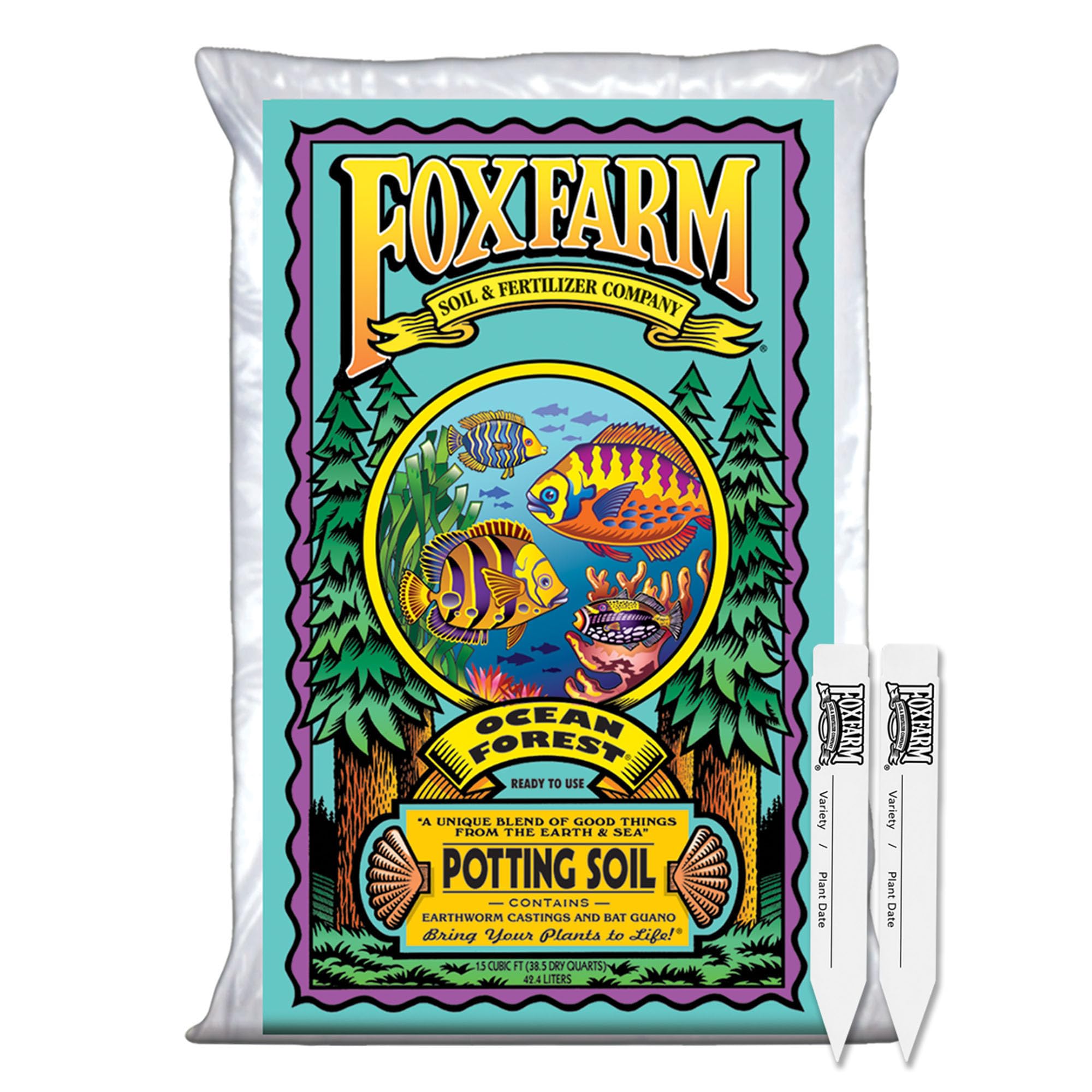
FoxFarm Ocean Forest has become the gold standard for container growers who want a ready-to-pour mix that feeds from day one. The 1.5-cubic-foot bag contains 50–60% aged forest products, sphagnum peat moss, and perlite, plus a proprietary fertilizer blend derived from fish emulsion, crab meal, shrimp meal, earthworm castings, and kelp meal. Users consistently report that transplants show visibly larger growth compared to standard potting soils under identical watering schedules, which speaks to the richness of that initial nutrient load.
The texture is noticeably light and fluffy — water absorbs immediately upon first watering rather than beading on the surface or running straight through. The sandy loam component provides enough weight to anchor larger plants without compacting into a brick after repeated rain. Some buyers note the occasional mushroom flush, which indicates active organic matter but can alarm new gardeners. The bag also includes two plant tags for labeling varieties and planting dates, a small but thoughtful touch for organized growers.
At roughly 34 pounds per bag, this is not a lightweight option for balcony haulers, but the nutrient density means you can often skip supplemental feeding for the first 4–6 weeks. For anyone filling a dozen or more patio pots with heavy feeders like tomatoes or peppers, the per-bag cost is justified by the reduced need for liquid fertilizers early in the season.
What works
- Loaded with organic nutrients and marine-based amendments for strong early growth
- Light, aerated texture that resists compaction and improves root oxygenation
- Immediate water absorption and excellent drainage for outdoor rainy conditions
What doesn’t
- Heavy bag at 34 pounds — difficult to carry up stairs or transport long distances
- High organic content can occasionally cause mushroom growth in dense containers
2. Coast of Maine Bar Harbor Blend Potting Soil
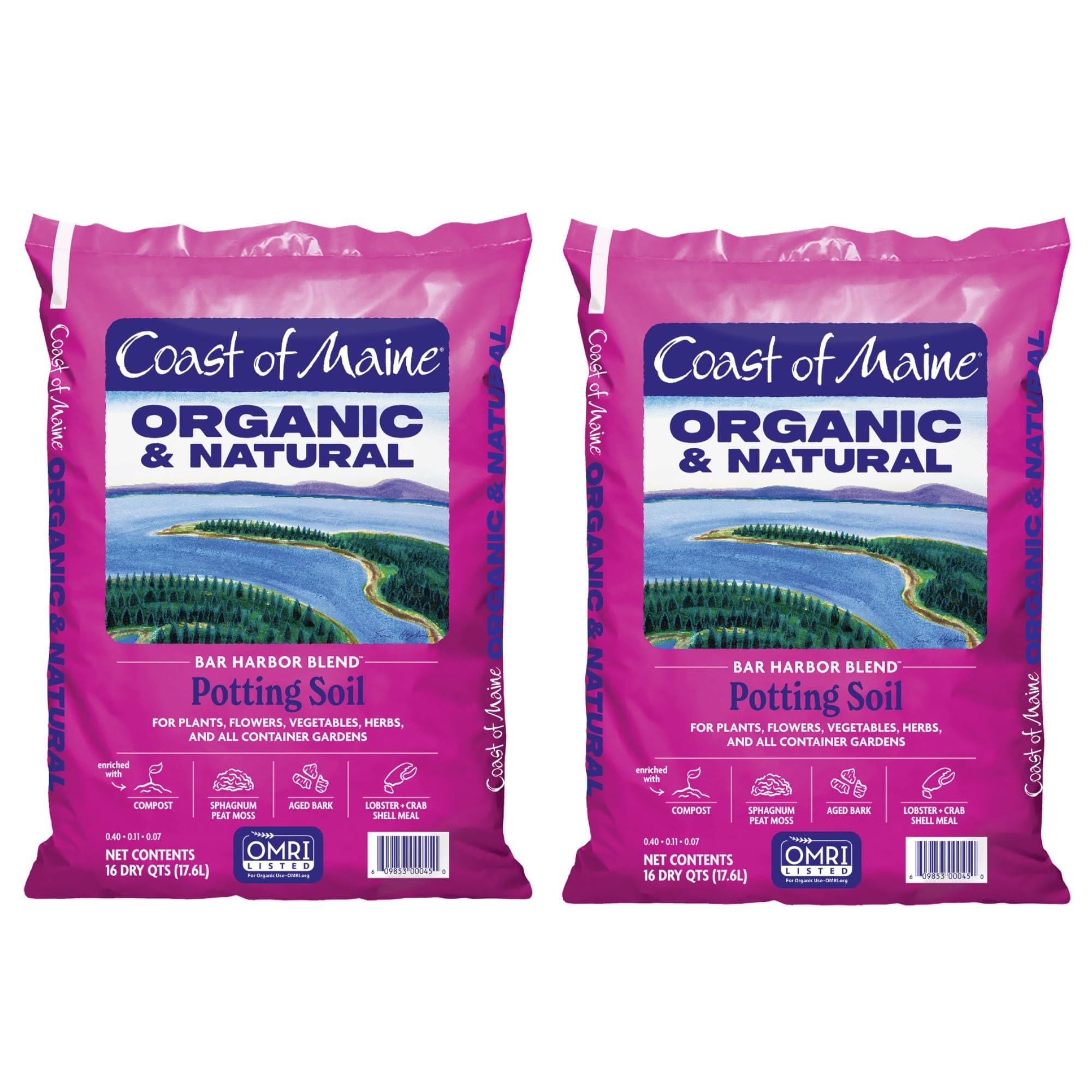
Coast of Maine’s Bar Harbor Blend is a benchmark for sustainable organic potting soil, formulated with sphagnum peat moss, perlite, lobster and crab shell meal, and kelp meal. The marine-based ingredients provide chitin and natural calcium, which help plants build strong cell walls and resist soil-borne diseases. Owners report that the soil has a dark, rich color with very little peat-moss dustiness, and the mix includes enough perlite to maintain drainage even through heavy rain cycles.
The slow-release nitrogen from the crustacean meals means consistent feeding for up to eight weeks without additional fertilizer. Gardeners using this in container tomatoes and large hanging baskets note that foliage stays dark green longer compared to standard organic blends. The 16-quart bag (2-pack configuration) is easy to handle at around 14 pounds per bag, making it more manageable than the heavy 50-pound sacks for rooftop or balcony growers.
Some users remark that the bag can arrive with a pronounced sea-fresh smell due to the shellfish content, which dissipates within a day or two after opening. The price per quart is higher than basic peat-based mixes, but for certified organic container gardening where you want a single-bag solution without mixing in your own amendments, this blend delivers consistent results.
What works
- Rich marine-based nutrient profile provides calcium and chitin for disease resistance
- Dark, peat-reduced texture with good perlite aeration and moisture balance
- Lightweight bag weight compared to 50-pound bulk options, easy to move
What doesn’t
- Shellfish-derived ingredients produce a temporary ocean-like odor upon opening
- Premium per-quart cost makes large raised-bed projects expensive
3. FoxFarm Cultivation Nation 70:30 Growing Media

FoxFarm Cultivation Nation 70:30 is a soilless growing media built around a specific ratio — 70% buffered coconut coir and 30% perlite. This precise blend delivers the highest drainage performance of any product on this list, making it the top choice for container growers in rainy climates or those who tend to overwater. The buffered coir means the medium arrives pH-stable and low in salts, so there is no need to pre-wash or soak before planting.
The 2-cubic-foot bag is surprisingly light for its volume — coir weighs far less than peat or soil — which simplifies transport even though the bag looks large. Users report that seed germination rates are high and that cuttings root faster in this inert medium compared to denser mixes. The 70:30 ratio allows growers to control their own feeding schedule without fighting pre-added fertilizer timing. Many experienced gardeners blend this with worm castings or a granular organic fertilizer for custom container mixes.
The lack of built-in nutrients means you must supply all feeding from day one, which is a dealbreaker for gardeners wanting a “plant and forget” solution. However, for anyone who wants maximum aeration, faster root development, and complete control over nutrient inputs, this is the most precise medium available in a bagged format.
What works
- Exceptional drainage and aeration from the 70:30 coir-perlite ratio, ideal for wet climates
- Lightweight 2-cubic-foot bag is easy to move despite high volume
- pH-buffered and low-salt, no pre-rinsing required before planting
What doesn’t
- Contains no added nutrients — requires immediate supplemental feeding for any crop
- Higher price per bag than standard soil mixes, best for targeted use
4. Coast of Maine Organic & Natural Planting Soil for Vegetables & Tomatoes

Coast of Maine’s Tomato & Vegetable Planting Soil is an OMRI-listed organic blend that balances composted manure with sphagnum peat moss and perlite for a mid-weight texture suitable for both in-ground and container use. The 20-quart bag provides a full container’s worth of soil for several large pots or a small raised bed. Gardeners consistently mention that their heirloom tomatoes show strong root development and consistent fruiting when started in this mix.
The composted manure component gives this soil a noticeable dark color and earthy smell that indicates active microbial content. Users report that it retains moisture well while still draining adequately — a key trait for vegetable containers that dry out fast in direct sun. The all-natural formula includes a small amount of wood-based material intended to deter insects, which some users find slightly chunky when sifting for fine seed starting.
Some buyers have reported fungus gnats emerging after watering, which is a common risk with any compost-heavy organic soil. Pre-treating the bag with a neem oil drench or allowing it to dry out slightly before planting can mitigate this. For the price per quart, this is one of the most affordable organic options that still uses real composted inputs rather than just peat and synthetic pellets.
What works
- Composted manure provides rich organic matter and active soil microbes for healthy roots
- Moisture retention is excellent for outdoor vegetable containers in hot sun
- OMRI-listed organic certification for chemical-free gardening
What doesn’t
- Compost content can introduce fungus gnats if bag is stored damp before use
- Contains some woody chunks that may need sifting for fine seed-starting trays
5. Miracle-Gro Potting Mix (3-Pack)

Miracle-Gro Potting Mix is the most widely recognized name in container soil, and the 3-pack of 8-quart bags is a practical choice for gardeners managing multiple small to medium pots. The mix contains a synthetic slow-release fertilizer that feeds continuously for up to six months, which removes the guesswork from summer-long feeding schedules. Users report that annual flowers and vegetables planted directly into this mix grow noticeably larger (the company claims “twice as big”) compared to unfed soil controls.
The texture is consistent and well-balanced — not too dense, not too fluffy. Each 8-quart bag fills two 8-inch containers, making the 3-pack ideal for a small patio garden without committing to a 40-pound bag. The perlite content is visible throughout the mix, providing sufficient drainage for outdoor pots that see afternoon thundershowers. Many long-time customers appreciate that the formula has not changed over the years, offering predictable results season after season.
The synthetic fertilizer base means this is not suitable for organic gardening, and some growers note that the nutrient release can cause salt buildup in porous terracotta pots over time. For container gardeners who prioritize convenience and consistency over organic certification, this 3-pack provides a low-effort path to dense, lush container growth through summer.
What works
- Six-month slow-release feeding schedule eliminates the need for regular liquid fertilizer
- Consistent, predictable texture and drainage for reliable container results
- Compact 8-quart bags are easy to handle and store, perfect for small spaces
What doesn’t
- Synthetic fertilizer formulation disqualifies this from organic gardening programs
- Salt buildup can occur in terracotta pots if drainage is not monitored closely
6. Michigan Peat General All Purpose Premium Potting Soil

Michigan Peat General All Purpose Premium Potting Soil is a 50-pound bulk option built around reed sedge peat, perlite, and sand, with both starter and slow-release fertilizers already blended in. This is a no-frills workhorse for large raised beds, heavy container gardens, or any situation where you need substantial volume at a reasonable cost. The ready-to-use consistency means you can tear open the bag and plant immediately without mixing or amending.
The inclusion of sand and perlite gives this mix a grittier feel compared to fluffy coir-based blends, which helps anchor large plants and provides good drainage in deep containers. Buyers who use this for outdoor potted vegetables and flowers note that it arrives moist and performs reliably through a full growing season, though some users report that it can attract fungus gnats if stored in humid conditions before opening. The 50-pound weight is significant — plan for two-person carry or a wheeled cart for transport.
The bag contains a general-purpose slow-release fertilizer that covers the first month of growth well, but heavy feeders like tomatoes may need supplemental liquid fertilizer by week six. For the budget-conscious gardener filling multiple large containers, the cost per pound is among the lowest of any all-purpose outdoor potting soil available.
What works
- Extremely low cost per pound for large-volume filling of raised beds and heavy pots
- Sand component provides weight and stability for top-heavy container plants
- Pre-blended fertilizers support first month of growth without extra feeding
What doesn’t
- Heavy 50-pound bag is difficult to transport and handle without assistance
- Moisture-retaining bag can develop fungus gnats if left sealed in damp conditions
7. Modellor Premium Super Washed Coco Coir (4 Bricks, 5 lb)
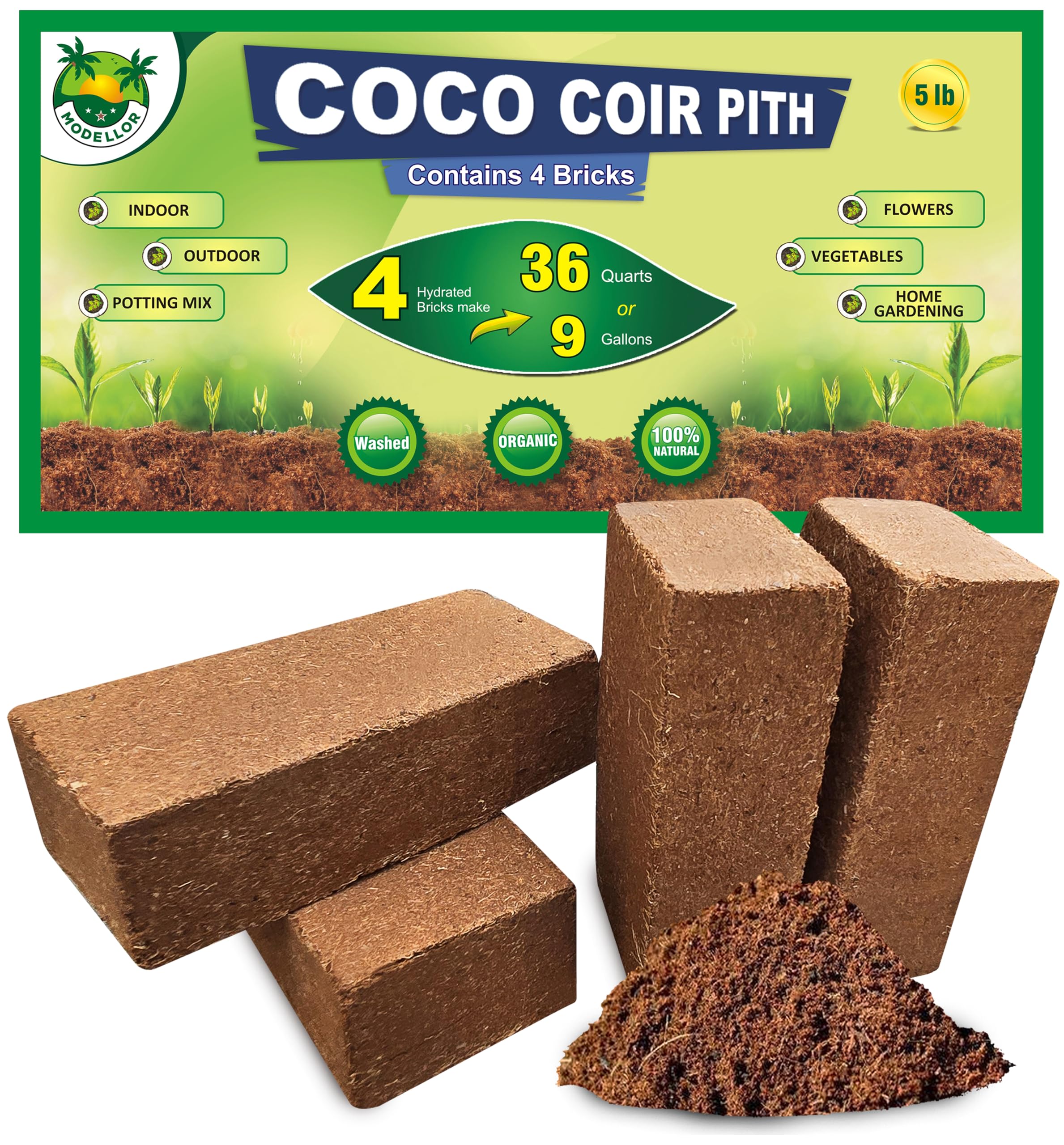
Modellor Premium Super Washed Coco Coir comes as four 1.25-pound bricks that each expand into roughly 9 gallons (36 quarts total) of fluffy growing medium when hydrated. The triple-washed, low-salt production process means you can hydrate these bricks and plant immediately without the rinsing step required by cheaper unbuffered coir — a real time saver during spring potting sprees. Users consistently report that the expansion volume matches or exceeds the stated 9 gallons per brick, with no visible debris or unpleasant smell.
The fluffy structure created by hydrated coir provides exceptional aeration and moisture retention simultaneously — seeds germinate faster in this medium compared to heavy peat-based soils, and roots grow visibly denser within weeks. This is a pure soilless medium with zero added nutrients, making it ideal for seed starting, microgreen trays, or as a base for custom mixes. Many gardeners blend this coir with worm castings, perlite, and a balanced organic fertilizer to create their own target-specific potting soil at a lower cost than premium pre-blends.
The bricks arrive extremely compact, making this one of the most space-efficient soil products to store — a stack of four bricks takes up less room than a single bag of pre-moistened potting mix. The trade-off is that you need a large bucket or tub to hydrate each brick, and the expansion process takes about 15-20 minutes. For return buyers who value control over their growing medium composition, this is the most versatile and budget-friendly building block available.
What works
- Triple-washed and low-salt — no pre-rinsing required, hydrate and plant directly
- Compact brick form stores easily and expands to 9 gallons of fluffy growing medium
- Versatile base for custom soil blending with added nutrients and perlite
What doesn’t
- Contains zero nutrients — requires mixing with fertilizer for any productive crop
- Brick hydration requires a bucket and 15-20 minute wait time before use
Hardware & Specs Guide
Texture and Drainage
The physical structure of outdoor potting soil determines how water moves through the root zone. A mix should feel light and crumbly, not dense or sandy. Visible perlite or coarse coco coir chunks indicate good aeration. Soils with sand content offer more weight for stability but require careful watering to avoid compaction. In rainy climates, a soilless blend like FoxFarm Cultivation Nation’s 70:30 coir-perlite ratio provides the fastest drainage; in dry climates, a peat-based mix with composted manure holds moisture longer.
Nutrient Profile and pH
Pre-fertilized blends offer convenience — Miracle-Gro’s synthetic slow-release formula feeds up to six months, while organic blends like Coast of Maine’s Bar Harbor Blend rely on natural kelp and crustacean meals for sustained slow-release nitrogen. Both pH and electrical conductivity matter: most vegetables thrive between pH 5.8 and 6.8. High salt content (common in synthetic-fertilized soils) can burn roots, especially in containers. Washed coco coir products advertise low EC specifically to avoid this, making them a safer base for sensitive seedlings.
FAQ
Can I use in-ground garden soil for outdoor pots?
How do I tell if my outdoor potting soil has poor drainage?
Do I need to add more fertilizer to pre-fertilized potting soil?
Final Thoughts: The Verdict
For most gardeners, the outdoor potting soil winner is the FoxFarm Ocean Forest Potting Soil because it delivers a rich, aerated texture and a robust nutrient profile that fuels strong growth from day one without needing immediate supplemental feeding. If you want an organic blend with marine-based slow-release nutrition, grab the Coast of Maine Bar Harbor Blend. And for maximum drainage control and the ability to build your own custom mix, nothing beats the FoxFarm Cultivation Nation 70:30.