
Every autumn, the same dilemma hits: you rake a massive pile of leaves, stuff them into paper bags, and watch the bottom dissolve into a pulpy mess after a light rain. Or you reach for a plastic bag that will sit in a landfill for centuries. The right leaf bag solves both problems — it must hold wet, weighty yard debris without tearing during pickup and break down safely afterward. That balance is harder to strike than most homeowners expect.
I’m Rikta — the co-founder and writer behind Lawn Gear Lab. I’ve spent hundreds of hours analyzing material certifications, measuring bag thickness specs against real-world tear rates, and cross-referencing ASTM standards with verified owner experiences to separate genuinely effective biodegradable leaf bags from marketing claims.
After reviewing thickness measurements, capacity ratings, and compost-certification details across a wide price spectrum, one set of liners consistently outperformed the rest when matched with real yard-waste conditions. This guide ranks the best biodegradable leaf bags currently available on the market.
How To Choose The Best Biodegradable Leaf Bags
Not every bag labeled “biodegradable” or “compostable” will survive a weekend of yard work. Three primary factors determine whether a bag holds your debris or ends up tearing at the curb: material thickness (mil), certification authenticity, and the specific conditions required for the bag to actually break down.
Mil Thickness — The Backbone of Durability
Mil (thousandths of an inch) is the standard measurement for bag film thickness. A 0.6-mil bag can handle light, dry leaves but will puncture easily if a twig or wet grass presses against the side. A 1.0-mil to 1.1-mil bag provides enough resistance for typical yard debris without feeling like a contractor-grade sheet. Anything above 1.1 mil is overbuilt for leaves alone but may be necessary for mixed garden waste containing small branches.
Certification Standards — Not All “Green” Claims Are Equal
The term “biodegradable” is not federally regulated for plastic bags in the same way as “compostable.” Look for BPI (Biodegradable Products Institute) certification, OK Compost HOME certification from TÜV AUSTRIA, or an ASTM D6400 compliance mark. These third-party audits ensure the bag will break down within a specified timeframe under real composting conditions — not just fragment into microplastics that still pollute the environment.
Storage Shelf Life — Plan Ahead
Compostable bags have a finite shelf life — typically 9 to 12 months when stored in a cool, dry place. Heat and humidity trigger premature degradation at the molecular level, meaning a bag that sat in a hot garage all summer may disintegrate the moment you lift a full load. If you buy in bulk, keep the unopened boxes in a climate-controlled area and rotate your stock.
Quick Comparison
On smaller screens, swipe sideways to see the full table.
| Model | Category | Best For | Key Spec | Amazon |
|---|---|---|---|---|
| UNNI 33 Gallon 40 Count | Premium Compostable | Heavy wet yard waste | 1.1 Mil Thickness | Amazon |
| Simply Bio 50-55 Gallon 12 Count | Large Capacity | Massive leaf piles & garden waste | 2.0 Mil / 55 Gal Capacity | Amazon |
| BioBag USA 33 Gallon 60 Count | Value Bulk | Regular weekly yard collection | 1.0 Mil / 60 Bags | Amazon |
| SUPERBIO 13 Gallon 30 Count | Kitchen Compost | Indoor food scrap collection | 1.0 Mil / Drawstring | Amazon |
| Reli. 33 Gallon 100 Count | Economy | Dry leaves & non-recyclable waste | 0.6 Mil / 100 Bags | Amazon |
| Ultrasac 39 Gallon 70 Count | Clear Bag | Municipal clear-bag requirements | 1.0 Mil / Clear Plastic | Amazon |
| Lowe’s H&PC-75419 30 Gallon 25 Count | Paper Yard Bag | Dry yard waste & recycling pickup | 2-Ply Paper | Amazon |
In‑Depth Reviews
1. UNNI 33 Gallon Compostable Lawn & Leaf Bags (40 Count)

The UNNI 33-gallon bag strikes the hardest-to-achieve balance in this category: it is thick enough at 1.1 mil to survive wet leaves and small sticks without tearing, yet fully certified compostable under BPI, OK Compost HOME, and ASTM D6400 standards. The 40-bag value pack comes in two 20-count rolls, making storage easy and reducing the risk of opening an entire box at once.
Reinforced side seams and a star-sealed bottom give this bag surprisingly good leak resistance for a plant-based liner. Multiple owners report carrying fully loaded bags by the gathered top without the film ripping — a common failure point on thinner compostable models. At this thickness, the bag also holds up better against the damp conditions that cause paper yard bags to collapse.
One limitation: the 33-gallon capacity is generous for a standard can, but users tackling truly oversized piles — the kind that fill a pickup bed — may find themselves reaching for a second bag mid-project. Additionally, the green tint makes it harder to see contents at a glance, though that is a minor tradeoff for the durability on offer.
What works
- Industry-leading 1.1-mil thickness prevents punctures from twigs
- Triple-certified compostable under BPI, OK Compost HOME, and ASTM D6400
- Star-sealed bottom resists leaks from wet grass clippings
What doesn’t
- 33-gallon size may be too small for extra-large yard waste piles
- Green color obscures bag contents for quick visual inspection
2. Simply Bio 50-55 Gallon Compostable Trash Bags (12 Count)
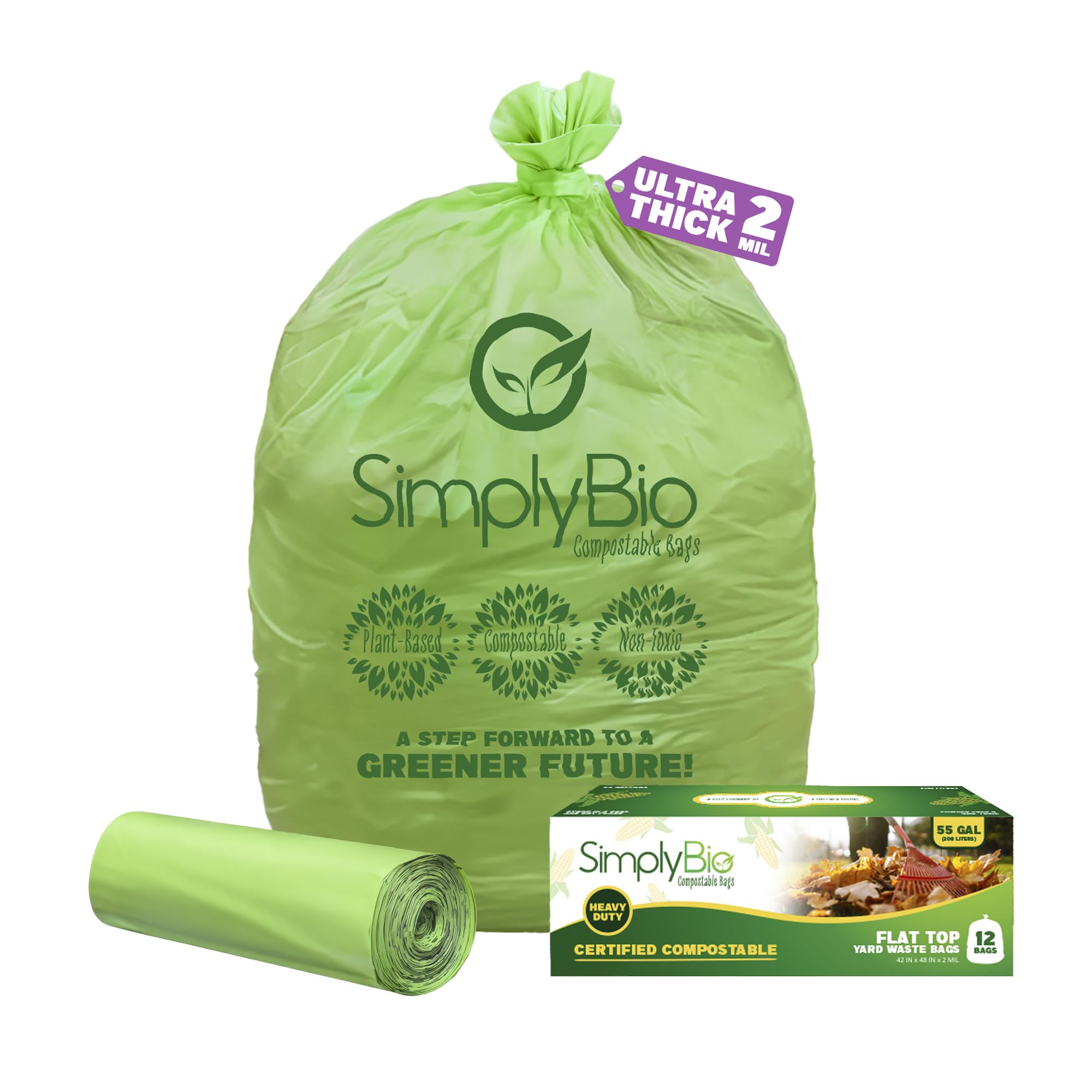
The Simply Bio 55-gallon bag is the category’s muscle option — a 2.0-mil-thick liner measuring 42 by 48 inches, large enough to line a contractor can or a dedicated yard-waste roll cart. The dual-thickness construction (PLA and PBAT plant-based materials) delivers puncture resistance that rivals standard plastic, making it suitable for mixed garden waste that includes hedge trimmings and the occasional stray branch.
Owners consistently praise the bag’s ability to hold up during wet months when paper yard bags turn to mush. The OK Compost HOME certification adds a layer of confidence: this bag is designed to break down in a backyard compost pile, not just an industrial facility. Users who filled the bags with grass clippings and left them for several days before pickup reported no structural failure — though leaving any compostable bag sitting full for weeks will eventually cause the bottom to give way.
At 12 bags per pack, the unit cost is higher per bag than smaller-count options. For homeowners who generate a moderate volume of yard debris — maybe a few bags per month — this pack may feel small. But for anyone contending with a large property, the combination of extra-thick material and generous capacity offsets the lower piece count.
What works
- 2.0-mil thickness feels almost like conventional heavy-duty plastic
- Massive 55-gallon capacity fits large yard waste bins
- OK Compost HOME certified for backyard composting
What doesn’t
- Only 12 bags per pack — high per-bag cost
- Bag left full too long can degrade at the bottom seam
3. BioBag USA 33 Gallon Compostable Lawn & Leaf Bags (60 Count)
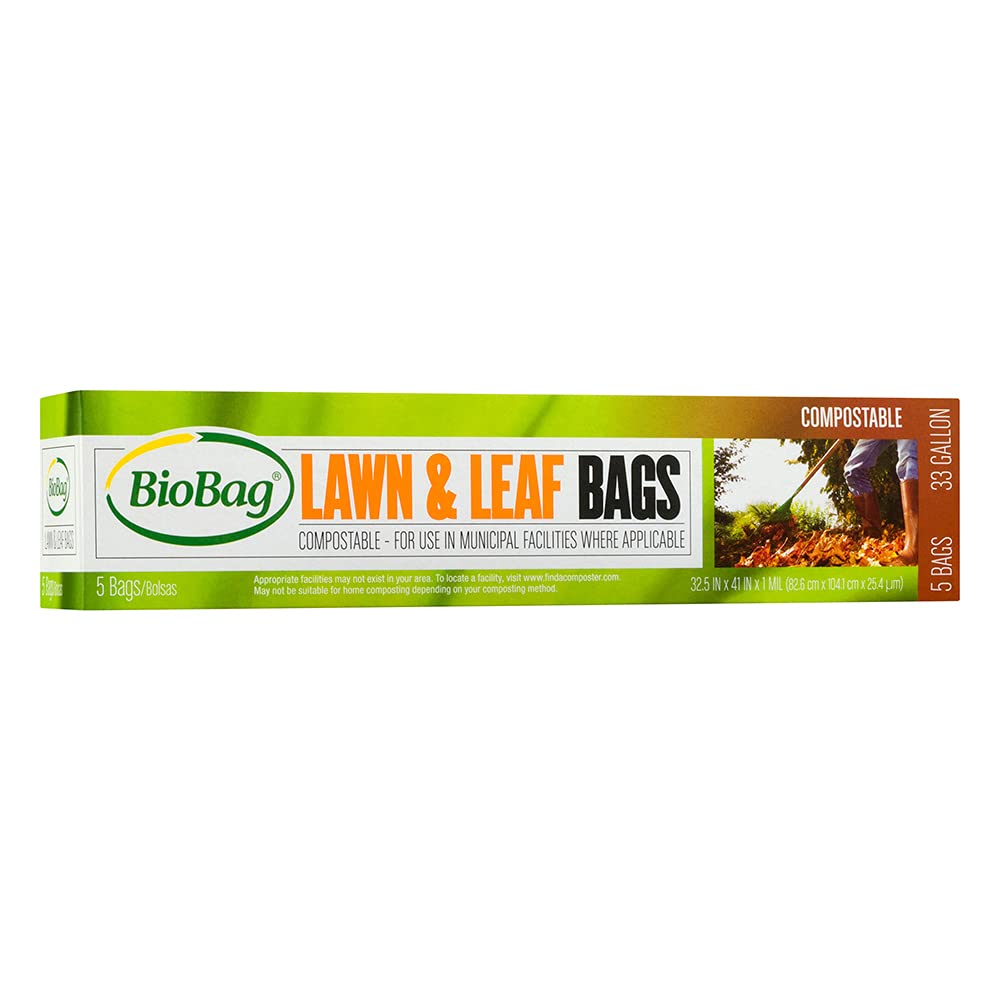
The 60-count pack arrives as 12 boxes of five bags each — a dispensing format that prevents accidental exposure of the entire supply to environmental moisture that could start premature degradation.
The starches and vegetable oils used in the manufacturing process allow these bags to break down in commercial composting facilities and, per the BPI and ASTM D6400 certifications, will not leave behind persistent microplastic fragments. Multiple owners report using the bags with electric leaf mulchers (the WORX WG430 being a frequent mention), filling them with shredded material that would ordinarily demand more frequent trips to the curb. The bags hold up well enough to carry by the gathered knot, though they are noticeably less robust than 1.1-mil alternatives when wrestling with wet debris.
Sharp twigs and large branches remain the primary weak point. A few reviews note that the bag can tear if a pointed stick presses against the side during filling. For typical leaf and grass collections, however, the BioBag offers the best per-bag value among certified compostable options in the 33-gallon class.
What works
- 60-count bulk pack with individual box dispensing prevents spoilage
- 1.0-mil thickness is adequate for leaves and grass clippings
- Long-standing BPI and ASTM D6400 certifications
What doesn’t
- Thinner than UNNI — punctures more easily with sharp debris
- Not ideal for heavy wet loads or branch-heavy garden waste
4. SUPERBIO 13 Gallon Compostable Drawstring Bags (30 Count)
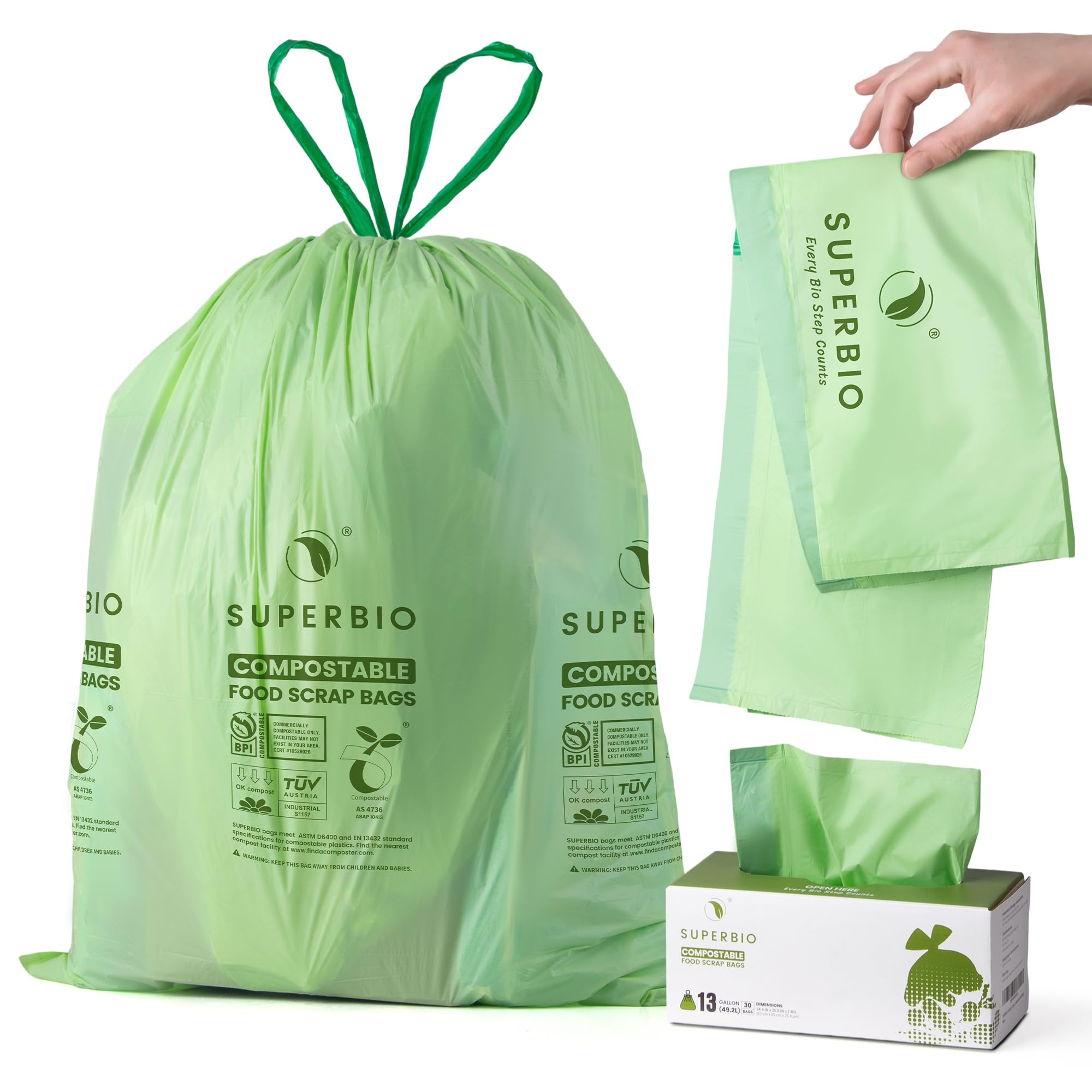
The SUPERBIO 13-gallon bag is built for indoor-to-outdoor transitions — think food scrap collection in a small kitchen bin that eventually gets consolidated into larger yard waste containers. The drawstring closure sets it apart from standard open-top compostable liners, making it easy to lift, tie, and carry even when the bag is fully loaded with wet scraps. The 1.0-mil thickness is consistent with the middle tier of this category, offering enough tear resistance for general food waste and light yard trimmings.
Certifications here are robust: BPI, Seedling, and OK Compost INDUSTRIAL (ASTM D6400, EN 13432). Owners upgrading from thinner store-brand liners note a meaningful improvement in durability, with the bag holding together through a week’s worth of kitchen waste without visible sagging at the bottom. The drawstring itself integrates into the bag material rather than being a separate adhesive strip, which prevents the common failure where the tie separates from the film under strain.
The obvious constraint is capacity — 13 gallons is too small for primary leaf collection or lining standard 30- to 40-gallon yard waste cans. Use this bag as a complement to larger compostable liners, not a replacement. Also worth noting: the bag is designed for industrial composting facilities, not home piles, so verify local drop-off acceptance if home composting is your intended endpoint.
What works
- Integrated drawstring closure simplifies tying and carrying
- 1.0-mil thickness provides reliable food-scrap durability
- Multiple compost certifications (BPI, Seedling, OK Compost)
What doesn’t
- 13-gallon capacity too small for direct yard waste collection
- Not OK Compost HOME certified — industrial facility required
5. Reli. Biodegradable 33 Gallon Trash Bags (100 Count)

The Reli. 33-gallon bag is an oxo-biodegradable option — meaning it breaks down through a chemical additive triggered by exposure to moisture, oxygen, and soil conditions, per ASTM D6954 standards. This is distinct from plant-based compostable bags and works best for dry leaf collection and non-recyclable waste destined for landfill, not composting facilities. At 0.6 mil, the film is noticeably thinner than every other bag on this list, which keeps the per-bag cost extremely low in the 100-count format.
Owners who have used these bags for weekly lawn mowing and leaf collection over several months report that the 0.6-mil thickness is adequate for light, dry yard debris but fails quickly if sharp twigs or small branches are present. The bags hold up reasonably well in Florida’s humid climate when stored under a carport until pickup day — a testament to the oxo-degradable formulation’s resistance to premature breakdown compared to PLA-based bags. The green color is consistent with the eco-friendly positioning.
This is not a bag for wet grass, heavy rainfall, or mixed garden waste with woody material. Pushing the bag’s limits will result in punctures and tears. For homeowners who generate mostly dry leaves and want a budget-friendly way to reduce plastic’s long-term persistence, the Reli. bags serve a specific niche — but don’t expect them to match the handling feel of thicker compostable liners.
What works
- Extremely low per-bag cost for a 100-count pack
- Resists premature breakdown better than PLA-based bags in humid storage
- ASTM D6954 certified for oxo-degradation
What doesn’t
- 0.6-mil film punctures easily with twigs or sharp debris
- Not suitable for wet leaves or heavy garden waste
- Oxo-degradation is not the same as compostable — not for compost bins
6. Ultrasac 39 Gallon Clear Drawstring Trash Bags (70 Count)

Ultrasac’s 39-gallon clear bag is not compostable in the traditional sense — it is a standard HDPE plastic liner — but it earns a place in this guide for a specific municipal use case: areas that mandate clear bags for curbside yard waste pickup. The 1.0-mil gauge is the thickest among clear-bag options, and the drawstring closure adds convenience that flat-top open bags lack. Made in the USA from virgin polyethylene, these bags are frustration-free in terms of dispensing and fit.
Owner reports highlight the bag’s consistent sizing and reliable seam integrity. The 39-gallon capacity is slightly larger than the industry-standard 33-gallon, giving you extra headroom for bulky leaf piles without sagging. The clear material allows sanitation workers to verify contents without opening, which is the primary regulatory reason for the product’s existence. Users coming from cheaper, thinner clear bags note that the 1.0-mil film significantly reduces tearing during transport.
The environmental drawback is obvious: this is not a biodegradable or compostable product. For readers in locales that allow plastic bags for yard waste, the Ultrasac provides a strong, well-priced, domestically manufactured option. But anyone seeking to reduce their environmental footprint should pair this with a larger goal of switching to certified compostable liners when local clear-bag requirements are not in force.
What works
- 1.0-mil thickness offers reliable puncture resistance for clear bags
- Drawstring closure makes tie-off and carry easy
- Made in the USA with consistent sizing
What doesn’t
- Not biodegradable or compostable — standard plastic liner
- Drawstring can tear before the bag itself under heavy loads
7. Lowe’s H&PC-75419 30 Gallon Brown Paper Lawn Bags (25 Count)

Lowe’s paper yard bags are the traditionalist’s choice — a 30-gallon, 2-ply kraft paper bag that stands open on its own and degrades naturally without any special facility. The self-standing design is genuinely useful: you can set the bag on the ground, open the top fully, and rake leaves directly into it without holding the rim. This makes the initial fill process faster than wrestling with a plastic film bag that collapses under its own weight.
The 2-ply construction provides reasonable tear resistance for dry leaves and light yard trimmings. Multiple owners note that these bags are accepted by municipal yard waste collection programs that reject plastic liners, making them the compliant choice in stricter jurisdictions. The brown paper appearance also signals “organic waste” to pickup crews, reducing the chance of bag rejection.
The fundamental limitation is moisture sensitivity. Wet grass clippings, damp leaves, or rain exposure will soften the paper fibers quickly, especially at the bottom seam. Several reviews mention the bottom falling out when lifting a full bag of wet grass — a failure mode that does not occur with film-based compostable bags. These are best reserved for dry, sunny days and light yard maintenance, not large post-storm cleanup operations.
What works
- Self-standing design allows hands-free two-handed raking into the bag
- 2-ply paper construction offers decent dry-load strength
- Accepted by most municipal yard waste programs that reject plastic
What doesn’t
- Paper absorbs moisture and fails quickly with wet debris or rain
- Bottom seam is the primary failure point — tears with moderate weight
Hardware & Specs Guide
Mil Thickness Ratings
The most critical spec for biodegradable leaf bags is the film thickness measured in mils. A single mil equals 0.001 inches. At 0.6 mil, the bag is suitable only for light, dry leaves and should not encounter twigs or sharp debris. A 1.0-mil bag handles standard mixed yard waste — leaves, grass, small sticks — for most homeowners. At 1.1 mil and above, the bag approaches the durability of conventional plastic trash bags while remaining compostable through the appropriate certification pathway. The thicker the mil rating, the longer the bag can sit in a damp environment before structural failure.
Certification Pathways
Three primary certification standards govern biodegradable and compostable bags in the US market. ASTM D6400 is the American standard for bags designed to break down in commercial composting facilities within 180 days. BPI certification verifies that a product meets ASTM D6400. OK Compost HOME certification, from TÜV AUSTRIA, confirms a bag will degrade in a backyard compost pile at ambient temperatures — a stricter requirement than commercial composting. Oxo-biodegradable bags (ASTM D6954) use chemical additives to fragment plastic into smaller pieces, but these fragments may not fully biodegrade into biomass, water, and CO2 in home compost conditions.
FAQ
Can biodegradable leaf bags go in my home compost pile?
How long do compostable leaf bags last in storage before they degrade?
Are 2-ply paper leaf bags better than compostable plastic film bags for wet conditions?
Final Thoughts: The Verdict
For most gardeners, the best biodegradable leaf bags winner is the UNNI 33 Gallon 40 Count because its 1.1-mil thickness provides genuine wet-load durability without sacrificing compost certification. If you need massive capacity for large properties, grab the Simply Bio 55 Gallon 12 Count. And for dry climates where budget matters most, the BioBag USA 60 Count delivers certified compostable performance at the lowest per-bag cost among top-tier options.