
The difference between a harvest that thrives and one that merely survives almost always comes down to what is happening beneath the surface. Bagged organic soil is not a commodity — the microbial life, particle size, and source materials vary wildly from brand to brand, and choosing the wrong bag means fighting compaction, nutrient burn, or pest problems from the first watering.
I’m Rikta — the co-founder and writer behind Lawn Gear Lab. I’ve spent hundreds of hours studying horticulture research, analyzing soil lab reports, and cross-referencing thousands of owner experiences to find which organic soils actually deliver the structure and biology plants need.
This guide cuts through the marketing to compare seven very different contenders so you can find the best organic soil for your specific growing situation — whether that is starting seedlings, filling raised beds, or rejuvenating potted perennials.
How To Choose The Best Organic Soil
Not all organic certifications are created equal, and the physical structure of the soil — not just the label — determines root health. Here are the three factors that separate a productive mix from a disappointing one.
Organic Matter Source and Maturity
The base ingredients matter more than the brand name. Composted manure provides a different nutrient profile than worm castings, and peat moss offers entirely different aeration than coco coir. Fully composted materials should have a dark, crumbly texture and an earthy smell rather than a sour or ammonia odor — that is the sign that the material has broken down completely and will not steal nitrogen from your plants during decomposition.
Drainage and Aeration Balance
Container plants suffer most from soil that collapses under its own weight, trapping water and suffocating roots. Look for visible perlite, pumice, or coarse sand in the mix. Coco coir holds moisture without compacting the way peat does, but it lacks the nutrient density of compost. The ideal organic soil for containers uses a blend of ingredients that maintain air pockets even after repeated watering cycles.
pH and Nutrient Availability
Most vegetables and flowers prefer a slightly acidic pH between 6.0 and 7.0. Lime is commonly added to peat-based mixes to raise pH, while some composts are naturally alkaline. If you are growing acid-loving plants like blueberries or potatoes, you want a mix with zero added lime. A soil test kit eliminates guesswork here — no bag guarantees perfect pH for every plant species.
Quick Comparison
On smaller screens, swipe sideways to see the full table.
| Model | Category | Best For | Key Spec | Amazon |
|---|---|---|---|---|
| Coast of Maine Bar Harbor Blend | Potting Mix | Container Vegetables | Lobster & Crab Shell Meal | Amazon |
| Black Gold All Organic Potting Soil | Potting Mix | Houseplant Re-potting | 8-Quart 2-Pack Format | Amazon |
| R&M Organics Premium Compost | Soil Amendment | Garden Bed Rejuvenation | Dairy Manure Compost | Amazon |
| Coast of Maine Tomato & Vegetable | Potting Mix | Heirloom Tomato Containers | Composted Manure Blend | Amazon |
| Avalution Organic Coco Coir Bricks | Soil Base | Custom Soil Mixing | 36 QT Expanded Volume | Amazon |
| Jiffy Seed Starting Mix | Seed Starter | Germination Trays | Peat & Vermiculite Blend | Amazon |
| Back to the Roots Worm Castings | Amendment | Slow-Release Feeding | 5 lb Pure Vermicompost | Amazon |
In‑Depth Reviews
1. Coast of Maine Bar Harbor Blend Potting Soil
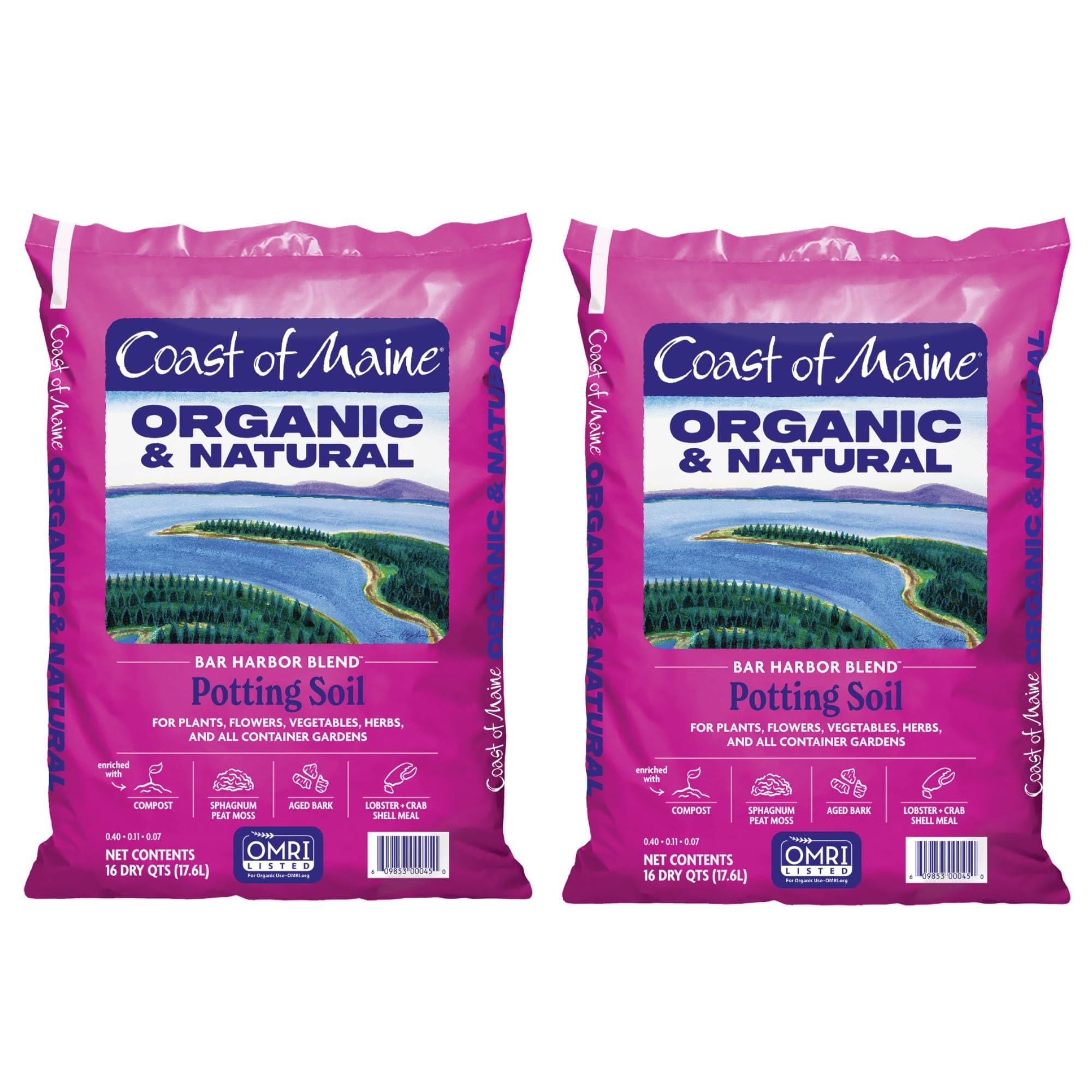
The Bar Harbor Blend uses a genuinely unusual base: sphagnum peat moss blended with compost, perlite, lobster and crab shell meal, and kelp meal. That marine-sourced calcium and chitin content gives this mix a slow-release nutrient profile that most standard organic potting soils cannot match. The nitrogen from the crustacean shells feeds plants steadily over months rather than releasing all at once and leaching away.
Multiple long-term container gardeners reported that their tomatoes, potatoes, and even fussy peas produced far more vigorous growth than with standard organic mixes. The texture is notably dark and crumbly, with visible perlite and coco coir fibers ensuring that air pockets remain open after repeated watering. Reviewers consistently noted zero weed seeds or large bark chunks — a common complaint with cheaper soils.
If you primarily grow in containers, raised beds, or hanging baskets and want a mix that minimizes the need for supplemental feeding through the growing season, this is the bag to buy. The volume per dollar is fair when compared to the nutrient density you get, and the Maine-sourced compost adds a biodiversity that lab-processed soils lack.
What works
- Marine-based slow-release nitrogen sustains growth for months
- Excellent drainage with visible aeration additives
- No weed seeds or large debris in multiple bags
What doesn’t
- Premium tier pricing may feel steep for large raised bed fills
- Lobster shell odor is noticeable immediately after opening
2. Black Gold All Organic Potting Soil 2 Pack

Black Gold stands out for a reason that matters deeply to houseplant owners: it reliably arrives free of fungus gnat eggs. Many organic soils are notorious for harboring gnat larvae that emerge days after repotting, but this mix from Sun Gro has a strong track record among indoor plant enthusiasts for being clean in that regard. The texture is rich and moisture-retentive without becoming waterlogged or compact.
The 8-quart two-pack format is ideal for repotting a collection of houseplants or small container vegetables without committing to a massive bag that degrades before it is used up. Reviewers noted that even tired, depleted potting soil revived dramatically when they mixed in this product — plants that had stalled resumed new leaf and root growth within days of the transition.
This is not a cheap bulk option for filling raised beds, but for the indoor gardener who wants a dependable, sterile-feeling organic mix that will not introduce pests or pathogens, Black Gold justifies its higher per-quart cost. The organic certification adds confidence for edible plants grown on windowsills or under grow lights.
What works
- Very low risk of fungus gnat contamination
- Rich texture that revives tired potting soil quickly
- Convenient two-pack for moderate-volume repotting
What doesn’t
- Expensive per quart compared to bulk alternatives
- Small bag size unsuitable for large raised beds or garden plots
3. R&M Organics Premium Organic Compost
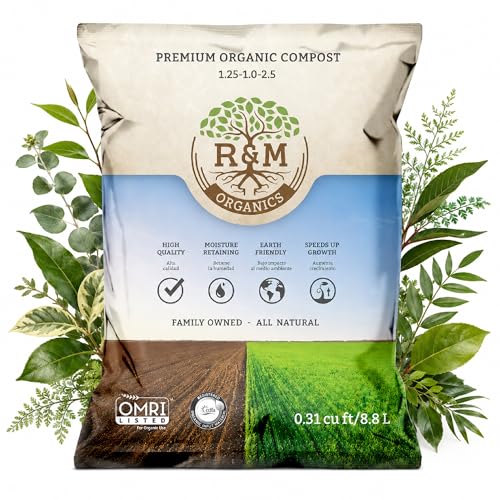
This is not a standalone potting mix — it is concentrated compost meant to be worked into existing soil as an amendment, and in that role it performs exceptionally. Made from composted dairy cow manure, it has a fine, topsoil-like texture that blends easily without clumping. The low-odor claim is legitimate; the product smells earthy rather than barn-like, making it suitable for indoor use or greenhouse application.
The evidence from owner reports is striking: ailing plants that were on the verge of dying — azaleas damaged by roof-cleaning chemicals, tomato plants with yellowing leaves, weak honeysuckle vines — rebounded within a week of having this compost mixed into their root zone. The nutrient concentration means a little goes a long way; a quarter-inch top-dressing is enough to deliver a measurable boost.
If you have existing beds or containers where the soil has become exhausted after a season or two, this is the most effective fix short of replacing everything. The 10-pound bag is manageable for medium-scale rejuvenation, and the 5-to-1 mixing ratio gives you flexibility to adjust strength based on plant response.
What works
- Very low odor for a manure-based compost
- Fine texture blends into existing soil without clumping
- Fast visible recovery in stressed plants within a week
What doesn’t
- Not a complete potting mix — must be mixed with a base
- Small bag does not cover large garden areas efficiently
4. Coast of Maine Tomato & Vegetable Planting Soil

Formulated specifically for heavy-feeding fruiting crops, this Coast of Maine mix balances moisture retention with drainage in a way that suits tomatoes, peppers, and squash. The composted manure base provides a solid nutrient foundation, while the lightweight texture prevents the compaction that kills container tomato roots by mid-summer. Several reviewers noted excellent results with heirloom tomato varieties that demand sharp drainage.
One trade-off is the presence of aromatic wood material — likely intended to deter soil-borne insects — which some customers found strong enough to notice indoors. A few bags also introduced fungus gnats, though treatment with neem oil resolved the issue quickly. For in-ground or outdoor container use this is less of a concern than for indoor seedlings.
At 20 quarts this bag offers better volume for the cost than many premium options, making it a practical choice for gardeners managing multiple large containers. The OMRI listing provides organic certification assurance, and the results speak for themselves in the consistent positive feedback from vegetable growers.
What works
- Excellent drainage for heirloom tomatoes and peppers
- Good nutrient density for heavy-feeding crops
- Competitive volume per dollar in the organic category
What doesn’t
- Some bags have reported fungus gnat issues
- Aromatic wood scent may be strong in indoor use
5. Avalution Organic Coconut Coir Bricks
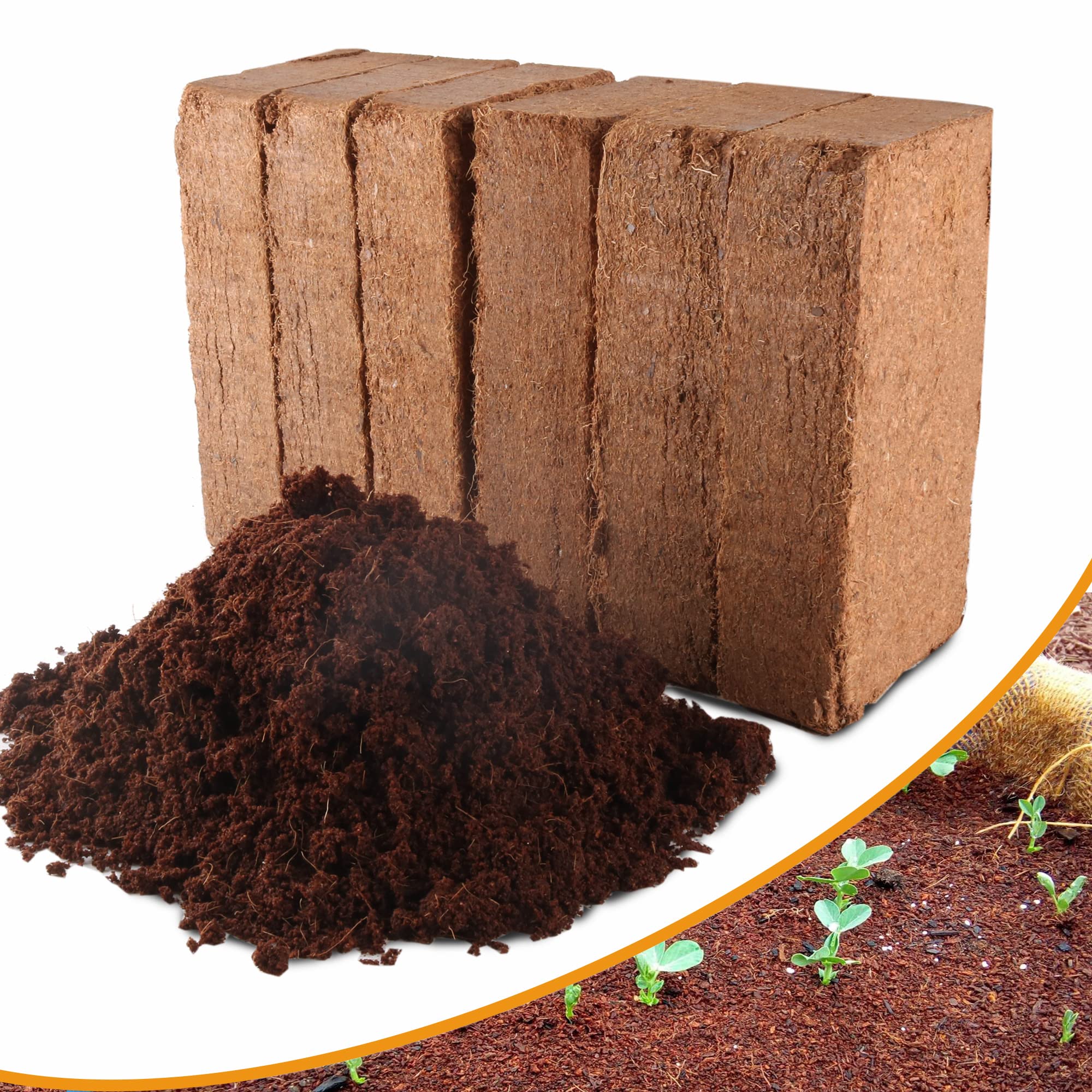
Coco coir is a fundamentally different product from soil — it is a soil-less growing medium that provides structure and water retention without inherent nutrients. These Avalution bricks are compressed dried coconut husk fiber that expands to roughly 36 quarts total when rehydrated. The low EC and balanced pH make them an excellent blank slate for building custom potting mixes tailored to specific plant needs.
The fiber structure holds up to ten times its weight in water, which reduces watering frequency significantly compared to peat-based mixes. However, that same water-holding capacity means you must monitor drainage carefully in container bottoms — standing water in a saucer can saturate the coir and lead to root rot if the pot lacks adequate holes.
For gardeners who want complete control over their soil composition, these bricks provide a lightweight, space-efficient base that stores indefinitely in dry form. Mix them with compost, perlite, and worm castings to create a custom blend that outperforms most bagged soils. The compressed brick format also eliminates the heavy bag shipping cost of pre-moistened soils.
What works
- Stores compactly in dry brick form for months
- Excellent water retention reduces watering frequency
- Neutral pH and low EC allow total custom formulation
What doesn’t
- Requires overnight soaking and manual breaking apart
- Contains no nutrients — must be amended for plant growth
6. Jiffy Natural & Organic Seed Starting Mix

Seed starting requires a fine, consistent texture that allows tiny roots to push through without obstruction, and this Jiffy mix delivers exactly that. The blend of sphagnum peat moss, vermiculite, and lime creates a light, fluffy medium that holds moisture evenly without forming a crust on the surface. The high germination rates reported across hundreds of reviews confirm that this mix provides the stable environment seeds need.
One notable physical property is that the mix holds together when you lift a seedling for transplanting — the root ball does not crumble apart the way it does with coarser soils. This reduces transplant shock significantly. The fine texture also means there are no bark chunks or sticks to block root development, a common problem with general-purpose potting soils used for seed trays.
If you grow your own transplants from seed every spring, this bag pays for itself in reduced seedling loss alone. The 10-quart size is just right for several seed flats, and the organic certification makes it safe for edible starts. Keep in mind that this mix contains minimal nutrients — you will need to begin fertilizing once true leaves appear.
What works
- Fine, consistent texture perfect for delicate seedling roots
- Root balls hold together well during transplanting
- Excellent moisture retention without surface crusting
What doesn’t
- Low nutrient content requires early supplemental feeding
- Peat-based mix is not sustainable if you avoid peat harvesting
7. Back to the Roots Organic Worm Castings

Worm castings are one of the most concentrated organic soil amendments available, and Back to the Roots delivers a consistent, odor-free product that blends seamlessly into any growing medium. The granular texture does not clump or create anaerobic pockets the way some raw composts do. Because castings release nutrients slowly through microbial activity, there is zero risk of fertilizer burn even if you accidentally apply a heavy layer.
Users reported excellent results across a wide range of applications — sprinkling on top of potting soil for houseplants, mixing into vegetable beds at planting time, and even using it as a safe fertilizer around milkweed for monarch butterfly larvae. The moisture retention is significant, so gardeners using it as a top-dressing should adjust watering frequency downward to account for the extra water held near the root zone.
This is not a standalone planting medium — worm castings function as a boost rather than a base. But for the gardener who wants to add biology and micronutrients without guessing at NPK ratios, this bag provides one of the most foolproof options available. The resealable bag preserves moisture content between uses, and the company’s social mission adds a feel-good factor that does not compromise product quality.
What works
- Zero burn risk — safe for even the most delicate seedlings
- Rich in beneficial microbes for soil biology
- Odor-free and easy to store in resealable packaging
What doesn’t
- Not a complete growing medium — must mix with base soil
- High moisture retention can cause overwatering if not adjusted
Hardware & Specs Guide
Organic Matter Content
This is the single most important metric for organic soil performance. Look for a minimum of 40 to 50 percent organic matter by volume for potting mixes meant to sustain plants over an entire season. Pure compost or worm castings may approach 100 percent organic matter, but these should only be used as amendments blended into a base like peat or coco coir that provides physical structure.
pH and Lime Additives
Most commercial organic potting soils include lime to neutralize the natural acidity of peat moss, targeting a pH of 6.2 to 6.8. If you are growing acid-loving crops like blueberries, potatoes, or azaleas, actively seek out mixes that do not contain added lime. A bag with a listed pH below 6.0 is appropriate for these plants, while pH above 7.0 suits alkaline-tolerant species like lavender or brassicas.
Texture and Particle Size
High-quality organic soil should feel crumbly and light, not dense or sticky. Visible perlite, pumice, or coarse sand indicates intentional aeration. Avoid mixes with large chunks of bark, sticks, or undecomposed wood — these materials will steal nitrogen from the soil as they break down, temporarily starving your plants. A mix that is too fine can compact and drown roots; a mix that is too coarse will dry out too quickly.
Nutrient Release Profile
Organic soils feed through microbial breakdown, not synthetic salt solutions. This means nutrients release slowly based on temperature and moisture. Soils containing blood meal, feather meal, or crab shell meal provide nitrogen over several months. Composted manure releases a more balanced NPK but can vary by batch. Worm castings provide micronutrients and biology without measurable NPK — they improve soil health rather than feeding plants directly.
FAQ
Is organic soil worth the higher cost compared to synthetic mixes?
Can I mix coco coir directly with compost to make my own organic soil?
Why do some organic potting soils attract fungus gnats?
Final Thoughts: The Verdict
For most gardeners, the best organic soil winner is the Coast of Maine Bar Harbor Blend because its marine-based slow-release nutrition supports vigorous growth from planting through harvest in containers and raised beds. If you want a clean, pest-free mix for indoor houseplants, grab the Black Gold All Organic Potting Soil. And for rejuvenating tired garden beds with a concentrated microbial boost, nothing beats the R&M Organics Premium Compost.