
Most orchids die not from neglect, but from drowning in the wrong container. Standard pots trap moisture against sensitive roots, suffocating the plant’s main lifeline. Choosing a pot built for aeration changes everything about how your orchid recovers and reblooms.
I’m Rikta — the co-founder and writer behind Lawn Gear Lab. I spent more than seventy hours dissecting the internal drainage geometry, measuring wall thicknesses, and cross-referencing customer reports on root health outcomes across dozens of orchid pot designs to produce this guide.
Whether you are repotting a stubborn Phalaenopsis or giving a Cattleya room to stretch, the right container makes the difference between a plant that merely survives and one that thrives. This article breaks down the exact considerations every owner should weigh before buying orchid pots for repotting.
How To Choose The Best Orchid Pots
Orchids are epiphytes — they grow on tree bark, not in soil. A conventional flowerpot traps moisture and rots the roots. The best Orchid Pots recreate the airy, quick-draining environment of a tropical branch. Here is what to check before buying.
Drainage and Side Ventilation
Bottom drainage alone is not enough. Orchid roots need oxygen along their entire length. Look for pots with slotted side walls or multiple rows of holes that allow air to circulate around the root zone. The more surface area the holes cover, the faster the potting medium dries between waterings.
Transparent Walls for Root Monitoring
Root health is the single best indicator of orchid well-being. Clear plastic or acrylic walls let you see when roots turn silvery (thirsty) versus brown and mushy (rot). Transparent Orchid Pots eliminate guesswork and let you water exactly when the plant needs it, not on a rigid schedule.
Material: Plastic vs. Terracotta vs. Ceramic
Plastic is lightweight, unbreakable, and excellent for beginners — especially the clear variants. Terracotta is porous and pulls moisture away from the root ball through evaporation, which suits humidity-sensitive species. Glazed ceramic offers the most aesthetic variety but reduces breathability, so it requires careful watering discipline. Match the material to your home’s humidity and your personal watering habits.
Quick Comparison
On smaller screens, swipe sideways to see the full table.
| Model | Category | Best For | Key Spec | Amazon |
|---|---|---|---|---|
| FUIJOL 6-Inch 6-Pack | Plastic Clear | Multi-pot repotting jobs | 6 pots + 6 saucers, 6-inch top diameter | Amazon |
| T4U 9-Pack 3-Size | Plastic Clear | Mixed orchid sizes in one buy | 4.3 / 5.5 / 6.3 inch, 3 each | Amazon |
| vensovo 6-Inch Terracotta 3-Pack | Terracotta | Breathable clay for moisture-sensitive orchids | 6-inch outer diameter, unglazed clay, side holes | Amazon |
| Orceler 6-Inch Terracotta 3-Pack | Terracotta | High-fire durability with wide side ventilation | 1922°F fired clay, 6-inch width, saucers included | Amazon |
| Phoenix Vine 6.5-Inch Acrylic | Acrylic Clear | Crystal-clear root viewing with deep tray | 6.5-inch OD, break-resistant acrylic, deep saucer | Amazon |
| LE TAUCI Ceramic 6.5-Inch | Ceramic Glazed | Decorative farmhouse style with breathable pores | 6.5-inch diameter, hand-carved leaf perforations | Amazon |
| W&W Teal Ceramic 6.5-Inch | Ceramic Glazed | Statement piece with excellent aeration cutouts | 6.5-inch wide top, glazed teal finish, stable base | Amazon |
In‑Depth Reviews
1. FUIJOL Orchid Pot, 6 Pack 6 Inch Clear Orchid Pots with Holes and Saucers

The FUIJOL set delivers six clear 6-inch pots with matching saucers at a compelling value. Each pot features a raised center on the bottom floor that prevents drainage holes from clogging, plus evenly distributed side holes for lateral airflow. The transparent walls make it easy to spot root browning before it becomes a crisis.
Customers consistently note the sturdy plastic construction — the material feels heavier and more rigid than typical nursery pots. The saucers are wide enough to catch runoff without being bulky. Owners of Phalaenopsis orchids report strong root growth after repotting, with several buyers making repeat purchases as their collections expand.
The only compromise is the 6-inch size; very large specimen orchids may need a bigger diameter. But for standard moth orchids and most Dendrobiums, this set covers everything you need in one tidy package. It is the most balanced choice for both beginners and experienced growers.
What works
- Sturdy clear plastic allows easy root inspection
- Raised center prevents drainage clogging
- Matching saucers included for each pot
What doesn’t
- 6-inch size may be too small for large Cattleya specimens
- Side holes are moderate in count, not extreme ventilation
2. T4U Orchid Pot, 9 Pack Orchid Pots with Holes and Saucers for Repotting
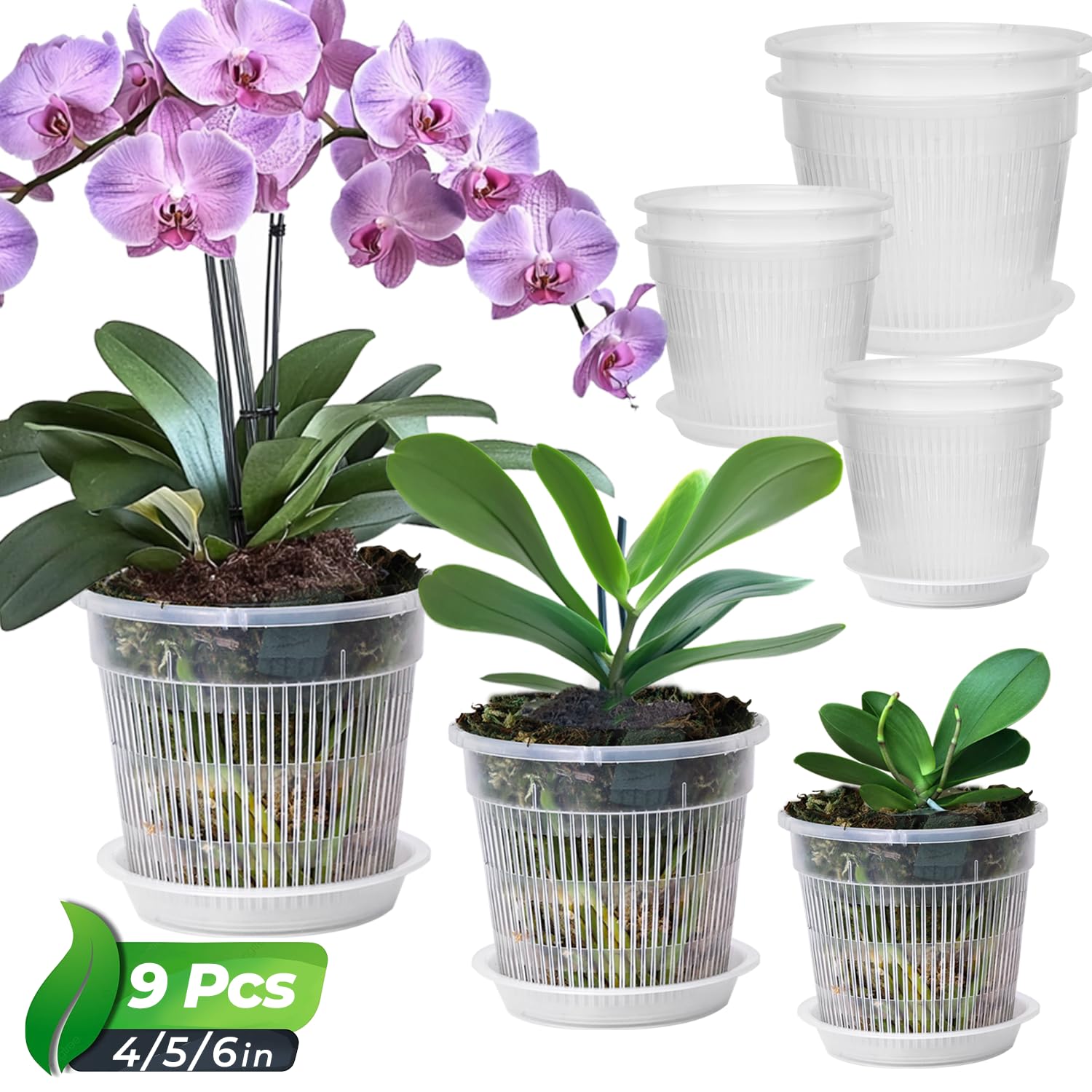
The T4U kit gives you nine pots across three diameters — 4.3, 5.5, and 6.3 inches — so you can match container size to each orchid’s root mass. The PP plastic is lightweight but resists cracking, and every pot has side and bottom drainage holes. The 360-degree airflow design is aimed directly at preventing root rot in epiphytic species.
Buyers who grow multiple genera — Phalaenopsis, Dendrobium, Oncidium — appreciate the ability to repot everything from a single purchase. Customers also report that the side holes allow effective bottom watering through the saucer, boosting humidity around the root zone. The transparent material makes checking soil moisture easy.
One recurring note is that the side holes measure about 3mm wide, which means fine bark or sphagnum can fall through. Using a medium-grade bark or a liner mesh solves this. For growers who want size flexibility in one order, this is the most cost-effective route.
What works
- Three sizes cover small to medium orchids
- 9 pots + 9 saucers in one box
- Excellent side ventilation for root health
What doesn’t
- Wide holes allow fine bark to escape
- Flat bottom encourages roots to grow out of drainage holes
3. vensovo 6 Inch Terracotta Orchid Pots with Holes and Saucers – 3 Pack
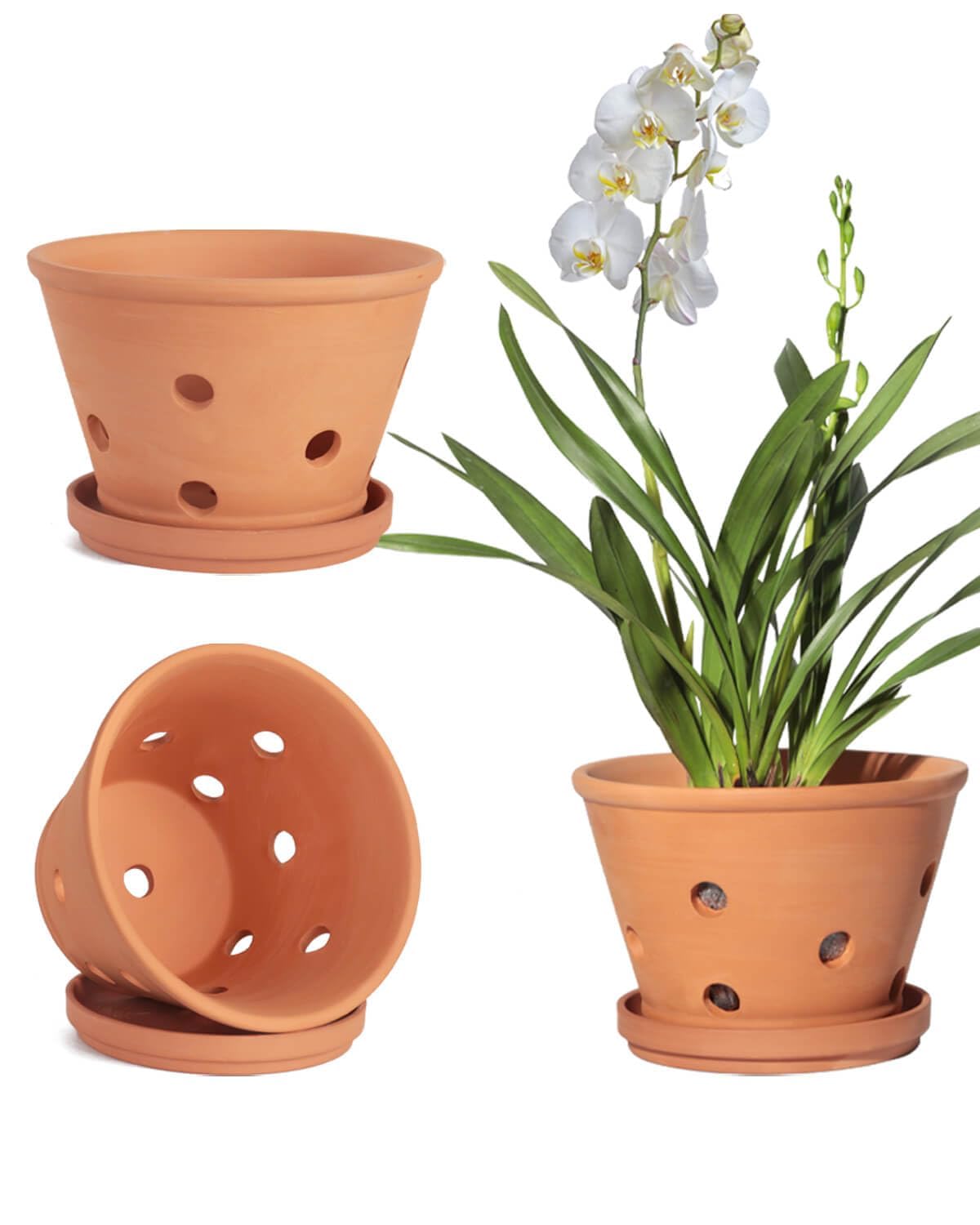
The vensovo terracotta pots are baked at 1796°F, giving them a dense structure that resists cracking during shipping — each pack passes a 3-foot drop test. The unglazed clay walls are naturally porous, drawing excess moisture out of the potting mix and allowing it to evaporate. Multiple side holes enhance air movement that solid clay pots lack.
Customers praise the heavy packaging that keeps all three pots and saucers intact during transit. Users report that these terracotta Orchid Pots work especially well in humid environments where plastic pots would stay soggy. The classic brown finish blends into any windowsill or greenhouse shelf without clashing.
The main drawback reported by some owners is that certain orchids — particularly those adapted to constant moisture — may dry out too fast in unglazed clay. A few buyers also mention that the side holes are large enough for chunky bark but may let finer medium escape. Overall, it is a top-tier pick for growers who want the natural breathability of fired clay.
What works
- Porous clay wicks moisture away from roots
- High-temperature firing improves durability
- Excellent packaging prevents breakage
What doesn’t
- Some orchids dry out too quickly in unglazed clay
- Side holes can lose fine bark mix
4. Orceler 6 Inch Terracotta Orchid Pots with Holes, Saucers – 3 Pack

The Orceler pots are fired at an even higher temperature — 1922°F — which increases their density and crack resistance relative to standard terracotta. The side holes are more numerous and wider, creating aggressive air exchange around the root ball. Each pot includes a saucer that sits flush under the base.
Reviewers highlight the quality control: consistent wall thickness, no glaze drips, and uniform hole spacing. Owners of Phalaenopsis orchids report their plants respond quickly after repotting, with new root growth appearing within weeks. Several customers also use these pots for Staghorn ferns and succulents, confirming their versatility beyond orchids.
The slight downsides are that the large side holes require a chunkier potting medium to prevent spillage, and terracotta’s natural moisture wicking means you will water more frequently than with plastic. For growers who prioritize root aeration above all else, this set delivers the most aggressive air flow of any clay option on this list.
What works
- Highest firing temperature for maximum durability
- Wide side holes deliver superior air circulation
- Well-packaged with no breakage reports
What doesn’t
- Requires coarse bark to avoid medium loss
- Frequent watering needed due to clay breathability
5. Phoenix Vine 6.5 Inch Clear Acrylic Planter Pot with Tray
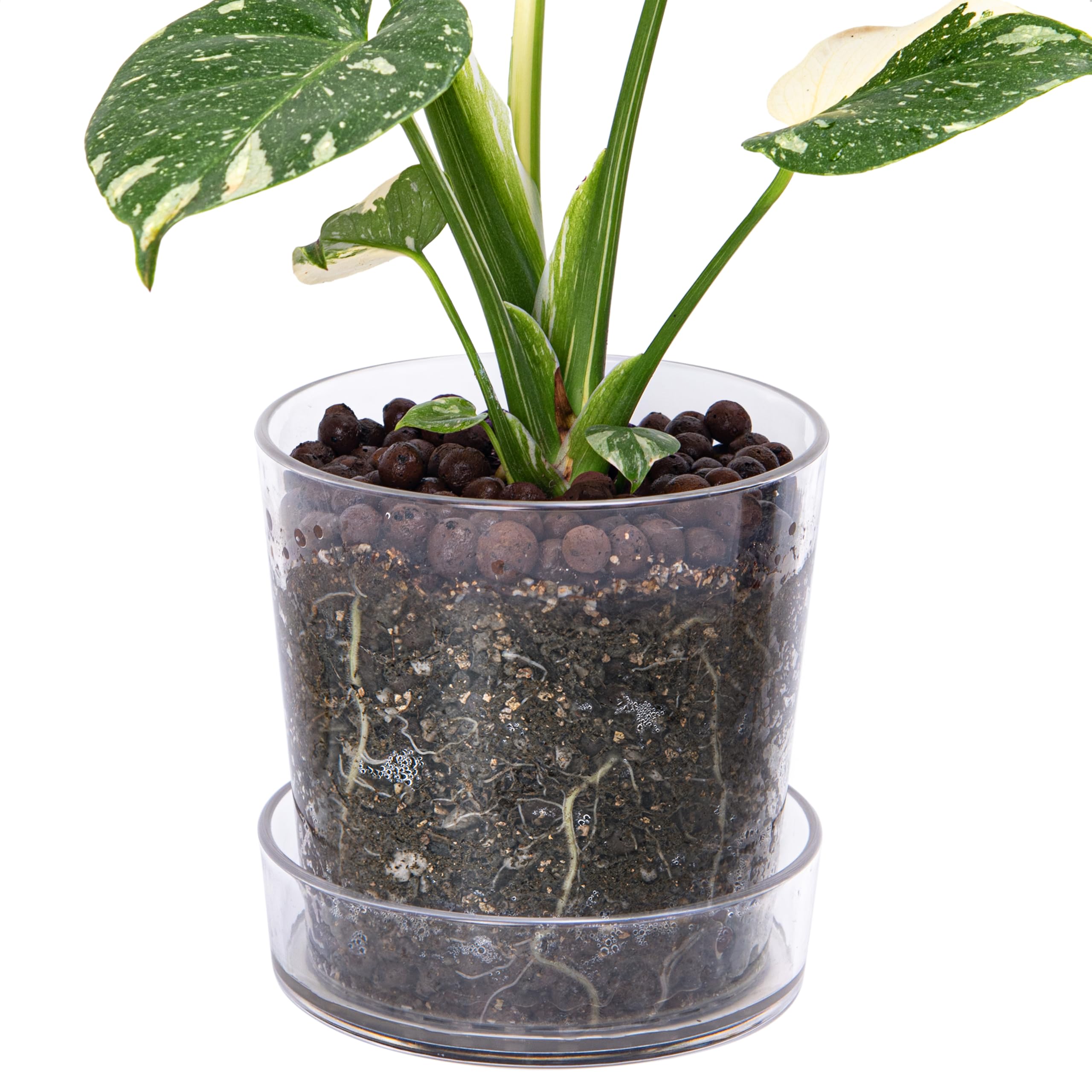
The Phoenix Vine pot is cut from acrylic rather than molded plastic, giving it a brilliant transparency that rivals glass without the breakage risk. At 6.5 inches tall and wide, it is roomy enough for a mature Phalaenopsis. The deep saucer is designed for bottom watering — you fill the tray and the roots draw moisture upward through the drainage holes.
Customers consistently call this the clearest pot they have used, noting that the walls remain scratch-free after months of use. The acrylic is noticeably thicker than standard clear plastic pots, which adds heft and stability. Many owners use it for rooting cuttings, as the transparent walls let them watch root development without disturbing the plant.
The single-pot format limits bulk repotting, and the acrylic surface can show water spots if you use hard tap water. For growers who want a single showpiece container with unparalleled root visibility, this is the premium clear-choice.
What works
- Brilliant crystal-clear acrylic walls
- Deep saucer supports bottom watering
- Thick, break-resistant construction
What doesn’t
- Single pot — not for multi-orchid repotting
- Water spots show on clear surface
6. LE TAUCI Ceramic Orchid Pot, 6.5 Inch Orchid Planter with Holes
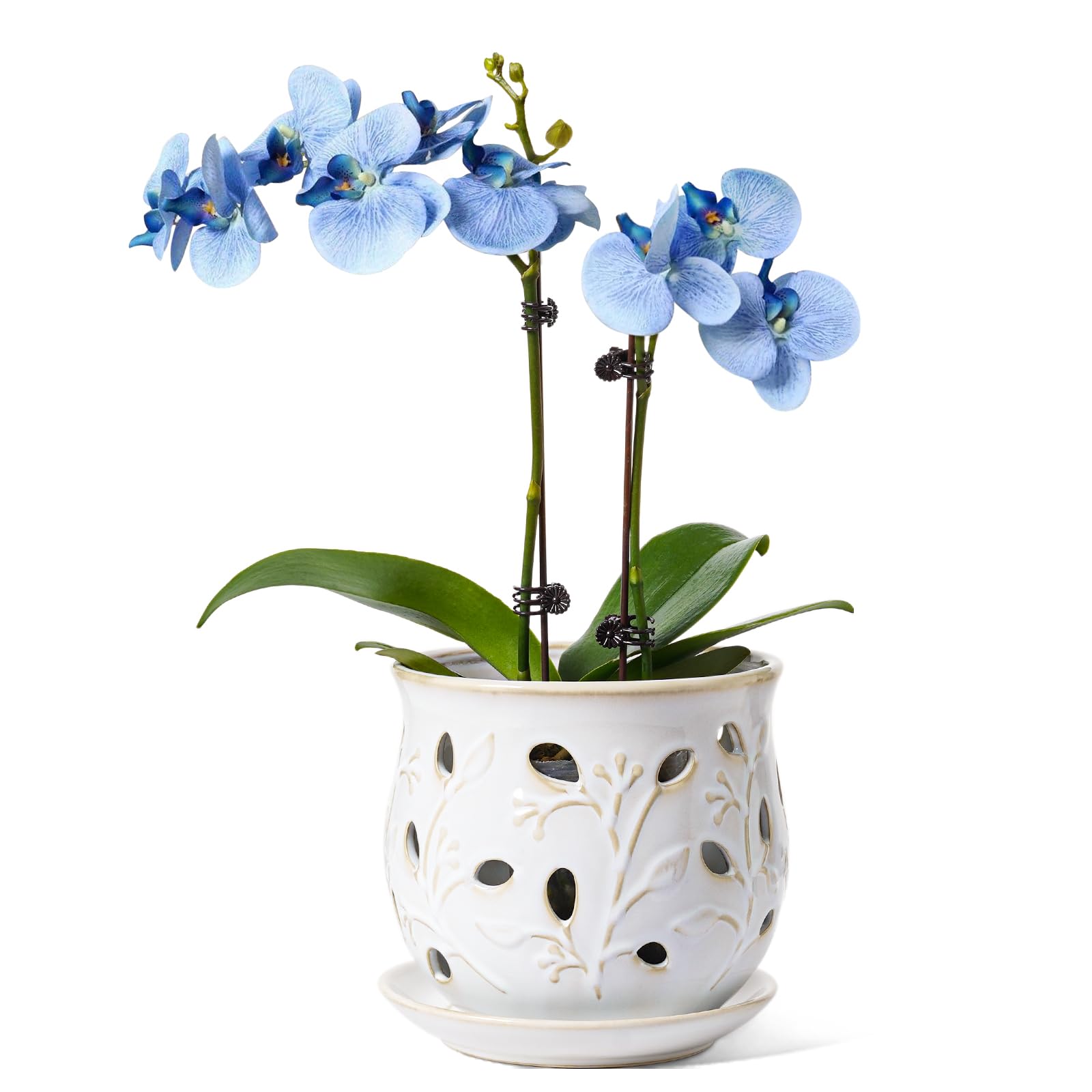
The LE TAUCI pot blends aesthetics with function through decorative leaf perforations cut into the side wall. These openings are not just ornamental — they provide real airflow to the root zone. The ceramic body has breathable micropores in the material itself, and the interior is fully glazed for easy cleaning.
Owners frequently comment on the vintage farmhouse glaze that makes each pot slightly unique due to the hand-carving process. The 6.5-inch diameter fits standard inner nursery pots perfectly, allowing you to lift the orchid out for soaking without disturbing the outer cachepot. The matching saucer is low-profile but effective at catching drips.
One limitation is that the side perforations are smaller than slotted plastic or terracotta options, so air exchange is moderate. This pot is best for growers who want a beautiful display container that still offers functional drainage and breathing, rather than maximum ventilation.
What works
- Hand-carved perforations add airflow and style
- Breathable ceramic micropores aid drying
- Glazed interior wipes clean easily
What doesn’t
- Side holes are small, limiting extreme ventilation
- Ceramic is heavier and more fragile than plastic
7. W&W Orchid Pot with Holes and Saucer for Repotting, Teal, 6.5″

The W&W pot stands out with its vivid teal glaze and generous cutout windows that expose the root zone to ambient air. The openings are large enough to check moisture levels by touch but not so big that bark spills out. The attached drip tray has small feet that elevate the pot base, allowing a shallow reservoir of water for humidity.
Customers love the weight and stability — at 1.75 kilograms, this pot anchors a tall orchid securely. The wide top opening makes repotting easier than slim ceramic containers. Many owners describe it as a centerpiece on their windowsill, noting that the teal color complements the green leaves and white blooms of Phalaenopsis.
The primary downside is that the attached drip tray requires manual draining; you cannot simply pour excess water out without lifting the whole pot. Also, the glazed surface is non-porous, so you must monitor watering more closely than with terracotta. For a decorative statement piece that still prioritizes root health, this is the premium pick.
What works
- Large cutout windows for excellent air exchange
- Heavy base prevents tipping for tall plants
- Beautiful teal glaze with artisanal feel
What doesn’t
- Attached tray requires lifting to drain
- Non-porous glaze demands careful watering
Hardware & Specs Guide
Side Hole Diameter and Pattern
The width and density of side ventilation holes directly control how fast the potting medium dries. Holes around 3mm work for medium bark but let fine sphagnum pass through. Slotted designs offer continuous airflow along the entire side wall, which mimics the air current orchids experience on tree branches.
Wall Thickness and Material Density
Thicker walls insulate roots from temperature swings and provide structural stability, but they also reduce the pot’s internal volume. Acrylic walls around 3mm offer the best balance of clarity and rigidity. Terracotta fired above 1700°F gains density that resists chipping, while PP plastic below 1.5mm may flex and crack over time.
FAQ
Should I use a clear or opaque Orchid Pot?
What size Orchid Pot should I buy for a Phalaenopsis?
Are terracotta Orchid Pots better than plastic?
Final Thoughts: The Verdict
For most gardeners, the orchid pots winner is the FUIJOL 6-Inch 6-Pack because it combines clear walls, sturdy construction, and matching saucers at a price that rewards both beginners and collectors. If you want aggressive air flow in a natural clay package, grab the Orceler Terracotta 3-Pack. And for a showpiece container that lets you watch every root develop, nothing beats the Phoenix Vine Acrylic Pot.