
An orchid’s root system is its lifeline, demanding a porous, free-draining environment that mimics the rough bark of a tropical tree. Packed, sodden soil is the fastest way to suffocate those sensitive roots, leading to rot and a slow decline. The right bark-based mix provides the air pockets and stability epiphytic orchids need to truly anchor and flourish.
I’m Rikta — the co-founder and writer behind Lawn Gear Lab. I’ve spent hundreds of hours cross-referencing horticultural data, analyzing particle-size distribution across dozens of bark formulations, and sifting through thousands of owner reports to separate the mixes that deliver consistent aeration from those that break down too fast.
Whether you’re repotting a Phalaenopsis or adding structure to an aroid blend, picking the right orchid bark means understanding particle uniformity, source wood, and moisture retention—three factors that define root health more than any label claim.
How To Choose The Best Orchid Bark
Not all bark is created equal. Three factors separate a mix that supports vigorous root growth from one that compacts into a sponge. Focus on these when comparing options.
Particle Size and Uniformity
Most epiphytic orchids need bark chunks between ¼ inch and 1 inch. Uniform particles create consistent air pockets—fines fill those gaps and trap moisture against the roots. Look for mixes with minimal dust and a narrow size range.
Source Wood and Longevity
Douglas fir and pine bark are common and break down in 1–3 years. New Zealand Pinus radiata (Orchiata) is heat-stabilized to resist decomposition for 5+ years, making it ideal for growers who want to repot less frequently. Harder woods hold structure longer.
Added Amendments
Some blends include perlite, charcoal, pumice, or coconut husk to boost drainage or water retention. Pure bark gives you total control, while a pre-mixed formula is convenient for beginners. Decide based on your watering habits and local humidity.
Quick Comparison
On smaller screens, swipe sideways to see the full table.
| Model | Category | Best For | Key Spec | Amazon |
|---|---|---|---|---|
| Orchiata Classic | Premium | Long-term repotting cycles | 5+ year durability | Amazon |
| Rio Hamza 8 Quart | Premium | Bulk orchids and aroids | 8 quarts volume | Amazon |
| Soil Sunrise 8 Quart | Mid-Range | Pure bark, no additives | 8 quarts pure pine bark | Amazon |
| Cz Garden Supply | Mid-Range | Multi-ingredient aroid mix | 6-ingredient blend | Amazon |
| Rio Hamza 4 Quart | Mid-Range | Loblolly pine flexibility | Southern yellow pine | Amazon |
| Doter All Purpose | Value | Budget-friendly organic mix | 4 quart blend | Amazon |
| Harris Premium | Value | Heat-treated fir reliability | Heat treated Douglas fir | Amazon |
In‑Depth Reviews
1. Orchiata Classic

Orchiata is the benchmark for serious orchid growers. Made from 100% New Zealand Pinus radiata, this bark is heat-stabilized to resist decomposition for over five years—roughly two to three times longer than domestic fir or pine mixes. The chips are consistently sized, creating stable air channels that roots can grip without the mix collapsing into mush.
The slightly rough surface texture of each chip encourages root attachment, mimicking the natural bark epiphytic orchids cling to in the wild. Because it breaks down so slowly, you can go years between repots without worrying about the medium turning into dense mulch that retains too much water. This also makes it cost-effective over the long run despite the higher upfront investment.
A few bags arrive with noticeable dust from shipping, and the price per quart is steeper than any other option here. But for collectors with rare specimens or anyone who hates the task of annual repotting, the longevity and consistency of Orchiata justify the premium. It’s the professional’s choice for a reason.
What works
- Exceptional 5+ year lifespan resists rot and compaction
- Uniform particle size ensures consistent aeration
- Rough surface helps roots anchor naturally
What doesn’t
- Higher price per quart than domestic bark
- Some bags arrive with dusty residue
2. Rio Hamza 100% Organic Orchid Bark (8 Quart)
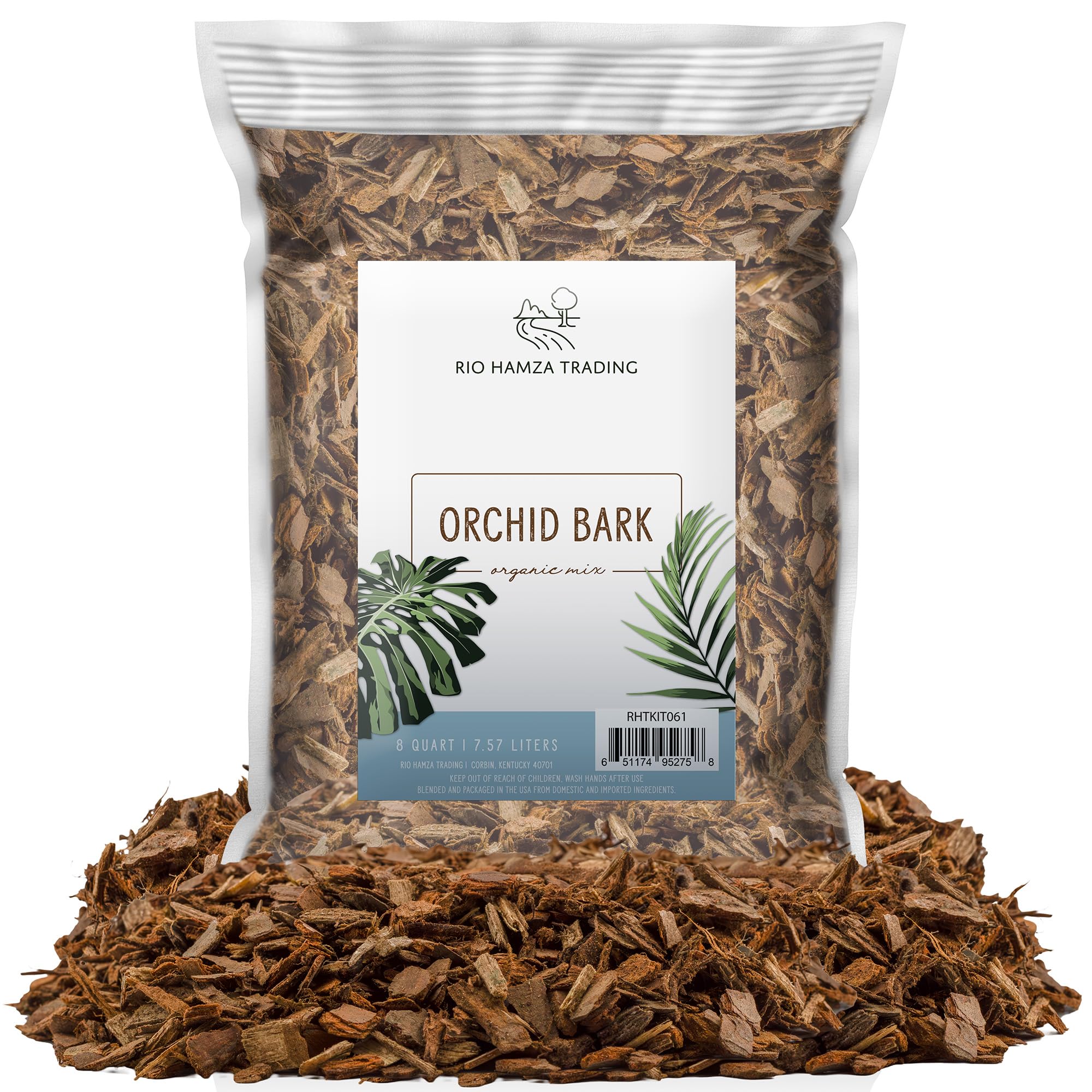
This 8-quart bag from Rio Hamza Trading gives you the largest volume per dollar among the pure bark options. Sourced from Southern yellow pine and Loblolly pine grown in North Carolina and Virginia, the bark is free from chemical additives and processed without synthetic treatments. It’s a straightforward, no-frills mix aimed at growers who need quantity without sacrificing organic integrity.
The particle size is generally consistent and falls into the medium range that works well for Phalaenopsis, Cattleya, and larger aroid mixes. Reviewers note the chunks are a good fit for chunky soil blends when combined with perlite or coco coir. The bag is resealable, which helps if you only use a portion at a time.
Some users report that the bark pieces run slightly smaller than what they expected, especially if they were accustomed to very coarse fir bark. A few bags also arrive with fine dust at the bottom. For the price and volume, this is a solid choice for anyone repotting multiple plants or building customized aroid substrates.
What works
- Large 8-quart bag offers great value for volume
- Chemical-free and sustainably sourced from US pines
- Versatile size for orchids and aroid mixes
What doesn’t
- Particle size can be smaller than expected
- Some fine dust settles at the bottom
3. Soil Sunrise 100% Organic Orchid Potting Bark (8 Quart)

Soil Sunrise offers exactly what the label promises: pure, premium pine bark with no added perlite, peat, or charcoal. This is ideal for growers who want to control every variable in their potting mix. The 8-quart resealable bag stores easily and the bark arrives dry with minimal dust compared to many other bulk options.
The particle size is mostly uniform and described by users as roughly quarter-sized, though a minority note some shredding and variability that makes it feel finer than the product photos suggest. When used as a base for aroid or orchid mixes, it provides excellent drainage and holds up reasonably well through one to two growing seasons before beginning to break down.
A few buyers mention the bag contains more fine particles than expected, which can settle and reduce aeration if not sifted. Overall, this is a clean, additive-free bark that gives you full control over your substrate. It’s best suited for experienced mixers who prefer to tune their blend to specific humidity and watering schedules.
What works
- Pure bark with zero fillers or amendments
- Resealable 8-quart bag for convenient storage
- Good drainage and structure for custom blends
What doesn’t
- Some bags contain finer, shredded pieces
- Not uniformly coarse as shown in some photos
4. Cz Garden Supply Orchid Potting Mix

Cz Garden Supply packs six ingredients into this 2-pound blend: fir bark, pine bark, coarse biochar, sponge rock (pumice), expanded clay pebbles, and coconut husk chips. The combination targets rapid drainage and maximum airflow—exactly what water-sensitive orchids and aroids need. The bag is resealable, and the fresh aroma immediately signals that the bark was processed recently without mildew.
Users frequently mention that this mix works beautifully for Hoyas and Monsteras when combined with a standard potting soil to create a chunky, well-draining medium. The biochar and clay pebbles add weight and stability that many pure bark mixes lack, helping tall orchid pots resist tipping. A pre-soak of several hours is recommended to fully hydrate the coconut husk before potting.
A small number of customers report packaging issues—air holes in the bag cause dust to escape during shipping, and the valve holes are designed to prevent mold but can create mess. Also, the bag is smaller than it appears, so for large repotting projects you may need multiple units. For those who want a ready-to-use, multi-textured medium, this blend saves the trouble of sourcing ingredients separately.
What works
- Six-ingredient blend enhances aeration and drainage
- Fresh, pleasant aroma with no mold odor
- Biochar and clay pebbles add stability
What doesn’t
- Packaging can leak dust during shipping
- Small bag size for larger repotting jobs
5. Rio Hamza 100% Organic Orchid Bark (4 Quart)
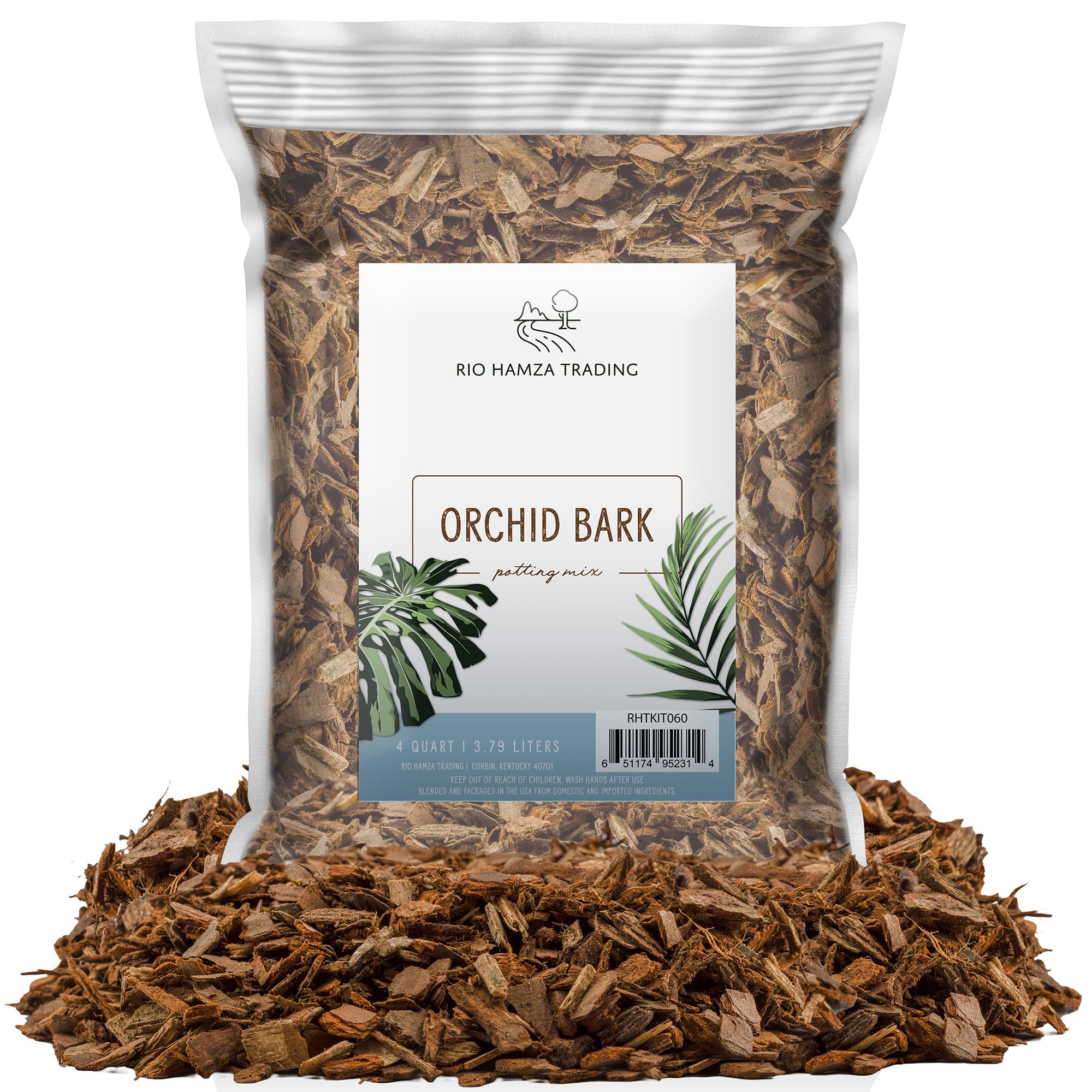
This 4-quart entry from Rio Hamza Trading is smaller than the 8-quart sibling but uses the same Southern yellow pine and Loblolly pine sourced from Eastern North Carolina. It’s a simple, organic bark option without any added perlite or peat, giving you full control over your mix. The bark pieces are medium-sized and free of synthetic chemicals.
Many owners report that their orchids respond quickly after repotting, with new root growth visible within weeks. The bark holds enough moisture to reduce watering frequency while still providing the air gaps epiphytic roots require. It’s also a common choice for growers who want to create their own chunky aroid substrate.
The primary drawback is inconsistency in particle size—some batches contain smaller pieces that can compact over time. A few users note the chunks are noticeably smaller than what they’ve used from other brands. For the price and volume, this is still a reliable option for single-plant repotting or as a supplementary bark supply.
What works
- Organic, chemical-free USA-sourced pine bark
- Good moisture retention without sogginess
- Encourages rapid new root growth
What doesn’t
- Inconsistent particle size between batches
- Some batches run finer than expected
6. Doter All Purpose Orchid Soil Potting Mix (4 qt)

Doter’s All Purpose Orchid Mix combines bark and organic perlite in a 4-quart bag at a very accessible price point. The formula is designed for phalaenopsis, cattleyas, dendrobiums, and other epiphytic orchids, and it uses 100% organic materials with no synthetic additives. The bark chips come in mixed sizes, with some larger pieces for structure and smaller grains to fill gaps without suffocating roots.
Users often praise the drainage characteristics—many mention their orchids rebounded quickly after repotting, with healthier-looking leaves and active root tips. The mix is also lightweight compared to soil-based blends, making it a good option for hanging pots or windowsill displays. A sealed bag keeps odors contained, and the product arrives ready to use.
A few repeat buyers have noticed batch variation: one bag may have mostly bark, while another contains a higher proportion of fine peat-like material. This inconsistency is the main downside, as it requires the user to adjust watering habits based on the specific bag. For the price, it’s a solid entry-level mix, but serious growers may prefer a more consistent product.
What works
- 100% organic material at an accessible price
- Excellent drainage encourages quick recovery
- Lightweight formula for hanging baskets
What doesn’t
- Inconsistent mix ratios between batches
- Small bag size for multiple repots
7. Harris Premium Orchid Potting Mix (4 qt)

Harris Premium stands out as one of the only orchid mixes on the market that uses heat-treated Douglas fir bark. This process helps eliminate potential pathogens and pests while stabilizing the bark structure. The formula also includes peat moss, pumice, and perlite in measured ratios to balance drainage with light moisture retention.
The mix drains freely enough to prevent root rot but holds a thin film of moisture around the bark surface that roots can access between waterings. Many orchid enthusiasts report that this mix is significantly less dusty and more consistent than big-box store brands. The 4-quart bag is compact, so it’s best suited for one to two medium-sized orchids or a single large repotting project.
Users note that the product is quite dusty during handling—pouring outdoors or wearing a mask is recommended. Some also mention it’s easy to overestimate the bag size, as the volume is smaller than what the “premium” label might suggest. For a reliable, heat-sterilized mix with proven results, Harris is a strong entry-level choice that delivers predictable performance.
What works
- Heat-treated Douglas fir reduces pathogen risk
- Balanced blend drains well without drying out
- Cleaner and more consistent than many store brands
What doesn’t
- Very dusty during handling
- Smaller bag than expected for the price
Hardware & Specs Guide
Particle Size (⅛″ – 1″)
The ideal orchid bark particle size ranges from roughly ⅛ inch to 1 inch, depending on the orchid species and pot type. Smaller pieces (⅛–¼ inch) pack tighter and retain more moisture, suitable for smaller pots or moisture-loving Vandas. Larger chunks (½–1 inch) create wide air channels that dry faster, perfect for Phalaenopsis and Cattleyas in open baskets.
Wood Type & Decomposition Rate
Douglas fir bark breaks down in about 1–2 years, releasing organic matter into the pot. Pine bark, especially Loblolly or Southern yellow pine, lasts 2–3 years before needing replacement. New Zealand Pinus radiata is heat-cured to resist decay for 5+ years, making it the longest-lasting option. Choosing a wood type directly impacts how often you’ll repot.
Amendments (Perlite, Charcoal, Pumice)
Perlite increases air porosity and drainage but floats to the top during watering. Charcoal absorbs impurities and improves pH stability. Pumice adds permanent pore structure without decomposing. Clay pebbles (LECA) add weight and wick moisture evenly. Each amendment shifts the mix toward faster drying or better water retention—know your watering style before picking a blend.
Bag Volume vs. Actual Fill
Most orchid bark bags are sold by dry volume in quarts or liters. A 4-quart bag typically fills one 6-inch pot with a small amount left over, while an 8-quart bag handles two to three medium orchids. Bark settles during shipping, so the bag may appear less full than the label suggests. Fluffing and sifting before use restores volume and removes dust.
FAQ
Should I soak orchid bark before repotting?
How often should I replace orchid bark?
Can I use regular potting soil instead of orchid bark?
Final Thoughts: The Verdict
For most gardeners, the orchid bark winner is the Orchiata Classic because its heat-stabilized radiata pine holds structure for five years, eliminating the need for frequent repots and providing consistent aeration. If you want a large-volume bag for multiple plants, grab the Rio Hamza 8 Quart. And for a pure, no-additive bark that puts you in full control of your substrate recipe, nothing beats the Soil Sunrise 8 Quart.