
The difference between a rose bush that struggles and one that explodes with color often comes down to a single bottle or bag. Most gardeners dump a general-purpose fertilizer on their roses and wonder why the foliage is lush but the blooms are sparse. Roses are heavy feeders with a specific nutritional demand: they need a blend that prioritizes phosphorus and potassium over nitrogen. Pick the wrong ratio, and you’ll spend a season trimming green leaves instead of cutting flowers.
I’m Rikta — the co-founder and writer behind Lawn Gear Lab. For this guide, I’ve spent hours cross-referencing NPK ratios, analyzing organic certifications, studying customer reports of actual bloom counts, and mapping each formula’s release timing against typical rose growth cycles to separate the effective blends from the hype.
Whether you grow hybrid teas, floribundas, climbers, or landscape shrubs, the best npk for roses delivers a phosphorus-heavy middle number without sacrificing the micronutrients that fuel root health and disease resistance.
How To Choose The Best NPK For Roses
Rose fertilizers are not interchangeable with tomato or lawn food. The ratio of nitrogen, phosphorus, and potassium directly dictates whether your plant produces leaves, roots, or flowers. Understanding three key variables will prevent you from wasting money on a formula that fights your garden’s natural cycle.
Understand the Three‑Number System
The first number (Nitrogen) drives green growth and foliage density. Too much and you get a leafy bush with zero buds. The second number (Phosphorus) is what you actually want — it governs bloom initiation, root development, and flower size. Look for a middle number that is at least double the first. The third number (Potassium) supports overall plant health, disease resistance, and stem strength. A ratio like 4-10-7 or 2-6-4 tells you the manufacturer prioritized flowers over leaves.
Liquid vs. Granular Release Timing
Liquid fertilizers, like fish emulsions or water-soluble powders, enter the root zone within hours and produce visible results in days. They are ideal for a mid-season boost when you see buds forming. Granular organic options like Rose-tone break down through soil microbial activity and release nutrients over several weeks. They are better for a consistent feeding schedule that won’t spike and crash your plant’s nutrient levels.
Check for Secondary Nutrients and Organic Certification
Roses benefit from calcium and magnesium for cell wall strength and chlorophyll production. A formula that includes these — or ingredients like seaweed, humic acids, or mycorrhizae — will outperform a bare NPK mix in real garden conditions. If you have pets or children, an OMRI-listed organic fertilizer eliminates the risk of synthetic salt burn and chemical runoff.
Quick Comparison
On smaller screens, swipe sideways to see the full table.
| Model | Category | Best For | Key Spec | Amazon |
|---|---|---|---|---|
| Miracle-Gro 18-24-16 | Liquid | Fast-acting bloom push | NPK 18-24-16 | Amazon |
| Espoma Rose-tone 4-3-2 | Granular | Sustained organic feeding | NPK 4-3-2 + 5% Calcium | Amazon |
| Dr. Earth Flower Girl 4-10-7 | Granular | Heavy phosphorus for bud set | NPK 4-10-7 | Amazon |
| Heirloom Boost & Bloom 15-10-10 | Granular | Established in-ground roses | NPK 15-10-10 | Amazon |
| Farmer’s Secret Rose Booster | Liquid | Recovery and weekly feeding | 2 tsp per gallon concentrate | Amazon |
| Neptune’s Harvest 2-6-4 | Liquid | Soil biology and gentle feed | NPK 2-6-4 + seaweed | Amazon |
| Heirloom Founder’s Fish Fertilizer | Liquid | Own-root and new roses | 4 oz per gallon dilution | Amazon |
In‑Depth Reviews
1. Miracle-Gro Water Soluble Rose Plant Food 18-24-16

This water-soluble formula delivers an aggressive 18-24-16 NPK ratio that puts phosphorus front and center — exactly what a rose bush needs to shift energy from leaf production into bud formation. Users report visible results within two weeks, with established plants producing up to 17 blooms per bush during a single cycle. The two-pack covers roughly 1,200 square feet total, making it economical for a medium-sized rose bed despite the premium nutrient density.
The synthetic composition means nutrients are instantly available to the roots, which is ideal when you see the first signs of budding and want to maximize flower size. It mixes cleanly in a watering can and works without sediment, so foliar feeding is an option for quicker absorption. The 18% nitrogen is higher than organic blends, but the phosphorus and potassium ratios are balanced to push the nitrogen into supporting flower stems rather than excess foliage.
Because it is a chemical salt-based fertilizer, over-application can cause root burn if you exceed the recommended 7 to 14-day interval. Organic gardeners who want to build long-term soil microbiology will need to supplement with compost or microbes separately. For pure bloom performance on established roses, this is the most straightforward, predictable option on the market.
What works
- Produces noticeably larger and more numerous blooms within two weeks
- Water-soluble formula dissolves completely with no sludge in the sprayer
- Mixing spoon included makes dosing simple even for beginners
What doesn’t
- Synthetic salts do not improve soil biology or long-term fertility
- Over-feeding even slightly can scorch leaf edges on sensitive hybrids
2. Espoma Organic Rose-tone 4-3-2

Espoma’s Rose-tone is a granular organic fertilizer that feeds through microbial breakdown in the soil. The 4-3-2 ratio is low in nitrogen compared to synthetic options, but the included 5% calcium and exclusive Bio-tone formula (a blend of beneficial microbes and mycorrhizae) strengthen cell walls and root systems in a way that prevents common issues like black spot entry points. Users in zone 7 and above report greener foliage and increased bud count within three weeks of the first application.
This is a monthly feed product — you sprinkle it around the drip line, scratch it into the top inch of soil, and water it in. The slow release means you cannot cause a nutrient spike that burns roots, even if you apply generously. It is OMRI-listed and free from chicken manure and sewage sludge, which matters if you grow roses near vegetable beds or children’s play areas.
The trade-off is speed. If your roses are already yellowing or late to bud, Rose-tone will not produce the overnight turnaround that a liquid synthetic would. It is a maintenance tool rather than a rescue tool. The 4-pound bag (this listing is a two-pack) covers about eight to ten mature bushes for a full season, making the per-plant cost very competitive for organic growers.
What works
- Bio-tone microbes improve soil structure and root colonization over time
- Calcium content prevents blossom-end issues and strengthens stems
- No risk of chemical burn even if applied slightly heavy
What doesn’t
- Low NPK numbers require consistent monthly reapplication for sustained blooms
- Granules can attract surface-feeding pests if not watered in immediately
3. Dr. Earth Flower Girl Bud & Bloom Booster 4-10-7

Dr. Earth’s Flower Girl formula carries a 4-10-7 NPK that delivers more than twice the phosphorus of the nitrogen — the exact profile that triggers flowering hormones in roses. Dahlia and dragon fruit growers on the verified reviews confirm this fertilizer produced 25 blooms per plant in the second season after switching from a balanced 10-10-10. The organic hand-crafted blend uses no GMOs, chicken manure, or bio-solids.
The 4-pound bag is dense enough to feed a border of six to eight hybrid tea roses for two to three months. You apply it as a top dress and water in, and the nutrients release steadily as soil temperatures warm. Users noted that the actual bag may show a 3-9-4 ratio instead of the listed 4-10-7 due to natural ingredient variation, which is common in organic fertilizers but something to verify before heavy use on established plants.
It is certified by the Organic Materials Review Institute, which means it meets organic production standards. The downside is that organic granular feeds are inherently slower than liquid synthetics, so if your roses are already in a bloom cycle and you want an immediate push, you will need to pair this with a liquid supplement. For pre-season soil building and sustained flower development, the phosphorus load here is difficult to beat organically.
What works
- Very high phosphorus content for strong bud initiation and flower size
- Certified organic and safe for edible gardens near roses
- Long-lasting granular release requires less frequent application
What doesn’t
- NPK label may differ slightly from actual bag contents due to organic variance
- Not ideal for quick rescue of nutrient-deficient plants
4. Heirloom Boost & Bloom Granular Rose Fertilizer 15-10-10
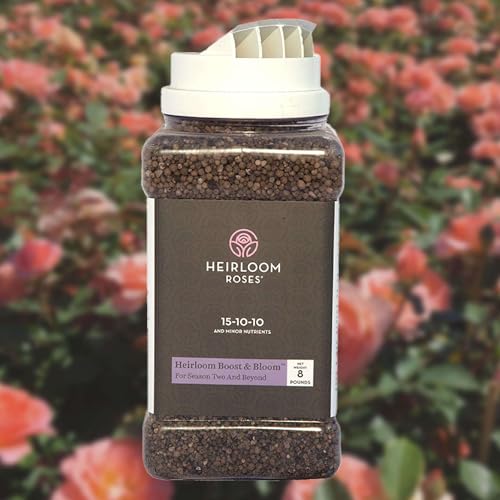
Heirloom Roses, a nursery with over 50 years of rose-breeding experience, formulated this 15-10-10 granular specifically for in-ground roses that have completed their first full season. The nitrogen is higher than most dedicated bloom boosters, but the ratio is designed to support vigorous foliage that can photosynthesize enough energy to fuel continuous flower production all season. Users report visible changes in leaf color and bud count within one week of application.
The recommendation is to apply half a cup per plant every four weeks starting in early spring. This 8-pound bag covers roughly twelve mature bushes for the entire growing season, making it one of the best value-per-coverage options among premium granulars. The product is not intended for potted roses or first-year bare-root plants, as the nutrient concentration can overwhelm underdeveloped root systems.
The downside is the higher nitrogen content. If your soil is already rich in nitrogen from previous composting or lawn runoff, this formula may push leafy growth at the expense of blooms. You should test your soil before committing to a full season with this ratio. For established gardens where foliage health and bloom volume are both priorities, this is a well-calibrated maintenance feed.
What works
- Balanced 15-10-10 supports both foliage vigor and continuous blooms
- Large 8-pound bag covers a full season for a dozen bushes
- Easy-to-dispense container with clear measurement instructions
What doesn’t
- Not suitable for first-year or container-grown roses
- Nitrogen level may cause excess foliage in nitrogen-rich soils
5. Farmer’s Secret Rose Booster Fertilizer 32oz

Farmer’s Secret uses a professional-grade liquid concentrate that requires only two teaspoons per gallon of water — a dilution ratio that makes the 32-ounce bottle last for dozens of feedings. This is not a general-purpose plant food; it is formulated specifically for all rose varieties throughout the entire life cycle. Verified reviews mention that it revived near-death bushes in under a month, producing larger blooms than the plants had ever shown before.
The liquid form delivers nutrients directly to the root zone within hours, making it one of the best rescue options for roses that are yellowing, stunted, or failing to bud. It has a sulfur-like odor during mixing, but the smell dissipates quickly once applied. The manufacturer recommends weekly feeding during the growing season, and users report that consistent use leads to branching, red new growth, and increased flower density.
Because it is super-concentrated, measuring accurately is critical. A heavy-handed pour can easily double the intended strength, and while the formula is forgiving enough that one over-application rarely causes damage, repeated over-feeding could lead to salt buildup in pots. The bottle is relatively small compared to the volume of finished solution it produces, so storing the concentrate properly is important to maintain potency.
What works
- Extremely high dilution rate makes the bottle last an entire season
- Proven recovery results on stressed or dying rose bushes
- Works as a foliar or root drench for flexible application
What doesn’t
- Measuring precisely at 2 tsp per gallon is essential to avoid over-concentration
- Sulfur-like odor during mixing requires ventilation
6. Neptune’s Harvest Rose & Flowering Fertilizer 2-6-4
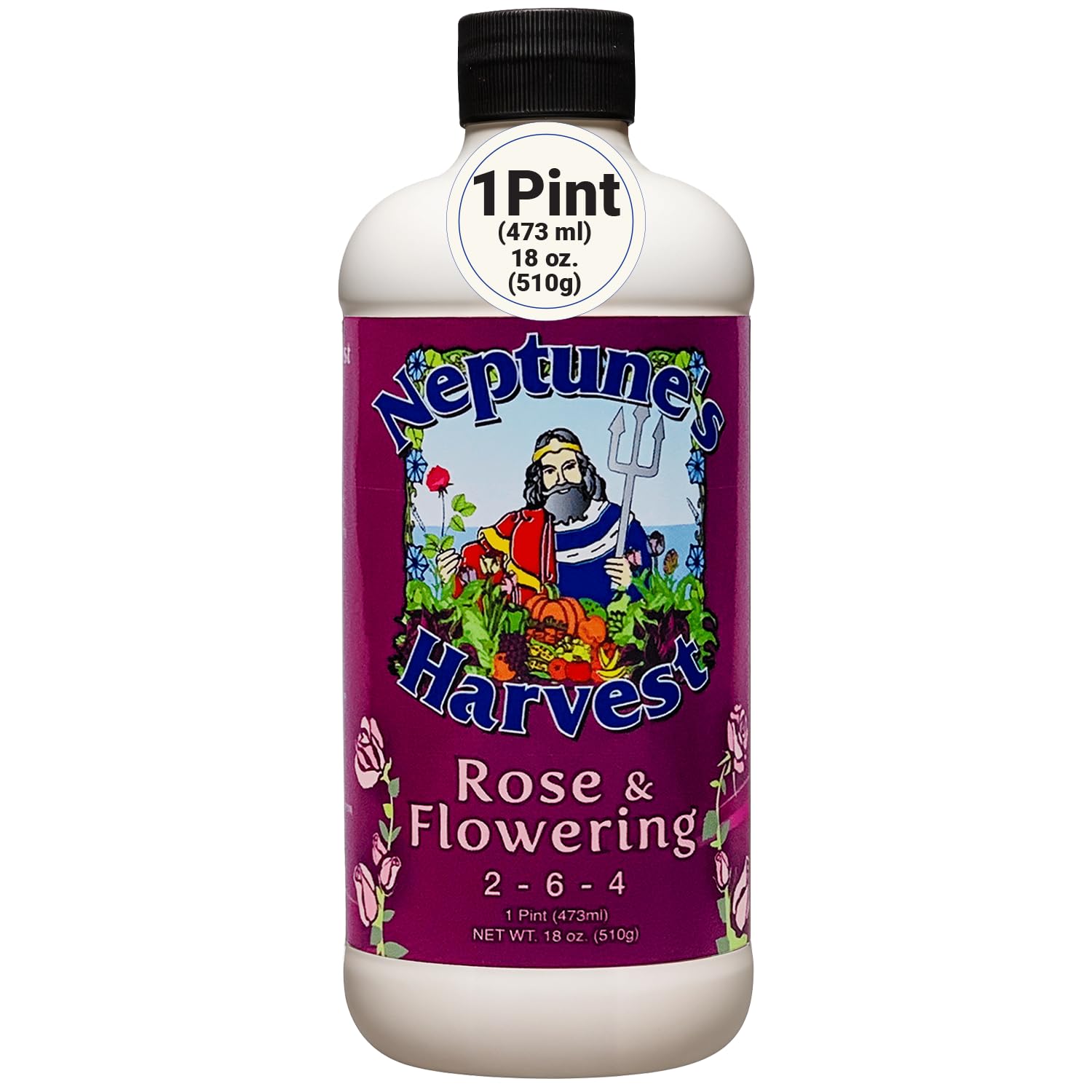
Neptune’s Harvest uses cold-processed fish, seaweed, molasses, humic acids, yucca extract, and liquid calcium to create a 2-6-4 liquid that feeds the soil food web as much as it feeds the rose. The NPK is very low by synthetic standards, but the biological activity it stimulates — microbes, mycorrhizae, and earthworms — builds a soil structure that retains moisture while draining well. Users report that it revived Brandywine tomatoes overnight and produced healthier rose foliage within days.
The one-ounce-per-gallon mixing rate is straightforward, and the formula can be applied both as a soil drench and as a foliar feed. The liquid calcium is a smart inclusion because it prevents blossom-end rot and strengthens cell walls against rust and black spot. Despite the mild fish smell during application, the odor fades as soon as the product dries, and the 18-ounce pint bottle covers about 18 gallons of solution — enough for a small rose garden for several weeks.
The low NPK means you must apply it more frequently — every one to two weeks during active growth — to match the nutrient delivery of a synthetic fertilizer. Gardeners with very poor or sandy soil may find the nutrient concentration too gentle to correct deficiencies quickly. For those focused on building long-term soil health and pest resistance through Brix levels, this is the most biologically complete option.
What works
- Includes humic acids, seaweed, and calcium for comprehensive soil biology support
- Safe for pets, children, and edible plants near roses
- Can be used as a foliar feed to address leaf-level deficiencies
What doesn’t
- Low NPK requires frequent reapplication for moderate to heavy feeders
- Fish odor, though temporary, can be strong during mixing
7. Heirloom Roses Founder’s Fish Fertilizer 32oz
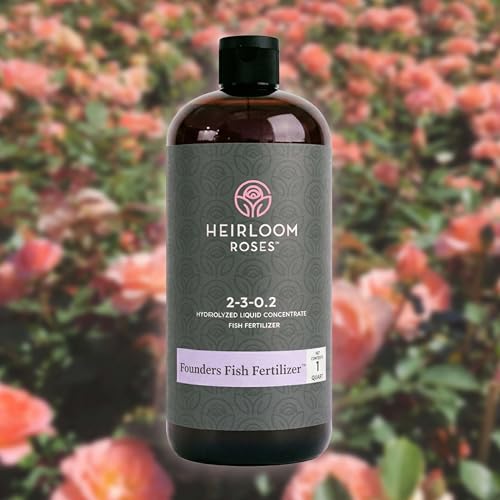
This liquid fish emulsion from Heirloom Roses is formulated specifically for own-root roses, which are more sensitive to chemical salts during their first season. The formula is derived from acidulated fish solubles stabilized with phosphoric acid, providing a gentle but effective nutrient source that won’t burn tender root systems. Users in zone 7a reported that new roses bloomed prolifically in their first year, with one bottle lasting an entire season for five plants.
The mixing ratio is four ounces per gallon of water, and the resulting solution is applied every two to three weeks during active growth. The 32-ounce quart bottle is compact but produces eight gallons of finished feed, which is adequate for a dozen container-grown roses or a small bed of in-ground plants. The fish-derived organic matter feeds mycorrhizae in the soil, improving nutrient uptake efficiency over the long term.
The strong fish odor is the main practical drawback. Reviews consistently warn about the smell during application, and it can cause sneezing or discomfort if applied in closed spaces or on windy days near open windows. The odor dissipates within a few hours after drying, but you should plan to apply it in the evening or when neighbors are not outdoors. For organic rose growers who want a single-bottle solution for new and established plants, this is a proven performer.
What works
- Gentle enough for own-root and first-year roses without risk of burn
- Feeds soil microbiology for sustained root health beyond the growing season
- Compact quart bottle stores easily and delivers high coverage per dollar
What doesn’t
- Strong fish odor during application requires outdoor mixing and timing
- Phosphoric acid stabilization means it is not purely fish-based
Hardware & Specs Guide
NPK Ratio Interpretation
The three hyphenated numbers on every fertilizer label represent the percentage by weight of Nitrogen (N), Phosphorus (P), and Potassium (K). For roses, the phosphorus number — the middle digit — is the most critical because it directly triggers bloom initiation. A ratio like 4-10-7 means the bag contains 10% phosphorus by weight, which is ideal for flower production. Avoid formulas where the first number is higher than the middle number unless your goal is to bulk up a young plant’s foliage first.
Granular vs. Liquid Release Curve
Granular fertilizers release nutrients over 4 to 8 weeks depending on soil temperature and microbial activity. They are best applied at the start of the growing season and again every 4 to 6 weeks. Liquid fertilizers are available to the plant within hours but wash through the soil faster, requiring applications every 7 to 14 days. The right choice depends on your schedule: granular suits a set-it-and-forget-it routine; liquid offers precise control for responding to plant cues.
FAQ
What NPK ratio is best for rose bloom production?
Can I use a general-purpose 10-10-10 fertilizer on roses?
Should I use liquid or granular fertilizer for my roses?
Final Thoughts: The Verdict
For most gardeners, the best npk for roses winner is the Miracle-Gro 18-24-16 because its high-phosphorus synthetic formula delivers the fastest, most dramatic bloom response on established bushes. If you want an organic slow-release granular that builds soil health, grab the Espoma Rose-tone 4-3-2. And for rescuing struggling plants or feeding first-year own-root roses, nothing beats the concentrated recovery power of Farmer’s Secret Rose Booster.