
Keeping a vegetable garden productive means stopping weeds before they steal water and nutrients from your tomatoes, peppers, and squash. The right ground cover does this without introducing chemicals or requiring constant reapplication. You need a barrier that blocks sunlight, retains soil moisture, and breaks down in a way that feeds your soil rather than polluting it. This category spans organic straw, compost, coconut-based materials, and synthetic fabrics — each with a different tradeoff between weed suppression, water flow, and long-term soil health.
I’m Rikta — the co-founder and writer behind Lawn Gear Lab. I’ve spent countless hours cross-referencing material specifications, studying how different organic and synthetic barriers perform in actual growing conditions, and analyzing owner feedback to pinpoint which products truly suppress weeds without harming your vegetable bed ecosystem.
Whether you need a fast-decomposing organic layer or a long-lasting geotextile barrier, this guide breaks down the top contenders for the best mulch for vegetable garden to prevent weeds and helps you match the right material to your planting style.
How To Choose The Best Mulch For Vegetable Garden To Prevent Weeds
Selecting the right ground cover depends on matching the material’s physical properties to your garden’s specific needs. The wrong choice can trap moisture against stems, introduce weed seeds, or prevent water from reaching the root zone. Focus on these criteria to narrow your options.
Coverage Depth and Blocking Ability
A mulch layer must be thick enough to block sunlight from reaching weed seeds in the soil below. Organic materials like straw and wood chips typically need a 2- to 3-inch layer to be effective, while synthetic fabrics can block light at a single-sheet thickness. Thinner layers of light materials may require more frequent replenishment as decomposition progresses.
Water Permeability and Moisture Retention
Water must pass through the mulch to your vegetable roots. Organic options like wheat straw and coconut coir are naturally porous and absorb moisture, releasing it slowly. Dense compost also retains water well but may crust over if applied too thick. Landscape fabrics vary widely — woven geotextiles allow water and air exchange while blocking light, whereas solid plastic films prevent both weed growth and water penetration.
Decomposition Rate and Soil Impact
Organic mulches break down over a single growing season and need annual replenishment. This decomposition adds organic matter and improves soil structure, making it a long-term investment in soil health. Synthetic fabrics do not decompose but require removal and disposal when they wear out. Consider whether you want a material that vanishes into the soil or one that remains a separate physical barrier.
Seed and Contaminant Content
Some natural mulches — particularly raw hay — carry grass and weed seeds that germinate in your bed. Look for products explicitly labeled as cleaned, filtered, or low-seed, such as wheat straw processed to remove chaff and seeds. Compost should be fully composted to kill weed seeds through heat. Any seed contamination defeats the purpose of applying a weed-prevention layer.
Quick Comparison
On smaller screens, swipe sideways to see the full table.
| Model | Category | Best For | Key Spec | Amazon |
|---|---|---|---|---|
| HealthiStraw GardenStraw | Premium Organic Straw | Large raised beds & wide-area coverage | 3 cu ft compressed bale covers 100 sq ft at 2-3″ | Amazon |
| Plantonix Coco Chips (10lb) | Premium Coco Chips | Aeration + moisture control in dense soil | Absorbs up to 10x its weight in water | Amazon |
| Plantonix Coco Coir Bricks (6-Pack) | Organic Coco Coir | Seed starting & moisture-retentive top layer | Expands to 12.5 gallons from 650g bricks | Amazon |
| R&M Organics Premium Compost | Organic Compost | Feeding soil while suppressing weeds | 10 lb bag covers ~¼ inch layer around plants | Amazon |
| UWIOFF Weed Barrier Fabric | Woven Landscape Fabric | Long-term weed block under pathways & beds | 3.2 oz PE fabric, UV resistant, permeable | Amazon |
| Out-Grow Wheat Straw (1 cu ft) | Natural Wheat Straw | Small beds & pet-safe garden covering | 4 lbs, 1 cubic foot box | Amazon |
| Vanver Landscape Fabric (3ft x 300ft) | Heavy-Duty Woven Fabric | Large-scale weed control & gravel pathways | 3.2 oz polypropylene, 300 ft roll | Amazon |
In‑Depth Reviews
1. HealthiStraw GardenStraw, 3 cu ft (20 lbs)
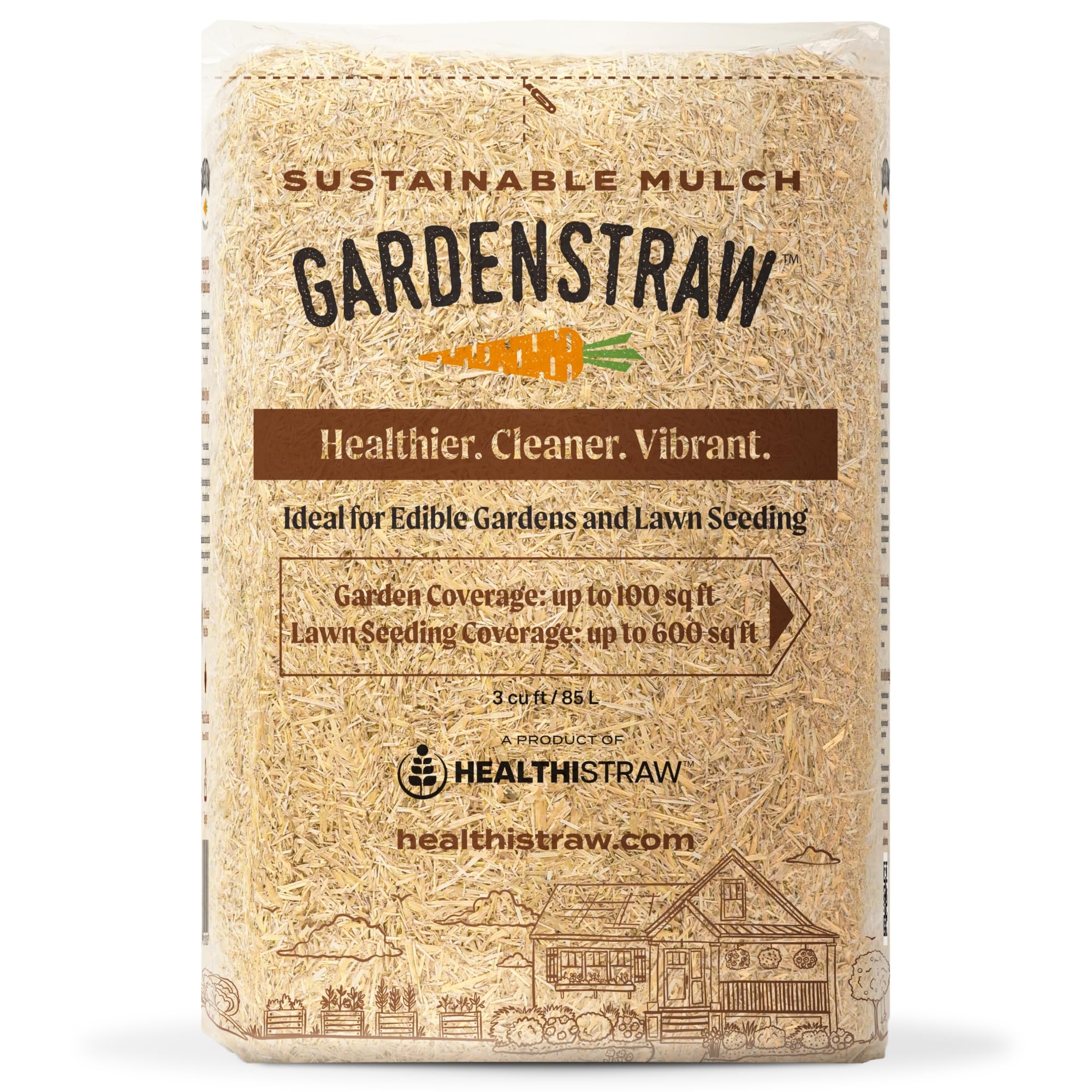
This compressed bale delivers an impressive 3 cubic feet of wheat straw that expands to cover up to 100 square feet at the recommended 2-3 inch depth. The straw fibers are specially cut to interlock when watered, which keeps the layer anchored against wind and rain without chemical binders. Users consistently report that it holds moisture and reduces watering needs noticeably during hot spells.
The product is filtered to remove dust, dirt, and as many weed seeds as possible — a critical advantage over raw hay that often germinates grass in your beds. While a few owners noted stray grass seeds, the vast majority describe the seed content as minimal compared to alternatives. The straw breaks down within a single season, adding carbon to your compost and improving soil aeration for the next planting.
At a 3-cubic-foot volume, the coverage-to-cost ratio is strong for gardeners with multiple raised beds or medium-sized in-ground plots. It works well for vegetables, herbs, flowers, and even lawn seeding at a thinner quarter-inch layer. The clean cut means it doesn’t mat down into a soggy mess, and the neutral tan color looks tidy in a garden setting.
What works
- Excellent coverage for the compressed volume, covering up to 100 sq ft
- Low weed seed content relative to raw straw or hay
- Breaks down into compostable organic matter after the season
What doesn’t
- Some users report a small number of grass seeds still present
- Bulk bag is lightweight but physically bulky to store
2. Plantonix Organic Coco Chips (10lbs)

These compressed coconut husk chips expand to 15 gallons of chunky mulch that excels at both weed suppression and soil aeration. Unlike fine coco coir, the chip format creates larger air pockets that prevent soil compaction while still blocking light well enough to stop weed germination. The texture is rough enough to stay in place during watering without washing away.
A key advantage is the material’s cation exchange capacity (CEC), which holds nutrients in the root zone and releases them as plants need them. With a neutral pH around 6.0-6.5, it won’t acidify your soil the way pine bark or peat moss can. Users report that the chips maintain moisture without becoming soggy, reducing watering frequency noticeably in raised beds and containers.
The 10-pound brick expands significantly, making it an economical choice for gardeners who need to cover medium-sized areas. Because coconut husk decomposes slower than straw, this mulch lasts longer into the season before needing replenishment. Mixing it with coco coir is a common strategy to balance water retention and drainage.
What works
- Creates excellent drainage and aeration in dense soil
- Slow decomposition means fewer applications per season
- Neutral pH won’t alter soil chemistry
What doesn’t
- Requires pre-hydration to expand fully before laying
- Large chips can be too chunky for very small seedlings
3. Plantonix Coco Coir Bricks (6-Pack, 650g each)

Each 650-gram brick expands to roughly 2 gallons of fluffy coco coir, giving the six-pack a total hydrated volume of about 12.5 gallons. The material is pre-rinsed and screened through a fine filter to remove fibers, sand, and rocks — a step many budget coir products skip. This results in a consistent, clean base that works both as a top-dressing mulch and as a soil amendment.
For weed suppression, a 2-inch layer of hydrated coco coir blocks light effectively while allowing water to percolate freely. The high cation exchange capacity helps retain fertilizer nutrients near vegetable roots. Gardeners using this as a seed-starting medium also benefit from the neutral pH and the material’s ability to hold moisture without becoming waterlogged.
The compressed bricks are significantly lighter and more space-efficient than bags of pre-moistened soil or compost. Users praise the cleanliness — very few report finding plastic fragments or debris. The six-pack format provides enough material to top-dress several raised beds or fill a standard 4×4 bed with a thin moisture-retentive layer.
What works
- Pre-screened for purity — minimal impurities or debris
- Compact storage — bricks expand to 10x their dry volume
- Versatile as mulch, seed starter, and soil conditioner
What doesn’t
- Fine texture can blow away in windy conditions if not wet down
- Bricks need 15-20 minutes to fully hydrate before use
4. R&M Organics Premium Organic Compost (10 lb)
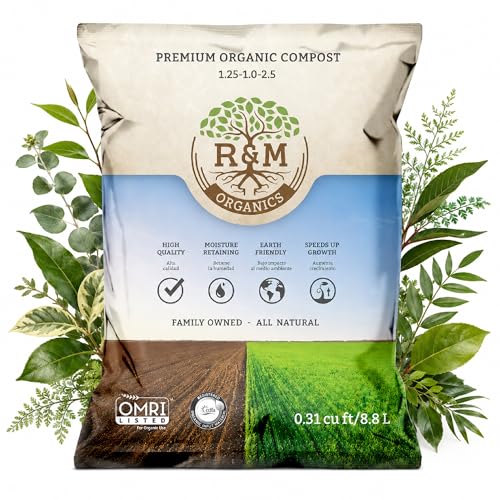
This fully composted dairy cow manure product serves double duty: it feeds the soil with nutrients while forming a thin, weed-suppressing top layer. The compost has a fine, earthy texture that spreads easily and does not carry the strong odor associated with raw manure. Users report noticeable improvements in plant health within a week of application, including leaf greening and new growth.
As a weed barrier, a quarter-inch layer of this compost blocks light from reaching small weed seeds, though it works best in combination with a coarser mulch on top. The material’s high organic matter content improves soil structure and water retention over time. Because it is fully composted through continuous aeration, the risk of introducing viable weed seeds is very low.
The 10-pound bag is compact and easy to store, making it ideal for small to medium vegetable gardens and container plants. It mixes well into existing soil for new beds or can be side-dressed around established vegetables. Gardeners who want both weed suppression and a gentle nutrient boost will find this a practical single-product solution.
What works
- Adds nutrients while suppressing weeds
- Low odor and clean texture — suitable for indoor use
- Fine consistency spreads easily without clumps
What doesn’t
- Thin layer may allow persistent weeds to push through
- 10 lb bag covers a modest area — not for large beds
5. UWIOFF 4ft x 100ft Weed Barrier Fabric
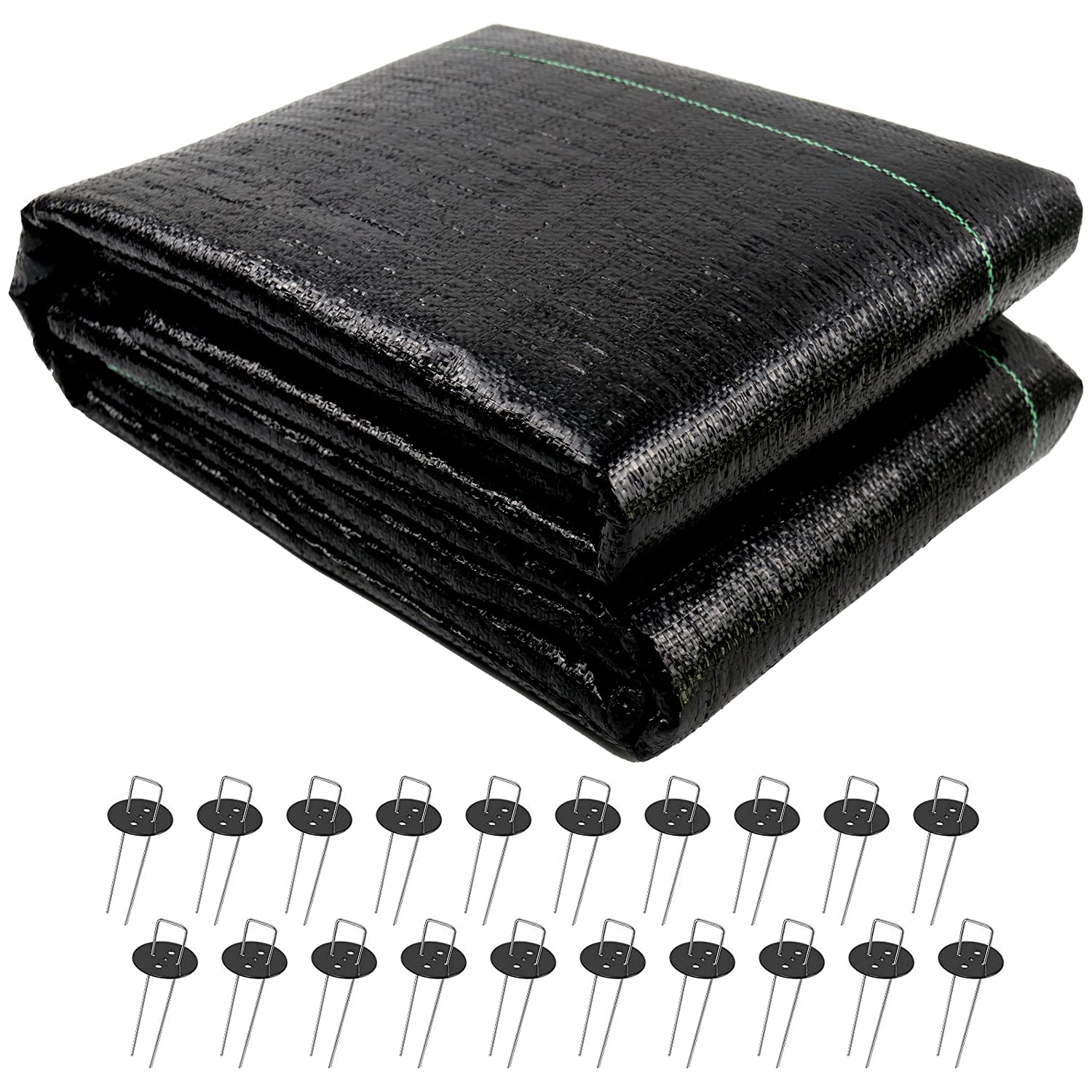
This 3.2-ounce polyethylene fabric provides a physical barrier that blocks light entirely while remaining permeable to air and water. The UV-resistant construction is rated to last over five years in direct sunlight, making it a durable option for vegetable garden pathways, raised bed underlayment, and areas where you don’t want to reapply organic mulch annually. The green stripes help with alignment and straight cutting.
Users highlight that water seeps through quickly without pooling, even during heavy rain. The fabric is flexible enough to contour around irregular bed shapes but tough enough to withstand foot traffic when staked down. Unlike solid plastic sheets, this woven material does not trap heat or create a greenhouse effect that could damage roots.
Proper installation requires cutting holes or slits for vegetable transplants and securing edges with landscape staples. The fabric does not decompose, so it must be removed and disposed of if you change your garden layout. For gardeners who want a one-time install with annual vegetable planting through cut openings, this is a time-saving approach.
What works
- Blocks all light for complete weed prevention
- Water and air permeable — no pooling or root suffocation
- UV-stabilized for multi-year outdoor use
What doesn’t
- Cut edges tend to unravel if not sealed
- Requires cutting holes for each plant — not a quick mulch
6. Out-Grow 1 Cubic Foot All Natural Wheat Straw (4lbs)

This 1-cubic-foot box of 100% natural wheat straw offers a chemical-free, additive-free mulch for small vegetable gardens. The straw is grown on-site with quality control from planting to harvest, ensuring no synthetic treatments are applied. At 4 pounds total weight, the box is lightweight and easy to carry, making it accessible for gardeners with limited mobility.
The straw provides natural insulation for soil, keeping it cooler in hot months and reducing evaporation. Users note that the material is clean and low-dust compared to hay, with minimal weed seed content. It is also popular for outdoor animal shelters due to its moisture-repelling properties, but it works equally well as a top-dressing for vegetable beds.
The main limitation is the relatively small coverage area — one cubic foot covers only about 4-6 square feet at the recommended 2-inch depth. This makes it best suited for container gardens, small raised beds, or targeted spot application around individual plants rather than large plot coverage.
What works
- Completely natural with no chemical additives
- Lightweight and easy to handle
- Low dust and minimal weed seeds
What doesn’t
- Small coverage — only 4-6 sq ft per box at proper depth
- Some users reported foreign objects in the packaging
7. Vanver 3ft x 300ft Heavy Duty Landscape Fabric
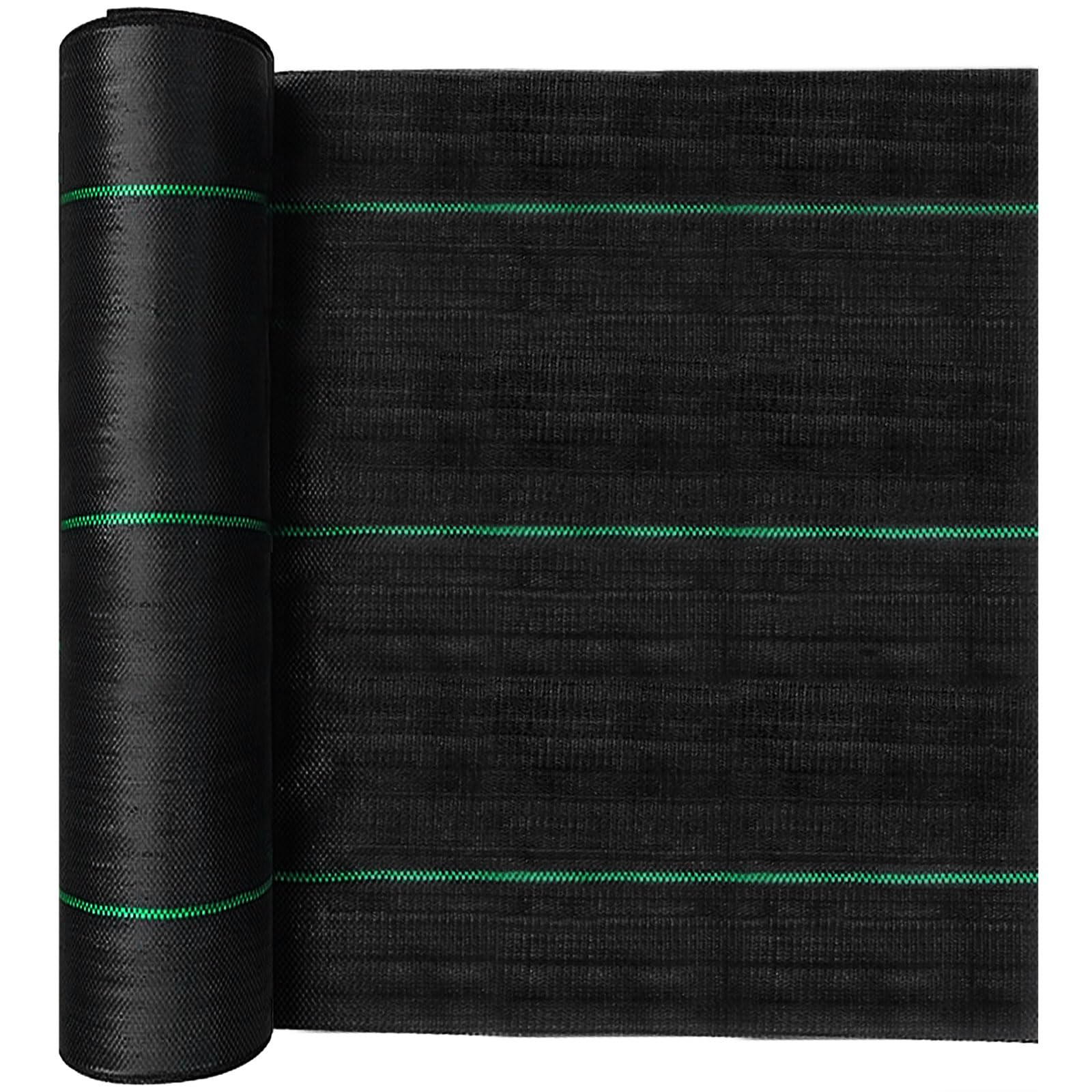
This massive 300-foot roll of woven polypropylene fabric is designed for large-scale weed control projects — think orchard rows, long vegetable garden pathways, or gravel driveways. The 3.2-ounce weight provides a durable barrier that withstands foot traffic, wheelbarrow loads, and exposure to the elements without tearing. The woven construction allows slow air and water exchange while completely blocking light.
Users specifically praise its thickness for walking surfaces between raised beds, where lighter fabrics would puncture or degrade. The anti-aging additive extends the usable life beyond standard landscape fabrics. Installation is straightforward: unroll, cut with scissors or a utility knife, and secure with landscape staples every few feet.
Because the fabric comes in a single 300-foot length, it is not practical for small gardens unless you cut and share the roll. The width is 3 feet, which suits narrow pathways and single-row beds. For any large-area weed prevention project where organic mulch would need constant replenishment, this fabric provides a permanent foundation.
What works
- Extremely durable — withstands foot traffic and wheel loads
- Huge 300 ft roll covers large areas without seams
- Light permeable design prevents water pooling
What doesn’t
- Excessive length for small gardens — leftover roll is bulky
- Cut edges may unravel without proper anchoring
Hardware & Specs Guide
Organic Straw Mulch
Straw products like HealthiStraw and Out-Grow use wheat stalks that are cut and baled. Key specs to compare: compressed volume (cubic feet), weight, and seed content. A 3-cubic-foot bale covers roughly 100 square feet at a 2-3 inch depth. The straw fibers should be dry and golden, not moldy or damp, and should not contain visible grain heads that could germinate. Straw decomposes in one season, adding carbon to compost piles and improving soil tilth.
Coconut Coir and Chips
Coco coir comes as compressed bricks or loose chips. The key spec is hydrated volume: a 650-gram brick yields about 2 gallons of loose material. Look for products labeled pre-rinsed and screened, which indicates salt removal and fewer impurities. Coco chips are larger pieces that improve aeration, while fine coir retains more moisture. Both have a neutral pH (5.5-6.5) and high CEC for nutrient retention.
Landscape Fabric Thickness
Synthetic weed barriers are measured in ounces per square yard (e.g., 3.2 oz). Heavier fabrics resist punctures and UV degradation longer. Polyethylene (PE) and polypropylene (PP) are the common materials — PE is flexible and aging-resistant, while woven PP is more breathable. The fabric must be permeable to water; solid plastic films are not suitable for vegetable gardens because they prevent oxygenation of the root zone.
Compost as Mulch Layer
Compost used as a top-dressing should be fully decomposed with a soil-like texture. The key spec is particle size — fine enough to spread thinly but coarse enough to avoid crusting. Fully composted manure has low odor and no viable weed seeds. Apply at a quarter-inch to half-inch depth; a 10-pound bag covers roughly 10-15 square feet. Compost provides slow-release nutrients in addition to weed suppression.
FAQ
Will wheat straw introduce weed seeds into my vegetable garden?
How thick should I apply organic mulch for effective weed control in a vegetable bed?
Can I use landscape fabric directly under vegetable plants in a raised bed?
Which mulch material breaks down fastest and adds the most nutrients to the soil?
Final Thoughts: The Verdict
For most gardeners, the mulch for vegetable garden to prevent weeds winner is the HealthiStraw GardenStraw because it combines wide coverage, low weed seed content, and natural decomposition that feeds the soil. If you want improved aeration and longer-lasting coverage, grab the Plantonix Coco Chips. And for permanent weed control under pathways and between beds, nothing beats the Vanver Heavy Duty Landscape Fabric.