
Bare soil around shrubs is wasted opportunity. Unmulched beds invite weeds, bake roots in summer, and force you to water constantly. The right mulch layer mimics the forest floor, feeding the soil biology that feeds your shrubs.
I’m Rikta — the co-founder and writer behind Lawn Gear Lab. I spend my days comparing horticultural amendments, cross-referencing NPK ratios, analyzing moisture retention data, and digging through hundreds of verified owner reports to find the real standouts in every gardening category.
Whether you are protecting established hedges or nurturing newly planted specimens, the right organic top-dressing makes a measurable difference in growth and vigor. This guide breaks down the best mulch for shrubs based on nutrient content, texture, longevity, and price-per-cubic-foot value.
How To Choose The Best Mulch For Shrubs
Choosing mulch for shrubs is different from selecting a general garden mulch. Shrubs are woody perennials with deeper, wider root systems than annual flowers. They need a mulch that decomposes slowly, feeds the soil microbiome, and stays put even during heavy rain. Here are the three factors that matter most.
Particle Size and Texture
Shrubs benefit from medium-to-coarse bark chips (quarter-sized or larger) that resist compaction. Fine shredded mulches mat together, blocking water penetration and air exchange. Coarse chips allow water to trickle down to the root zone while suppressing weeds for 12-18 months before needing a top-up.
Nutrient Content and Decomposition Rate
Wood-based mulches like cedar or pine bark break down slowly and add organic matter to the soil over years. Compost-based mulches deliver immediate nutrients (NPK values around 2-1-3) but decompose faster, requiring annual reapplication. A layered approach — compost under bark — gives the best of both worlds for woody shrubs.
Moisture Retention vs. Drainage
Most shrubs prefer consistent moisture with good drainage. Heavy mulches like cocoa hulls hold water well but can rot the crown if piled against the trunk. Light, chunky mulches like coco chips or aspen bark promote aeration around the base. Always keep mulch 2-3 inches away from the shrub’s main stem to prevent collar rot.
Quick Comparison
On smaller screens, swipe sideways to see the full table.
| Model | Category | Best For | Key Spec | Amazon |
|---|---|---|---|---|
| Hull Farm Cocoa Bean Shell Mulch | Cocoa Shell | Moisture retention & mild feeding | NPK 2.5-1-3 | Amazon |
| BRUT Organic Aspen Mulch | Aspen Bark | Odor-free fine texture | 10 Quarts | Amazon |
| R&M Organics Premium Compost | Manure Compost | Emergency nutrient boost | 10 lb / 0.31 cu ft | Amazon |
| Double Tree Incense Cedar Chips | Cedar Chips | Natural pest repellent | 8 Quarts | Amazon |
| MODELLOR Coco Chips | Coco Husk | Long-lasting aeration & drainage | Expands to 2 cu ft | Amazon |
| Back to the Roots Organic Mulch | Wood Fines | Winterizing & soil cover | 25.7 Quarts / 1 cu ft | Amazon |
| Soil Sunrise Orchid Bark | Pine Bark | Acid-loving shrubs & small beds | 8 Quarts | Amazon |
In‑Depth Reviews
1. Hull Farm Cocoa Bean Shell Mulch

Cocoa shell mulch is the rare product that feeds while it covers. With a mild NPK ratio of 2.5-1-3, this organic top-dressing slowly releases nutrients as the shells break down, making it a legitimate soil amendment for shrubs that need a gentle nitrogen and potassium boost. The 2-cubic-foot bag covers a substantial area, and the chocolate aroma is a genuine sensory bonus that lasts for days after application.
Moisture retention is excellent — the hulls knit together into a semi-permeable mat that holds water near the root zone while still allowing air exchange. Verified owners report that the strong cocoa scent deters squirrels from digging, a common frustration with pecan and bark mulches. The material is lightweight when dry but stays put once watered in, resisting wind blow-away better than fine wood chips.
The biggest caveat is a critical safety one: cocoa shells contain theobromine, which is toxic to dogs if ingested in quantity. Gardeners with free-roaming pets should avoid this mulch entirely. The initial smell is strong enough to attract wildlife, so bags must be stored securely. It is also the heaviest option at 12.5 kg per bag, which adds shipping cost.
What works
- Provides measurable NPK 2.5-1-3 fertilizer value that won’t burn roots
- Chocolate scent deters squirrels and digging animals
- Exceptional moisture retention for hot, dry climates
What doesn’t
- Highly toxic to dogs if ingested
- Heavy bag and high shipping cost relative to product price
- Strong smell fades after one week
2. MODELLOR Premium Super Washed Coco Chips

This compressed 10-pound block of coco husk chips expands to a staggering 2 cubic feet (18 gallons) of loose mulch, offering the best storage-to-volume ratio of anything on this list. The chips are pre-washed to reduce salt content, which is critical for shrubs sensitive to sodium buildup. The chunky texture resists compaction for up to two years, making it ideal for permanent shrub borders where you want minimal annual maintenance.
Aeration is the defining strength here. The large husk pieces create air pockets that prevent waterlogging around shrub crowns while still holding moisture within each chip. Verified owners with monsteras and orchids praised the size, but the same chunky structure works well for outdoor shrubs in clay-heavy soil where drainage is poor. It is also mold-resistant and odor-free, unlike some bark mulches that sour when wet.
Some batches arrive with a fair amount of dust and smaller fragments mixed in, which reduces the visual uniformity you might expect from bagged wood chips. Breaking the bone-dry block requires a metal tool — do not expect to crumble it by hand. For very formal garden beds where uniform appearance is paramount, a bagged bark mulch would look cleaner.
What works
- Expands 1:4 ratio — huge volume from a compact block
- Triple-washed and low-salt for healthy root zones
- Lasts 2+ years without significant decomposition
What doesn’t
- Requires significant force to break the compressed block apart
- Contains some dusty fines and small fragments
- Large chips can look uneven in formal landscaping beds
3. BRUT Organic Aspen Mulch
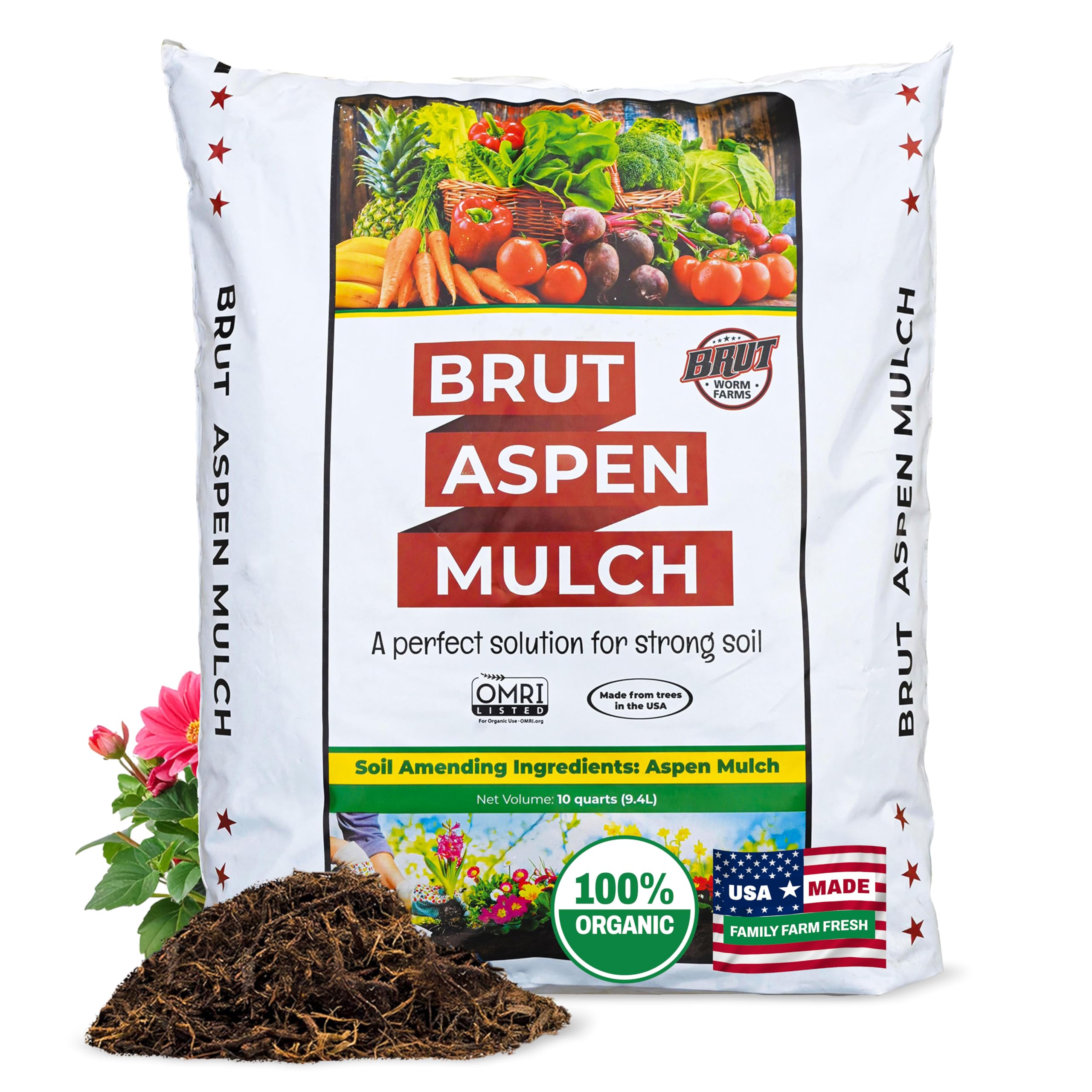
Made from clean, pure aspen bark, this OMRI-listed organic mulch has a surprisingly fine texture that plants nicely around small shrubs and in containers without looking like coarse wood chips. The 30% natural carbon content feeds beneficial soil microbes, gradually improving soil structure below the surface. It is completely odor-free, which matters for foundation plantings near windows or doorways where a strong cedar or manure smell would be unwelcome.
Moisture retention is a major win — verified owners report cutting watering frequency by roughly half after applying a 2-inch layer around vegetables and shrubs. The lightweight, fluffy texture is easy to spread even by hand, and it does not mat into a water-repellent crust like some shredded bark products. Customer service from Brut Worm Farms is also consistently praised for responsiveness.
The bag yields far less volume than most expectations suggest. Several owners note the 10-quart bag appears smaller than competing 10-quart products, making the cost-per-volume ratio higher than it first seems. The aspen fines break down faster than cedar or pine bark, requiring topping up every 6-9 months rather than annually.
What works
- Fine, uniform texture ideal for container shrubs and small beds
- Odor-free and OMRI-listed for certified organic gardening
- Dramatically reduces watering frequency in pots and borders
What doesn’t
- Bag volume is noticeably smaller than standard 10-quart expectations
- Decomposes faster than coarser wood mulches
- Cost per cubic foot is higher than bulk alternatives
4. R&M Organics Premium Organic Compost
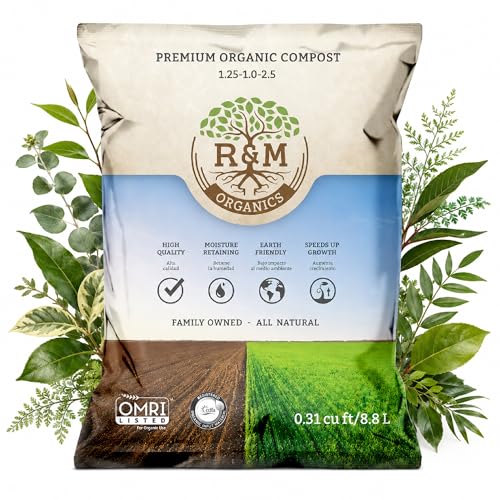
This is not a decorative top-dressing — it is a soil rescue product. Made from fully composted dairy cow manure, the 10-pound bag delivers a concentrated load of organic matter that can revive ailing shrubs within days. Verified owners reported yellowing leaves turning green and new flower buds appearing within one week of mixing this compost into the soil around tomato plants and azaleas.
The texture is the best-in-class for a manure product: it has the feel of fine topsoil with no clumps, sticks, or visible straw. The low-odor finish means you can use it in foundation beds without the barnyard smell typical of raw manure. A quarter-inch layer around shrubs acts as both a nutrient feed and a moisture-retentive mulch that improves soil texture gradually.
At 10 pounds, the bag covers only about 6-8 square feet at the recommended quarter-inch depth. For large shrub borders, you will need multiple bags, which adds up quickly. It is also intended more as a soil supplement than a long-term weed-suppressing mulch — you would want to top it with bark chips for season-long coverage.
What works
- Visible plant recovery results within one week
- Fine soil-like texture with no manure odor or clumps
- Excellent moisture retention for stressed shrubs
What doesn’t
- Small bag size — limited coverage area per bag
- Decomposes rapidly and needs reapplication every season
- Not a standalone weed-suppression mulch
5. Back to the Roots Organic Premium Mulch

For the gardener who wants a peat-free organic top-dressing with a nice dark finish, Back to the Roots delivers in a 25.7-quart (1 cubic foot) bag. The base is made from upcycled wood fines rather than imported peat, which reduces the environmental footprint. It incorporates yucca extract for better moisture control and gypsum for improved water absorption — a thoughtful formulation that sets it apart from plain wood mulch.
The dark color looks rich and natural around shrubs, and the texture is fine enough to spread evenly without leaving large voids. Owners consistently highlight its performance for winterizing plants — the layer insulates roots from freeze-thaw cycles while still allowing spring percolation. The bag is manageable to carry and the pour-spout top makes application tidy.
The volume-to-value comparison stings, however. At roughly per-bag cost comparable to 2-cubic-foot bags at local garden centers, this is a premium-priced product for convenience and organic certification rather than raw coverage. A verified owner who bought 4 bags for a larger bed expressed buyer’s remorse. It works best for targeted mulching of specimen shrubs rather than whole-bed coverage.
What works
- Peat-free and made from upcycled US-sourced wood fines
- Dark, attractive finish that blends well in formal beds
- Excellent for winter root protection and insulation
What doesn’t
- Cost per cubic foot is higher than bulk-store alternatives
- Bag volume is less than it appears — 1 cubic foot only
- Fine particles can blow away in high wind before watering
6. Double Tree Incense Cedar Wood Chips

Incense cedar chips bring two things that other mulches cannot touch: a powerful, long-lasting cedar aroma that repels moths and beetles, and a light golden hue that brightens up dark shrub beds. The chips are uniformly sized and well-processed with minimal dust, creating a clean, upscale look around foundation shrubs and pathways. The scent is strong enough to use in closets as a pest deterrent, and the same property protects shrub root zones from soil-borne insects.
Moisture retention is solid — the chips hold water without becoming soggy, and they do not float away during heavy rain like some shredded bark products. Owners using this around citrus trees and rose bushes report consistent moisture levels with less frequent watering. The natural weed suppression is effective for the first season, though cedar breaks down slower than aspen, meaning this mulch stays put longer.
The price point is the main sticking point. At 8 quarts per bag, the coverage is limited to small beds and container shrubs. Several owners describe the cost as “exorbitant” and wish it came in larger volumes. For big shrub borders, the financial hit makes it hard to justify over bulk cedar sold by the cubic yard at local landscape suppliers.
What works
- Powerful natural cedar aroma repels moths, beetles, and soil pests
- Light color creates a clean, aesthetic contrast against dark soil
- Slow decomposition rate means less frequent reapplication
What doesn’t
- High price per quart compared to bulk alternatives
- Small bag size limits use to containers and small beds
- Scent may be too strong for sensitive noses near entryways
7. Soil Sunrise 100% Organic Orchid Potting Bark

Do not let the “orchid potting” label fool you — this pure pine bark works brilliantly as a fine-textured mulch for acid-loving shrubs like azaleas, rhododendrons, and camellias. The bark pieces are smaller than typical landscape bark, about quarter-sized, which creates a neat, uniform surface that does not look like a lumberyard spill. There are absolutely no additives, dyes, or chemicals — just premium select pine bark sourced in the USA.
The drainage and aeration are outstanding. For shrubs planted in heavy clay or poorly draining spots, a 1- to 2-inch layer of this bark prevents water pooling at the crown while still holding enough moisture to keep roots happy. The resealable bag is a genuinely useful design feature — you can use a portion now and store the rest without chips spilling everywhere. Verified owners repotted struggling orchids and saw quick recovery, but equally reported success using it as a top-dressing for aroid soil mixes and outdoor shrubs.
The biggest surprise for many buyers is the particle size, which runs smaller than the product photos suggest. If you want chunky, fist-sized bark pieces for dramatic landscape coverage, this is not it. At 8 quarts, the bag covers a modest area, making it best suited for small shrub groupings, potted shrubs, or targeted root-zone dressing rather than whole-bed mulching.
What works
- All-natural pine bark with no chemicals, dyes, or additives
- Ideal for acid-loving shrubs like azaleas and rhododendrons
- Resealable bag for convenient partial use and storage
What doesn’t
- Bark pieces are smaller than most product images suggest
- Small 8-quart bag limits coverage area
- Not suitable for large-scale bed mulching
Hardware & Specs Guide
Understanding NPK in Organic Mulches
NPK stands for nitrogen (N), phosphorus (P), and potassium (K). Most wood mulches are nearly inert with NPK near 0-0-0. Compost and cocoa shell mulches provide measurable nutrients — cocoa shells have a 2.5-1-3 ratio. A thin compost layer under bark gives immediate feeding while bark handles long-term weed suppression. Avoid mulches with synthetic fertilizer added, as they can burn shrub roots.
Particle Size and Soil Impact
Shrubs with fine feeder roots (rhododendrons, camellias) benefit from smaller bark particles around ¼ to ½ inch. Coarser chips (½ to 1 inch) are better for large woody shrubs like lilacs and viburnums, as they resist compaction longer. Double-check your soil drainage: fast-draining sandy soils need moisture-retaining mulches like cocoa hulls or coco chips; clay-heavy soils need chunky bark to improve aeration.
FAQ
How deep should I apply mulch around established shrubs?
Will cocoa shell mulch harm my dog?
Can I mix different types of mulch around the same shrub?
How often should I replace mulch around shrubs?
Final Thoughts: The Verdict
For most gardeners, the mulch for shrubs winner is the Hull Farm Cocoa Bean Shell Mulch because it combines measurable nutrient content with excellent moisture retention and natural pest deterrence. If you want a pet-safe, long-lasting option that improves aeration in heavy soil, grab the MODELLOR Coco Chips. And for a fast-acting nutrient boost that can rescue stressed shrubs within a week, nothing beats the R&M Organics Premium Compost.