
Landscaping mulch is the silent workhorse of a healthy garden, regulating soil temperature, locking in moisture, and providing a finished aesthetic that defines your outdoor space. But with options ranging from compressed coco blocks to aromatic cedar shavings, the wrong choice can invite pests, fade in weeks, or even harm your soil chemistry.
I’m Rikta — the co-founder and writer behind Lawn Gear Lab. I’ve spent over 150 hours studying mulch composition, reading nursery and horticultural bulletins, cross-referencing NPK values, particle sizes, and pH levels, and analyzing thousands of owner reports to help you match the right material to your specific planting environment.
The core question most gardeners face is whether to prioritize organic breakdown, pest resistance, or visual consistency. After deep research, I’ve sorted the top contenders to help you confidently choose the best landscaping mulch for your project, whether that’s a veggie bed, a flower border, or a potted patio display.
How To Choose The Best Landscaping Mulch
Mulch is not a one-size-fits-all garden layer. The material you select interacts directly with your soil’s fertility, moisture retention, and even its pH. Understanding three key factors will help you avoid costly mistakes and ensure your plants thrive season after season.
Organic vs. Inorganic: The Decomposition Trade-Off
Organic mulches — bark, wood chips, straw, cocoa shells, and coconut husk — break down over time, adding organic matter and nutrients back into the soil. This is a significant advantage for vegetable beds and perennial borders. However, fresh wood chips can temporarily tie up nitrogen as they decompose, so aged or composted materials are safer for heavy feeders like tomatoes or corn. Inorganic options like rubber or stone last forever but do nothing for soil health, and they can overheat soil in direct sun.
Particle Size & Texture: The Anchor Factor
Large bark nuggets and chunky pine bark pieces resist wind and heavy rain but can be uncomfortable to walk on and tend to float away in a downpour. Fine-textured materials like shredded cedar or straw interlock and form a mat that stays put even on slopes, making them ideal for erosion-prone areas. For container plants, smaller particles (½ inch or less) are easier to fit around tight root balls and provide a clean decorative finish.
pH, Nutrients, and Animal Safety
Cocoa bean shells have an NPK value around 2.5-1-3 and a slightly acidic pH of about 5.8, which suits acid-loving plants like azaleas and blueberries but can be toxic to dogs due to theobromine and caffeine. Pine bark naturally lowers soil pH over time, making it an excellent choice for ericaceous plants. Cedar shavings release aromatic oils that repel insects and rodents but can inhibit seed germination when used too thickly. Always verify a mulch’s chemical profile and potential pet hazards before spreading it near high-traffic areas or edible gardens.
Quick Comparison
On smaller screens, swipe sideways to see the full table.
| Model | Category | Best For | Key Spec | Amazon |
|---|---|---|---|---|
| Back to the Roots Coco Mulch | Organic Fiber | Raised beds & veggie gardens | 2 cu ft expanded volume | Amazon |
| Garden Elements Cocoa Shell | Cocoa Hull | Fragrant flower beds | NPK 2.5-1-3 | pH 5.8 | Amazon |
| GranuCide Cedar Granules | Cedar Chips | Pest-repelling around foundations | 8 lbs | Aromatic oil content | Amazon |
| HealthiStraw GardenStraw | Wheat Straw | Vegetable gardens & lawn seeding | 3 cu ft | Covers 100 sq ft @ 2-3″ | Amazon |
| Soil Sunrise Pine Bark Nuggets | Pine Bark | Container & bonsai soil supplement | 30 qt | ½-inch average pieces | Amazon |
| Hull Farm Cocoa Shell | Cocoa Hull | Moisture retention in planters | 2 cu ft | Natural fertilizer value | Amazon |
| Double Tree Cedar Shavings | Cedar Shavings | Indoor plant top-dressing & pest control | 16 qt | 100% natural cedar | Amazon |
In‑Depth Reviews
1. Back to the Roots 100% Organic Mulch
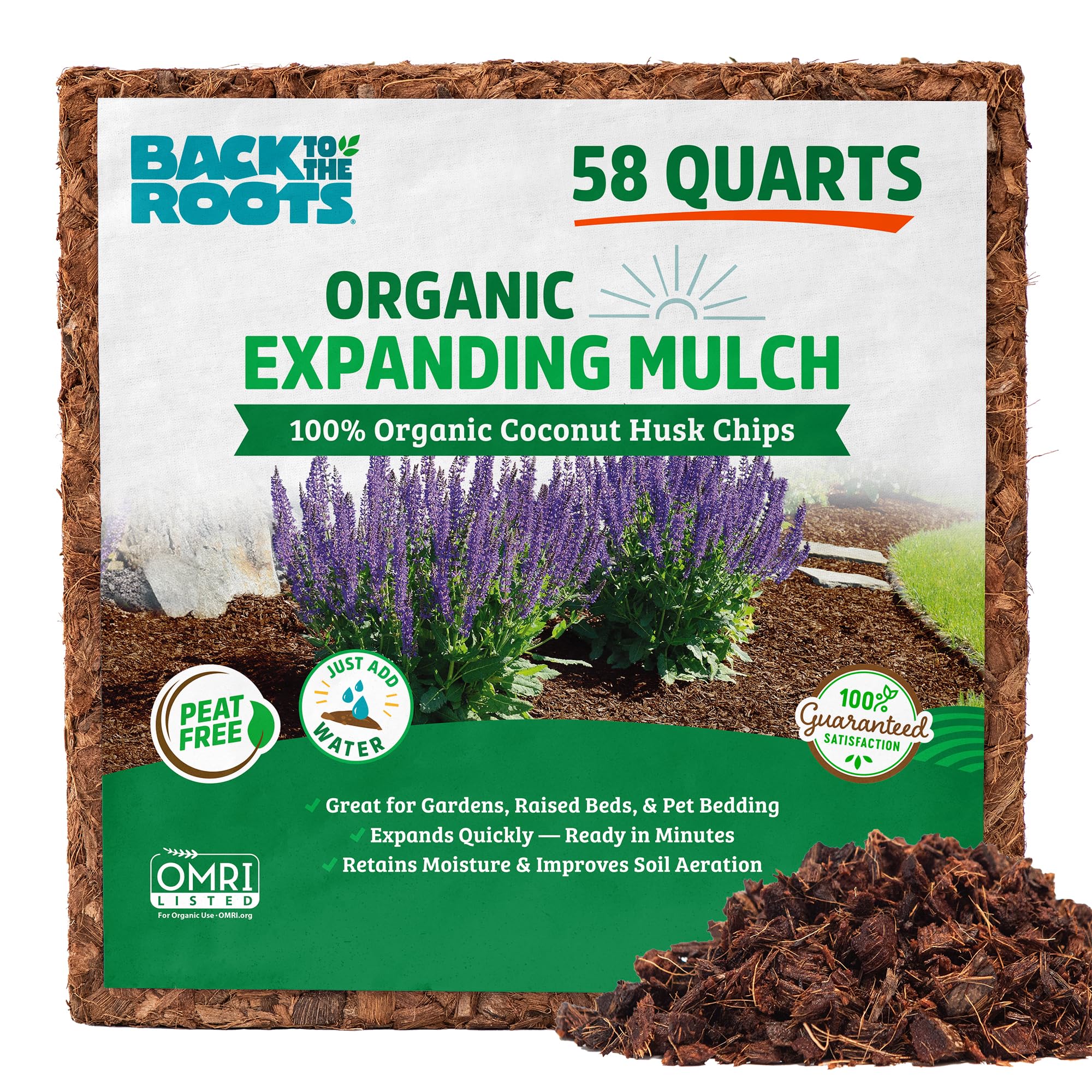
Compressed into a 10-pound block that expands to over 2 cubic feet when hydrated, this coconut husk mulch is a logistical game-changer. The low shipping weight means you save on freight while getting a volume equivalent to multiple heavy bags of bark. Organic certification (OMRI listed) ensures no synthetic chemicals contact your vegetable bed soil, making it a top pick for edible gardens where soil purity matters.
Once expanded, the fibrous coco texture forms a dense mat that suppresses weeds effectively while retaining moisture significantly longer than traditional wood mulches. Users report filling a full wheelbarrow from a single block — a back-saving feature compared to hauling wet wood chips. The material also doubles as a soil amendment when tilled in, adding organic matter without creating a nitrogen deficiency.
The primary trade-off is the required preparation: you must add water and wait for expansion before spreading. The final texture is somewhat light and can blow away in high winds until fully saturated. This is strictly an organic solution — it will decompose over a season, needing replenishment, but that decomposition feeds your soil rather than just covering it.
What works
- OMRI organic certification eliminates synthetic chemical concerns
- Compressed block dramatically reduces shipping weight and storage space
- Excellent water retention for raised vegetable beds
- Peat-free and renewable coconut source
What doesn’t
- Requires pre-soaking and expansion time before application
- Lightweight texture can displace in heavy wind before fully wetted
- Decomposes within one season, requiring annual reapplication
2. Garden Elements 100% Natural Cocoa Bean Shell Mulch

This 2-cubic-foot bag of cocoa bean shells brings a rich, natural chocolate aroma that transforms a garden walk into a sensory experience. More than fragrance, the shells contain a mild fertilizer value (NPK 2.5-1-3) and a slightly acidic pH of 5.8, making them especially suitable for acid-loving ornamentals like hydrangeas, rhododendrons, and blueberry bushes. The dark brown color resists fading longer than dyed wood mulches.
Owner reports highlight the lightweight texture — this mulch spreads easily by hand and settles into a thick weed-suppressing barrier. The shells interlock reasonably well after watering, staying put better than straight wood chips on gentle slopes. Over the course of a year, the material breaks down and can be incorporated into the soil, delivering slow-release nutrients without the nitrogen-stealing risk associated with fresh wood waste.
The critical safety consideration is toxicity to dogs — cocoa shells contain theobromine and caffeine, which can be fatal if ingested. The mulch also develops white saprophytic fungi when kept damp in shady areas; this is harmless to plants but visually unappealing to some gardeners. Users note the strong chocolate scent attracts squirrels and rodents, so it’s best deployed in sunny beds away from foundations.
What works
- Natural chocolate scent provides a unique garden ambiance
- Mild NPK fertilizer value feeds soil as it decomposes
- Rich brown color resists fading better than dyed alternatives
- Easy to spread and settles into a weed-blocking mat
What doesn’t
- Toxic to dogs if ingested (theobromine and caffeine)
- Can develop benign white mold in damp, shaded areas
- Strong aroma may attract rodents and wildlife
- Higher cost per bag compared to base wood mulches
3. GranuCide Cedar Granules (8 lbs)
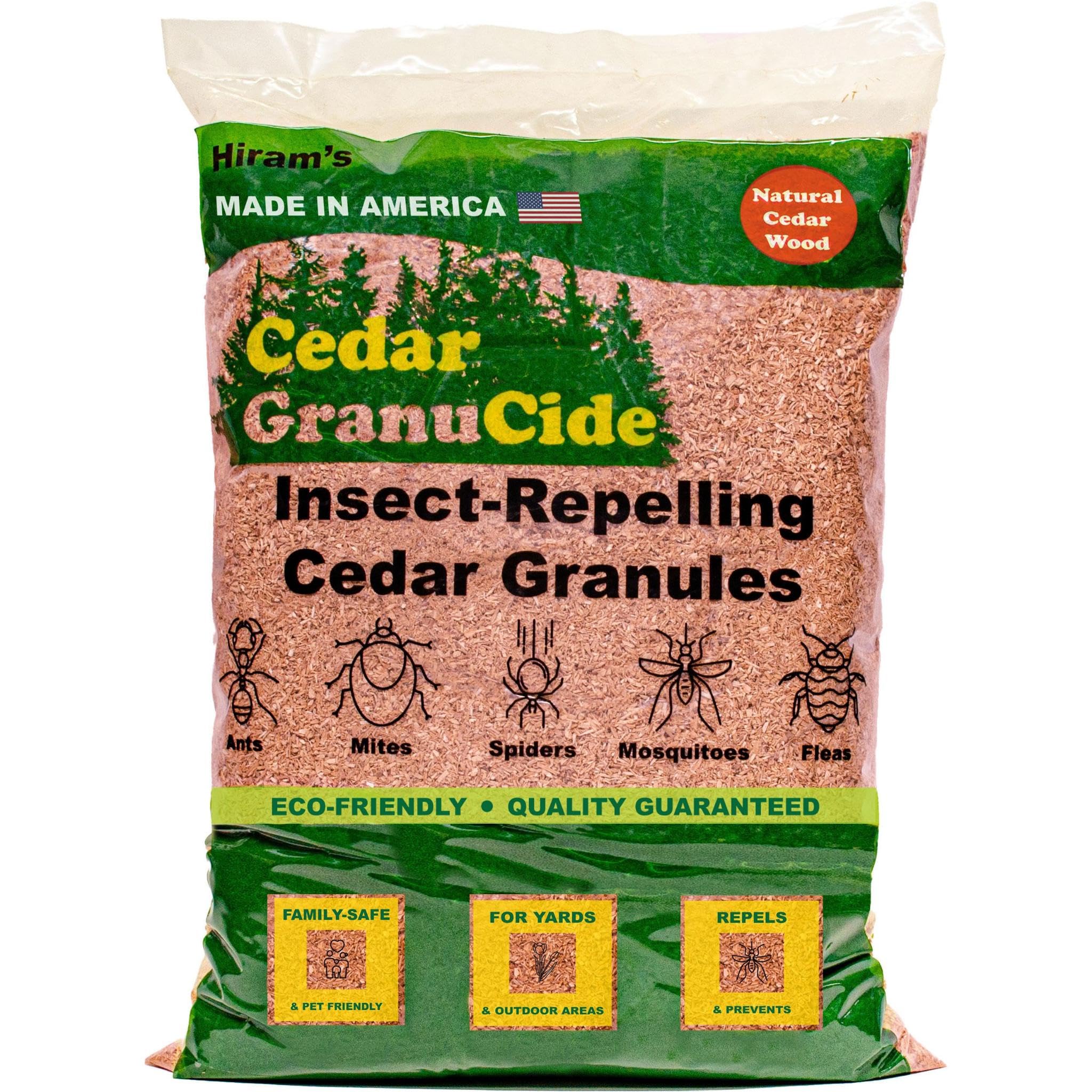
GranuCide takes the pest-repelling properties of cedar and refines them into a granular format that can be sprinkled directly around foundations, garden beds, and perimeter zones. The 100% untreated cedar wood emits volatile aromatic oils that naturally deter mosquitoes, ants, spiders, chiggers, and other garden pests without chemical insecticides. Owner reports confirm a noticeable reduction in ant and spider activity within days of application.
The 8-pound bag covers a solid footprint around a house foundation or along a fence line. Users find the granules easy to apply with a hand spreader, and the cedar scent remains pleasant — not overpowering like some concentrated oil sprays — while continuing to repel for multiple weeks before needing a refresh. The material doubles as a decorative top-dressing that enhances the visual appeal of garden beds.
The main limitation is coverage depth: because these are granules rather than a thick mulch layer, you cannot rely on them for significant weed suppression or moisture retention. The product is best viewed as a pest-management tool that offers aesthetic benefits, not a primary landscaping mulch. Some clumping occurs in high humidity, but breaking up the clumps by hand restores usability without losing efficacy.
What works
- Natural aromatic oils repel a broad spectrum of insects effectively
- 100% untreated cedar is safe for pets and children when used as directed
- Easy to apply with a spreader and blends into landscaping naturally
- Pleasant cedar scent lasts for weeks without being overpowering
What doesn’t
- Granules are too sparse to provide meaningful weed control or moisture retention
- Can clump together in humid conditions, requiring manual break-up
- More expensive per square foot compared to bulk weed-suppressing mulches
4. HealthiStraw GardenStraw (3 cu ft)
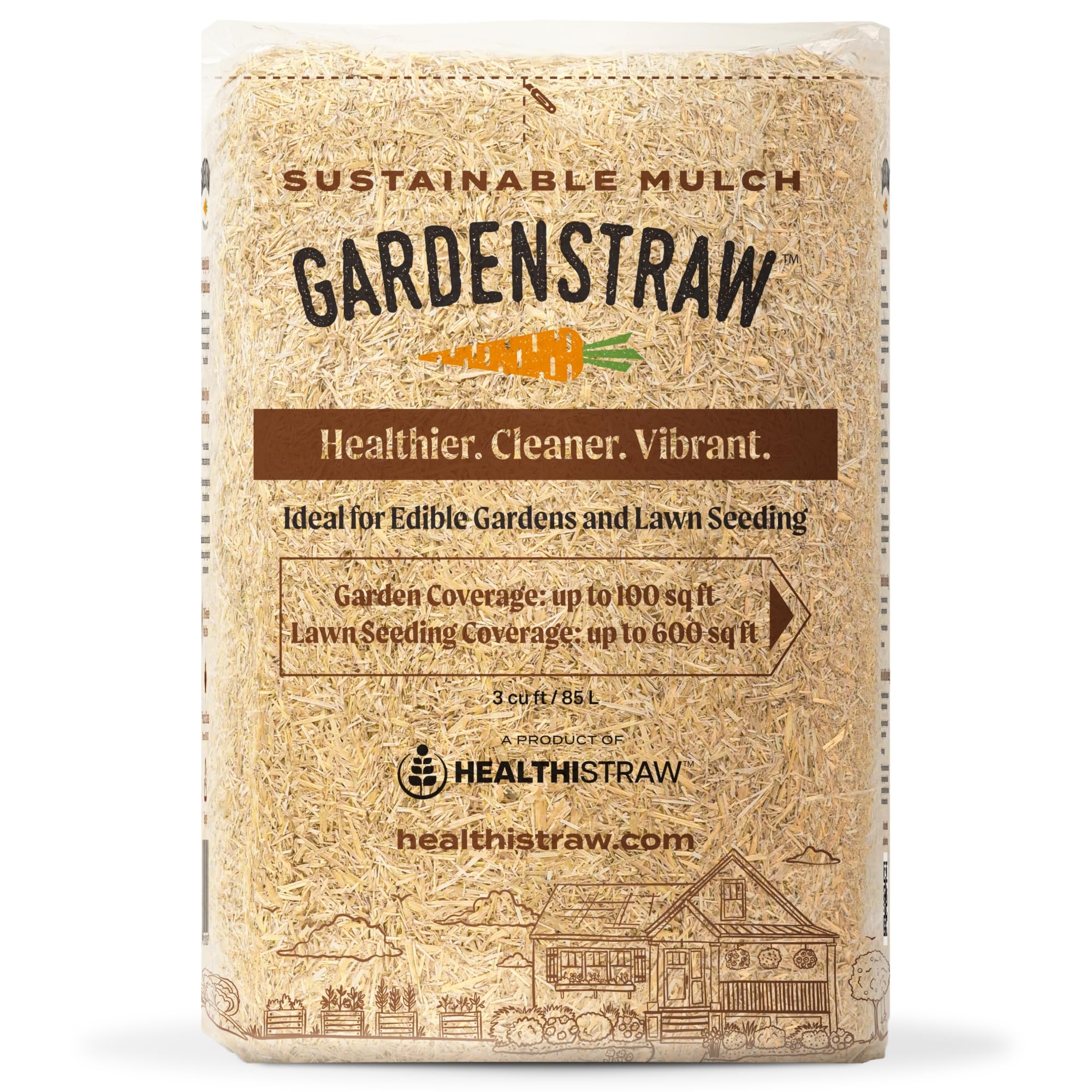
This 3-cubic-foot compressed bale of all-natural, non-GMO wheat straw is pre-cleaned to remove dust, dirt, and as many weed seeds as possible — a major advantage over conventional hay, which often introduces invasive grasses. The straw fibers are cut to a length that interlocks when watered, creating a natural mat that resists wind and rain without chemical binders. A single bale covers up to 100 square feet at a 2-3 inch mulch depth, making it one of the most coverage-efficient options here.
Vegetable gardeners particularly appreciate the straw’s ability to reduce watering needs by up to 50%. The hollow stems insulate soil from temperature swings while allowing air and moisture to penetrate. When the growing season ends, the straw breaks down quickly and adds carbon to the compost pile, improving aeration and microbial activity. Users note minimal allergy irritation compared to dusty hay, and the product’s clean, light texture makes spreading easy even for large beds.
The trade-off is that even cleaned straw can contain a small number of grass seeds, which some reviewers observed sprouting in their beds. The rough texture also requires a slightly thicker layer to achieve the same weed suppression as fine shredded bark. Additionally, straw decomposes faster than wood-based mulches, needing replenishment mid-season in heavy rainfall zones.
What works
- Pre-cleaned processing removes the majority of weed seeds and dust
- Interlocking fibers stay put in wind and rain without chemical binders
- Reduces watering frequency by retaining soil moisture effectively
- Breaks down quickly to enrich compost with carbon and improve soil structure
What doesn’t
- Some residual grass seeds may still germinate in the garden bed
- Requires a thicker layer for comparable weed suppression to bark mulches
- Decomposes faster than wood-based options, needing mid-season top-ups
5. Soil Sunrise 100% Natural Pine Bark Mulch Nuggets (30 qt)
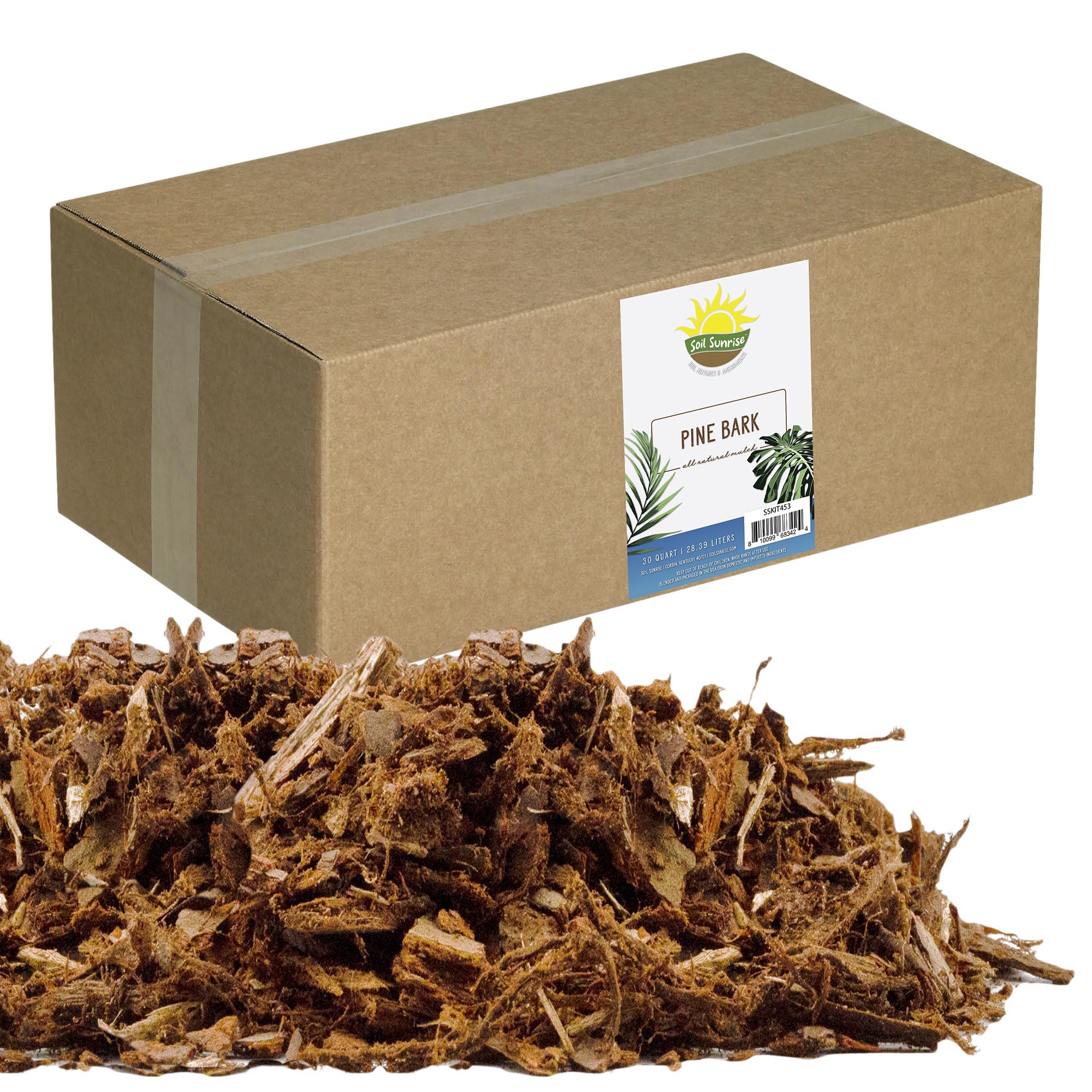
Soil Sunrise delivers 30 quarts of consistent, ½-inch pine bark nuggets that feel distinctly different from mass-market shredded bark. The pieces are uniformly sized — almost shredded — which allows them to pack tightly around container plants, block critters from digging, and create a clean, professional top-dressing. The material comes in a clear bag so you can inspect for mold or pests before application, a transparency appreciated by discerning gardeners.
The primary use case here is potting mix amendment rather than broad landscaping. Pine bark the size and consistency of these nuggets improves drainage and aeration when blended with peat and perlite — the classic recipe for ericaceous container mixes. Gardeners growing citrus, gardenias, blueberries, and succulents report excellent results mixing them into the soil, as the bark maintains an airy, slightly acidic root environment that prevents compaction.
For general garden mulching, the 30-quart volume covers a relatively small area compared to the cubic-foot bags from competing brands. The aesthetic is more decorative than functional for weed suppression in large beds; the pieces are too small to create a deep insulating layer. The premium price per quart also limits its use as a bulk ground cover. It excels in its intended role: high-value container and houseplant applications.
What works
- Uniform ½-inch nuggets create a consistent, professional appearance
- Excellent for improving drainage and aeration in potting mixes
- Maintains an airy, slightly acidic environment ideal for citrus and acid-lovers
- Comes in a clear bag for visual inspection before opening
What doesn’t
- Limited volume (30 quarts) covers a small area for general landscaping
- Premium pricing per quart restricts use to containers and small beds
- Small nuggets provide less effective weed suppression than large chips or mats
6. Hull Farm 50150 Cocoa Bean Shell Mulch (2 cu ft)

Hull Farm’s cocoa bean shell mulch is a longtime favorite among gardeners who want the unmistakable chocolate aroma and the mild fertilizer boost (NPK 2.5-1-3) that cocoa hulls provide. The 2-cubic-foot bag arrives fresh, not dried or moldy — a common complaint with other cocoa mulch vendors. The shells retain moisture exceptionally well in hot climates, keeping container plants hydrated between waterings in a way bark or stone cannot match.
The scent is the headline feature: reviewers consistently mention walking through their garden and smelling chocolate for about a week after application. The aroma eventually fades, but the visual appeal of the rich dark brown hulls persists. Users also note the shells do not blow away as easily as lighter materials once they’ve been watered in. When used in planters, the material forms a natural barrier that deters squirrels from digging.
The cost is the most polarizing factor. Many long-time cocoa mulch users remember paying significantly less for similar bags, and the shipping price can be as much as the product itself. The shells are also toxic to dogs if eaten, and the fragrance can attract raccoons or rodents. The mulch develops harmless but unsightly saprophytic mold when kept moist in shade. It’s a high-margin specialty product best reserved for areas where the sensory experience justifies the spend.
What works
- Strong chocolate scent creates a unique and enjoyable garden atmosphere
- Mild fertilizer value feeds soil without risk of nitrogen burn
- Excellent moisture retention ideal for hot, dry climate container gardening
- Deters squirrels from digging in flower planters
What doesn’t
- Higher cost than other organic mulches, especially with shipping
- Toxic to dogs if ingested (theobromine and caffeine content)
- Fragrance can attract wildlife like raccoons and rodents
- White saprophytic mold develops in damp, shaded conditions
7. Double Tree Incense Cedar Wood Chips (16 qt)

Double Tree’s shredded cedar wood chips offer a dual-purpose solution: a decorative mulch for indoor and outdoor plants, and a natural odor absorber for closets, litter boxes, and pet bedding. The 16-quart bag is compact but delivers a potent cedar aroma that repels moths, beetle larvae, and mosquitoes. Users specifically mention using these chips to keep bugs away from citrus trees and potted plants on patios.
The texture is ground fine enough to avoid floating away during rain, making it practical for small outdoor garden beds and pathways. Many reviewers note using the chips in closets and drawers as a moth deterrent, placing them in sachets or simply pouring a layer on shelves. The natural cedar oil provides a fresher alternative to chemical mothballs, and the smell is described as pleasant and authentic rather than synthetic.
The primary downside is the price-to-volume ratio. At 16 quarts for this price point, the coverage area is limited compared to larger bark or straw bales. The cedar chips are also not an ideal primary mulch for extensive landscaping because a thin layer decomposes relatively fast in direct contact with soil. This product earns its place as a specialized tool for targeted pest control and indoor use, not as a budget-friendly bulk ground cover.
What works
- Strong cedar aroma naturally repels moths, beetles, mosquitoes, and spiders
- Versatile for both garden top-dressing and indoor odor absorption
- Fine grind resists floating away after rain or watering
- Safe, chemical-free alternative to mothballs and synthetic repellents
What doesn’t
- Small bag volume offers limited coverage for large garden areas
- Premium cost per quart compared to bulk bark or straw mulches
- Decomposes faster when used as a primary mulch in direct soil contact
Hardware & Specs Guide
NPK & pH Balance
Cocoa bean shell mulches typically carry a mild NPK of 2.5-1-3 and a pH around 5.8, making them suitable for acid-loving ornamentals but not neutral-soil vegetables. Pine bark and cedar chips are naturally acidic and acidify soil over time, which benefits azaleas, blueberries, and camellias. Coconut husk and wheat straw are pH-neutral and do not significantly alter soil chemistry, giving you more flexibility across varied plantings. Always test your soil before choosing a mulch that shifts pH.
Expanded vs. Bagged Volume
Compressed coco blocks (like Back to the Roots) ship at a fraction of their final weight — a 10-pound block expands to 2 cubic feet after adding water. This saves on shipping costs and storage space but requires planning and hydration time before use. Bagged mulches (bark, straw, shells) arrive ready to spread but are heavier and bulkier to transport. For large projects, the logistical savings of compressed materials can offset the extra step of expansion.
Particle Size and Interlocking
Pine bark nuggets at ½ inch provide drainage and aeration but do not form a tight weed barrier. Shredded cedar chips and straw fibers interlock to create a mat that resists wind and water erosion, making them ideal for slopes and exposed beds. Cocoa shells are lightweight and settle well after watering but are prone to floating in heavy rain until fully saturated. Matching particle size to your site’s exposure level prevents mulch runoff and reapplication labor.
FAQ
Is cocoa shell mulch safe to use around dogs?
Does cedar mulch actually repel insects and mosquitoes?
How deep should I apply mulch for effective weed suppression?
Will fresh pine bark mulch steal nitrogen from my soil?
Final Thoughts: The Verdict
For most gardeners, the landscaping mulch winner is the Back to the Roots Coco Mulch because it combines certified organic purity with a low-weight, high-volume format that saves your back and feeds your soil without chemical residue. If you want a pest-repelling solution with a pleasant cedar scent, grab the GranuCide Cedar Granules. And for budget-friendly, expansive coverage in vegetable gardens, nothing beats the HealthiStraw GardenStraw for its clean composition and watering savings.